Asset protection · International
Second citizenship and capital protection: what a passport gives and what it does not
Updated: November 2026·12 min read·Expert reviewed
Terms and costs verified: November 2026
Contents
A second passport is often called a "plan B" for capital. That is true, but only half true. A passport extends freedom: visa-free travel, the ability to relocate quickly, new options with banks and a document for your children. But by itself it does not change tax residence, does not protect against sanctions and creditors and does not release you from obligations to the country of your first citizenship. We look at where a second passport fits in protecting capital and what to combine it with.
Key points
- A second passport gives mobility, the option to relocate, additional bank options and a choice of law for succession in the EU.
- Tax residence is determined by where you live, not by citizenship. Banks report under CRS to the country of residence.
- Sanctions and creditors' claims apply to the person and his property, not to the passport.
- Russian citizens must notify the Interior Ministry of a second citizenship within 60 days. Failure to do so carries liability.
- A passport works best together with residence, correct tax residence and legal instruments: a marital agreement, a will, a foundation or trust.
What a second passport really gives
First and foremost, freedom of movement. A passport with wide visa-free access allows travel around the world without lengthy visa procedures and without depending on visa decisions for the first passport. For a family with businesses in different countries this saves time and reduces risk: a trip will not be cancelled because of a visa refusal.
Second, the ability to relocate quickly. If circumstances change in the country of residence, a second passport makes it easier to obtain residence in a third country and opens options for the children: study, work, their own residence. Many programmes allow the spouse, children and parents to be included, and the whole family gets the passport. On family programmes, see a second passport as plan B.
Third, additional bank options. Some banks and brokers restrict work with clients by citizenship. A second passport widens the choice, although the bank will still check all your citizenships and countries of residence. More in second passport and banks.
Fourth, succession. EU Regulation 650/2012 allows a will to choose the law of one's nationality. A second citizenship widens this choice and can help subject succession to the law that suits the family best. This is covered in our article on succession in several countries.
| What a second passport gives | What it does not give by itself |
|---|---|
| Freedom of movement and visa-free access to countries closed to the first passport | A change of tax residence: that depends on where you live, not on citizenship |
| The ability to relocate quickly with the family and obtain residence in a third country | Protection from sanctions: restrictions apply to the person, not the passport |
| Additional options with banks and brokers | Release from obligations to the country of first citizenship |
| A choice of the law of nationality for succession in EU countries | Protection of property from creditors |
| A document for children and future generations | Anonymity: the bank checks all citizenships and countries of residence |
Citizenship and tax residence are different things
The most common misconception is that a second passport changes taxes. In most countries tax residence is determined by where you actually live, usually by the 183-day rule, the centre of vital interests and other criteria. Citizenship has almost no effect. A Russian citizen with a Vanuatu passport who lives in Moscow remains a Russian tax resident and pays taxes there. The rules are covered in the 183-day rule and what tax residence is.
Banks know this and report under the CRS standard to the country of tax residence, not citizenship. The OECD has specifically warned about attempts to use citizenship by investment schemes to circumvent the exchange, and banks examine particularly closely clients with a second passport who declare residence in the passport country without living there. Changing residence requires a real move, and citizenship only helps arrange it. A country overview is in countries for tax residence.
Passports and sanctions
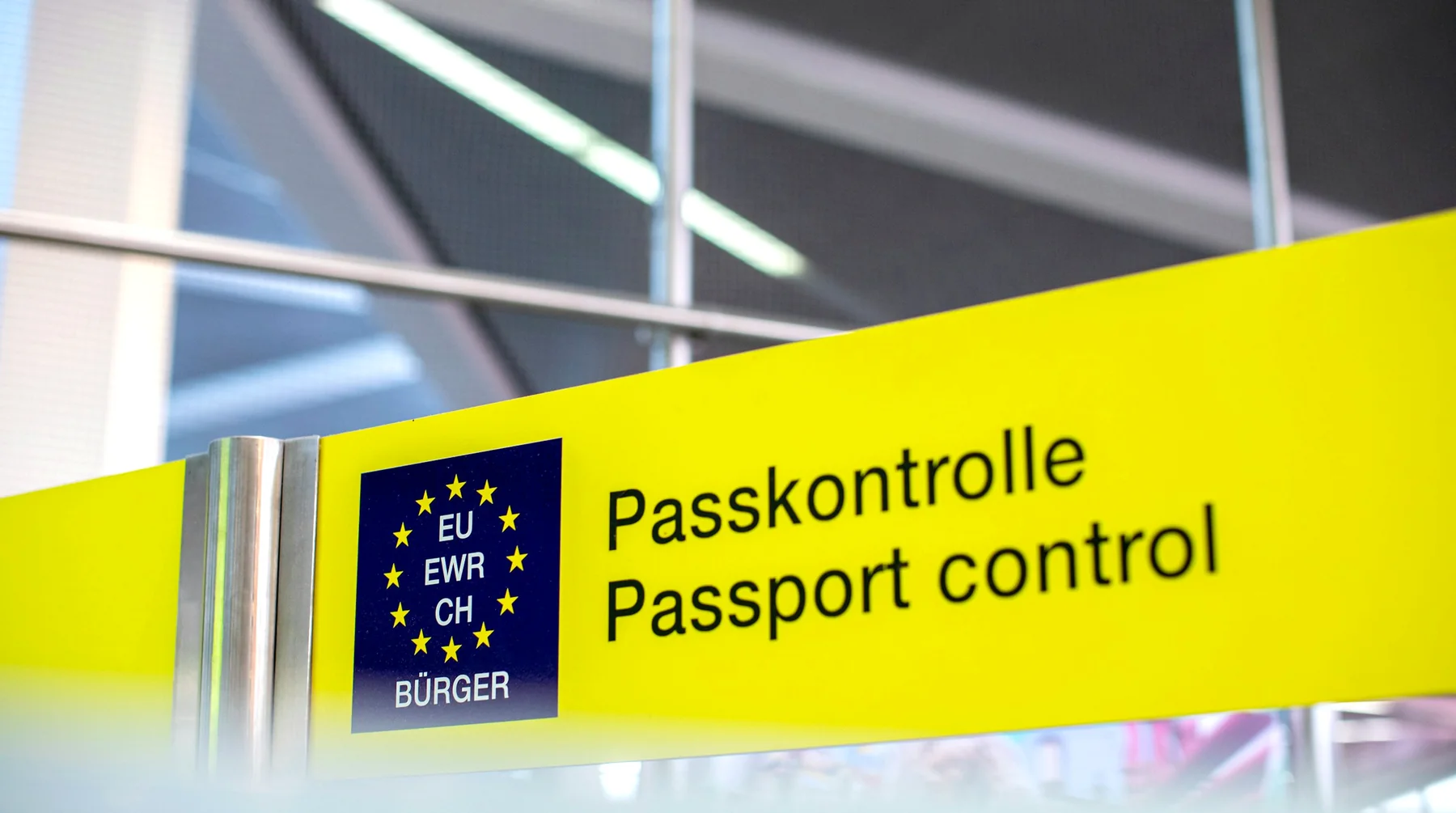
Sanctions restrictions apply to a person, not to a document. If a person is on a sanctions list, a second passport does not remove him from it or protect his property from a freeze. Some EU restrictions concern Russian nationals as such, for example restrictions on accepting deposits. European Commission guidance states that such restrictions do not apply to Russian nationals who hold the citizenship of an EU or EEA country or Switzerland, or a residence permit in one of those countries. A third country passport is not such an exception by itself.
So for Russian citizens, dealing with EU banks often depends on an EU residence permit rather than a third country passport. We check such questions before accounts are opened as part of a sanctions check.
Obligations to Russia
A Russian citizen who has obtained a second citizenship or a residence permit must notify the Interior Ministry within 60 days. Failure to do so carries liability, including criminal liability under Article 330.2 of the Criminal Code. This rule does not depend on where the person lives or which programme was chosen. Details in whether to notify of a second citizenship.
While a person remains a Russian tax resident, all tax obligations remain too: notifications of foreign accounts, CFCs, declaring income. A second passport does not cancel them but can become part of a relocation plan after which residence and obligations will change.
Sofia MendesInvestment Programs Expert, BRIDGES
Want to know which passport suits your goals? We will choose a programme
We will compare citizenship programmes by visa-free access, timelines, family and their role in your capital protection plan.
Dual citizenship: what to consider
Russia allows dual citizenship but treats its citizen who holds another citizenship only as a Russian citizen, unless an international treaty provides otherwise. This means all of a citizen's obligations apply in Russia, and the second passport has no effect there. Most citizenship by investment programmes, including Vanuatu, St Kitts and Nevis, Türkiye and Malta, do not require renouncing the first citizenship.
Before obtaining a second citizenship, also check the rules of the country where you live or plan to live. Some countries do not allow dual citizenship for their citizens or for people who naturalise, and this may matter if you later want the citizenship of your country of residence. How dual citizenship works in the UAE, for example, is covered in dual citizenship in the UAE.
Passports and business
For an entrepreneur a second passport makes it easier to register companies and open accounts in countries where the first passport raises extra questions. But the bank and registrar will still establish the ultimate beneficial owner, all his citizenships and his country of tax residence. A company registered to the holder of a second passport remains his company for the tax authority of his country of residence, with all the CFC rules.
Sensible practice is to use the second passport as an additional document in reviews while disclosing all citizenships, not hiding the first. Concealing a citizenship from a bank is a breach that leads to accounts being closed. On company registration, see our company registration page, and on holding companies a UAE holding company.
When to obtain a passport
A second passport, like any protection instrument, is obtained in advance, in a calm situation. There are three reasons. First, programmes change: thresholds rise, vetting tightens, routes close. Second, the process requires documents on the origin of funds, which are easier to gather without haste. Third, in a crisis, restrictions on travel, transfers and transactions can make the process impossible or very expensive.
This does not mean everyone needs a passport at once. The decision is made by goal: if the family plans to relocate, educate children abroad or run an international business, the passport is obtained in advance. If there are no such plans, residence or accounts in another country may be enough. On waiting and its cost, see why waiting costs more.
Passport or residence permit: the difference
A passport and a residence permit solve different tasks. A residence permit gives the right to live in a country, and in an EU country also to travel in the Schengen area for up to 90 days in any 180. It must be renewed, sometimes requires minimum presence, and can be lost if the conditions stop being met. A passport gives citizenship for life, the right to pass it to children and freedom to travel to that passport's visa-free countries, but not the right to live in Europe.
For capital protection a residence permit is often more important than a passport: it opens access to the country's banks, allows a change of tax residence and protects against some of the restrictions on Russian nationals in the EU. A passport adds mobility and a backup. So families often start with residence, such as a Greek golden visa, and obtain a passport in parallel or later.
Passports and real estate
In a number of countries the purchase of property by foreigners is restricted or requires a permit, and the rules depend on the buyer's citizenship. A second passport sometimes makes such a purchase easier, but restrictions on Russian citizens in some countries apply regardless of a second passport if the buyer remains a Russian citizen. Before a transaction, the requirements of the country where the property is located and sanctions restrictions are checked.
The passport in family scenarios
It is useful to think through several scenarios: what the family will do if exit rules, banking restrictions or taxes change in the country of residence. For each scenario, decide which documents and accounts are needed, where to move and who runs the business. In this plan a second passport is the key to relocation, but it needs housing, residence in the destination country, access to money and documents for the children. We help draw up such a plan and prepare all the elements in advance.
How to choose a programme
A citizenship programme is chosen by goal. For travel in Asia, the Gulf and Latin America and for speed, Vanuatu is often chosen: the passport can be obtained in two to three months, and dual citizenship is allowed. For Schengen visa-free access, Caribbean programmes such as St Kitts and Nevis. For a returnable investment and a path to the US E-2 visa, Turkish citizenship. A full overview is on our citizenship by investment page.
The programme's stability also matters. The EU is putting pressure on Caribbean programmes, and their conditions change; see EU pressure on Caribbean programmes. A passport's visa-free access can change, so for Europe it is more reliable to combine a passport with a European residence permit.
All programmes vet applicants: origin of funds, criminal records, sanctions risks. This is not a formality, and preparing documents on the source of funds is the bulk of the work. The better the documents, the faster the approval.
What to combine a passport with
| Goal | What is usually combined |
|---|---|
| Travel and a backup document | A second passport with wide visa-free access |
| Living and travelling in Europe | An EU residence permit, optionally plus a second passport |
| Changing tax residence | A residence permit and a real move to a country with a suitable tax regime |
| Succession and capital protection | A marital agreement, a will, a foundation or trust |
| Bank access | Residence, source of funds documents, a second passport as an addition |
A working capital protection plan almost never comes down to one passport. A typical combination for a family: a second passport for mobility and a backup, residence in an EU country or the UAE for living and banking, a marital agreement and a will for the family, a foundation or trust for large capital, and accounts at two or three banks in different countries. Each element solves its own task, and together they provide resilience.
A passport for children and future generations
One of the main advantages of a second citizenship is that it can be passed to children. In many countries children born after citizenship is obtained receive it by descent, and children born before can be included in the application or added later. This gives the next generation a choice of where to study, work and live. On passing citizenship to children, see inheritance of Vanuatu citizenship.
For children it also matters how a second passport fits with the succession plan: where they will live, which law will apply to their inheritance, who will manage property until they come of age. These questions are solved together, not separately.
The order of work
Goal
Decide what matters more: travel, relocation, banks, the children's future.
Programme
Compare programmes by visa-free access, timelines, requirements and family.
Documents
Prepare documents on the origin of funds and your background.
Notifications
After obtaining it, notify the Interior Ministry and check tax obligations.
Residence
If a change of residence is needed, plan a real move.
Legal instruments
Update the marital agreement, will and structures in light of the new citizenship.
Common mistakes
- Declaring residence in the passport country to a bank without living there. This is an error in self-certification.
- Expecting a passport to protect against sanctions. Restrictions apply to the person.
- Not notifying the Interior Ministry. Liability up to criminal.
- Choosing a passport only by the number of visa-free countries. The stability of visa-free access and the goal matter.
- Treating a passport as a substitute for legal instruments. A marital agreement, a will and structures are still needed.
What this means for you. A second passport is an important part of a capital protection plan, but not the whole plan. It gives freedom of movement, the ability to relocate and a document for your children. Taxes, banks, succession and protection from risks are solved together with residence and legal instruments. We will choose a programme and build it into the overall plan.
You can start with an online consultation. The general approach to capital protection is in our overview of asset protection, and on residence, see our residence programmes page. Terms: residence permit, tax residence certificate, due diligence.
Share this article
Still have questions? We'll answer for your case
Tell us what you want to solve, and an expert on the topic will contact you.

Frequently asked
Questions people ask before deciding
01Does a second passport change tax residence?
No. Residence is determined by where you actually live, usually by the 183-day rule and the centre of vital interests.
02Does a second passport protect against sanctions?
No. Sanctions restrictions apply to the person. A third country passport is not by itself an exception to EU restrictions on Russian nationals.
03Must the Interior Ministry be notified of a second citizenship?
Yes, a Russian citizen notifies the Interior Ministry within 60 days. Failure to do so carries liability, including criminal liability.
04Does a second passport help with banks?
It widens the choice, but the bank checks all citizenships and countries of residence and reports under CRS to the country of residence.
05Which passport is best for capital protection?
By goal: for mobility and speed often Vanuatu, for Schengen Caribbean programmes, for a returnable investment Türkiye. For Europe it is more reliable to add EU residence.
06Can a second citizenship be passed to children?
In many countries yes: children are included in the application, and those born after citizenship is obtained receive it by descent.
About the author
Related materials
What to read next
 AnalysisA Second Passport and Banks: What It Solves and What It Does Not
 ArticleA second Vanuatu passport as plan B: why entrepreneurs and families need one
 ArticleAutomatic exchange under CRS: what information about your accounts tax authorities receive
News+10 stories on 24 November
Related news
 European Union · 24 NovEU Commission tightens visas for Russians: five-year passports should no longer be recognised
 Spain · 24 NovBest cities for expats 2026: Malaga third in the world, Lisbon and Madrid in the top ten
 Saint Kitts and Nevis · 24 NovNevis Premier asks for five years to close citizenship programmes: a statement, not an EU decision
Personal programme selection is conducted by Anna Kovalevskaya, Head of Legal, BRIDGES.
Need a second passport as part of your family plan? Write to us and we will choose one
We will compare programmes, prepare documents and build the passport into the overall plan with residence, taxes and structures.