



Updated

CH-LS

The lump-sum tax

Residency in Switzerlandfor a tax

Switzerland allows you not to work in the country and to pay a single fixed tax, the amount of which you agree with the canton before the move. In practice that is from CHF 250,000 a year. In return — a residence permit for the whole family and a tax that does not grow with your income.

  • The conditions under Article 14 of the federal direct tax act
  • Working since 2004
  • We agree the amount with the canton before the move
A Swiss residence permit, category B
from CHF 250,000The whole tax for a year
The amount is known in advanceAgreed with the canton
The family togetherA spouse and children in the application

01 / About the program

How the lump-sum tax works

Switzerland allows foreigners who do not work in the country to be taxed not on their income but on their living expenditure. The amount is agreed with the cantonal tax authority in advance and fixed by an agreement. On the basis of that regime a category B residence permit is issued, renewed annually.

01

The tax is calculated from expenditure

The base is seven times the annual cost of rent or of the home you own, but not below the cantonal minimum. The federal minimum base is CHF 429,100, and the cantons set their own, usually higher.

02

The amount is known in advance

The agreement with the canton is signed before the move: you know the annual tax before you take the decision. In practice it is from CHF 250,000 a year depending on the canton.

03

You cannot work in Switzerland

The regime is open to those who carry on no employment or business activity in the country. Income from business outside Switzerland is no obstacle.

04

The canton decides

The regime does not apply everywhere: Zurich abolished it on its territory. Zug, Schwyz, Valais, Ticino, Geneva, Vaud and a number of others operate it — each with its own conditions and minimums.

02 / What you get

What the status in Switzerland gives you

A predictable tax

The amount is fixed by the agreement with the canton and does not depend on how much you earned over the year outside the country.

Life in Switzerland

The B permit gives the right to live in the country with your family, to use the medicine and the schools and to enter and leave freely.

Schengen without a visa

Switzerland is in the Schengen area: travel around it without a visa for up to 90 days in every 180.

A status for the family

A spouse and minor children receive the status together with the applicant. The agreement with the canton is a single one for the family.

Banks and capital

Residency makes work with Swiss banks and the management of capital inside the country simpler.

A long horizon

The status is renewed annually, and after ten years of residence the right to the permanent C permit opens up.

A preliminary assessment

Work out the tax by canton

Set out who is moving with you. With the calculation we show the amount of tax for several cantons, the housing requirements, the timeline by stage and a plan of action.

Who is moving?

Get the calculation

about a minuteno calls and no obligationsconfidential

  • The amount of tax for several cantons
  • The requirements as to housing and residence
  • A plan of action: where to start
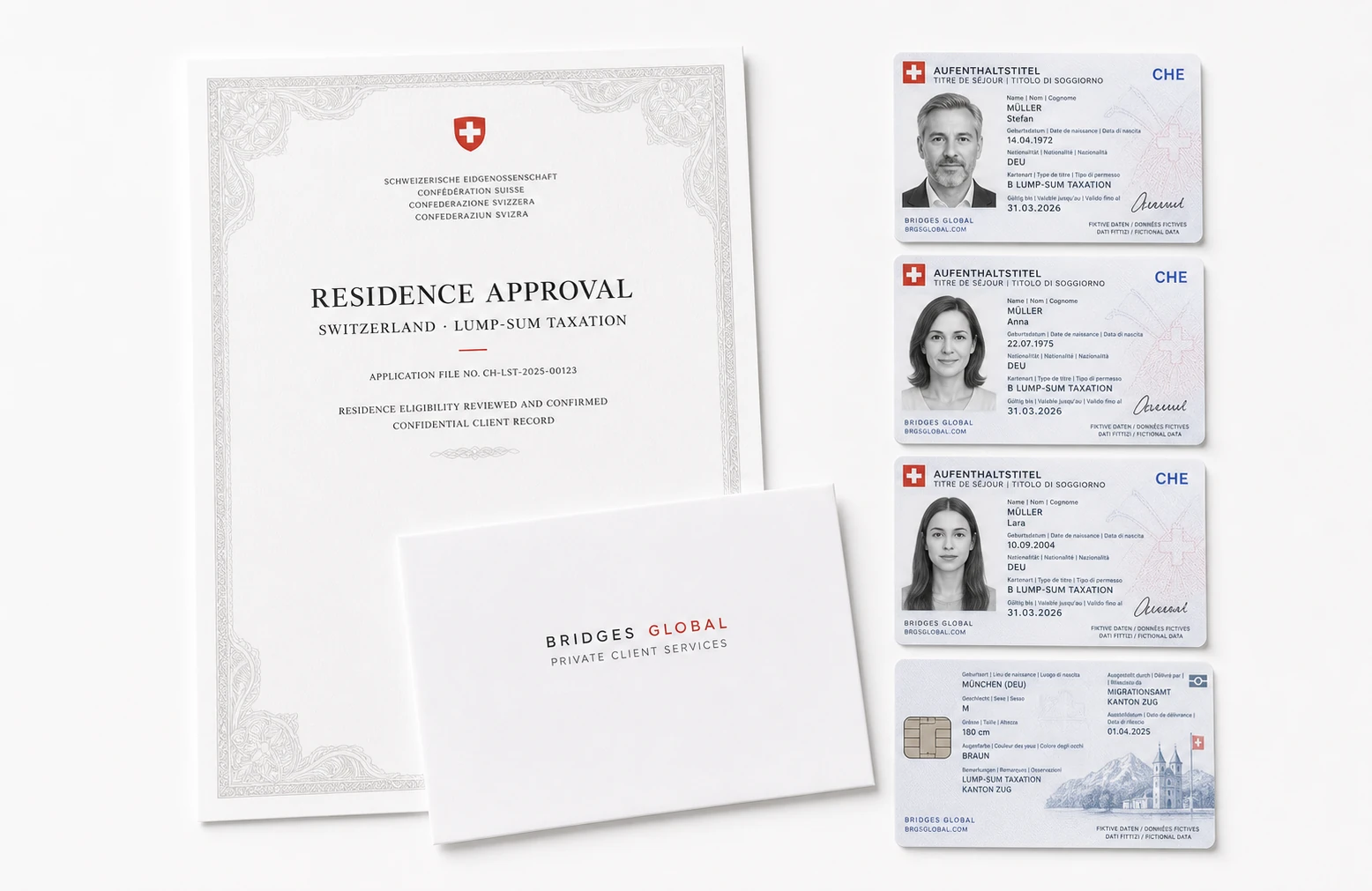
A Swiss category B residence permit and a BRIDGES GLOBAL envelope

03 / Why people apply

Why people arrange the lump-sum tax

This regime is chosen by people with a large foreign income who genuinely move to Switzerland. It is not a scheme on paper: you will have to live in the country.

A clear tax burden

The amount is known before the move and does not grow with income. For a large capital that is fundamental.

Quality of life

Safety, medicine, schools, transport. The main reason families choose Switzerland rather than cheaper jurisdictions.

The centre of Europe

Geneva and Zurich — direct flights worldwide, Schengen all around and the headquarters of international organisations.

Education for the children

International schools and universities of world reputation, open to residents.

Stability

A franc, a banking system and a legal environment that do not change from one election to the next.

A path to permanent status

After ten years of residence the C permit opens up, and then the possibility of naturalisation.

04 / Travel

What the status gives you for travel

The B permit gives the right to live in Switzerland and to travel around the Schengen area, but it is not citizenship.

Mode 01

Switzerland without limits

Residence in the canton that issued the permit. A change of canton is possible but requires a new agreement to be negotiated.

Mode 02

Schengen, 90 days in 180

Travel around the Schengen countries without a visa. The status does not give the right to work in other countries.

Mode 03

Real residence is compulsory

The regime is designed for those who genuinely live in the country. A formal presence puts both the status and the agreement in question.

Mode 04

The rest of the world on your own passport

You travel to third countries on your passport of citizenship: that is what sets the visa regime, not the Swiss permit.

Sources: Article 14 of the federal direct tax act, cantonal tax legislation and the Foreign Nationals and Integration Act. The conditions of the regime differ from canton to canton and are subject to review.

05 / The composition of the application

Who gets the status with you

The agreement with the canton is concluded for the family. Open a row to see the conditions.

  • Citizenship of a country outside the EU and EFTA
  • Does not work and carries on no business in Switzerland
  • Becomes a tax resident of the country for the first time, or returns after ten years’ absence
  • A confirmed lawful source of funds
  • In a registered marriage
  • Likewise has no right to work in Switzerland on this status
  • The children of the applicant or the spouse
  • They study in Swiss or international schools
  • They do not come into the agreement
  • Separate grounds are found for them
  • We go through it individually

06 / Cost

What the status in Switzerland costs

The amount of the tax is agreed with the particular canton. The number of people in the application does not change it: the agreement is a single one for the family.

The central cantons · Zug, Schwyz, Lucerne

250,000 CHF

≈ $310,000

The term of the agreement Reviewed annually

  • The base is seven times the cost of rent or of the home, but not below the cantonal minimum
  • The agreement with the cantonal tax authority is signed before the move
  • Employment and business activity in Switzerland are not allowed
  • Real residence in the canton and a home of the corresponding level are required

The western and southern cantons · Geneva, Vaud, Valais, Ticino

300,000 CHF

≈ $372,000

The term of the agreement Reviewed annually

  • French- and Italian-speaking cantons with a developed international environment
  • The minimum base is higher than in the central cantons
  • In Geneva and Vaud the requirements as to the amount and the home are the highest
  • The exact amount is set individually from the family’s expenditure

Canton

The main applicant
1
Spouse
0
Minor children
0
Parents and adult children
0

The amounts are given as practical guides: the exact tax is agreed with the particular canton and depends on the cost of the home and the family composition. The federal minimum tax base is CHF 429,100 and the cantonal minimums are higher. On top of the tax come the fees for arranging the status, medical insurance and support. This is a preliminary calculation, not tax advice.

07 / Comparison

Switzerland against other tax regimes

Switzerland is the most expensive of Europe’s mild tax regimes and also the most predictable. Here are the parameters side by side.

SwitzerlandMalta GRPItalyAndorraThe UAE
Tax a year fromCHF 250,000€15,000€300,000rates up to 10%None
How it is calculatedFrom living expenditure15% of what is remittedFixedFrom income-
Work in the countryForbiddenLimitedAllowedForbiddenAllowed
PresenceReal residenceA home and visitsNot set90 days a yearEntries
SchengenYesYesYesNoNo

The amounts are given as practical guides and depend on the canton, the family composition and the structure of income. The data are as at the date this page was updated.

Full program comparison →

10 / How it works

How the process for the status works

STEP 1

Assessing the situation

We go through citizenship, the family composition and the structure of income and assets. We work out whether the regime will be advantageous against your current burden.

STEP 2

Choosing the canton

The minimum amounts, the requirements as to housing and the attitude to the lump-sum regime differ. We choose the canton to fit the budget and the family’s way of life.

STEP 3

Preliminary agreement

We approach the cantonal tax authority for an advance ruling on the amount of tax. That is the key stage: the amount is fixed before the move.

STEP 4

Housing

Renting or buying a home in the chosen canton. The cost of the home feeds directly into the tax base, so it is chosen together with the calculation.

STEP 5

Filing for the permit

The documents are filed with the cantonal migration office. For citizens of countries outside the EU a separate procedure and quotas apply.

STEP 6

Receiving the B permit

A residence permit is issued with the right to live in the canton. The overall time is 3-6 months.

STEP 7

Annual confirmations

The tax agreement and the permit are renewed annually. After ten years of residence the C permit opens up.

A step-by-step plan of the process

The same seven steps as a document: what is prepared at each stage, how the amount of tax is agreed and what is confirmed each year.

Download the step-by-step plan

11 / Our role

Why people arrange the status in Switzerland with us

In Switzerland everything is decided by the arrangement with the canton. A mistake at the negotiation stage means either a refusal or an amount you had not planned for.

01

We agree the amount in advance

We work with the cantonal tax authority before the move: you take the decision knowing the annual tax, rather than finding it out afterwards.

02

We choose the canton

The difference between cantons runs to hundreds of thousands of francs a year. We compare them by the amount, the housing requirements and the attitude to the regime.

03

We do the sums straight

If the regime is not advantageous for your structure of income we say so plainly and propose alternatives — Malta, Italy or the UAE.

04

We run the renewals

The annual confirmation of the agreement and the permit, questions of changing canton and the move to the C permit.

15 / Materials

Useful materials on Switzerland

Materials on the lump-sum tax: how the amount is calculated, how the cantons differ and what is required of the applicant.

The main materialPresentation

A Swiss residence permit under the lump-sum tax

The presentation gathers the essentials: how the tax is calculated, a comparison of the cantons, the requirements for the applicant, the family composition and how the work is done.

Inside:

  • how the tax base is calculated
  • how the cantons differ in the amount
  • what the requirements are as to housing and residence
  • which family members receive the status
  • which documents will be needed
  • how the agreement with the canton is negotiated
  • how work with BRIDGES is organised

PDF · free · current as of August 2026

We calculate the amount of tax by canton and compare it with your current burden.

The minimum amounts, the housing requirements and the cantons’ attitude to the lump-sum regime.

The list for the applicant and each family member, marking what has to be translated and certified.

All the materials are updated regularly by our team and are used when supporting BRIDGES clients.

16 / News

What has changed in the regime

2016-01-01

A reform came into force: the federal minimum tax base was raised and further requirements were introduced for spouses. The canton of Zurich abolished the regime on its territory.

2025-01-01

The cantons revised the minimum amounts of tax upwards. We confirm the current values with the canton as at the date of the enquiry.

Worth having

Download the Switzerland checklist

The short document we give clients before the start: how the tax is calculated, how the cantons differ, the requirements for the applicant and the stages — in one list, with nothing padded.

Inside the document

  • How the tax base and the cantonal minimums are calculated
  • The requirements as to housing and residence
  • The current conditions for 2026

We will send it after a short form - no call or obligation.

17 / Questions

Answers to common questions

The tax is calculated from expenditure: the base is seven times the annual cost of rent or of the home you own, but not below the minimum. The federal minimum base is CHF 429,100 and the cantonal ones are higher. In practice the annual tax starts from CHF 250,000 and depends on the canton, the home and the family composition. The exact amount is agreed in advance.

No. The regime is open only to those who carry on no employment or business activity in the country. Income from business and assets outside Switzerland is no obstacle — that is exactly what the regime is built on.

Not all of them: Zurich abolished the regime on its territory and several other cantons do not apply it. Zug, Schwyz, Lucerne, Valais, Ticino, Geneva, Vaud and others do. Each has its own minimum amounts, and the difference between cantons runs to hundreds of thousands of francs a year.

Yes. This is not a formal status: the regime is designed for moving the centre of your life to the country. A home of the corresponding level and actual residence are checked both on issue and on renewal.

A citizen of a country outside the EU and EFTA who becomes a Swiss tax resident for the first time, or returns after ten years’ absence, does not work in the country and confirms a lawful source of funds.

A spouse and minor children. The agreement with the canton is a single one for the family and no additional tax is charged for each member, but the composition affects the calculation of the base.

3-6 months: most of the time goes on agreeing the amount with the canton and finding a home. For citizens of countries outside the EU quotas apply, which may extend the timeline.

After ten years of residence the right to the permanent C permit opens up, and naturalisation is possible after twelve years, taking into account cantonal and communal requirements, language and integration among them.

The tax agreement and the permit are confirmed annually: the home, the actual residence and the payment of the agreed amount are checked. On a change of canton the agreement is renegotiated.

On a moderate income: a fixed amount from CHF 250,000 a year makes it more expensive than ordinary taxation. We work that out before the negotiations with the canton begin and, where necessary, propose Malta, Italy or the UAE.

INITIAL ASSESSMENT

Tell us what outcome your family needs

We will design a solution for your case, choose the country and the right status, and take the whole process through to the result.

Or message us on WhatsApp or Telegram

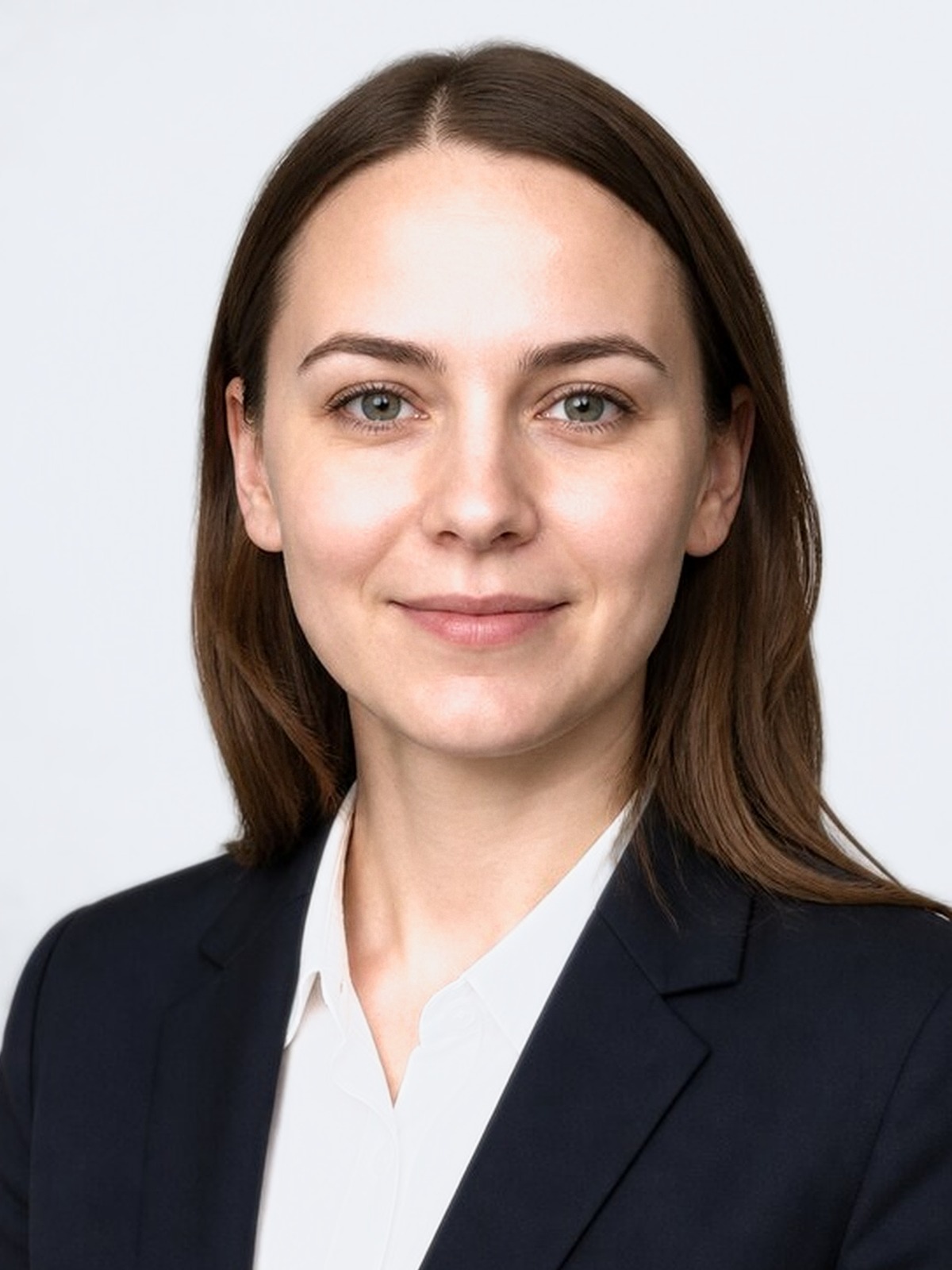
Anna Kovalevskaya, lead lawyer at BRIDGES GLOBAL
Anna KovalevskayaLead lawyer, citizenship and residency, 12 years of practice