News · European Union
EU Commission tightens visas for Russians: five-year passports should no longer be recognised

Updated: November 2026·10 min read·Expert reviewed
Terms and costs verified: November 2026
Contents
On 23 November 2026 the European Commission adopted new visa guidelines for Russian citizens. EU countries are asked to take a very strict approach to tourist visas, to stop recognising Russia's non-biometric travel passports and, at the external Schengen border, to interview every Russian citizen and check their fingerprints in SIS. The guidelines came together with the draft 22nd sanctions package and an updated list of supporting documents for visa applications. They are not law: visas are still issued by EU consulates, but the Commission will push for the new rules to be applied in the same way everywhere.
Key points
- The tourist visa becomes the hardest type of Schengen visa for Russian citizens to obtain.
- The Commission proposes that no EU country should recognise the five-year passport without a chip. 15 of 29 Schengen countries already refuse it.
- Every Russian citizen entering Schengen faces an interview and a fingerprint check in SIS, wherever they arrive from.
- Visa applications will include a military service questionnaire and a self-declaration. The entry ban for combatants takes effect when the EU Council decides.
- Human rights defenders, independent journalists and Ukrainians forcibly given Russian citizenship should not be affected.
What the Commission adopted
The 23 November package has three parts: revised guidelines for EU countries on issuing visas to Russian citizens, an updated list of supporting documents for visa applications, and the draft 22nd sanctions package. The Commission states its reason plainly: in its assessment, Russian citizens continue to pose high security risks to the EU, from sabotage and espionage to disinformation. That is why the guidelines cover ordinary travel, not only military personnel.
| What the Commission recommends | What it means in practice |
|---|---|
| A very strict approach to tourist visas | tourism becomes the weakest ground for a Schengen visa |
| Stop recognising Russia's non-biometric passports | no visa will be placed in a five-year passport, and it will not work for entry |
| Interviews and SIS fingerprint checks at the external border | checks for every Russian citizen, wherever they arrive from |
| Enter refusals on security grounds into SIS | a refusal at one border will be visible at all others |
| A military service questionnaire and self-declaration | new documents in the visa file, and a military booklet on request |
For travellers the first three points matter most. The Commission recommends a very strict approach to tourist visas. EU countries should no longer recognise Russia's non-biometric passports because of the high risk of fraud. At the external border, guards should carry out a thorough individual assessment of every Russian citizen entering the Schengen area.
The Commission said the texts of the guidelines and the new list of documents will be published later. We report the decision from the Commission's official statement and will update this news when the documents appear. The Commission's page on visa measures has already been updated with the stricter approach to tourist visas, the end of recognition for non-biometric passports and stronger border checks.
The five-year passport: from 15 countries to the whole EU
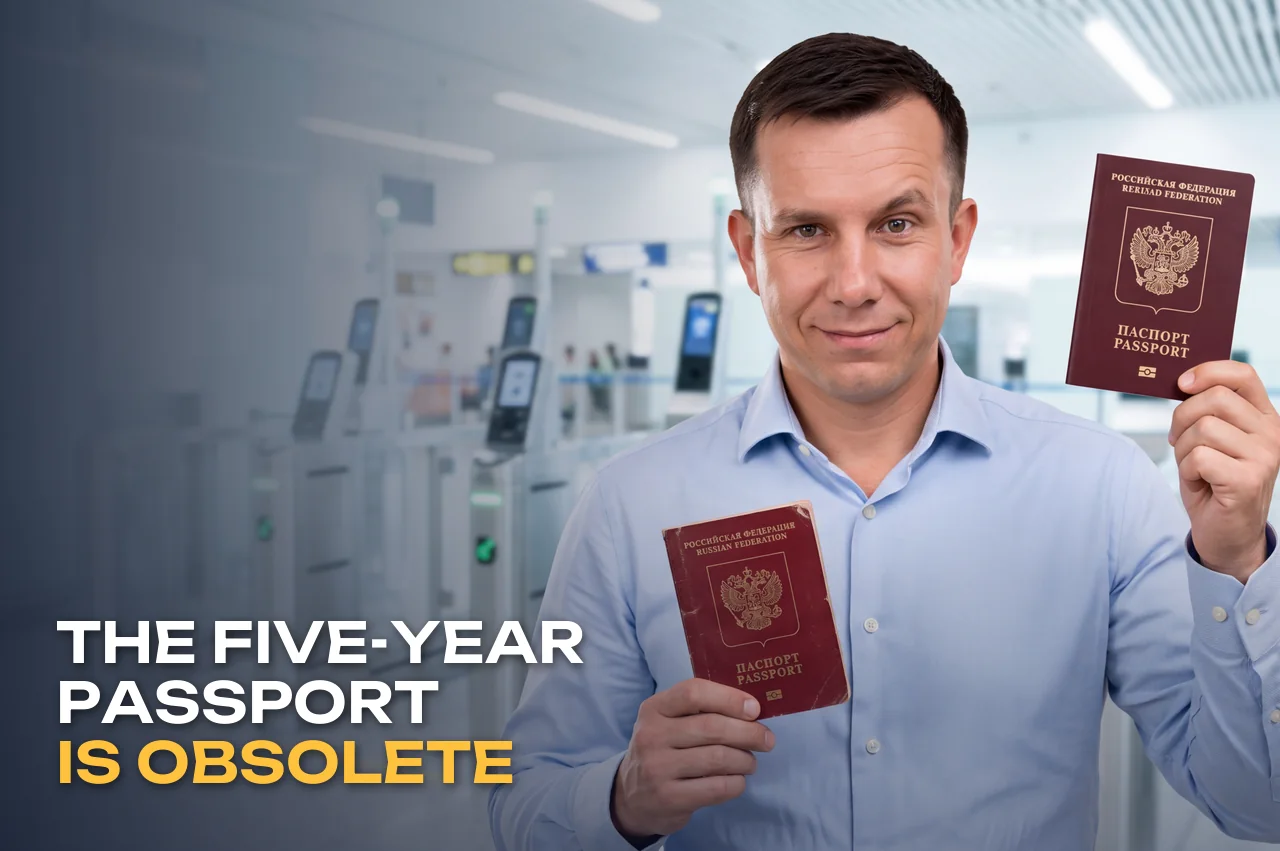
Russia issues two kinds of travel passport. The old-style passport is valid for 5 years and has no electronic chip. The biometric passport is valid for 10 years, stores the holder's data and photo on a chip and carries the chip symbol on the cover. The Commission's recommendation concerns only the first kind.
Some Schengen countries stopped recognising the five-year passport earlier. Belgium, the Netherlands, Luxembourg and Sweden joined them on 1 October 2026, bringing the total to 15 of 29, as listed in our news on the five-year passport. Until now it was still accepted by, for example, Italy, Spain, Greece and Hungary. The Commission now proposes that all EU countries act alike.
For the holder of such a passport this means one simple thing: a visa in it no longer guarantees a trip. A country that does not recognise the document will not place a visa in it or admit the holder at the border, and an airline may refuse boarding. A visa cannot be transferred to a new passport, it has to be obtained again. Russian citizens have not been issued multiple-entry visas since November 2025, so a new visa is needed for every trip in any case.
What this means for you. If your travel passport was issued for 5 years and has no chip, get a biometric one before your next trip to Europe. This does not depend on how quickly EU countries apply the guidelines.
Border checks for every Russian citizen
What is new for many travellers is the check on entry. The Commission recommends that border guards carry out a thorough individual assessment of every Russian citizen entering Schengen, regardless of where they arrive from. This covers direct flights, connections via Istanbul, Dubai or Belgrade, and land borders.
The check includes an interview and a systematic fingerprint check against the Schengen Information System, SIS. Fingerprints are already taken for visas and on entry through the EES system, which we explained in our guide to the new border systems. Now a SIS check should become a standard part of border control for every Russian citizen.
The Commission also asks countries to enter into SIS any refusal of entry on grounds of public policy or internal security. The aim is stated directly: a person refused at one border should not enter through another. A refusal at the Finnish border will be visible to a border guard in Italy or Germany.
In practice this means more time at passport control and more questions about the purpose of the trip. Keep your accommodation booking, return ticket, insurance and employment documents at hand. The border guard decides on entry, and a valid visa does not replace that decision.
Military personnel and the new document list
The second part of the package prepares an entry ban for current and former combatants. EU countries agreed its political and legal basis in the 21st sanctions package, see our news on the entry ban. The checks are aimed at those who serve or have served in the Russian armed forces or associated armed groups since 24 February 2022 and took a direct part in combat against Ukraine. Combatants of other nationalities who fought for Russia are covered too.
To help consulates identify such applicants, the Commission updated the list of documents. It now includes a military service questionnaire and a self-declaration, and a consulate may request further documents such as a military booklet. Men of conscription age should be ready for these questions when they apply.
The ban itself is not yet in force. The EU High Representative has proposed starting to apply it, and the EU Council will set the date. The guidelines and the document list are meant to give countries the tools for checks by then.
Athletes and artists
The draft 22nd package proposes banning Russian citizens from competing on behalf of the Russian state at sporting events in the EU. Once the ban is adopted, countries are advised to consider refusing visas to athletes who compete under the Russian flag, anthem or national team uniform. Artists sent and sponsored by the Russian authorities to cultural events also call for specific attention.
Who should not be affected
The Commission sets out safeguards. Stricter scrutiny must not prevent the entry of people with a legitimate interest in leaving Russia, notably human rights defenders, dissidents and independent journalists. Humanitarian exceptions should be considered for Ukrainians who were forcibly given Russian citizenship and can prove their previous Ukrainian citizenship.
Since 2022 the EU has also kept a simpler procedure for family members of EU citizens, whose rights are protected by Directive 2004/38/EC. An EU residence permit removes the need for a tourist visa, but not the border check: the interview and fingerprint check apply to every Russian citizen. That is why residence permit holders should also replace an old-style passport.
How we got here
- 09.2022The EU fully suspends the visa facilitation agreement with Russia
- 12.2022The EU stops recognising Russian passports issued in the occupied territories of Ukraine and Georgia
- 11.2025Russian citizens can no longer get multiple-entry visas: a new visa for every trip
- 10.202615 of 29 Schengen countries already refuse the five-year passport
- 20.11.2026Denmark asks EU countries to stop tourist visas and non-biometric passports
- 23.11.2026The Commission adopts new visa guidelines alongside the draft 22nd sanctions package
The 23 November guidelines continue the course of recent months. On 20 November Denmark sent EU countries a note with similar points: stop tourist visas and stop recognising non-biometric passports. Since 16 November Slovenia has accepted visa applications in Russia on seven grounds only, see our news on Slovenia. Finland restricted short-term work by Russian citizens on Schengen visas, details in our news on Finland. Lithuania closed in-country residence permit applications on a visa, as we reported in our news on Lithuania.
Until now each country acted on its own, and the rules differed from one consulate to the next. The new package moves towards a common approach: the Commission will work with EU countries to apply the guidelines consistently and will monitor how they are implemented. Visas valid in a single country, discussed in October, are not mentioned in the official statement; we covered that option in our news on single-country visas.
Are the guidelines binding
The Commission's guidelines are not law and do not ban anything by themselves. The visa decision is taken by the consulate of a given country, and the entry decision by its border service. But consulates rely on these guidelines when assessing applications, and the Commission says plainly that it will push for uniform application. Countries with a hard line will apply the new rules first, and the rest are likely to follow.
Sanctions work differently. The draft 22nd package, including the ban on athletes, must be approved by the EU Council and has no effect until then. The entry ban for combatants will also take effect only after a Council decision. How visa policy may develop up to 2027 is covered in our analysis of Schengen visas, and the October changes are collected in our review of the Schengen rules.
Who will feel it most
- Tourists and people visiting friends and relatives without a status in the EU. For them the tourist visa is the only way into Schengen, and it is exactly what the Commission proposes to narrow.
- Holders of five-year passports. They are hit by the non-recognition point even with a visa.
- Men of conscription age. Questions about military service will come up both at the consulate and at the border.
- Everyone who crosses the border often. An interview and fingerprint check at every entry will make control take longer.
The changes matter least to those who hold an EU residence permit or a second citizenship with visa-free access. Caribbean passports with visa-free Schengen access are collected in our news on Caribbean visa-free travel, and passport strength can be compared in the passport index. The EU has not yet set a launch date for ETIAS for visa-free travellers, see our news on the ETIAS timeline.
Daniel KovachSenior International Law Attorney, BRIDGES
Travelling to Europe on a visa? We will find a status that does not depend on it
We will review your travel, compare EU residence permits and second citizenship, and prepare documents for the whole family.
What to do now
Check your passport
If your travel passport was issued for 5 years and has no chip, get a 10-year biometric passport before your next trip.
Apply for a visa with time to spare
Prepare a full file: booking, tickets, insurance, employment letter. Be ready for questions about military service.
Prepare for the border check
Keep documents on the purpose of your trip at hand: a visa does not replace the border guard's decision.
Consider a status
Suitable programmes are collected in the residence catalogue and the citizenship catalogue.
BRIDGES supports clients with residence and citizenship programmes in EU countries and beyond. You can discuss your situation at an online consultation.
Share this article
Still have questions? We'll answer for your case
Tell us what you want to solve, and an expert on the topic will contact you.



Frequently asked
Questions people ask before deciding
01Has the EU banned tourist visas for Russian citizens?
No. On 23 November 2026 the European Commission advised EU countries to take a very strict approach to tourist visas. There is no ban, and each visa is decided by a consulate.
02Can I travel to Europe with a five-year passport?
It is getting harder. 15 of 29 Schengen countries already refuse it, and the Commission recommends that all EU countries stop recognising it. A 10-year biometric passport is the safer choice.
03What happens at the border?
The Commission recommends an interview and a SIS fingerprint check for every Russian citizen entering Schengen, wherever they arrive from.
04Are the guidelines binding on EU countries?
They are guidelines, not law. But consulates rely on them when assessing applications, and the Commission will push for uniform application.
05Does this affect EU residence permit holders?
They do not need a tourist visa, but the border check applies to every Russian citizen. Residence permit holders should also replace an old-style passport.
About the author
Related materials
What to read next
 NewsThe five-year passport is obsolete: 15 Schengen states already refuse it
 NewsSlovenia stops accepting tourist visa applications in Russia: what it means for travel
News+10 stories on 24 November
Related news
 European Union · 24 NovEU migration pact's first year: 1,283 relocations against a floor of 30,000
 European Union · 24 NovETIAS is not running yet: lookalike websites are already charging for applications
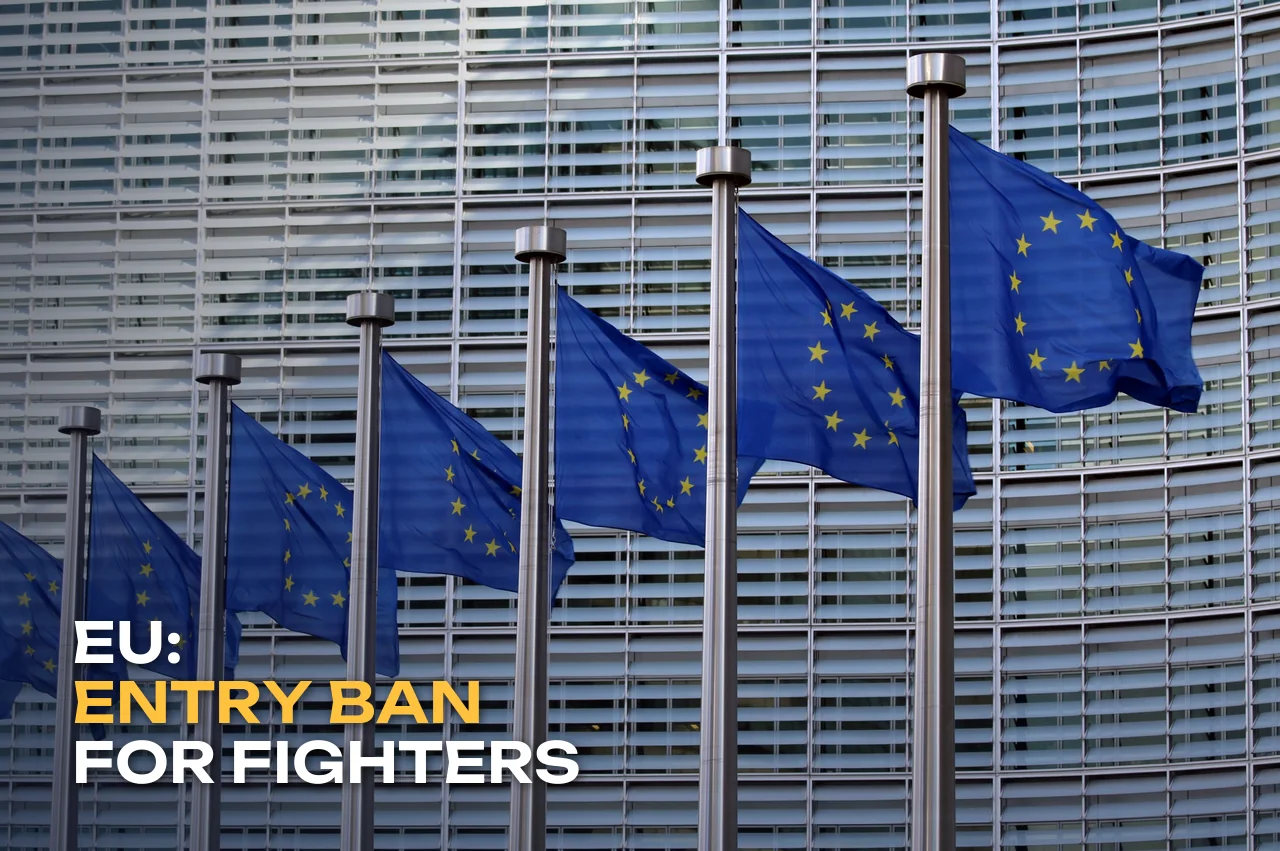 European Union · 18 NovEU prepares an entry ban for Russian citizens: it targets those who fought in Ukraine
Personal programme selection is conducted by Anna Kovalevskaya, Head of Legal, BRIDGES.
Worried about new entry restrictions? We will find an EU residence permit or a second passport
We will review your travel, compare countries and prepare documents for the whole family.