






Updated

PT-FI

Residency on passive income

Residency in Portugalthe D7 visa

A status for those living on a pension, rent, dividends or interest. The card is given for two years, extended for three and allows work and business in the country. An income from €920 a month is enough — nothing has to be invested.

Go through your situation
  • The conditions are checked against law 23/2007 and Portaria 1563/2007
  • Working since 2004
  • We run the visa, the status at AIMA and the renewal
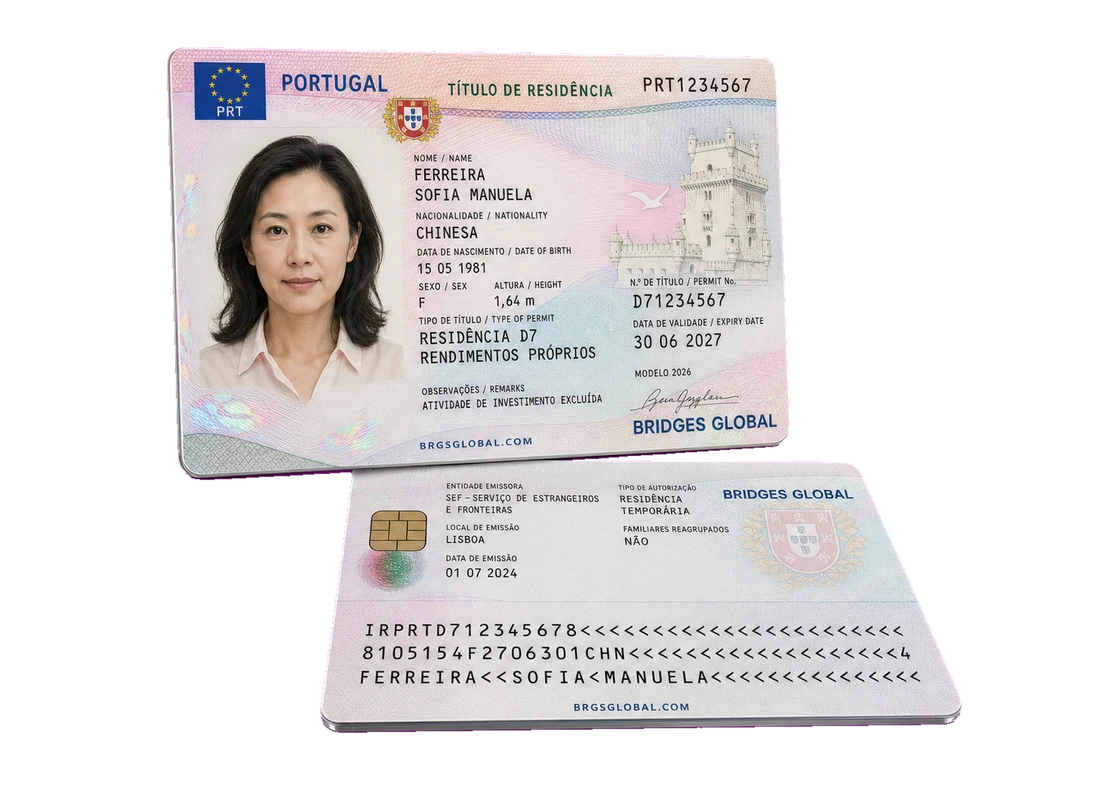
A Portuguese residence card under the D7 visa
from €920 a monthSufficient income
4-6 monthsFrom filing to the card
You may workEmployment, business and self-employment

01 / About the program

How the D7 works

The D7 is a national visa for third-country nationals with an income of their own. First the consulate issues an entry visa, then the residence card is arranged in Portugal. The programme requires no investment: the state checks not the balance on an account but the regularity and origin of the income.

01

The income must be passive and regular

A pension, rent, dividends, interest on deposits, royalties. A one-off receipt or the sale of an asset does not meet the requirement: what is checked is that the income will still be there next year.

02

The threshold is measured from the minimum wage

Portaria 1563/2007 ties the means of subsistence to the guaranteed minimum wage: 100% for the applicant, 50% for a second adult and 30% for a child. From January 2026 that is €920 a month.

03

The status requires real residence

That is the key difference from the Golden Visa. An absence of more than six months in a row, or eight months in total over the term of the card, is a ground for cancelling the status.

04

There is a path to permanent residence and citizenship, but a long one

Permanent residence opens up after five years of residence. Citizenship under the new law comes after ten years for citizens of countries outside the Portuguese-speaking community.

02 / What you get

What the D7 status gives you

Life in a European Union country

The right to live in Portugal for the whole term of the card, to enter and leave freely and to move around the Schengen area for up to 90 days in every 180.

A status for the whole family

A spouse, minor children, dependent adult children in study and dependent parents come into the application through family reunification. Each adds their own share of income.

The right to work and run a business

Unlike a tourist status, the D7 allows employment, self-employment and setting up a company. That income does not replace the passive income requirement; it supplements it.

State medicine and schools

Once residence is registered a resident receives a health system number and access to state schools on equal terms with citizens.

The road to permanent residence

Five years of residence open up permanent residence under article 80 of law 23/2007. The years on the D7 count if the presence requirements were met.

Tax planning

A move means Portuguese tax residency. New residents have a special regime for qualified activity — whether it applies to your income is worked out separately, before the move.

A preliminary assessment

Calculate the budget for your family

Set out who is applying with you. With the calculation you get the full Portuguese picture: the income required for your family composition, the budget for the move, the timeline by stage and a plan of action.

Who is applying for the residence permit?

Get the calculation

about a minuteno calls and no obligationsconfidential

  • The full calculation for your family composition
  • The timeline for each stage of the process
  • A plan of action: where to start
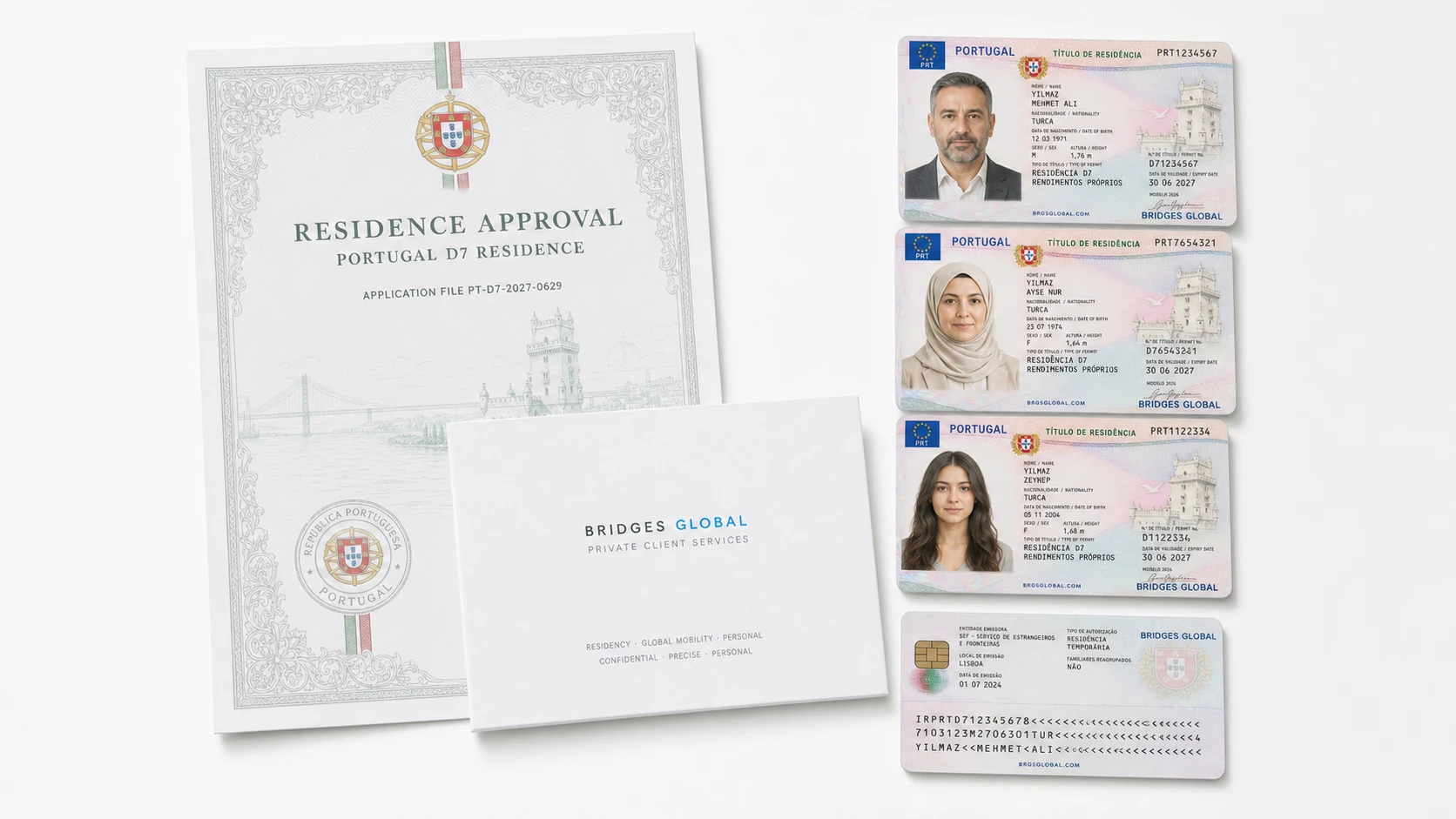
A Portuguese residence card and a set of D7 documents

03 / Why people apply

Why people arrange the D7

The D7 is chosen not for a second document in the safe but for a move. It is the most affordable way into European Union residency in money terms — provided you really do intend to live in the country.

A move with no large investment

The Golden Visa requires hundreds of thousands of euro; the D7 an evidenced income from €920 a month. For a family with rental income or a pension that is fundamentally different arithmetic.

School and university for the children

Children study in state schools free of charge and pay as residents when they enter university. For families that is most often the main reason.

A calm life by the ocean

A mild climate, safety and clear everyday infrastructure. Portugal remains one of the few EU directions where a move does not mean a drop in the standard of living.

Lawful access to EU banks

A resident opens accounts and uses European financial services as a local. The source of funds is of course checked on general terms.

The prospect of a passport

Ten years of residence open up the right to naturalise. The period is long, but it is a real path to European Union citizenship, not a declaratory one.

Clear requirements

The income threshold and the presence rules are set out in regulation rather than left to the authority’s discretion. A case either meets the formal criteria or it does not.

04 / Travel

Where you can travel on the residence card

A Portuguese residence card gives the right to live in the country and move around Schengen, but it does not replace an EU passport.

Mode 01

Portugal without limits

Residence, entry and exit at any time for the whole term of the card. At the same time the status assumes you live in the country rather than visiting occasionally.

Mode 02

Schengen, 90 days in 180

Travel around the Schengen countries without a visa — up to 90 days in every 180. The card gives no right to work in other countries of the Union.

Mode 03

Work and business in Portugal

The status allows employment, self-employment and enterprise. The passive income must be kept up: it remains the ground of the status.

Mode 04

The rest of the world on your own passport

You travel to third countries on your passport of citizenship: that is what sets the visa regime, not the residence card.

Sources: law 23/2007 as in force and the Schengen Borders Code (Regulation (EU) 2016/399) as regards the 90 days in every 180. Entry rules are set by the receiving states and may change.

05 / The composition of the application

Who can obtain the status

The main applicant files first and the others follow through family reunification. Open a row to see the conditions.

  • Over 18
  • A regular passive income of at least 100% of the minimum wage
  • Housing in Portugal: a lease of a year or more, or ownership
  • No convictions, with medical insurance and an NIF tax number
  • In a registered marriage or an evidenced partnership
  • Adds 50% of the minimum wage to the income requirement
  • Receives the status for the same term as the applicant
  • The children of the applicant or the spouse, including from previous marriages
  • Each adds 30% of the minimum wage to the income requirement
  • They are enrolled in state schools on equal terms with residents
  • Unmarried and supported by their parents
  • They evidence full-time study
  • The financial dependency is proved by documents, not only by the relationship
  • The parents of the applicant or the spouse
  • They evidence that they are being supported
  • The income requirement rises by their support

06 / Cost

How much income is needed and what the process costs

The programme has no investment. What matters is the annual income required — it grows with the family composition, because it is measured in shares of the minimum wage.

A single applicant · 100% of the minimum wage

€11,040

≈ $13,000

Evidenced The whole term of the status

  • A pension, rent, dividends, interest or royalties — the income must be regular
  • €920 a month on the 2026 guaranteed minimum wage
  • The consulate separately asks for savings on a Portuguese account to be shown
  • A one-off receipt or the sale of an asset does not meet the requirement

The applicant and a spouse · 100% plus 50%

€16,560

≈ $19,000

Evidenced The whole term of the status

  • For a second adult 50% of the minimum wage is added — €460 a month
  • The marriage must be registered and evidenced by documents with an apostille
  • The income may belong to either spouse
  • Both receive their cards at the same time and for the same term

A couple with a child · 100% plus 50% plus 30%

€19,872

≈ $23,000

Evidenced The whole term of the status

  • For each child 30% of the minimum wage is added — €276 a month
  • Adult children are included where study and dependency are evidenced
  • Dependent parents are arranged through family reunification and counted separately
  • Housing in Portugal is evidenced for the whole application

The composition of the application

The main applicant
1
Spouse
0
Minor children
0
Dependent adult children
0
Dependent parents
0

The thresholds are given under Portaria 1563/2007 and the minimum wage of €920 under Decreto-Lei 139/2025. On top of the income come the consular fee, the AIMA fee for the residence card, medical insurance, renting or buying housing and the support. This is a preliminary calculation, not a decision of a state authority.

07 / Comparison

The D7 against the other options

The D7 is compared with the same country’s digital nomad visa and with investment programmes. The difference is not the price but what exactly is required of the applicant.

Portugal D7Portugal D8The Golden VisaSpainItaly
What is evidencedPassive incomeRemote incomeAn investmentthe programme is closedPassive income
The thresholdfrom €11,040 a yearhigher than the D7from €500,000-from €31,000 a year
Residence requirementYes, realYes, real7 days a year-Yes, real
The right to workYesYes, for a foreign employerYes-No
The qualifying period for citizenship10 years10 years10 years-10 years

The thresholds are given as at the date this page was updated. The Spanish residency by investment programme has been closed to new applicants since 3 April 2025. The Italian Elective Residence threshold is set by consular practice and checked before filing.

Full program comparison →

10 / How it works

How the D7 process works

STEP 1

The preliminary check

We go through the structure of the income: what it consists of, how regular it is and what evidences it. We work out the threshold required for the family composition and the full budget for the move.

STEP 2

The tax number and the account

We obtain the Portuguese NIF tax number and an account with a local bank. The savings the consulate asks to see alongside the income are placed in that account.

STEP 3

Housing in Portugal

A lease of a year or more, or a property purchase. The housing must match the family composition — that is checked both at filing and on renewal.

STEP 4

Filing for the visa at the consulate

The file with proof of income, housing, insurance and no convictions is filed with the consulate for your place of residence. The visa is issued for entry and for the period up to the AIMA appointment.

STEP 5

The residence card at AIMA

After entry comes the AIMA appointment: the biometrics and the check on the documents. The residence card is issued for two years and extended for three.

STEP 6

Life with the status and the renewal

We keep the record of presence, the renewal of the card, adding new family members and the preparation for permanent residence after five years.

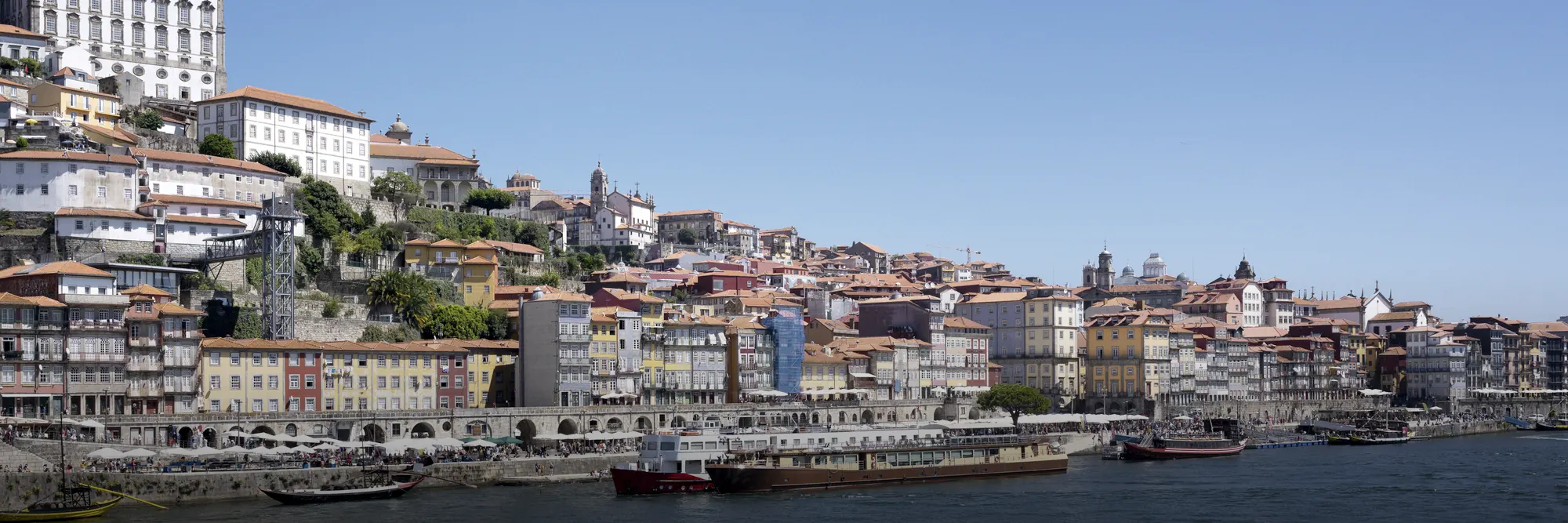
Porto and the Ribeira waterfront

The D7 is a move, not a fallback document: the status rests on real residence.

PortugalThe European Union and SchengenLaw 23/2007
Go through your situation

11 / Our role

Why people arrange the D7 with us

D7 refusals rarely come down to the amount and often to how the file is assembled. We have worked since 2004 and take the case through to the residence card, not to the filing at the consulate.

01

We assemble the evidence of income

Showing a sum is not enough: the regularity and the origin have to be proved. We prepare the statements, the leases and the pension and dividend certificates in the form the consulate accepts.

02

We work out the threshold for the whole composition

The shares for a spouse and children change the sum required. We calculate it in advance so that it does not turn out at filing that the income does not cover the family.

03

We run the NIF, the account and the housing

The tax number, the bank account and the lease are arranged before filing. That is the most frequent point of delay and we close it by power of attorney.

04

We stay with you after the move

The AIMA appointment, renewing the card, family reunification, the record of days present and the preparation for permanent residence.

15 / Materials

Useful materials on the D7

Materials on the D7: how the income is calculated, what is accepted as evidence and how the move works.

The main materialPresentation

A Portuguese residence permit on income

The presentation gathers the essentials: the income requirements by family composition, the documents, the order of filing and what happens after the move.

Inside:

  • what income is required for your family composition
  • which sources of income are accepted
  • what has to be shown on the account
  • which relatives come into the application
  • which documents will be needed
  • how the AIMA appointment works
  • how work with BRIDGES is organised

PDF · free · current as of August 2026

A short check: whether your income counts as passive, whether it covers the family composition and whether you are ready to meet the residence requirement.

The list for the applicant and each family member, marking what has to be translated, certified and apostilled.

We calculate the income required, the budget for the move, the fees and the support.

All the materials are updated regularly by our team and are used when supporting BRIDGES clients.

16 / News

What has changed in the rules

2026-01-01

The guaranteed minimum wage rose to €920 a month (Decreto-Lei 139/2025). The D7 income requirement rose with it: €11,040 a year for the applicant.

2025-10-15

A new citizenship law was passed: the naturalisation period is ten years of residence for citizens of countries outside the Portuguese-speaking community and seven years for CPLP citizens.

2023-10-06

Portugal closed the Golden Visa route through property. For those planning a move the D7 remained the main option with a clear threshold.

Worth having

Download the D7 checklist

The short document we give clients before the start: the income requirements, the list of evidence, the stages and the timelines — in one list, with nothing padded.

Inside the document

  • The income required by family composition
  • What is accepted as evidence
  • The current conditions for 2026

We will send it after a short form - no call or obligation.

17 / Questions

Answers to common questions

From 100% of the guaranteed minimum wage for the applicant — from January 2026 that is €920 a month, or €11,040 a year. For a spouse 50% is added (€460 a month) and for each child 30% (€276 a month). The threshold is set by Portaria 1563/2007 and rises with the minimum wage.

A pension, rental income, dividends, interest on deposits and bonds, royalties. The main requirement is regularity: the income must be evidenced for the past period and be likely to continue. A one-off sale of an asset or a gift does not meet it.

Yes, and that is the main difference between the D7 and the investment programmes. An absence of more than six months in a row, or eight months in total over the term of the card, is a ground for cancelling the status. Planning the D7 as a fallback document without moving makes no sense.

No, a long-term lease is enough — usually a contract of a year or more, registered with the tax authority. The housing must match the number of occupants: that is checked both at filing and when the card is renewed.

Yes. The status allows employment, self-employment and enterprise in Portugal. But the passive income remains the ground of the status: it has to be kept up and evidenced on renewal.

A spouse or partner, minor children, dependent adult children with evidenced study and supported parents. Each participant raises the income required by their share.

The first residence card is for two years and the renewal for three. The renewal application is filed in advance, before the current card expires.

Permanent residence after five years of residence under article 80 of law 23/2007. Citizenship under the new citizenship law after ten years of residence for citizens of countries outside the Portuguese-speaking community, with knowledge of the language and a test.

On moving, yes: residency arises on living there more than 183 days a year or on moving the centre of your vital interests. That means declaring worldwide income. New residents have a special tax regime, but it is designed for qualified activity — whether it applies to your case is worked out separately, before the move.

Usually 4-6 months: preparing the file, the consideration at the consulate, the entry and the AIMA appointment. The timeline depends on the workload of the particular consulate and on how quickly the income evidence is assembled.

The D7 is designed for passive income — a pension, rent, dividends. The D8 is the digital nomad visa for those working remotely for a foreign employer or clients, and its income threshold is higher. Both statuses require real residence in the country.

The law sets no restrictions on citizenship and applications are accepted. The difficulty lies elsewhere: evidencing the source of funds and opening an account with a Portuguese bank. That is exactly the part gone through before filing.

INITIAL ASSESSMENT

Tell us what outcome your family needs

We will design a solution for your case, choose the country and the right status, and take the whole process through to the result.

Or message us on WhatsApp or Telegram

Anna Kovalevskaya, lead lawyer at BRIDGES GLOBAL
Anna KovalevskayaLead lawyer, citizenship and residency, 12 years of practice