Asset protection · International
Succession with property in several countries: wills, applicable law and EU Regulation 650/2012
Updated: November 2026·12 min read·Expert reviewed
Terms and costs verified: November 2026

Contents
A flat in Lisbon, an account in Dubai, a stake in a Russian company, a villa in Cyprus and a second country's passport: for the families we work with, this is a typical picture. The problem is that every country has its own succession law, its own taxes and its own notary. Without preparation, heirs spend years settling property in several countries, paying translators and lawyers and arguing about which law applies. Here is how to avoid that.
Key points
- Russia determines the law applicable to succession by the deceased's last place of residence, while real estate passes under the law of the country where it is located. Real estate in Russia always passes under Russian law (Art. 1224 of the Civil Code).
- Since 17 August 2015 the EU has applied Regulation No 650/2012: succession is governed by the law of habitual residence at death, but a will can choose the law of one's nationality.
- Denmark and Ireland do not apply the Regulation, nor do non-EU countries, including the United Kingdom.
- A working arrangement: a will that takes each country into account, a choice of law where needed, a foundation or trust for large capital, life insurance and a tax plan.
- The forced share of heirs in Russia remains whatever instrument is used.
Why succession across several countries is complex
An estate spread across countries brings several legal systems into conflict. One country considers the whole estate subject to the law of last residence. Another applies its own law to real estate. A third recognises only its own statutory heirs and forced shares. As a result the same property can be distributed differently depending on where the heirs litigate.
Then there are practical difficulties: in each country probate must be opened, documents translated and apostilled, and a local certificate of inheritance obtained. Banks freeze accounts until documents are produced, and tax authorities expect returns. Without a will, heirs often learn about some property only when deadlines have passed. That is why succession planning is the foundation of asset protection, not a formality.
How Russian law approaches succession
Russia's conflict rules are in Article 1224 of the Civil Code. Succession is governed by the law of the country where the deceased had his last place of residence. Succession to real estate is governed by the law of the country where it is located, and real estate entered in the Russian state register by Russian law. A person's capacity to make and revoke a will, and the form of the will, are determined by the law of the country where the testator resided when making it.
In practice this means the following. If you live in Portugal and own a flat in Moscow, the Moscow flat passes under Russian law and the rest of the estate, from a Russian court's point of view, under Portuguese law. Inheritance in Russia is not subject to personal income tax: income received by inheritance is exempt, with certain exceptions. But inheritance tax may be levied in the country where the property is located or where the heirs live. Details are in our article on inheritance tax with second citizenship.
Russian law has instruments that help arrange everything in advance. Since 2019 spouses can make a joint will and conclude an inheritance contract, which can attach conditions for heirs. An inheritance fund can be provided for the business. But Article 1149 of the Civil Code guarantees a forced share to minor and disabled children and a disabled spouse and parents, and it cannot be overridden by will.
How EU Regulation 650/2012 works
EU Succession Regulation No 650/2012 applies to the estates of persons who died on or after 17 August 2015. Its main idea is one estate, one law. As a general rule the whole estate, including real estate in different EU countries, is governed by the law of the country where the deceased was habitually resident at death. This avoids a situation where a flat in France passes under French law and an account in Germany under German law.
The second important rule is choice of law. A will can state that succession is governed by the law of the country of your nationality. A Russian citizen living in Spain can choose Russian law; a dual national can choose either. This is a way to avoid the forced shares of the country of residence if your national law is different. But some countries protect their heirs even when foreign law is chosen: for example, in 2021 France introduced a right for children to compensation from property in France if the foreign law deprives them of a forced share.
The Regulation also introduced the European Certificate of Succession, a document recognised in all participating countries that allows an heir to receive property without separate proceedings in each country. Denmark and Ireland do not apply the Regulation. For real estate in non-EU countries, including Russia, the United Kingdom, the UAE and Türkiye, it does not work: local law applies there.
| Situation | Which law Russia applies | Which law an EU country applies |
|---|---|---|
| Movable property, accounts, shares | The law of the deceased's last place of residence | The law of habitual residence at death unless the law of nationality was chosen |
| Real estate abroad | The law of the country where the property is located | The same law as for the whole estate under Regulation 650/2012 |
| Real estate in Russia | Always Russian law | Russia applies its own law regardless of the choice |
| Choice of law in a will | Limited, under the Russian Civil Code | The law of one's nationality may be chosen |
Based on Art. 1224 of the Russian Civil Code and Regulation (EU) No 650/2012; for a specific country the rules are confirmed under its law.
When the rules of different countries collide
The most common situation in our practice is a Russian citizen with an EU residence permit, real estate in several countries and accounts outside the EU. The EU country may consider the whole estate subject to its law as the law of habitual residence. Russia will apply its law to Russian real estate and, if it considers Russia the last place of residence, to movable property. The country where a non-EU villa is located will apply its own law.
The way out is to make the rules compatible in advance. To do this, establish which country will be the place of habitual residence, choose the law of nationality where permitted, draft wills so they do not contradict each other, and check how each will is executed locally. A second citizenship widens the choice: succession can be subjected to the law of the country of nationality that suits the family best. Programmes are on our citizenship by investment page.
Daniel KovachSenior International Law Attorney, BRIDGES
Property in several countries? We will draw up a succession plan
We will determine the applicable law, prepare wills and choose a foundation or trust for large assets.

Instruments of international succession planning
| Instrument | What it solves | Limits |
|---|---|---|
| A will in each country with real estate | Speeds up local administration | Wills must not contradict each other |
| Choosing the law of nationality under the EU Regulation | A single law for the estate in EU countries | Does not work for real estate in Russia or non-EU countries |
| Joint spousal will, inheritance contract (Russia) | Distribution of joint property, conditions for heirs | The forced share remains |
| Foundation or trust | Property outside the estate | Taxes, reporting, possible challenge by heirs |
| Life insurance | Payment to a beneficiary outside the estate | Depends on the law of the policy's country |
Wills by country. A separate will is often made for property in each country where there is real estate: a local notary finds it easier to execute a document drawn up in the local form and language. The main rule is that each new will must not revoke the previous ones. To ensure this, it states expressly which property it covers.
Foundation and trust. For large capital, property is taken out of the estate through a trust or a private foundation. After the founder's death no probate is needed in those countries: management continues under the structure's rules. But heirs with a forced share may challenge the transfer if it violated their rights, and for a Russian tax resident the structure falls under CFC rules.
Life insurance. An insurance payout to a beneficiary is usually not part of the estate and passes without probate. Policies designed for international families are particularly convenient, for example Luxembourg life insurance policies.
Matrimonial regime. Before the estate is divided, it is established what belongs to the surviving spouse. For an international family, the matrimonial property regime may be governed by a different country's law than succession. This is covered in our article on marital agreements in international families.
The executor and trusted persons
In an estate spread across countries someone has to coordinate the work: open proceedings, collect documents, deal with banks and local lawyers. Russian law allows a will to appoint an executor, and many countries have a similar figure. It is better to choose a person or firm that knows your assets and can work in several countries, and to agree the fee in advance.
It is just as important to think about the period before death: if the owner falls ill or becomes incapacitated, someone has to make decisions on accounts and the business. For this, powers of attorney are prepared, including ones valid abroad, and a trust protector or foundation bodies are appointed. Without this, banks may freeze accounts and the business may be left unmanaged for months. Such documents should be updated together with the will.
Minor heirs
If the heirs are children, the question is not only what they receive but also who will manage their property until they come of age. By default this is decided by the guardianship authority or court of the country where the child lives, and the decision may not match the parents' wishes. So the will or a separate document should name the preferred guardian, and substantial property for children is better passed not directly but through a trust or foundation with distribution rules: for education, medical care and housing, with large sums from a certain age.
For an international family it also matters in which country the child will live after a parent's death and what documents will be needed. If the child has a second citizenship, for example Vanuatu, check how his rights will be established in the country of nationality and in the country of residence.
Digital assets and paperless accounts
A separate problem is property a notary has no record of: cryptocurrency, accounts with brokers and payment services, domain names, interests in foreign companies held through nominees. If heirs do not know about such property or have no access, it is effectively lost. Cryptocurrency without keys is inaccessible to anyone, and a foreign broker may fail to respond for years without a full set of documents.
The solution is simple but requires discipline: a register of assets stating where and how access is kept, instructions for the executor and regular updates. Keys and passwords are not written into a will that outsiders may read; instead it states where and with whom the access information is held.
Documents heirs will need
Even perfect planning does not remove paperwork. Heirs will need a death certificate, proof of relationship, wills, certificates of inheritance, and account and register statements. For use in another country documents are apostilled and given a sworn translation. Russia and most EU countries are parties to the Hague Apostille Convention, but the UAE, for example, does not apply it, and consular legalisation is needed there.
The best thing to do in advance is to compile a register of property with the country, bank, registration numbers and contacts, and to keep copies of key documents where the family can reach them. We help gather documents and, where needed, recover civil status records from archives.
Taxes on inheritance abroad
Inheritance tax is levied by many European countries, as well as the United States and Japan, with rates and reliefs for close relatives varying widely. Usually the tax depends on where the property is located and on the residence of the deceased or the heir. For a Russian resident, receiving an inheritance is exempt from personal income tax, but a foreign state may collect its own tax. Double tax treaties sometimes help, but few cover inheritance.
So a succession plan is always accompanied by a tax calculation for each country: how much heirs will pay, whether there are reliefs for the spouse and children, whether tax can be reduced through a structure or insurance. This is part of tax coordination. If the family changes its country of residence, consider exit taxes as well.
The order of work
Register of property
List property by country, with the form of ownership and documents.
Applicable law
Determine which country's law will apply to each part of the estate.
Family goals
Decide who should receive what and whether conditions or guardianship for heirs are needed.
Instruments
Choose wills, choice of law, a foundation, trust or insurance.
Taxes
Calculate inheritance taxes in each country and ways to reduce them.
Review
Update the plan after relocation, marriage, divorce, the birth of children and property purchases.
Common mistakes
- One will for all countries without checking local rules. It may not be executed in the country where the property is.
- A new will accidentally revokes an old one. It must state expressly which property it covers.
- Ignoring the forced share. Heirs can claim it in Russia and in many EU countries.
- Not knowing your habitual residence. It determines the law applied in the EU.
- Not leaving the family a register of property. Heirs spend years looking for accounts.
What this means for you. If you have property in at least two countries, draw up a succession plan now: a register, applicable law, wills and, if needed, a foundation or trust. It costs far less than a dispute between heirs in three countries. We will prepare such a plan together with lawyers in the countries where your property is.
You can start with an online consultation or our page on family and succession planning. Terms: habitual residence, inheritance tax, apostille.
Share this article
Still have questions? We'll answer for your case
Tell us what you want to solve, and an expert on the topic will contact you.
Frequently asked
Questions people ask before deciding
01Which country's law applies to succession?
Russia applies the law of last residence, and to real estate the law of where it is located. EU countries apply the law of habitual residence at death unless the law of nationality was chosen.
02Can I choose Russian law if I live in the EU?
Yes, EU Regulation 650/2012 lets you choose the law of your nationality in a will.
03Do I need a separate will in each country?
It is often convenient for real estate, but the wills must be coordinated and must not revoke each other.
04Is there inheritance tax in Russia?
Income received by inheritance is exempt from personal income tax, with certain exceptions. But another country may collect its own tax.
05Can a foundation deprive an heir of the forced share?
There is no guarantee: heirs entitled to a forced share may challenge the transfer of property.
06What is the European Certificate of Succession?
A document under Regulation 650/2012 that is recognised in participating EU countries and confirms an heir's rights.
About the author
Related materials
What to read next
 ArticlePrivate foundation or trust: which suits a family with capital
 ArticleInheritance funds in Russia: how to set one up and how it differs from a foreign foundation
 ArticleInheritance tax and second citizenship: where heirs pay
News+3 stories on 11 November
Related news
 Saint Lucia · 11 NovSaint Lucia replies to the EU on its citizenship programme: letter withheld, programme open
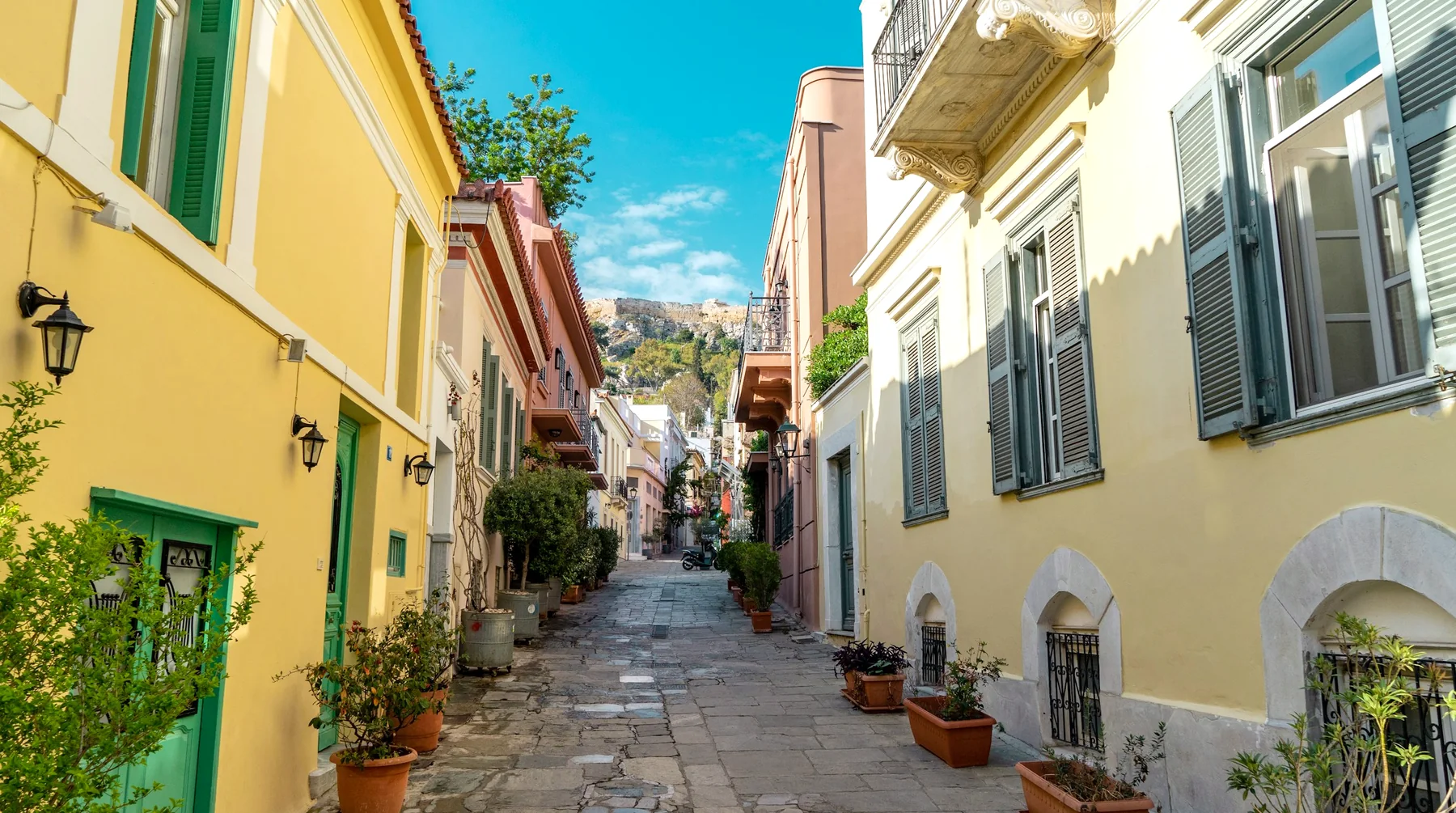 Greece · 11 NovGreece introduces a 10% tax on cryptocurrency gains from 2027
 Malaysia · 11 NovMalaysia reopens DE Rantau on 1 December: up to four years, but USD 36,000 for tech roles
Personal programme selection is conducted by Anna Kovalevskaya, Head of Legal, BRIDGES.
Property in several countries? Write to us and we will draw up a succession plan
We will determine the applicable law, prepare wills, calculate taxes and choose a foundation or trust.
