News · Saint Kitts and Nevis
Nevis Premier asks for five years to close citizenship programmes: a statement, not an EU decision
Updated: November 2026·11 min read·Expert reviewed
Terms and costs verified: November 2026
Contents
On 19 November 2026 Mark Brantley, Premier and Minister of Finance of Nevis, gave the keynote address at the 7th Annual Investment Migration Round Table in Grenada. He urged the five Eastern Caribbean countries that the EU wants to wind down their citizenship by investment programmes to negotiate together and to secure a transition of at least five years on a clearly agreed timetable. He called the EU deadline of 1 June 2028 unrealistic: on the day of the speech it was 547 days away. This is a political statement, not a decision. Neither the EU nor the federal government of Saint Kitts and Nevis has changed the deadline, and the Saint Kitts programme is still accepting applications.
Key points
- The Premier of Nevis wants the five OECS countries to speak with one voice: a joint transition of at least 5 years instead of the year and a half left before the EU deadline.
- In his view, the transition should come with European investment in renewable energy, skills, connectivity and productive enterprise.
- This is a negotiating proposal. The official EU deadline is still 1 June 2028.
- The Saint Kitts and Nevis programme remains open: filed applications are processed as usual, and new ones are accepted until a date the government will announce.
- If you want a passport with visa-free Schengen access, we recommend not waiting for the outcome of the talks and filing while the programme is open.
What Brantley said
The round table took place in Grenada under the theme "Define. Defend. Deliver." Brantley opened by saying that investment migration stands at a critical crossroads. He then followed the theme step by step: define the challenge honestly, defend the region's interests collectively and intelligently, and deliver a plan that replaces the lost revenue.
His main proposal is aimed at the five countries that received the EU request: Antigua and Barbuda, Dominica, Grenada, Saint Kitts and Nevis and Saint Lucia. Brantley believes they should negotiate with Brussels as a group rather than one by one, and seek a transition of at least five years locked into a clear timetable. He wants the transition backed by meaningful European investment in renewable energy, skills development, connectivity and productive enterprise.
The Premier also reminded the audience what the programme money pays for. Citizenship by investment revenue funds healthcare, education, housing, infrastructure and social programmes, and it keeps builders, hotels, lawyers, accountants and local businesses at work. For small island economies a rapid closure is not the loss of a single budget line but a blow to whole sectors.
Brantley is not asking anyone to fight the EU decision itself. He called on the region to accept reality, stop lamenting what cannot be recovered and use the transition to build new sources of income. The debate is about the timing and terms of the exit, not about keeping the programmes forever.
Why five years and not eighteen months
Brantley's argument is simple and practical. The EU originally gave the countries about two years. On the day of the round table, roughly eighteen months, or 547 days, were left before 1 June 2028. According to the Premier, some governments in the region cannot complete a single public procurement process in eighteen months, let alone rebuild a budget in which citizenship revenue is a large share.
How large, Brantley wrote back in the summer. In an op-ed on the Nevis Island Administration website on 7 July 2026 he gave his estimates of this revenue as a share of government income in recent years: up to 60-70% for Saint Kitts and Nevis, 40-60% for Dominica, 30-35% for Grenada and 15-25% for Saint Lucia. These are a politician's estimates, not official statistics, but the order of magnitude explains why the five countries are not ready to close within eighteen months.
The Premier did not say from which date the five years should run. Counted from November 2026, the transition would end around late 2031. That is close to Grenada's position: it intends to keep its programme until at least 2032, see our news on Grenada. Antigua and Barbuda is asking for less, the end of 2030, as covered in our news on the 2030 proposal.
What this means for you. Five years is a negotiating position, not a new deadline. Plan your application around the current EU date and the closing date for applications that the government will announce.
Where the five countries and the EU stand
The call for unity has a clear reason: for now, each country is discussing its own timeline with the EU. Below are the positions confirmed officially or by the governments themselves as of 24 November 2026.
| Who | Position on timing | When |
|---|---|---|
| European Commission | wind down the five programmes by 1 June 2028 | letter of 25.06.2026 |
| Saint Kitts and Nevis, federal government | the programme is being wound down on a schedule agreed with the EU | 13.11.2026 |
| Nevis, Premier Mark Brantley | a joint transition of at least 5 years for all five countries | 19.11.2026 |
| Antigua and Barbuda | close the programme by the end of 2030 | November 2026 |
| Grenada | keep the programme until at least 2032 | 17.11.2026 |
| Saint Lucia | written reply sent to the EU, content not disclosed | 09.11.2026 |
The spread is wide, from a wind-down on the EU schedule in Saint Kitts to 2032 in Grenada. The Saint Lucia government has promised to disclose its position once the EU confirms receipt, as we reported in our news on Saint Lucia's letter. Brantley's proposal is to merge these positions into one formula that the five countries take to Brussels together.
A single negotiating partner is easier for the EU than five different ones. For the countries it is a way to stop Brussels from dealing with each of them separately and on worse terms. Whether the EU will accept such an approach is unknown: the European Commission has not responded officially to the five-year formula.
Why Nevis is the one speaking
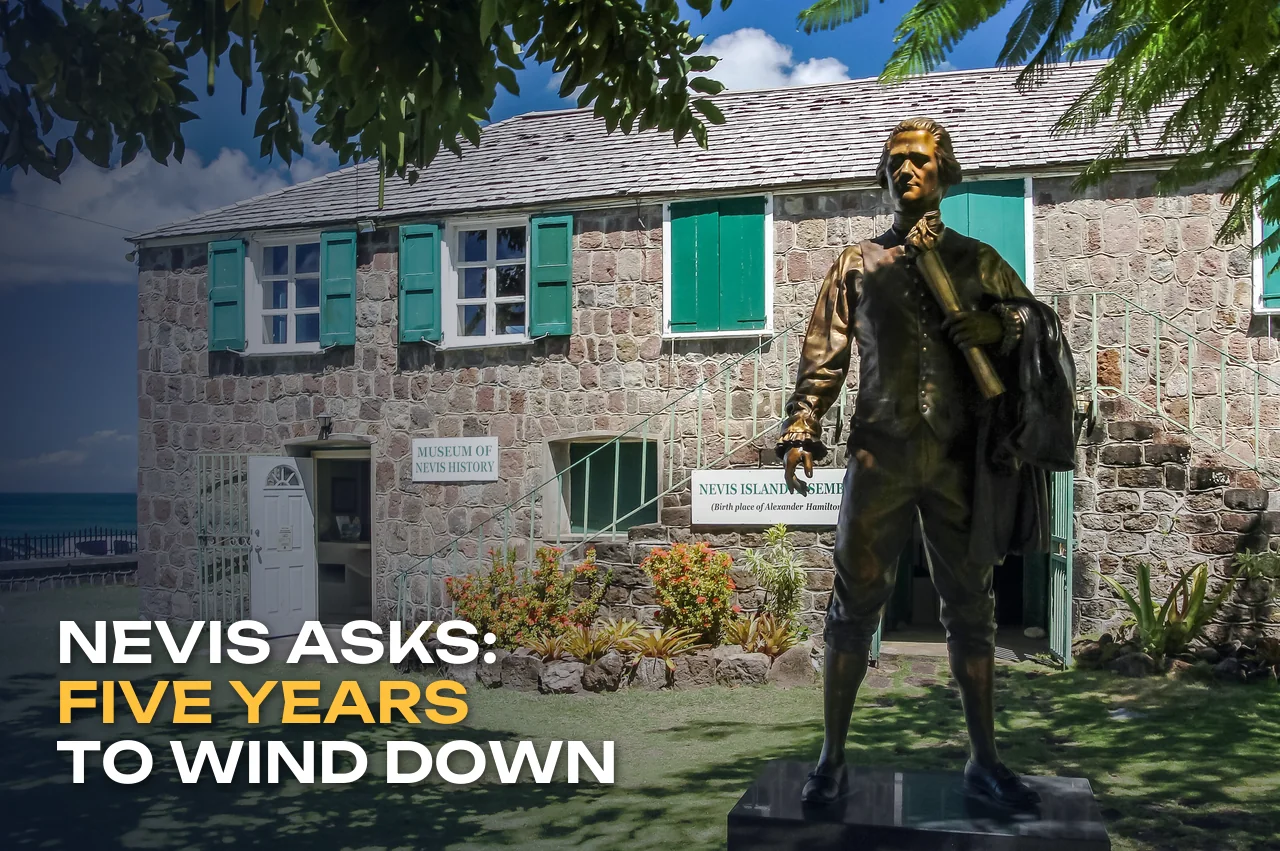
Saint Kitts and Nevis is a federation of two islands. The citizenship programme is run by the federal Citizenship by Investment Unit, while Nevis has its own administration, its own Premier and its own budget. Programme revenue is shared between the islands, and Nevis has long pressed for its "fair share": in September 2025 Brantley said the two sides were close to agreeing how to calculate it.
So for Nevis the wind-down is a question of its own budget. On 13 November 2026 Prime Minister Terrance Drew announced that the federation would wind down the programme on a schedule to be agreed with the EU. What this means for applicants and citizens is set out in our guide to filed applications and issued passports, and the impact on the wider market in our analysis of the Saint Kitts decision. Brantley's speech in Grenada does not challenge that decision; it adds the question of timing.
The next signal is the Nevis budget for 2027, to be presented on 8 December 2026. On 23 November the island administration said there would be no new taxes and no utility rate increases in 2027. The budget will show how the island plans programme revenue for the transition period.
A statement, not a decision
It is important to separate the levels. The request to wind down the programmes comes from the European Commission and rests on EU Regulation 2025/2441, which since 30 December 2025 allows visa-free travel to be suspended because of a citizenship by investment programme. How this mechanism works and which scenarios are possible is covered in our news on Caribbean visa-free travel and our analysis of EU pressure.
The talks with the EU are conducted by the governments of the five countries. Nevis is part of the federation, and its Premier speaks as a regional politician, not as a party to the negotiations with Brussels. So Brantley's call is a proposal to his colleagues that may become a common position or may remain an opinion. None of the five countries has publicly said it accepts the five-year formula.
Recent weeks show that deadlines in this story move fast and not always the way they are reported. In October there was talk of pausing the Antigua programme by 12 November, see our news on the possible pause, and in early November it turned out the EU had never officially set that date. That is why we rely only on official statements and say plainly what is a decision and what is a negotiating position.
What it means for applicants and citizens
For those who already hold Saint Kitts and Nevis citizenship, Brantley's call changes nothing. The federal government stresses that citizens by investment keep their status and rights, and the wind-down was chosen precisely to protect visa-free Schengen access for all the country's citizens. Where this passport opens doors is shown in the Saint Kitts and Nevis passport index.
Nothing changes for those who have filed either: applications are processed as usual. For those still choosing, what matters is the closing date for applications, which the federal government will announce once it reaches an agreement with the EU. If the five-year formula succeeds, the window widens. If not, it closes sooner. Building a plan on the longer timeline is a gamble.
- Already citizens. Status and passport remain, and passport renewals and family additions follow the current rules.
- Already filed. Processing continues as usual, so answer requests on time and complete biometrics.
- Still choosing. The same investment thresholds and checks apply. Filing now is the safest way to get in before the window closes.
- Schengen is the priority. A Caribbean passport gives visa-free access today. If that is your key goal, compare it with an EU residence permit.
Note also the new requirements for applicants themselves. Saint Kitts has introduced a physical presence requirement, explained in our news on the presence rule. Programme terms, thresholds and timelines are on the Saint Kitts and Nevis citizenship page.
Sofia MendesInvestment Programs Expert, BRIDGES
Want to secure a Saint Kitts or Grenada passport? We will file before the window closes
We will check your documents and source of funds, calculate the budget for the whole family and file while the programme is accepting applications.
Timeline of the dispute over deadlines
- 30.12.2025EU Regulation 2025/2441 takes effect: a citizenship programme becomes a ground to suspend visa-free travel
- 25.06.2026The European Commission asks five countries to wind down their programmes by 1 June 2028
- 07.07.2026Brantley publishes an op-ed urging the region to prepare for life without the programmes
- 13.11.2026Saint Kitts and Nevis announces a wind-down on a schedule to be agreed with the EU
- 17.11.2026Grenada tells the EU it will keep its programme until at least 2032
- 19.11.2026In Grenada, Brantley calls on the five countries to seek a transition of at least 5 years together
- 08.12.2026Nevis presents its 2027 budget
Brantley has been preparing the region for this conversation for some time. In March 2026 in Grenada he spoke about economic diversification, and in his July op-ed he described the end of the programmes as a reality to prepare for. What is new in the 19 November speech is a concrete number for the talks and a call for the five countries to present a united front.
As sectors to replace programme revenue, Brantley named renewable energy, agriculture, tourism, the creative industries and international education. He urged governments to move from lists of opportunities to financing plans, timelines and measurable targets, banks to lend to productive businesses, and the countries themselves to simplify procedures for investors.
One point concerns people who already hold citizenship. Brantley called for stronger ties with economic citizens and for offering them new investment, philanthropic projects and business partnerships. For Caribbean passport holders this is a good sign: the region sees them not only as a source of one-off contributions but as long-term partners.
If timing matters: the options
The talks on timing may drag on, while a client needs results on a clear schedule. So we look beyond a single passport. If the goal is a second citizenship with visa-free Schengen access today, Saint Kitts and Grenada remain workable options while they accept applications. Grenada's terms are on the Grenada citizenship page.
If speed and privacy matter most and European travel can be handled with a visa or a residence permit, Vanuatu fits. Why demand for this programme did not fall after visa-free access ended is covered in our analysis of Vanuatu, a comparison with Saint Kitts in Vanuatu vs Saint Kitts, and the terms on the Vanuatu programme page.
If Europe is the main goal, a status inside the EU is the safer choice. A residence permit by investment does not depend on the Caribbean talks with Brussels and gives the right to live in the country and travel across Schengen, for example the Greek Golden Visa. How a residence permit differs from a passport by investment is explained in our comparison of citizenship and golden visas. For the wider EU visa picture, see our news on the Commission's visa guidelines.
What to do now
Don't wait for the talks
The five-year transition is only a proposal. Work to the current EU deadline and the closing date for applications.
Gather documents early
Source of funds evidence and police certificates take the longest. Start with them.
Compare a passport and a residence permit
If Europe is your main goal, compare a Caribbean passport with EU residence in the residence catalogue.
BRIDGES supports clients with Caribbean and Vanuatu citizenship programmes and residence permits in EU countries. We are following the five countries' talks with Brussels and will update this news when an official response appears. You can discuss your situation at an online consultation.
Share this article
Still have questions? We'll answer for your case
Tell us what you want to solve, and an expert on the topic will contact you.


Frequently asked
Questions people ask before deciding
01Has the EU extended the Caribbean deadline to five years?
No. Five years is a proposal by Nevis Premier Mark Brantley of 19 November 2026. The official EU deadline is still 1 June 2028.
02Can I apply for Saint Kitts and Nevis citizenship now?
Yes. The programme is fully operational, and new applications are accepted until a date the federal government will announce.
03What happens to passports already issued?
Citizens by investment keep their status and rights. The wind-down was chosen to protect visa-free Schengen access for all the country's citizens.
04How does the Nevis position differ from Grenada and Antigua?
Brantley proposes a joint transition of at least 5 years for all five countries. Grenada speaks of keeping its programme until at least 2032, Antigua and Barbuda of closing by the end of 2030.
05What should I choose if long-term visa-free Europe matters?
A status inside the EU is safer, for example the Greek Golden Visa. A Caribbean passport gives visa-free access today, but its future depends on the talks with the EU.
About the author
Related materials
What to read next
 AnalysisSt Kitts chose visa-free travel over selling passports: what it changes for the Caribbean
 ArticleSt Kitts citizenship after the programme closes: submitted applications and issued passports
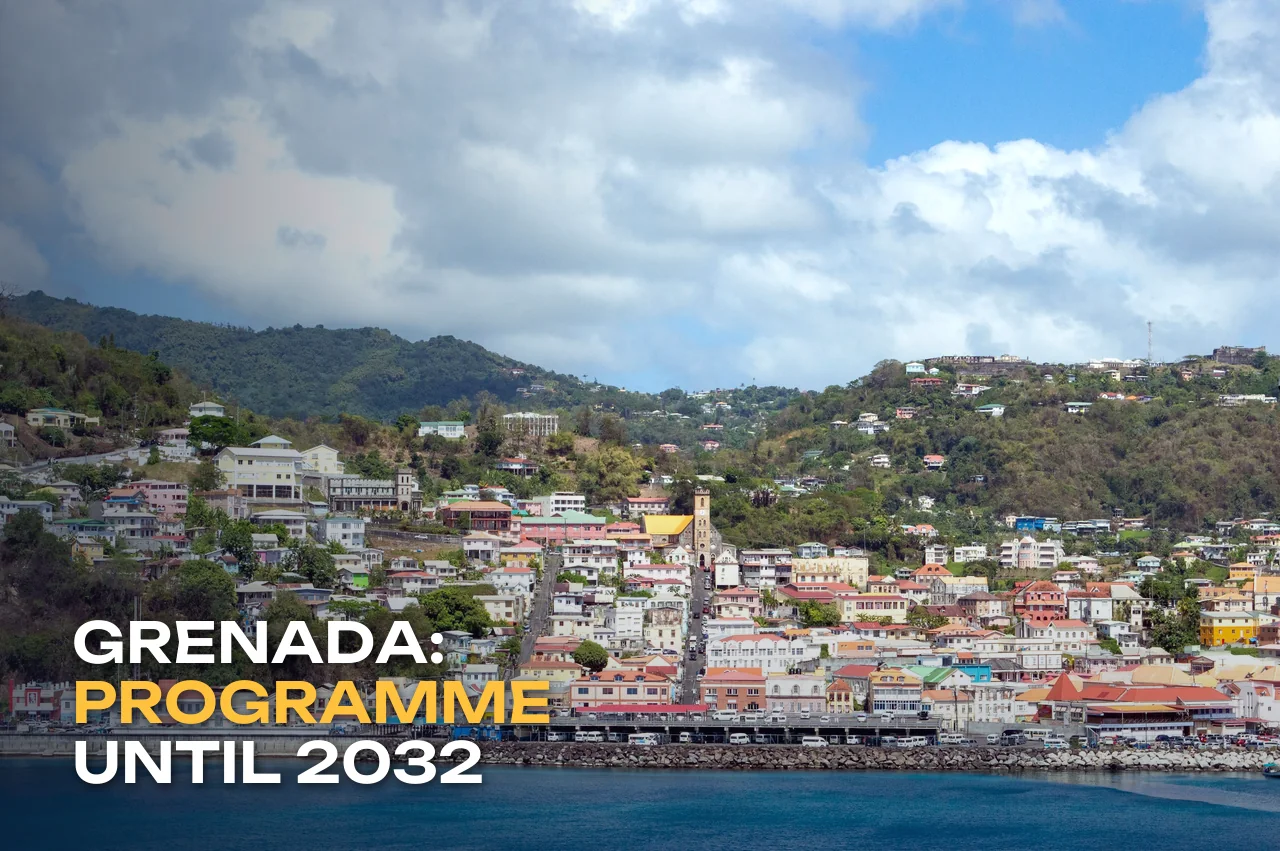 NewsGrenada to keep its citizenship programme until 2032: the EU deadline does not change that
News+10 stories on 24 November
Related news
 Saint Kitts and Nevis · 25 OctSaint Kitts and Nevis: citizenship for children and grandchildren of citizens born abroad after 1983
 Saint Kitts and Nevis · 21 OctSt Kitts residency requirement: what is announced, what is in force and how to plan a trip to the island
 Saint Kitts and Nevis · 11 OctSaint Kitts and Nevis passport biometrics: who, where, cost and the 31 July 2027 deadline
Personal programme selection is conducted by Anna Kovalevskaya, Head of Legal, BRIDGES.
The window for Caribbean passports is narrowing. We will file while the programmes are open
We will compare Saint Kitts, Grenada and Vanuatu, check your documents and calculate the budget for the whole family.