Asset protection · International
Asset protection in 2026: what is lawful, what is not and where a family should start
Updated: November 2026·12 min read·Expert reviewed
Terms and costs verified: November 2026

Contents
Asset protection is not about secret accounts or nominee directors. It is an arrangement under which a family knows in advance what will happen to its business, money and property in a divorce, a dispute with a creditor, the owner's illness or a change in the political climate. Lawful protection is built before a problem arises and withstands scrutiny by a court, a bank and the tax authority. Below is where the line between lawful and unlawful runs, which instruments work and where to start.
Key points
- Protection is built in advance. A transaction made after a debt has arisen can be set aside by a court, and in Russia moving assets out during bankruptcy carries criminal liability.
- The main instruments are a marital agreement, a will and an inheritance contract, a personal fund, a trust, a private foundation, a holding company, life insurance and spreading capital across several banks and countries.
- A structure does not hide assets from the tax authority. Russian tax residents report foreign companies, accounts and trusts, and banks exchange data under the CRS.
- A structure does not protect against sanctions: an EU freeze covers assets a person controls, not only those owned directly.
- The order of work: an inventory of assets, family goals, tax residence, choice of instrument, documents and regular review.
What asset protection really is
Lawyers use asset protection to mean a set of lawful decisions that reduce the risk of losing property through circumstances unrelated to the owner's intent. These are business risks, family disputes, succession, the owner's illness or death, and country risks: a bank freeze, changes to currency rules, political instability. The aim is not to put property beyond everyone's reach, but to have it where it is expected and managed under rules the owner chose.
A good structure answers three questions. Who owns the property legally? Who makes decisions? Who receives the income, and what happens after the owner's death or incapacity? If there is no written answer, at a difficult moment the property will be dealt with by default law, a court or a bank. That is why asset protection almost always starts with family and succession planning, not with picking an offshore jurisdiction.
It also matters what protection does not do. It does not exempt anyone from tax, does not cancel the duty to disclose accounts and companies, and does not help escape debts that already exist. Using a structure for that almost always ends with the transaction being reversed and the owner facing additional claims.
Where the line between lawful and unlawful runs
The main test is timing and purpose. If property is transferred when there are no debts and none are foreseeable, for a clear business or family purpose and on market terms, that is lawful planning. If property leaves after a creditor has made a claim, for a token price or to a connected person, a court is very likely to see an attempt to avoid the debt.
| Lawful | Unlawful or ineffective |
|---|---|
| Splitting property between spouses by a marital agreement in advance, while there are no debts | Transferring property to a relative after a creditor has already made a claim |
| Transferring capital to a foundation or trust on arm's length terms and for a clear purpose | Setting up a structure in which the founder still controls all the property himself |
| Opening accounts in several banks and countries and declaring them | Hiding accounts from the tax authority and not filing notifications |
| Insuring life, liability and property | Selling property for a token price to a connected person |
| Obtaining a residence permit or second passport and arranging tax residence | Trying to use a structure to move assets out of reach of sanctions |
Russian law has long-established tools to reverse such transactions. Sham and disguised transactions are void under Article 170 of the Civil Code, and abuse of right removes protection under Article 10. In bankruptcy, Article 61.2 of the Bankruptcy Law applies: a transaction with unequal consideration can be challenged if made within one year before the bankruptcy petition was accepted or after it, and a transaction made to harm creditors within three years. For individuals these rules are supplemented by Article 213.32 of the same law.
There is also criminal liability: Article 177 of the Russian Criminal Code for malicious evasion of large debts, and Articles 195-197 for unlawful actions in bankruptcy, deliberate and fictitious bankruptcy. Abroad the approach is similar. In England, section 423 of the Insolvency Act 1986 allows a court to set aside a transaction made to put assets beyond the reach of creditors, and the statute sets no look-back period for such a transaction. Details on timing and criteria are in our article on creditor protection and clawback.
What risks people actually protect against
When we review a family's situation, the risks usually fall into five groups. It is important to name them up front: the choice of instrument depends on it.
- Business risks. Personal guarantees on loans, subsidiary liability of a director or controlling person, claims by partners. The solution is to separate the operating business from ownership and from family capital.
- Family disputes. Division of property on divorce, disputes with children from different marriages. The solution is a marital agreement and clear succession rules.
- Succession. Splitting of the business among heirs, lengthy probate in several countries, taxes. The solution is a will, a personal or inheritance fund, a trust, life insurance.
- Owner's incapacity. If the owner is ill, nobody can make decisions and accounts get blocked. The solution is powers of attorney, foundation bodies, a trust protector.
- Country and banking risks. Account freezes, currency restrictions, sanctions against a bank. The solution is spreading capital across several banks and jurisdictions, a second passport or residence permit.
Most families face several risks at once. A business owner with loan guarantees, a second marriage and children studying abroad needs separation of the business, a marital agreement and a will that takes the law of several countries into account. So it is worth starting with the full picture rather than with a single instrument someone recommended.

Protection instruments and their limits
No instrument solves every problem. A working arrangement usually combines two or three: for example, a marital agreement, a will and a foundation for the family business, plus accounts in two countries. The table shows what each instrument offers and where its limits lie.
| Instrument | What it protects against | Limits |
|---|---|---|
| Marital agreement | Divorce disputes, enforcement for one spouse's debts | Does not bind creditors who were not informed |
| Will, inheritance contract | Disputes among heirs, splitting of the business | Forced heirship shares under law |
| Russian personal fund | Break-up of the business after death, inexperienced heirs | From RUB 100m if created in lifetime; liable for founder's debts for 3 years |
| Trust or private foundation abroad | Succession, management, part of creditor risk | Settlor's taxes and reporting, challenge when debts exist |
| Holding company | Separating a risky business from the owner | CFC rules and real substance |
| Life insurance | Succession outside the general estate, part of the risks | Depends on the law of the policy country and of residence |
| Accounts in several countries | Freezing at one bank, country risk | Notifications and reports for Russian tax residents |
Compiled from the Russian Civil Code (Art. 123.20-4, 1118, 1140.1, 1149), the Russian Tax Code (Art. 25.13-25.15) and our practice.
Of the foreign instruments, the most common choices are a trust and a private foundation. The trust comes from English law: property is transferred to a trustee who manages it for the beneficiaries. A private foundation is a legal entity without members that owns the property itself; this is how foundations in Liechtenstein, Panama, Malta and the UAE work. How they differ and which to choose is covered in private foundation or trust, and a country comparison in our review of jurisdictions for a private foundation.
A holding company separates the business from the owner and from family capital. But for a Russian tax resident it almost always becomes a controlled foreign company: it must be reported, and its profit may be taxed in Russia. How to choose a country for a holding company is discussed using the examples of the UAE and Malta.
A structure does not hide assets from the tax authority
The most common misconception is that a foreign trust or foundation makes property invisible. That has not been true for more than a decade. Banks and managers in more than a hundred countries exchange account information under the CRS standard, most countries keep beneficial ownership registers, and the bank itself checks the source of funds and the ultimate owner when opening an account.
Russian tax residents have their own obligations. They must notify the tax authority of participation in foreign companies and of CFCs, including trusts and foundations treated as foreign structures without legal personality. The fine for not filing a CFC notification is RUB 500,000 per company. Separately, residents notify the authority of opening foreign accounts and report account movements every year. A detailed review is in our article on CFCs, trusts and notifications.
That is why any structure is designed together with tax coordination: where the owner will be tax resident, where the company or foundation will be resident, how payments to the family are taxed. If the owner is relocating, the exit tax in the country being left must be checked in advance.
What the bank will check before accepting a structure
A structure without an account is useless, and the bank is the strictest reviewer. When opening an account for a foundation, trust or holding company, the bank establishes who the ultimate beneficial owner is, who the founder and protector are, where the assets came from and why the structure is needed. It asks for evidence of the source of wealth: a business sale, dividends, salary, inheritance, property transactions. The longer the ownership chain, the more questions there are.
Hence a practical rule: a structure should be as simple as the task allows. Each extra layer of companies adds cost, review time and the risk of refusal. We prepare a source of funds file for the bank in advance, together with a one- or two-page description of the structure's purpose. This saves weeks of correspondence and reduces the chance of the account being closed after the first large transaction.
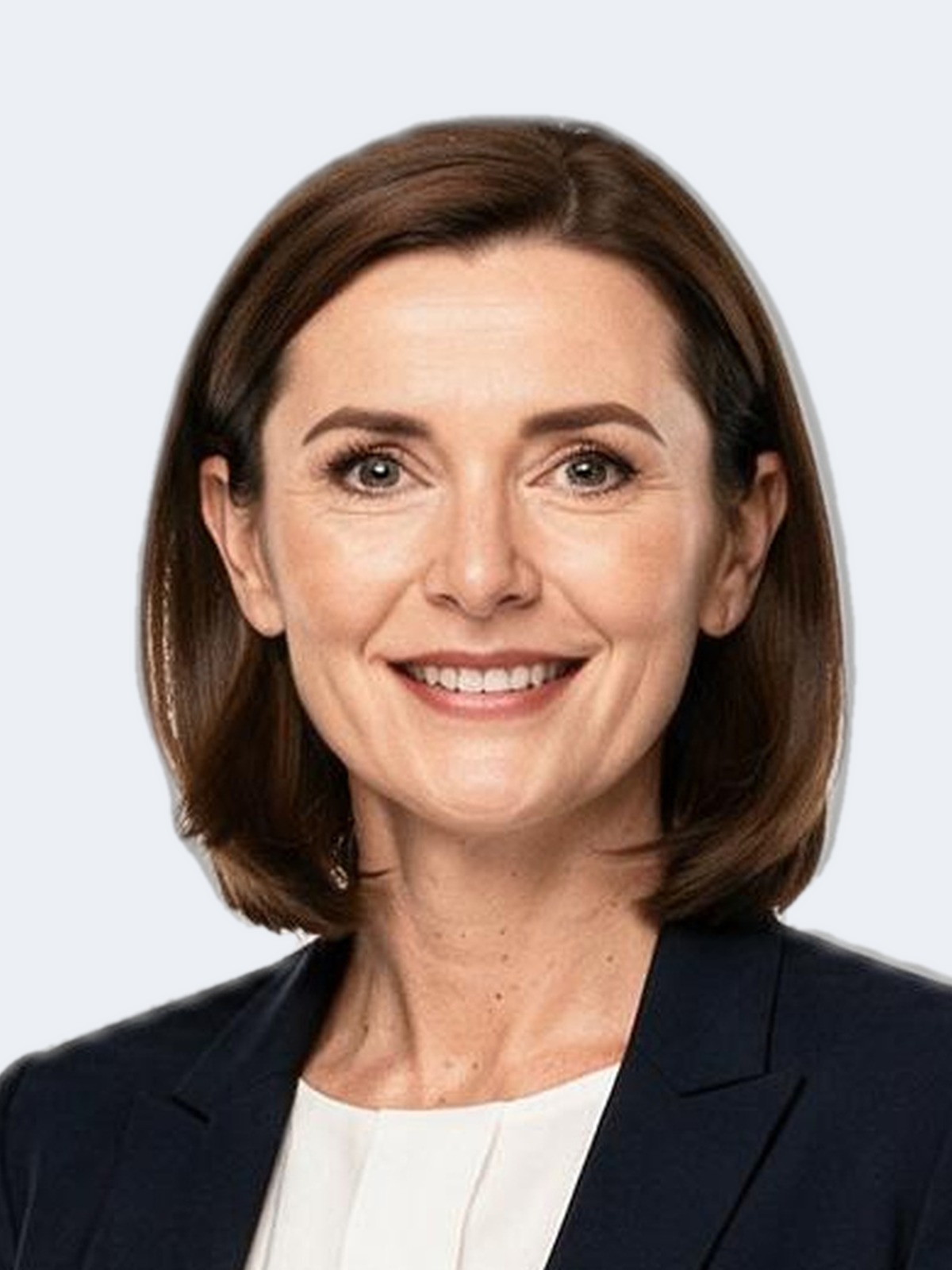
Anna KovalevskayaHead of Legal, BRIDGES
Want to understand the risks to your capital? We will review your situation
We will draw up an inventory of assets, name the risks and propose two or three lawful solutions for your family.
Sanctions: what a structure cannot do
Sanctions need a separate word. EU Regulation No 269/2014 freezes funds and economic resources belonging to, owned, held or controlled by a listed person. The key word is control. If a person in fact disposes of property through a foundation, trust or nominee, the property is still caught by the freeze, and those involved in the arrangement risk liability for sanctions circumvention.
Lawful work with sanctions risk looks different: screening counterparties and banks against sanctions lists, a clear origin of funds, choosing banks and countries willing to serve a client with your passport and residence. We carry out such a sanctions check before accounts are opened, not after a freeze.
Where to start: the order of work
Inventory of assets
List the business and shares, real estate, accounts, securities, crypto assets, rights and obligations, including guarantees. Note in whose name each asset is held and in which country.
Goals and risks
Decide what matters more: passing the business to children, protection from business risks, relocation, a separate property regime with a spouse. The instrument depends on the goal.
Tax residence
Decide where you will be tax resident in the coming years. This determines which notifications and taxes the structure will trigger.
Instrument and country
Compare a marital agreement, a will, a foundation, a trust, insurance and spreading across banks. For a foreign structure, choose the country by its law, taxes and banks.
Documents and banks
Prepare evidence of the source of funds, constitutional documents and agreements. The bank must understand where the money comes from and why the structure exists.
Regular review
Once a year and after major events, such as marriage, divorce, the birth of children, relocation or the sale of a business, check that the structure still works.
Common mistakes
- Starting when the problem already exists. Transferring property after a creditor's claim is the main ground for a challenge.
- Keeping full control. If the founder of a trust or foundation still disposes of everything, a court and the tax authority will treat the property as his own.
- Choosing a country because it is "offshore". The quality of law, courts, banks and attitude to your passport matter more.
- Forgetting taxes and notifications. Fines and additional assessments often cost more than the structure itself.
- Not telling the family. Heirs who do not know about a foundation or trust lose time and money searching for assets.
- Not updating documents. Marriage, divorce and relocation change the applicable law and taxes.
If debts have already arisen
If creditors have already made claims or bankruptcy is likely, it is too late to plan asset protection in the usual sense. Any transfer of property in this period will be examined by a court, and for an insolvency administrator it is the first thing to look for. The right path in this situation is negotiation with creditors, debt restructuring and, if necessary, bankruptcy under the law, keeping what the law leaves to the debtor.
That does not mean nothing can be done. It is possible, and necessary, to put documents in order, evidence the origin of funds and separate personal and business accounts. But decisions that change the owner of property in this period require a separate legal assessment.
What this means for you. Asset protection works when it is built calmly and in advance: inventory, goals, taxes, instrument, documents. It is worth starting with a conversation about your family, not with choosing an offshore jurisdiction. We will help draw up such a plan, select the instruments and prepare documents for the banks.
You can start with an online consultation. If you are considering relocation, see our reviews of residence programmes and citizenship, and on inheritance tax with two passports, our article on inheritance tax. Terms are explained in the glossary: trust, foundation, beneficial owner.
Share this article
Still have questions? We'll answer for your case
Tell us what you want to solve, and an expert on the topic will contact you.
Frequently asked
Questions people ask before deciding
01What is asset protection in simple terms?
A set of lawful decisions that determine in advance who owns property, who manages it and what happens to it in a divorce, a dispute, illness or the owner's death.
02Can property be protected if debts already exist?
Transferring property after debts have arisen is almost always challenged. In that situation you need negotiations with creditors or a process under bankruptcy law, not a new structure.
03Does a trust or foundation hide property from the tax authority?
No. Banks exchange data under the CRS, and Russian tax residents must report CFCs, trusts and foreign accounts.
04Does a structure protect against sanctions?
No. An EU freeze covers property a person controls, including through a foundation, trust or nominee.
05Which instrument should I start with?
Usually a marital agreement and a will, then a decision on a foundation, trust or holding company, and spreading accounts across several banks.
06How much does a Russian personal fund require?
In the founder's lifetime, property with a market value of at least RUB 100 million must be transferred to the fund. No such threshold applies to an inheritance fund.
About the author
Related materials
What to read next
 ArticleThe trust: how it works, who owns the property and when it really protects
 ArticleCreditor protection: when a court sets aside a transfer of property
 ArticlePrivate foundation or trust: which suits a family with capital
News+3 stories on 11 November
Related news
 Saint Lucia · 11 NovSaint Lucia replies to the EU on its citizenship programme: letter withheld, programme open
 Greece · 11 NovGreece introduces a 10% tax on cryptocurrency gains from 2027
 Malaysia · 11 NovMalaysia reopens DE Rantau on 1 December: up to four years, but USD 36,000 for tech roles
Want to protect your family's capital lawfully? Write to us and we will draw up a plan
We will review assets and risks, choose a marital agreement, foundation, trust or accounts in several countries and prepare documents.