






Updated

ST-CIP

Citizenship by investment

Citizenship of São Tomé andPríncipe by investment

The most affordable entry into citizenship by investment. A passport for the whole family, filed at a distance — with no move, no exams and no trips to the country.

  • Filing through a licensed agent of the programme
  • Working since 2004
  • The legal basis — Decree-Law 07/2025
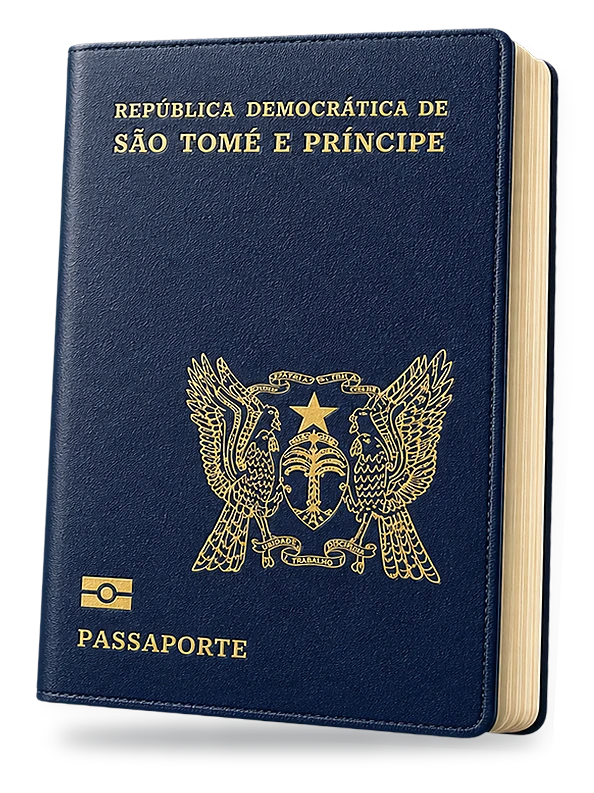
The passport of a citizen of the Democratic Republic of São Tomé and Príncipe
$90,000Fund contribution from
2-3 monthsA decision on the application
No moveResidence is not required

01 / About the program

How the São Tomé and Príncipe programme works

São Tomé and Príncipe grants citizenship for a non-refundable contribution to the National Transformation Fund. The programme was established by Decree-Law 07/2025, published in the official gazette Diário da República on 1 August 2025 and in force from the day of publication. It is the lowest entry threshold among the state citizenship by investment programmes in operation.

01

A state programme under a decree-law

The basis is Decree-Law No. 07/2025 implementing the Nationality Act, Lei No. 7/2022. Applications are received by a state body — the Unidade de Cidadania por Investimento e Doação (UCID) — under the supervision of the Minister of Justice. The contributions go to the National Transformation Fund, which has a separate account, a mandatory annual audit and oversight by the Court of Auditors and the Central Bank.

02

One contribution, a clear amount

A single applicant pays $90,000. A composition of two to four people is a single $95,000, so a family of four costs the same on the contribution as a couple. Each person from the fifth adds $5,000. The filing and due diligence fee is $5,000 per application, and official documents cost $750 per person.

03

Filing with no move and no residence

The application is filed electronically through the UCID platform. The Nationality Act expressly allows an investor to be exempted from the general conditions — five years of residence in the country and knowledge of Portuguese. The oath is taken before an official in São Tomé or before a consular officer of the country abroad.

04

The programme is young — and that has to be taken into account

Applications opened in September 2025 and the first passport was issued in January 2026. There is little practice yet, the issue of documents takes longer, and a group of lawyers and the opposition are challenging the decree-law in court — there is no decision on their application and the programme continues to operate. We say this before the contract, not after.

02 / What you get

What the São Tomé and Príncipe passport gives you

The lowest threshold on the market

A contribution from $90,000 against $200,000-250,000 for the Caribbean programmes and $130,000 for Vanuatu. For a family the gap is wider still: the contribution for a composition of up to four is a single amount.

Residence is not required

You do not have to live in the country either before filing or after citizenship is granted. The application is filed electronically and documents are accepted in Portuguese or English.

Dual citizenship is permitted

The Nationality Act preserves the status of anyone who acquires another citizenship. You do not have to give up your current passport. There is one limit: at the time of filing the applicant may not hold more than two foreign citizenships.

Citizenship for the whole family

One application covers a spouse or de facto partner, children up to 30 and parents and grandparents aged 55 and over. Citizenship is open-ended and passes to children born after it is granted.

Exemption from military service

The decree-law expressly gives naturalised citizens a permanent exemption from compulsory military service, including under a state of emergency.

Portuguese residence under the CPLP agreement

The country is a member of the Community of Portuguese Language Countries, and its citizens have a separate residence permit in Portugal under the CPLP Mobility Agreement: no investment is required and the state fee for the residence card is 15 euro. Naturalisation for CPLP citizens comes after 7 years of residence instead of 10.

A preliminary assessment

Calculate the cost for your family

Set out who is applying with you — the cost on the page recalculates at once. With the calculation you get the São Tomé and Príncipe budget for your composition, the timeline by stage and a plan of action.

Who is applying for citizenship?

Get the calculation

about a minuteno calls and no obligationsconfidential

  • The contribution and the fees for your family
  • The timeline for each stage of the process
  • A plan of action: where to start
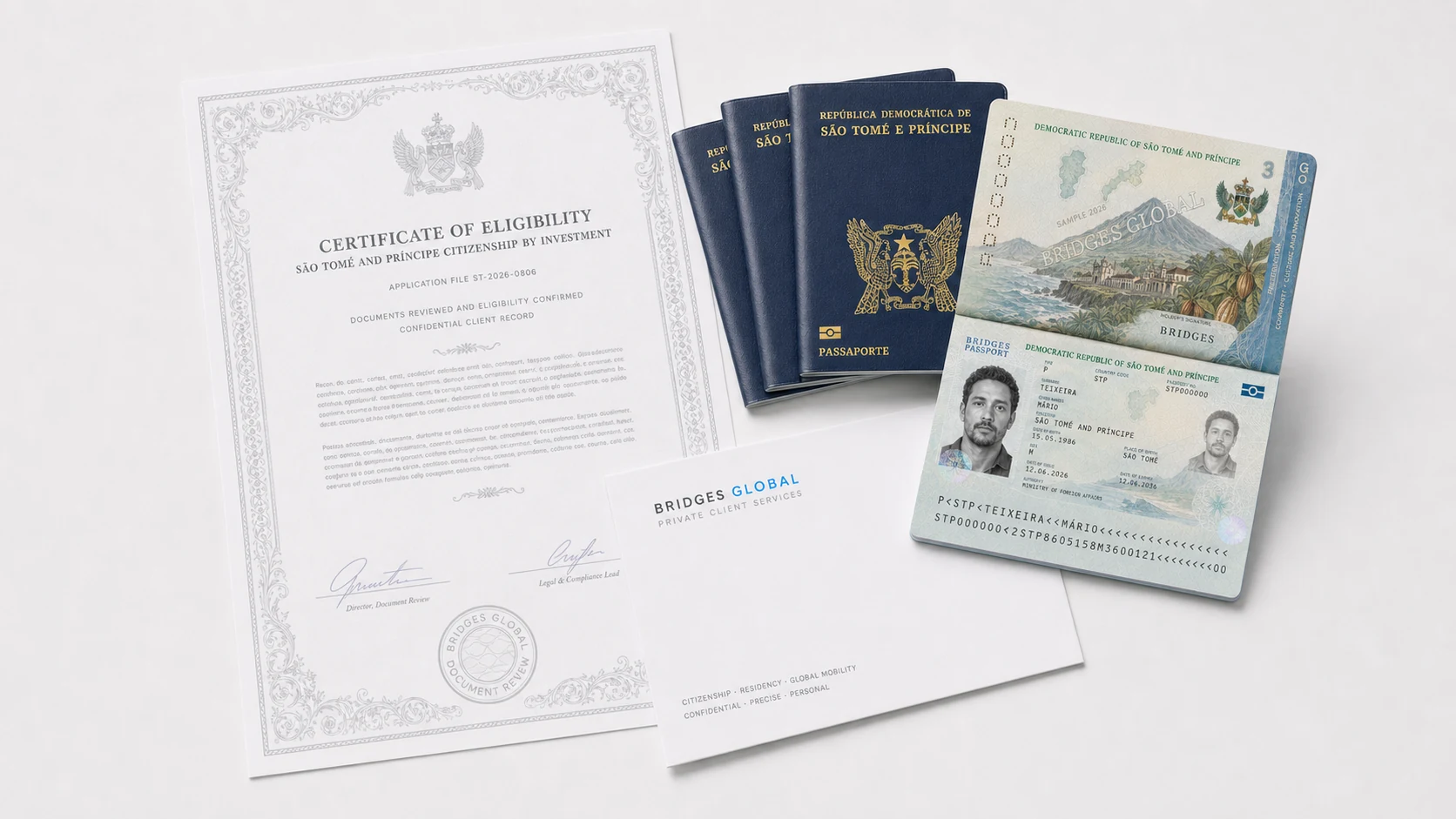
The set of documents for the São Tomé and Príncipe citizenship programme

03 / Why people apply

Why people obtain the São Tomé and Príncipe passport

This passport is not taken for travel — on mobility it is behind both the Caribbean and Vanuatu. It is taken as the most affordable way to obtain a second lawful citizenship and to use it for tasks where the fact of a second document matters, not visa-free entry to Europe.

When the budget is limited

The state costs for a single applicant are $95,750. That is around half the price of Vanuatu and a third of Saint Kitts. If the task is to obtain a second citizenship at all, this is the shortest route in money terms.

A family at the price of a couple

The contribution is the same for a composition of two to four people. A couple adding two children pays extra only for the documents — $750 per person. For a three-generation family the difference against the Caribbean programmes runs into hundreds of thousands.

Two ways into Portugal instead of one

With this passport two different paths lead to Portugal. The first is residence under the CPLP agreement: no investment is needed, but a CPLP consular visa and a ground for living in the country — work, study or family reunification. The second is investment residence in Portugal or Greece: the terms there are the same for every third country and a CPLP passport gives no discount. We handle the Greek residence ourselves — one team runs both stages.

Bank accounts and capital

A second passport widens the list of banks and jurisdictions willing to consider you. It does not remove the checks and does not hide the first citizenship: every citizenship is disclosed to the bank. But the choice becomes wider.

A plan B for the family

Insurance for when a single document stops working. The decision is taken once, the citizenship is open-ended and passes to children by descent.

Africa and the Portuguese-speaking world

Membership of the African Union and of the CPLP, and business ties with Angola, Mozambique, Cape Verde and Portugal. For a business tied to Portuguese-speaking markets the status reads differently from a visitor visa.

04 / Decree 07/2025

Who the nationality law allows

Who files the application themselves and who can be included in the same application. Open a row — the conditions for that category are there.

  • Over 18
  • No more than two foreign citizenships at the time of filing
  • No conviction carrying more than one year’s imprisonment
  • A confirmed lawful source of funds
  • A registered marriage or a de facto union
  • Included in the same application as the main applicant
  • Included together with the parents
  • Where custody is shared, a court or administrative document is required
  • Unmarried and financially dependent on the applicant
  • They go through due diligence on the same basis as adults
  • The parents of the main applicant and the parents of the spouse
  • Included where financial dependency is confirmed

05 / Cost

What citizenship of São Tomé and Príncipe costs

One state programme — a contribution to the National Transformation Fund. The contribution is shown large, and below it the all-in total together with the fees and the documents. Both figures are recalculated for the composition you set above.

The Transformation Fund · non-refundable

from$90,000

Contribution · 1 person in the application

All-in with fees from $95,750

The contribution is the same for a composition of two to four people — $95,000. Each person from the fifth adds $5,000 to the contribution and $750 for documents. The contribution is non-refundable. The filing fee is paid before the screening begins and is not returned whatever the decision.

What it includes

Contribution to the National Transformation Fund
$90,000
Filing and due diligence fee (per application)
$5,000
Documents: passport, certificate and national ID
$750
Total all-in
from $95,750
Send me this quote WhatsApp Telegram PDF
The main applicant
1
Spouse
0
Children under 18
0
Children aged 18 to 30
0
Parents and grandparents aged 55 and over
0

A preliminary calculation based on the rates in Annex I of Decree-Law 07/2025. It is not a decision of a state authority: the outcome depends on citizenship, the source of funds and the result of the screening. The BRIDGES fee, bank charges, translations, notarial certification and apostilles are not included.

06 / Comparison

São Tomé and Príncipe against the alternatives

The programme wins on money and loses on mobility. If visa-free Europe is the priority, look at the Caribbean; if the price of a second citizenship is the priority, there is no alternative to São Tomé today. The gap is widest for a family: here a composition of up to four costs a single $95,000. The full comparison of every programme sits on its own page.

São Tomé and PríncipeVanuatuDominicaSaint Kitts and NevisAntigua and Barbuda
Contribution from$90,000$130,000$200,000$250,000$230,000
Processing time2-3 months to approval30-60 daysfrom 6 monthsfrom 4 monthsfrom 6 months
Schengen visa-freeNoNoYesYesYes
The programme has run since20252017199319842013

The amounts are the minimum contribution thresholds, excluding fees and documents. The timelines come from the practice of the programmes as at the date this page was updated. For São Tomé and Príncipe the time to a decision on the application is given: issuing the documents takes around four months more.

Full program comparison →

09 / How it works

How the São Tomé and Príncipe citizenship process works

STEP 1

The consultation and the preliminary check

We go through the task, the citizenship and the applicant’s biography. We check the limit on the number of citizenships and the family composition. If visa-free Schengen is the priority, we say so at once and propose a different programme.

STEP 2

Preparing the documents

We assemble the file: police clearance certificates from the countries of citizenship and residence for the last five years, a medical certificate and proof of the origin of funds. We arrange translations into Portuguese or English, notarial certification and Hague Convention apostilles.

STEP 3

Filing through a licensed agent

Only an agent licensed by the Minister of Justice may promote the programme and file applications. The application goes to the UCID electronic platform, and a $5,000 fee is paid on filing. The preliminary review takes 15 days, and at that stage the authority may request further information.

STEP 4

Due diligence and the prosecutor’s clearance

The screening is carried out by independent accredited companies — on the applicant and on every adult family member. An interview is possible, including by video. The completed file goes to the prosecutor’s office for preliminary clearance, and compliance with AML/CFT standards is overseen by the Screening Committee.

STEP 5

Approval and the fund contribution

After the prosecutor’s clearance the director of UCID takes a decision within 15 days. Confirmation of approval is issued once the contribution to the National Transformation Fund has been made — 90 days are allowed for payment, and if the deadline is missed the case is closed.

STEP 6

The oath, registration and the documents

The oath of allegiance to the Constitution is taken before an official in São Tomé or at a consular post of the country abroad. Within 5 days the file goes to the Central Registry Office. Issuing the passport, the certificate and the national ID takes around four months more.

10 / Travel

Where you can travel and where a visa is needed

The main point first: this passport does not give visa-free entry to the Schengen area, the United Kingdom or the United States. Destinations fall into four entry regimes. We do not publish a total number of visa-free countries: the lists change and the estimates of analytical services differ by a factor of two. Below the cards the full list of destinations opens — with the entry regime and the length of stay for each.

Mode 01

Visa-free

Entry on the passport with nothing arranged in advance. Most such destinations are in Africa, with individual states in Asia, the Caribbean and the Portuguese-speaking world.

Mode 02

Electronic authorisation

Entry is possible after an eVisa or electronic authorisation is arranged online — usually a few days before the trip.

Mode 03

Visa on arrival

The permit is issued at the airport or at the border. The receiving country sets the requirements for passport validity and supporting documents.

Mode 04

Visa required in advance

The European Union and the Schengen area, the United Kingdom, the United States, Canada, Australia and Japan — the visa is obtained before the trip. If free entry to Europe is the priority, this programme does not solve that task: then we propose the Caribbean programmes or a combination with Greek residence.

All countries on a São Tomé and Príncipe passport

50+ destinations with nothing to arrange in advance — visa-free or with a visa on arrival

Where you are admitted without a visa, where the permit is arranged online, where the visa is issued at the border and where a consular visa is needed — with the length of stay given for each country.

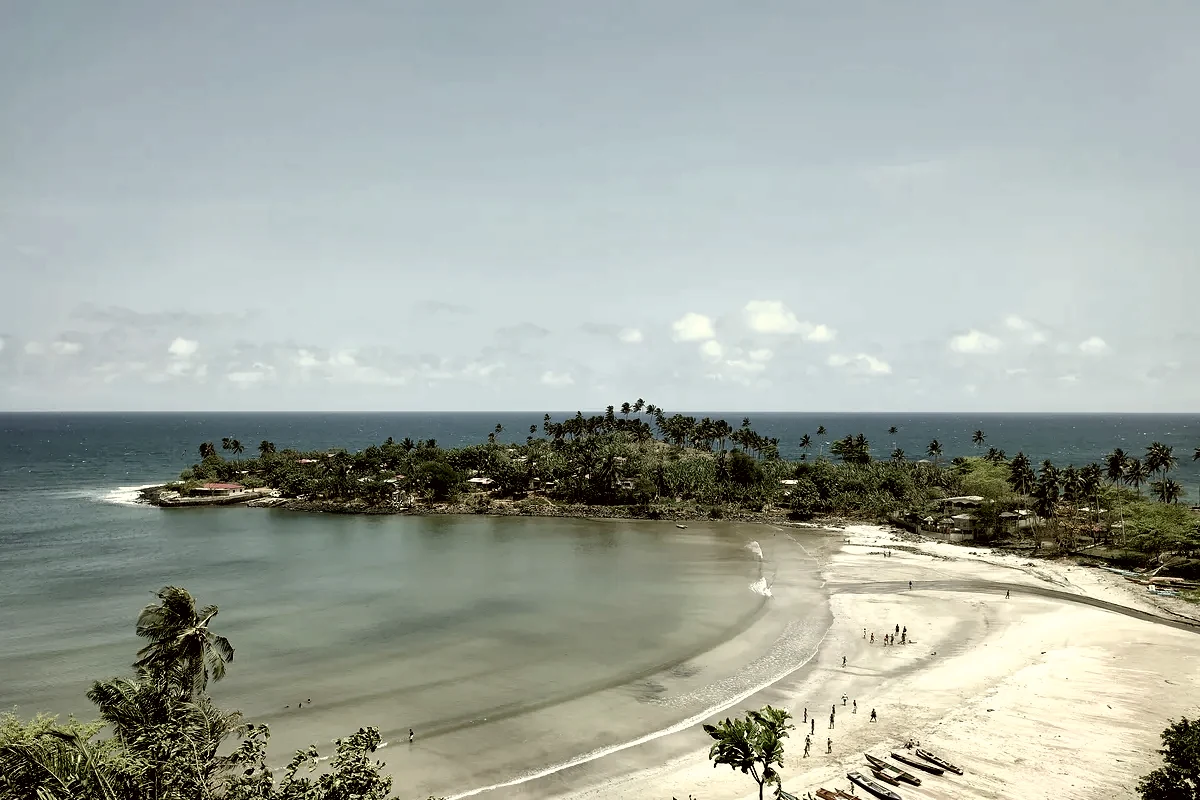
São Tomé and Príncipe, the Gulf of Guinea

The programme was established by Decree-Law 07/2025 and has run since August 2025. The first passport was issued in January 2026.

The Democratic Republic of São Tomé and PríncipeWest AfricaA programme since 2025
Calculate the cost

11 / Our role

Why people obtain São Tomé citizenship with us

We have worked since 2004. In that time more than 8,000 families have come through us. São Tomé and Príncipe is a young programme, and with it who runs the application and which sources they rely on matters especially.

01

Working only through a licensed agent

Promoting the programme without a licence from the Minister of Justice carries a fine of up to $500,000 under the decree-law itself. We file applications through a licensed agent of the programme — that is not an option but the only lawful way.

02

We check against the primary sources

Every amount and rule on this page is checked against the text of Decree-Law 07/2025 in the official gazette and the Nationality Act 7/2022, not against intermediaries’ material. The date of the last check is at the top of the page.

03

A straight assessment before the start

Before the work begins we run a preliminary check: the number of citizenships, convictions, the source of funds, the right to include particular relatives. If we see a material risk of refusal, we say so plainly and propose an alternative.

04

The full cycle, including life after the passport

Replacing the passport after 7 years, opening an account, registering a company, adding family members, investment residence in Europe. We stay with the client after the documents are issued.

12 / Team

Who runs the São Tomé citizenship process

A São Tomé and Príncipe application is run not by a “sales manager” but by a permanent team: the programme lawyer, a compliance specialist and a family coordinator. You know them all by name from day one.

15 / Materials

Useful materials on São Tomé and Príncipe

Materials on São Tomé and Príncipe: the conditions of the programme, the amounts and how filing at a distance works.

The main materialPresentation

São Tomé and Príncipe citizenship by investment

The presentation gathers the essentials of the programme: the conditions, the amounts, the family, the documents and how the work is done.

Inside:

  • who can take part in the programme
  • which investment options are available
  • what it costs for your family composition
  • which relatives are included in the application
  • which documents will be needed
  • how due diligence works
  • how work with BRIDGES is organised

PDF · free · current as of August 2026

A short check: who passes the screening, what the citizenship restrictions are and what due diligence looks at.

The list of documents for the applicant and each family member, marking what has to be translated, certified and apostilled.

We calculate the full budget for your composition: the contribution, the state fees, due diligence and our support.

All the materials are updated regularly by our team and are used when supporting BRIDGES clients.

16 / News

What has changed in the São Tomé programme

17 February 2026

According to the programme, 98 applications have been filed since it opened, 27 of them approved and 71 under consideration. The average processing time is around 2.5 months.

January 2026

The first passport under the citizenship by investment programme was issued — confirmation that the procedure has been carried through to the end in practice.

21 October 2025

The opposition and a group of lawyers, including the president of the bar association and a former attorney general, filed an application to suspend the programme. There is no decision on the application and the programme continues to accept applications.

1 August 2025

Decree-Law 07/2025 “Regulamentação da Nacionalidade por Investimento ou Doação” was published in Diário da República No. 33 and came into force. UCID, the National Transformation Fund and the Screening Committee were established.

Worth having

Download the São Tomé and Príncipe checklist

The short document we give clients before the start: the requirements, the full cost structure, the stages and the timelines — in one list, with nothing padded.

Inside the document

  • Clear requirements and the full cost structure
  • A step-by-step guide to the process
  • The current conditions for 2026

We will send it after a short form - no call or obligation.

17 / Questions

Answers to common questions

Yes. It was established by Decree-Law No. 07/2025, published in the official gazette Diário da República No. 33 of 1 August 2025, implementing the Nationality Act, Lei No. 7/2022. Applications are considered by the state body UCID under the supervision of the Minister of Justice, the file passes through the prosecutor’s office, and the contributions go to the National Transformation Fund with a mandatory annual audit.

There is no residence requirement either before filing or after citizenship is granted: the law expressly allows an investor to be exempted from the general conditions of five years’ residence and knowledge of the language. The application is filed electronically. The oath is taken before an official in São Tomé or before a consular officer of the country abroad — we agree the format before filing.

The state costs for a single applicant are $95,750: the $90,000 fund contribution, the $5,000 filing and due diligence fee per application and $750 per person for documents. For a composition of two to four people the contribution is a single $95,000. The BRIDGES fee, bank charges, translations, notarial certification and apostilles are paid separately.

No. The passport does not give visa-free entry to the Schengen countries, the United Kingdom, the United States, Canada, Australia or Japan. If a European visa waiver is what you need, the Caribbean programmes are worth considering — we say so at the first consultation. Europe opens with this passport not through a visa waiver but through a status: investment residence in Greece or Portugal is arranged on top of it.

Indirectly and not quickly. São Tomé and Príncipe belongs to the Community of Portuguese Language Countries together with Portugal and Brazil. Under Lei Orgânica No. 1/2026, published in Diário da República on 18 May 2026, Portugal grants citizens of CPLP countries naturalisation after 7 years of lawful residence against 10 for other foreigners. The same law changed how the period is counted: it runs from the date the residence card is issued, waiting for a decision on the permit does not count, and an examination on the history and culture of Portugal has been added. A São Tomé passport shortens the period; it does not replace the move.

A separate residence permit for CPLP citizens — under the Mobility Agreement signed in Luanda on 17 July 2021 and approved by Resolution of the Assembly of the Republic 313/2021. The order is: a CPLP consular visa at a Portuguese consulate, then a residence card, with a state fee of 15 euro. No investment and no proof of substantial capital are required, and under the agreement a refusal is possible only where there is a ban on entering Portugal or a threat to public order, security or health. The ground for living in the country — work, study or family reunification — is proven on general terms.

No. The terms of investment residence in Portugal are the same for citizens of every country outside the European Union: the investment thresholds, the source-of-funds checks and the presence requirement do not depend on a CPLP passport. The benefit of this passport lies elsewhere — in the separate CPLP residence route, where no investment is needed at all, and in the shorter naturalisation period: 7 years against 10.

Dual citizenship is permitted and you do not have to give up your current passport. But there is a limit that is usually not written about: under Article 11 of the Nationality Act, São Tomé citizenship is not granted to anyone holding more than two foreign citizenships, and a naturalised citizen who acquires a fourth citizenship loses the status immediately. That is the first thing we check.

Screening and a decision on the application take around 2-3 months, and around four months more pass from approval to the issue of the documents. A realistic full timeline is around six months from filing. There is no official processing standard: the authority may request further information and defer the decision, so we do not promise an exact date.

Before filing only the $5,000 fee is paid — it covers the consideration and due diligence and is not returned whatever the decision. The contribution to the National Transformation Fund is made after the application is approved, with 90 days allowed for payment. If the deadline is missed the case is closed.

The screening is carried out by independent accredited companies on the applicant and every adult family member: the biography, all current citizenships and residence permits, police clearance certificates, the source of funds and the origin of capital, corporate structures, sanctions and PEP factors and press coverage. An interview is possible, including by video. Compliance with AML/CFT standards is additionally overseen by the Screening Committee with the prosecutor’s office and the financial intelligence unit.

A spouse or de facto partner, children up to 30 who are unmarried and financially dependent, and parents and grandparents aged 55 and over. Siblings are not provided for by the programme. The right to include a particular relative and the list of supporting documents are agreed with the competent authority before payment.

That validity is set in the country: the passport is issued for 7 years, whereas most programmes issue documents for 10. It will have to be replaced more often, with a fee. The citizenship itself is open-ended, passes to children by descent and needs no renewal.

That risk exists and we say so plainly. The opposition and a group of lawyers are challenging the decree-law and seeking its annulment; an application to suspend the programme has been filed with the court and, as at the date this page was updated, has not been considered. The programme is meanwhile operating and issuing passports. In addition, the decree-law allows the government to change the contributions and fees by joint order — a change does not affect applications already accepted.

The filing and due diligence fee is not returned, and the fund contribution has not yet been made at that point — it is paid only after approval. That is exactly why we run a preliminary check before filing: it shows the risk of refusal in advance. If we see a material risk at that stage, we say so plainly and propose an alternative programme.

INITIAL ASSESSMENT

Tell us what outcome your family needs

We will design a solution for your case, choose the country and the right status, and take the whole process through to the result.

Or message us on WhatsApp or Telegram

Anna Kovalevskaya, lead lawyer at BRIDGES GLOBAL
Anna KovalevskayaLead lawyer, citizenship and residency, 12 years of practice