






Updated

CH-SP

Talent and specialists

Residency in Switzerlandfor a specialist

A work and residence permit for a professional with rare qualifications: no investment is required, but a Swiss employer and a place in the annual quota are.

  • The conditions under the Foreign Nationals and Integration Act
  • Working since 2004
  • We take the employer through the labour market priority procedure
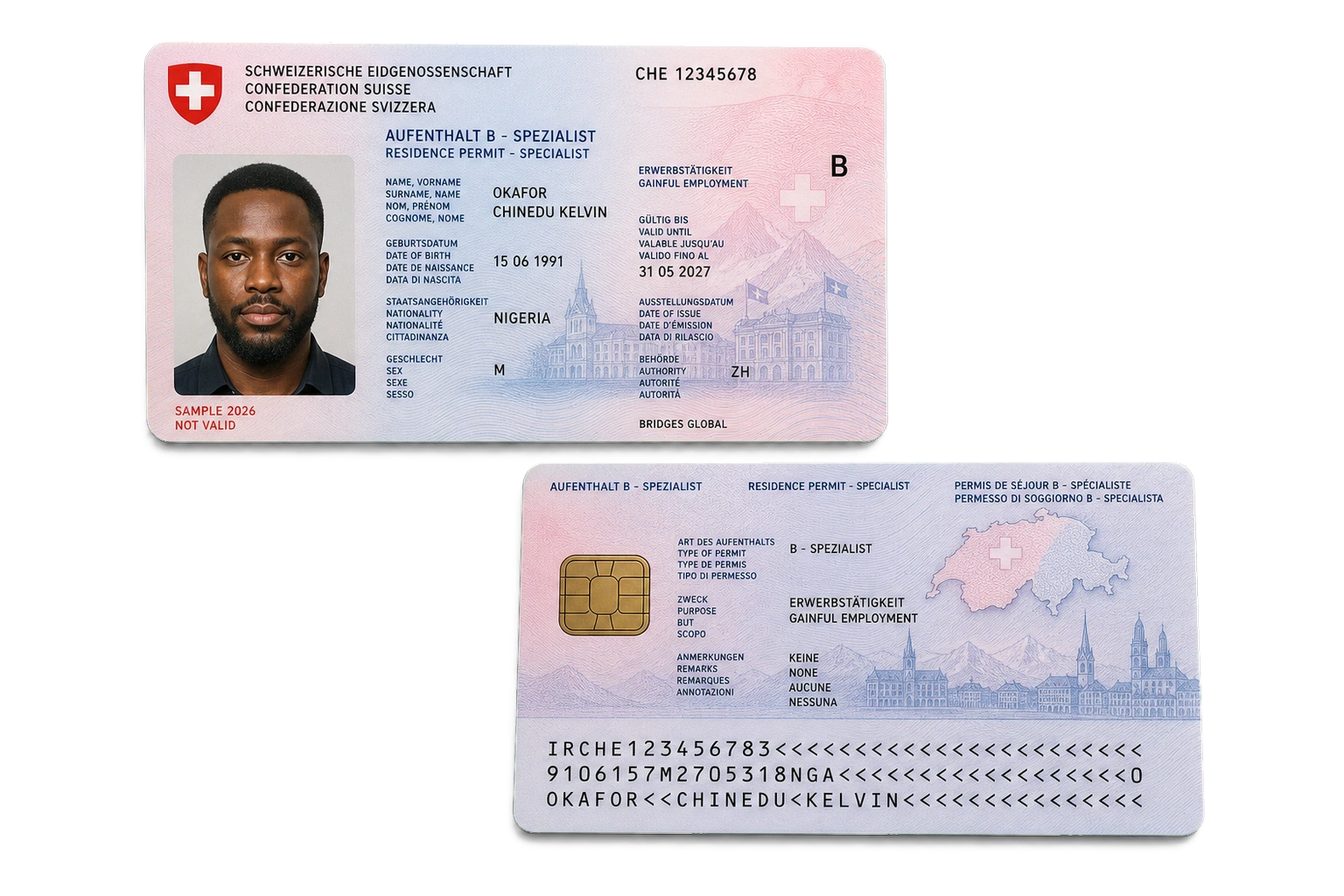
A residence and work permit for Switzerland
no investmentNo investment is required
A B permitThe type of status
2-4 monthsTo the status

01 / About the program

How a specialist’s permit works

Switzerland admits specialists from outside the European Union to its labour market only exceptionally: the employer must prove that no candidate was found in Switzerland or the EU countries. The permit is issued within the annual quota shared out between the cantons. No money has to be invested — the ground lies in the qualifications and the contract.

01

An employer is required

The application is filed by the Swiss company, not by the specialist. It is also the company that proves the need to hire you in particular.

02

Priority for the local market

The employer shows that it looked for a candidate in Switzerland and the EU and found none. Without that procedure the permit will not be issued.

03

The quotas are limited

The annual number of permits for citizens of countries outside the EU and EFTA is limited and shared out between the cantons — the timeline depends on availability.

04

A salary at market level

The terms of employment and the pay must match local ones — paying a foreigner less is forbidden.

02 / What you get

What a specialist’s permit gives you

Work with no investment

No investment and no purchase of a business: the ground is your qualifications and the contract with the employer.

Life in Switzerland with the family

A spouse and minor children move with you, and the spouse has the right to work in the country.

Schengen without a visa

Travel around the Schengen area without a visa for up to 90 days in every 180.

Swiss terms of employment

Pay and conditions at the level of the local market, with a full social package and insurance.

A change of employer is possible

Once the status is obtained a move to another company is agreed with the canton, but it is not forbidden.

A path to permanent status

After ten years of residence the C permit opens up, with naturalisation possible after that.

A preliminary assessment

Assess your chances on qualifications

Set out who is moving with you. At the review we assess your field against the cantons’ requirements and look at the quotas, the timeline by stage and a plan of action.

Who is moving?

Get the assessment

about a minuteno calls and no obligationsconfidential

  • An assessment of your field against the cantons’ requirements
  • The timeline taking the quotas into account
  • A plan of action: where to start
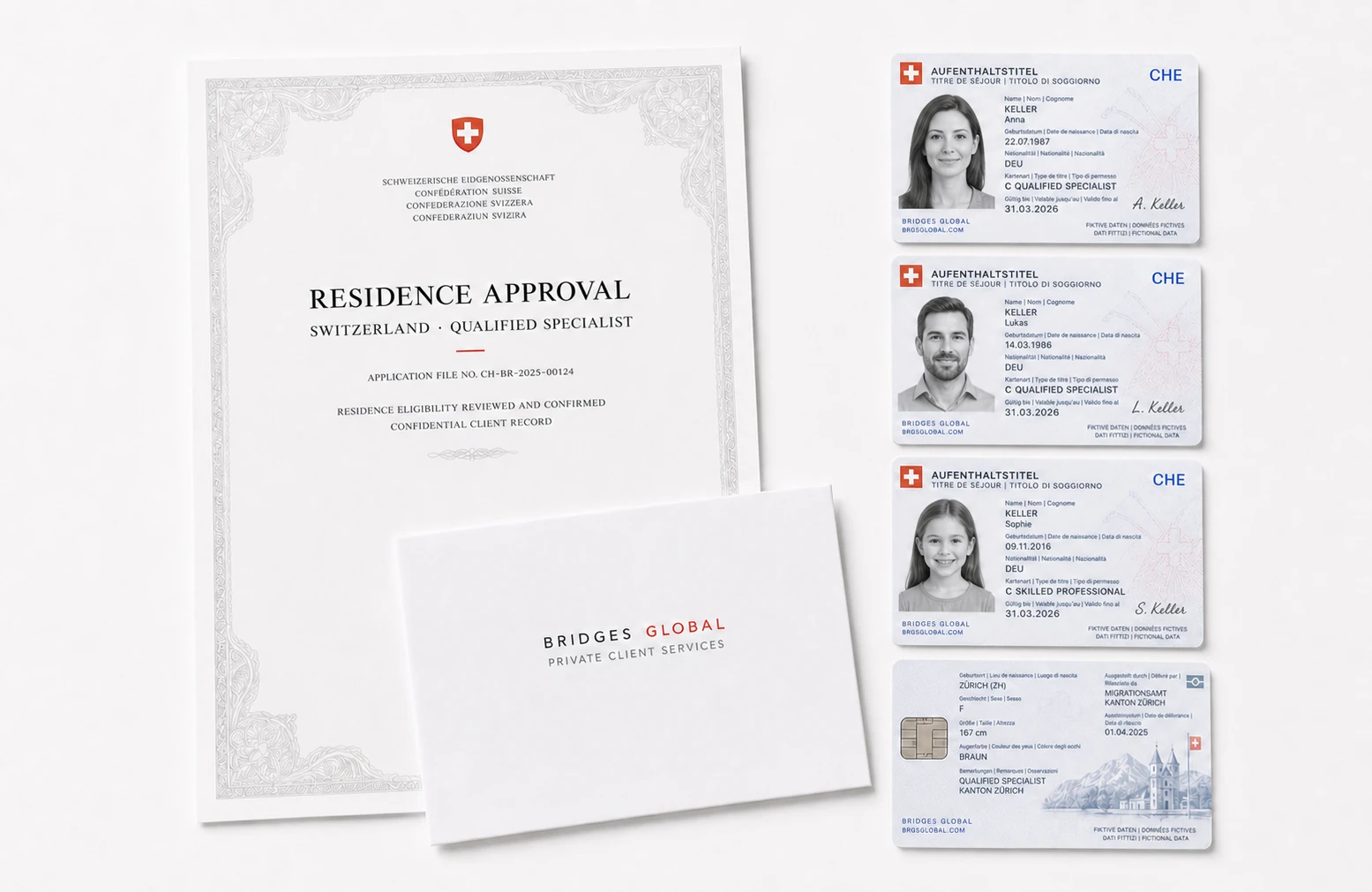
A Swiss residence permit and a specialist’s documents

03 / Why people apply

Why people arrange a specialist’s permit

This path is chosen by professionals with rare qualifications: engineers, doctors, scientists, IT architects, financiers. Here it is the labour market that pays, not the applicant.

Moving without capital

There is no need to invest a million or to pay a lump-sum tax: a job offer is enough.

Work in a strong economy

The level of salaries, the research base and the international companies are why specialists choose Switzerland.

The family moves together

A spouse with the right to work and children in schools — the move is arranged in a single pack.

A clear prospect

After ten years of residence the permanent permit, and then the possibility of naturalisation.

The stability of the contract

Swiss employment law and social guarantees protect both the specialist and their family.

A base for a future business

Some clients start on a specialist’s status and later move to a company of their own in the country.

04 / Travel

What the permit gives you for travel

The B permit gives the right to live and work in Switzerland and to travel around the Schengen area, but it is not citizenship.

Mode 01

Switzerland without limits

Residence and work in the canton that issued the permit, for the whole time the status is in force.

Mode 02

Schengen, 90 days in 180

Travel around the Schengen area without a visa. The status does not give the right to work in other EU countries.

Mode 03

The status is tied to the job

On dismissal the permit may be reconsidered. A change of employer is agreed with the canton.

Mode 04

The rest of the world on your own passport

You travel to third countries on your passport of citizenship: that is what sets the visa regime.

Sources: the Foreign Nationals and Integration Act (FNIA), the ordinance on admission, residence and employment and the practice of the SEM. For citizens of countries outside the EU and EFTA annual quotas apply.

05 / The composition of the application

Who moves with you

The permit extends to the specialist’s immediate family. Open a row to see the conditions.

  • Higher education and experience in the field
  • An employment contract with a Swiss company
  • Pay at the level of the local market
  • A place in the canton’s annual quota
  • In a registered marriage
  • Has the right to work in Switzerland
  • The children of the applicant or the spouse
  • They study in Swiss or international schools
  • They do not come into the application
  • Separate grounds are found for them
  • We go through it individually

06 / Cost

What the process costs

The programme requires no investment. The costs are the permit fees, legalisation of documents and support through the procedure.

A contract with a Swiss company · the main scenario

No investment is required

No investment is required

The term of the status The term of the employment contract

  • Higher education and confirmed experience in the field
  • The employer proves that it found no candidate in Switzerland or the EU
  • Pay and terms of employment at the level of the local market
  • The permit is issued within the canton’s annual quota
  • The status is tied to the employer: a change is agreed with the canton

A transfer within the company · an international group

No investment is required

No investment is required

The term of the status The term of the secondment

  • The employee is transferred to the Swiss division of their group
  • Confirmed service with the company and a managerial or expert role are required
  • The labour market priority procedure applies in a simplified form
  • The permit also counts against the annual quota

Scenario

The main applicant
1
Spouse
0
Minor children
0
Parents and adult children
0

The programme requires no investment. The cantonal fees for the permits of the applicant and the family members, legalisation and translation of documents, recognition of a degree where needed and the support are payable. The quotas and requirements differ from canton to canton — the conditions are checked as at the date of the enquiry. This is a preliminary calculation, not a decision of a state authority.

07 / Comparison

Switzerland against other statuses for specialists

A professional has several paths open. Here are the main parameters side by side.

SwitzerlandUS O-1FrancePortugalThe UAE
An employer is requiredYesYes, a sponsorYes, most oftenNoYes
Investment requiredNoNoNofrom €200,000No
QuotasYesNoNoNoNo
Work for the spouseYesNoYesYesYes
Processing time2-4 months2-4 months2-3 months6-18 months1-2 months

The data are given as at the date this page was updated and are checked again before the agreement is signed.

Full program comparison →

10 / How it works

How the permit process works

STEP 1

Assessing the qualifications

We go through your education, experience and field: whether there is a chance the canton will treat your qualifications as rare for the local market.

STEP 2

The employer

The process starts with a job offer. If there is no employer yet, we help with positioning on the Swiss market.

STEP 3

Priority for the local market

The company documents its search for a candidate in Switzerland and the EU. That procedure is compulsory; without it the application will not be accepted.

STEP 4

The application to the canton

The employer files the documents with the cantonal labour office, which checks the terms of the contract and the availability of a quota place.

STEP 5

SEM approval

The State Secretariat for Migration approves the permit within the federal quota.

STEP 6

The visa and the entry

After approval a D visa is arranged, then the entry and registration of residence in the canton.

STEP 7

The family and the renewals

We arrange the statuses of the spouse and children, the insurance and the schools. The permit is renewed together with the employment contract.

A step-by-step plan of the process

The same seven steps as a document: what the employer does, what you prepare and how the quotas work.

Download the step-by-step plan
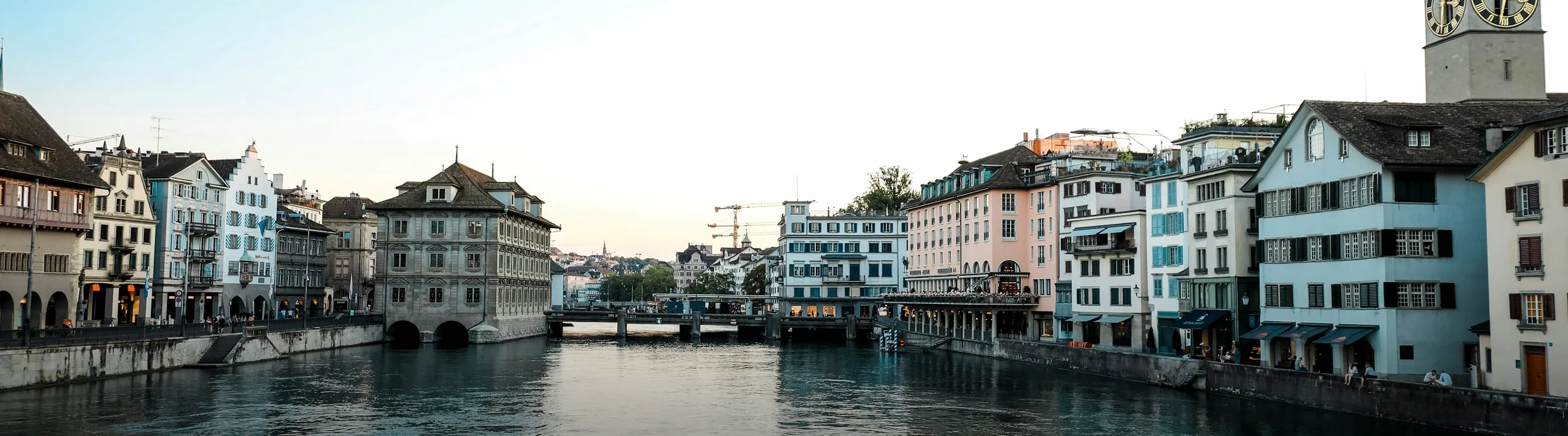
Zurich, the Limmat riverfront

Admission of specialists is governed by the Foreign Nationals and Integration Act (AIG).

SwitzerlandSchengenWork on a contract
Assess the qualifications

11 / Our role

Why people arrange the permit with us

Most of the work here is done by the employer, and that is exactly where things go wrong: a labour market priority procedure done badly means a refusal whatever your qualifications.

01

We guide the employer

We help the company through the labour market priority procedure and describe the position properly — that is the decisive part of the application.

02

We assess the chances plainly

If your field is not in short supply we say so straight and propose alternatives — other countries or another status.

03

We work out the quotas and the timeline

The availability of places in the canton’s quota changes the timeline by months. We check that before the work begins.

04

We move the whole family

The statuses of the spouse and children, the insurance, the schools, the registration. The family moves in a single pack, not through separate procedures.

15 / Materials

Useful materials on Switzerland

Materials on a specialist’s permit: the requirements, the quotas and how the work with the employer runs.

The main materialPresentation

Swiss residency for a specialist

The presentation gathers the essentials: the requirements as to qualifications, the employer’s duties, the quotas, the family composition and how the work is done.

Inside:

  • which fields get through
  • what the employer has to do
  • how the quotas work by canton
  • which family members move with you
  • which documents will be needed
  • how degrees are recognised
  • how work with BRIDGES is organised

PDF · free · current as of August 2026

Which qualifications the cantons treat as in short supply and what strengthens an application.

The list for the applicant, the employer and the family, marking what has to be translated and legalised.

We work out the timeline taking the quotas into account and assess the chances for your field.

All the materials are updated regularly by our team and are used when supporting BRIDGES clients.

16 / News

What has changed in the rules

2025-01-01

The annual quotas for permits for citizens of countries outside the EU and EFTA were confirmed, the quota for seconded employees among them.

2026-01-01

The cantons clarified how priority for the local labour market is to be evidenced when foreign specialists are hired.

Worth having

Check the qualification requirements for specialists

The short document we give clients before the start: the requirements as to qualifications, the employer’s duties, the stages and the timelines — in one list, with nothing padded.

Inside the document

  • Which fields get through on the quotas
  • What the employer has to do
  • The current conditions for 2026

We will send it after a short form - no call or obligation.

17 / Questions

Answers to common questions

No. The ground is your qualifications and an employment contract with a Swiss company. The costs come down to the permit fees, the legalisation of documents and the support.

No. The application is filed by the Swiss company, which also justifies the need to hire you in particular and goes through the labour market priority procedure.

The employer must show documentarily that it looked for a candidate in Switzerland and the EU countries and found none suitable. Without that a permit for a third-country national will not be issued.

The annual number of permits for citizens of countries outside the EU and EFTA is limited by a federal quota shared out between the cantons. If a canton has no places left, you will have to wait for the next period.

Those where Switzerland has a shortage: engineering disciplines, medicine, research, IT architecture, finance and narrow manufacturing competencies. The decision is taken by the canton on the particular vacancy.

Yes. The spouse receives a residence permit with the right to work and the children study in schools. The family moves in a single pack with the main applicant.

Once the status is obtained a move to another company is possible, but it is agreed with the canton. In the first year changing jobs is harder, so the choice of the first employer matters.

2-4 months from the employer filing the documents to the visa, where quota places are available. Checking the quotas is the first thing we do.

After ten years of residence the C permit opens up. For citizens of certain countries that period may be shorter under international treaties. Naturalisation is possible later, subject to the cantonal requirements.

The permit is tied to the job: if the position is lost the canton gives time to find a new employer, but the status may be reconsidered. We warn about this before the move.

INITIAL ASSESSMENT

Tell us what outcome your family needs

We will design a solution for your case, choose the country and the right status, and take the whole process through to the result.

Or message us on WhatsApp or Telegram

Anna Kovalevskaya, lead lawyer at BRIDGES GLOBAL
Anna KovalevskayaLead lawyer, citizenship and residency, 12 years of practice