







Updated

RO-DN

The digital nomad visa

Residency in Romaniathe nomad visa

A status for those who work remotely for a company registered outside Romania, or through their own foreign firm. The threshold is three average gross salaries, around €5,400 a month. Since 2025 Romania has been in Schengen, and up to 183 days of stay a nomad’s income is not subject to Romanian tax.

  • The conditions are checked against the immigration inspectorate and laws 22/2022 and 69/2023
  • Working since 2004
  • We run the visa, the extension of the stay and the tax questions
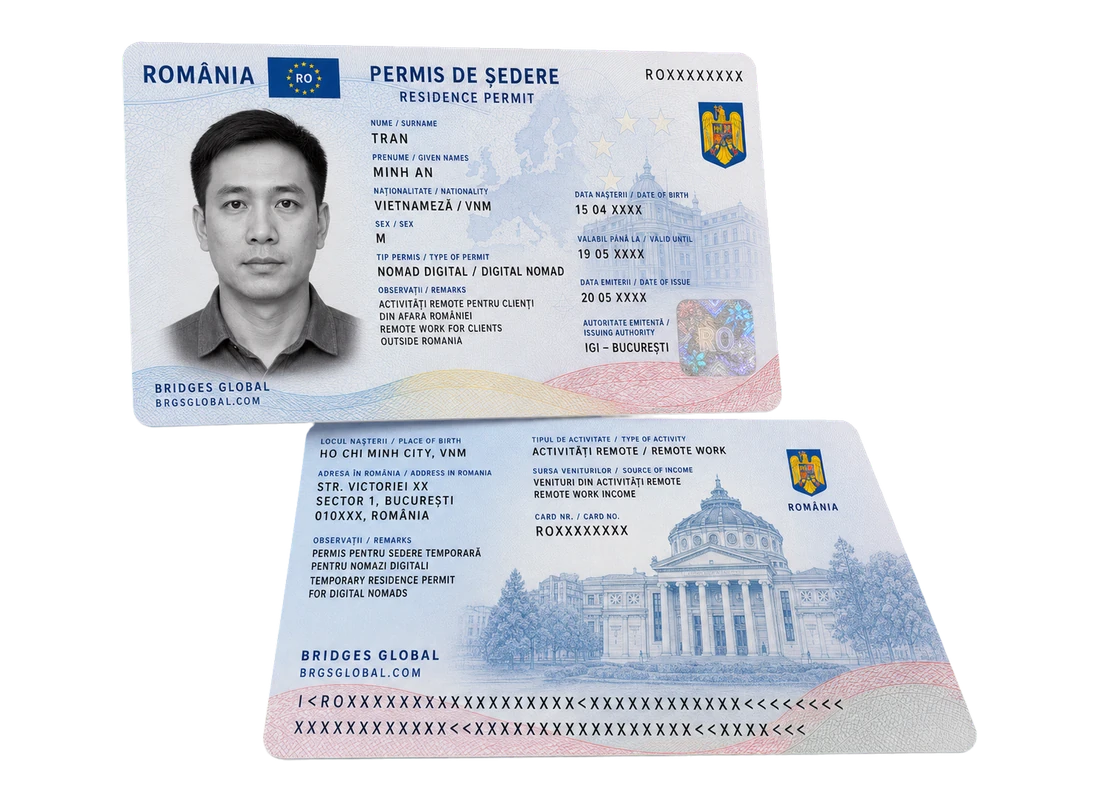
A Romanian residence card under the digital nomad status
Schengen since 2025Travel around the zone 90/180
Up to 183 days tax-freeThe income and contributions are exempt
3 average salariesAround €5,400 a month

01 / About the program

How the Romanian nomad visa works

Romania introduced the status by law 22/2022 and added tax concessions in 2023. Since 2025 the country has been a full member of Schengen, so the status gives not only life in Romania but travel around the whole zone.

01

The employer is outside Romania

An employment contract with a company registered abroad qualifies, as does work through your own foreign company — for that route it must have existed for at least three years.

02

The threshold is three average salaries

The income is evidenced for each of the last six months and for the whole term of the visa. For 2026 that is 27,576 lei — around €5,400 a month.

03

A visa, then extensions

The D visa is arranged at a consulate; after entry the right of stay is extended: the first extension is for six months, then further ones while the conditions hold.

04

The 183-day tax window

While the stay does not exceed 183 days in any 12 months, a nomad’s income is exempt from Romanian income tax and social contributions.

02 / What you get

What the status gives you

Schengen with no visas

Since 1 January 2025 Romania has been a full member of Schengen: travel around the zone for up to 90 days in every 180.

Exemption from tax and contributions

Law 69/2023: while the stay is up to 183 days in 12 months a nomad’s income is not subject to tax, CAS or CASS.

Clear extensions

The first extension of the right of stay is for six months, and later ones follow while the conditions hold and with a certificate from the tax authority.

The work does not change

An employment contract with a foreign company and work through your own firm registered abroad both qualify.

Fast internet and low costs

Bucharest and Cluj have some of the fastest networks in Europe at costs noticeably below Western Europe.

An EU country

European Union banks, rentals and services — the nomad lives inside the EU’s legal framework, not in a grey area.

A preliminary assessment

Check whether you meet the income requirement

Set out how you work. With the calculation you get the full Romanian picture: the income required, the budget for the move, the timeline and a plan of action.

How do you work remotely?

Get the calculation

about a minuteno calls and no obligationsconfidential

  • The threshold calculated for your format of work
  • The timeline for each stage of the process
  • A plan of action: where to start
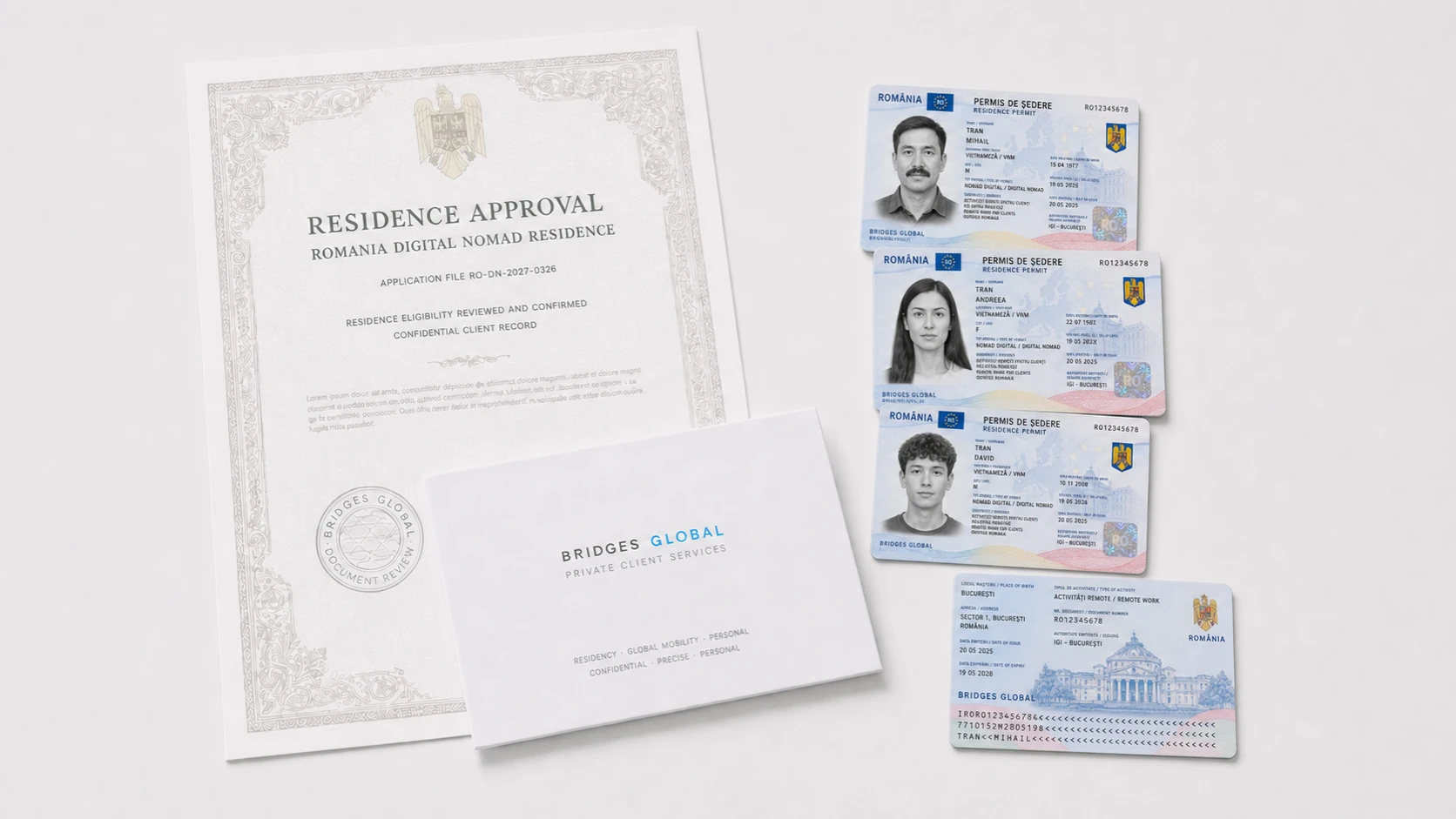
A Romanian residence card and a set of documents

03 / Why people apply

Why people arrange the status in Romania

Romania is chosen for the combination of Schengen, the tax window and the real cost of living — with an income threshold that filters out casual applicants.

Schengen on a Romanian card

The status opens travel around the whole zone — the main argument against the neighbouring non-Schengen options.

The tax window is in the law

The exemption up to 183 days is an express provision of the Tax Code, not a practice taken on trust.

Clear documents

A contract, proof of income, insurance from €30,000, housing and a police clearance certificate. No quotas and no investment.

The threshold is known in advance

Three average gross salaries — the figure is published in the budget law and revised once a year.

A base in the EU for years

The extensions are not capped by a hard limit while the income and the remote format of the work hold.

Logistics and prices

Direct flights around Europe, rent and living cheaper than the western capitals, and a strong IT community.

04 / Travel

Where you can travel on the nomad status

Since 2025 Romania has been a full member of the Schengen area, so the status opens travel around the whole zone.

Mode 01

Romania without limits

Residence, entry and exit for the whole term of the visa and the extended right of stay.

Mode 02

Schengen, 90 days in 180

Travel around the Schengen countries with no further visas — up to 90 days in every 180.

Mode 03

Work only for clients abroad

The status covers remote work for foreign companies. Work on the Romanian market requires other permits.

Mode 04

The rest of the world on your own passport

You travel to third countries on your passport of citizenship: that is what sets the visa regime.

Sources: OUG 194/2002 as amended by Law 22/2022 (the long-stay visa for digital nomads), Law 69/2023 (the tax exemption) and the Schengen Borders Code (Regulation (EU) 2016/399).

05 / The composition of the application

Who can obtain the status

The nomad visa is arranged for the applicant alone. Separate grounds are chosen for a spouse and children — open the rows.

  • Remote work for a company registered outside Romania
  • An income of three average gross salaries for each of the last 6 months
  • Insurance with cover from €30,000, housing and a police clearance certificate
  • For your own company — registration abroad for at least 3 years
  • Not included in the nomad visa — arranged on their own ground
  • If both work remotely, each applies for their own nomad visa
  • The family reunification option is gone through individually at the consultation
  • Not included in the nomad visa
  • The ground for the children is chosen together with the spouse’s route
  • The order and the timelines are gone through before the main application is filed

06 / Cost

What income has to be evidenced

The threshold is three average gross monthly salaries in Romania: for each of the last six months and for the whole term of the visa.

A remote employee · a contract with a foreign company

€5,400

≈ $6,000

Evidenced The last 6 months and the whole term of the visa

  • An employment contract with a company registered outside Romania
  • The work is carried out remotely through information technology
  • Income of at least three average gross salaries for each of the last 6 months
  • Insurance with cover from €30,000 for the whole term

The owner of your own company · a firm abroad, 3 years or more

€5,400

≈ $6,000

Evidenced The last 6 months and the whole term of the visa

  • The company has been registered abroad for at least three years at the date of filing
  • The income from the company’s activity is evidenced by documents
  • The company’s taxes and contributions are paid with no arrears
  • Insurance with cover from €30,000 for the whole term

Scenario

The main applicant
1
Spouse
0
Minor children
0

The threshold is tied to the average gross salary from the social insurance budget law (9,192 lei for 2026) and is revised annually. On top of the income come the consular fee, the insurance, the housing and the support. This is a preliminary calculation, not a decision of a state authority.

07 / Comparison

Romania against the neighbouring nomad visas

The key differences are Schengen, the 183-day tax window and a threshold tied to the average salary.

RomaniaHungaryCroatiaMontenegroSpain
Income requirementaround €5,400 a month€3,000 a month€3,622 a monthA foreign income€2,442 a month
Tax on a nomad’s incomeNot taxed up to 183 daysUnder the general rulesNot taxedExemptA special regime
The term of the statusExtensions of 6 months1 + 1 year18 months2 + 2 years3 + 2 years
SchengenSchengen since 2025SchengenSchengenOutside SchengenSchengen
The path to permanent residenceNo direct routeDoes not leadDoes not leadDoes not lead5 years

The thresholds are given as at the date this page was updated; the conditions for each country are set out on its own page.

Full program comparison →

10 / How it works

How the process works

STEP 1

Checking the employment and the income

We go through where the employer or your company is registered and whether the income covers the threshold of three average salaries over six months.

STEP 2

The work documents

An employment contract or your company’s documents (registered three years or more), proof of the remote format and of taxes paid.

STEP 3

Insurance and certificates

We arrange insurance with cover from €30,000 for the whole term, the police clearance certificate and proof of housing.

STEP 4

The D visa at the consulate

The application is filed with a Romanian diplomatic mission or consulate in the country of residence.

STEP 5

Entry and extension of the stay

After entry we prepare the extension of the right of stay with the immigration inspectorate: the first one is for six months.

STEP 6

Further extensions and taxes

We run the later extensions with the certificate from the tax authority and watch the 183-day tax window.

The Romanian Athenaeum in Bucharest

Schengen, a tax window and some of the fastest networks in Europe — on a single Romanian visa.

RomaniaLaw 22/2022 and Law 69/2023Schengen since 2025
Go through your situation

11 / Our role

Why people arrange the status with us

The threshold is high and the form of the income evidence is strict — that is exactly where applications most often stumble.

01

We prepare the income evidence

Three average salaries have to be shown for each of the six months in the form the consulate accepts. We check that before filing.

02

We check the structure of the employment

For the route through your own company the age of the company — three years or more — and a clean tax history matter. We look at the documents in advance.

03

We run the extensions

The first extension is for six months, and after that a certificate of income from the tax authority is needed. We keep the deadlines and the set of documents under control.

04

We work out the taxes plainly

The 183-day window needs the days counted and an understanding of what happens once it is exceeded. We go through the consequences before the move.

15 / Materials

Useful materials on Romania

Materials on the nomad visa: calculating the income, the documents and the order of filing.

The main materialPresentation

The Romanian nomad visa

The presentation gathers the essentials: the requirements as to income and employment, the documents, the order of filing and the tax regime.

Inside:

  • how the threshold of three average salaries is calculated
  • which documents evidence work for a foreign company
  • how the 183-day tax window works
  • which routes exist for the family
  • how and where the application is filed
  • how the right of stay is extended
  • how work with BRIDGES is organised

PDF · free · current as of August 2026

A short check: where the employer is registered, whether the income covers the threshold and whether there are six months of statements.

The list for an employee and for a company owner, the €30,000 insurance and the police clearance certificate included.

We calculate the income required, the budget for the move, the fees and the support.

All the materials are updated regularly by our team and are used when supporting BRIDGES clients.

16 / News

What matters to know

2026-03-30

Law 44/2026 set the average gross salary at 9,192 lei: the nomad threshold is 27,576 lei a month, around €5,400.

2025-01-01

Romania became a full member of the Schengen area: travel around the zone is 90 days in every 180.

2023-04-02

Law 69/2023 came into force: while the stay is up to 183 days in 12 months a nomad’s income is exempt from tax and from the CAS and CASS contributions.

Worth having

Download the Romania checklist

The short document we give clients before the start: the income, the documents, the stages and the timelines.

Inside the document

  • How to show the threshold of three average salaries
  • What evidences work for a foreign company
  • The current conditions for 2026

We will send it after a short form - no call or obligation.

17 / Questions

Answers to common questions

At least three average gross monthly salaries in Romania — for each of the last six months before filing and for the whole term of the visa. For 2026 that is 27,576 lei a month, around €5,400 (the average salary is 9,192 lei under Law 44/2026). The threshold is revised annually.

While the stay in Romania does not exceed 183 days in any 12 consecutive months, a nomad’s income is exempt from income tax and from the CAS and CASS social contributions — an express provision of Law 69/2023. Once that is exceeded the general rules of tax residency apply.

Yes. Since 1 January 2025 Romania has been a full member of the Schengen area: travel around the other countries of the zone is up to 90 days in every 180.

First a long-stay visa is arranged at a consulate. After entry the right of stay is extended: the first extension is for six months, and later ones follow while the conditions hold and with a certificate of income from the tax authority.

Yes, if the company has been registered outside Romania for at least three years at the date of filing, the work is carried out remotely and the company’s taxes are paid with no arrears.

No. The status is built on income from companies registered outside Romania. For work on the local market other permits exist.

The family is not included in the nomad visa itself. If the spouse also works remotely, each arranges their own nomad visa; otherwise we choose a separate ground — the route is gone through at the consultation before filing.

With a Romanian diplomatic mission or consulate in your country of citizenship or residence. After approval and entry the later extensions go through the immigration inspectorate.

There is no direct route: the status is designed for a temporary stay with extensions. If a permanent status in the EU is the goal, we compare it with the programmes of Portugal, Spain or Greece.

The tax exemption stops applying and the general rules take over: Romanian tax residency and tax on worldwide income become possible. We work out the consequences and the calendar of days before the move, not after.

INITIAL ASSESSMENT

Tell us what outcome your family needs

We will design a solution for your case, choose the country and the right status, and take the whole process through to the result.

Or message us on WhatsApp or Telegram

Anna Kovalevskaya, lead lawyer at BRIDGES GLOBAL
Anna KovalevskayaLead lawyer, citizenship and residency, 12 years of practice