Citizenship · Saint Kitts and Nevis
St Kitts citizenship after the programme closes: submitted applications and issued passports

Updated: November 2026·17 min read·Expert reviewed
Terms and costs verified: November 2026
Contents
On 13 November 2026 the Prime Minister of Saint Kitts and Nevis, Terrance Drew, announced that the country will wind down its citizenship by investment programme. On 16 November the Citizenship Unit (CIU) issued an official statement on what this means for applicants and citizens. I read the CIU statement, the Prime Minister's Office release and the biometrics rules and set out the answer case by case: a submitted application, a file still in preparation, a passport already issued, its renewal, and adding a spouse or children. Separately, what has not been officially announced yet.
In brief
- The programme is open and fully operational. The decision is a gradual transition on a timeline being agreed with the European Union and other international partners.
- Submitted applications are processed in the ordinary course. New ones are received until a date the Government will announce. The CIU will formally notify Authorised Agents of that date.
- Investment thresholds and checks do not change. The Prime Minister said there will be no rush, no discounts and no fire sale.
- The status of people who lawfully hold citizenship is unaffected. Their rights, including the ability to travel, remain unchanged.
- The biometrics deadline for programme citizens stays at 31 July 2027. After that date only biometric passports are accepted for travel.
- The final date for receipt, transitional rules and adding family members after closure have not been officially announced.
What was announced officially on 13 and 16 November
The decision came in Prime Minister Terrance Drew's national address on the evening of 13 November 2026. The Prime Minister's Office summarised it in a release from the government information service SKNIS on 16 November. The Government has formally informed the EU of its decision and is negotiating a transition timeline. The main reason, Drew said, is to protect visa-free travel to Schengen and the correspondent links between local banks and banks in the United States, Canada and Europe: without them residents could not receive remittances and businesses could not pay for imports.
Three days later, on 16 November, the CIU published on ciu.gov.kn its "Official Statement - The Future of the Citizenship Programme". This is the key document for applicants and citizens. It makes five points. The programme will be transitioned in a gradual and orderly manner on a timeline agreed with the EU and other partners. The status of citizens is unaffected. The programme remains open, submitted applications are processed in the ordinary course, and new ones are received until an announced date. Requirements and thresholds are not reduced. Government-approved projects already under way will be supported through to completion.
In its last line the CIU asks stakeholders to rely only on information published by the Unit or the Government through official channels. That warning matters: since 13 November many retellings with invented closing dates have appeared online. The Government of Saint Kitts has named neither 31 December 2026 nor 1 June 2028 as a date for receipt. 1 June 2028 is the deadline the European Commission proposed to five Caribbean states in its letter of 25 June 2026. We track the exchange with the EU in our news on the EU giving the Caribbean until June 2028.
| Question | What has been said officially | What is not there yet |
|---|---|---|
| Programme now | open and fully operational | a date after which applications are not received |
| Submitted applications | processed in the ordinary course | rules for applications without a decision on the closing date |
| New applications | received until the announced date for receipt | the date itself; the Government will announce it after agreement with partners |
| Requirements and amounts | no lower thresholds or relaxed rules, no discounts and no rush | no changes |
| Programme citizens | status and rights, including travel, unchanged | no separate restrictions announced |
| Approved projects | supported through to completion | list of projects and timelines |
| Biometrics | deadline for programme citizens is 31 July 2027 | no extension announced |
What this means for you. Today the programme works as before, and all timelines apart from biometrics are still unknown. Decide on the basis of what has been announced, not on rumours of closure "next month".
Application already submitted: what happens to it
For those whose application is already with the CIU, the 16 November statement gives the clearest wording: applications already submitted will continue to be processed in the ordinary course. They are decided under the programme's current rules, investment thresholds do not change, due diligence remains mandatory, and so does biometrics for applications submitted from 14 April 2026. No separate review of submitted applications has been announced.
According to the CIU, the ordinary course looks like this. Only an Authorised Agent can submit an application. Within 120-180 days of acknowledging receipt, the Unit advises the outcome. A successful applicant receives an approval in principle letter. After that the applicant makes the investment, enrols biometrics and receives a certificate of registration as a citizen and a passport. We break down the stages in our article on St Kitts citizenship timelines.
What matters right now. There will be no speed-up ahead of closure: the Prime Minister explicitly ruled out a "rush". So the application that moves faster is the one that gives fewer reasons for additional requests. Answer CIU requests within days, make sure police certificates and bank statements do not expire, and prepare for the interview, which is mandatory for the main applicant. We collected the questions in our piece on interview questions, and what is checked most strictly in our article on St Kitts due diligence.
A question almost everyone asks: what if the date for receipt is announced while my application still has no decision? There is no official answer yet. The CIU statement speaks of a date for receipt of applications, not a date for final decisions, and promises further guidance once the timeline is confirmed. The logic of the text is that an application received before that date continues to be processed, but transitional rules have not been published. We will update this article when they appear.
If your investment is through real estate, check the project status. The CIU promises to support government-approved projects already under way through to completion. This matters to buyers for two reasons: construction will not stop because the programme closes, and the holding period and resale conditions remain those that applied at purchase. We describe this route in our article on St Kitts real estate for citizenship.
What this means for you. A submitted application follows its normal course. Your task is to keep it from stalling on requests and outdated documents, because there will be no speed-up.
Sofia MendesInvestment Programs Expert, BRIDGES
Already applied or still collecting documents? We will check your case
We will tell you which stage you are at, what to do now and which documents to update before filing.
Documents in preparation: will you make it in time
For those who have not applied yet, the key phrase in the CIU statement is "date for receipt". New applications continue to be received and processed until the Government announces a final date for receipt of applications. It will be announced after agreement with international partners, and the CIU will formally notify Authorised Agents. So what counts is when the Unit receives a complete application, not the date of your agent agreement or invoice.
Nobody can say today how much time is left. The European Commission's deadline for the region is 1 June 2028, but that is an EU proposal, not a St Kitts date. Neighbouring Antigua and Barbuda, according to its government, asked the EU for a transition to the end of 2030; see our news on the Caribbean deadline. St Kitts has not named its date. Planning around the latest possible scenario is risky.
So the practical advice is simple: prepare your documents as if the date will be announced in the coming months. The slowest part of the file is not the forms but what is ordered in other countries: police certificates for each family member aged 16 and over, birth and marriage certificates with apostille and translation, and proof of source of funds. The CIU 2026 brochure requires a twelve-month bank statement dated within six months of submission. The full list is in our article on documents for St Kitts citizenship, and we handle preparation and legalisation as part of our documents service.
The amount will not change, so bargaining or waiting for closing discounts is pointless: both the Prime Minister and the CIU explicitly ruled out lower thresholds. We calculated the current amounts and all family fees in our piece on the cost of St Kitts citizenship, and the applicant requirements in our article on programme requirements.
And the main warning. Applications are submitted only through an Authorised Agent on the official list on the CIU website. The same site lists agents the Unit has blacklisted. "Last chance" offers with a discount, a speed-up or "direct" filing contradict the official position and should raise a flag. Check your agent against the CIU list yourself before paying.
What this means for you. If you are seriously considering St Kitts, start collecting documents now. The date for receipt may be announced at short notice, and an incomplete application will not count.
Passport already issued: what does not change
For programme citizens the CIU statement is unequivocal: the status of persons who lawfully hold St Kitts and Nevis citizenship is unaffected, and their rights, including their ability to travel, remain unchanged. The Prime Minister said the same in his address: nothing changes tonight for any person who lawfully holds our citizenship. The wind-down concerns granting new citizenship by investment. It does not revoke citizenship already conferred by a certificate of registration.
Citizenship is permanent and passes to children under the citizenship law. Dual citizenship is allowed, so you do not have to give up your other passport; see our piece on St Kitts dual citizenship. Taxes, bank accounts and companies opened on a Federation passport are not affected by the programme decision. Why the passport is still useful is covered in our article on the benefits of St Kitts citizenship.
But there is a deadline that applies regardless of the wind-down, and many people forget it. Since 14 April 2026 the National Biometric Enrolment and Passport Modernisation Programme has been running. Everyone who obtained citizenship through the programme, including dependants and children, must enrol biometrics by 31 July 2027. Passports issued through the programme before 14 April 2026 remain valid for travel until then; after that only biometric passports are accepted for travel. Citizenship is not affected, but from 1 August 2027 the old passport can no longer be used.
Government fees according to the CIU: USD 2,500 for the main adult aged 16 and over, USD 2,000 for a second adult and USD 1,300 for a child under 16. Enrolment between 20 July and 31 December 2026 carries a 10% reduction, for example USD 2,250 instead of 2,500. The reduction applies only to appointments booked and completed in that window and will not be extended. We list the locations in our article on biometrics centres, how children enrol in our piece on child biometrics, and the full picture in our news on St Kitts passport biometrics.
What this means for you. Your citizenship is not at risk. Your old passport is: if you have not enrolled yet, do it before the end of 2026 with the reduction, or at least well before 31 July 2027.
Renewal, replacement and a lost passport
A passport and citizenship are different things. Citizenship is permanent; a passport is issued for a period. Renewal and replacement of citizens' passports is handled by the St Kitts Passport Office: it is a service to a citizen, not part of the investment programme. The CIU statement keeps citizens' rights unchanged, and no changes to renewal have been announced. For programme citizens the route now runs through biometrics: a new passport is issued after booking on the official government platform.
If your passport expires within the next year, it is easier to combine renewal with biometrics and avoid paying twice. We calculated the family cost in our article on passport replacement cost, and what to certify and translate in our piece on replacement documents. We prepare and file the application as part of our St Kitts and Nevis passport renewal service.
For a lost or stolen passport there is a separate procedure: an affidavit on the circumstances, a police report, a recovery form and an application for a new passport through the Passport Office, and if you need to travel urgently, an emergency document through an embassy. All steps and fees are on our page on replacing a lost passport. The wind-down does not affect this procedure, but given biometrics the new passport will be issued in biometric format.

Spouse and children after the programme closes
This is where the unknowns are greatest. Today a programme citizen can add a new family member through the Citizenship Unit: a spouse married after citizenship was granted, a child born after that, or a parent who has reached the qualifying age. A child born during processing is added to the application that is still pending. Who exactly can be added and which fees apply is set out on our page on citizenship for new family members and in our article on St Kitts citizenship for the family.
Whether this route survives the wind-down has not been officially announced. The 16 November CIU statement addresses citizens' status, applications and projects, but says nothing about adding dependants after citizenship. The procedure is built as part of the programme and runs through the CIU. So we cannot promise it will work the same way in two or three years.
Hence the practical conclusion. If the event has already happened - you married, a child was born, a parent reached dependant age - do not delay the application: while the Unit is operating, the route is clear. If a child is due in the coming months while your application is still being processed, the child can be added to the current CIU file, which is simpler and cheaper than a separate procedure. For children born later there is also descent from a citizen parent: we review such cases on our page on citizenship for a newborn. Note also that in October 2026 the Federation opened a route for adult descendants of citizens born abroad after 1983, but it covers descendants of citizens at Independence, not investors; details in our news on citizenship by descent.
What this means for you. Adding a spouse, children and parents still works, but its future has not been announced. If your family already has grounds to apply, apply now.
EU visa-free travel and passports: what if it is suspended
The Government is winding the programme down precisely to protect visa-free travel to Schengen. The basis is Regulation (EU) 2025/2441, in force since 30 December 2025: operating an investor citizenship scheme without a genuine link to the country became a separate ground for suspending visa-free access. Today citizens of Saint Kitts and Nevis enter Schengen without a visa for 90 days in any 180-day period, and the EU has taken no suspension decision. The list of visa-free countries is in our article on St Kitts passport visa-free travel.
What if the EU does suspend visa-free access? Citizenship is not revoked; only the entry rules change, and a visa would be needed for Schengen. Under the text of the regulation, a suspension may apply not to all nationals but to certain categories defined by types of travel documents and additional criteria. In theory this lets the EU single out passports issued through an investment programme. Whether it would apply such an approach to St Kitts has not been announced. While the country winds the programme down on a timeline agreed with the EU, this is a mechanism in the law, not a plan.
In practice this means that if Europe is where you want to live rather than visit briefly, do not build your plans on Caribbean visa-free access alone. Visa-free travel gives 90 days, while living, schooling children and working in the EU requires a residence permit. A St Kitts passport helps rather than hinders here: many families use it to apply for the Greek Golden Visa and other European residence programmes. How we see the scenarios for issued passports is covered in our analysis of EU pressure on Caribbean passports.
On the market as a whole, one paragraph. St Kitts is not the only country the EU asked to wind down its programme: four other Caribbean states received letters, and each is responding in its own way. How the five Caribbean programmes work today and how they differ is covered in our review of Caribbean passports. Here we cover only what applicants and citizens should do.
Common mistakes after the closure news
- Withdrawing an application in panic. Submitted applications are processed in the ordinary course. Withdrawal will not refund non-refundable fees and gives no advantage.
- Waiting for closing discounts. There will be no discounts, no speed-up and no lower thresholds: both the Prime Minister and the CIU said so.
- Trusting dates from retellings. The Government will announce the date for receipt and the CIU will notify agents. Any other date is a guess.
- Putting off biometrics. The 31 July 2027 deadline is not linked to the wind-down and has not been extended. Without a new passport, travel stops.
- Putting off adding family members. The procedure after closure has not been announced. If the grounds already exist, apply now.
- Paying an agent not on the official list. Applications can only be filed through a CIU Authorised Agent. Check the agent on the Unit's website.
What to do now: a plan by situation
| Your situation | What to do now | By when |
|---|---|---|
| Application filed, no decision | answer requests quickly, keep documents current, prepare for the interview | during processing, usually 120-180 days to approval in principle |
| Approval in principle received | make the investment within the deadline in the letter, book biometrics | deadline in the CIU letter |
| Documents in preparation | complete the file and submit before the date for receipt is announced | date for receipt not announced |
| Passport issued before 14.04.2026 | enrol biometrics and obtain new passports for the whole family | 31 July 2027 |
| New spouse or child | apply to add the family member while the Citizenship Unit is operating | procedure after closure not announced |
| Passport expiring or lost | renew or replace through the Passport Office | before travel, allowing for processing time |
Identify your situation
Whether the application is filed, whether you have approval in principle, whether you hold a passport and when it was issued. That determines what comes first.
Check document validity
Police certificates, statements and medical documents expire. Update them before they are requested, not after.
Book biometrics
If your passport was issued before 14 April 2026, book before the end of 2026 while the 10% reduction applies.
Apply for family members
A new spouse, child or dependant parent: apply while the procedure is working.
Follow official channels
The Government and the CIU will announce the date for receipt and transitional rules. We will update this article on the day they are published.
If you would like us to review your application or passport and draw up a plan for your family, book an online consultation or see our services for St Kitts and Nevis citizens. An overview of the programme is in our St Kitts and Nevis guide and on the programme page.
How this article was prepared
The article is based on official documents: the Citizenship Unit of Saint Kitts and Nevis "Official Statement - The Future of the Citizenship Programme" of 16 November 2026 on ciu.gov.kn, the Prime Minister's Office release via the government service SKNIS of 16 November 2026 on the national address of 13 November, the CIU page on the biometric enrolment and passport modernisation programme, the CIU 2026 brochure on the application process and the text of Regulation (EU) 2025/2441 on the visa suspension mechanism. Anything not found in official documents is expressly called unannounced. The article is updated when the Government or the CIU publishes new decisions.
Share this article
Still have questions? We'll answer for your case
Tell us what you want to solve, and an expert on the topic will contact you.


Frequently asked
Questions people ask before deciding
01Can I still apply for St Kitts citizenship?
Yes. According to the CIU statement of 16 November 2026 the programme is open, and new applications are received until a date the Government will announce after agreement with international partners.
02What happens to an application already submitted?
It is processed in the ordinary course under current rules and thresholds. Transitional rules for applications without a decision on the closing date have not been published yet.
03Will citizenship be taken away from programme citizens?
No. The CIU confirmed that the status of lawful citizens is unaffected and their rights, including the ability to travel, remain unchanged.
04Do I still need biometrics if the programme is closing?
Yes. Programme citizens, including children, must enrol by 31 July 2027. After that date only biometric passports are accepted for travel.
05Will I be able to add a spouse or child after closure?
This has not been officially announced. Additions currently go through the Citizenship Unit, so if the grounds already exist it is better to apply now.
06Will there be discounts or a speed-up before closure?
No. The Prime Minister and the CIU ruled out lower thresholds, discounts and accelerated processing.
About the author
Related materials
What to read next
 AnalysisCaribbean passports under EU pressure: what happens to issued passports and how to choose a programme now
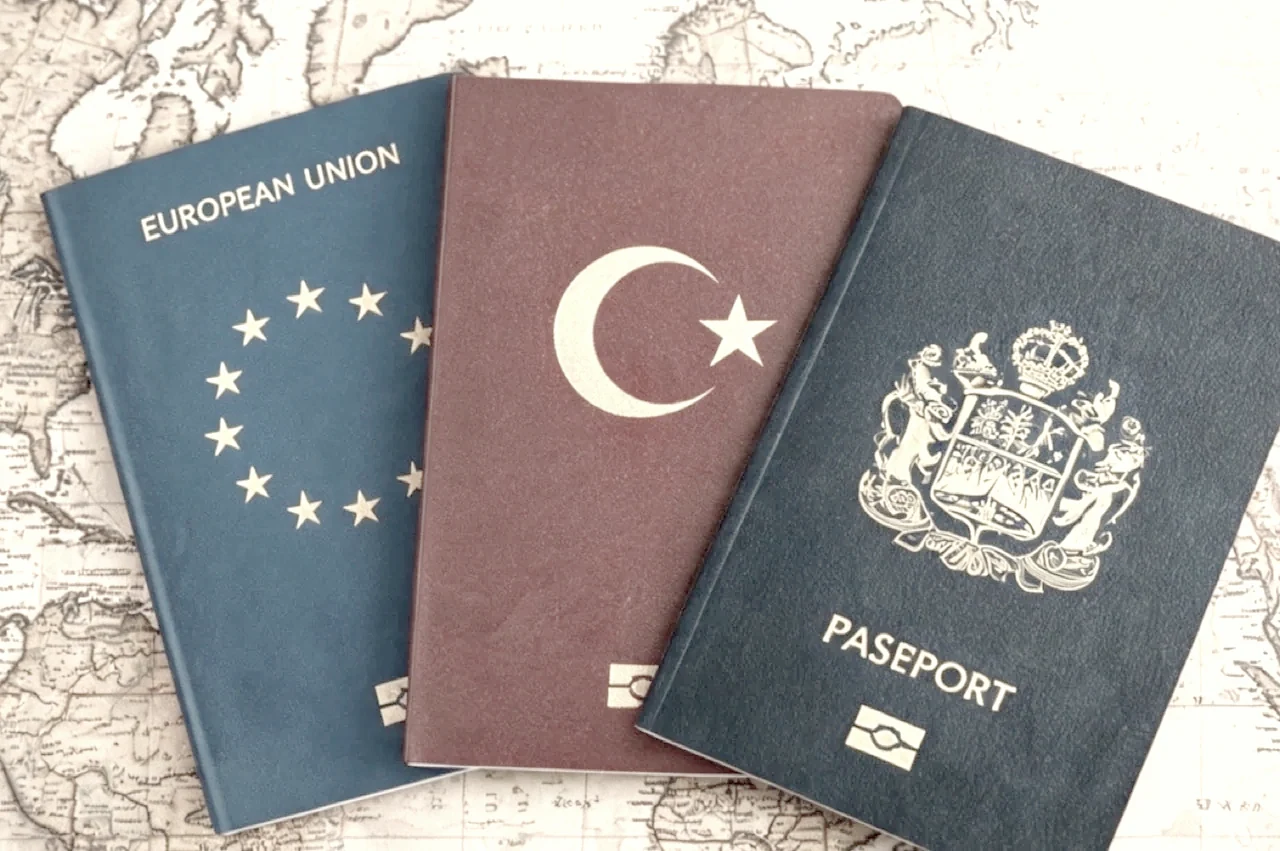 ComparisonMalta, Türkiye or St. Kitts: which passport gives more visa-free travel in 2026
 ArticlePros of St. Kitts citizenship in 2026: how a passport is useful
News+3 stories on 11 November
Related news
 Saint Kitts and Nevis · 25 OctSaint Kitts and Nevis: citizenship for children and grandchildren of citizens born abroad after 1983
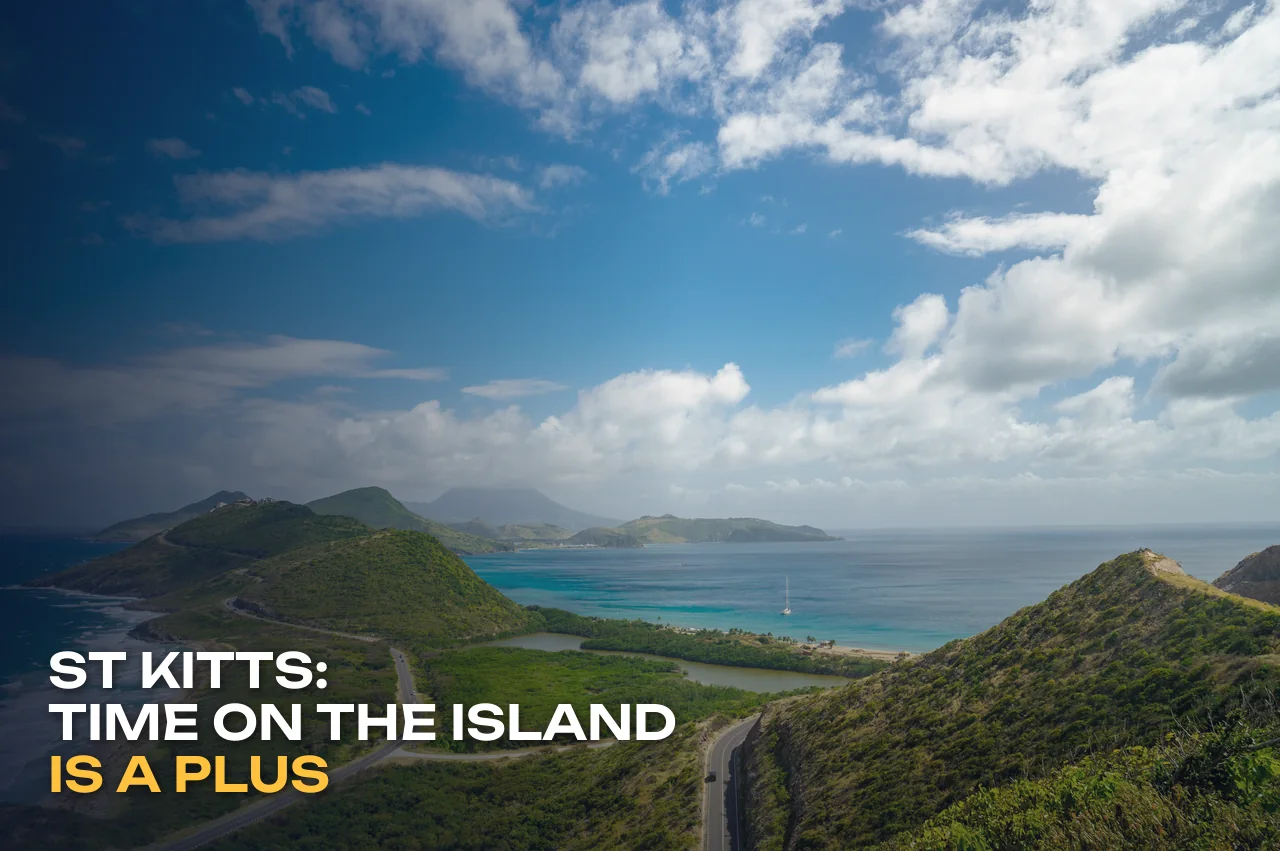 Saint Kitts and Nevis · 21 OctSt Kitts residency requirement: what is announced, what is in force and how to plan a trip to the island
 Saint Kitts and Nevis · 11 OctSaint Kitts and Nevis passport biometrics: who, where, cost and the 31 July 2027 deadline
Personal programme selection is conducted by Anna Kovalevskaya, Head of Legal, BRIDGES.
Applied for St Kitts or already hold the passport? We will draw up a plan for your family
We will check your application, biometrics and passports and advise who in the family to add now.
