Citizenship · Saint Kitts and Nevis
Dual citizenship with Saint Kitts and Nevis in 2026: is it permitted and what are the nuances

Updated: June 2026·9 min read·Expert reviewed
Terms and costs verified: June 2026

Contents
Do you want a second passport but fear you'll have to give up your native one? With Saint Kitts and Nevis, this question doesn't arise. The country freely permits dual and even multiple citizenship. Your previous passport remains with you. Sounds too good to be true? In reality, it is - but with a couple of important caveats. Let's break it down : who has this path open, who doesn't, and what you need to remember if you hold a Russian passport.
Is dual citizenship with Saint Kitts and Nevis permitted
Yes, it is permitted. And this is not a gray area but a clear position of the state. Saint Kitts and Nevis recognizes dual and even multiple citizenship.
What does this mean in practice? You receive a Saint Kitts and Nevis passport while retaining your native one. You do not need to renounce your previous citizenship. No one will ask you to surrender your old passport.
This rule applies to all citizenship acquisition paths - by birth, by descent, through marriage, naturalization, or investment. The investment-based citizenship program (CBI) is the most popular among foreigners here.
Why is this convenient? You maintain your connection to your homeland. You retain the rights of a citizen of your country. And at the same time you add a second passport for travel and a backup plan.
Many countries require renunciation of previous citizenship. Saint Kitts does not. This is its strength. For more details about the program itself, see the guide to Saint Kitts citizenship by investment.
Why you don't need to renounce your previous passport
It's simple. There is no requirement to renounce your native citizenship in Saint Kitts and Nevis law. This is officially established.
When you go through the investment program, the state verifies you, your funds, and your background. But it does not require you to sever ties with your previous country.
After approval, you and your family receive full citizenship. And a passport. Your old document remains valid.
Compare with other countries. For example, India, China, or Japan do not recognize dual citizenship. You would have to choose. With Saint Kitts, there is no need to choose.
An important point. The fact that Saint Kitts permits a second passport does not override the rules of your native country. If your country also allows dual citizenship - everything is clear. If it prohibits it - the question is already about its laws, not about Saint Kitts. More on this below.
Confidentiality: will your country find out
A frequent question. Will Saint Kitts inform your homeland about your new passport? The answer is no, not automatically.
Saint Kitts and Nevis does not notify other states that you have become its citizen. There are no bilateral agreements that would require this.
Moreover, the country does not publish lists of new citizens in official gazettes. Investors' names are not disclosed publicly. Confidentiality is protected by law - this is one of the strongest aspects of the program among Caribbean countries.
But let's be . Complete invisibility in the world of 2026 does not exist. Information can emerge through banks, tax reporting between countries, or at border control.
That is, Saint Kitts itself will not expose you. But this does not mean the fact of second citizenship is hidden forever from all systems. Therefore, concealing it from your country if it requires notification is a bad idea.
Important and : the path is closed for citizens of the RF and Belarus
This needs to be stated directly. Citizens of Russia and Belarus cannot participate in the Saint Kitts investment citizenship program.
The ban was introduced officially. The document is called SRO 27 from 2023 (full name - The Saint Christopher and Nevis Citizenship By Investment Exclusion Order). It was published in July 2023.
Under this document, applications are not accepted from citizens of Russia, Belarus, and also a number of other countries - North Korea, Afghanistan, Iraq, Iran.
There is an additional detail. The restriction applies not only to citizens of these countries. It also covers those who permanently reside in these countries, even with a different passport.
The official reason cited is national security of the Federation. This is not a temporary pause, but a ban enshrined in law.
Therefore, for citizens of the Russian Federation and Belarus, St. Kitts is currently unavailable as a path to dual citizenship. To say otherwise would be dishonest.
What alternatives exist for citizens of the Russian Federation and Belarus
The closed door of St. Kitts is not the end of the story. Outside the Caribbean there are programs that remain open.
Neighboring Grenada will not help here: since March 31, 2023, its program has not accepted applications from citizens of Russia and Belarus either.
Other options for a second passport or residence permit are also considered, where due diligence rules allow working with Russian Federation citizens.
The selection logic for Russians is always the same: enhanced background checks, transparent source of funds, strictly according to law, without circumventing sanctions.
Which country is right for you depends on your goals, budget, and family situation. This is determined individually. If you are interested in a comparison specific to St. Kitts for Russians, there is separate material. St. Kitts citizenship for Russians.
Want a St Kitts passport and keep your Russian one? Ask our lawyer
Our lawyer will answer your questions and tell you where to start.
Interior Ministry notification: rules for Russian residents
This section is important for those who already have dual citizenship or will acquire it through another route. Russia itself permits dual citizenship.
However, there is an obligation. If you permanently reside in Russia and obtain a second passport or residence permit of another country, you must notify the Interior Ministry.
The deadline is 60 days. If you were abroad when obtaining it, the 60-day period begins from the date of entry into Russia.
How to submit? In person at the Interior Ministry office in your place of residence. Or online through Gosuslugi. You can also apply through a consulate abroad, but this is not mandatory.
What happens if you fail to notify? Concealment is subject to liability under Article 330.2 of the Russian Criminal Code—a fine up to 200,000 rubles or community service.
Simple conclusion. Dual citizenship in Russia is legal. But remaining silent about it is not. Notification is a mandatory formality, not an obstacle.
Citizenship is not the same as tax residency
Many people confuse this. Remember a simple rule: passport and taxes are two different things.
Obtaining a St. Kitts passport does not automatically make you its tax resident. Nor does it stop you from being a tax resident of your home country.
Tax residency is determined not by passport. It depends on where you actually live, where your center of interests is, how many days per year you spend in the country.
Therefore, a second passport by itself does not reduce your taxes at home. To change your tax status, you need to change your place of residence and center of interests—that is a separate matter.
St. Kitts does not tax worldwide income of its citizens. But this works for those who have become its actual tax resident, not merely obtained a passport.
Conclusion. Do not expect that a new passport will automatically resolve tax issues. It is a tool for mobility and a backup plan, not a tax scheme.
Why dual citizenship at all
Let me explain simply. Why do people get a second passport if they already have one?
First—mobility. A St. Kitts passport provides visa-free entry to many countries, including the Schengen area and the United Kingdom. To be clear: this is visa-free access, not EU membership.
Second—a backup plan. If things change in your home country, you have a second document and a second route.
Third—freedom for the family. Children gain more opportunities for education and travel.
Fourth—business and accounts. Sometimes a second passport simplifies opening accounts and conducting business abroad.
And the main advantage of dual citizenship specifically—you lose nothing. Your old passport remains. You simply add new opportunities to what you already have. More on the strength of the document is in the material on St. Kitts passport.
"The most common client fear sounds like this: will I have to give up my original passport? With St. Kitts—no, and that relieves half the anxiety immediately. But I always start the conversation with a different question—what is the person's current citizenship? If I have a citizen of Russia or Belarus in front of me, I speak directly: this path has been closed since 2022, and no workarounds work here. Honesty is worth more than beautiful promises. Grenada has also been closed to them since March 31, 2023, so we look for working alternatives among programs without such restrictions. Second, I warn everyone about: a passport is not tax magic. Citizenship and tax residency exist separately. A new document provides mobility and a backup plan, but does not cancel your obligations at home. And third—for Russian residents, remember the Interior Ministry notification within 60 days. It is not scary, it is a formality, but you cannot forget about it. When all three points are discussed, the client makes a decision calmly and without illusions. This is exactly how it should be."
Investment program conditions in brief
For those to whom the path is open, here is the essence of the investment program in a nutshell.
There are two main investment options. A non-refundable contribution to the state fund—from 250,000 USD. Or purchase of an approved property—usually from 325,000 USD with retention for several years.
The amount depends on family composition. The more people in the application, the higher the final figure.
Relocation is not required. Living on the island is not mandatory. The process is conducted remotely.
Timelines are usually several months. St. Kitts is known for very strict due diligence, so there are no quick shortcuts here, and that is for the best—the passport is respected.
Your spouse, children, and other dependent family members can be included in the application. Exact conditions and amounts are best verified for your situation—they are updated periodically.
How the process of obtaining citizenship proceeds
We will break down the path step by step, without unnecessary details.
Step one—preliminary assessment. They check whether you are suitable in principle and whether there are any stop factors related to citizenship and residency.
Step two—document collection. Certificates, proof of source of funds, biography. This is the most labor-intensive part.
Step three—filing the application through a licensed agent. Direct filing is not possible; only through an authorized representative.
Step four—due diligence. The government carefully studies you and the origin of your funds. St. Kitts has a rigorous process.
Step five - investment. After approval, you make a contribution or register the property.
Step six - passport. You and your family become citizens and receive documents. Your previous citizenship remains with you.
Can family members be included?
Yes, and this is one of the main advantages. A second passport is obtained not only by you, but also by your relatives.
The application typically includes a spouse and children.
Additionally, subject to meeting the conditions, you can add other dependent family members - for example, parents. The composition and age limits depend on the current program rules.
Important: each family member undergoes the same screening. You cannot hide someone with a problematic background - everyone is checked.
Back to dual citizenship. All included relatives retain their previous passports. No one renounces anything.
This makes the program family-oriented in spirit. You solve the mobility issue at once for everyone, not just for yourself.
Main questions about dual citizenship: table
We will compile the essentials into one table. This makes it easier to see the full picture.
| Question | Short answer |
|---|---|
| Does Saint Kitts permit dual citizenship? | Yes, and even multiple citizenship |
| Must you renounce your previous passport? | No, your original passport is retained |
| Will Saint Kitts notify my country? | No, it does not notify automatically |
| Is it available to Russian and Belarusian citizens? | No, closed since 2022, by law since 2023 (SRO 27/2023) |
| Must you live on the island? | No, relocation is not required |
| Does the passport change my taxes? | No, citizenship and taxes are separate matters |
| Can family members be included? | Yes - spouse, children, sometimes parents |
| Must a Russian resident notify the Ministry of Internal Affairs? | Yes, within 60 days |
If your question extends beyond the table, it is best to address it individually based on your situation.
Expert review: what to pay attention to
A few candid warnings to conclude. They will protect you from mistakes.
First. Check whether the path is available to you in principle. If you hold a Russian or Belarusian passport, the Saint Kitts program is closed, and promises to circumvent the ban should raise red flags.
Second. Do not confuse passport and taxes. A new document does not automatically make you a tax resident and does not cancel your obligations at home.
Third. If you are a Russian resident with second citizenship through any pathway, do not forget to notify the Ministry of Internal Affairs within 60 days. This is the law.
Fourth. Confidentiality is real, but not absolute. Saint Kitts will not disclose information itself, however banks and tax data exchange do exist.
Fifth. Work only through a licensed agent and with a transparent source of funds. Saint Kitts' strict screening is a plus for the passport's reputation.
Want St Kitts and Nevis citizenship? We will help you get it
We will send a document checklist for your case.
Darya MelnikSenior Investment Programs Advisor, BRIDGES
Bottom line: is Saint Kitts worth considering?
Let us conclude in human terms.
Saint Kitts and Nevis is a convenient dual citizenship option. Your previous passport is retained. You do not need to renounce anything. Confidentiality is protected by law.
You obtain a fast second passport with good mobility, without relocation, for your entire family. The program is respected precisely because of its strict screening.
But about the drawbacks. Russian and Belarusian citizens currently have no access, and Grenada is closed to them too, so alternatives outside the Caribbean are needed. And the passport does not solve tax issues by itself.
If you meet the criteria, this is a powerful tool. If not, there are other open doors worth exploring. Details and pricing can be found on the Saint Kitts and Nevis citizenship program page.
Want to understand which path is right for you and your family? Submit an application - we will review your situation and professionally.
Share this article
Frequently asked
Questions people ask before deciding
01Does Saint Kitts and Nevis permit dual citizenship?
Yes. The country recognizes dual and even multiple citizenship. You don't need to renounce your previous passport.
02Can you hold two citizenships with Saint Kitts?
Yes, you can. You retain your native passport and receive a second one - Saint Kitts. No one asks you to surrender your old document.
03Do you need to renounce your previous citizenship?
No. Saint Kitts law has no requirement to renounce native citizenship. Your previous passport remains valid.
04Will Saint Kitts notify my native country about the new passport?
No, it won't notify automatically. There are no agreements requiring other states to be notified. However, complete anonymity doesn't exist in the world - information may emerge through banks or tax exchange agreements.
05Is the program available to Russian citizens?
No. Since 2023, applications from Russian citizens are not accepted - this is established by document SRO 27/2023. Grenada has also not accepted citizens of Russia and Belarus since March 31, 2023, so alternatives are chosen among programs without such restrictions.
06And citizens of Belarus?
Neither. Belarus is on the list of excluded countries under the same 2023 document. The Saint Kitts path is closed for them.
07Why was the ban introduced for Russia and Belarus?
The official reason is national security of the Federation. This is not a temporary pause but a ban established in law.
08Does a Saint Kitts passport change my taxes?
No. Citizenship and tax residency are different things. A passport by itself does not make you a tax resident and does not cancel obligations in your home country.
09Does a Russian with dual citizenship need to notify the Ministry of Internal Affairs?
Yes, if you permanently reside in Russia. The deadline is 60 days. You can submit your notification in person or through Gosuslugi. This applies to dual citizenship obtained through any pathway.
10Do I need to relocate to the island?
No. Residency on Saint Kitts is not required. The investment-based program operates remotely without relocation.
11Can family members be included in the application?
Yes. Typically, spouses and children are included, and parents may be included subject to certain conditions. All of them retain their previous passports.
12How strong is the Saint Kitts passport?
It is a solid document with visa-free access to many countries, including the Schengen area and the United Kingdom. However, to be : this is visa-free travel, not EU membership.
Transparency
How this material was prepared
- Author
- Darya Melnik, senior Investment Programs Advisor, BRIDGES
- Terms and costs last verified
- June 2026
- Sources
- official government authorities of the relevant country and state publications
- Methodology
- government minimum requirements are stated separately from due diligence charges, state fees, legal and banking costs
Sources and methodology
Figures, terms and timelines are checked against official sources as of June 2026. Link availability verified in August 2026. Third-party blogs and agent websites are not used as a source of programme terms.
- [1]St Kitts and Nevis Citizenship by Investment UnitOfficial conditions of the programmeciu.gov.kn
Methodology: tables and charts state government minimum investment requirements; due diligence charges, state fees, legal, banking and other costs are calculated separately and are not included in the minimum thresholds.
About the author
Related materials
What to read next
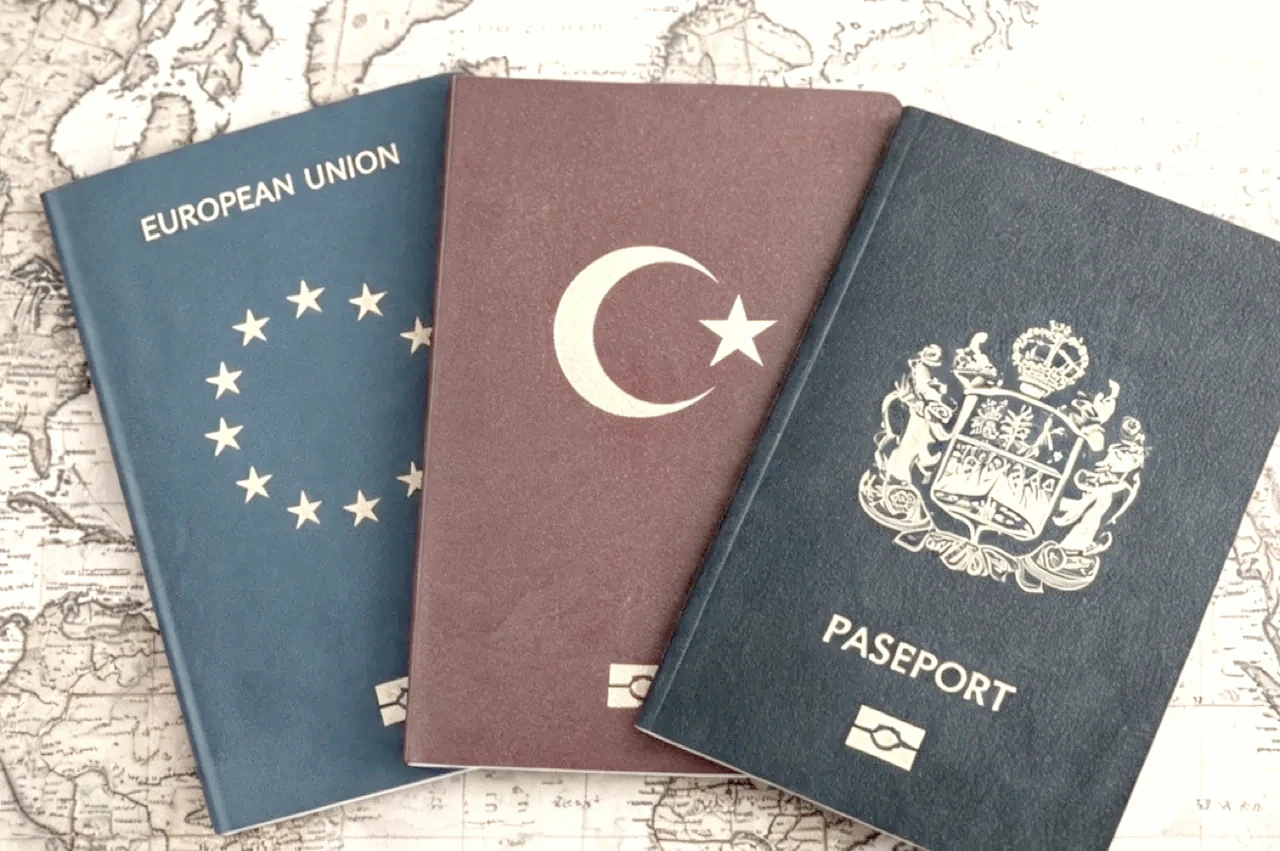 ComparisonMalta, Türkiye or St. Kitts: which passport gives more visa-free travel in 2026
 AnalysisWhat is due diligence and why the Caribbean is rejecting applications
 ArticlePros of St. Kitts citizenship in 2026: how a passport is useful
News+6 stories on 25 October
Related news
 Saint Kitts and Nevis · 25 OctSaint Kitts and Nevis: citizenship for children and grandchildren of citizens born abroad after 1983
 Saint Kitts and Nevis · 21 OctSt Kitts residency requirement: what is announced, what is in force and how to plan a trip to the island
 Saint Kitts and Nevis · 11 OctSaint Kitts and Nevis passport biometrics: who, where, cost and the 31 July 2027 deadline
Personal programme selection is conducted by Anna Kovalevskaya, Head of Legal, BRIDGES.
Comparison of five Caribbean programmes
Amounts, timelines, family composition and requirements in one table.
