Asset protection · International
Beneficial ownership registers: who sees the owner of a company or trust in the EU, UAE and offshore
Updated: November 2026·12 min read·Expert reviewed
Terms and costs verified: November 2026

Contents
Fifteen years ago the owner of a company on an island or in Europe could hide behind a nominee director and shareholder. Today almost every country that registers companies, trusts and foundations keeps a register of ultimate owners, the beneficial owners. The difference lies elsewhere: who has access to the register. In some places it is open to anyone, in others only to authorities and banks. We look at registers in the EU, the UK, the UAE, offshore centres, the US and Russia, and what this means for a family's confidentiality.
Key points
- A beneficial owner is an individual who owns more than 25% of a company or controls it otherwise. For trusts and foundations, the settlor, trustee or council, protector and beneficiaries count.
- EU registers have been kept since 2017. In 2022 the EU Court of Justice held broad public access incompatible with the right to privacy, and many countries closed registers to the public.
- In the UK the register of persons with significant control is open to all, and the register of overseas entities holding property has operated since 2022.
- In the UAE and the British Virgin Islands registers are closed to the public but available to authorities.
- A nominee owner does not hide the beneficial owner: the actual owner is entered in the register, and false information is a breach of the law.
Why beneficial ownership registers appeared
Beneficial ownership registers are part of the international anti-money laundering system. FATF recommendations require authorities to be able to find out quickly who stands behind a company or trust. The EU enshrined this in its anti-money laundering directives: since 2017 member states have had to keep central registers of beneficial owners. The UK, the UAE, Singapore and island jurisdictions introduced similar registers.
For an owner of capital this means one thing: the anonymity of legal structures is a thing of the past. The remaining question is who will see your information. That determines the level of confidentiality, not whether the authorities will find out. A beneficial ownership register works together with CRS exchange and bank checks.
For clients from Russia there is an additional factor. In February 2023 the FATF suspended Russia's membership. This does not change register rules, but banks in many countries apply enhanced due diligence to clients connected with Russia: they look deeper at the ownership chain, ask for more documents on the origin of funds and more often compare client data with registers. So the accuracy of register information is especially important for such clients.
Who is a beneficial owner
| Structure | Who is the beneficial owner |
|---|---|
| Company | An individual who directly or indirectly owns more than 25% or controls the company otherwise |
| Trust | Settlor, trustees, protector, beneficiaries and others who in fact control the trust |
| Private foundation | Founder, council members, protector, beneficiaries and those who in fact control the foundation |
| Company with a nominee owner | The actual owner, not the nominee |
Based on EU anti-money laundering rules and FATF recommendations; thresholds and details vary by country.
The 25% threshold is not the only test. A person who controls the company otherwise is also a beneficial owner: through the right to appoint directors, a shareholders' agreement or a veto. If no one exceeds the threshold by shareholding, the company's senior manager is entered as beneficial owner. For trusts and foundations the circle is wider: all key figures are registered, including the protector, even if he receives no benefit. On roles in a trust, see our article on trusts.
What exactly goes into the register
The set of information is similar across countries. The register records the beneficial owner's full name, date of birth, nationality, country of residence and the nature of his interest: ownership share, voting rights or other means of control. For trusts and foundations the role of each person is stated: settlor, trustee, council member, protector, beneficiary. The closed part of the register holds more data, such as address and document number, while the public, where access is open, sees a reduced set.
The information must be filed by the company or the trustee, not by the beneficial owner. But the beneficial owner must provide the company with information about himself. Changes are made within deadlines set by each country, usually from two weeks to a month. If a company changes owner and the register is not updated, that is a breach even if the transaction itself is entirely lawful.
The register, the bank and discrepancy reports
In the EU, banks, auditors, notaries and other obliged entities do not just read the register; they report discrepancies: if beneficial ownership information obtained from a client does not match the register, the bank must notify the registrar. So any mismatch between what you told the bank and what is recorded in the register quickly becomes known.
Hence a practical rule: the data in the register, bank forms, CRS self-certification and tax authority notifications must match. We check this when preparing bank compliance and opening new accounts.
The EU: from open registers to legitimate interest
The EU's fifth anti-money laundering directive made company beneficial ownership registers open to the general public. Many countries began publishing beneficial owners' names, nationality and month and year of birth. This sparked privacy disputes, and on 22 November 2022 the EU Court of Justice in cases C-37/20 and C-601/20 declared invalid the provision giving any member of the public access to beneficial ownership information: it was a disproportionate interference with the rights to privacy and data protection.
After the ruling many countries closed public access. The EU's new 2024 anti-money laundering package sets out access for competent authorities, banks and other obliged entities, and for persons with a legitimate interest, such as journalists and civil society organisations investigating financial crime. These rules are being introduced in stages, with most applying from 2027.
For a family with a company or foundation in the EU this means: neighbours and competitors will most likely not see your data, but the bank, the tax authority and, under certain conditions, a journalist will. Trusts and similar arrangements administered in the EU or acquiring property in the EU must also be registered.

The United Kingdom: open registers
The UK has gone further than the EU. The register of persons with significant control (PSC) has been kept since 2016 and is open to all at Companies House. Since August 2022 the Register of Overseas Entities has applied: a foreign company owning or buying UK property must register and disclose its beneficial owners, otherwise it cannot deal with the property. Separately, a trust registration service has operated since 2017, with restricted access.
So UK companies, and UK property held through foreign companies, offer the least confidentiality. If privacy matters, a UK structure is chosen knowingly, accepting that the beneficial owner's name will be available to everyone.
Daniel KovachSenior International Law Attorney, BRIDGES
Want to know who will see your information? We will check your structure
We will review the countries of your companies, trusts and foundations and show what information about you is available where.
The UAE and offshore jurisdictions
In the UAE, Cabinet Decision No. 109 of 2023 on beneficial owner procedures has applied since 2023. Mainland and free zone companies must keep a register of beneficial owners with a 25% threshold and file the information with the registrar. The register is not public: registrars and competent authorities have access. The information is checked, and failure to provide it carries fines.
The British Virgin Islands, the Cayman Islands and other island jurisdictions keep registers in secure systems accessible to authorities and, under agreements, to UK and other law enforcement agencies. There is no public access, but the islands are gradually introducing access for persons with a legitimate interest. In any case the bank sees information on an island company when opening an account. On UAE companies, see our articles on a UAE offshore company and on a UAE holding company, and on company registration our company registration page.
Singapore
Since 2017 Singapore has required companies to keep a register of registrable controllers, and since 2020 to file the information with the central register of the regulator ACRA. The register is not public: government authorities have access. For trusts, trustees must know and keep information on the parties to the trust. Singapore is chosen by families who value strong courts, Asia's banking system and confidentiality from the public with full transparency towards the authorities.
Registers and real estate
Real estate is the most visible part of capital. Land registers in many countries are open and show the owner. If a property is held by a company, more and more countries require disclosure of that company's beneficial owner: the UK through the register of overseas entities, EU countries through mandatory registration of trusts and foreign structures that acquire property. So property held through a company offers convenience of management and sale, but not anonymity.
If privacy matters to you, it is achieved by choosing a country where the beneficial ownership register is closed to the public and by having a company or foundation as the owner in the land register. But full information will in any case be with the tax authorities and the bank through which payment is made.
Consequences of breaches
Failing to provide or misstating beneficial ownership information carries fines in almost every country, and criminal liability in some. In addition, a company without up-to-date register information may face practical problems: the bank refuses a transaction, the registrar does not record changes, the notary does not certify a deal. In the UK an overseas company not registered in the register of overseas entities cannot deal with UK property.
After a beneficial owner's death the information must also be updated to show the heirs or the new arrangement of control. If this is not done, the heirs will face blocks. So registers are taken into account in succession planning.
The US: corporate transparency after 2025
In the US, the federal Corporate Transparency Act was meant to require most companies to disclose beneficial owners to FinCEN, the financial intelligence unit. In March 2025 FinCEN, by an interim rule, exempted US companies and US persons, keeping the duty mainly for foreign companies registered to do business in the US. The information is not public. In addition, individual states keep their own registers and requirements.
This does not make US structures "invisible" for tax residents of other countries. For a Russian resident, the duties to report CFCs and accounts apply regardless of where the company is registered, and banks check the ultimate owner in any case.
Russia
Russia has no separate public beneficial ownership register, but under the anti-money laundering law legal entities must know their beneficial owners, keep information on them and provide it to Rosfinmonitoring and tax authorities on request. Information on the members of limited liability companies is in the open Unified State Register of Legal Entities. Russian banks also identify their clients' beneficial owners. For residents' foreign structures there is the system of CFC and participation notifications.
Nominee owners and directors
A nominee shareholder and a nominee director are lawful in many countries but do not hide the beneficial owner. The actual owner is entered in the register, and the nominee must disclose on whose behalf he acts. Providing false information to the register is an administrative and, in some countries, a criminal offence. When opening an account the bank also requires disclosure of the actual owner and evidence of his source of wealth.
So nominee services today are used for convenience of management, not anonymity: for example, when a local director is needed for real substance. We provide nominee directors only in transparent structures where the beneficial owner is disclosed to the bank and registrar.
How to keep reasonable confidentiality
- Choose a country with a closed register. In the EU, UAE and the islands information is not public; in the UK it is.
- Use a foundation or trust. Information on them is usually disclosed to a limited circle.
- Do not hold property through UK companies if privacy matters. The overseas entities register is open.
- Comply with the requirements. Breaches lead to fines and attract attention that destroys confidentiality faster than any register.
Protecting privacy and lawful transparency towards the state are compatible. The goal is that your information is seen by the bank and the tax authority, but not by competitors, fraudsters and random people. This is achieved by choosing the country and structure, not by hiding the owner. The general approach is in our overview of asset protection.
The order of work
Map of structures
List companies, trusts and foundations and their countries of registration.
Register regime
Check whether the register in each country is public and who has access.
Information
Make sure the registers contain accurate and up-to-date data.
Optimisation
If needed, move the structure to a country with a closed register.
Updates
Report changes within the deadlines set by each country.
Common mistakes
- Relying on a nominee owner. The register requires the actual beneficial owner.
- Not updating information. Fines for outdated data exist almost everywhere.
- Buying UK property through a company for anonymity. The overseas entities register is open.
- Confusing confidentiality with secrecy. Nothing can be hidden from the state and the bank.
What this means for you. Beneficial ownership registers have made anonymity impossible, but confidentiality remains achievable: by choosing a country where the register is closed to the public and the right structure. We will check where and to whom information about you is available and propose a structure with reasonable privacy and full transparency for banks and tax authorities.
You can start with an online consultation or our pages on ownership structure and choice of jurisdiction. Terms: beneficial ownership register, AML, due diligence.
More on due diligence: how to find a company's ultimate owner, how to check a foreign company, sanctions and PEP screening, the Due Diligence service.
Share this article
Still have questions? We'll answer for your case
Tell us what you want to solve, and an expert on the topic will contact you.

Frequently asked
Questions people ask before deciding
01Who is a beneficial owner?
An individual who owns more than 25% of a company or controls it otherwise. For trusts and foundations, the settlor, trustee or council, protector and beneficiaries.
02Are EU beneficial ownership registers open?
After the EU Court ruling of 22.11.2022 broad public access is closed. Authorities, banks and persons with a legitimate interest have access.
03Can a nominee shareholder hide the owner?
No. The actual owner is entered in the register, and false information is a breach of the law.
04Where is the register public?
In the UK: the register of persons with significant control and the register of overseas entities holding property are open.
05Does the UAE keep a beneficial ownership register?
Yes, with a 25% threshold, but it is not public and is available to registrars and competent authorities.
06Is there a beneficial ownership register in Russia?
There is no separate public register, but legal entities must know and keep information on their beneficial owners and disclose it to authorities on request.
About the author
Related materials
What to read next
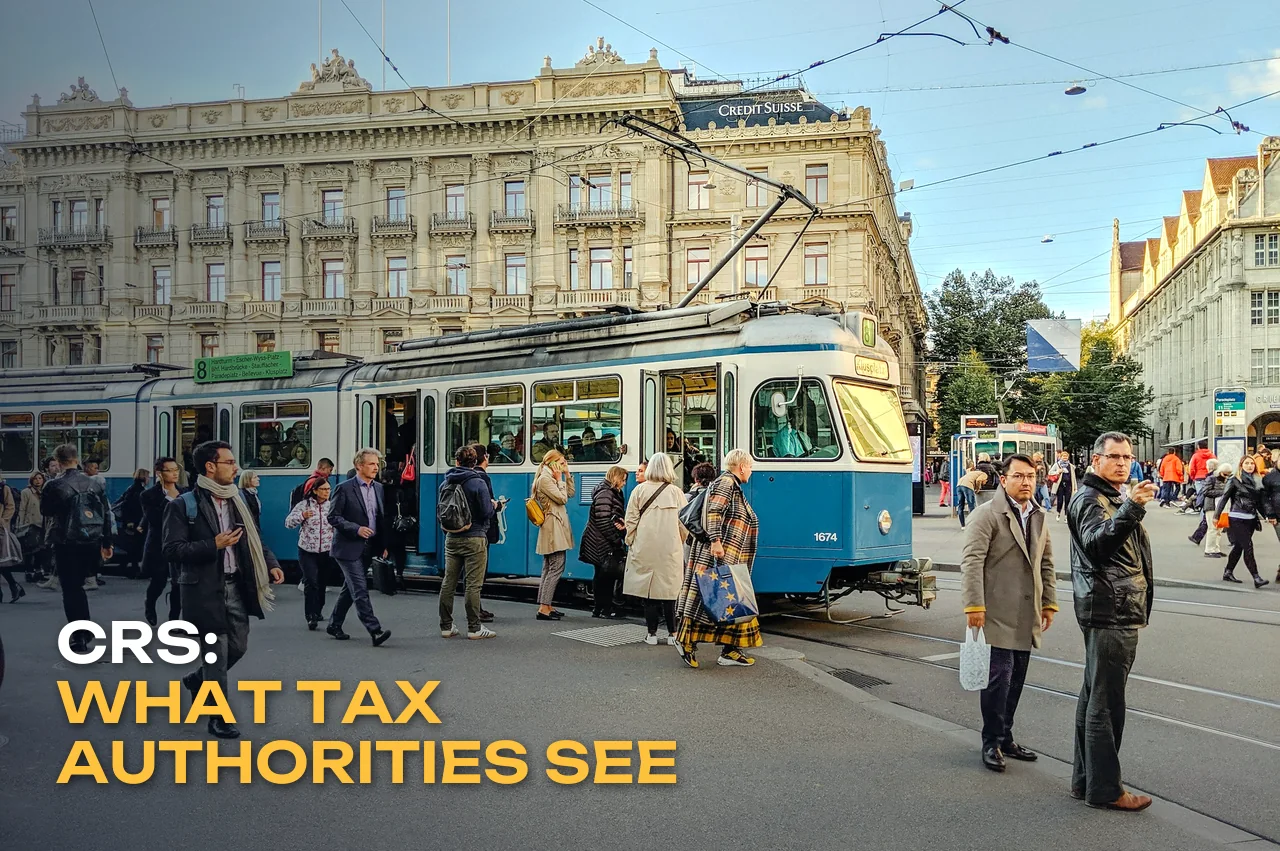 ArticleAutomatic exchange under CRS: what information about your accounts tax authorities receive
 ArticleTrusts and foreign companies of Russian residents: CFC rules, notifications and tax
 ArticleThe trust: how it works, who owns the property and when it really protects
News+3 stories on 11 November
Related news
 Saint Lucia · 11 NovSaint Lucia replies to the EU on its citizenship programme: letter withheld, programme open
 Greece · 11 NovGreece introduces a 10% tax on cryptocurrency gains from 2027
 Malaysia · 11 NovMalaysia reopens DE Rantau on 1 December: up to four years, but USD 36,000 for tech roles
Personal programme selection is conducted by Anna Kovalevskaya, Head of Legal, BRIDGES.
Does your family's privacy matter? Write to us and we will choose a structure
We will check where and to whom information about you is visible and propose a country and structure with a closed register.
