Asset protection · Russia
Inheritance funds in Russia: how to set one up and how it differs from a foreign foundation
Updated: November 2026·12 min read·Expert reviewed
Terms and costs verified: November 2026
Contents
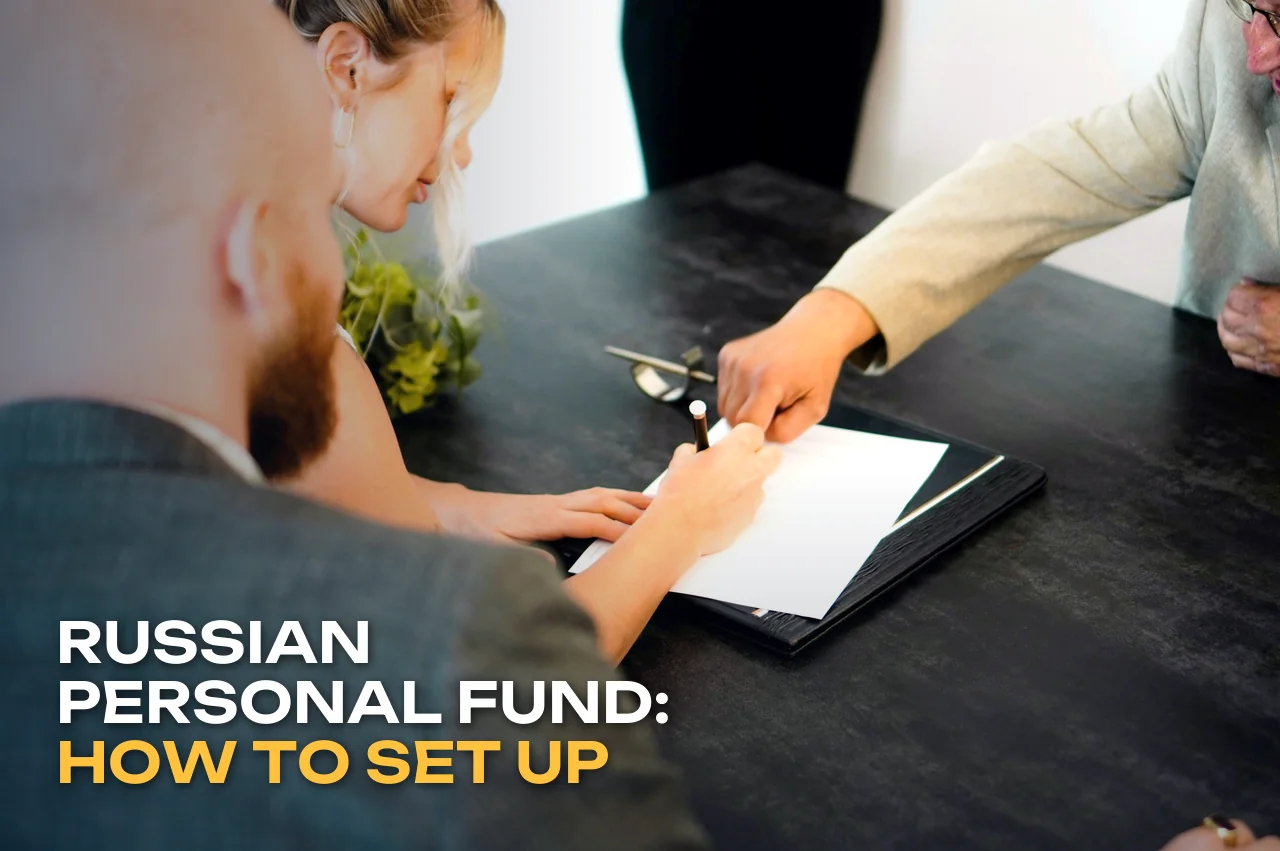
For many years business owners in Russia handled succession through foreign trusts and foundations. Since 2019 the Civil Code has had an inheritance fund, and since 2022 a personal fund that can be created during one's lifetime. It is a Russian organisation without members that owns family property and manages it under the founder's rules. We look at how both types of fund work, how much property is needed, how the fund is liable for debts and when it is better than a foreign one.
Key points
- A personal fund is a unitary non-commercial organisation that a citizen creates to manage his property under terms he approves (Art. 123.20-4 of the Russian Civil Code).
- In his lifetime the founder transfers property with a market value of at least RUB 100 million. No threshold applies to an inheritance fund created under a will.
- A lifetime fund bears subsidiary liability for the founder's debts for three years from creation. In exceptional cases a court may extend this, but to no more than five years.
- A beneficiary's rights cannot be enforced against for the beneficiary's own debts.
- A Russian fund suits Russian assets. For foreign accounts and companies, a foreign foundation or trust is usually chosen.
What personal and inheritance funds are
A personal fund is a unitary non-commercial organisation. A citizen creates it for a fixed term or indefinitely so that the fund manages the property transferred to it under terms the founder approved himself. The property belongs to the fund, and the founder has no rights to it. The fund may carry on business consistent with the purposes in its charter and may create or participate in companies.
The law distinguishes two types. A lifetime personal fund is created by the founder's decision certified by a notary. An inheritance fund is created after the death of a citizen who provided for it in his will: the notary handling the estate applies for registration, and the fund is called to inherit. The name must include the words "personal fund" or "inheritance fund".
The founder can be a single citizen. Co-founding is not permitted, with one exception: spouses may set up a fund together if they transfer joint property into it. The founder cannot be replaced. This matters for families where the business belongs to both spouses: the fund can be set up jointly, but the composition of property and the rules have to be agreed in advance.
| Personal fund in lifetime | Inheritance fund | |
|---|---|---|
| When created | In the founder's lifetime, by his notarised decision | After death, under a will, by the notary handling the estate |
| Minimum property | At least RUB 100 million at market value | No threshold |
| Liability for founder's debts | Subsidiary, for 3 years from creation; a court may extend to 5 years | None |
| Founder's rights | May change the management terms unless the charter forbids it | Rules fixed after death, except as provided by law |
| Registration deadline | General rules | No later than one year after the estate is opened |
Based on Art. 123.20-4 and 123.20-8 of the Russian Civil Code as amended by Federal Law No. 237-FZ of 08.08.2024.
How a fund is created in one's lifetime
The founder decides to create the fund and approves its charter and management terms. A notary certifies the decision, and the management terms also require notarisation. The charter is the constitutional document that sets out the fund's bodies and how they work. The management terms are the key document for the family: they record who the beneficiaries are, what distributions they receive and when, and how property may be disposed of.
The management terms are confidential unless the law or the charter requires otherwise. During his lifetime the founder may change them unless the charter prohibits it. After the founder's death the terms generally do not change, except in cases expressly provided by law, for example by court decision if they have become impossible to carry out.
When a lifetime fund is created, the founder transfers property with a market value of at least RUB 100 million. This can be a stake in a company, real estate, securities or money. The valuation is done by an appraiser, and it deserves care: an understated value invites disputes with the tax authority and creditors, while an overstated one leads to extra taxes on later transactions.
How an inheritance fund is created
An inheritance fund is provided for in a will. The will must contain the decision to establish the fund, its charter and management terms, and must be certified by a notary. After the testator's death the notary handling the estate applies to register the fund within three working days of opening the estate. If the notary fails to do so, the fund can be created by court decision at the request of the executor or a beneficiary.
There is a strict deadline: an inheritance fund cannot be registered more than one year after the estate is opened. Before registration the notary invites the people named in the establishment decision to join the fund's bodies. If someone refuses and the bodies cannot be formed otherwise, the fund will not be created. So the will should name reserve candidates or a procedure for choosing them, otherwise the whole arrangement may fail.
An inheritance fund is useful when the owner does not want to re-register the business during his lifetime but wants the company not to be split among heirs and to be professionally managed after his death. No minimum property threshold applies. But the forced share under Article 1149 of the Civil Code continues to apply: minor and disabled children and a disabled spouse and parents will receive at least half of their share by law. Succession with assets in several countries is covered in our article on international estate planning.
Who manages the fund
The fund's bodies, their functions and members are determined by the charter and management terms. The law allows a sole executive body, collegial bodies such as a supreme collegial body and a board of trustees, and a supervisory body. The supervisory body can approve transactions, terminate the powers of the head if he breached the duty to act in good faith and reasonably, and appoint a temporary head.
After the founder's death the bodies are formed and changed under the charter. If the required bodies are not formed within one year, for example no head is appointed, the fund may be liquidated at the request of beneficiaries or an authorised state body. So the charter should provide in advance a list of people from whom replacements are chosen and how managers are paid.
Anna KovalevskayaHead of Legal, BRIDGES
Considering a personal fund for the family business? We will assess whether it suits you
We will compare a Russian personal fund, a foreign foundation and a trust for your assets and prepare documents.

The fund and debts: of the founder, beneficiaries and the fund itself
For asset protection the liability rules are what matter. The founder bears subsidiary liability for the fund's obligations if the fund's property is insufficient. The reverse link is limited in time: a lifetime fund bears subsidiary liability for the founder's obligations for three years from creation. In exceptional cases a court may extend this period if creditors had good reason for not making claims in time, but to no more than five years from creation. An inheritance fund is not liable for the founder's debts.
A beneficiary's rights cannot be enforced against for his own debts. A beneficiary is not liable for the fund's obligations, and the fund is not liable for the beneficiary's. This is a strength of the fund: if an heir runs into debt or difficulty, his creditors cannot take the fund's property. But money a beneficiary has already received becomes his property.
These rules should not be confused with immunity from challenge. Transferring property to the fund is the founder's transaction, and in his bankruptcy it can be challenged under the general rules of Article 61.2 of the Bankruptcy Law: a transaction with unequal consideration within one year, and one harmful to creditors within three years before the petition is accepted. Details are in our article on creditor protection.
Beneficiaries' rights
A beneficiary is entitled to receive property in accordance with the management terms: the amount and timing of distributions are set by the document, not by the heir's wishes. He can obtain information about the fund's activities where the charter provides for it. He may demand an audit by an auditor of his choice at his own expense, although the board of trustees may decide to reimburse the cost from the fund. If the management terms are breached and the beneficiary suffers losses, he may claim compensation if the charter provides for it.
This allows the founder to set sensible rules: for example, unlimited payments for education and medical care, a monthly allowance from a certain age, and large sums only with the consent of the board of trustees. Such rules protect young heirs from mistakes and from pressure by third parties.
Taxation of a personal fund
The Tax Code sets special rules for personal funds. A 15% profit tax rate is available to them if the conditions of paragraph 1.18 of Article 284 of the Tax Code are met. Distributions to beneficiaries who are Russian tax residents are subject to personal income tax at 13% and 15% under the progressive scale in force since 2025, and to non-residents at 30%. Certain distributions may be exempt depending on the beneficiary's relationship to the founder and when the payment is made.
The tax consequences of transferring property to the fund, of distributions and of the fund selling assets must be calculated before it is created. The tax rules on funds changed in 2024 and continue to be refined, so the calculation is made under the current text of the Code and Ministry of Finance guidance as at the date of the decision. We do this calculation as part of tax coordination.
A Russian fund or a foreign one
| Criterion | Russian personal fund | Foreign private foundation |
|---|---|---|
| Law | Russian Civil Code, Art. 123.20-4 to 123.20-8 | The law of the foundation's country |
| Convenient for holding | Russian companies, real estate and accounts in Russia | Foreign accounts, portfolios, companies |
| CFC notifications to the tax authority | Not needed: the fund is Russian | Needed if the founder is a controlling person |
| Protection from founder's creditors | Weaker in the first 3 years, then property is separated | Depends on the country and timing of the transfer |
| Attitude of foreign banks | Limited: a Russian organisation | Depends on the country and bank |
A Russian personal fund naturally suits Russian assets: stakes in LLCs and joint-stock companies, real estate, accounts in Russian banks. It avoids CFC notifications and is familiar to Russian courts and notaries. A foreign foundation or trust is more convenient for property abroad: foreign banks are reluctant to work with Russian organisations, and transferring a foreign account to a Russian fund is difficult in practice. So many families use both: a Russian fund for assets in Russia and a foreign foundation for the rest.
Restrictions on transactions with foreign persons and requirements for strategic companies also need to be considered, for example Decree No. 750 on state consent to disclosure of information and the sale of foreign assets by strategic companies. Before choosing, check whether such restrictions apply to your assets.
The fund, relocation and a second passport
Many personal fund founders also obtain a residence permit or second citizenship and spend more and more time abroad. A Russian fund does not stop working because of this: it remains a Russian organisation, and its bodies continue to manage the property under the charter. But the family's tax picture changes. If the founder or a beneficiary ceases to be a Russian tax resident, the 30% non-resident rate applies to distributions to him, and his new country of residence may tax those distributions under its own rules.
Tax residence in Russia is determined by the 183-day rule within 12 months, and abroad by the country's law and international treaties. So on relocation three things are checked: where the founder will be resident, where the beneficiaries will be resident, and how the fund's distributions will be treated in each country. The basics are in what tax residence is, and choosing a country in our review of the best countries for tax residence.
There is also a practical point: a founder living abroad finds it harder to take part in the fund's bodies and handle matters with a Russian notary. If you plan to relocate, provide in the charter for remote participation in meetings and for trusted persons who will represent you in Russia.
The order of work
Purpose and assets
Decide which assets go into the fund and what rules you want to set for the family.
Type of fund
Decide whether to create the fund in your lifetime or provide for an inheritance fund in your will.
Valuation and taxes
Value the property and calculate taxes on transfer and distributions.
Documents
Prepare the decision, charter and management terms; name members of the bodies and reserve candidates.
Notary and registration
Have the documents certified by a notary and register the fund.
Review
Update the management terms as the family and business change, while the charter allows it.
Common mistakes
- Creating a fund while in debt. For three years the fund is liable for the founder's debts, and the transfer may be challenged.
- Not naming reserve members of the bodies. Without them an inheritance fund may not be registered.
- Forgetting the forced share. Heirs may claim it even after the fund is created.
- Placing foreign assets in a Russian fund. In practice this complicates dealing with foreign banks.
- Not discussing it with the family. Beneficiaries should know the rules and the people managing the fund.
What this means for you. If your business and real estate are in Russia and you want the company not to be split among heirs after you, a personal or inheritance fund is a clear Russian instrument. For capital abroad a foreign foundation or trust will suit better. We will help you choose, prepare the documents and calculate the taxes.
You can start with an online consultation or our page on family and succession planning. A comparison of structures is in private foundation or trust, the general approach in our overview of asset protection, and inheritance tax with two passports in our article on inheritance tax. Terms: foundation, inheritance tax.
Share this article
Still have questions? We'll answer for your case
Tell us what you want to solve, and an expert on the topic will contact you.
Frequently asked
Questions people ask before deciding
01How much property is needed to create a personal fund?
In his lifetime the founder transfers property with a market value of at least RUB 100 million. No threshold applies to an inheritance fund.
02Is the fund liable for the founder's debts?
A lifetime fund bears subsidiary liability for the founder's debts for three years from creation; a court may extend this to five years. An inheritance fund is not liable.
03Can an heir's creditors take the fund's property?
No. A beneficiary's rights cannot be enforced against for his debts. But distributions he has received become his property.
04Who can be a founder?
A single citizen. Co-founding is not allowed, except for spouses transferring joint property into the fund.
05What if an inheritance fund is not registered in time?
It cannot be registered more than a year after the estate is opened. So the will should name reserve members of the fund's bodies.
06A Russian fund or a foreign one?
A Russian fund suits assets in Russia and needs no CFC notifications. For foreign accounts and companies a foreign foundation or trust is usually chosen.
About the author
Related materials
What to read next
 ArticlePrivate foundation or trust: which suits a family with capital
 ArticleSuccession with property in several countries: wills, applicable law and EU Regulation 650/2012
 ArticlePrivate foundations abroad: Liechtenstein, Austria, Panama, Malta and the UAE compared
News+3 stories on 11 November
Related news
 Russia · 29 OctRussia: the Bank of Russia brings crypto payments under foreign trade contracts into currency control
 Russia · 29 OctRussia: CFC profit to be taxed without the RUB 10 million threshold from 2027
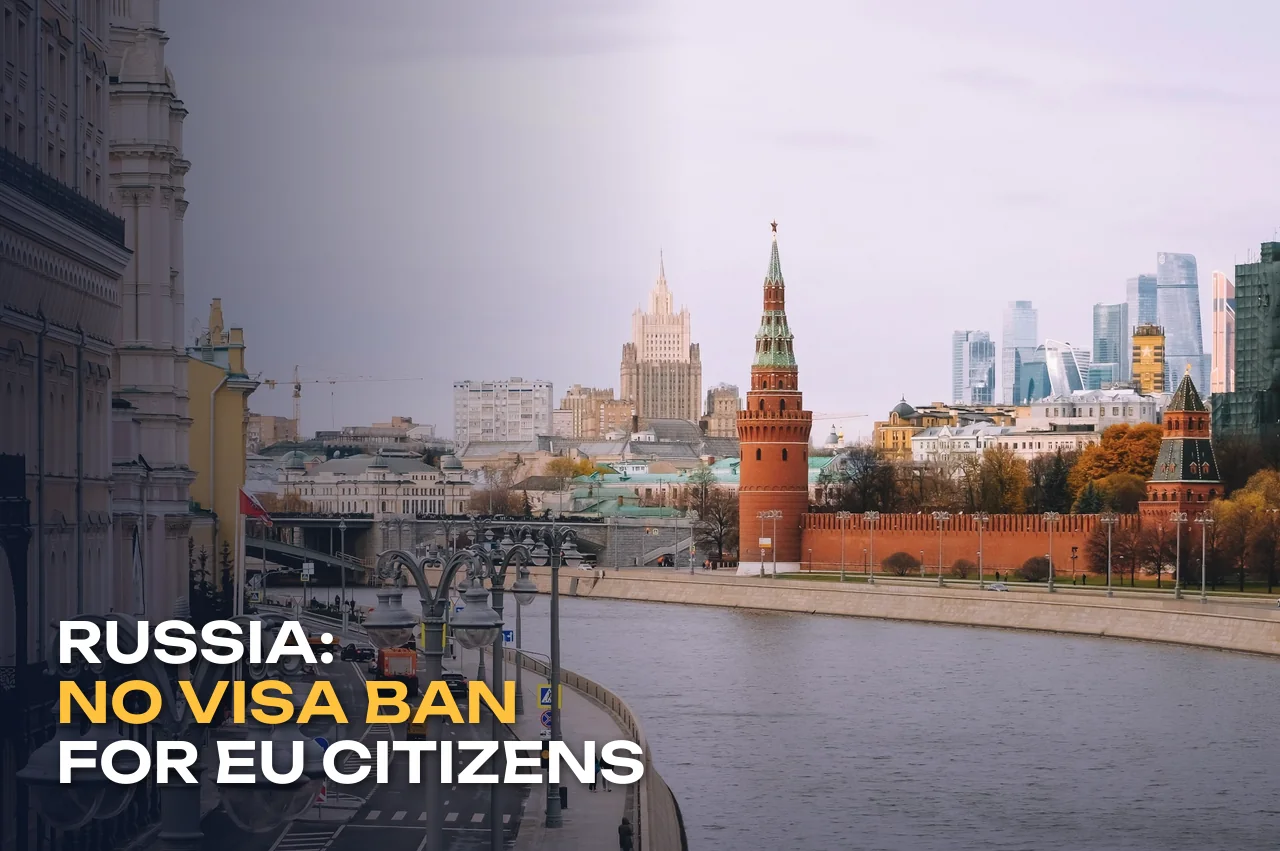 Russia · 28 OctRussia's Foreign Ministry: no full visa ban for EU citizens in response to tighter Schengen rules
Want to preserve the business for your family? Write to us and we will set up a fund
We will prepare the charter and management terms, calculate taxes and accompany you at the notary.