News · Russia
Russia's Foreign Ministry: no full visa ban for EU citizens in response to tighter Schengen rules
Updated: October 2026·10 min read·Expert reviewed
Terms and costs verified: October 2026
Contents
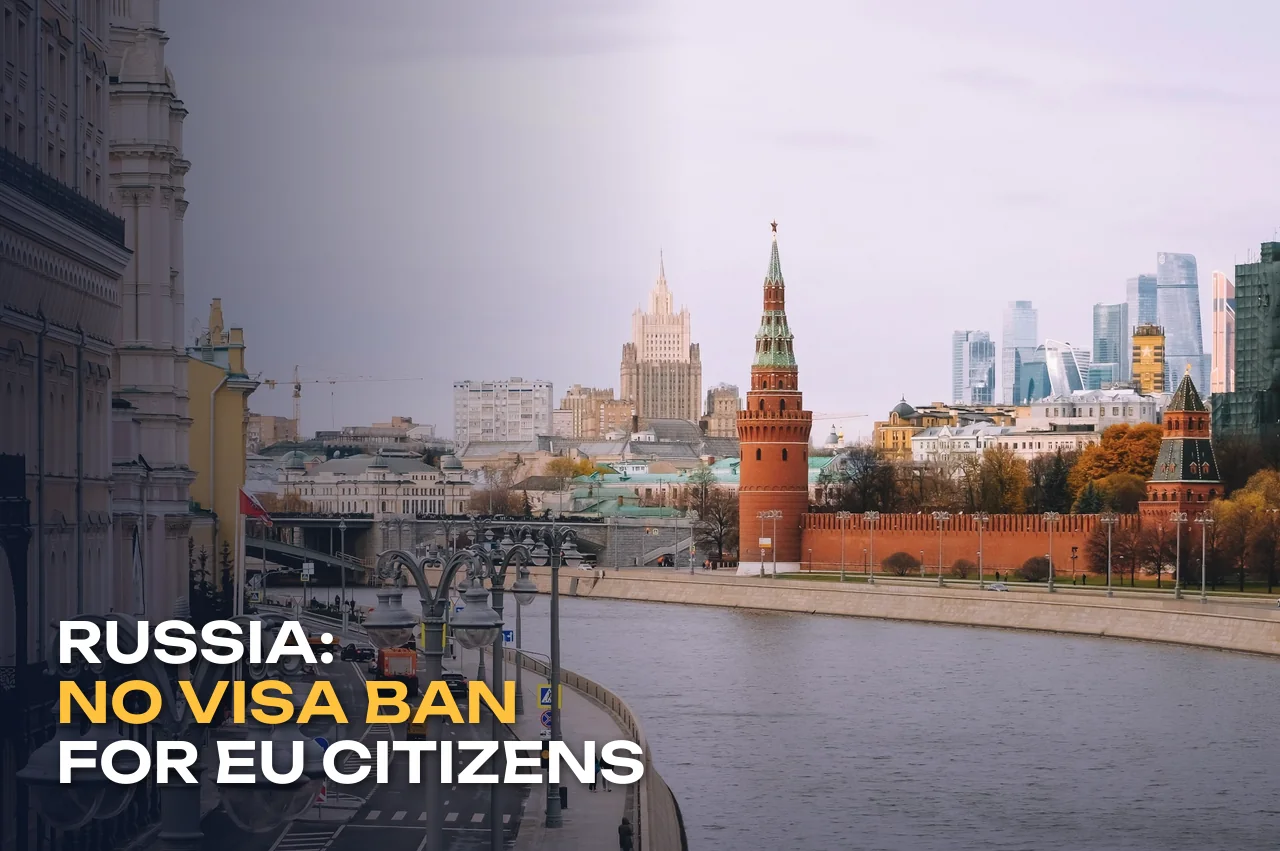
On 28 October 2026 Russia's Deputy Foreign Minister Alexander Grushko said Russia would not fully ban visas for EU citizens, even if the European Union tightens visa rules for Russians. Moscow allows for specific restrictions, but a mirror ban, in his words, does not fit its foreign policy line. I explain what lies behind the statement, what is happening with Schengen visas for Russians now, and how to plan travel to Europe in 2026-2027.
In brief
- On 28 October 2026 Deputy Foreign Minister Alexander Grushko stated that Russia would not respond with a full visa ban for EU citizens to tighter visa rules for Russians.
- He said specific restrictions were possible, but Russia would not apply the principle of a mirror response in this matter.
- The trigger was the Commission's plans to tighten Schengen visa issuance for Russians. Finland and Estonia proposed a full ban on tourist visas, and Latvia's prime minister also called for stopping them.
- As of 28 October 2026 there is no EU decision on new rules for Russians. Valid visas remain valid until they expire.
- Nothing changed for travel from Russia to the EU because of this statement: it concerns how Russia will issue visas to Europeans.
What the deputy minister said
Alexander Grushko made the statement on 28 October 2026. Grushko oversees relations with European countries at the ministry. He said Russia had never resorted to a total visa ban for Europeans and would not do so, even if the EU introduced new restrictions for Russians. The gist of his words: if the other side does foolish things, Russia will not repeat them.
At the same time Grushko did not rule out specific measures. This is a standard diplomatic formula: a country keeps the right to respond selectively, for instance by easing or tightening certain visa categories, introducing special procedures for specific persons or changing processing times. The interview did not say what exactly might follow. As of 28 October there is no official document changing the rules for issuing Russian visas to EU citizens.
| Date | What happened |
|---|---|
| 9 September 2022 | the Council fully suspended the visa facilitation agreement with Russia: EUR 80 fee, longer processing, stricter documents |
| 19 September 2022 | Estonia, Latvia, Lithuania and Poland restricted entry for Russians on tourist Schengen visas |
| 1 August 2023 | Russia introduced a unified e-visa, including for citizens of most EU countries |
| December 2023 | Finland closed its land border crossings with Russia |
| October 2026 | the Commission announced plans to tighten Schengen visa issuance for Russians |
| 28 October 2026 | Deputy Foreign Minister Alexander Grushko: there will be no full visa ban for EU citizens in response |
What this means for you. This is a statement of Russian intentions, not a new rule. For Russians travelling to Europe it changes nothing: Schengen visas are issued by EU countries under their own rules.
What the EU is proposing
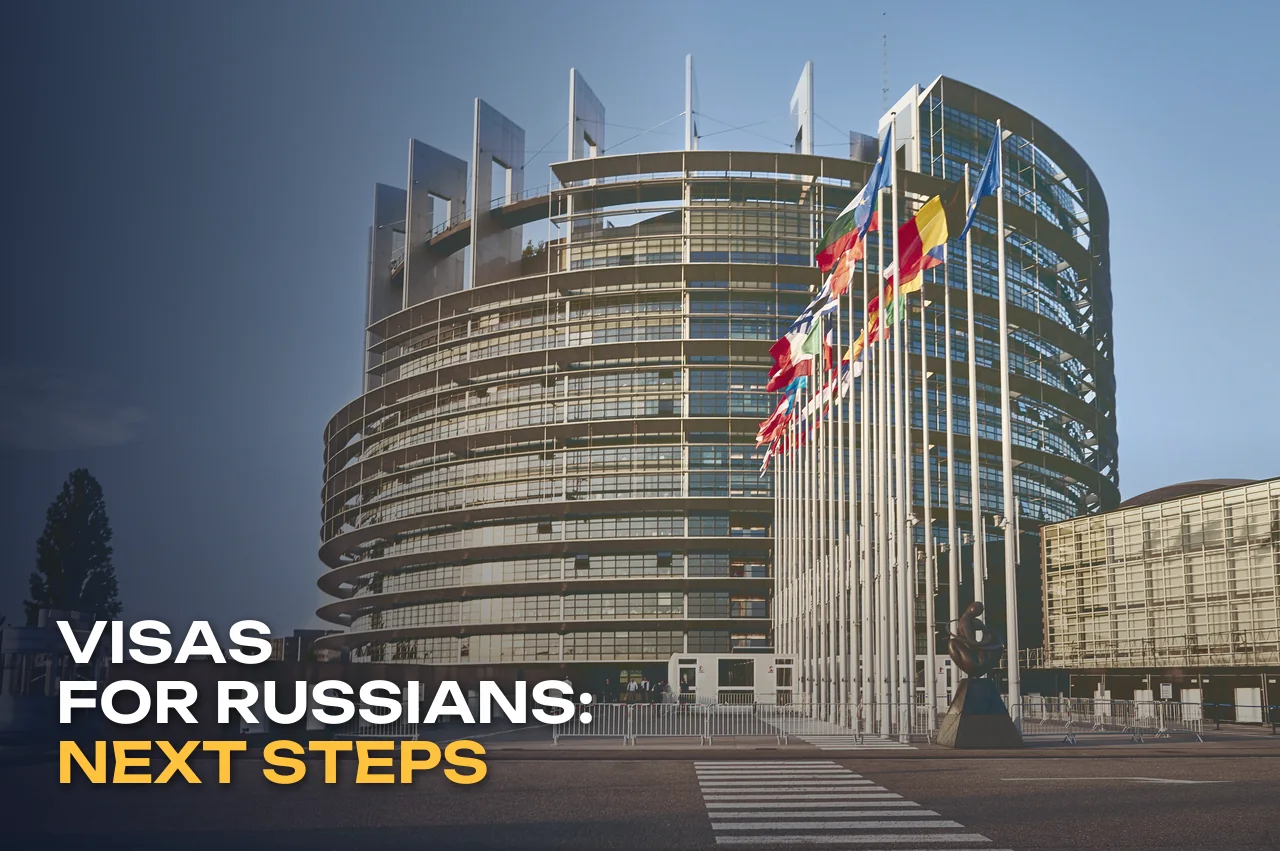
The statement was prompted by debates in the EU. The Commission announced plans to tighten Schengen visa issuance for Russians, mainly by moving away from multiple-entry visas towards single-trip visas and visas valid only in the issuing country. We covered this in detail in our stories on single-country visas, Schengen for Russians in October and limited territorial validity visas.
Some countries go further. Finland and Estonia proposed fully banning tourist visas for Russians and restricting entry for certain categories. Latvia's prime minister also called for an end to tourist visas. But Schengen visa policy is shared, and a common ban requires the agreement of EU countries. As of 28 October 2026 there is no such decision. Several countries already restrict entry for Russians on tourist visas on their own: Estonia, Latvia, Lithuania and Poland have done so since September 2022, and Finland closed its land border in December 2023.
Separately, the EU is also tightening its general migration policy. On 27 October 2026 the Commission proposed tripling Frontex and making it the lead agency on returns; see our story on Frontex. It is not a visa measure, but it shows the overall direction: control at external borders is getting stronger.
What this means for you. The main risk for Russians is not Russian counter-measures but EU visa decisions. If you travel to Europe regularly, follow Council decisions and the rules of the specific country you apply to.
How Schengen visas are issued to Russians now
Since 9 September 2022 the EU-Russia visa facilitation agreement has been fully suspended. For Russians this means an EUR 80 visa fee instead of the former EUR 35, longer processing, more documents and fewer multiple-entry visas. EU consulates decide for themselves how many applications to accept and which visas to issue. In practice, issuance varies widely between countries: some consulates still issue multiple-entry visas, others only single-trip ones.
A valid visa lets you enter Schengen, with a caveat. Countries that have restricted entry for Russians on tourist visas may refuse a person holding another country's visa. So before travelling it is worth checking the rules not only of the issuing country but also of the countries of entry and transit. At external borders the EES entry/exit system records each entry and counts days automatically. The launch of ETIAS for visa-exempt travellers has been postponed and does not concern Russians travelling on visas.
| Who you are | What matters now |
|---|---|
| Russian with a valid Schengen visa | the visa stays valid until it expires, but entry to some countries may be limited by their own rules |
| Russian planning to apply for a visa | expect longer processing and visas for a single trip or a single country |
| Russian with residence in an EU country | residence gives the right to enter your country and travel in Schengen for up to 90 days in any 180 |
| Russian with a second citizenship | enters Schengen under the rules of the second passport, if they are visa-free |
| EU citizen travelling to Russia | according to the ministry, Russia will keep issuing visas, including e-visas |
What this means for you. If you apply for a Schengen visa in the coming months, allow more time and prepare a full set of documents. A multi-year multiple-entry visa is harder to get now than before.
Tired of visas? We will arrange EU residence
We will choose a programme that lets you enter Schengen without a visa.
Daniel KovachSenior International Law Attorney, BRIDGES
How Russia issues visas to EU citizens
Since 1 August 2023 Russia has issued a unified e-visa to citizens of 55 countries, including most EU countries. It is obtained online, is single-entry, is valid for 60 days from issue and allows a stay in Russia of up to 16 days. Alongside it, ordinary consular visas remain: tourist, business, private, work and others. According to Grushko, Russia will keep this system even if Schengen rules are tightened.
For business this is a practical signal. European partners of Russian companies, investors and relatives of Russians living in the EU can still count on obtaining Russian visas. Restrictions, if any appear, are likely to be targeted. We will follow official decisions and report if the rules change.
Why Russia is rejecting a mirror response
A mirror response is common practice on visas: if one country introduces visas, raises fees or restricts issuance, the other does the same. Russia has responded this way in some cases before, for example over diplomatic expulsions. But on visas for ordinary EU citizens it has acted differently since 2022: it introduced no general ban and in 2023, on the contrary, opened a simplified e-visa to Europeans that can be obtained online within a few days.
There are practical reasons for this approach. The flow of Europeans to Russia is small, but it matters for part of the economy: business trips, investors, specialists, relatives of Russians living in the EU, and tourists from countries with a calmer attitude to travel to Russia. A full ban would hit these people and Russian business first of all. Moscow is also showing that it is the EU, not Russia, that imposes restrictions, which is part of its negotiating position.
This also matters for Russians living in the EU. Their spouses and children with EU citizenship will still be able to get Russian visas to visit relatives. If a child has dual citizenship, they must enter Russia on a Russian passport: Russian rules require this, and it does not depend on visa policy.
What may happen next
The most likely scenario for the coming months is further tightening by the EU without a full ban. The Commission may propose a common approach to visas for Russians: fewer multiple-entry visas, more checks, single-country visas. A full tourist visa ban requires the agreement of EU countries, and some of them, especially in southern Europe, depend on tourists and are against it. So a decision, if there is one, is likely to be a compromise.
On Russia's side, judging by Grushko's words, the response will be targeted. Changes are possible for certain categories, such as lawmakers, officials or journalists from countries that introduce bans first, but not for all EU citizens. For Russians the practical conclusion is the same: EU decisions are decisive for travel, and reliable protection against them is residence or a second citizenship.
Why residence is more reliable than a visa
For those who need Europe regularly, a residence permit solves the visa problem more reliably than any forecast. Residence in a Schengen country gives the right to live there and travel around the Schengen area for up to 90 days in any 180 without a visa. EU decisions on tourist visas do not apply to residence permit holders: a residence card is issued under different rules and is renewed if programme conditions are met.
Several investor residence programmes are open to Russians. The Greek Golden Visa is the best known, with property from EUR 250,000 in certain cases. Portugal offers fund investment. There are programmes in Hungary, Cyprus and Malta. Their presence requirements differ and are compared in the guide to presence requirements. For frequent travellers, a second citizenship remains an option: a Vanuatu passport, Turkish citizenship and other citizenship by investment programmes.
When choosing, consider how the programme fits with Russian citizenship. Russia allows dual citizenship, but a second citizenship and residence permit must be notified within the set deadline. Permanent residence in an EU country is usually available after five years of legal residence, and citizenship after a longer period and with language knowledge.
What this means for you. If travel to Europe matters to you, do not build plans on tourist visas. Residence or a second citizenship protects you from visa policy changes that are now happening every few months.
What to do
You have a valid visa
Check its expiry and the rules of entry and transit countries. Do not plan entry through countries that have restricted tourist visas.
You plan to apply for a visa
Apply early, with a full set of documents and proof of the purpose of travel.
You travel to Europe regularly
Consider residence in a Schengen country: it does not depend on decisions about tourist visas.
You host European guests
Their visas to Russia are processed as before, including e-visas.
You follow the news
Council decisions on visas for Russians may come in the next few months. We will report them.
We keep a timeline of EU visa decisions for Russians in our analysis of Schengen visas in 2027. New visa rules for Russians in the Balkans are in our story on Montenegro visas, and checks inside Schengen in the one on Italy and Spain. The terms Schengen and visa-free travel are explained in the glossary. To discuss residence, book an online consultation; all BRIDGES services are on the home page.
Need freedom to travel? We will find residence or a second passport
We will tell you what suits your timeline, budget and travel.
Daniel KovachSenior International Law Attorney, BRIDGES
How this article was prepared
Sources: the statement by Russian Deputy Foreign Minister Alexander Grushko of 28 October 2026; Council Decision 2022/1500 on the full suspension of the visa facilitation agreement; the joint statement of Estonia, Latvia, Lithuania and Poland of 8 September 2022; the Russian government resolution on the unified e-visa. This article does not replace a consultation.
Share this article
Frequently asked
Questions people ask before deciding
01What did the Russian Foreign Ministry say about visas for EU citizens?
On 28 October 2026 Deputy Minister Alexander Grushko said Russia would not fully ban visas for EU citizens, even if the EU tightens visa rules for Russians. He did not rule out specific measures.
02Have Schengen visa rules for Russians changed?
As of 28 October 2026 there is no new EU decision. The Commission announced plans to tighten them, and some countries already restrict entry on tourist visas.
03Is my Schengen visa still valid?
Yes, until it expires. But countries that have restricted entry for Russians on tourist visas may refuse you on another country's visa.
04Does an EU residence permit holder need a visa?
No. Residence in a Schengen country gives the right to enter that country and travel in Schengen for up to 90 days in any 180 without a visa.
05How do EU citizens get a visa to Russia?
Through a consulate or online as a unified e-visa. According to the ministry, this system will remain.
About the author
Related materials
What to read next
 NewsThe Commission promises new steps on visas for Russians: what changes now and who should apply
 NewsEuropean Union: Germany proposes single-country Schengen visas for Russians
 AnalysisSchengen is narrowing for Russians, and a backup plan is best built before 2027
News+7 stories on 28 October
Related news
 Russia · 27 OctBank of Russia: cash deposits from RUB 5 million will need proof of source
 Russia · 26 OctRussia: tax service sends requests about foreign accounts after the 2025 data exchange
 Russia · 23 Oct68% of home purchases abroad are for residence: what a 9-month 2026 market study showed
Personal programme selection is conducted by Anna Kovalevskaya, Head of Legal, BRIDGES.
Tired of visas? We will arrange EU residence
We will choose a programme that lets you enter Schengen without a visa.
