News · Spain
Spain: foreigners' share of home purchases hits a record 16% as prices peak

Updated: November 2026·8 min read·Expert reviewed
Terms and costs verified: November 2026

Contents
In the third quarter of 2026 foreigners made 16.05% of all home purchases in Spain, the highest share ever recorded by the Spanish Association of Registrars. At the same time the overall market has shrunk for a third quarter in a row and prices are hitting new highs. Spaniards are buying less, foreigners are sustaining demand, and that is exactly why their share is rising.
In brief
- Foreigners' share of home purchases in Q3 2026 was 16.05%, a record according to the Spanish Association of Registrars. That is more than 26,300 transactions.
- 54.7% of foreign purchases were by EU citizens and a further 17.8% by buyers from other European countries.
- Leading nationalities: British (7.5% of foreign purchases), Moroccan (6.4%) and Dutch (5.8%).
- The repeat-sales price index rose 15.8% year on year to an all-time high. The average price is EUR 2,512 per square metre.
- Total sales were 164,148, down 5.9% year on year and the lowest in nine quarters.
What the registrars' data show
The Spanish Association of Property Registrars has published its third-quarter 2026 statistics. Registrars count transactions entered in the property register, so their data are considered among the most accurate for the Spanish market. The quarter's key figures:
| Indicator, Q3 2026 | Value |
|---|---|
| Foreigners' share of home purchases | 16.05%, a record |
| Home purchases by foreigners | over 26,300 |
| Total home sales | 164,148, a nine-quarter low |
| Sales year on year | -5.9% |
| Repeat-sales price index, year on year | +15.8%, an all-time high |
| Average price | EUR 2,512 per sq m |
At first glance the picture is contradictory. There are fewer sales, for the third quarter running. Prices are rising faster than a year ago. And the foreign share has reached a record. All three trends have one explanation: local buyers are leaving the market because of prices and mortgage costs, while foreigners, who more often buy without a loan or with a large down payment, keep buying.
What this means for you. If you are buying a home in Spain, you are competing less with local buyers and more with other foreigners in popular regions. That is a reason to choose the region carefully and not overpay on a wave of demand.
The decline is visible in both segments. New homes accounted for 34,611 sales, 0.9% fewer than the previous quarter. Resale homes made up most deals, 129,537, and fell 2.6%. The quarterly decline affected ten autonomous communities and 27 provinces, so this is not one resort's local story.
The British remain the largest group of foreign buyers, even though since leaving the EU they may stay in Spain visa-free for no more than 90 days in 180. Many of them obtain non-lucrative residence to live in the home they bought for longer. It is a good example of how property and status in Spain are now handled separately.
Who is buying and where
More than half of foreign purchases, 54.7%, are by EU citizens. A further 17.8% are by Europeans from outside the EU, above all the British. The British remain the largest group at 7.5% of all foreign purchases, followed by Moroccan (6.4%) and Dutch (5.8%) citizens.
Foreign demand is concentrated on the islands and the Mediterranean coast. In the Balearic Islands foreigners made 37.2% of all purchases, in the Valencian Community 30.4%. In all other autonomous communities the share is below 30%.
| Region | Foreigners' share of purchases | Average price per sq m |
|---|---|---|
| Balearic Islands | 37.2% | EUR 4,502 |
| Valencian Community | 30.4% | - |
| Community of Madrid | below 30% | EUR 4,565 |
| Basque Country | below 30% | EUR 3,693 |
| Catalonia | below 30% | EUR 2,989 |
| Canary Islands | below 30% | EUR 2,850 |
Regional prices show where foreign demand presses hardest on the market. The Balearic Islands have almost caught up with Madrid on average price. The Balearics also have some of the strictest tourist rental rules in the country: we recently reported on a record fine for illegal rentals in Ibiza. Buying there to let to tourists without checking the licence is a major risk.
Maria StavruReal Estate Analyst, BRIDGES
Buying a home in Spain? We will check the property and price before the deposit
We will compare the price with the local market, check the documents and the rental licence.
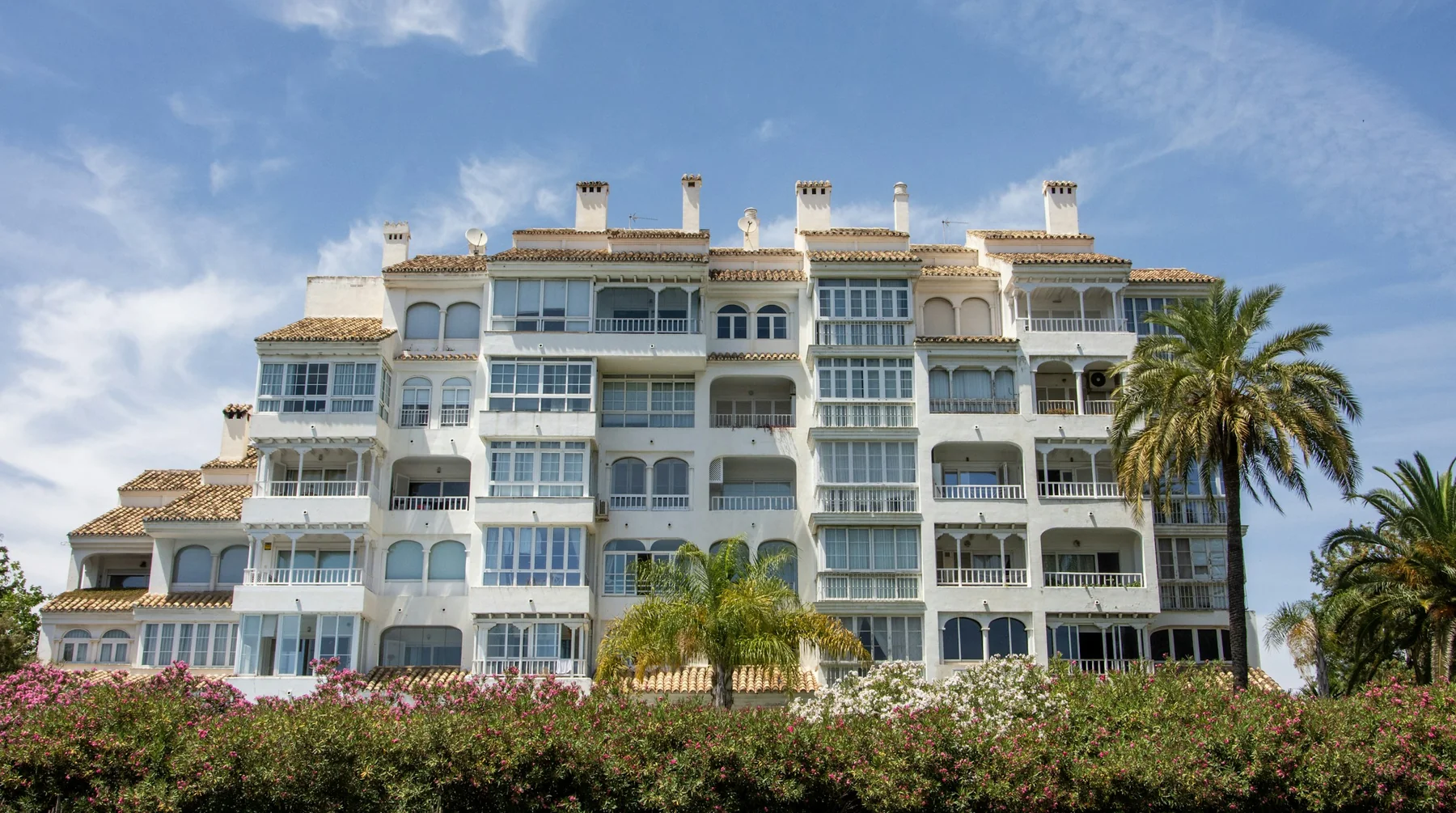
Prices: a new high
The registrars' repeat-sales price index rose 15.8% over the year and 5.2% over the quarter, taking it to an all-time high. The average home price is EUR 2,512 per square metre. Resale homes averaged EUR 2,462 per square metre (+0.6% on the quarter) and new homes EUR 2,701 (+2.5%).
The average price under another method is rising more slowly: +1% on the quarter and +9.3% on the year. The difference is that the repeat-sales index compares the same properties, while the average price depends on which homes sold in the quarter. For a buyer the index matters more: it shows how much more the same apartment now costs.
The most expensive homes among provincial capitals are in San Sebastian at EUR 6,662 per square metre, followed by Madrid (EUR 5,597), Barcelona (EUR 5,124), Palma (EUR 4,408) and Bilbao (EUR 3,877). How prices compare with Spanish incomes is covered in our report on prices and wages.
Why notaries' and registrars' figures differ
An attentive reader will spot a contradiction. On 1 November we reported that foreigners bought 13% fewer homes in the first half and that their share fell to 18.3% according to notaries. Now registrars report a record share of 16.05%. Both figures are correct; they simply count different things.
Notaries record a sale when it is signed before a notary; registrars record it when it is entered in the property register, usually later. They use different bases, periods and definitions of a foreign buyer: notaries, for example, separate resident and non-resident foreigners. So compare trends within one source rather than figures across two. Both notaries and registrars show the same thing: the overall market is shrinking while prices rise.
How to read these figures
Registrars' data reflect transactions already entered in the register, so they lag slightly behind actual signings. A deal signed before a notary at the end of June may appear in third-quarter statistics. This is not an error but a feature of the source, worth bearing in mind when comparing quarters. The registrars' fourth-quarter data will come out in early 2027, and we will analyse them in the same detail.
Mortgages are shrinking too
In the third quarter 124,145 home mortgages were registered, 3.9% fewer than the previous quarter. Mortgages accompany 75.6% of sales. Over the past twelve months 519,388 mortgages were granted, 6% more than a year earlier, so it is too early to speak of a credit crunch.
Most mortgages in the quarter were in Andalusia (23,635) and Catalonia (23,268), followed by Madrid (18,240) and the Valencian Community (15,692). The highest mortgage amount per square metre is in Madrid (EUR 3,158) and the Balearics (EUR 2,987). A non-resident foreigner finds a Spanish mortgage harder and more expensive to obtain, which is why the share of foreigners among cash buyers is higher.
What a purchase costs on top of the price
Record prices are only part of the budget. Buying a resale home in Spain incurs property transfer tax. Its rate is set by the autonomous community and is usually 6% to 10% of the price. Buying a new home from a developer instead incurs 10% VAT plus stamp duty, also at a regional rate.
On top of taxes come the notary, land registry registration and, if you borrow, mortgage costs. In practice the full purchase budget is 10-14% above the property price. In the Balearics, where foreigners buy most, the price per metre is already EUR 4,502, and regional differences in transfer tax turn into tens of thousands of euros on a single apartment.
A non-resident needs a Spanish foreigner's tax number (NIE) and a Spanish bank account. Owning a home also brings annual costs: local property tax and, for non-residents, tax on deemed income from the property even if it is not let. All of this should be calculated before the deposit, not after.
Our forecast
We expect foreigners' share of Spanish purchases to stay high in 2027. Local demand is held back by prices and the cost of credit, while foreigners more often buy with their own money and in regions where locals already cannot compete. At the same time the total number of sales is likely to keep falling and price growth to slow: three consecutive quarters of declining sales are the first sign of that.
For buyers this means negotiating will become easier in 2027, especially for resale homes outside the main resort areas. In popular regions with a high foreign share, prices will hold up longer. Political pressure on foreign buyers will persist: the Canary Islands restrictions and rental rules are not the last measures of their kind.
Property and residence after the Golden Visa closed
Since April 2025 buying a home in Spain no longer gives residence: the Golden Visa was closed. Record foreign demand is holding up without the programme, which matters for understanding the market: people buy homes to live in and for holidays, not for status. Those who need residence can use non-lucrative residence for the financially independent or the digital nomad visa for remote workers. The procedure is described in our non-lucrative residence guide.
Restrictions on foreign buyers are a separate issue. The Canary Islands are discussing a 10-year residence requirement to buy homes, and rent caps apply across the country. If you are considering a property to let, see also our article on renting for foreigners in 2026.
What a buyer should do
Compare regions
The Balearics and the Valencian coast are the most competitive for foreigners. Inland regions and the north are cheaper and calmer.
Check the property and documents
Registration, debts, tourist rental licence. Fixing a mistake after purchase costs far more.
Budget with taxes
Transfer tax or VAT, notary and registration come on top of the price. Rates depend on the region.
Sort out status separately
Buying a home does not give residence. If you plan to live in Spain, choose a suitable permit before buying.
Our team carries out pre-purchase property checks and sources homes through our real estate section. If you are choosing between countries, compare Spain with Greece and Portugal, and find background on the Spain page. You can discuss your purchase in an online consultation.
Share this article
Frequently asked
Questions people ask before deciding
01What share of Spanish homes do foreigners buy?
In Q3 2026, 16.05% of all purchases, a record according to the Spanish Association of Registrars.
02Which nationalities buy most?
British (7.5% of foreign purchases), Moroccan (6.4%) and Dutch (5.8%). More than half of purchases are by EU citizens.
03Where do foreigners buy most often?
In the Balearic Islands, where they account for 37.2% of all purchases, and the Valencian Community at 30.4%.
04Why did notaries report a fall in foreign purchases?
Notaries and registrars count transactions at different moments and on different bases. Compare trends within one source.
05Does buying a home in Spain give residence?
No. The property Golden Visa closed in April 2025. Non-lucrative residence or the digital nomad visa are the options.
About the author
Related materials
What to read next
 NewsSpain: foreigners bought 13% fewer homes as the market falls for an eighth month
 NewsSpain: housing up 80% in ten years while wages rose 28%
 GuideRenting a home in Spain as a foreigner in 2026: prices, the contract and tenant rights
News+12 stories on 9 November
Related news
 Spain · 9 NovSpain: the digital nomad permit will need EUR 3,001 a month from 2027
 Spain · 31 OctSpain: Extremadura will again pay remote workers up to EUR 10,000 to move, but conditions are stricter
Personal programme selection is conducted by Anna Kovalevskaya, Head of Legal, BRIDGES.
Want to buy a home in Spain without overpaying? We will find and check the property
We will compare regions, check the documents and price and take the deal through to registration.
