News · Spain
Spain sets the 2027 digital nomad threshold at EUR 3,001, and the election does not change it

Updated: November 2026·8 min read·Expert reviewed
Terms and costs verified: November 2026
Contents
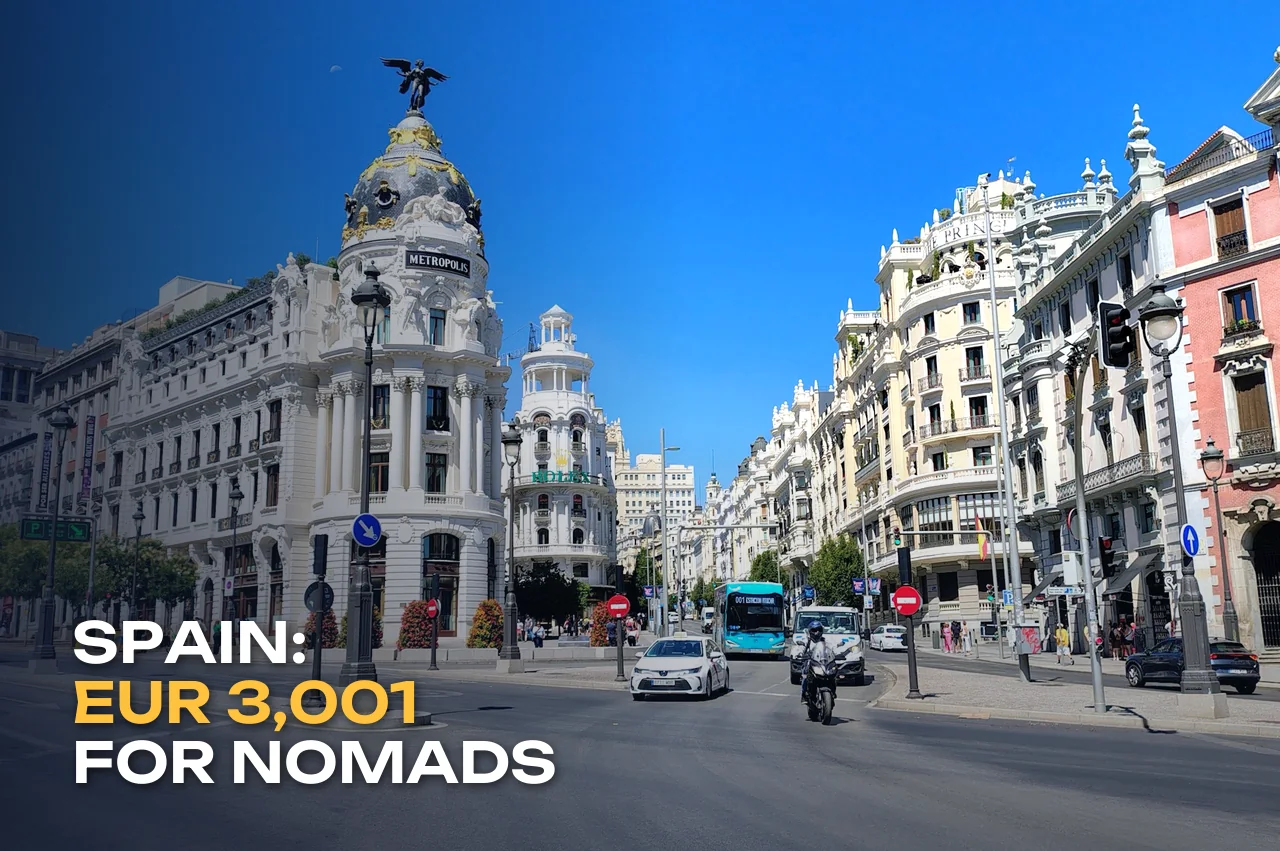
On 17 November 2026 the Spanish government approved the 2027 minimum wage: EUR 18,004 a year, or EUR 1,286 a month over 14 payments. With it, the income required for the digital nomad residence permit rises from 1 January: EUR 3,001 a month for a single applicant. The general election on 29 November is 11 days away, but it does not affect the programme itself: the permit is set in law, and a dissolved parliament cannot change the law.
Key points
- Real Decreto 1013/2026 sets the 2027 minimum interprofessional wage (SMI) at EUR 18,004 a year, an increase of 5.3%. It applies from 1 January to 31 December 2027.
- The income threshold for the digital nomad permit is 200% of the SMI. From 1 January 2027 that is EUR 3,001 a month for the main applicant instead of EUR 2,849.
- A family of three will need EUR 4,501 a month instead of EUR 4,274.
- Real Decreto 806/2026 dissolved the Congress and the Senate. The general election takes place on Sunday 29 November 2026, and the new chambers sit on 23 December.
- The nomad permit conditions are set out in Articles 74 bis to 74 quinquies of Law 14/2013. The election does not change them, and applications continue to be accepted.
What the government approved
Spain's minimum wage is set each year by the government in a separate royal decree. This usually happens in January or February: the 2026 decree, Real Decreto 126/2026, was issued on 18 February. This time the Ministry of Labour sped up the procedure because of the election. The draft went to consultation in early November, and on 17 November the Council of Ministers approved it.
The amount matches the draft we covered in our news story "Spanish digital nomad permit to require EUR 3,001 from 2027": EUR 1,286 a month over 14 payments, EUR 18,004 a year. That is EUR 65 a month and EUR 910 a year more than in 2026. At the same time the government adopted Real Decreto-ley 38/2026 on a tax credit so that minimum wage earners pay no income tax. It was published in the BOE on 18 November and states the new SMI amount directly.
For immigration programmes the annual amount is what counts. It is divided by 12 months, giving EUR 1,500.33. The threshold for the main nomad applicant is 200% of that figure, EUR 3,000.67, or EUR 3,001 rounded. The first family member adds 75% of the SMI, and each further member 25%.
| Applicant | Until 31 December 2026, per month | From 1 January 2027, per month |
|---|---|---|
| Single applicant (200% of SMI) | EUR 2,849 | EUR 3,001 |
| Family of 2 | EUR 3,918 | EUR 4,126 |
| Family of 3 | EUR 4,274 | EUR 4,501 |
| Each additional family member | +EUR 357 | +EUR 376 |
What this means for you. If you apply for the digital nomad permit before the end of 2026, you need to show at least EUR 2,849 a month. From 1 January 2027, at least EUR 3,001. For those whose income falls between the two amounts, filing in December is a real advantage.
The 29 November election and what it means for residence permits
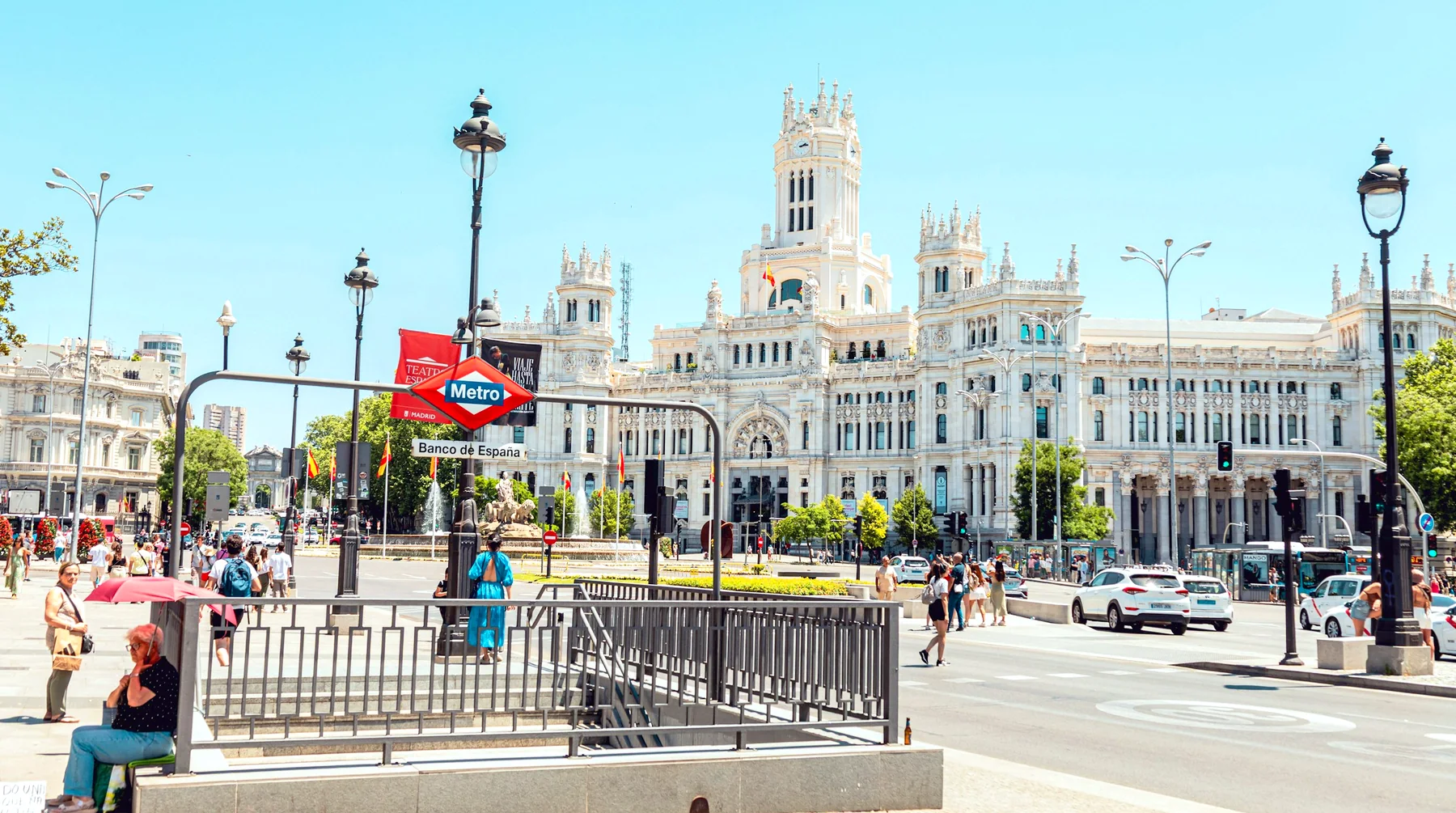
On 5 October 2026 the Council of Ministers, on the prime minister's proposal, decided to dissolve parliament. Real Decreto 806/2026 was published in the official gazette BOE on 6 October and came into force the same day. The Congress of Deputies and the Senate elected on 23 July 2023 were dissolved, and a new election was called for Sunday 29 November 2026.
| Date | What happens |
|---|---|
| 6 October 2026 | Real Decreto 806/2026 published in the BOE and in force, the Cortes dissolved |
| 13-27 November 2026 | election campaign |
| 17 November 2026 | Council of Ministers approves the 2027 minimum wage |
| 29 November 2026 | general election to the Congress and the Senate |
| 23 December 2026 | first sittings of the new chambers |
| 1 January 2027 | new minimum wage and new income thresholds |
For foreigners who live in Spain or plan to move, one point matters: an election does not repeal or suspend existing laws. The digital nomad permit was introduced in 2023 as Chapter V bis of Law 14/2013 on support for entrepreneurs. Changing or abolishing it requires a new law, which parliament passes. Dissolved chambers do not pass laws, and bills that had not completed their passage lapse on dissolution.
That is what happened with the golden visa. It was abolished not by a government decision but by Organic Law 1/2025, which went through the Cortes. Applications for investment residence stopped on 3 April 2025. Details are in our article on the Spanish golden visa. Any similar change for nomads would have to follow the same route, which is impossible until a new parliament is formed.
After the election the government will act in a caretaker capacity until a new cabinet is approved. Under the Government Act it handles current business in that period and does not submit new bills to parliament. The Ministry of Inclusion, the consulates and the large companies unit UGE continue to accept and process applications as usual.
Irena SokolovskaHead of European Practice, BRIDGES
Want to file for the nomad permit under the 2026 threshold? We will prepare the documents
We will check your income and your contract with the employer or clients and file the application before year end.
Which conditions stay the same
Apart from income, the requirements for nomads do not change. They are set out in Law 14/2013 and apply in the same way before and after the election.
- Work for a company outside Spain or for foreign clients. If you work as a professional, Spanish clients may account for no more than 20% of your activity.
- A university degree, a vocational or business school diploma, or at least 3 years of professional experience.
- The company you work with has carried on real activity for at least a year.
- Your employment or contractual relationship with it has lasted at least 3 months before filing and allows remote work.
- Health insurance, a criminal record certificate and the general requirements for foreigners.
There are two filing routes. A remote work visa is issued by a consulate for up to 1 year, and 60 days before it expires you can apply for a residence authorisation. If you are already lawfully in Spain, you can apply online to UGE for a residence authorisation for up to 3 years at once. According to published consular guidance, UGE decides such applications within 20 days. The permit is renewed for 2 years if the conditions are still met. All the steps are in our digital nomad guide and in the article "Spain's digital nomad visa".
Taxes are worth checking separately. A nomad who spends more than 183 days a year in Spain becomes a tax resident and may opt for the special regime for relocated workers. We covered its conditions in "The digital nomad visa and taxes".
A worked example for a family
Take a family of three: the main applicant works as a designer for an agency in Germany, and a spouse and child move too. In 2026 this family needs to show EUR 4,274 a month: EUR 2,849 for the main applicant, EUR 1,068 for the spouse and EUR 357 for the child. From 1 January 2027 it is EUR 4,501: EUR 3,000.67, EUR 1,125.25 and EUR 375.08, with the total rounded up. The difference is EUR 227 a month, or EUR 2,724 a year.
If the applicant's salary is EUR 4,400 gross, in December 2026 the family clears the threshold with EUR 126 to spare. In January 2027 the same salary falls EUR 101 short, and the application would need other income to support it or a later date. Income of other family members and savings can be taken into account, but each such source must be documented, and the consulate assesses them according to its own practice.
That is why we advise checking the threshold not against an annual average but against each month that will be included in the application. Bonuses, one-off payments and exchange rate swings for those paid in a currency other than the euro can move the result either way.
What happens to those who already hold the permit
The new threshold does not only concern new applicants. The nomad permit is renewed if the conditions on which it was granted are still met, and income is checked again on the renewal date. So someone who received a 3-year permit in 2024 and renews it in 2027 will have their income measured against EUR 3,001 a month. If your salary has grown more slowly than the minimum wage, recalculate it in advance. The same applies to family members added to the permit later: each one raises the required income from the date of their application.
When to apply
The threshold is calculated from the minimum wage in force on the filing date. So anyone heading to Spain in the coming months has a simple choice. If the documents are ready, filing in December 2026 pays off: you need to show EUR 2,849, not EUR 3,001. If not, plan for the new amounts straight away and show income with a margin.
The margin is needed because income is checked for recent months through statements, certificates and contracts. If even one month falls below the requirement, the permit may be refused. Income is counted gross, before tax. Documents in a foreign language must be translated into Spanish, and official certificates need an apostille. Certificates such as a criminal record check have a limited validity, usually a few months, so order them last, once the rest of the package is ready and the filing date is clear.
Those who do not work remotely but live on savings or passive income should consider the non-lucrative residence permit. Its threshold is based on a different indicator, IPREM, so the new minimum wage does not affect it. A comparison with the Portuguese equivalent is in "Portugal D7 or Spain NLV", and the process is in our non-lucrative permit guide.
What to do now
Total your income for the last 3-6 months
Compare it with EUR 2,849 for filing in 2026 and EUR 3,001 for filing from 1 January 2027.
Check your contract
It must provide for remote work, a relationship of at least 3 months, and an employer or clients outside Spain.
Gather family documents
Marriage and birth certificates with apostille and translation, and insurance for everyone.
Choose the filing route
A visa at a consulate, or a permit directly in Spain through UGE if you are already there lawfully.
We write regularly about life in Spain after the move: how renting for foreigners works, what the rent cap changed, and how regions such as Extremadura attract remote workers. General information is on our Spain country page.
Our team arranges the Spanish digital nomad permit end to end: we check income and contracts, prepare documents and file the application. Other relocation options are in our residency section, and you can discuss your situation at an online consultation.
Share this article
Still have questions? We'll answer for your case
Tell us what you want to solve, and an expert on the topic will contact you.


Frequently asked
Questions people ask before deciding
01How much do I need to earn for the digital nomad permit in 2027?
From 1 January 2027 the main applicant shows at least EUR 3,001 a month, which is 200% of the minimum wage. The first family member adds EUR 1,126, and each further member EUR 376.
02Has the 2027 minimum wage been approved?
Yes. The government approved it on 17 November 2026: EUR 18,004 a year, or EUR 1,286 a month over 14 payments.
03Can the election abolish the nomad permit?
No. The permit is set in Law 14/2013, and only parliament can change it with a new law. Dissolved chambers do not pass laws.
04Which threshold applies if I file in December 2026?
The threshold is based on the minimum wage on the filing date. In 2026 it is EUR 2,849 a month for a single applicant.
05Does the new minimum wage affect the non-lucrative permit?
No. The non-lucrative threshold is based on IPREM, not on the minimum wage.
About the author
Related materials
What to read next
 NewsSpain: the digital nomad permit will need EUR 3,001 a month from 2027
 ArticleThe digital nomad visa in Spain: the Digital Nomad Visa in 2026
 ComparisonGreece or Spain in 2026: golden visa, residence permit, taxes, real estate - what to choose
News+2 stories on 21 November
Related news
 Spain · 12 NovSpain keeps housing decree 29/2026 and rejects automatic lease renewal
 Spain · 9 NovSpain: foreigners' share of home purchases hits a record 16% as prices peak
Personal programme selection is conducted by Anna Kovalevskaya, Head of Legal, BRIDGES.
Want to live in Spain and work remotely? We will arrange the nomad permit
We will check your income and contracts, gather family documents and file the application.
