Residency · UAE
Cost of living in Dubai 2026: rent, food, family and single budget

Updated: June 2026·13 min read·Expert reviewed
Terms and costs verified: June 2026

Contents
How much does it cost to live in Dubai in 2026 is a question to which there is no one answer: the range is huge. A single specialist can easily afford 9-13 thousand dirhams per month, while a family of four with a school and an apartment in the center needs 30-45 thousand. The main expense item is rent, it eats up half of the budget. Let’s break it down piece by piece: how much it costs to rent a studio and an apartment by region, prices for food, DEWA utilities, transport, communications, insurance and schools, plus a ready-made monthly budget in dirhams and dollars. And why zero income tax makes real income in Dubai higher than it seems.
How much does it cost to live in Dubai: short answer
If you need one figure right now, here are the guidelines for 2026. A single person renting a studio in a normal, but not premium, area spends approximately 9,000-13,000 dirhams per month (about $2,450-3,540). A family of four with a two-room apartment and one child in school - approximately 30,000-45,000 dirhams per month (about $8,200-12,300). These are working corridors, not exact amounts: actual numbers vary greatly by area, school and lifestyle.
Why such a spread? Because Dubai is a city of contrasts in the truest sense. Here you can live on 8 thousand dirhams in a studio in Jumeirah Village Circle, eating at home, and on 60 thousand in an apartment on Palm Jumeirah with a nanny and a private school. The cost of living in Dubai is not a fixed price tag, but a set of decisions you make for each expense item.
Next, we will analyze the budget in parts. Let's start with the main thing - rent, because it determines which corridor you will find yourself in. If you are just planning a move, it is useful to read our analysis in advance moving to Dubai for permanent residence and weigh it soberly pros and cons of living in Dubaibefore counting money.
Rent in Dubai: prices for studio, 1BR and 2BR by area
Rent is the main budget item, and approximately 40-50% of all expenses go to it. In Dubai, apartments are traditionally rented a year in advance, with payment in one to four checks; monthly rent is 15-30% more expensive. Prices in 2026 have risen in recent years, but you can still find reasonable options in budget areas.
Average market guidelines for 2026: studio in the city - about 62-63 thousand dirhams per year, one-room (1BR) - about 99 thousand, two-room (2BR) - about 168 thousand per year. In terms of a month, this is approximately 5,200, 8,300 and 14,000 dirhams. But the average figure says little - everything is decided by the region.
| Housing type/area | Rent per month, AED (approximate) |
|---|---|
| Studio, budget area (JVC, Discovery Gardens, International City) | 4 500-5 500 |
| Studio, Middle Area (Business Bay, JLT) | 5 500-7 000 |
| Studio, Waterfront (Dubai Marina, Downtown) | 7 000-8 500 |
| 1BR, budget district | 6 500-8 500 |
| 1BR, Dubai Marina / Downtown | 9 000-12 000 |
| 2BR, budget/mid-range | 9 000-13 000 |
| 2BR, Dubai Marina / Downtown | 13 000-18 000 |
| 3BR / villa, family areas (Dubai Hills, JVC) | 15 000-25 000 |
The logic is simple: the closer to the water and the center, the more expensive. JVC, Discovery Gardens and International City are the choice of those who save money; Dubai Marina, Downtown and Palm Jumeirah - premium. We have compiled a detailed analysis of how to look for and rent housing without overpayments and pitfalls in a separate guide about rent an apartment in Dubai.
Hidden costs when renting: deposit, commission, Ejari
The announced annual rate is not all the money that will be needed upon moving in. In Dubai, rent comes with a set of additional fees, and newbies are often taken by surprise. Include them in your starting moving budget separately from your monthly expenses.
- Deposit for the apartment - usually 5% of the annual rent for unfurnished housing and 10% for furnished housing, returned upon departure.
- Agent commission - usually 5% of the annual rent, one-time payment.
- Registration Ejari - mandatory registration of the lease agreement, approximately 220 dirhams; Without it, you won’t be able to connect utilities and you won’t be able to obtain a visa for family members.
- DEWA deposit - deposit for connecting electricity and water: about 2,000 dirhams for an apartment and 4,000 for a villa, refundable if disconnected.
- Building maintenance fee - as part of the agreements, the tenant is subject to service fees; check before signing.
In total, when you move into an apartment for 80 thousand dirhams per year, you really need to have about 95-100 thousand on hand, taking into account deposits, commissions and the first check. It is important to understand this in advance: the first month in Dubai is always the most expensive.
DEWA utility and air conditioning: how much to pay for electricity and water
Utilities in Dubai are paid through DEWA (Dubai Electricity and Water Authority) - this is a single bill for electricity and water. The main factor that inflates the bill is the air conditioning. In the summer, when it is 45 degrees outside, the air conditioner works around the clock, and the bill can double compared to winter.
DEWA guidance for 2026 per month:
- Studio / 1BR - approximately 400-700 dirhams; in summer closer to the upper limit.
- 2BR - approximately 700-1,200 dirhams.
- 3BR / villa - approximately 1,200-2,500 dirhams, during peak summer it can be higher.
Areas with district cooling (eg Empower provider) are a different story: there, cooling is paid for separately, and this can add several hundred dirhams per month. When choosing an apartment, always check how cooling is calculated - this is a real cost item, and not a trifle.
You can save money: if you keep the air conditioner at 24 degrees instead of 19 and use fans, you can actually reduce your DEWA bill by 20-30%. For a family in a villa, that's thousands of dirhams in savings over the summer.
Food prices in Dubai: how much does it cost to buy food?
Products in Dubai is an article that is easy to manage. A basic set in Carrefour, Lulu or Union Coop hypermarkets is quite reasonable, especially if you buy local and Asian brands rather than imported European delicacies. It becomes expensive when you want familiar products from home - they are imported and at a premium.
Product guidelines for 2026:
- Lonely man cooking at home - approximately 800-1,200 dirhams per month.
- Pair - approximately 1,500-2,500 dirhams.
- Family of four - approximately 3,000-5,000 dirhams.
A few specific prices for reference: a liter of milk - about 6-7 dirhams, a dozen eggs - 12-15, a kilogram of chicken - 18-25, bread - 5-8, a kilogram of rice - 8-12. Vegetables and fruits at markets (for example, Waterfront Market) are noticeably cheaper than in premium supermarkets like Spinneys or Waitrose.
But restaurants are a separate article that can stretch any budget. Lunch in an inexpensive cafe - 35-50 dirhams, dinner for two in a mid-level restaurant - 250-400 dirhams. Takeaway coffee - 18-25 dirhams. Dubai is a city where it is easy to eat several thousand a month if you dine out frequently, so it is the catering, not the store, that usually inflates food costs.
Transport: cars, taxis and metro in Dubai
You can spend very differently on transport in Dubai - from a couple of hundred dirhams on the metro to several thousand on maintaining a car. The city is built for the car, but public transport is clean, modern and cheap.
Options and their costs:
- Metro and buses (Nol card) - the most budgetary way. A trip is 3-7 dirhams depending on the zones, an unlimited monthly pass is about 300 dirhams. The metro covers the main business districts.
- Taxi and Careem/Uber - landing from 12 dirhams, then about 2-3 dirhams per kilometer. A taxi without a personal car actually costs 800-2,000 dirhams per month.
- Personal car - petrol is cheap (about 3 dirhams per liter), but add insurance (2,000-4,000 per year), Salik (toll gates, 4-6 dirhams for travel), parking and maintenance. Maintaining a car on average is 1,500-3,000 dirhams per month, excluding purchase or leasing.
A practical scenario for a family is one car plus metro and taxi for a second adult. For a single specialist living near a metro station, a personal car is often not needed at all, and this is a serious savings. More details about everyday life can be found in our material about life in Dubai.
Communications, Internet and mobile communications
Communications in Dubai are a relatively small but regular expense item. The market is divided between two operators - Etisalat (e& brand) and du, their tariffs are comparable. There is little competition, so communication here is not the cheapest in the world, but it is not ruinous either.
- Mobile communications - basic postpaid package from 125 dirhams per month, the market average is about 200 dirhams. Prepaid SIM cards are cheaper for tourists, but a contract is more convenient for residents.
- Home Internet - packages from 350 dirhams per month, usually together with TV channels; fast fiber optic Internet - 389-599 dirhams.
- Combo phone + internet - for a family it is realistic to meet 400-600 dirhams per month in total.
An important nuance: calls and video communications via WhatsApp, FaceTime and some VoIP services in the UAE are traditionally limited. For international calls, use official operator applications (Botim and analogues) or regular cellular communications. This is not critical, but you need to be prepared for it - the usual free calls do not work everywhere.
Zero income tax: why the net in Dubai is higher
Dubai's main financial argument is taxes. There is no personal income tax in the UAE: the rate is 0%. This means that the salary comes to the account in its entirety, without deductions, which in Europe, the USA or Russia eat up from 13 to 45% of income. When comparing numbers directly, this changes all the math.
A simple example: a specialist with an income of 30,000 dirhams per month in Dubai receives all 30,000. In a country with an income tax of 25-30%, a person with the same net amount would have to earn 40,000-43,000 before taxes. That is, the high cost of living in Dubai is partially offset by the fact that you keep all your earnings.
What's important to know about taxes in 2026:
- Personal income tax - 0%, no capital gains or inheritance tax for individuals.
- VAT (VAT) - 5%, already included in the prices of goods and services.
- Corporate tax - 9% on company profits over AED 375,000 (applies to business, not salaries).
Therefore, when assessing whether Dubai is affordable for you, consider not the gross salary at home, but the net income. Zero income makes real purchasing power noticeably higher than it seems at first glance when comparing price tags.
How to save money on living in Dubai: working tricks
Dubai can be made noticeably cheaper without losing quality of life - if you know where the system is set up in your favor. Here are the tricks that actually work and are used by local expats.
- Budget areas instead of the embankment. JVC, Discovery Gardens, International City, Dubai Silicon Oasis - the same infrastructure, but rent is 30-40% lower than in Marina or Downtown.
- Pay rent with fewer checks. One annual check instead of four often gives a discount - landlords are willing to pay in advance.
- Air conditioning at 24 degrees. Reduces your DEWA bill by 20-30% - thousands of dirhams over the summer.
- Local products and markets. Lulu, Union Coop and markets instead of premium Waitrose and Spinneys; Imported delicacies are the main eater of the food budget.
- Subway instead of a car. If you live near the station, giving up a car saves 1,500-3,000 dirhams per month.
- Fewer restaurants. Cooking at home instead of eating out every day is the biggest savings for those who live alone.
The combination of “budget area plus metro plus cooking at home” can reduce the expenses of a single person by a third, and a family by 20-25%. Dubai is expensive not in itself, but in a premium design; in practical terms, it is quite comparable to major European capitals.
Budget Reality: What to Look for Before Moving
Over the years of working with clients moving to the UAE, we see the same budgeting mistakes. We will collect them so that you do not repeat the mistakes of others and arrive with realistic expectations.
- Underestimating start-up costs. The first month is always the most expensive: deposits for the apartment and DEWA, agent commission, annual check, visa and Emirates ID. Lay down a separate “cushion” for entry - 30-40 thousand dirhams for a family.
- Calculation based on gross salary. Compare net income: Dubai has 0% income, and this changes the whole picture in your favor.
- Ignore schools. For a family with children, it is education, and not rent, that most often becomes the decisive factor. Consider school first, not last.
- Summer and air conditioning. Summer DEWA bill is twice as high as winter - average over the year, not over mild months.
- Monthly rent "to try." It is 15-30% more expensive than the annual one; living for a long time in short-term housing quietly eats into the budget.
The main advice is to consider the full annual budget, taking into account one-time and seasonal expenses, and not just “rent plus groceries.” Then Dubai will not present any unpleasant surprises, and the decision to move will be conscious. You should always check the portal for current rules and official information for residents UAE government (u.ae).
Bottom line: who can afford Dubai?
Life in Dubai costs exactly as much as you set it up for. A single specialist with an income of 12-15 thousand dirhams per month lives here comfortably and saves. A family of four with a school needs an income of 35-45 thousand to feel confident - and this is without premium frills. The main items are always the same: rent and, for families, school.
At the same time, zero income tax, safety, developed infrastructure and sun 300 days a year outweigh the high price tags for many. Dubai is not a cheap city, but it is fair: you get quality for your money and keep all your earnings. The question is not whether Dubai is expensive, but what kind of income and lifestyle you plan on.
If you are deciding whether to move, start with three numbers: your net income, rent in the chosen area and the cost of school for the children. These three items determine 70% of the budget. The BRIDGES GLOBAL team will help you sort out the rest and obtain legal status. It is also useful to study in advance how it works UAE real estate market, - buying a home not only gives you a roof over your head, but also opens the way to a long-term resident visa.
Not sure which country and status to choose?
We will compare suitable residency programs on budget, timelines and stay requirements - with a full cost calculation for your family.
Free of charge, we reply right away, no obligation.
Medical insurance: mandatory expense
Medical insurance in Dubai is not an option, but a legal requirement: every resident is required to have a valid policy, without which they cannot apply for or extend a visa. If you are an employee, your employer will most often pay for basic insurance - and this is a serious savings. But entrepreneurs, freelancers and those on a self-sponsored visa have to buy insurance on their own.
Cost guidelines for 2026:
- Essential Benefits Plan - from 320-700 dirhams per year; covers the minimum required by law.
- Mid-level individual plan - approximately 3,000-7,000 dirhams per year per adult.
- Premium policy with wide coverage - 10,000-20,000 dirhams per year.
- Family plan for four - approximately from 6,000-7,000 for basic to 18,000-28,000 dirhams per year for good coverage from Cigna, Bupa, Allianz.
The cost depends on age, health status and the selection of clinics in the network. For a family without an employer, insurance is a real few thousand dirhams a year, which needs to be budgeted in advance. Prices are indicative and highly dependent on the insurer.
“When a client asks how much money is needed to live in Dubai, I always ask not to name the gross salary, but to count three things: net income, rent in a particular area and school for children. These three figures give 70% of the budget, the rest is details. The most common mistake is to compare Dubai prices with home prices on the principle “it’s more expensive here.” But at home, your income tax is deducted from your salary, but here it’s 0% - and with a net recalculation, Dubai turns out to be more profitable than it seems. The second mistake is to forget about start-up costs: deposits, commission, annual check, visa. The first month is always the most expensive and requires a separate pillow. And to families, I repeat: consider school the first priority, not the last - it is this, and not rent, that most often decides whether you can afford life in Dubai.”
Schools and kindergartens: the most expensive item for a family
If you move with children, school becomes the heaviest budget item - heavier than rent. Public education in the UAE is not available to expats, leaving only private international schools, which are expensive. This is the first thing you should budget for when planning a family move.
Tuition cost guidelines for 2026 (per year per child):
| Level | Cost per year, AED (approximately) |
|---|---|
| Kindergarten/nursery (3-5 years old) | 25 000-60 000 |
| Primary school | 35 000-75 000 |
| Middle and high school | 50 000-110 000 |
| Top schools (British/American program) | up to 110,000-130,000 |
But this is not the whole amount. In addition to tuition, there are one-time and related fees: entrance fee and deposit for a place, fees for the first trimester, school bus (8,000-14,000 per year), uniforms, textbooks and equipment (2,500-6,000 in the first year), school capital fee (5,000-25,000 one-time). Taking all this into account, a top school actually costs a family 60,000-130,000 dirhams per child per year.
The conclusion is simple: a family with two children in a good school needs to budget 150,000-250,000 dirhams a year just for education. It is schools, and not rent, that most often determine whether a family can afford life in Dubai.
How much money do you need to live in Dubai: a ready-made budget
Let's collect all the items into two specific budgets - for a single person and for a family of four. These are approximate “mid-range” scenarios: not the cheapest and not premium. Conversion into dollars is given at the pegged rate of 1 USD ≈ 3.67 AED.
| Article | One person, AED/month | Family of 4, AED/month |
|---|---|---|
| Rent | 5,500 (studio) | 14 000 (2BR) |
| Communal apartment DEWA | 500 | 1 100 |
| Products | 1 200 | 4 000 |
| Transport | 800 | 2 500 |
| Communication and Internet | 400 | 600 |
| Medical insurance (per month) | 400 | 1 500 |
| School for 1 child (calculated per month) | - | 5 500 |
| Life, restaurants, leisure | 1 500 | 4 000 |
| Total per month | ~10,300 AED (~$2,800) | ~33,200 AED (~$9,040) |
What is important to understand: this is a corridor, not a sentence. A single person who is willing to live in a studio in JVC and use the metro will spend 8,000-9,000 dirhams. A family choosing a simpler school and an apartment in a budget area will cost 25,000-28,000. And vice versa - a premium area plus a top school can easily raise the family budget to 50,000-60,000 dirhams per month. It all comes down to the area, school and lifestyle.
Frequently asked
Questions people ask before deciding
01How much does it cost to live in Dubai per month for one person in 2026?
Approximately 9,000-13,000 dirhams per month (about $2,450-3,540) when renting a studio in a normal area, cooking at home and moderate leisure. If you live in a budget area like JVC and use the metro, you can spend 8,000-9,000 dirhams. The main item is rent, it eats up almost half of the budget.
02How much money does a family of four need to live in Dubai?
Approximately 30,000-45,000 dirhams per month (about $8,200-12,300) with a two-room apartment and one child in school. With two children in a good school, the amount grows to 45,000-60,000. Decisive items for a family are rent and school; It is education that most often determines whether a family can afford Dubai.
03How much does it cost to rent an apartment in Dubai in 2026?
Studio - approximately from 4,500-5,500 dirhams per month in budget areas to 7,500+ near the water. One-room (1BR) - 6,500-12,000 depending on the area. Two-room (2BR) - 9,000-18,000. The most expensive housing is in Dubai Marina, Downtown and Palm Jumeirah; cheaper at JVC, Discovery Gardens and International City.
04Which areas of Dubai are the cheapest to rent?
The most affordable areas are Jumeirah Village Circle (JVC), Discovery Gardens, International City and Dubai Silicon Oasis. Rent there is 30-40% lower than in Marina or Downtown, with comparable infrastructure. This is the best choice for those who want to reduce the main budget item without losing quality of life.
05How much do groceries cost in Dubai?
Prices for groceries in Dubai are moderate if you buy from Lulu, Carrefour and Union Coop. A single person spends approximately 800-1,200 dirhams per month, a couple - 1,500-2,500, a family of four - 3,000-5,000. It becomes expensive due to imported European goods and restaurants; local products and markets are noticeably cheaper.
06How much does a DEWA utility cost in Dubai?
For a studio or one-room apartment - approximately 400-700 dirhams per month, for 2BR - 700-1,200, for a villa - 1,200-2,500. The main factor is air conditioning: in the summer the bill can double. In some areas, central cooling (district cooling) is paid separately; this should be clarified when choosing housing.
07Is it expensive to maintain a car in Dubai?
Gasoline is cheap - about 3 dirhams per liter. But taking into account insurance (2,000-4,000 per year), paid Salik gateways, parking and maintenance, maintaining a car costs approximately 1,500-3,000 dirhams per month, excluding purchase or leasing. Those who live near the metro often don’t need a car - this is a serious savings.
08How much does a school in Dubai cost per child?
Approximately from 25,000 dirhams per year for a kindergarten to 110,000 and above for a top high school. In addition to tuition, there are one-time fees, a school bus (8,000-14,000 per year), uniforms and textbooks. Taking everything into account, a top school actually costs 60,000-130,000 dirhams per child per year.
09Is there income tax in Dubai?
No, personal income tax in the UAE is 0%. The salary comes in full, without deductions. There is also no capital gains or inheritance tax for individuals. VAT is 5% (included in prices) and corporate tax is 9% on company profits over AED 375,000. Zero income makes real net income higher than it appears.
10How much does health insurance cost in Dubai?
Insurance is required for all residents. Basic policy - from 320-700 dirhams per year, individual mid-level plan - 3,000-7,000 per adult, premium - 10,000-20,000. Family plan for four - approximately from 6,000-7,000 to 18,000-28,000 per year. For employees, insurance is usually paid for by the employer.
11How much does internet and communication cost in Dubai?
Mobile communications - from 125 dirhams per month for a basic package, on average about 200. Home Internet - from 350 dirhams, fast fiber optic - 389-599. It’s realistic to spend 400-600 dirhams in total for a family. It is important to note: free calls via WhatsApp and FaceTime in the UAE are limited; they use operator applications.
12What are the hidden costs when moving to Dubai?
The first month is the most expensive: apartment deposit (5-10% of annual rent), agent commission (5%), DEWA deposit (2,000-4,000), Ejari registration (about 220), visa and Emirates ID. Plus a year's rent check in advance. For a family, the starting cushion should be 30-40 thousand dirhams above the monthly budget.
Transparency
How this material was prepared
- Author
- Maria Stavru, real Estate Analyst, BRIDGES
- Terms and costs last verified
- June 2026
- Sources
- official government authorities of the relevant country and state publications
- Methodology
- government minimum requirements are stated separately from due diligence charges, state fees, legal and banking costs
Sources and methodology
Figures, terms and timelines are checked against official sources as of June 2026. Link availability verified in August 2026. Third-party blogs and agent websites are not used as a source of programme terms.
- [1]Federal Authority for Identity, Citizenship, Customs and Port Security (ICP)Visas, residence statuses, Emirates IDicp.gov.ae/en
- [2]Official portal of the UAE GovernmentGolden visa and residence visasu.ae/en/information-and-services/visa-and-emirates-id/residence-visas/golden-visa
Methodology: tables and charts state government minimum investment requirements; due diligence charges, state fees, legal, banking and other costs are calculated separately and are not included in the minimum thresholds.
About the author
Related materials
What to read next
 ArticleUAE citizenship by investment in 2026: is there a program and what really works?
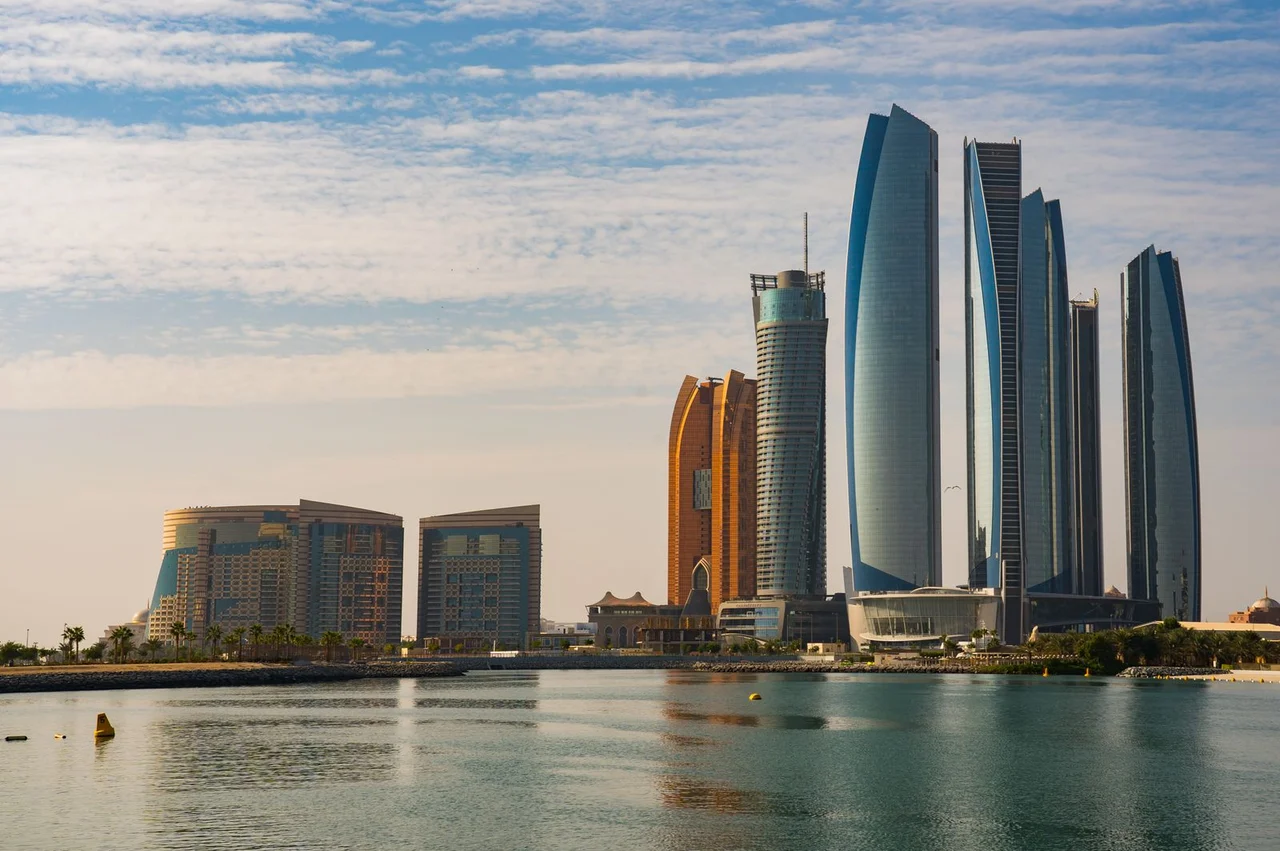 ComparisonDubai or Abu Dhabi in 2026: where to live, work and buy property
 AnalysisWhat is due diligence and why the Caribbean is rejecting applications
Personal programme selection is conducted by Anna Kovalevskaya, Head of Legal, BRIDGES.
Buying property in UAE: what to check
Title, encumbrances, outstanding debts and what to look for in the contract.