Residency · UAE
Rental yield in Dubai 2026: how much an apartment brings, by area, taxes

Updated: June 2026·12 min read·Expert reviewed
Terms and costs verified: June 2026
Contents
Dubai has long become one of the few markets where an investor earns a double-digit yield in hard currency and does not pay a single dirham of tax on rental income. But the "10% a year" figures from developers' advertising and the real payback of an apartment are different things. In this guide we break it down shelf by shelf: what the gross rental yield in Dubai is in 2026 by area, how long-term rental differs from short-term (holiday homes), how much the service charge and management eat up, and how much you can really earn renting in Dubai after all costs.
Rental yield in Dubai: what exactly we are counting
Before arguing about areas and percentages, let us agree on terms - otherwise comparing figures is meaningless. When people say "rental yield in Dubai", they most often mean gross yield: the annual rental income divided by the purchase price of the apartment. This is the loudest and most deceptive figure, because it accounts for not a single cost.
It is far more to look at net yield - what is left to the investor after the building service charge, management, insurance, vacancies and minor repairs. The difference between gross and net yield in Dubai is usually 1.5-2.5 percentage points, and it is precisely this delta that separates marketing from reality.
- Gross yield = annual rent / purchase price. For Dubai, approximately 5-9%.
- Net yield = (annual rent minus all costs) / purchase price. Usually 1.5-2.5 points below gross.
- Payback period = in how many years the rental flow returns the invested amount. At a net yield of 6% this is roughly 16-17 years, excluding price growth and capital appreciation.
Further in the text, when speaking of yield by area, we mean gross - that is the market convention and how the regulator publishes data. But in each section we keep the cost adjustment in mind. A basic understanding of how the market works is convenient to start with the article on real estate in the UAE.
How much you can earn renting in Dubai: 2026 benchmarks
The main question people read such articles for: how much an apartment in Dubai really brings. The answer depends on three things - the area, the rental format (long-term or nightly) and the purchase budget. We will give a clear benchmark in figures to give you something to build on.
Take a typical studio or one-bedroom apartment in a mid-yield area such as Jumeirah Village Circle (JVC) priced at approximately 700,000-900,000 AED (about 190,000-245,000 USD). At a gross yield of about 7-8%, such an apartment brings:
- Annual rental income: approximately 55,000-65,000 AED with long-term rental.
- Less the service charge: about 8,000-12,000 AED per year.
- Less management and vacancies: approximately 5-8% of the rental income.
- Net in hand: approximately 40,000-50,000 AED per year, with no tax deducted - there simply is none.
In money terms this means that renting out an apartment in Dubai brings income of the order of 11,000-14,000 USD per year from one small apartment in the mid segment. For a luxury apartment on Palm Jumeirah at 4-5 million AED the absolute rent amount is higher, but the percentage yield is lower - 4-6%, because the purchase price grows faster than rental rates. That is why investors who chase the payback percentage specifically more often choose affordable areas - there is a separate breakdown of them in the piece on affordable areas of Dubai.
Rental yield by area of Dubai: 2026 table
This is the central table of the guide. All figures are the approximate gross yield of long-term rental as of 2026; the real values vary by the specific building, floor, view and condition of the apartment. In the "long/short" column we indicate which rental format is usually better for the area: tourist and coastal locations lean towards short-term (holiday homes), residential areas - towards stable long-term.
| Area | Gross yield (approximate) | Which pays off more: long/short |
|---|---|---|
| Jumeirah Village Circle (JVC) | 7-9% | Long-term, short-term also possible |
| Dubai Sports City | 7-9% | Long-term |
| Discovery Gardens | 7-8% | Long-term |
| International City | 7-9% | Long-term |
| Dubai Marina | 6-7% | Short-term is strong (tourism) |
| Jumeirah Lake Towers (JLT) | 6-7% | Long-term and short- |
| Business Bay | 5,5-7% | Short-term (centre, business) |
| Dubai Hills Estate | 5-6,5% | Long-term (families) |
| Downtown Dubai | 5-6% | Short-term (tourism, Burj Khalifa) |
| Palm Jumeirah | 4-6% | Short-term (premium tourism) |
The pattern is clear at a glance: the more affordable the area, the higher the yield percentage, and vice versa - prestigious addresses give a lower percentage but a higher absolute rent and usually grow more in price. A detailed breakdown of the locations with the character of each area is in the guide to real-estate areas of Dubai.
High-yield areas: JVC, Sports City, the affordable segment
If the goal is the maximum payback percentage, investors look towards the affordable and mid segment. Here the entry price is lower, tenant demand is high (this is housing for working professionals and small families), and rental rates relative to price are the most favourable.
- Jumeirah Village Circle (JVC) - the yield flagship. A huge choice of studios and one-bedrooms, a constant inflow of tenants, a gross yield of approximately 7-9%. One of the most liquid areas for letting.
- Dubai Sports City and Dubai Production City - a similar model: affordable apartments, steady demand, a yield of 7-9%.
- International City and Discovery Gardens - the most budget-friendly entry, a high percentage yield, but also a more basic class of housing.
The advantages of the affordable segment are obvious: a low entry threshold, a high percentage, quick occupancy. There are downsides too - in such areas capital-value growth is weaker, competition among landlords is higher, and the class of tenants requires more active management. For an investor who counts cash flow first of all, rather than the prestige of the address, this is the optimal choice. Many of these locations fall precisely into the selection of affordable areas of Dubai for entry on a modest budget.
Premium areas: Palm, Downtown, Marina - yield versus prestige
At the other pole are the landmark addresses bought not for the percentage but for status, lifestyle and long-term price growth. A simple rule applies here: the more expensive and prestigious the property, the lower the percentage rental yield.
- Palm Jumeirah - Dubai's calling card. Seafront villas and apartments, premium tenants, but a gross yield of approximately 4-6%. Its strength is premium-class short-term rental and steady growth in capital value.
- Downtown Dubai - the Burj Khalifa and Dubai Mall district. A tourist magnet, excellent short-term rental, but long-term yields a modest 5-6% because of the high entry price.
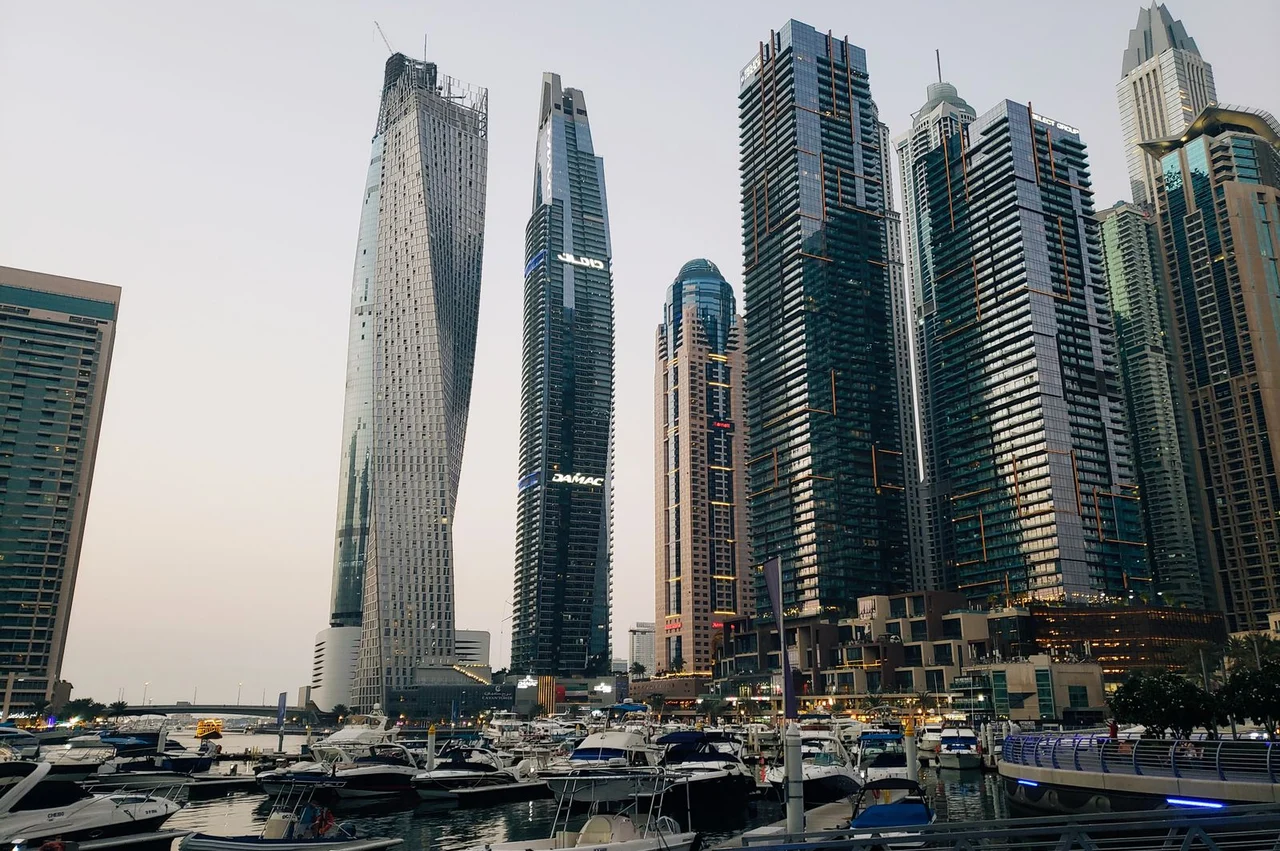
- Dubai Marina - the golden mean: both tourism and permanent tenants. A gross yield of 6-7%, very high liquidity. Details on this area are in the piece on real estate in Dubai Marina.
The premium segment makes sense when an investor wants to combine rental with asset-value growth and is not critically dependent on the yield percentage. Such apartments are often bought "for personal use and to let", combining personal use with short-term rental through a management company.
We will find the right basis for residency in the UAE
We calculate the budget and timing for your family and list the documents you need.
Long-term versus short-term rental: which pays off more
This is a fork in the road on which the entire economics of the investment depends. Dubai has two fundamentally different letting models, each with its own upsides, risks and regulation.
Long-term rental. The apartment is let for a year under a contract registered in the system Ejari (the mandatory registration of a rental contract in Dubai). The tenant usually pays with several cheques a year in advance. This is a calm, predictable income with minimal hassle.
Short-term rental (holiday homes). Nightly and weekly letting to tourists. Income is 20-40% higher than long-term, but it requires a DTCM licence, active management (cleaning, check-in, advertising on platforms) and depends heavily on the season and occupancy.
| Criterion | Long-term | Short-term (holiday homes) |
|---|---|---|
| Potential income | Basic, stable | 20-40% higher with good occupancy |
| Regulation | Registration of the contract in Ejari | A DTCM licence for each unit |
| Hassle | Minimal, one cheque a year | High: cleaning, check-in, platforms |
| Vacancy risk | Low (one-year contract) | Seasonal, depends on occupancy |
| Where it pays off more | Residential areas (JVC, Sports City) | Tourism (Marina, Downtown, Palm) |
The main takeaway: short-term rental brings more money, but it is no longer passive income - it is a fully-fledged mini-business. Long-term is a calm background income. Many investors choose a hybrid: they let through a management company on the short-term model in the tourist season and switch to long-term in the off-season.
Short-term rental and the DTCM licence: how it works legally
Nightly letting in Dubai is a fully legal and regulated market, but you cannot let an apartment to tourists on your own initiative. Short-term rental (holiday homes) is licensed by the Department of Economy and Tourism of Dubai (DTCM, formerly Dubai Tourism). Without a licence, nightly letting is considered a violation and risks fines.
How the process of legalising a holiday home works:
- Operator registration. It can be let either by the owner as an operator, or by a licensed management company that handles the paperwork.
- A permit for each unit. The permit is issued for a specific apartment and is renewed periodically.
- Quality requirements. The property must meet DTCM standards for furnishing, equipment and safety - a "hotel" level.
- Tourism fee. Guests are charged a "Tourism Dirham" - a small per-night fee that the operator remits to the state.
In practice, most private investors do not bother with the licence themselves but hand the apartment to a specialised management company. It takes a commission (approximately 15-25% of revenue) but removes the entire operational load from the owner: licensing, advertising on Airbnb and Booking, check-in, cleaning, reporting. For a remote investor who does not live in the UAE, this is practically the only workable option for the short-term model.
Terms and pitfalls: what to check before buying
Before calculating future yield, you need to make sure the property and the deal itself are clean. Here is a checklist of conditions that separate a profitable investment from a problematic purchase.
- Real yield, not the marketing figure. Ask the seller for the history of actual rental rates in the building, not the promised percentages. Cross-check against market data for the area.
- Size of the service charge. Find out the exact service-charge rate for that specific building - in premium towers it can "eat up" the entire gain in yield.
- Reputation of the developer and management company. Both rental demand and the level of costs depend directly on the quality of building management.
- Stage of the project. A completed apartment generates income immediately; an off-plan one only after handover, but it is cheaper to enter. For off-plan housing, check the escrow account and the Oqood registration.
- Area liquidity. How quickly tenants are found in this location. A high yield on paper is useless if the apartment sits empty for months.
- Rental format and regulation. If you plan short-term letting, check in advance whether the developer and management company allow holiday homes in that building.
It is also worth accounting for your tax status at home: zero tax in the UAE does not cancel obligations in the jurisdiction of your residence. This point is better discussed with a tax adviser before the deal, not after.
An expert view: where beginners lose yield
Over years of working with investors in Dubai real estate, we see that yield is lost not in the choice of area, but in the details missed at the start. Let us go through the typical slip-ups so that you do not repeat them.
- They count gross yield instead of net. The advertised 8-9% turns into a real 6% as soon as you subtract the service charge, management and vacancies. Count net from day one.
- They underestimate the service charge. In premium buildings the service charge can cut yield by 1.5-2 points. Always find out the exact rate for the specific building.
- They get into short-term rental without doing the maths. Holiday homes bring more money, but it is a business with a DTCM licence, a management-company fee and seasonal vacancies. Without a occupancy calculation, it is easy to end up worse off than ordinary long-term letting.
- They chase the percentage alone. The highest percentage is in simple housing with slow price growth. Sometimes an apartment yielding 5.5% in a growing area is better than 8% in a stagnant one.
A sound rental investment in Dubai is always a balance of three things: cash flow, asset-growth potential and zero tax, which reinforces both factors. When these three elements come together, Dubai delivers a result that is hard to replicate in high-tax markets.
Bottom line: how much renting out an apartment in Dubai really brings
Let us draw the line. Rental yield in Dubai in 2026 is approximately 5-9% gross and 4-7% net, depending on the area and the letting format. Affordable locations such as JVC and Dubai Sports City give the maximum cash-flow percentage; premium addresses such as Palm Jumeirah and Downtown - a lower percentage, but a higher absolute rent and value-growth potential.
The main components of the real result:
- Zero tax on rental income for individuals - a key advantage over most global markets.
- Service charge and management - costs that turn gross yield into net; they must be counted from day one.
- Choosing the format - long-term rental for a calm flow, short-term (with a DTCM licence) for maximum revenue and greater involvement.
- Asset value growth - the second, and often the main, part of the investor's profit, especially in growing and premium areas.
If you approach the purchase as a calculation rather than a lottery - checking real rates, counting net yield and factoring in all costs - Dubai remains one of the most efficient rental markets in the world. A convenient place to start getting to grips with the locations is the overview of real-estate areas of Dubai and the general guide to real estate in the UAE.
We will calculate the budget for your family
A full estimate: contributions, fees and our work for your family.
Tax on rental income in Dubai: zero for individuals
This is the reason Dubai beats most global real-estate markets in a direct comparison. In the UAE there is no personal income tax, which means that rental income earned by an individual is not taxed - neither federally nor locally. There is also no annual property tax, which in many countries eats up a noticeable part of the income.
What this means for the investor in figures: if in a notional London or Lisbon rental income is taxed at 20-40%, then in Dubai the investor keeps everything earned, minus operating costs. At the same gross yield, the net result in Dubai turns out noticeably higher precisely because of the zero tax.
A few important caveats, to be precise:
- DLD fee on purchase - 4% of the value, one-off. This is not an annual tax but a one-time fee when the deal is registered at the Land Department.
- Corporate tax 9% applies to businesses on profit above 375,000 AED. If the property is held by a company, the situation is more complex than personal ownership and requires separate advice.
- Taxes in your country of residence. If you are a tax resident of another country, rental income in Dubai may be subject to taxation under the rules of your jurisdiction - this needs to be checked separately.
All calculations and deal registrations are handled through the government Dubai Land Department - is the official regulator of the emirate's real-estate market.
"The first thing I ask a client to do before buying an apartment to let in Dubai is to stop looking at the gross yield from the developer's advertising. The "9% a year" figure is pretty, but it accounts for neither the service charge, nor management, nor vacancies between tenants. The real net yield is almost always a point and a half to two points lower. But Dubai has a trump card that almost nowhere else has: zero tax on rental income for individuals and the absence of an annual property tax. This means that at the same yield on paper an investor in Dubai keeps noticeably more than in Europe. My advice is simple: count net yield, not gross, find out the exact service charge for the specific building, and decide in advance - do you want a calm flow through long-term rental or maximum revenue through short-term with a DTCM licence. When these things are counted, Dubai rarely disappoints."
Service charge and other costs
The most common beginner mistake is to calculate gross yield and forget the costs. And in Dubai they are considerable, the main one being - service charge (the charge for maintaining the building's common property). This is an annual payment to the management company for the upkeep of lifts, the pool, security, cleaning, the facade and the building's infrastructure.
Service charge benchmarks in 2026:
- Affordable segment (JVC, International City) - approximately 10-15 AED per sq. ft per year.
- Mid- and business-class (Business Bay, JLT) - approximately 15-20 AED per sq. ft.
- Premium (Downtown, Palm Jumeirah) - 20-30 AED per sq. ft and up, especially in buildings with rich amenities.
For an apartment of, say, 700 sq. ft in a mid-range area this is approximately 10,000-14,000 AED per year - and this money is paid by the owner, not the tenant. Service-charge rates are published and controlled by the regulator (RERA, part of the Land Department), so they can be checked in advance.
Besides the service charge, the net-yield calculation should also include:
- Management - approximately 5% of the rent for long-term, 15-25% for short-term.
- Vacancies - the period without a tenant between contracts.
- Insurance and minor repairs - keeping the apartment in rentable condition.
- Agent commission when finding a tenant - usually 5% of the annual rent, one-off.
It is the sum of these costs that turns the advertised "9% a year" into a real 6-7% net. They must be built into the calculation from the very start.
Payback of real estate in Dubai: in how many years the money returns
Payback is the period over which the rental flow fully returns the amount invested in the purchase. It is calculated simply: divide 100% by the net yield in percent. This is a basic benchmark that ignores the apartment's value growth but gives a picture of the "bare" cash flow.
| Net yield | Payback period | Typical segment |
|---|---|---|
| 7% | about 14 years | JVC, Sports City (affordable) |
| 6% | about 17 years | Marina, JLT (mid-range) |
| 5% | 20 years | Downtown, Dubai Hills |
| 4% | 25 years | Palm Jumeirah, luxury |
But this is only half the picture. An investor's real yield is made up of two parts: the rental flow and the growth in value of the real estate itself (capital appreciation). The Dubai market has shown noticeable price growth in recent years, and for many investors it is the capital gain, not the rent, that provides the main part of the profit. If an apartment appreciates by 30-40% over a few years, effective payback taking value growth into account turns out to be far faster than the "bare" 14-17 years.
That is why a sound investor looks at two figures at once: current cash flow (how much the rental brings already) and the area's growth potential (how much the asset itself will gain). Affordable areas win on flow, premium ones more often on value growth. The general logic of choosing a property is covered in the guide to real estate in Dubai.
We will send a document checklist for your case
Leave your details: we will put together documents and timelines for your family.
How to build a profitable portfolio: strategies for the investor
Let us bring it all together into practical strategies. Which approach to choose depends on your budget, your willingness to handle management and on what matters more to you: cash flow now or capital growth in the future.
- The "maximum flow" strategy. Studios and one-bedrooms in JVC, Sports City, Discovery Gardens. The target is a 7-9% gross yield, long-term rental, minimal hassle. Ideal for those who value a stable passive income in hard currency.
- The "flow + growth" strategy. Apartments in Dubai Marina, JLT, Business Bay. A yield of 6-7% plus good price-growth potential and strong liquidity. Hybrid rental is possible: long-term and short-term by season.
- The "premium and capital growth" strategy. Palm Jumeirah, Downtown, Dubai Hills. The yield percentage is lower (4-6%), but it is a status asset, with premium tenants and a bet on value growth. Often combined with personal use.
- The "active income" strategy. Short-term rental through a management company with a DTCM licence in tourist areas. Maximum revenue at the cost of maximum involvement.
A separate pleasant bonus: buying real estate in Dubai from 2 million AED opens the path to a Golden Visa - a 10-year residence visa. So the asset works twice: it generates rental income and provides grounds for long-term residency. This makes Dubai real estate a tool not only for investment but also for relocation.
Frequently asked
Questions people ask before deciding
01What is the rental yield in Dubai in 2026?
The gross rental yield in Dubai is approximately 5-9% per year depending on the area. The highest percentages (7-9%) are in affordable areas such as JVC, Dubai Sports City and Discovery Gardens. The lowest (4-6%) are in the premium segment: Palm Jumeirah, Downtown, luxury apartments. Net yield after costs is usually 1.5-2.5 points below gross.
02How much can you earn renting out an apartment in Dubai?
A small apartment in a mid-range area priced at 700,000-900,000 AED brings approximately 55,000-65,000 AED of rent per year, and net after costs - about 40,000-50,000 AED (around 11,000-14,000 USD). This income is not taxed. In the premium segment the absolute rent amount is higher, but the yield percentage is lower.
03Is tax paid on rental income in Dubai?
No. The UAE has no personal income tax, so rental income earned by an individual is not taxed. There is also no annual property tax. There is only a one-off Land Department fee of 4% on purchase. However, if you are a tax resident of another country, the income may be taxed under the rules of your jurisdiction.
04Which areas of Dubai are the most profitable to rent out?
On gross-yield percentage the affordable areas lead: Jumeirah Village Circle (JVC), Dubai Sports City, Discovery Gardens, International City - approximately 7-9%. They deliver the maximum cash flow thanks to a low entry price and steady demand from working tenants, but grow less in price.
05Which pays off more: long-term or short-term rental in Dubai?
Short-term rental (holiday homes) gives 20-40% higher income, but it requires a DTCM licence, active management and depends on the season. Long-term rental is a calm, stable income with the contract registered in Ejari and minimal hassle. For tourist areas short-term is more often better, for residential ones - long-term.
06What is a DTCM licence and why is it needed?
DTCM is the Department of Economy and Tourism of Dubai, which licenses short-term (nightly) rental. You cannot let an apartment to tourists without a licence - it is a violation with fines. A permit is issued for each apartment, the property must meet the standards, and guests are charged a tourism fee. Often the management company handles the paperwork.
07What is the service charge and how much is it?
The service charge is an annual fee for maintaining the building's common property (lifts, pool, security, cleaning) paid by the owner. Approximately 10-15 AED per sq. ft in the affordable segment, 15-20 in the mid segment and 20-30 and up in premium. For a 700 sq. ft apartment this is roughly 10,000-14,000 AED per year.
08In how many years does an apartment in Dubai pay off?
At a net yield of 7% payback is about 14 years, at 6% - about 17 years, at 5% - 20 years. But that is without accounting for the growth in the apartment's value. Taking into account the capital appreciation the Dubai market shows, effective payback for many investors turns out to be noticeably faster.
09How does gross yield differ from net?
Gross yield is the annual rent divided by the purchase price, without accounting for costs. Net yield subtracts the service charge, management, vacancies, insurance and repairs. In Dubai the difference between them is usually 1.5-2.5 percentage points. An investment should be assessed by net yield, not by the advertised gross.
10Can you get a visa when buying real estate in Dubai to rent out?
Yes. Buying real estate from 2 million AED grants the right to a Golden Visa - a 10-year residence visa, renewable and self-sponsored. Real estate from 750,000 AED grants a 2-year residence visa. So a profitable apartment works both as a rental asset and as grounds for long-term residency.
11Which costs should be factored into the rental yield calculation?
The main costs: the service charge (building maintenance fee), management (5% of rent for long-term, 15-25% for short-term), vacancies between tenants, insurance and minor repairs, a one-off agent commission of about 5% of the annual rent when finding a tenant. It is precisely these costs that turn gross yield into real net.
12Where can you check official data on the Dubai real-estate market?
The official regulator is the Dubai Land Department (dubailand.gov.ae), which registers deals and oversees the rental market. It houses RERA, which regulates, among other things, service-charge rates. This data can be cross-checked before buying so as not to rely on the seller's word alone.
Transparency
How this material was prepared
- Author
- Dmitry Nagy, international Tax Consultant, BRIDGES
- Terms and costs last verified
- June 2026
- Sources
- official government authorities of the relevant country and state publications
- Methodology
- government minimum requirements are stated separately from due diligence charges, state fees, legal and banking costs
Sources and methodology
Figures, terms and timelines are checked against official sources as of June 2026. Link availability verified in August 2026. Third-party blogs and agent websites are not used as a source of programme terms.
- [1]Federal Authority for Identity, Citizenship, Customs and Port Security (ICP)Visas, residence statuses, Emirates IDicp.gov.ae/en
- [2]Official portal of the UAE GovernmentGolden visa and residence visasu.ae/en/information-and-services/visa-and-emirates-id/residence-visas/golden-visa
Methodology: tables and charts state government minimum investment requirements; due diligence charges, state fees, legal, banking and other costs are calculated separately and are not included in the minimum thresholds.
About the author
Related materials
What to read next
 ArticleUAE citizenship by investment in 2026: is there a program and what really works?
 ComparisonDubai or Abu Dhabi in 2026: where to live, work and buy property
 AnalysisWhat is due diligence and why the Caribbean is rejecting applications
Personal programme selection is conducted by Anna Kovalevskaya, Head of Legal, BRIDGES.
Tax residency in UAE: how it is determined
When tax residency arises, how double taxation is avoided and what the tax authority checks.