Residency · UAE
Districts of Dubai for buying property in 2026: where to buy for living and for renting

Updated: June 2026·13 min read·Expert reviewed
Terms and costs verified: June 2026
Contents
Dubai is not a single market but dozens of independent markets under one sky. An apartment with a view of the Burj Khalifa, a flat by a yacht marina, a villa in a green suburb and a studio in a growing outlying district are different money, different yields and different lifestyles. To avoid overpaying and being disappointed, you should choose a district not by the beauty of the render but for a specific goal: to live there yourself, to rent it out, or to resell it with capital growth. We break down the key freehold zones of Dubai in 2026 : what the price per metre is where, what the real yield is, and what to choose for each goal.
The key question before buying: to live in, to rent out, or to resell
Before you look at the map of Dubai and scroll through listings, answer one question for yourself: why are you buying? Literally everything depends on it - the district, the type of property, the budget and whether you'll be happy with the investment in three years. An experienced buyer does not look abstractly for the "best district in Dubai", because no such district exists. There is a district that best suits your specific goal.
There are essentially three scenarios, and they barely overlap:
- For living. Here what matters is schools, parks, quiet, family convenience and infrastructure near home. Yield is secondary - you are buying quality of life. This is what families and those moving to the UAE for good look at.
- For rental (passive income). The goal is maximum net yield and a steady flow of tenants. Here compact studios and one-bedrooms in affordable, high-demand districts win, not expensive luxury.
- For resale (capital growth). You enter a growing district or an off-plan new build to sell higher after handover. Rental yield is secondary - what matters is the potential for price growth.
People often try to combine these goals, and that's fine - but there is always a trade-off. Palm Jumeirah is excellent for living and holds its status, but delivers a modest yield. JVC brings a high rental return, but it is not a dream district for a premium resident. Next we'll go through the key freehold zones with exactly this lens. The overall market context is gathered in our overview of UAE property, and the details of the process itself are in our guide on how to buy property in Dubai.
Dubai freehold zones: where a foreigner buys in full ownership
The basic concept without which you cannot take a single step is freehold. In Dubai a non-resident foreigner cannot buy property just anywhere, only in specially designated full-ownership zones (freehold areas, or designated areas). In these districts you receive a Title Deed - an ownership document in your own name, with no time limit and no local partner. This is full ownership that can be sold, bequeathed, rented out and mortgaged.
The good news: almost all the districts buyers dream of are freehold. The designated zones include Dubai Marina, Downtown Dubai, Palm Jumeirah, Business Bay, Jumeirah Village Circle (JVC), Dubai Hills Estate, Dubai Creek Harbour, JBR, Dubai Sports City, Arabian Ranches, Dubai South and dozens more. In all, Dubai has about 80 freehold zones, and the list is gradually expanding.
How does freehold differ from leasehold (a long-term 99-year lease)? Under leasehold you own the right to use but not the land itself, and disposing of the property is harder. For a foreign investor the right benchmark is almost always freehold: only it gives full control over the asset and, importantly, counts towards obtaining a residence visa.
- Full ownership - a Title Deed in your name, indefinitely.
- Freedom of disposal - sale, rental, inheritance, remodelling within the rules.
- Visa for property - a property from 750,000 AED grants a 2-year residence visa, from 2 million AED - a 10-year Golden Visa.
The current list of designated zones is maintained by the Dubai Land Department - the official portal Dubai Land Department (DLD).
Downtown Dubai: prestige, the Burj Khalifa and status
Downtown Dubai is the city's showcase. Here stand the Burj Khalifa, the dancing fountains and The Dubai Mall, tourists come here from all over the world, and a Downtown address in itself works as a status marker. It is the heart of Dubai, and property here is bought for prestige, recognition and liquidity - such a property will always find a buyer or a tenant.
2026 price benchmarks: a studio from ~$350,000, a one-bedroom from ~$500,000, a two-bedroom from ~$850,000, three-bedrooms and penthouses from $1.5 million and significantly higher. This is one of the most expensive apartment segments in the city.
On yield, Downtown is middle of the road: 5-6% per year on average, while compact studios and one-bedrooms can deliver up to 6-8% thanks to high tourist and corporate demand. Premium service charges here are higher than in affordable districts, and this "eats into" part of the net yield. But capital appreciation is steady: prices in Downtown rise by 3-5% a year thanks to limited supply in the very centre.
- For living - yes, if you value the urban rhythm, restaurants and views; not the best option for a family with children.
- For rental - moderate: prestige tenants are always there, but the yield is lower than in affordable districts.
- For resale - reliable: liquidity and recognition hold the price.
Downtown is the choice for those to whom prestige and a clear, liquid asset in the very centre matter more than the maximum rental return.
Dubai Marina and JBR: a water view and strong rental
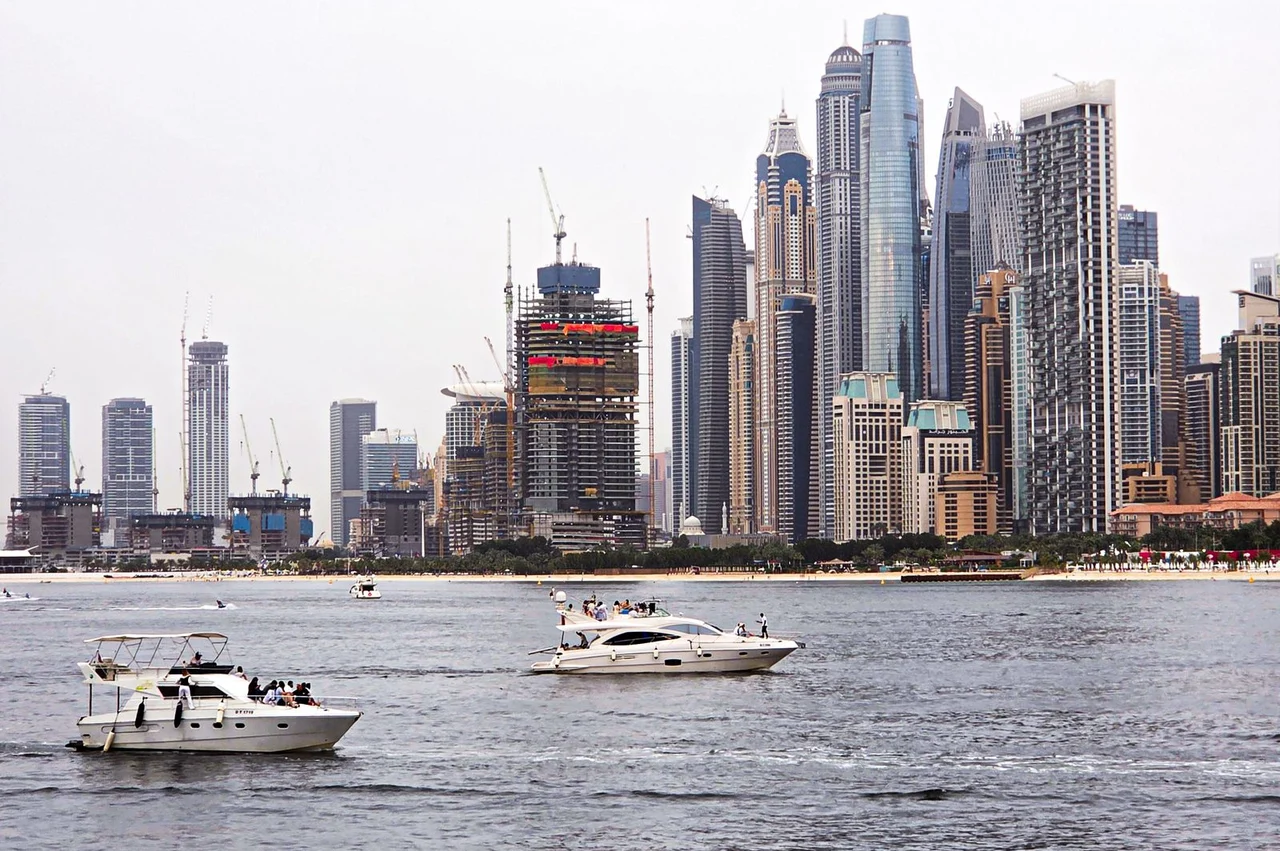
Dubai Marina is one of the most recognisable districts and a favourite among tenants. Skyscrapers along an artificial marina, a waterfront with yachts, restaurants, cafes and endless evening life. Nearby is JBR (Jumeirah Beach Residence) with its own beach and The Walk promenade. This is the territory of young professionals, expats and tourists who are willing to pay for a water view and the buzz around them.
For an investor, the Marina is valuable above all for rent. Demand here is practically year-round: the district is equally popular with long-term tenants and with those renting by the night. The yield on apartments averages 6-7%, and on compact studios reaches 6.5-8%. JBR adds a premium for the beach and tourist traffic - short-term rental flows here steadily.
2026 prices in the Marina are more moderate than in Downtown: a studio from ~$280,000, a one-bedroom from ~$400,000, a two-bedroom from ~$700,000. JBR, being on the seafront, costs more than comparable units in the Marina itself.
- For living - excellent for the active and single, a bit noisy for families with small children.
- For rental - one of the best districts: high, steady demand and a good yield.
- For resale - stable: the district is mature, no sharp jumps, but no slumps either.
The Marina and JBR are the classic "buy and rent out" choice: clear demand, liquidity and a pleasant water view that always sells.
Palm Jumeirah: luxury, exclusivity and a status asset
Palm Jumeirah is a man-made palm-shaped island and Dubai's most recognisable luxury address. Villas on the palm's "fronds" with their own beach, premium apartments on the "trunk", five-star hotels and restaurants. People buy here not for the yield but for status, privacy and an asset that is physically limited: the island cannot be extended, and that supports the price.
The price threshold is high: one-bedroom apartments from ~$600,000, two-bedrooms from ~$1.2 million, three-bedrooms from $2 million, villas run into the millions of dollars. The square metre on Palm is one of the most expensive in the city, a benchmark of $7,000-10,000 and above.
The yield is more modest than in affordable districts - 4-6% on average. But Palm has its own logic: it is a "defensive" asset. Demand for exclusive waterfront property is resilient, the premium segment grows by 3-5% a year on limited supply, and the island's villas and penthouses are sought after by wealthy buyers from around the world.
- For living - yes, it is the benchmark of premium seaside living with privacy.
- For rental - a moderate yield, but expensive tenants and strong short-term villa rental.
- For resale - a strong asset: limited supply protects the price.
Palm Jumeirah is the choice for those to whom the quality of the asset and status matter more than the maximum return. More on the premium segment is in our article on villas in Dubai.
We will find the right basis for residency in the UAE
We calculate the budget and timing for your family and list the documents you need.
Business Bay: a business centre and a balance of price and yield
Business Bay is a business district a step away from Downtown, along the Dubai Canal. It has office towers, apartments, hotels and a rare combination for a city centre: proximity to the Burj Khalifa plus prices noticeably lower than in Downtown itself. For an investor this means a sound balance between a prestigious location and an adequate yield.
2026 prices: a studio from ~$250,000, a one-bedroom from ~$380,000, a two-bedroom from ~$650,000. On yield, Business Bay is one of the most balanced central districts: 6.5-7.5% on apartments, and even higher on compact units. Demand comes from company employees, expats and tenants who want a central location cheaper than Downtown.
The district continues to be actively developed, and there are many new builds from developers on instalments - a convenient entry for those buying off-plan for a subsequent resale or rental. At the same time the infrastructure is already mature: the canal waterfront, restaurants, the metro, access to the main highways.
- For living - suits active professionals who value the centre; less obvious for families.
- For rental - a strong option: central location plus a good yield plus steady demand.
- For resale - promising thanks to new builds and the district's growth.
Business Bay is a sensible compromise for those who want the centre of Dubai but aren't ready for Downtown prices and are looking for a real yield.
JVC and Dubai Sports City: affordable entry and high yield
If your goal is maximum net yield and a fast entry on a modest budget, you need to look towards affordable districts. The main players here are Jumeirah Village Circle (JVC) and Dubai Sports City. These are the investor's "workhorses": a low entry threshold, a dense flow of tenants and some of the highest rental returns in the city.
JVC is a family-friendly, affordable district in the centre of the Dubai map, built up with apartments and townhouses. The yield here is among the best: 7-9% gross, up to 8.5% on compact units, with net after costs holding around 5.5-6.5%. The secret is simple: entry prices are lower than in the centre and service charges are more modest, so the "net" return often beats even the Marina and Downtown.
Dubai Sports City is one of the most affordable freehold districts: studios from ~350,000 AED, one-bedrooms from ~500,000 AED, two-bedrooms from ~800,000 AED, with a gross yield of 7-9%. The inexpensive Dubai South near the new airport gravitates here too - a district for long-term growth.
- For living - budget-friendly and convenient for tenants and small families, but without a luxury atmosphere.
- For rental - the best choice for net yield: a high return and constant demand.
- For resale - moderate: there is growth, but this is first of all a rental-income story.
JVC and Sports City are what people choose for the numbers: invest less and get the maximum annual return. How to break the budget down by property type, we cover in our article on how to buy an apartment in Dubai.
Common mistakes when choosing a district: what to avoid
Over the years of practice we see that buyers lose money and nerves on the same typical mistakes. Let's go through them so you don't step on the same rake.
- Buying on the render rather than the goal. A pretty project render does not answer whether property here rents out and what return you'll get. First the goal - then the district.
- Chasing luxury for the sake of yield. Palm and Downtown offer status but not the maximum return. If you need income - look at affordable districts, not the most expensive ones.
- Ignoring service charges. High service charges in a premium tower can shave 1-2 percentage points off the net yield. Calculate the net, not the gross, return.
- A family in a "party" district. The Marina and Downtown are noisy and dense - a family with children may find them uncomfortable. For a family, look at Dubai Hills and Arabian Ranches.
- Buying outside a freehold zone. A foreigner needs property only in designated zones with a Title Deed - otherwise there will be neither full ownership nor a visa.
- Inattention to the developer. Off-plan, the developer's reputation and the presence of escrow are critical - this protects your money until handover.
Most of these mistakes are cheap to prevent at the start and expensive to fix later. The more precisely the goal is formulated, the less chance of choosing the wrong district.
How to choose the right district for you: a step-by-step guide
Let's put it all into a practical algorithm. To avoid drowning in dozens of districts, work through the steps - and the list of candidates will narrow by itself.
- Step 1. Define your goal. To live in, to rent out or to resell - this steers the choice in different directions. If you're combining them, decide what the priority is.
- Step 2. Fix your budget. Affordable entry - JVC, Sports City, Dubai South; mid-range - Business Bay, Marina; premium - Downtown, Palm.
- Step 3. For income - calculate the net return. The high gross yield of affordable districts, after modest charges, often beats the premium segment.
- Step 4. For a family - look at the infrastructure. Schools, parks, quiet: Dubai Hills, Arabian Ranches, and JVC to some extent.
- Step 5. For growth - enter developing districts. Creek Harbour and Dubai South offer appreciation potential.
- Step 6. Check the freehold status and the visa. Make sure the district is a designated zone and the property meets the threshold for the visa you need.
This algorithm won't replace a personal viewing and a check of the specific property, but it will protect you from a strategic mistake - buying in the wrong district for the goal. Beyond that, the details matter: the developer, the floor, the view, the building's condition and the actual service charges. It is at this stage that competent support saves both money and time.
Bottom line: which district to choose for living, renting and resale
Let's sum up briefly. There is no universal "best district in Dubai" - there is a district perfectly suited to your specific goal, and that is what you should start from.
- For living (family, comfort): Dubai Hills Estate and Arabian Ranches - greenery, schools, space, safety. For urban life without children - Downtown, Marina, Palm.
- For rental (maximum income): JVC, Dubai Sports City, Business Bay, Dubai South - a high net yield of 7-9% and a steady flow of tenants.
- For resale (capital growth): Dubai Creek Harbour and Dubai South are developing districts with appreciation potential; in the premium segment Palm Jumeirah protects the price thanks to scarcity.
- For status and liquidity: Downtown Dubai and Palm - a recognisable address that will always find a buyer.
And Dubai's main advantage on top of any district: 0% income tax, no annual property tax, and a residence visa for the purchase - from a 2-year one for a property from 750,000 AED to a 10-year Golden Visa for an investment from 2 million AED. This turns buying an apartment not only into a source of income but also into a basis for living in the UAE. Before the deal, always cross-check against the list of designated zones and the official rules on the portal Dubai Land Department and lean on professional support so that the choice of district matches your real goal.
We will calculate the budget for your family
A full estimate: contributions, fees and our work for your family.
Dubai Hills and Arabian Ranches: districts for family and villas
When the purchase is first and foremost a home for the family, the logic changes: instead of the yield, schools, parks, safety, space and greenery come to the fore. Two flagship Emaar districts are geared to this goal - Dubai Hills Estate and Arabian Ranches.
Dubai Hills Estate is a modern green district with a golf course, a large park, schools and its own mall. It has apartments, townhouses and villas. It is a rare case where family comfort combines with strong investment momentum: the average price has risen by roughly 81% since 2021, with a yield of 5-7% on apartments. As a price guide - about 1,800-3,200 AED per sq ft for apartments and 2,000-4,500 AED for villas.
Arabian Ranches is an established villa community with spacious homes, parks, schools (JESS, Ranches Primary) and an unhurried suburban atmosphere. Villas with 3-7 bedrooms cost roughly from 3.4 to 7.6 million AED, and the yield is more modest - 3.8-5%, because this is a purchase for living, not for rental.
- For living - this is exactly where families go: space, greenery, schools, safety.
- For rental - a moderate yield; villas rent for a lot, but the return is lower than apartments.
- For resale - Dubai Hills shows notable growth, Arabian Ranches offers stability.
For a family move these are two obvious candidates. If you are considering a villa specifically as an asset, there is more detail in our guide to villas in Dubai.
"The first thing I ask a client is not to name a district but to state their goal . Because for living, for renting out and for resale these are three different Dubais. Someone comes in and says: I want the Palm, it's prestigious. And when it turns out the goal is passive income, I explain: on the Palm you'll get 4-6%, whereas in JVC or Sports City you'll get 7-9% at a third of the entry cost. And the other way around: if a family is moving with children, I steer them away from the noisy Marina to Dubai Hills and Arabian Ranches - schools, parks and quiet. Another common trap is to look at gross yield and forget the service charges: in a premium tower they can shave a couple of points off the return. You should always calculate the net yield and always check that the district is a freehold zone, otherwise there will be neither full ownership nor a visa. Dubai forgives almost everything except one thing - buying in the wrong district for your goal."
Dubai Creek Harbour and Dubai South: a bet on growth
A separate scenario is to buy where the district is still growing, to profit from capital growth. Here the main candidates for 2026 are Dubai Creek Harbour and Dubai South. These are large-scale development districts where prices are still below the mature centre and the appreciation potential is higher.
Dubai Creek Harbour is a large Emaar project on the bay shore with views of old Dubai and the future Creek Tower. Early investors in the delivered phases have already seen about 25% price growth, and the forecast for the district is roughly 8-12% annual appreciation over the 2026-2027 horizon. The average price is about 2,410 AED per sq ft, with yields across the different sub-areas of 4.8-5.8%. This is above all a purchase for capital appreciation, with decent rent as a bonus.
Dubai South is a district around the new Al Maktoum international airport and logistics hubs, one of the most affordable to enter. It is a long-term bet: as the infrastructure and airport develop, the district should grow in both price and rental demand.
- For living - suits those ready for a developing location with a horizon of years.
- For rental - the yield grows as occupancy rises; moderate for now.
- For resale - this is exactly where people go for capital growth: cheaper entry, higher potential.
Creek Harbour and Dubai South are about patience and horizon: you are buying the district's future, not its present state.
Comparison table of Dubai districts: district - what for - price and yield
Let's bring all the districts into one table so the main things are visible: what each district is geared to, the entry threshold and the yield to expect. The figures are indicative for 2026, for compact apartments, and depend on the specific property, floor and view. The yield shown is gross (before maintenance costs).
| District | Best suited for | Entry (from) | Rental yield |
|---|---|---|---|
| Downtown Dubai | Prestige, status, liquidity | ~$350,000 (studio) | 5-6% (studios up to 8%) |
| Dubai Marina / JBR | Rental, water view, living | ~$280,000 (studio) | 6-7% |
| Palm Jumeirah | Luxury, a status asset | ~$600 000 (1BR) | 4-6% |
| Business Bay | Central + balanced yield | ~$250,000 (studio) | 6,5-7,5% |
| JVC | Rental, affordable entry | ~$170,000 (studio) | 7-9% |
| Dubai Sports City | Rental, minimum budget | ~350 000 AED (~$95 000) | 7-9% |
| Dubai Hills Estate | Family + capital growth | from ~$400,000 | 5-7% |
| Arabian Ranches | Family, villas, quiet | from ~3.4 million AED (villa) | 3,8-5% |
| Dubai Creek Harbour | Capital growth | from ~$430,000 (1BR) | 4,8-5,8% |
| Dubai South | Long-term growth, cheap entry | from ~$130,000 | 6-8% (growing) |
The pattern is immediately clear: the more affordable the district, the higher the rental return, and the more premium it is, the lower the yield but the higher the status and capital preservation. There is no universal leader - there is a leader for your goal. We keep the latest price dynamics by district in our overview of Dubai property prices in 2026.
We will send a document checklist for your case
Leave your details: we will put together documents and timelines for your family.
Costs and terms of purchase: how much entry really costs
The property price is not the only sum you need to budget for. In Dubai the deal is transparent, but mandatory fees are added to the apartment's cost, and it is important to calculate them in advance so there are no surprises at closing.
- DLD fee - 4% of the property value, paid to the land department on registration. This is the buyer's main one-off payment.
- Registration fee - a fixed administrative charge for issuing the Title Deed (depends on the property value).
- Agency commission - usually around 2% of the price on the secondary market (often absent in new builds from the developer).
- Service charges - the annual charge for building upkeep, calculated per sq ft; higher in premium towers, lower in affordable districts - it is exactly this that affects the net yield.
What Dubai does not have is an annual property tax or a capital gains tax for individuals. Income tax is also 0%. This is one of the reasons why the net yield here is higher than in many of the world's capitals.
For off-plan properties the buyer's money is protected through escrow accounts and the RERA regulator, and the off-plan unit itself is registered through the Oqood system. A popular way to enter is a new development from the developer with instalment payments right up to handover, which lowers the entry threshold in expensive districts. Completed property (the secondary market) generates income straight away but requires the full amount sooner.
Frequently asked
Questions people ask before deciding
01In which districts of Dubai can a foreigner buy property outright?
A non-resident foreigner buys property in full ownership (freehold) in specially designated zones. These include Dubai Marina, Downtown Dubai, Palm Jumeirah, Business Bay, JVC, Dubai Hills Estate, Dubai Creek Harbour, JBR, Dubai Sports City, Arabian Ranches, Dubai South and dozens of others - about 80 districts in all. In these zones you receive a Title Deed in your own name, with no time limit and no local partner.
02Which district of Dubai is best for living with family?
For a family with children, Dubai Hills Estate and Arabian Ranches are ideal: schools, parks, space, greenery, safety and an unhurried suburban atmosphere. JVC is also family-affordable, but without luxury infrastructure. The noisy Dubai Marina and Downtown suit active adults without children better than families.
03Which district of Dubai has the highest rental yield?
The highest gross yield - 7-9% per year - is delivered by affordable districts: JVC, Dubai Sports City, Business Bay and the developing Dubai South, especially on compact studios and one-bedrooms. Premium Palm Jumeirah and Downtown deliver less (4-6%), because the entry cost is higher and service charges are higher. For income, calculate the net return after costs.
04How much does an apartment in Dubai cost in 2026 by district?
2026 benchmarks: a studio in Business Bay from ~$250,000, in Dubai Marina from ~$280,000, in Downtown from ~$350,000. A one-bedroom on Palm Jumeirah from ~$600,000. In affordable districts like JVC and Dubai South entry starts at roughly $130,000-170,000. Prices depend on the floor, the view, the condition and the developer.
05Which districts of Dubai are best for capital-growth investment?
For capital growth people look at developing districts: Dubai Creek Harbour (forecast growth of ~8-12% a year across delivery phases) and Dubai South around the new Al Maktoum airport. In the premium segment, Palm Jumeirah protects the price thanks to limited supply. Entering off-plan from the developer on instalments is a common format for a subsequent resale.
06What is a freehold zone and why does it matter for a foreigner?
A freehold zone (designated area) is a district where a foreigner buys property in full, indefinite ownership with the right to sell, rent, bequeath and mortgage it. You receive a Title Deed in your own name. This matters: only freehold gives full control over the asset and counts towards obtaining a residence visa for property. A foreigner cannot buy outside such zones.
07What additional costs come with buying property in Dubai?
Added to the property price are: the DLD fee of 4% of the value, a fixed registration fee for the Title Deed, an agency commission of about 2% on the secondary market (often absent in new developments) and annual service charges for building upkeep. At the same time, there is no annual property tax and no capital gains tax for individuals in the UAE.
08Does buying an apartment in Dubai grant a residence visa?
Yes. Property from 750,000 AED grants a 2-year residence visa, and an investment from 2,000,000 AED (~$545,000) a 10-year Golden Visa, renewable and self-sponsored. The Golden Visa holder sponsors the family themselves - a spouse, children with no age limit, parents and domestic staff. The property must be in a freehold zone.
09Is it worth buying on Palm Jumeirah for rental?
Palm Jumeirah is above all a status luxury asset, not a tool for maximum yield: the average rental return is 4-6%. But demand for exclusive waterfront property is resilient, short-term villa rental is strong, and the island's limited supply protects the price. If the goal is the maximum return, affordable districts are more profitable; if it is status and capital preservation, Palm is justified.
10How does Business Bay differ from Downtown Dubai for buying?
Business Bay is located next to Downtown, but prices here are noticeably lower and the yield higher - 6.5-7.5% against 5-6% in Downtown. Downtown offers maximum prestige and liquidity (the Burj Khalifa, The Dubai Mall), Business Bay a sound balance of a central location and real yield. For income people more often choose Business Bay, for status - Downtown.
11Can you buy property in Dubai on an instalment plan?
Yes, this is a popular way to enter. Developers offer instalment payments on off-plan properties right up to handover, which lowers the entry threshold in expensive districts. The buyer's off-plan money is protected through escrow accounts and the RERA regulator, and the property is registered through the Oqood system. A non-resident can also get a mortgage, usually with an LTV of up to 50-60%.
12Which district should a beginner with a small budget choose?
A beginner with a limited budget whose goal is income should look at JVC, Dubai Sports City and Dubai South: a low entry threshold (from ~$95,000-170,000), a high yield of 7-9% and steady tenant demand. This is a clear and liquid first purchase. The key is to check the district's freehold status and the developer, and to calculate the net yield after service charges.
Transparency
How this material was prepared
- Author
- Igor Venc, real Estate Managing Director, BRIDGES
- Terms and costs last verified
- June 2026
- Sources
- official government authorities of the relevant country and state publications
- Methodology
- government minimum requirements are stated separately from due diligence charges, state fees, legal and banking costs
Sources and methodology
Figures, terms and timelines are checked against official sources as of June 2026. Link availability verified in August 2026. Third-party blogs and agent websites are not used as a source of programme terms.
- [1]Federal Authority for Identity, Citizenship, Customs and Port Security (ICP)Visas, residence statuses, Emirates IDicp.gov.ae/en
- [2]Official portal of the UAE GovernmentGolden visa and residence visasu.ae/en/information-and-services/visa-and-emirates-id/residence-visas/golden-visa
Methodology: tables and charts state government minimum investment requirements; due diligence charges, state fees, legal, banking and other costs are calculated separately and are not included in the minimum thresholds.
About the author
Related materials
What to read next
 ArticleUAE citizenship by investment in 2026: is there a program and what really works?
 ComparisonDubai or Abu Dhabi in 2026: where to live, work and buy property
 AnalysisWhat is due diligence and why the Caribbean is rejecting applications
Personal programme selection is conducted by Anna Kovalevskaya, Head of Legal, BRIDGES.
Buying property in UAE: what to check
Title, encumbrances, outstanding debts and what to look for in the contract.
