Residency · Bulgaria
Bulgarian residence permit for pensioners: income, housing and registration procedure in 2026
Updated: June 2026·11 min read·Expert reviewed
Terms and costs verified: June 2026
Contents
Bulgaria has long become a quiet haven for those who are retiring and want to live in Europe without the bustle of the capital and sky-high prices. The mild climate by the sea, affordable real estate and a flat tax of 10% make the country one of the most reasonable options. Bulgarian residence permit for pensioners is a clear and legal basis: it is enough to show a stable income (pension), housing and health insurance. Below we will analyze point by point what income is needed, how to apply for a D visa and why the road to permanent residence will open in five years. Only real requirements of 2026.
Why retirees choose Bulgaria
Bulgaria has been a member of the EU since 2007, and since 2025 it has fully entered the Schengen area, including land borders. For a pensioner, this means living in a European country with clear rules, but without the prices of Western Europe. From January 1, 2026, Bulgaria will switch to the euro (EUR) instead of the lev (BGN, pegged at about 1.95583 per euro) - payments will become even more familiar for those coming from abroad.
The main thing that attracts pensioners is a combination of three things. First: low cost of living. A comfortable life costs approximately 1000-1200 EUR per month, and a modest life outside Sofia is noticeably cheaper. Second: mild climate. The south of the country and the Black Sea coast (Burgas, Varna, Pomorie) have warm summers and mild winters with a maritime influence. Third: affordable real estate and a flat tax of 10%, one of the lowest in the European Union.
Add an established expat environment and a calm rhythm, and it becomes clear why retirees increasingly choose to move to Bulgaria.
Who is this base suitable for?
Bulgarian residence permit for pensioners is designed for people of retirement age who have a permanent income from a state pension and who are not from EU countries (for example, pensioners from the UK, the US, Russia or Kazakhstan). The logic is simple: the state wants to see that a person will provide for himself without applying for social assistance.
The foundation is convenient because it does not require employment, opening a company or large investments. It is enough to show a regular pension, housing in Bulgaria and health insurance. This makes the path transparent for those who have already completed their career and simply want to live in Europe.
An important nuance of honesty: as a rule, it is the state pension that is counted. Payments from private pension funds or organizations may not be accepted as basic income - this must be clarified in advance so as not to be refused on formalities.
Conditions: income, housing, insurance
Let's look at the three pillars on which the permit rests. This is the core of all requirements for a Bulgarian residence permit for a pensioner.
Stable income. You need to prove a regular pension from your country of origin. The document on the right to a state pension is usually required to be legalized. In terms of size, the benchmark is tied to the Bulgarian minimum - the minimum pension or minimum salary. In practice, a pension of about 500-700 EUR per month in combination with insurance is usually sufficient. The figures change from year to year (the minimum salary and minimum pension are revised), so the current threshold is verified at the time of submission.
Housing in Bulgaria. Confirmed either by a lease agreement or documents for your own real estate. When renting, you usually need a notarized declaration of the owner's consent to register the tenant at the address.
Medical insurance. The policy must be valid in Bulgaria, covering emergency assistance and repatriation. Coverage guideline - from 30,000 EUR, issued by a company licensed in the EU.
Additionally, you will need a valid international passport, account statements, a police clearance certificate and, as a rule, a Bulgarian bank account.
Table of requirements: what and in what volume
To keep the picture before your eyes, let’s summarize the key parameters in one table. The values are indicative and are updated - they must be verified before submission.
| Requirement | Value (target 2026) |
|---|---|
| Income (pension) | From ~500-700 EUR per month, at the level of the minimum pension/salary in Bulgaria |
| Income type | State pension (private may not be accepted) |
| Housing | Rental or ownership + owner's declaration of registration |
| Medical insurance | Coverage from 30,000 EUR, valid in Bulgaria, EU license |
| Bank account | Bulgarian account (usually required) |
| Visa | Long-term visa D (6 or 12 months) |
| Duration of residence permit | Up to 12 months, renewable annually |
| Other documents | International passport, extracts, police clearance certificate |
This table is a frame. It is better to specify the specific package of documents and legalization formats based on your country of origin, because the details (apostille, translation, certification) vary.
Visa D: entry into the procedure
The path begins not with the residence permit itself, but with a long-term visa D. This is a multiple-entry visa that allows you to enter Bulgaria and is issued for 6 or 12 months. Without it, you will not be able to apply for a residence permit - a D visa is a mandatory first step.
It is applied for at the Bulgarian consulate in the country of residence. Already at this stage, the basic kit is collected: confirmation of pension, documents for housing, insurance, and a certificate of good conduct. Essentially, the consulate verifies in advance that the person meets the criteria.
Having received a D visa, the applicant enters Bulgaria and submits documents directly to the local migration service for a residence permit. The logic is two-stage: first, the country verifies the basis for entry, then formalizes the stay itself. Therefore, mistakes at the D visa stage are costly - it is important to prepare your package carefully the first time.
How to apply for a residence permit: step by step
In order not to get lost in the details, we will describe the order in large steps.
Step 1. Preparation of documents. They collect proof of pension, legalize it, arrange insurance, prepare documents for housing and a certificate of good conduct. Some documents need to be translated and certified.
Step 2. Visa D. Submit an application at the consulate at your place of residence. The processing time depends on the consulate.
Step 3. Entry and application for a residence permit. With a D visa, a person enters Bulgaria, opens (if not already) a Bulgarian account, registers an address and submits documents to the migration service.
Step 4. Receive a card. A residence permit is usually issued for a period of up to 12 months. The processing time is approximately 30-90 days.
Next - life according to the resident's rules and timely renewal. It is better to plan each step in advance: legalization and transfers take time, and the validity period of the D visa is limited.
Extension and accumulation of experience
A pensioner's residence permit is issued for a period of up to a year and is renewed annually. Extension is not a formality: each time they confirm that the basis is preserved, that is, the pension is still being received, there is housing, and the insurance is valid.
Therefore, it is important to keep things in order between filings: avoid gaps in insurance, save income documents, renew your lease on time. Any break in the continuity of stay can reset the accumulated length of service, and it is the length of service that leads to the next status.
A practical tip is to not leave your renewal until the last minute. The application must be submitted in advance, before the current permit expires, so as not to find yourself in a situation where the deadline has expired and the new card is not yet ready. Accuracy here directly affects the future of permanent residence.
Path to permanent residence and long-term residence
The main reward for discipline is permanent residence. After five years of continuous legal stay under a residence permit, the opportunity to apply for permanent residence in Bulgaria opens up. This is a completely different level of stability: the status does not need to be renewed annually, and the resident’s rights are expanded.
On the basis of long-term EU residence, naturalization can eventually be considered, but this is a separate, longer path with a language qualification and other conditions. For most pensioners, the target is a comfortable permanent residence.
It is important to understand: five years are considered continuous, so thoughtful extension and preservation of the foundation in the early years is critical. That is why it is worth building a strategy from the very beginning - so that every year of stay works for future permanent residence, and does not disappear due to a technical error.
“Over the years of practice, I see the same picture: people are afraid that they will not meet their income standards, but they stumble on something completely different. A pension of 500-700 euros is sufficient in the vast majority of cases - the question is how to confirm it. The document on the right to a state pension must be properly legalized in the country of origin, and this is where weeks are most often lost. The second weak point is insurance: the policy must actually be valid in Bulgaria and cover repatriation, and not be a formal piece of paper. Third - housing: when renting, a notarized declaration of the owner is required, and without it, the application will stall. And the main thing I ask you to remember is that buying an apartment by the sea is wonderful, but in itself it does not give you a residence permit; the basis is your income. If you build these three pillars carefully the first time and do not interrupt your experience during the annual renewal, then after five years you will get permanent residence calmly and without nerves. Bulgaria is a and predictable country for a pensioner, and with proper preparation the process goes smoothly.”
Housing by the sea and in the mountains: where to live
Bulgaria is attractive for its affordable real estate - prices here are among the lowest in the EU. For a pensioner, this is both comfort and potential savings on rent if you buy your own home. Read more about purchasing in the material about real estate in Bulgaria.
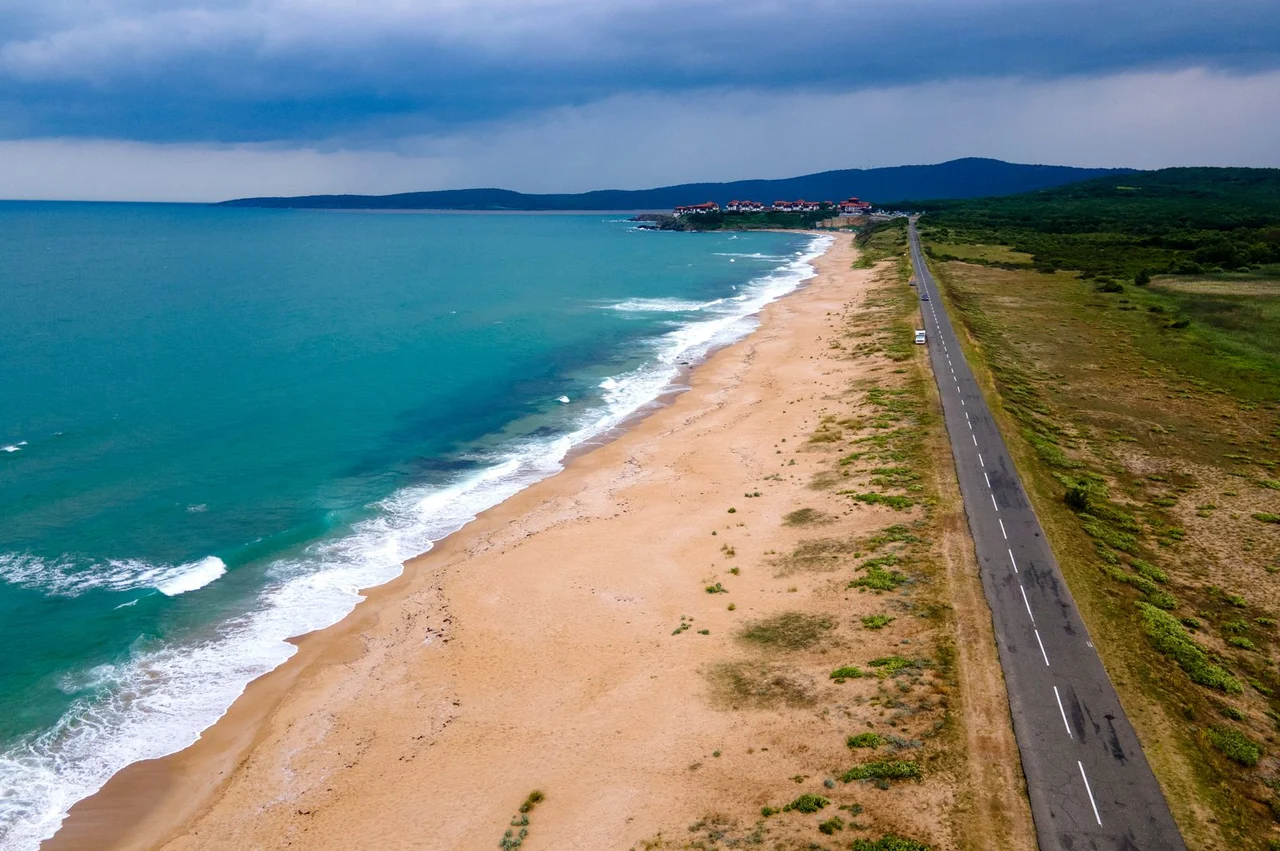
The most popular destinations for those moving to retire are the Black Sea coast: Varna, Burgas, Nessebar, Pomorie, Sunny Beach. There is a mild maritime climate, beaches and established communities of immigrants. A two-room apartment in residential areas of Varna can cost approximately 400-500 EUR rent per month. For those who love cool weather and mountains, Bansko is suitable, and for those who value urban infrastructure - Sofia.
A subtle point of honesty: buying real estate in itself does not give you a residence permit. Housing is one of the conditions for the pension foundation, but it is a stable income (pension) that makes a person a suitable applicant. The property covers the occupancy requirement rather than replacing the basis.
How much does it cost to live in retirement?
Cost of living is often a deciding factor. According to 2026 guidelines, a comfortable life in Bulgaria costs approximately 1000-1200 EUR per month, and a modest life outside the capital is feasible and cheaper. The coast (Varna, Burgas) is usually 10-20% more accessible than Sofia.
What is included in this budget: rent or maintenance of housing, food, transportation, basic medical expenses, leisure. For a pensioner with a pension of around 600-800 EUR and small savings, life is calm, without the need to count every coin. We have collected a detailed breakdown of expenses in the review. cost of living in Bulgaria.
It is the low prices combined with the European quality of the environment that make moving a pensioner to Bulgaria a rational choice. Money, which in more expensive countries would be enough, here provides a decent level of comfort.
Taxes: flat 10% and residence
Bulgaria's tax system is one of its trump cards. Income tax is levied at a flat rate of 10%, one of the lowest in the European Union. This is attractive for those who have income other than a pension.
Key point: tax residency and citizenship are two different things. A person becomes a tax resident if he spends 183 days or more a year in the country or if his center of vital interests is here. Then, as a general rule, worldwide income must be declared and the foreign pension may be taxed at the same rate of 10%.
It's important not to oversimplify here. Bulgaria has double taxation agreements with dozens of countries - they determine where and how the pension is taxed, so as not to pay twice. You should check the specifics for your country and type of income individually: tax consequences depend on the details, and it is better to calculate them in advance, before moving.
Pitfalls and fair reservations
In order for the decision to be balanced, we will list what is often kept silent. First: income and minimum wage thresholds are revised annually, so the guideline of 500-700 EUR is just a guideline, and not a fixed figure forever. Please check the current values at the time of submission.
Second: as a rule, the state pension is counted. Private payments may not be accepted and should be verified in advance. Third: buying real estate is not equal to a residence permit - this is a common misconception. Housing fulfills one of the conditions, but the basis is income.
Fourth: for pensioners from Russia and other CIS countries, the procedure works strictly within the framework of EU law, with enhanced compliance and verification of the source of funds. There are no workarounds - everything is transparent. Russia allows second citizenship and other statuses, but for certain statuses there is an obligation to notify the Ministry of Internal Affairs. It is better to take these points into account from the very beginning so that the move goes without surprises.
How we help a pensioner obtain a residence permit
Registration of a residence permit in Bulgaria for pensioners is not one document, but a bunch of steps: correctly confirm income, legalize papers, choose insurance, arrange housing and get a D visa without refusals. An error at any stage shifts the deadlines by months.
We help build the entire process: we assess whether your pension meets the threshold, prepare a set of documents to meet the requirements of a specific consulate, support the application for a D visa and then a residence permit in Bulgaria, help with a bank account and address registration. Next, we build a strategy for annual renewal so that the experience accumulates continuously and leads to permanent residence in five years.
If you are considering not only a stay, but also a deeper connection with the country (for example, you have Bulgarian roots), we will also advise you about Bulgarian citizenship by descent is a separate path to an EU passport. And the basic steps for residence permit and permanent residence are discussed in our guides by residence permitandby permanent residence.
An expert's view: what to look for
When working with pension matters, details that at first glance seem trivial matter. The most common reasons for delays are not the size of the pension, but legalization formalities and discrepancies in documents. Therefore, you should approach preparation methodically, and not collect papers at the last moment.
Below is our expert's commentary on what applicants most often miss and how to avoid it.
Frequently asked
Questions people ask before deciding
01What income does a pensioner need for a residence permit in Bulgaria?
Approximately from 500-700 EUR per month - at the level of the minimum pension or minimum wage in Bulgaria. The exact threshold is linked to current values and is revised annually, so it is verified at the time of submission. As a rule, it is the state pension that is counted.
02Is this basis suitable for pensioners from Russia?
Yes, a residence permit in Bulgaria for pensioners from Russia is a common route. The procedure works strictly within the framework of EU law, with enhanced compliance and verification of the source of funds. You need a pension, housing in Bulgaria, health insurance and a D visa. No workarounds are used.
03Does purchasing real estate automatically give you a residence permit?
No. This is a common misconception. Purchasing a home covers the residence requirement, but does not in itself provide a residence permit. The basis for a pensioner is a stable income - a pension. Real estate is one of the conditions, not a replacement for the foundation.
04What is a D visa and why is it needed?
Visa D is a long-term multiple-entry visa for 6 or 12 months. This is a mandatory first step: without it you cannot apply for a residence permit. First, a D visa is issued at the consulate at the place of residence, then they enter Bulgaria with it and submit documents for permission.
05What health insurance is required?
The policy must be valid in Bulgaria, covering emergency medical care and repatriation. Coverage guideline - from 30,000 EUR, registration in a company licensed in the EU. This is one of the mandatory conditions for both the D visa and the residence permit.
06How often do you need to renew your residence permit?
The permit is issued for a period of up to 12 months and is renewed annually. With each extension, they confirm that the basis is maintained: the pension is received, housing is available, insurance is valid. The extension is submitted in advance, before the expiration of the current period, so as not to interrupt the length of service.
07After how many years can I get permanent residence?
After five years of continuous legal stay under a residence permit, the opportunity to apply for permanent residence (permanent residence) opens up. It is important that the five years run continuously - without any gaps in status - so careful annual renewal is critical.
08What taxes does a pensioner pay in Bulgaria?
Income tax is flat 10%, one of the lowest rates in the EU. A person becomes a tax resident if he resides for at least 183 days a year or has a center of interest in the country. The worldwide income is then declared and the foreign pension may be taxed at 10%, subject to double tax treaties.
09Is a private pension eligible?
As a rule, the state pension is counted. Payments from private foundations or organizations may not be accepted as primary income. This needs to be clarified in advance so as not to be refused due to formalities and, if necessary, support the income with other confirmations.
10Where is it better to live as a pensioner in Bulgaria?
The Black Sea coast is popular - Varna, Burgas, Nessebar, Pomorie, Sunny Beach - with a mild maritime climate and established communities of immigrants. For mountain lovers, Bansko is suitable, and for those who value urban infrastructure - Sofia. The coast is usually 10-20% more accessible than the capital.
11How much does it cost to live in retirement in Bulgaria?
According to 2026 guidelines, a comfortable life costs about 1000-1200 EUR per month, and a modest life outside Sofia is realistic and cheaper. The budget includes housing, food, transportation, basic medical expenses and leisure activities. Low prices with a European quality environment is one of the main reasons for moving.
12Do you need a Bulgarian bank account?
As a rule, yes - having a Bulgarian account is included in the registration requirements. Through it, they confirm their financial solvency and receipt of a pension. An account is usually opened at the stage of preparation for applying for a residence permit, after receiving a D visa and entering the country.
Transparency
How this material was prepared
- Author
- Daniel Kovach, senior International Law Attorney, BRIDGES
- Terms and costs last verified
- June 2026
- Sources
- official government authorities of the relevant country and state publications
- Methodology
- government minimum requirements are stated separately from due diligence charges, state fees, legal and banking costs
Sources and methodology
Figures, terms and timelines are checked against official sources as of June 2026. Link availability verified in August 2026. Third-party blogs and agent websites are not used as a source of programme terms.
- [1]Ministry of Interior of BulgariaResidence of foreign nationals and documentswww.mvr.bg/en
Methodology: tables and charts state government minimum investment requirements; due diligence charges, state fees, legal, banking and other costs are calculated separately and are not included in the minimum thresholds.
About the author
Related materials
What to read next
 ArticleBulgarian citizenship through investment in 2026: why the program was cancelled and what works instead
 ComparisonCitizenship of Bulgaria or Romania: what to choose for an EU passport
 AnalysisWhat is due diligence and why the Caribbean is rejecting applications
Personal programme selection is conducted by Anna Kovalevskaya, Head of Legal, BRIDGES.
Buying property in Bulgaria: what to check
Title, encumbrances, outstanding debts and what to look for in the contract.