Residency · Bulgaria
Real estate in Bulgaria 2026: prices, purchase by foreigners, regions
Updated: June 2026·11 min read·Expert reviewed
Terms and costs verified: June 2026
Contents
Bulgaria has long been on the list of the most affordable countries in the European Union in terms of housing costs - and at the same time it gives what Turkey or Georgia do not have: an apartment inside the EU, on the Black Sea coast or near the Bansko ski slopes. On January 1, 2026, the country switched to the euro, the Schengen borders were fully opened, and interest from foreign buyers increased noticeably. Let's take a look: how much square meters actually cost in 2026, what a foreigner can buy and what cannot, how the transaction works with a notary and how much will be added on top in taxes and fees.
Why real estate in Bulgaria is again in the spotlight
Bulgaria has been a full member of the European Union since 2007, and from 2025 it is a full-fledged part of Schengen, including land borders. On January 1, 2026, another weighty argument was added to this: the country entered the eurozone and replaced the lev (BGN) with the euro at a fixed rate of about 1.95583 levs per euro. For a foreign buyer, this means predictability: the price of the apartment is now denominated in the same currency as in most EU countries, without hidden currency risk.
At the same time, Bulgaria remains one of the most affordable housing countries in the European Union. For a budget that in Spain or Italy would only be enough for a studio in the outback, here you can buy a spacious apartment by the sea or in the capital. A rare combination: prices at the level of a developing market - and at the same time full-fledged European jurisdiction, clear ownership and a notarial transaction.
Add to this the mild climate, the long Black Sea coast, ski resort Bansko and one of the lowest income tax rates in the EU (10%). It is not surprising that in 2026, demand from foreign buyers, including from Russia, has picked up again.
Can a foreigner buy property in Bulgaria?
The short answer: an apartment or a house - yes, land directly - in most cases no. This is a key difference to understand before viewing ads for the first time.
Buildings and apartments. A foreign individual, including a non-EU citizen (for example, a Russian citizen), can freely buy apartments, houses and commercial premises - that is, the building itself. Bulgarian or EU citizenship is not required for this; there are no restrictions on the number of objects.
Earth. But a non-EU individual cannot directly buy the land under the facility - this is directly limited by the Constitution of Bulgaria. Agricultural lands, forests and vineyards are completely closed to all foreigners. The purchase is possible under EU rules, under an international treaty or by inheritance.
In practice, this is solved simply: the land (for example, a plot under a house or villa) is registered in the name of a Bulgarian legal entity - most often a company of the LLC/EOOD format, where the foreigner owns 100% of the shares. Registration of such a company costs approximately several hundred euros plus annual accounting. If you buy an apartment in a high-rise building, the land under the building does not become your property - and the question disappears by itself.
Property prices in Bulgaria by region in 2026
It is impossible to give one “average price in Bulgaria” - the spread between the seaside resort and the capital is huge. Let's give guidelines for the beginning of 2026 (market figures; they should be taken as an order of magnitude, and not as a fixed price).
Sofia. The most expensive market in the country: approximately 2,500 euros per square meter in new and good areas. A two-room apartment in a decent location - approximately 120-180 thousand euros. The capital is growing fastest due to jobs and demand.
Varna and Burgas. Large coastal cities: approximately 1700-1900 euros per square meter. This is permanent city housing by the sea, and not seasonal apartments.
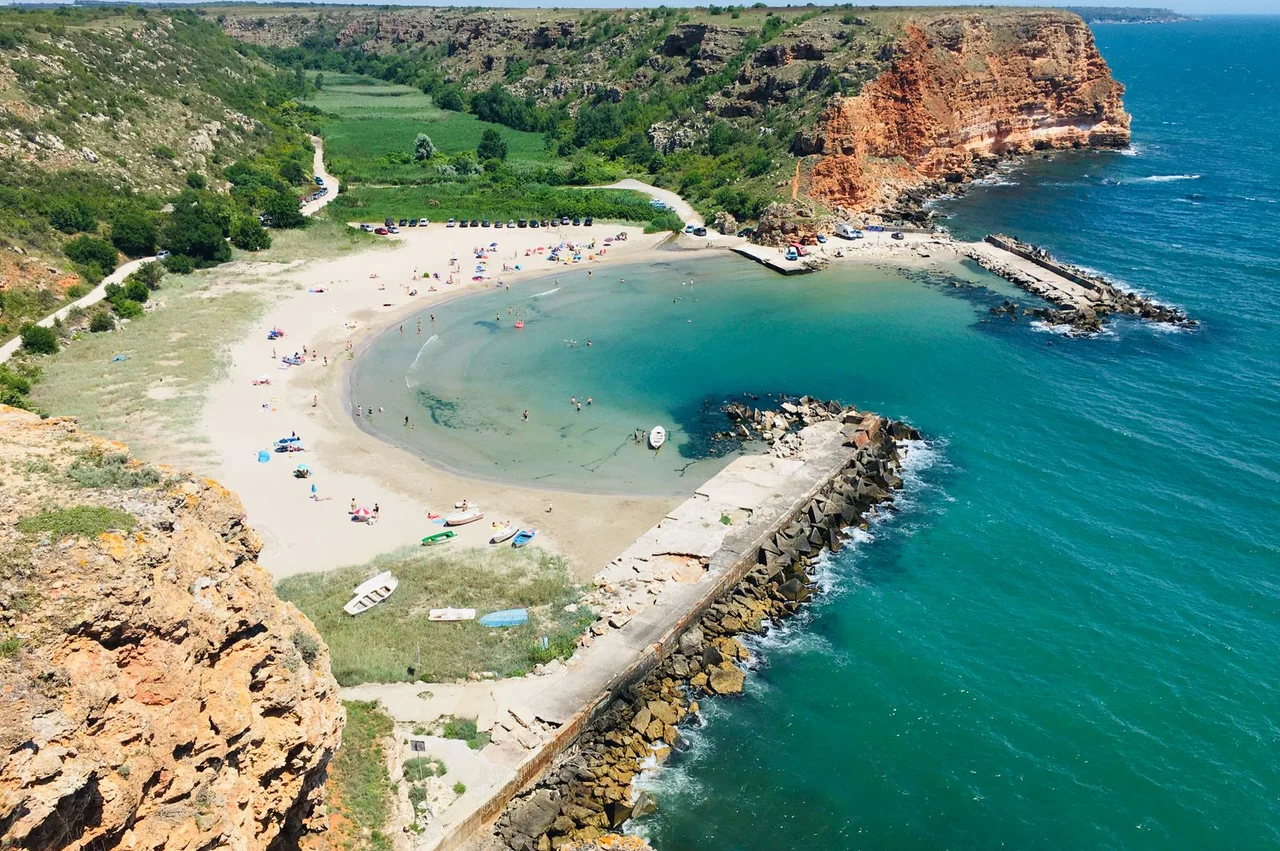
Black Sea resorts (Sunny Beach, Nessebar, Pomorie). Here are the most affordable offers for purchasing “by the sea”: studios often start from ~38-49 thousand euros, one-room apartments - from ~54-65 thousand euros, and a square meter in resort complexes is approximately in the range of 800-1200 euros.
Bansko and mountains. The ski destination is traditionally cheaper than the coast - this is an option for those who are looking for a seasonal apartment for rent and holidays at a low entrance budget.
Regions of Bulgaria: what to choose for your task
To make it more clear, we have summarized the main directions in one table - a guideline for prices and for whom which region is usually suitable.
| Region | Price guide | What does it offer? |
|---|---|---|
| Sofia (capital) | ~2500 euro/sq.m | Work, year-round rental, liquidity, infrastructure |
| Varna, Burgas | ~1700-1900 euro/sq.m | City life by the sea, airports, permanent housing |
| Sunny Beach, Nessebar, Pomorie | ~800-1200 euro/sq.m | Seaside holidays, seasonal rental, low entrance (studios) |
| Bansko and mountains | below the coast | Alpine skiing, seasonal rental, weekend cottage |
Sofia (year-round demand) and large coastal cities are often considered for passive rental income. For relaxation and a low budget - resorts and mountains. We have collected a detailed analysis of the coast in the material about real estate in Bulgaria on the sea, and current guidelines are in the review real estate prices in Bulgaria.
How to buy property in Bulgaria: the process step by step
The deal in Bulgaria is structured transparently and is familiar to Europeans. Ownership is confirmed by a notarial deed and an entry in the state register - after that you are the rightful owner.
1. Selecting an object and making a reservation. You agree on a price and make a small reservation deposit (approximately 1-2 thousand euros) so that the property is removed from sale.
2. Due diligence. The lawyer checks the purity of the title: who is the owner, whether there are any debts, arrests, encumbrances, whether everything is in order with permits. This step cannot be skipped.
3. Preliminary agreement and deposit. A preliminary agreement is signed and a deposit is paid - usually about 10% of the cost. It sets out the price, terms and conditions.
4. Notarial deed. The parties sign a notarial deed (notary public) and pay for the transaction. From this moment, ownership passes to you.
5. Registration. The transaction is entered into the Imoten registry (property register) under the Registration Agency. This is the final point - the object is officially registered to you.
We will find the right basis for residency in Bulgaria
We calculate the budget and timing for your family and list the documents you need.
How much does the purchase cost above the price of the object: taxes and fees
In addition to the price of the apartment, factor in additional costs - they are moderate in Bulgaria, approximately 5-10% above the cost of the property. What do they consist of:
- Municipal tax on transfer of rights - approximately from 0.1% to 3% depending on the municipality; in large cities (Sofia, Varna, Burgas, Plovdiv) it is usually about 3%.
- Notary fee - on a progressive scale, approximately from 0.1% to 1.5% of the cost, with an upper ceiling; On top of that, 20% VAT is charged on the collection itself.
- Registration in Imoten registry - state tax of about 0.1% of the cost.
- Legal support - verification and preparation of documents (paid separately, by agreement with a lawyer).
All figures should be clarified for a specific object and municipality - municipal tax rates vary. We have included a full analysis of the fiscal side in a separate article about property taxes in Bulgaria.
If you are planning not just a vacation, but a long history with Bulgaria - the selection of an object, the ownership structure and the connection with residency - it makes sense to discuss the task with a specialist before the transaction. Leave a request, and we will analyze your specific case.
Checking the object: what needs to be checked before signing
The Bulgarian market is transparent, but this is not a reason to buy blindly. Most of the problems for foreign buyers arise where they saved on inspection. What to pay attention to:
- Title and owner. Who is the real owner, is he the same as the seller, are there any co-owners whose consent is needed.
- Encumbrances. Mortgages, arrests, legal disputes, debts - all this is checked against the registry before the deposit is made.
- Construction documents. Construction permit, commissioning certificate, legality of redevelopment - especially for new buildings and villas.
- Maintenance debts. Resort complexes have an annual maintenance fee - make sure there is no debt on the property and what the amount is for the future.
- Legal entity underground. If you buy a house with a plot through a Bulgarian company, check that the structure is drawn up correctly and there is accounting support for it.
It is good practice to hire an independent Bulgarian lawyer on the buyer’s side, and not rely only on the seller’s agent.
“The most common mistake I see among foreign buyers is that they look only at the price of the apartment and forget about two things. First: it’s easy for a foreigner to buy an apartment, but the land under the house directly is not, and this needs to be included in the structure of the transaction in advance, through a Bulgarian company, and not dealt with by a notary. Second: buying a home in itself does not provide a residence permit - this is not the “residence permit for meters” program. If a person needs European status, we build a separate legal basis, and connect real estate as a convenient support. And separately for 2026: the market has already won back the excitement around the transition to the euro in 2025, prices have risen, and now the dynamics are cooling down - this is a calm time to choose an object with your head.”
New building or resale: what to choose
Both options work; the choice depends on the goal and willingness to wait.
New building. Modern layouts, new communications, often the opportunity to enter during the construction phase at a price lower than finished housing. Disadvantages: at the excavation stage there is a higher risk, the reputation of the developer and the stage of the project are important. In 2026, new projects may noticeably increase in price as they are ready due to the rising cost of building materials - this can be used as an entry point, but it is necessary to check the developer.
Secondary. You can see the property “live”, move in immediately, and assess the real condition of the house and its neighbors. In resort complexes, resale units often come with furniture. The downside is possible wear and tear and the need for repairs.
For seasonal rental by the sea, they often take ready-made furnished apartments in the secondary market - it is easier to rent them out right away. To live in Sofia or Varna, many people prefer new buildings with modern layouts.
Real estate in Bulgaria for Russians: what is important to consider
Russians and citizens of other CIS countries can buy real estate in Bulgaria - the law does not make national bans on buildings and apartments. But there are nuances that are worth knowing in advance.
Compliance and source of funds. As elsewhere in the EU, banks and notaries check the origin of money. Prepare documents confirming the legal source of funds (sale of property, income, savings). This is normal practice, not an obstacle - it just needs to be taken seriously.
Calculations and sanctions. All operations are carried out strictly within the framework of EU legislation, without circumventing restrictions. It is better to work out this point in advance with a lawyer so that the payment goes through without delays.
Second citizenship. Buying a home does not affect your citizenship. And if in the future it comes to an EU passport based on Bulgarian roots, Russia allows second citizenship with notification of the Ministry of Internal Affairs.
Read more about the practical side for buyers from the Russian Federation in our material about real estate in Bulgaria for Russians.
Does buying real estate give you a residence permit in Bulgaria?
It’s important to be here, because many people are misled by this: purchasing real estate in Bulgaria does not in itself provide a residence permit. This is not a “residence permit for an apartment” program like in some other countries. Availability of housing is a plus to the application and convenience, but not the basis for status.
A residence permit requires a separate legal motive: for example, representation of a company at the Bulgarian Chamber of Commerce and Industry, pensioner status with a stable income and housing, family reunification, work or study. Having your own apartment solves the question of “where to live” and helps confirm housing for certain reasons.
The residence permit is renewed annually, after a few years the path to permanent residence, the status of a long-term EU resident and naturalization opens. We discussed exactly how real estate is integrated into this scheme in a separate guide about Bulgarian residence permit through real estate - it shows where housing helps and where additional motivation is needed.
Euro from 2026: how does this affect the market
From January 1, 2026, Bulgaria is officially in the eurozone: the lev is replaced by the euro at a fixed rate of about 1.95583 levs per euro. This is a significant event for the real estate market, but not a reason for panic in either direction.
The main effect has already been reflected by the market in 2025: the anticipation of the transition to the euro spurred demand, and prices in large cities increased noticeably over the year - according to various estimates, about 13-19% in Sofia, Varna and Burgas. Analysts attribute part of this growth to the “euro effect.”
For 2026, most forecasts agree on normalization: annual growth is approximately slowing down to 5-10%, monthly dynamics are cooling down. The euro adds predictability to the market and removes currency risk for buyers from the eurozone, which makes Bulgaria more attractive to international capital. At the same time, some experts believe that prices will be driven further by internal factors of the economy, and not by the fact of the currency change itself.
For the buyer, the conclusion is calm: the rush is over, the market is entering a smoother phase - this is more likely a good time for a balanced purchase than for a rush.
Maintenance of real estate: taxes and expenses of the owner
Once purchased, maintenance costs in Bulgaria remain among the most lenient in the EU - this is part of the country's appeal.
Annual property tax. Low, calculated from the tax assessment of the property by the municipality; for a typical apartment this is a modest amount per year.
Garbage removal fee (estimate fee). Also municipal, usually small, depends on the location and type of object.
Maintenance fee for the complex. Relevant for resort complexes with a swimming pool, security, and cleaning of the territory - lay it separately, the size depends on the level of the complex and area.
Utility payments. Electricity, water, internet - based on consumption, at Bulgarian tariffs.
Separately, it is worth keeping in mind taxes when renting out and for future resale - this is about planning, and a tax specialist is useful here. Bulgaria is attractive with a flat income tax rate of 10%, but tax residency depends on residence (183 days) and center of vital interests, and not on the fact of home ownership itself.
Common buyer mistakes and how to avoid them
Most of the troubles on the Bulgarian market are predictable and come from haste or skimping on support. Here's what most often trips up foreign buyers:
- Buying without a lawyer on your side. Relying solely on the seller's agent is a risk. An independent title inspection pays for itself many times over.
- Ignoring maintenance fee. In resort complexes, the annual maintenance fee can be sensitive - it needs to be found out before the transaction, not after.
- Rate for “residence permit for an apartment”. Buying a home does not give you status - if the goal is residency, build a plan around a legal basis, and take real estate as an addition.
- Land for an individual. An attempt to register a plot of land directly in the name of a non-EU foreigner will run into restrictions - plan the structure in advance through a company if the land is really needed.
- Underestimation of compliance. Without prepared documents about the source of funds, the payment may get stuck at the bank. Prepare them in advance.
All these points are removed with competent support - then the transaction proceeds calmly and predictably.
Real estate as part of a strategy: apartment today - EU passport tomorrow
An apartment in Bulgaria is good in itself - as an affordable European property, a holiday destination or a source of rental income. But for many foreign buyers, it is the first step in a broader EU presence strategy.
The strongest product in Bulgaria for people with roots - citizenship by descent. If among your ancestors (father, mother, grandfather, grandmother or further down the line) there were Bulgarians, the country provides a preferential path to a passport: without a residence requirement, without a language exam and without renouncing your previous citizenship. This is a full-fledged EU passport with the right to live, work and study in any country of the Union.
In this logic, your own apartment is a convenient base: a place to live while completing paperwork, confirmation of connections with the country, a springboard for the family. We talk in detail about the program itself and the conditions for restoring Bulgarian roots on the page Bulgarian citizenship. It is important to understand : golden passports for investments in Bulgaria were canceled back in 2022 - you cannot buy citizenship, but the path through your roots and the path through a residence permit to naturalization work.
We will send a document checklist for your case
Leave your details: we will put together documents and timelines for your family.
Is it worth buying property in Bulgaria in 2026?
In short: Bulgaria in 2026 is one of the most reasonable entries into EU real estate in terms of price, quality of life and prospects. A square meter by the sea or in the mountains remains affordable, while you are not buying a “resort in a third country,” but property within the European Union and Schengen, with the transition to the euro and a transparent notary transaction.
A foreigner of any nationality can freely buy apartments and houses; land, through a Bulgarian company. Additional costs are moderate (approximately 5-10%), maintenance is one of the cheapest in the EU, and the hype around the euro has already been won back, which makes 2026 more of a time for calm, balanced purchases.
The main thing is not to confuse real estate with residence and not to skimp on checking the property. And if there is a big goal behind the apartment - an EU passport for Bulgarian roots or relocation of the family - build everything into a single plan. Write to us: we will analyze your case, advise you on the object, ownership structure and connection with residency and citizenship.
Frequently asked
Questions people ask before deciding
01Can a foreigner buy property in Bulgaria in 2026?
Yes. A foreign citizen, whether British, American or Russian, can freely buy apartments, houses and commercial premises: the law does not prohibit foreigners from owning buildings. The restriction applies only to land: it cannot be registered directly to a non-EU individual, but this can be solved by purchasing through a Bulgarian company. All calculations are carried out strictly within the framework of EU legislation with verification of the source of funds.
02How much does seaside property cost in Bulgaria?
In the Black Sea resorts (Sunny Beach, Nessebar, Pomorie) the guideline is about 800-1200 euros per square meter, studios often start from ~38-49 thousand euros. In large coastal cities (Varna, Burgas) it is more expensive - approximately 1700-1900 euros per sq.m. The figures are market figures, they should be taken as an order of magnitude and adjusted for a specific object.
03Is it possible for a foreigner to buy land in Bulgaria?
An individual not from the EU is not directly allowed, this is limited by the Constitution of Bulgaria (agricultural land, forests and vineyards are closed to all foreigners). The standard solution is to register a Bulgarian company (OOD/EOOD), where you own 100% of the shares, and register a plot for it. If you buy an apartment in a high-rise building, the land does not become your property and the question does not arise.
04Does buying real estate give you a residence permit in Bulgaria?
No, the purchase of a home in itself does not provide a residence permit - this is not the “Residence Permit for an Apartment” program. Status requires a separate legal motive: representation of a company, pensioner status with income, family reunification, work or study. Having your own apartment helps confirm housing and is convenient as a base. Details are in our guide about residence permits through real estate.
05What taxes and fees are payable upon purchase?
On top of the price, budget approximately 5-10%: municipal tax on the transfer of rights (about 3% in large cities), notary fee on a progressive scale plus 20% VAT on it, registration in the register of about 0.1% and legal support. The exact amounts depend on the municipality and the value of the property.
06How does a real estate purchase transaction work?
Stages: selection of an object and reservation deposit, due diligence, preliminary agreement with a deposit of about 10%, signing of a notarial deed with a public notary and registration in the Imoten registry (property registry). After entry into the register, you become the full owner.
07How has Bulgaria's adoption of the euro in 2026 affected prices?
The market played out the main effect in advance, in 2025: the expectation of the euro spurred demand, and prices in Sofia, Varna, and Burgas increased by approximately 13-19% per year. For 2026, forecasts indicate normalization - annual growth slows to about 5-10%. The euro removes currency risk and makes the market more predictable for buyers from the eurozone.
08Where is it more profitable to buy - by the sea, in Sofia or in the mountains?
Depends on the goal. Sofia is the most expensive and liquid market, good for year-round rental. Varna and Burgas - city life by the sea. Black Sea resorts - low entry and seasonal rental. Bansko and the mountains are the most budget option for skiing and recreation. People often look to the capital and large cities for passive income, and resorts for vacation.
09Do you need a lawyer when buying real estate in Bulgaria?
It is highly recommended that you have an independent lawyer on the buyer's side, not an agent of the seller. He will check the purity of the title, the absence of debts and encumbrances, the legality of buildings and permits. Most problems for buyers arise where they skimped on inspection. The cost of support is repaid many times over by the peace of mind of the transaction.
10Is it possible to buy real estate in Bulgaria for investment and obtain citizenship?
No. The Bulgarian “golden passport” program for investment was canceled by parliament back in 2022 - citizenship cannot be purchased. The real paths to an EU passport are citizenship by origin (based on Bulgarian roots, preferential) or a long path through residence permit and permanent residence to naturalization. Real estate can be a convenient support, but it is not the basis for a passport.
11How much does it cost to maintain real estate in Bulgaria?
One of the softest in the EU. The annual property tax is low and the garbage collection fee is small. Separately, resort complexes have a maintenance fee - its size depends on the level of the complex, find out before the transaction. Plus utility bills based on consumption. Income tax in the country is flat - 10%.
12Should you choose a new building or a resale property in Bulgaria?
Depends on the goal. New building - modern layout, new communications, sometimes entrance during the construction phase at a price lower than finished housing (but the reputation of the developer is important). Resale - you can see it live, move in immediately; in resort complexes it often comes with furniture and is immediately ready for rent. For seasonal rental by the sea, ready-made furnished apartments are often purchased.
Transparency
How this material was prepared
- Author
- Maria Stavru, real Estate Analyst, BRIDGES
- Terms and costs last verified
- June 2026
- Sources
- official government authorities of the relevant country and state publications
- Methodology
- government minimum requirements are stated separately from due diligence charges, state fees, legal and banking costs
Sources and methodology
Figures, terms and timelines are checked against official sources as of June 2026. Link availability verified in August 2026. Third-party blogs and agent websites are not used as a source of programme terms.
- [1]Ministry of Interior of BulgariaResidence of foreign nationals and documentswww.mvr.bg/en
Methodology: tables and charts state government minimum investment requirements; due diligence charges, state fees, legal, banking and other costs are calculated separately and are not included in the minimum thresholds.
About the author
Related materials
What to read next
 ArticleBulgarian citizenship through investment in 2026: why the program was cancelled and what works instead
 ComparisonCitizenship of Bulgaria or Romania: what to choose for an EU passport
 AnalysisWhat is due diligence and why the Caribbean is rejecting applications
Personal programme selection is conducted by Anna Kovalevskaya, Head of Legal, BRIDGES.
Buying property in Bulgaria: what to check
Title, encumbrances, outstanding debts and what to look for in the contract.