Residency
Real estate in Abu Dhabi 2026: how a foreigner can buy an apartment, areas and prices

Updated: June 2026·13 min read·Expert reviewed
Terms and costs verified: June 2026
Contents
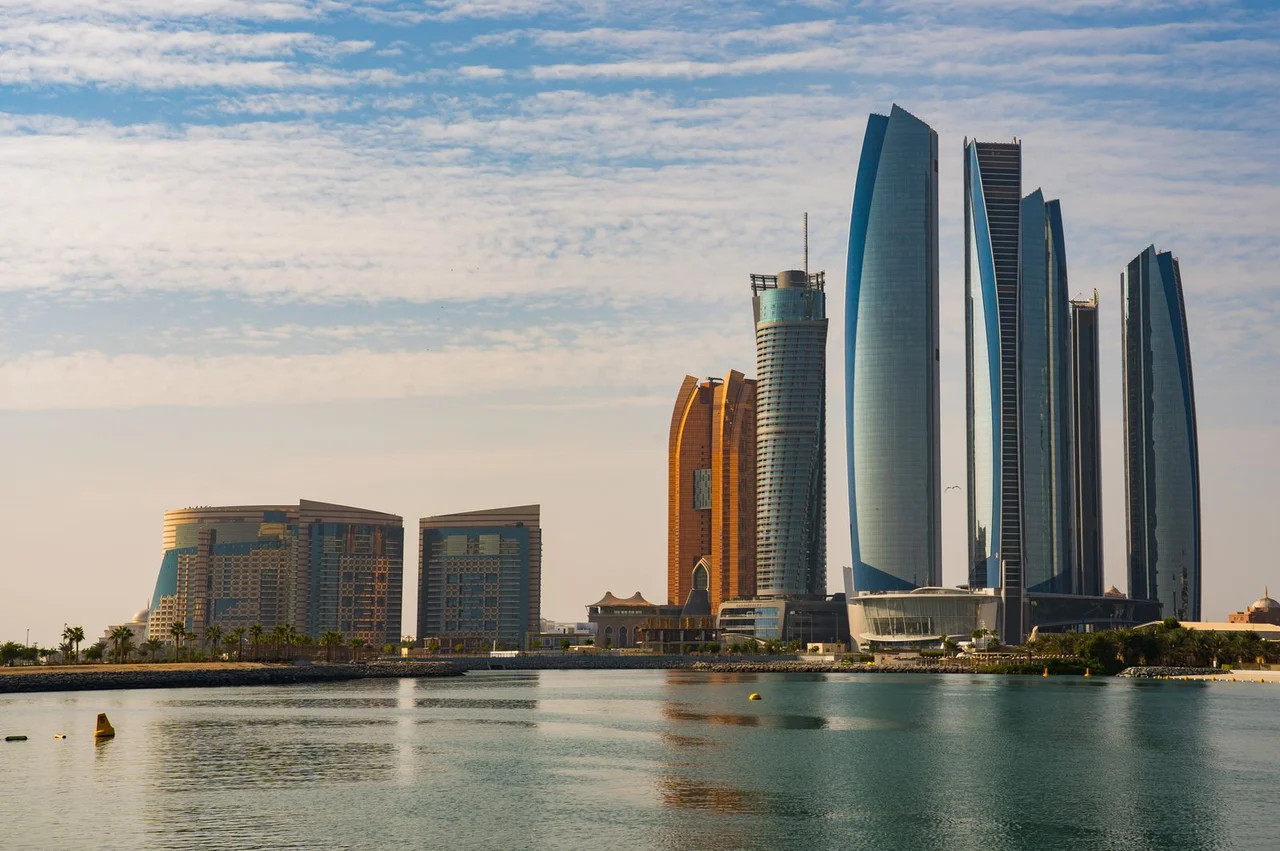
Abu Dhabi is the capital of the UAE and a quiet, green alternative to bustling Dubai. Since 2019, foreigners have been buying freehold housing here in investment zones: Saadiyat Island, Yas Island, Al Reem, Al Maryah and Al Raha. Prices here are usually lower than in Dubai with comparable quality, the registration fee is about 2% versus 4% in Dubai, and a purchase of over 2 million dirhams opens the way to a Golden Visa for 10 years. We'll look at how to buy an apartment in Abu Dhabi, how much real estate costs by area, and how the capital's market differs from Dubai's.
Why real estate in Abu Dhabi is not a “second Dubai”, but a separate market
When people talk about the UAE and real estate, they usually mean Dubai. But Abu Dhabi is the country's capital, the largest emirate by area and the center of the oil and state economy. The real estate market here is structured differently: it is calmer, more conservative and on average cheaper than Dubai, with the same level of construction and infrastructure. This is not “Dubai-light”, but an independent market with its own logic.
The main difference is in character. Dubai is a showcase, a city of skyscrapers, tourism and quick deals. Abu Dhabi is a laid-back, green, more family-friendly city with an emphasis on culture, education and long-term living. Here are the Louvre Abu Dhabi, the campuses of New York University and the Sorbonne, quiet promenades and beaches without crowds. Many who move to the UAE for the sake of life, and not for the investment race, choose the capital.
For the buyer, this means three practical advantages: a lower entry threshold, a noticeably lower registration fee and often higher rental yields in certain areas. If you have already studied UAE real estate market in general, then Abu Dhabi should be considered as a separate, in many ways more profitable option, and not as an annex to Dubai.
Freehold for foreigners: what is allowed to buy since 2019
The key date for the capital market is 2019. It was then that the Abu Dhabi law allowed foreigners (not citizens of the UAE and not citizens of the Gulf countries) to buy real estate in full ownership - freehold - in specially designated investment zones. Prior to this, non-residents had access to mainly long-term lease and use rights, but not full ownership of the land and the facility.
What is important to understand about ownership formats:
- Freehold - full and perpetual ownership of the object and share in the land. You can sell, rent out, pass on by inheritance, rebuild within the framework of the regulations. It is the freehold that gives the Title Deed (property document) in the name of the foreigner.
- Leasehold / Usufruct - long-term lease or right of use for up to 99 years. Found outside freehold zones; rights are limited; upon expiration of the term, the object is returned to the owner of the land.
For a foreigner who is buying housing for himself or for investment, it makes sense to focus specifically on freehold in investment zones: this is full-fledged property, which is also taken into account when applying for a resident visa and Golden Visa. Purchasing outside these zones is possible, but in a rental/use format and without the same rights. Therefore, the first question when selecting an object is whether it is located in the designated investment zone.
Abu Dhabi Investment Zones: Where exactly can a foreigner buy?
Property rights for foreigners do not apply throughout the emirate, but in designated investment zones. There are several of them, and each has its own character - from a premium cultural island to a business hub and family suburbs. Understanding geography is half the success when choosing.
- Saadiyat Island - cultural and premium island: museums (Louvre Abu Dhabi), beaches, five-star hotels, NYU campus. The most expensive segment.
- Yas Island - an island of entertainment: Formula 1 track, theme parks (Ferrari World, Warner Bros), golf courses. Strong rental demand and high yield.
- Al Reem Island - business and residential hub near the center: high-rise buildings, Reem Mall, marina, Sorbonne University. The most affordable entrance and high rental rates.
- Al Maryah Island - financial center (ADGM), premium towers, Cleveland Clinic hospital, The Galleria shopping center.
- Al Raha Beach - coastal residential area near the airport: canals, villas and apartments for family living.
In addition, freehold purchase is available in communities such as Khalifa City, Masdar City, Al Reef and Al Ghadeer - these are more budget and suburban options. But the “core” of the market for foreign buyers is precisely the islands of Saadiyat, Yas, Al Reem, Al Maryah and the coast of Al Raha. We take them as a basis when comparing prices and character.
Districts of Abu Dhabi: character and prices in one table
In order not to get lost in the details, let’s summarize the key zones in a table: the character of the area and the price guideline in 2026. All figures are indicative, the market is live, and the specific cost depends on the project, floor, type and stage of completion. But the order of magnitude and the logic of “more expensive-cheaper” by region are stable.
| Abu Dhabi area | Character | Price guide, 2026 |
|---|---|---|
| Saadiyat Island | Premium, culture, beaches, museums | from ~3.5 million to 25+ million AED ($0.95-6.8 million) |
| Yas Island | Entertainment, parks, high profitability | ~1.4-6 million AED ($380 thousand-1.6 million) |
| Al Reem Island | Business and residential hub, accessible entrance | ~0.42-3.5 million AED ($115-953 thousand) |
| Al Maryah Island | Financial center, premium towers | from ~2-2.5 million AED and above |
| Al Raha Beach | Family Coastal Living | ~1.2-5 million AED (apartments and villas) |
| Khalifa City / Al Reef | Suburbs, budget villas and townhouses | from ~0.7-1 million AED |
To simplify: a studio or small apartment in Abu Dhabi can be found from ~420-500 thousand dirhams on Al Reem, an average family option is in the range of 1.5-3 million, and a villa on Saadiyat easily costs several million dollars. The lowest entry threshold is at Al Reem, the highest ceiling is at Saadiyat.
Abu Dhabi real estate prices in 2026: numbers and dynamics
Let's talk about money in detail. The average threshold for entry into the capital's market is lower than Dubai's: apartments start from about 500,000 dirhams (about $136,000), studios in Al Reem - even from ~420,000 AED. An average one-room apartment costs approximately $150-200 thousand, depending on the area and condition. Villas start from approximately 2 million dirhams (~$545,000) and then depend on location and area.
For the islands in 2026, the guidelines are as follows:
- Al Reem Island - approximately from 900 thousand to 3.5 million AED ($245-953 thousand); the most accessible entrance.
- Yas Island - approximately 1.4-6 million AED ($380 thousand-1.6 million); price per square foot is approximately 1,200-1,800 AED.
- Saadiyat Island - from ~3.5 million to 25+ million AED ($0.95-6.8 million); upper premium segment.
What about the dynamics: the Abu Dhabi market at the beginning of 2026 showed a price increase of about 8% year on year - noticeable, but calmer than Dubai's double-digit figures. This is a plus for the buyer: there is less risk of overheating and hype, more predictable price behavior. In terms of rental yield, certain areas of Abu Dhabi are ahead of average Dubai: on Yas Island the net yield reached ~7.5% per annum, and studios on Al Reem reached almost 8%. That is, with a lower entrance you can get comparable or higher rental yield.
Registration fee 2% and why is it cheaper than Dubai
One of the most underrated arguments in favor of the capital is the cost of the transaction itself. When purchasing property in Abu Dhabi, the buyer pays a municipal registration fee (ADM fee) of about 2% of the property price. In comparison, in Dubai the standard Land Department (DLD) fee is 4%. On a large transaction, this difference is hundreds of thousands of dirhams.
Let’s do the math using a simple example of an apartment for 2 million AED:
- Abu Dhabi - fee ~2% = ~40,000 AED.
- Dubai - fee 4% = 80,000 AED.
The difference of 40 thousand dirhams out of the blue is already furniture for a new apartment or part of the decoration. In addition to the main fee, there will be standard associated costs: agent services (usually ~2% for resale), paperwork, for a mortgage - bank and registration commissions, for objects under construction - registration in the developer's system. But the basic state tax in the capital is noticeably lower, and this directly affects the final cost of entry.
Let us separately emphasize the pleasant thing: there is no annual tax on real estate in the UAE, there is no tax on rental income for individuals, as well as no capital gains tax on resale. That is, after the purchase, there are no annual mandatory payments to the state for the very fact of ownership - only service fees for maintaining the building.
Conditions and purchase procedure: how can a foreigner buy an apartment in Abu Dhabi
The purchase scenario for a foreigner is transparent and does not require prior receipt of a visa or residence permit - you can buy real estate in Abu Dhabi while abroad or through a tourist entry. Let's look at the order step by step.
- Selecting an object in the freehold zone. We decide on the area, budget and type (ready-made housing or one under construction from the developer). We check that the property is in an investment zone and is available to a foreigner for ownership.
- Reservation and contract. The reservation and purchase and sale agreement are signed (for resale - MOU), a deposit is paid (usually ~5-10%).
- Settlements and escrow. For projects under construction, the money goes into the project's escrow account, which protects the buyer; for finished housing - settlement with the seller according to an agreed scheme.
- Registration and Title Deed. The transaction is registered with the Department of Municipalities and Transport of Abu Dhabi (DMT), a fee of ~2% is paid, the buyer receives a Title Deed - a property document in his name.
For projects under construction, installment plans from the developer are almost always available - part is paid at the construction stage, part when handing over the keys, sometimes with continued payments after delivery (post-handover). This lowers the barrier to entry. Purchasing is also possible with a mortgage: banks usually give a LTV of up to 50-60% to a non-resident foreigner, and higher to a resident. Before making a transaction, you should check the current rules and zones on the official portal UAE government (u.ae).
Real estate as a path to Golden Visa and resident visa
Buying a home in Abu Dhabi is not only an asset, but also the basis for long-term legalization in the UAE. Property is directly converted into a visa, with the level of visa depending on the value of the property.
- Golden Visa for 10 years - when purchasing real estate worth more than 2,000,000 AED (~$545,000). The visa is extendable, self-sponsored: the holder himself sponsors his spouse, children without an age limit, parents and family members. Suitable for finished housing, for housing under construction, and for a property with a mortgage - the threshold is calculated based on cost.
- Resident visa for 2 years - when purchasing real estate from 750,000 AED. A more affordable threshold for those who do not yet need a ten-year visa.
The visa, in turn, gives an Emirates ID, the right to live in the UAE, open accounts, arrange services and sponsor a family. An important fair disclaimer: neither the purchase of real estate nor the Golden Visa gives UAE citizenship - the country's passport is not sold for investment, the Golden Visa is a residence permit, not citizenship. But in terms of taxation, everything is as comfortable as possible: there is no income tax on individuals in the UAE. The logic of visas and thresholds is discussed in more detail in our material about real estate and residence in the UAE.
Abu Dhabi or Dubai: a fair comparison for the buyer
The main practical question is what to choose. There is no definite answer: markets are different and solve different problems. Let's summarize the differences into a clear picture.
| Parameter | Abu Dhabi | Dubai |
|---|---|---|
| Entry threshold | Below, apartments from ~500 thousand AED | Above average for comparable areas |
| Registration fee | ~2% | 4% (DLD) |
| Character of the city | Calm, green, family, culture | Dynamic, tourist, business showcase |
| Price increases (2026) | More moderate, ~8% y/y | Faster, double-digit growth |
| Rental yield | In selected areas above (Yas, Al Reem) | Consistently high, but the market is tighter |
| Liquidity/choice | Already, there are fewer projects | Very wide selection and turnover |
Rough rule: Abu Dhabi often chosen for a quiet life, family, lower entry and fees, good income in the right areas. Dubai - for the sake of maximum choice, liquidity, dynamics and brand. If the priority is the comfort of life and savings on the transaction, the capital wins; If fast turnover and the widest market are important, Dubai is ahead. Many investors end up holding properties in both emirates. Detailed analyzes of the Dubai market - in materials about buying property in DubaiandDubai property prices in 2026.
Real estate in Abu Dhabi for Russians and CIS citizens
For international buyers, from the UK and Europe to India, the Gulf and the CIS, Abu Dhabi is one of the most accessible and transparent foreign markets. Citizens of many countries enter the UAE without a prior visa (Russian citizens, for example, get 90 days within 180 under the 2023 agreement), which is enough to fly in, view properties and complete a deal. Ownership of real estate for a foreigner is not limited by citizenship in freehold zones.
What a foreign buyer should pay attention to:
- Settlements and banks. UAE banks maintain enhanced compliance (KYC/AML) and verify the source of funds. Banks differ in their appetite for clients from certain countries (Russian citizens, for example, face stricter checks), so plan opening an account and making the payment in advance. Everything is strictly within the law, without circumventing sanctions.
- Source of funds. It is worth preparing transparent documentation about the origin of the money in advance - this eliminates most of the issues during the transaction and when opening an account.
- Capital mentality. Abu Dhabi is more conservative than Dubai in everyday life - this is worth taking into account for those who are moving with their family for permanent residence.
Otherwise, the procedure is the same for every foreign buyer, whatever their passport: the same freehold, the same Title Deed, the same road to a visa. A separate analysis of the nuances for our audience is in the material about purchasing real estate in the UAE for Russians, and the logic there generally applies to the capital.
New buildings, developers and installment plans: how to lower the entry threshold
A significant portion of transactions in Abu Dhabi are housing under construction (off-plan) from large developers. This is understandable: a new building is cheaper than a ready-made analogue at the start, provides a choice of better layouts and views, and most importantly, is sold in installments, which radically reduces the amount that you need to have on hand right away.
How the purchase of a new building usually works:
- Reservation and down payment - as a rule, 5-20% upon signing the contract.
- Payments according to construction schedule - the remaining amount is divided into stages (according to the percentage of readiness of the object).
- Post-handover installment plan - for some projects, payments continue even after receiving the keys, sometimes for 2-5 years.
The buyer's money for projects under construction goes into a protected escrow account - the developer receives it as the work is completed, which reduces risk. Nevertheless, the key check is the reputation and track record of the developer: we look at completed projects, deadlines, reviews, and registration of the project with the regulator. Both public and private developers with strong portfolios operate in the capital, but caution is in order. Ready-made housing (resale) is an option for those for whom it is important to move in or start renting out immediately, without waiting for construction; here the price is higher, but there are no risks and pauses associated with construction.
Maintenance costs and what you need to know about ownership
Buying is half the battle; It's important to understand the cost of ownership. The good news is that there is no annual property tax in the UAE, and there is no tax on rental income or capital gains for individuals. But there are still regular expenses - service expenses.
- Service charges - annual fee for maintenance of the building and common areas (cleaning, security, swimming pools, elevators, landscaping). It is calculated by area, the rate depends on the class of the project and the area.
- Public utilities - water and electricity (in Abu Dhabi via ADDC), internet and communications are paid based on consumption.
- Rental management - if you rent and use a management company, pay a management fee.
When renting in Abu Dhabi, a contract registration system (Tawtheeq) is used, which streamlines the relationship between the landlord and the tenant. This is a plus for the investor - the rules are clear and protect both parties. Service fees and potential rental yield should always be taken into account BEFORE purchasing: they determine the real net profitability, and not the “figure on the window.” Proper calculation at the start is what distinguishes a successful investment from a disappointment.
What to look for before a deal: an expert’s view and common mistakes
Over the years of working with the UAE market, we see that the mistakes of buyers in Abu Dhabi are repeated. Let's look at the main ones so that you don't commit them.
- Purchase outside the freehold zone. The property may be beautiful, but if it is not in an investment zone, only rent/use is available to a foreigner, and not full ownership. Always check the zone status.
- Ignoring the developer's reputation. On an off-plan basis, it’s easy to be tempted by the price and lose track of the project and miss the deadline. Check completed objects and project registration.
- Calculation of profitability without service fees. Dirty returns look good on paper; real net is considered minus service charges and downtime.
- Underestimation of banking compliance. The invoice and payment should be prepared in advance with a transparent source of funds, especially for buyers from countries under heightened bank scrutiny, such as Russia.
- Visa and citizenship confusion. Golden Visa for real estate is a 10-year residence permit, not a UAE passport. Citizenship by investment is not for sale in the country.
The main advice is simple: first the goal (life, rent, visa), then the area, then the specific object - and be sure to legally check the freehold status and agreement before making large payments.
Not sure which country and status to choose?
We will compare suitable residency programs on budget, timelines and stay requirements - with a full cost calculation for your family.
Free of charge, we reply right away, no obligation.
Bottom line: who is suitable for buying property in Abu Dhabi
Abu Dhabi property is a strong and often undervalued option for those looking at the UAE. The capital's market offers a lower entry barrier, a registration fee of about 2% instead of Dubai's 4%, a calm and green character of the city, no taxes on ownership and rental, and in the right areas, profitability equal to that of Dubai. Plus a clear path to a 10-year Golden Visa when purchasing from 2 million dirhams.
Who is this especially suitable for: families who move to the UAE to live and not to speculate; investors who are interested in the profitability of Yas and Al Reem with a moderate entry; buyers for whom savings on the transaction are critical. If the priority is maximum liquidity, the widest choice and dynamics, it makes sense to look at Dubai in parallel and compare specific projects and areas of Dubai.
The optimal strategy is not to choose “blindly according to the city brand”, but to consider according to your task: goal, budget, desired visa, horizon. Then Abu Dhabi often turns out to be more profitable than it seems at first glance. Current ownership rules and the list of investment zones should be checked on the official portal UAE government (u.ae).
Frequently asked
Questions people ask before deciding
01Can a foreigner buy freehold property in Abu Dhabi?
Yes. Since 2019, foreigners have been buying freehold housing in special investment zones in Abu Dhabi - such as Saadiyat Island, Yas Island, Al Reem, Al Maryah and Al Raha. In these zones, a Title Deed is issued in the name of a foreigner. Outside the investment zones, long-term lease or right of use for up to 99 years is available, but not full ownership.
02How much is property worth in Abu Dhabi in 2026?
The entry threshold is lower than in Dubai: apartments start from about 500,000 AED (~$136,000), studios in Al Reem - from ~420,000 AED. The average one-room apartment costs $150-200 thousand. On Yas Island prices are approximately 1.4-6 million AED, on the premium Saadiyat - from 3.5 million to 25+ million AED. Villas start from around AED 2 million.
03How is Abu Dhabi real estate different from Dubai?
Abu Dhabi is on average cheaper with comparable quality, the registration fee here is about 2% versus Dubai's 4%, the city is calmer and greener. Price growth is more moderate (~8% year-on-year versus double-digit in Dubai), and rental yields in certain areas (Yas, Al Reem) are even higher. Dubai wins in terms of liquidity, project selection and market dynamics.
04In which areas of Abu Dhabi can a foreigner buy?
In designated investment zones. Key: Saadiyat Island (premium, culture), Yas Island (entertainment, high income), Al Reem Island (accessible entry, business hub), Al Maryah Island (financial center), Al Raha Beach (family beach). More affordable freehold communities are Khalifa City, Masdar City, Al Reef, Al Ghadeer.
05What fee is payable when buying property in Abu Dhabi?
The municipal registration fee (ADM fee) is about 2% of the property price - half the Dubai 4%. Additionally, agent services are possible (~2% on the secondary market), paperwork, bank commissions for mortgages and project registration for housing under construction. There is no annual property tax in the UAE.
06Does purchasing property in Abu Dhabi provide a visa?
Yes. Purchasing real estate from AED 2,000,000 (~$545,000) entitles you to a 10-year Golden Visa, renewable and self-sponsored, with the opportunity to sponsor a family. Purchasing from AED 750,000 gives a 2-year resident visa. The visa is accompanied by an Emirates ID and the right to live in the UAE. However, neither the purchase nor the visa gives UAE citizenship.
07Saadiyat or Yas Island - which to choose for investment?
Saadiyat is a premium cultural island with the highest price ceiling and lower current yield (~5.8%) and is all about status and long-term capital growth. Yas Island is an entertainment island with strong rental demand and higher yields (up to ~7.5% per annum). For pure rental income, Yas is most often chosen, for prestige and capital - Saadiyat.
08Do you need a visa or residence permit to buy an apartment in Abu Dhabi?
No. You can buy real estate while abroad or through tourist entry - no preliminary visa or residence permit is required. On the contrary, the purchase itself of a certain amount becomes the basis for obtaining a resident visa or Golden Visa. Citizens of many countries enter the UAE without a prior visa (Russian citizens, for example, for 90 days), which is enough for the transaction.
09Does Abu Dhabi have an annual property tax?
No. In the UAE, there is no annual property tax, no rental income tax for individuals, and no capital gains tax on resale. There is also no personal income tax. The owner's regular expenses are service charges for maintaining the building (service charges) and utilities based on consumption.
10Is it possible to buy property in Abu Dhabi using installments or a mortgage?
Yes. Projects under construction (off-plan) are almost always sold in installments: a down payment of 5-20%, then payments according to the construction schedule; for some projects, payments are also made after handing over the keys (post-handover). Mortgages are also available: banks usually give LTV to a non-resident foreigner up to 50-60%, and higher to a resident.
11What are the nuances of purchasing as a foreign buyer?
Ownership in freehold zones is not limited by citizenship. The main nuance is banking compliance: UAE banks check the source of funds for every buyer and are more cautious with some nationalities (Russian citizens among them), so the invoice and payment are planned in advance, with transparent documentation about the origin of the money. Everything is strictly within the law, without circumventing sanctions.
12Will real estate in Abu Dhabi give UAE citizenship?
No. UAE citizenship by investment is not for sale - it is provided only by decree of the authorities for exceptional individuals or after a very long naturalization. Purchasing real estate and the Golden Visa provide a residence permit (up to 10 years, renewable), the right to live in the country and sponsor a family, but not a passport. This is important to understand when planning.
Transparency
How this material was prepared
- Author
- Igor Venc, real Estate Managing Director, BRIDGES
- Terms and costs last verified
- June 2026
- Sources
- official government authorities of the relevant country and state publications
- Methodology
- government minimum requirements are stated separately from due diligence charges, state fees, legal and banking costs
Sources and methodology
Figures, terms and timelines are checked against official sources as of June 2026. Link availability verified in August 2026. Third-party blogs and agent websites are not used as a source of programme terms.
- [1]EUR-LexOfficial texts of European Union legislationeur-lex.europa.eu/homepage.html
- [2]European Commission - Migration and Home AffairsEntry and residence rules in the EUhome-affairs.ec.europa.eu/index_en
Methodology: tables and charts state government minimum investment requirements; due diligence charges, state fees, legal, banking and other costs are calculated separately and are not included in the minimum thresholds.
About the author
Related materials
What to read next
 ComparisonAntigua and Barbuda or Grenada: Family Passport for Large Families in 2026
 AnalysisWhat is due diligence and why the Caribbean is rejecting applications
 ArticleLife in Abu Dhabi in 2026: how it differs from Dubai, areas, prices, for families
Personal programme selection is conducted by Anna Kovalevskaya, Head of Legal, BRIDGES.
How to check a property abroad
Title, encumbrances, outstanding debts and what to look for in the contract.