Residency
Life in Abu Dhabi in 2026: how it differs from Dubai, areas, prices, for families
Updated: June 2026·12 min read·Expert reviewed
Terms and costs verified: June 2026
Contents
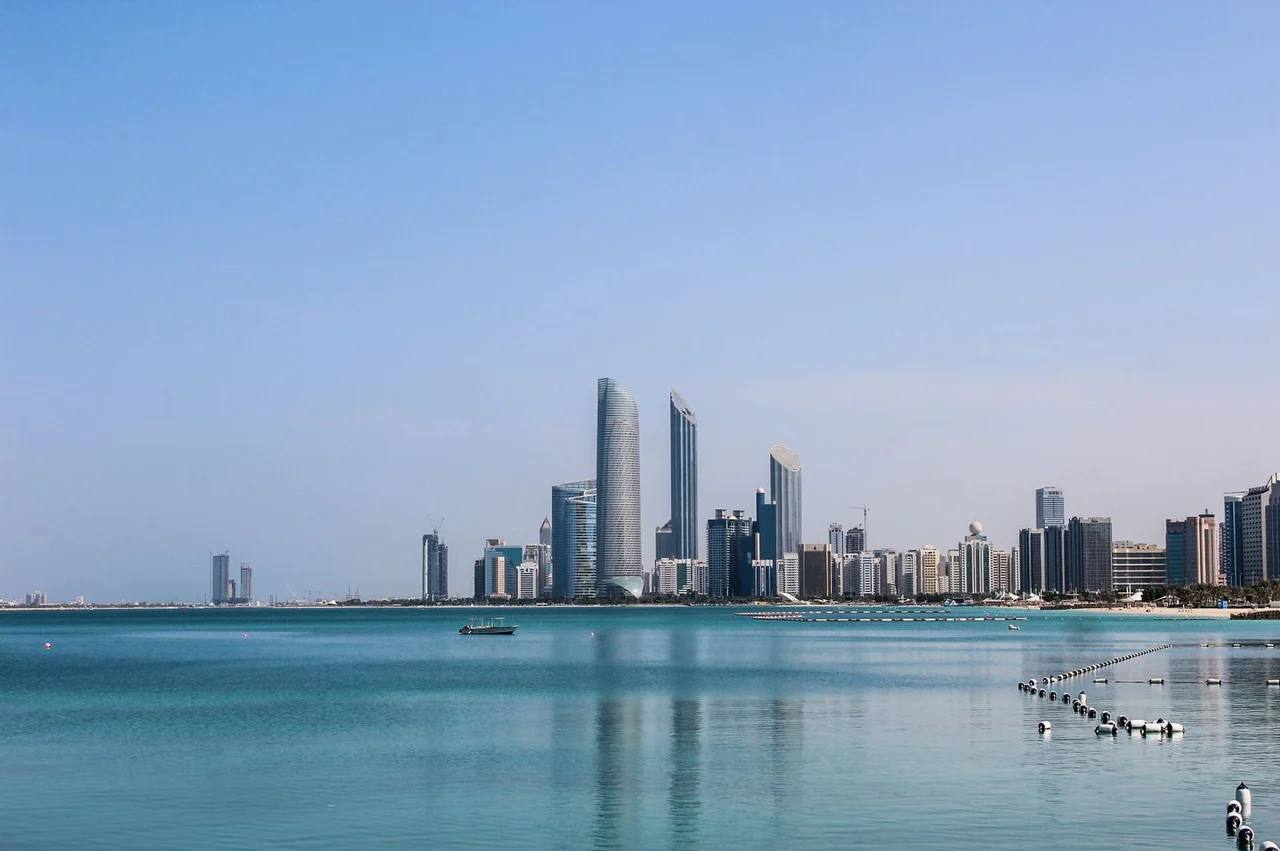
Abu Dhabi is the capital of the UAE, and it has a completely different rhythm than Dubai: calmer, greener, with an eye on family, the public sector, oil and gas and culture. The streets here are quieter, the avenues are wider, there are more parks and beaches, and rent is usually 15-20% cheaper than in Dubai with the same safety and the same 0% income tax. In this guide, we'll break it down into detail: how life in Abu Dhabi differs from Dubai, which areas to choose for your family and status, how much it really costs to live, and for whom moving to Abu Dhabi is more suitable than to the neighboring emirate.
Life in Abu Dhabi: a capital with a different character
When people talk about the UAE, the first thing that comes to mind is Dubai - skyscrapers, nightlife, a showcase for the whole world. But the capital of the country is Abu Dhabi, and it lives differently. This is not a “second, more modest Dubai”, but a city with its own character: measured, green, with an emphasis on family, public service, oil and gas sector and culture. This is where federal authorities, the headquarters of energy giants and the country's largest museum projects are concentrated.
Abu Dhabi occupies most of the territory of the UAE and at the same time feels more spacious and calmer than its neighbor. Wide avenues, an abundance of parks and embankments, smooth development, less traffic jams and free parking almost everywhere - all this forms a rhythm that many who have moved describe in one word: “breathing”. For families with children, for those who value work-life balance, and for those who quickly get bored with noisy Dubai, this is a serious argument.
At the same time, the basic conditions are the same as throughout the country: zero income tax, high security, access to world-class schools and clinics. If you are considering a neighboring emirate, it is useful to compare material about life in Dubai - then the difference will be visible in detail.
Abu Dhabi or Dubai for life: key differences
This is the main question asked by anyone planning to move to the UAE. Both cities are in the same country, an hour and a half drive from each other, with the same tax regime and the same currency - the dirham. But their character is different, and the choice of “Abu Dhabi or Dubai for life” almost always depends on the lifestyle, and not on formal conditions.
Dubai is a dynamic, business showcase, endless discoveries and events, a more international and louder environment. Abu Dhabi is calm, spacious, family-oriented and a noticeably calmer background. Dubai attracts entrepreneurs, freelancers and those who need maximum business density. Abu Dhabi attracts public sector and oil and gas professionals, diplomats, academics and families who value quiet and predictability.
- Pace. Dubai is faster and noisier, Abu Dhabi is calmer and greener.
- Money. Rent and many expenses in the capital are usually lower than in Dubai.
- Family. Abu Dhabi is often chosen for children: less traffic, more parks, quieter areas.
- Business and party. Dubai is ahead in terms of business activity and entertainment.
- Culture. Abu Dhabi is the capital of museums and large cultural institutions.
It is important to understand: you can live in one emirate, but work or do business in another - many do this. Therefore, the choice is not final, but rather about where it is more comfortable for you to keep your home.
Table: Abu Dhabi vs Dubai by key criteria
So that the comparison does not hang at the level of sensations, we will collect the main differences in one table. This is a guideline: specific numbers depend on the area, area and condition of the housing, but the direction of the difference is stable from year to year.
| Criterion | Abu Dhabi | Dubai |
|---|---|---|
| Pace of life | Calm, measured | Fast, dynamic |
| Atmosphere | Family, a little more conservative | Cosmopolitan, more liberal in feel |
| Renting a home | Usually 15-20% cheaper | Higher for comparable housing |
| Greenery and space | More parks, wider streets | Denser buildings |
| Traffic | Less traffic jams, journey 15-25 minutes | Significant traffic jams during rush hours |
| Parking | Often free | Mostly paid |
| Business activity | Public sector, oil and gas, culture | Business, trade, tourism, startups |
| Entertainment and nightlife | Calmer, family format | Very rich |
| Income tax | 0% | 0% |
| Safety | Very high | Very high |
The conclusion from the table is simple: if the priority is silence, family and economy, the scales tip towards the capital. If business drive and maximum events are important, go to Dubai.
Why Abu Dhabi is calmer and greener
The feeling of calm in Abu Dhabi is not marketing, but a consequence of the layout and way of life. The city was built more spacious: wide highways, well-thought-out green areas, a Corniche embankment stretching for several kilometers, an abundance of parks and beaches within walking distance. The building density is lower than in Dubai, which means less visual and sound noise.
The composition of the population also plays a role. The capital is the center of public service and the oil and gas industry, so there are more people with a stable lifestyle: families, specialists with long contracts, an academic and diplomatic environment. This sets a more sedate backdrop than Dubai, with its constant flow of tourists and short-term visitors.
- More nature. Parks, mangrove reserves, long beaches, embankments for walks and sports.
- Less traffic. The roads are clearer, and a typical trip around the city takes 15-25 minutes.
- Cleaner and more organized. The city feels more organized and less congested.
- Family rhythm. Emphasis on relaxing leisure: museums, parks, themed islands.
At the same time, “calmer” does not mean “boring”: Yas Island with amusement parks and a Formula 1 track, the Saadiyat cultural quarter, restaurants and embankments provide enough life - just in a more family-friendly and less hectic format.
Districts of Abu Dhabi: where to look when moving
Choosing an area is half the success of moving. Abu Dhabi is designed in such a way that each request has its own territory: a luxury by the sea, an entertainment island, a modern urban cluster or quiet villas for a family. Let’s look at the main directions that people moving most often consider.
- Saadiyat Island - luxury and culture. Snow-white beaches, premium villas and residences, a cultural quarter with the Louvre Abu Dhabi. Upper price segment, calm and status environment.
- Yas Island - entertainment and active life. Ferrari World, Yas Waterworld, Warner Bros. World, Formula 1 track, marina. Modern villas and apartments, dynamic but family format.
- Al Reem Island - modern urban area. High-rise buildings with water views, developed infrastructure, schools and services nearby. The middle and higher segment is convenient for those who want to live in a new urban cluster near the center.
- Khalifa City - families and villas. Spacious villas, quiet streets, suburban lifestyle, more affordable. One of the most common choices for families with children.
- Mohammed Bin Zayed City (MBZ) - affordable family housing. Villas and apartments at competitive prices, schools and clinics within walking distance.
Foreigners can buy property in freehold zones - including Yas Island, Saadiyat and Al Reem. If you are considering not renting, but purchasing a residence permit and investment, read the separate material about real estate in Abu Dhabi.
We will find the right basis for residency in the UAE
We calculate the budget and timing for your family and list the documents you need.
Abu Dhabi for families: the best areas for children
If the move involves children, the logic of choosing an area changes: silence, nearby schools, parks, safe yards and a convenient road come to the fore. Based on these criteria, there are several obvious favorites in the capital.
- Khalifa City - a classic family choice. Large villas with courtyards, quiet streets, schools and shops nearby, suburban pace of life. Divided into sectors A, B and C, prices range from affordable to average.
- Al Reem Island - an urban option for a family. Lots of good schools, children's and entertainment spaces, all infrastructure at hand, but at the same time a modern urban look.
- Yas Island - for active families. Amusement parks are literally on the doorstep, beaches, sports, marina. Suitable for those who want their children to always have something to do.
- Saadiyat Island - premium family. Beaches, cultural institutions, a calm and high-status environment, but this is the upper price segment.
A separate advantage of the capital for families is the multinational environment: children of 10-15 nationalities often study in a class, which helps them grow up open-minded and speak English fluently. Since 2026, Abu Dhabi schools have stricter accompanying rules: students under 15 years of age must be accompanied by their parents on the way to school, while high school students can travel on their own with the written consent of their parents.
Cost of living in Abu Dhabi: rent, schools, expenses
The main financial argument in favor of the capital is that the cost of living in Abu Dhabi is usually lower than in Dubai. According to the market, rent in Abu Dhabi is approximately 15-20% cheaper than in Dubai for most housing categories. For a family, this is a tangible saving - often tens of thousands of dirhams per year with comparable footage and quality.
Rent guidelines for 2026 (ranges depend on area and housing condition):
| Housing type | Abu Dhabi, AED/year | Dubai, AED/year (for comparison) |
|---|---|---|
| Studio | 30 000 - 45 000 | 35 000 - 50 000 |
| 1 bedroom | 25 000 - 60 000 | higher at the same level |
| 2 bedrooms | 70 000 - 120 000 | 80 000 - 140 000 |
| 3 bedrooms | 120 000 - 200 000 | 140 000 - 250 000 |
| Villa 3 bedrooms | from 120,000 (not in the center) | higher |
Furnished housing costs about 20-30% more than empty housing, but allows you to move in immediately. In terms of schools, the capital is also a little more profitable: education of a comparable level is usually 10-15% cheaper than in Dubai. The guideline for private schools is from 30,000 to 50,000 AED per year for primary grades and up to 100,000 AED for senior and IB/A-level programs, plus uniforms, transportation (about 5,000-8,000 AED) and registration fees.
It is convenient to compare a detailed breakdown of products, transport and household expenses with the material about cost of living in Dubai - the capital is a little more economical in almost all respects.
Taxes and finance: the same 0% throughout the country
The tax regime in Abu Dhabi is federal, that is, exactly the same as in Dubai and other emirates. This is one of the main reasons why the UAE remains a magnet for professionals and entrepreneurs from all over the world.
- Income tax for individuals - 0%. Salaries, dividends, and rental income from an individual are not subject to income tax.
- There is no capital gains or inheritance tax for individuals. This makes long-term family planning easier.
- VAT - 5%. Standard rate on most goods and services.
- Corporate tax - 9% for company profits over 375,000 AED (introduced from June 2023). In free zones for qualifying income - 0%.
- There is no annual property tax. Upon purchase there is a one-time registration fee and administrative costs.
For large international groups with a turnover of €750 million or more, the global minimum tax Pillar Two (15%) will apply from 2025 - but this only applies to large corporations, not families and ordinary professionals. Banking compliance in the UAE is strict: banks check the source of funds, and all transactions are carried out strictly within the law, without circumventing sanctions. In terms of tax structure, the capital is no different from the neighboring emirate - and this is a sustainable advantage for the entire country.
“The first thing I make clear with clients is that Abu Dhabi is not a ‘low-key Dubai’, but a different way of life. If you have a family, children and silence, parks and a predictable rhythm are important to you, the capital is almost always better. Rent here is usually 15-20% cheaper, schools are a little more accessible, there is less traffic, and taxes are the same zero - they are federal, the same throughout the country. Dubai wins in business density and entertainment, but it comes at the cost of noise, traffic jams and a higher price tag. I always advise you not to choose a city based on a picture, but first describe your real day: where you work, where your children study, what kind of vacation you have. And remember - living in calm Abu Dhabi, but working in Dubai is absolutely normal: an hour and a half on the highway makes such a connection work.”
Residence permit in Abu Dhabi: visas are the same as throughout the country
Since migration rules in the UAE are federal, living in Abu Dhabi requires exactly the same visa routes as in Dubai. UAE citizenship cannot be bought with money - we state this right away; We are talking about residence permits, not passports.
- Golden Visa (10 years) - renewable, self-sponsored. Routes: real estate from 2,000,000 AED, investors and entrepreneurs, unique talents, scientists, doctors, athletes, excellent students. The holder himself sponsors a family - a spouse, children without an age limit, parents, and family members.
- Green Visa (5 years) - for qualified specialists, freelancers and investors without a sponsoring employer.
- Regular Resident Visa (2 years) - through employment, your own company or the purchase of real estate from AED 750,000. Accompanied by Emirates ID.
- Retirement visa (5 years) - for persons 55+ with savings or real estate from 1 million AED or income from 180,000 AED per year.
Many nationalities enter the UAE without a prior visa; Russian citizens, for example, get 90 days within 180 for tourism. To live and work you need a resident visa and an Emirates ID. Purchasing real estate in freehold zones of the capital is one of the working routes to a residence permit, and here it is useful to study the market real estate in the UAE entirely to choose between emirates consciously.
We will calculate the budget for your family
A full estimate: contributions, fees and our work for your family.
Work and business: public sector, oil and gas, culture
Abu Dhabi's economic profile is different from Dubai's. If Dubai is all about trade, tourism, logistics and startups, then the capital is based on the public sector, energy and large institutional projects. Federal departments, headquarters of oil and gas companies, sovereign wealth funds and large cultural institutions are concentrated here.
- Public sector and federal structures. The capital's status attracts officials, diplomats, and specialists from state corporations.
- Oil and gas and energy. The backbone of the emirate’s economy, many long-term contracts and stable positions.
- Culture and education. Saadiyat Museum Quarter, international university campuses, creative institutions.
- Finance and investments. Sovereign funds and ADGM financial center with its own regulation.
The capital is also open for entrepreneurs: a company can be registered both on the mainland (mainland, with 100% foreign ownership for most activities) and in the free zone with 100% ownership, repatriation of profits and 0% corporation tax on qualifying income. At the same time, many choose a hybrid: home and family in calm Abu Dhabi, and part of their business or work in more business-like Dubai. An hour and a half on the highway makes this format quite workable.
Culture, leisure and lifestyle
Abu Dhabi positions itself as the cultural capital of the region, and these are not big words. The heart of this destination is Saadiyat Island with its museum quarter. Here is the Louvre Abu Dhabi, which is surrounded by canals and walkways: this is not a branch of the Parisian museum, but an independent institution that has received the right to a name and access to world collections for decades to come. This is one of the largest art spaces in the world, where temporary exhibitions from the best museums on the planet are held.
In addition to museums, the capital also has plenty of more active leisure activities. Yas Island is a whole cluster of entertainment: Ferrari World, Yas Waterworld, Warner Bros. World and the Formula 1 circuit, where the Grand Prix takes place. The long Corniche promenade, mangrove reserves, beaches, restaurants and sports infrastructure complete the picture.
- Museums and art. Louvre Abu Dhabi and the emerging Saadiyat cultural quarter.
- Family parks. Yas Island theme parks and water parks.
- Nature and sport. Corniche, mangroves, beaches, bike paths, water sports.
- Events. Formula 1 Grand Prix, concerts, exhibitions, festivals.
It is worth keeping in mind that the capital is a little more conservative than Dubai in terms of its way of life. This does not create problems in everyday life, but sets a more relaxed and family-like tone - which is exactly what many are looking for when moving.
Safety, climate and medicine
In terms of safety, Abu Dhabi is one of the calmest cities in the world, like the whole country. The low crime rate, orderliness, the feeling that children can walk and go out in the evening without fear are one of the reasons why families choose the UAE to move. In this, the capital and Dubai are equally strong.
The climate is typical for the region: lots of sun, mild and pleasant winters (this is the peak season for walks and beaches) and very hot summers, when life largely flows into air-conditioned spaces. People get used to it: shopping centers, schools, offices and transport are equipped with air conditioning, and most active leisure time outside occurs in the cooler months.
- Safety. Very low crime, high level of public order.
- Medicine. Modern, world-class clinics, compulsory health insurance for residents.
- Climate. Hot summers, comfortable winters, developed infrastructure for the heat.
- Infrastructure. Good roads, convenient transportation, free parking in many places.
The combination of these factors makes the capital attractive specifically for family, long-term living, and not for short bursts.
Who is suitable for moving to Abu Dhabi?
Moving to Abu Dhabi is a conscious choice in favor of moderation. The city is not trying to outshine Dubai; he takes it differently - space, silence and family life. Therefore, it is not suitable for everyone, and that’s okay.
- Families with children. Quiet areas, schools nearby, parks, safety, savings on rent and tuition.
- Public sector and oil and gas specialists. Here is the center of these industries and long-term stable contracts.
- For those who value work-life balance. Less traffic, calmer rhythm, more nature.
- For culture lovers. World-class museums and a developed cultural environment.
- For those who care about savings. With the same 0% tax, costs are usually lower than in Dubai.
But for those who need maximum business density, vibrant nightlife and a constant flow of events, Dubai will be closer. The good news is that you don’t have to make a rigid “either/or” choice: you can live in the quiet capital and work or do business in a neighboring emirate. It’s easier to figure out which scenario is more profitable in your situation with a relocation specialist in the UAE.
Expert's view: common mistakes when choosing between emirates
Over the years of practice, we see that when choosing between Abu Dhabi and Dubai, people stumble over the same things. We’ll sort them out so you don’t lose money and nerves.
- Choosing a city “by inertia.” Many people go to Dubai simply because they have heard about it, although the quiet capital is closer to their lifestyle. First - the life scenario, then - the city.
- Ignoring rent differences. Those same 15-20% savings in Abu Dhabi add up to a large sum over several years, especially for a family.
- Wrong area for the task. A luxury at Saadiyat for a budget family or a quiet suburb for someone looking to party is a common mistake. The area must suit the lifestyle.
- Underestimation of banking compliance. Opening an account requires preparation and confirmation of the source of funds - this is laid down in advance.
- A tough “either/or”. It is not necessary to choose one emirate forever: a house in the capital and work in Dubai is a working and common combination.
The main thing is not to confuse the display case with the style. Dubai is brighter in the picture, but family living is often more comfortable and cheaper in Abu Dhabi. The decision should be based on your actual scenario, not a stereotype. You should always check the latest rules and official information on the country on the state portal u.ae.
We will send a document checklist for your case
Leave your details: we will put together documents and timelines for your family.
Where to start moving: step-by-step plan
To prevent moving to Abu Dhabi from turning into chaos, it is better to break it down into understandable steps. The sequence is approximately the same for a family and for a single move - only the details of the visa and housing change.
- Step 1. Determine status. Choose a visa route: Golden Visa, work visa, visa for your company or for real estate. The entire future plan depends on this.
- Step 2. Select an area. For family - Khalifa City, Al Reem, Yas; for luxury - Saadiyat; for a budget - MBZ City. Match with place of work and schools.
- Step 3. Solve the housing issue. Rent at the start or purchase in a freehold zone for a residence permit and investment.
- Step 4. Complete the documents. Visa, Emirates ID, health insurance, for children - enrollment in school.
- Step 5. Set up everyday life. Bank account (subject to strict compliance and verification of the source of funds), transport, communications.
Each of these steps has nuances - from visa thresholds to choosing a bank that will actually open an account. In order not to waste time on mistakes and re-registrations, it makes sense to build a route in advance and for your specific situation.
Frequently asked
Questions people ask before deciding
01How is life in Abu Dhabi different from Dubai?
Abu Dhabi is the capital of the UAE, it is calmer and greener than Dubai, with an emphasis on family, the public sector, oil and gas and culture. There are wider streets, more parks, less traffic and usually cheaper rent. Dubai is more dynamic, vibrant and dense in terms of business and entertainment. Taxes and security in both cities are the same - they are federal.
02Abu Dhabi or Dubai for life - what to choose?
If the priority is family, silence, nature and economy, the scales tip towards Abu Dhabi. If business drive, nightlife and maximum events are important, go to Dubai. It is not necessary to make a tough choice: many live in the quiet capital, and work or do business in Dubai - an hour and a half on the highway allows this.
03Is it cheaper to live in Abu Dhabi than in Dubai?
As a rule, yes. Rent in Abu Dhabi is usually 15-20% lower than in Dubai for comparable housing, schools are about 10-15% cheaper, plus often free parking. For a family, this is tens of thousands of dirhams in savings per year. At the same time, the tax regime is the same - 0% income tax for individuals.
04How much does it cost to rent a home in Abu Dhabi in 2026?
Guidelines for 2026: studio - approximately 30,000-45,000 AED per year, 1-bedroom apartment - 25,000-60,000 AED, 2-bedroom apartment - 70,000-120,000 AED, 3-bedroom apartment - 120,000-200,000 AED. Villas from 120,000 AED in less central areas. Furnished housing is 20-30% more expensive than empty housing.
05Which areas of Abu Dhabi are best for families?
The most common family options are Khalifa City (spacious villas, quiet, affordable), Al Reem Island (modern urban area with many schools), Yas Island (for active families with amusement parks) and Saadiyat Island (premium segment by the sea). Budget option - Mohammed Bin Zayed City.
06Which area of Abu Dhabi is considered the most luxurious?
Saadiyat Island is the top segment: snow-white beaches, premium villas and residences, a cultural quarter with the Louvre Abu Dhabi. This is a high-status and calm environment with the highest prices in the city. Foreigners can buy property there, as in Yas and Al Reem.
07Is it safe in Abu Dhabi?
Yes, Abu Dhabi is one of the safest cities in the world, like the whole country. Very low crime rate, high public order, a feeling that children can walk around in peace. The capital and Dubai are equally strong in terms of security - this is one of the key reasons for families moving to the UAE.
08What taxes do residents of Abu Dhabi pay?
Income tax for individuals is 0%, as throughout the UAE (federal regime). There is no capital gains or inheritance tax for individuals, and there is no annual estate tax. VAT - 5%. Corporate tax - 9% on company profits over AED 375,000, in free zones for qualifying income - 0%.
09What visas and residence permits are available in Abu Dhabi?
The same as throughout the country: Golden Visa for 10 years (including for real estate from AED 2,000,000), Green Visa for 5 years, regular resident visa for 2 years (through work, company or real estate from AED 750,000) and retirement visa for 5 years for persons 55+. UAE citizenship cannot be bought with money.
10Do I need a visa to enter Abu Dhabi?
Visa rules depend on your passport: citizens of many countries enter the UAE without a prior visa, and Russian citizens, for example, can stay up to 90 days within 180 for tourism. To live and work you need a resident visa and an Emirates ID. One of the ways to obtain a residence permit is to purchase real estate in the freehold zones of Abu Dhabi, for example in Yas, Saadiyat or Al Reem.
11How much do schools cost in Abu Dhabi?
Guideline for private schools: primary school - from 30,000 to 50,000 AED per year, secondary school - 45,000-75,000 AED, high school and IB/A-level programs - up to 100,000 AED. Additionally, uniforms, transportation (about 5,000-8,000 AED) and registration fees are paid. On average, training is 10-15% cheaper than in Dubai.
12Is it possible to live in Abu Dhabi and work in Dubai?
Yes, this is a common connection. The cities are located about an hour and a half away from each other, in the same country, with the same tax regime. Many people choose a quiet family home in Abu Dhabi, while more business activities are carried out in Dubai. The main thing is to evaluate your daily journey and routine in advance.
About the author
Related materials
What to read next
 ComparisonAntigua and Barbuda or Grenada: Family Passport for Large Families in 2026
 AnalysisWhat is due diligence and why the Caribbean is rejecting applications
 ArticleReal estate in Abu Dhabi 2026: how a foreigner can buy an apartment, areas and prices
Personal programme selection is conducted by Anna Kovalevskaya, Head of Legal, BRIDGES.
Residency programmes: timelines and requirements
Grounds, document list, presence requirements and what is needed for renewal.