Residency · UAE
Property in Dubai for Russians in 2026: how to buy legally, payment, sanctions, residence permit

Updated: June 2026·13 min read·Expert reviewed
Terms and costs verified: June 2026
Contents
Who this is for. This article is written for citizens of Russia. Visa, banking, sanctions and dual citizenship rules depend on your passport: for other nationalities they may differ.
Can a Russian citizen buy property in Dubai? Yes - legally it is entirely permitted: foreigners take freehold ownership in designated zones, and the buyer's nationality is irrelevant. The UAE has not imposed sanctions on Russians, and buying an apartment is itself lawful. The main difficulty in 2026 is not the right to the transaction but the money: how to transfer funds from Russia, pass banking compliance and confirm the origin of the capital strictly within the law, with no grey schemes. We break it down step by step: payment, roubles and dirhams, the developer's payment plan and a residence permit for the property.
Can a Russian citizen buy property in Dubai
Let's start with the main question that concerns everyone: can a Russian citizen buy property in Dubai in 2026? The answer is unequivocal - yes, they can, and it is entirely legal. There is not a single provision in UAE law that would prohibit a Russian from acquiring a home. The buyer's nationality is irrelevant to the transaction: a Russian can buy an apartment in Dubai on the same terms as a citizen of any other country.
An important fact that removes half the worries: the UAE has not joined the Western sanctions against Russia and has not introduced any restrictions of its own on Russians. This means a Russian citizen is permitted to buy property in the UAE on both the primary and the secondary market, without any special approvals based on nationality.
The only real exception is individuals under personal sanctions (the OFAC SDN, EU and UN lists). If a person is personally on a sanctions list, they will face blocks both at banks and in the transaction. But for the overwhelming majority of private buyers who do not appear on such lists, there are no legal barriers. The difficulty lies not in the right to buy but in the mechanics of payment and banking compliance - and that is what the main discussion below is about.
A detailed analysis of the local market is kept in the article on real estate in the UAE for investors.
Freehold versus leasehold: where a foreigner is allowed to own
To understand exactly what a Russian is buying, you need to grasp the two forms of ownership. In Dubai foreigners obtain full ownership rights only in specially set-aside zones - the so-called designated freehold zones.
- Freehold (full ownership). The foreigner becomes the absolute owner of the property and the share of land beneath it, with no time limit. This right is registered with the Dubai Land Department (DLD) and confirmed by a Title Deed. It is freehold that is needed by those who want property in Dubai as an asset or for the sake of a residence permit.
- Leasehold (a long-term lease). A right of use for a term, usually up to 99 years, without transfer of the land. It is less common and less attractive for investment purposes.
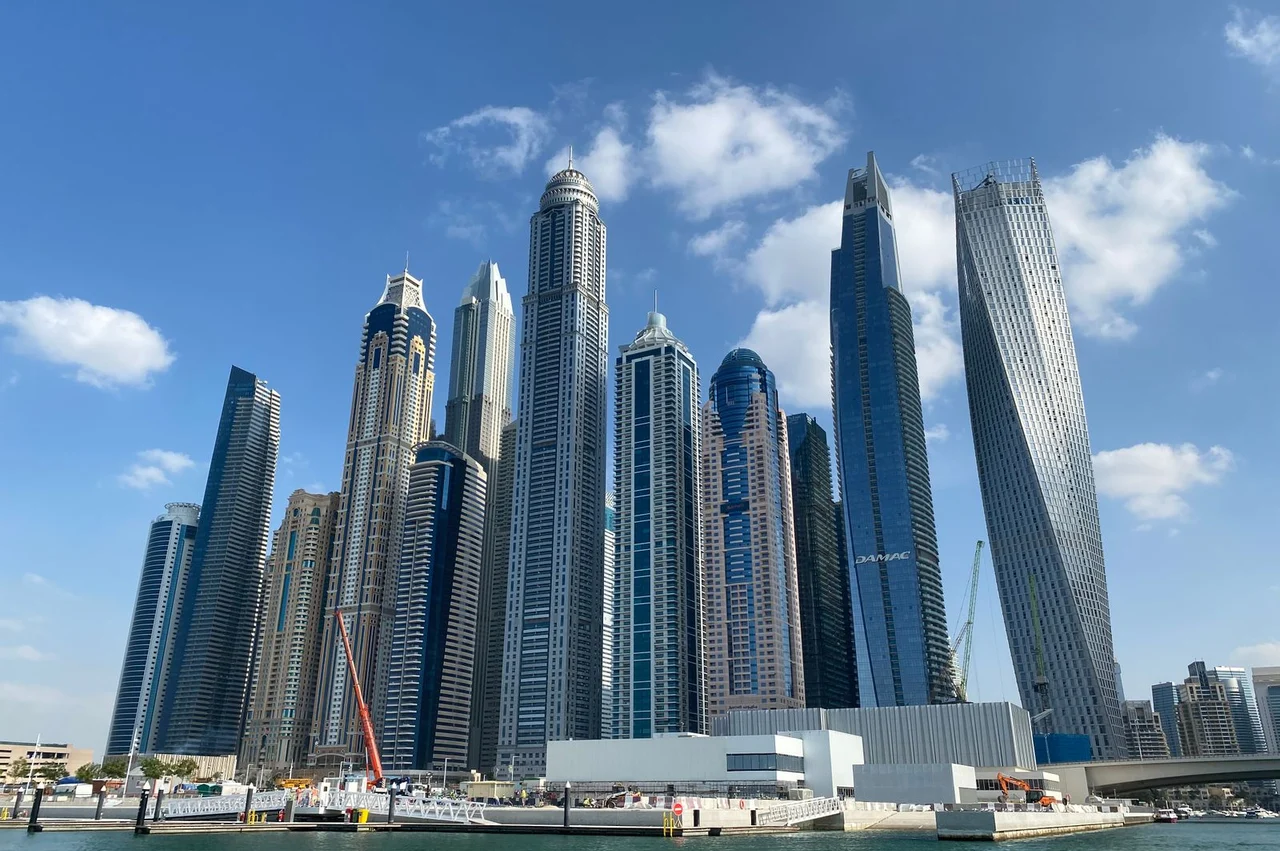
The good news is that most of the areas popular with buyers are freehold: Dubai Marina, Downtown, Palm Jumeirah, Business Bay, Jumeirah Village Circle (JVC), Dubai Hills and many others. In these locations a Russian citizen takes full ownership with the same scope of rights as a local investor.
Before a transaction it is important to make sure the specific property is located in a freehold zone for foreigners. This is a basic check that we run against the official register of the the Dubai Land Department (DLD) before any deposit is paid.
Paying for the purchase: how to transfer money legally
Now we come to the most sensitive point. The purchase is legal, but how do you pay the seller so that the money arrives and the transaction raises no questions? The key principle for 2026 is simple: the funds must come from a legitimate, traceable source and pass through the UAE banking system with documentation. No grey schemes and no sanctions circumvention - it doesn't work and it creates real risks.
The legal payment channels that are actually used:
- A direct international transfer. From a bank that has retained international connectivity and is not under blocking restrictions, funds are sent to the UAE. A number of banks in Russia and the CIS have multi-currency accounts where roubles are converted and sent to the developer's or seller's account.
- A transfer through a friendly jurisdiction. Money is legally sent to the buyer's own account in Kazakhstan, Armenia, Turkey or Georgia, converted into dirhams or dollars and transferred from there to the UAE. The transit usually takes several business days, with fees of roughly 2-5%.
- A Manager's Cheque (a UAE banker's cheque). For secondary-market transactions a banker's cheque drawn on the buyer's account at an Emirati bank is often used.
- Cryptocurrency - only within the legal framework. Some developers accept payment through licensed crypto gateways with conversion into dirhams and a mandatory check on the source of funds. This is not a way to circumvent sanctions but a legal tool with the same compliance.
Whichever channel you choose, the outcome is the same: the money enters the UAE financial system officially, with documents on its origin. That is the line between a legal transaction and a risk.
Property in Dubai in roubles: myth and reality
The search "property in Dubai in roubles" is very popular, and here it is important to separate expectation from reality. You cannot pay a Dubai developer for an apartment directly in roubles - settlements are made in dirhams (AED) or, less often, in dollars (USD). The dirham is firmly pegged to the dollar at a rate of about 3.6725, so the price in currency is predictable.
What "buying in roubles" means in practice:
- The price is calculated in roubles for convenience. An off-plan studio in areas such as JVC starts at roughly 12-15 million roubles, and completed properties cost more. But this is a conversion - you will pay in AED.
- Conversion happens along the way. Roubles are turned into dirhams either at a multi-currency account at a Russian/CIS bank or at a bank in a friendly transit country.
- Exchange-rate differences and fees are part of the budget. They need to be factored in in advance so that the final AED amount matches the contract.
In other words, "property in Dubai in roubles" is about the source of the money and the convenience of pricing, not about the currency of the payment to the developer. The actual payment always reaches the seller in dirhams through the UAE banking system. This is normal global practice for overseas transactions, and it is entirely legal.
Banking compliance and AML: what is checked with a Russian
The main reason a transaction can drag on is not a refusal of the right to buy but banking compliance. The UAE has significantly strengthened its anti-money-laundering regime (AML/CFT), and banks scrutinise clients carefully, especially on large incoming transfers. For a Russian citizen this means heightened attention to two things: who you are and where the money comes from.
What is usually checked and requested:
- Identity and sanctions screening. A passport, a check against the OFAC, EU and UN lists. If the person is not on the lists, this is a formality passed easily.
- Source of funds. Documents explaining the origin of the money: income statements, the sale of assets, dividends, contracts, tax returns. This is the key point.
- Source of wealth. For large amounts - how the capital was formed overall, not just this particular sum.
- Payment purpose. Linking the transfer to the transaction: a preliminary contract or an agreement with the developer.
The cleaner and more complete the package of documents on the origin of the funds, the faster and smoother the transaction. The main mistake is to go to the bank without a prepared explanation of the money. We always compile the source-of-funds dossier in advance, before the first transfer, so as not to have a payment frozen midway through the deal. a, documented path is the only one that works; attempts to hide the origin of the funds only increase the risk of a block.
We will find the right basis for residency in the UAE
We calculate the budget and timing for your family and list the documents you need.
Sanctions and property: where the line of the law runs
There are many fears and myths around the topic of sanctions. Let's lay out the facts, without panic and without illusions.
What is important to understand in 2026:
- The UAE has not imposed sanctions on Russians. The purchase of property by a Russian citizen does not breach UAE law and is not prohibited.
- Personal sanctions are a stopping point. If a person is personally on the OFAC SDN, EU or UN lists, they will face refusals at banks and in the transaction. This cannot be got around, and there is no point trying.
- Banks are sensitive to secondary sanctions. UAE financial institutions work with the dollar and the euro and protect their ties with Western correspondent banks. That is why they are cautious about the source of funds and the origin of the money.
- Circumventing sanctions is against the law. Any schemes involving hiding the beneficiary, splitting payments to evade controls or using nominee owners create criminal risks for both the buyer and the intermediary.
Our position is simple and : we handle the lawful purchase of property in Dubai for Russians within the legal framework. If a client has a clean source of funds and is not under personal sanctions, the transaction can go ahead. If it is a matter of trying to circumvent restrictions, that is not our path, and we say so from the outset. A transparent deal sleeps easier than a grey one.
The developer's payment plan: a working tool for Russians
One of the most convenient ways for Russian citizens to enter Dubai property is the developer's interest-free payment plan on off-plan properties. It reduces the one-off burden of transferring money and spreads payments over time, which is especially valuable given the more complicated logistics of transfers.
How it works:
- The down payment. Usually 10-20% of the value on booking.
- A payment schedule over the course of construction. Plans of 60/40, 70/30 or, for example, 10/60/30 are common, where part of the sum is paid after the property is handed over.
- Interest-free. Many developers do not charge interest on the payment plan during construction - a direct advantage over a mortgage.
- Protection of the money. Funds for an off-plan property go through escrow accounts under RERA supervision, and the claim right is recorded in the Oqood system.
For a Russian, the payment plan solves two problems at once: it allows transfers to be split into smaller amounts (which are easier to process and support with documents) and it lowers the entry threshold. At the same time each instalment still passes banking compliance - the payment plan does not remove the source-of-funds check but makes it more manageable in parts. We cover the convenience of off-plan in detail in the guide on buying property in Dubai.
Transaction stages and nuances for a Russian: a table
Let's bring the whole transaction path into one table, with the emphasis on what specifically requires a Russian citizen's attention. This is a working checklist: each stage has its own nuance, and missing any of them can stall the purchase.
| Stage | The nuance for a Russian |
|---|---|
| Choosing the property | Make sure the property is in a freehold zone for foreigners (check against the DLD register) |
| Booking | Signing the booking form and preliminary contract; fixing the price in AED |
| Preparing the money | Compile the source-of-funds dossier in advance - before the first transfer |
| Choosing the payment channel | A direct transfer, transit through a friendly country, a manager's cheque or licensed crypto |
| Banking compliance | Sanctions screening + a check on the origin of funds; personal sanctions are a stop |
| Payment | Conversion of roubles into dirhams along the way; the payment to the developer arrives in AED |
| Registration with the DLD | A DLD fee of 4% + admin fees; obtaining the Title Deed (or Oqood for off-plan) |
| Payment plan (off-plan) | A payment schedule; each instalment passes compliance separately |
| Residence permit | From AED 750,000 - a 2-year visa; from AED 2,000,000 - a 10-year Golden Visa |
This table is the skeleton of the whole operation. The tightest bottleneck for a Russian is not choosing the apartment but the "money transfer + compliance" combination. If that is worked out in advance, everything else proceeds routinely.
"The main thing I explain to clients from Russia at our first meeting: you are legally permitted to buy property in Dubai - the UAE has not imposed sanctions on Russians, and the buyer's nationality plays no role in the transaction. The difficulty is not in the right but in the money. We always start not with choosing an apartment but with two checks: whether the person is on any personal sanctions lists and how clean their source of funds is. If everything is in order here, the transaction can go ahead. Next we build a legal payment route for the specific bank, compile the dossier on the origin of the money in advance so the payment doesn't get stuck at compliance, and only then book the property and register it with the DLD. A transparent deal is not only safer than grey schemes - it is genuinely faster. And a purchase from AED 750,000 gives a two-year residence permit, from two million a ten-year golden visa for the whole family."
We will calculate the budget for your family
A full estimate: contributions, fees and our work for your family.
A residence permit for property: 2 years and a 10-year Golden Visa
Buying property in Dubai is not only an asset but also a direct route to residency. In 2026 the thresholds have become noticeably more accessible than before.
- A 2-year residence permit. Granted by buying property worth from AED 750,000. This is the basic investor residence visa, comes with an Emirates ID and is renewable as long as the property is retained.
- A 10-year Golden Visa. Issued for an investment in property from AED 2,000,000 (roughly $545,000). The visa is self-sponsored, long-term and renewable.
What matters for a Russian in the new 2026 rules:
- The previous high threshold has been removed. Previously a golden visa required from 5 to 10 million AED - now 2 million is enough.
- It's possible via a mortgage and off-plan. Full payment used to be required; now a Golden Visa can be obtained for both an off-plan property and one bought on a mortgage from an approved bank - the threshold is measured by value.
- The family under one status. The Golden Visa holder sponsors a spouse, children with no age limit, parents and domestic staff themselves.
There is no tax on the mere fact of owning property in the UAE, nor any personal income tax. So an investment in square metres also solves the task of long-term legal residence for the whole family. Details of the residency routes are in the article on buying an apartment in Dubai.
A mortgage for a non-resident and a Russian citizen
Not everyone has the full amount in cash, and here the question of a mortgage arises. UAE banks lend to foreigners, including non-residents, but the terms are stricter than for residents with local income.
Benchmarks for a non-resident mortgage:
- LTV (the loan share). For a non-resident, usually up to 50-60% of the property value, meaning a down payment of 40-50%. Banks lend more to a resident with proven income.
- Proof of income. The bank will request income documents and source-of-funds compliance - just as with a direct payment.
- The property. Lending is available for completed homes and some approved off-plan projects from accredited developers.
For a Russian citizen, a mortgage at a UAE bank is not a simple tool: approval depends on the client's profile, the source of income and sanctions screening. In practice many Russians prefer the developer's interest-free payment plan as a more accessible alternative to a bank loan. Importantly, even a mortgaged purchase from an approved bank counts towards the Golden Visa threshold if the property value reaches 2 million AED. So a "part own funds, part loan" arrangement is compatible with obtaining a long-term visa.
Owner's taxes and costs: what it costs to hold property
One of the reasons Dubai property attracts Russians is the gentle tax regime. But "no taxes" is an oversimplification, and it is important for an owner to understand the real structure of costs.
- There is no annual property tax. The UAE has no annual property tax of the kind common in many countries - you do not pay the state every year simply for owning.
- There is no personal income tax or capital gains tax for an individual. Income from resale or letting at the individual level is not subject to income tax.
- A one-off DLD fee - 4%. Paid on registration of the transaction with the Land Department, plus administrative fees.
- Service charges. An annual charge to the management company for the upkeep of the building and infrastructure - this is the owner's main recurring cost.
- VAT 5%. It generally does not apply to residential property on resale, but it does affect a number of related services.
In sum: the tax burden on ownership is genuinely low, and the main payments are the one-off DLD fee on purchase and the recurring service charges. For a Russian it is important to separately account for their own tax status in Russia when receiving income from foreign letting - this is resolved on the Russian tax-residency side and deserves a separate consultation.
Common mistakes Russians make when buying - and how to avoid them
In our practice we see that buyers from Russia are let down not by rare, exotic causes but by the same recurring mistakes. Let's go through them in advance so you don't lose money and time.
- A transfer without a prepared source of funds. The money leaves but gets stuck at the UAE bank on a check. The source-of-funds dossier must be compiled BEFORE the first payment.
- Betting on "grey" schemes. Attempts to hide the origin of the money or circumvent sanctions have the opposite effect - blocks and risks. The legal path is not only safer but also faster.
- Buying outside a freehold zone. The property may turn out to be leasehold or in a zone not available to a foreigner for full ownership. A check against the DLD register is essential.
- Underestimating conversion fees. Transferring roubles into dirhams through a friendly jurisdiction costs 2-5% plus the exchange-rate difference - this needs to be built into the budget.
- Ignoring service charges. The buyer counts only the price of the property, forgetting the annual service charges.
- Buying for a visa without calculating the threshold. A property at 1.9 million AED will not grant a Golden Visa - it falls just short of the 10-year visa.
Almost all of these mistakes are cured by one thing - preparation at the outset. A transparent transaction structure and documents gathered in advance save weeks and nerves.
We'll help you buy an apartment in Dubai legally and without blocks
Buying an apartment in Dubai is achievable for a Russian - but the cost of a mistake on the money side is high: an unresolved source of funds or the wrong transfer channel results in a payment being frozen midway through the deal. We handle the lawful purchase of property in Dubai for Russians end to end: we select a property in a freehold zone, prepare the source-of-funds dossier in advance, build a legal payment route for your bank, run the transaction through to the Title Deed and arrange the residence permit.
Discuss your situation with a BRIDGES GLOBAL lawyer - we'll assess your source of funds, suggest a workable payment channel for your particular case and calculate the transaction budget including fees and charges.
We will send a document checklist for your case
Leave your details: we will put together documents and timelines for your family.
How we run a Russian's transaction: an expert's view
Let me describe what a safe property purchase in Dubai looks like in practice for a Russian citizen and why the order of steps matters more than speed.
The first thing we always start with is not choosing an apartment but checking two things: whether the client is on any personal sanctions lists and how clean and documented their source of funds is. This is the foundation. If everything is in order here, the transaction can go ahead within the legal framework.
Next we build the money route for the client's specific bank: in some cases a direct transfer, in others a legal transit through an account in a friendly jurisdiction with conversion into dirhams. In parallel we compile the source-of-funds dossier so that the UAE bank accepts the payment without freezing it. Only after that do we book the property in a freehold zone, make the payment, register the transaction with the DLD and obtain the Title Deed - and, at the threshold value, arrange a residence permit or Golden Visa for the whole family.
The main thing I explain to clients: a Russian citizen can buy property in Dubai entirely legally, and it is precisely the transparent deal that is the most reliable. Grey schemes and attempts to circumvent sanctions do not save money - they create risks. A clean source of funds, the right payment channel and prepared documents are what actually bring you closer to the keys to the apartment.
Frequently asked
Questions people ask before deciding
01Can a Russian citizen buy property in Dubai in 2026?
Yes, they can, and it is entirely legal. UAE law has no restrictions based on the buyer's nationality. Russians acquire freehold property in special designated zones on the same terms as citizens of other countries. The UAE has not imposed sanctions on Russians. The exception is individuals under personal sanctions (OFAC SDN, EU, UN).
02Can you pay for property in Dubai in roubles?
You cannot pay the developer directly in roubles - settlements are in dirhams (AED) or dollars. "Buying in roubles" means the price is calculated in roubles for convenience, while conversion into dirhams happens along the way: at a multi-currency account at a Russian/CIS bank or at a bank in a friendly transit country. The payment always reaches the developer in AED.
03How do you transfer money from Russia to Dubai to buy an apartment?
Legal channels: a direct international transfer from a bank that has retained connectivity; a transfer through your own account in a friendly jurisdiction (Kazakhstan, Armenia, Turkey, Georgia) with conversion into dirhams; a manager's cheque at a UAE bank; a licensed crypto gateway. Any channel requires proof of the source of funds. Transit fees are roughly 2-5%.
04Do sanctions prevent buying property in Dubai?
The purchase itself by a Russian is not prohibited - the UAE does not sanction Russian citizens. But UAE banks observe AML rules and are sensitive to secondary sanctions, so they check the source of funds carefully. The stopping point is personal sanctions: if a person is personally on the OFAC, EU or UN lists, they will face blocks, and these cannot be circumvented.
05What is source of funds and why does a Russian need it?
It is the documented origin of the money: income statements, the sale of assets, dividends, contracts, declarations. The UAE bank requires it as part of AML compliance before accepting a large transfer. The source-of-funds dossier should be prepared in advance, before the first payment, otherwise the money may get stuck on a check midway through the deal.
06Can you buy property in Dubai with cryptocurrency?
Yes, some developers accept payment through licensed crypto gateways with conversion into dirhams. But this is not a way to circumvent sanctions: the transaction goes through the same compliance and source-of-funds check as an ordinary transfer. A crypto payment works only within the legal framework, with documents on the origin of the capital.
07What is the minimum budget for an apartment in Dubai for a Russian?
An off-plan studio in areas such as JVC starts at roughly 12-15 million roubles, and completed properties cost more. To the price of the property you need to add a DLD fee of 4%, administrative fees, conversion fees (2-5%) and future annual service charges. The exact budget depends on the area and the stage of completion.
08Does buying property in Dubai grant a residence permit?
Yes. A purchase from AED 750,000 grants a 2-year investor residence visa with an Emirates ID. An investment from AED 2,000,000 (about $545,000) grants a 10-year Golden Visa - self-sponsored and renewable. The Golden Visa holder sponsors a spouse, children with no age limit, parents and domestic staff.
09Can you get a Golden Visa by buying property on a mortgage or off-plan?
Yes. Under the 2026 rules a Golden Visa can be obtained for both an off-plan property and one bought on a mortgage from an approved bank - the threshold is measured by the property value. The key point is that the property value reaches 2 million AED. The former requirement of full payment and the high threshold of 5-10 million have been abolished.
10What is a developer payment plan and is it suitable for Russians?
It is an interest-free payment plan for an off-plan property: the down payment is usually 10-20%, the rest in instalments over the course of construction (60/40, 70/30, 10/60/30 plans). For Russians this is convenient: the amounts are split, making them easier to transfer and support with documents. Each instalment passes compliance, but the check becomes more manageable in parts.
11What taxes does a property owner in Dubai pay?
There is no annual property tax in the UAE, nor any personal income tax or capital gains tax for an individual. The main payments are the one-off DLD fee of 4% on purchase plus admin fees, and the management company's annual service charges. Your own tax status in Russia on rental income must be accounted for separately.
12What should you do if a UAE bank blocks the payment for an apartment?
Most often the reason is questions about the source of funds. You need to promptly provide a full package of documents on the origin of the money and the purpose of the payment (the contract with the developer). That is why the source-of-funds dossier is prepared in advance. If the payment channel was poorly chosen, it is sometimes better to reroute through another bank or a friendly jurisdiction - but strictly legally.
Transparency
How this material was prepared
- Author
- Klara Rihter, head of Compliance and Due Diligence, BRIDGES
- Terms and costs last verified
- June 2026
- Sources
- official government authorities of the relevant country and state publications
- Methodology
- government minimum requirements are stated separately from due diligence charges, state fees, legal and banking costs
Sources and methodology
Figures, terms and timelines are checked against official sources as of June 2026. Link availability verified in August 2026. Third-party blogs and agent websites are not used as a source of programme terms.
- [1]Federal Authority for Identity, Citizenship, Customs and Port Security (ICP)Visas, residence statuses, Emirates IDicp.gov.ae/en
- [2]Official portal of the UAE GovernmentGolden visa and residence visasu.ae/en/information-and-services/visa-and-emirates-id/residence-visas/golden-visa
Methodology: tables and charts state government minimum investment requirements; due diligence charges, state fees, legal, banking and other costs are calculated separately and are not included in the minimum thresholds.
About the author
Related materials
What to read next
 ArticleUAE citizenship by investment in 2026: is there a program and what really works?
 ComparisonDubai or Abu Dhabi in 2026: where to live, work and buy property
 AnalysisWhat is due diligence and why the Caribbean is rejecting applications
Personal programme selection is conducted by Anna Kovalevskaya, Head of Legal, BRIDGES.
Buying property in UAE: what to check
Title, encumbrances, outstanding debts and what to look for in the contract.