Residency · Turkey
Deposit, flat or passport: which Turkish status to choose from USD 150,000
Updated: November 2026·13 min read·Expert reviewed
Terms and costs verified: November 2026
Contents
Since 18 November 2026 Türkiye has three statuses for an investment: the new investor residence permit for a deposit or bonds, the property-based permit and citizenship by investment. They differ not only in threshold but in what you keep, how much you must live in the country and what the family receives. We look at the choice by budget: USD 150,000-199,000, 200,000-399,000 and from 400,000.
In brief
- Below USD 200,000 the only status available for an investment in Türkiye is the three-year investor permit.
- Between USD 200,000 and 400,000 the choice is between the five-year investor permit and the property-based permit. The first is simpler and more liquid, the second gives you a home to live in.
- From USD 400,000 in property or USD 500,000 in a deposit, citizenship opens: a passport for the whole family with no obligation to live in Türkiye.
- Both permits are short-term: they can be cancelled if you spent more than 120 days abroad in the past year. The rule does not apply to a passport.
- Investments do not add up: money held for the investor permit does not count towards the citizenship threshold.
How the three statuses differ
Each status rests on a different provision. The property-based permit is issued under Article 31(1)(b) of Law No. 6458 on Foreigners. The new investor permit is issued under Article 31(1)(j) and Article 31(5), which allows a term of up to five years. Citizenship by investment is granted under Article 12 of Citizenship Law No. 5901, and Decision No. 11994 expressly excludes the new permit from it. Our full analysis of the decision is in the article on the new permit.
| Investor permit | Property permit | Citizenship by investment | |
|---|---|---|---|
| Entry | from USD 150,000 for 3 years, from USD 200,000 for 5 | a home from USD 200,000 by valuation | property from USD 400,000 or deposit, bonds, funds from USD 500,000 |
| What you keep | a deposit or securities | a flat or a house | the property or deposit after 3 years |
| Status | a 3 or 5-year permit | a permit of up to 2 years, renewable | a passport |
| Holding the investment | 18 or 30 months | as long as you need the permit | 3 years |
| 120-day rule for time abroad | applies | applies | does not apply |
| Children included | minor and dependent | under 18 | under 18 |
What this means for you. If the main goal is living in Türkiye, compare the two permits with each other. If the goal is a passport and freedom not to live in the country, comparing with a permit makes no sense: you need the citizenship route.
Budget of USD 150,000-199,000
In this range there is no choice: you cannot buy a home for a permit, because the threshold for the property permit is USD 200,000 by a licensed valuer's report, and the contract price alone does not count. What remains is the three-year investor permit for an investment from USD 150,000.
A practical tip: do not invest exactly USD 150,000 if the money is in another currency. The decision accepts the equivalent in a foreign currency but does not say at what rate or on what date it will be checked. A buffer of a few per cent protects against exchange-rate risk. Which instrument to choose, a deposit, bonds, funds or the pension system, is covered in our article on choosing the investment.
If you plan to buy a home in a year or two, three years is a convenient term: the money is free after eighteen months, and by the end of the status you can move to a permit for your own flat. Suitable properties are covered in our article on property for a residence permit.
What to choose with USD 200,000-399,000
This is where the real choice begins. For USD 200,000 you can get a five-year investor permit or buy a home and get the property permit. The difference starts with the costs you do not get back.
| Item | Investor permit, USD 200,000 deposit | Property permit, USD 200,000 home |
|---|---|---|
| Title transfer tax, 4% | none | USD 8,000 |
| Cadastre fee, valuation, notary, DASK | none | about USD 1,550 |
| Tax on income | 25% of deposit interest | tax on rent if you let it |
| Permit fee and insurance | for each family member | for each family member |
| Exit | money in the account after 30 months | selling the property, timing and price set by the market |
Transaction costs are calculated as on our citizenship programme page: a 4% title transfer tax on the value, a cadastre fee of about USD 550, a valuation of about USD 500, notary costs of about USD 400 and the compulsory DASK earthquake insurance of about USD 100. Each item is explained in our article on the cost of Turkish residence and in our guide to purchase costs.
Where the investor permit wins. No 4% tax and no transaction costs. No risk that the property fails the valuation or sits in a district closed to foreigners' registration. A status for five years at once instead of up to two years with renewals. After 30 months the money can be withdrawn without selling a flat.
Where the property permit wins. You have a home and pay no rent. The status lasts as long as you own the property, without keeping money in a bank. Property can rise in value, a dollar deposit cannot. The difference between renting and buying is covered in our article on the choice between them, and checking the property in the article on closed districts.
For a budget closer to USD 400,000 a third option appears: wait and go for citizenship. But if you need life in Türkiye rather than a passport, money above USD 200,000 does nothing for the investor permit status. It can be held separately or put into a home for yourself.
Sofia MendesInvestment Programs Expert, BRIDGES
Not sure which status to choose? We will compare the three routes on your numbers
We will calculate the costs of each route for your family and tell you which works better for your budget and plans.
Budget from USD 400,000
From this threshold Turkish citizenship by investment opens. Property from USD 400,000 or a deposit, bonds or fund units from USD 500,000, held for three years. The applicant, spouse and children under 18 receive passports, and unlike a permit, citizenship does not require living in the country.
The entry price is higher, and costs are counted differently. Under the calculation on the programme page, for the property option the 4% tax is USD 16,000, plus the cadastre fee, valuation, notary and property insurance, and fees for each family member: a ten-year passport costs about USD 309 per person. The deposit option from USD 500,000 has no transaction tax but needs USD 100,000 more. The two routes are compared in our articles on citizenship through property and on the cost of citizenship.
The consequences of a passport also need weighing. According to our Türkiye documentation, the main obligation Turkish citizenship creates for a family is military service for sons. It is settled before filing because it affects who is in the application. Pros and cons are in our article on Turkish citizenship: for and against, visa-free countries in the article on the Turkish passport.
Can you start with a permit and move to a passport
You can, but these are two separate investments. Money held for the investor permit does not count towards the citizenship threshold: Decision No. 11994 expressly takes this permit out of Article 12 of the Citizenship Law. If you already hold USD 200,000 in a deposit and decide to get a passport, you will need a new investment from USD 400,000 in property or USD 500,000 in financial instruments.
Ordinary naturalisation after five years of residence under Article 11 of the Citizenship Law requires language skills and continuous residence. Whether time on the investor permit counts towards those years, the decision does not say. The residence route is described in our article on Turkish citizenship and residence, and timelines for a passport by investment in the article on citizenship timelines.
Hence a practical conclusion. If a passport may be needed within two or three years, the investor permit is usually an extra step: the money would be held twice, first for the permit and then for citizenship. In that case we calculate both scenarios with the client and most often advise either going straight to citizenship or choosing the property permit in a home the family will keep. The investor permit makes sense when a passport is not needed, or not for at least five years.
Family: three different circles
The family circle differs between the statuses, and sometimes it decides the choice. Under Decision No. 11994 the investor permit covers the foreign spouse and the minor or dependent children of the investor and spouse. So an adult student child living on the parents' money can be included if the dependency is proven. In the property permit and in citizenship by investment children are included up to 18; an adult child needs their own qualifying investment for a passport.
The investor's parents are not directly covered by any of the three statuses. Another ground is found for them, as we wrote in our article on the family residence permit. The family for citizenship is covered in the article on citizenship for a family.
How much you need to live in Türkiye
Both permits are short-term, and Article 33 of Law No. 6458 applies to them: a permit is cancelled or not renewed if the foreigner spent more than 120 days in total outside Türkiye in the past year. Citizenship has no such rule: a passport is not withdrawn for living in another country.
Hence a simple split. If you plan to live in Türkiye most of the year, both permits work. If Türkiye is a back-up and you will live in another country, a permit may not hold, and it is more honest to consider a passport or a permit in another country. A comparison with Greece is in "Greece or Türkiye", and choosing the investor permit term in the article on 3 or 5 years.
Processing times
The three routes take different times, and for the new permit the times are not yet known. The regulation implementing Law No. 6458 requires the migration service to decide on a permit application within 90 days of a complete file. How long the regulator's confirmation of the investment takes and which documents an investor will need will be set by the Ministry procedure. For the property permit we plan on 2-3 months from the deal to the card, for citizenship by investment on 6-12 months; see our article on citizenship timelines.
What the investor risks on each route
Investor permit. The main risk now is the unknown procedure: what will count, how holding is proven, what renewal requires. The second risk is the bank: in 2026 deposit insurance covers TRY 1,200,000 per person per bank, the rest depends on the bank's soundness. The third is political: the programme is new and its terms may be refined.
Property permit. The risks sit in the property: a valuation below the threshold, a district closed to foreigners' registration, encumbrances, a slow sale on exit. The status has to be renewed every one or two years. Typical refusals are covered in our article on permit refusals.
Citizenship. The money is locked for three years, the applicant and family go through security checks, and the passport creates obligations, including military service for sons. How the check works is covered in our article on due diligence for citizenship.
Tax on each route
The status itself does not make you a tax resident: Turkish tax residence arises after more than six months in the country in a calendar year. But each route carries its own taxes on the investment itself.
- Investor permit. The bank withholds 25% of foreign-currency deposit interest; Treasury Eurobonds carry no withholding for a non-resident. A non-resident files no returns.
- Property permit. On purchase, the 4% title transfer tax, then an annual property tax. If you let the property, rental income is taxed in Türkiye whatever your residence.
- Citizenship. A passport alone does not change tax residence, but a citizen living in Türkiye becomes a resident taxed on all income. Since 2026 new residents have a 20-year exemption for foreign income.
Because both permits require living in Türkiye for most of the year, their holders most often become tax residents. How this fits with tax in your country is covered in our article on Turkish tax residence, and the relief for new residents in our news report.
3 families, 3 decisions
To show how the choice works, here are three typical situations. They are generalised examples, not the stories of specific clients.
- A retired couple, USD 250,000, living in Türkiye nine months a year. They have not chosen a flat yet and want to keep the money liquid. The answer is the five-year investor permit for USD 200,000 in a deposit, with the rest for living and rent. In a couple of years they can buy a home and move to the property permit.
- A family with two children, USD 300,000, wanting a house by the sea. Living in their own home matters to them. The answer is the property permit: a home from USD 200,000 by valuation, for example in Antalya, with the district checked before the deposit. See our article on residence in Antalya.
- An entrepreneur, USD 450,000, needing a passport for travel and business in the US. A permit does not solve this. The answer is citizenship through property from USD 400,000: Türkiye is party to the E-2 visa treaty with the US, details in our article on the Turkish passport and the E-2 visa.
What will change after the Ministry procedure
The Ministry procedure may change the calculations in this article significantly. If renewal of the investor permit requires holding the investment again, its comparison with the property permit over five years or more will look different. If the Ministry allows the threshold to be split between several instruments or several banks, the bank risk will fall. If the permit is confirmed to count towards the eight years for permanent residence, the five-year option will become even more attractive. We will update this article on the day the procedure is published.
The choice in 5 minutes
- You need a status, budget below USD 200,000: the three-year investor permit.
- You want to live in your own home: the property permit from USD 200,000, with the district and valuation checked before the deposit. Details are in our article on residence through property.
- You want to live in Türkiye and keep the money liquid: the five-year investor permit for USD 200,000.
- You need a passport and freedom to live anywhere: citizenship from USD 400,000 in property or USD 500,000 in a deposit.
- You are torn between a permit and a passport: see "Residence permit, permanent residence or citizenship".
The full terms of the new status are on the Turkish investor residence page. Property valuation and title documents are explained in the glossary: valuation and tapu. An overview of the country is on the Türkiye page, and you can discuss your budget at an online consultation.
How this article was prepared
This article is based on official texts: Presidential Decision No. 11994 in Official Gazette No. 33434 of 18 November 2026; Articles 31 and 33 of Law No. 6458 on Foreigners and International Protection; Articles 11 and 12 of Law No. 5901 on Turkish Citizenship. Thresholds for the property permit and citizenship by investment are given under the rules in force on the date of the article. Transaction costs are taken from the calculation on the BRIDGES Turkish citizenship programme page and are confirmed on the date of the deal. The Interior Ministry procedure for the new permit had not been published as of the date of this article.
Share this article
Still have questions? We'll answer for your case
Tell us what you want to solve, and an expert on the topic will contact you.

Frequently asked
Questions people ask before deciding
01What to choose in Türkiye with a budget of USD 200,000?
A five-year investor permit for a deposit or bonds, or a property permit for a home from USD 200,000 by valuation. The first is simpler and more liquid, the second gives you a home.
02Can I buy a flat for USD 150,000 and get a permit?
No. The property permit threshold is USD 200,000 by a licensed valuer's report. For USD 150,000 only the three-year investor permit gives a status.
03Does money held for the investor permit count towards citizenship?
No. Decision No. 11994 excludes this permit from Article 12 of the Citizenship Law. A passport needs a separate investment from USD 400,000.
04Do I have to live in Türkiye with the investor or property permit?
Largely, yes. Both permits are short-term and can be cancelled if you spent more than 120 days abroad in the past year.
05What does buying a home for a permit cost on top of the price?
A 4% title transfer tax, a cadastre fee, valuation, notary and DASK insurance. For a USD 200,000 home that is about USD 9,500.
06Which children receive the status?
The investor permit covers minor and dependent children. The property permit and citizenship cover children under 18.
About the author
Related materials
What to read next
 ArticleTurkish citizenship by investment in 2026: complete guide
 ComparisonCaribbean or Turkey: Citizenship for Contribution or Real Estate in 2026
 AnalysisWhy the Caribbean rejects applications: what due diligence is and how it works
News+10 stories on 24 November
Related news
 Turkey · 21 NovTurkish home sales fell 23.3%: foreigners bought more in October
 Turkey · 31 OctNew Turkish residents pay no tax on foreign income for 20 years: how the exemption works
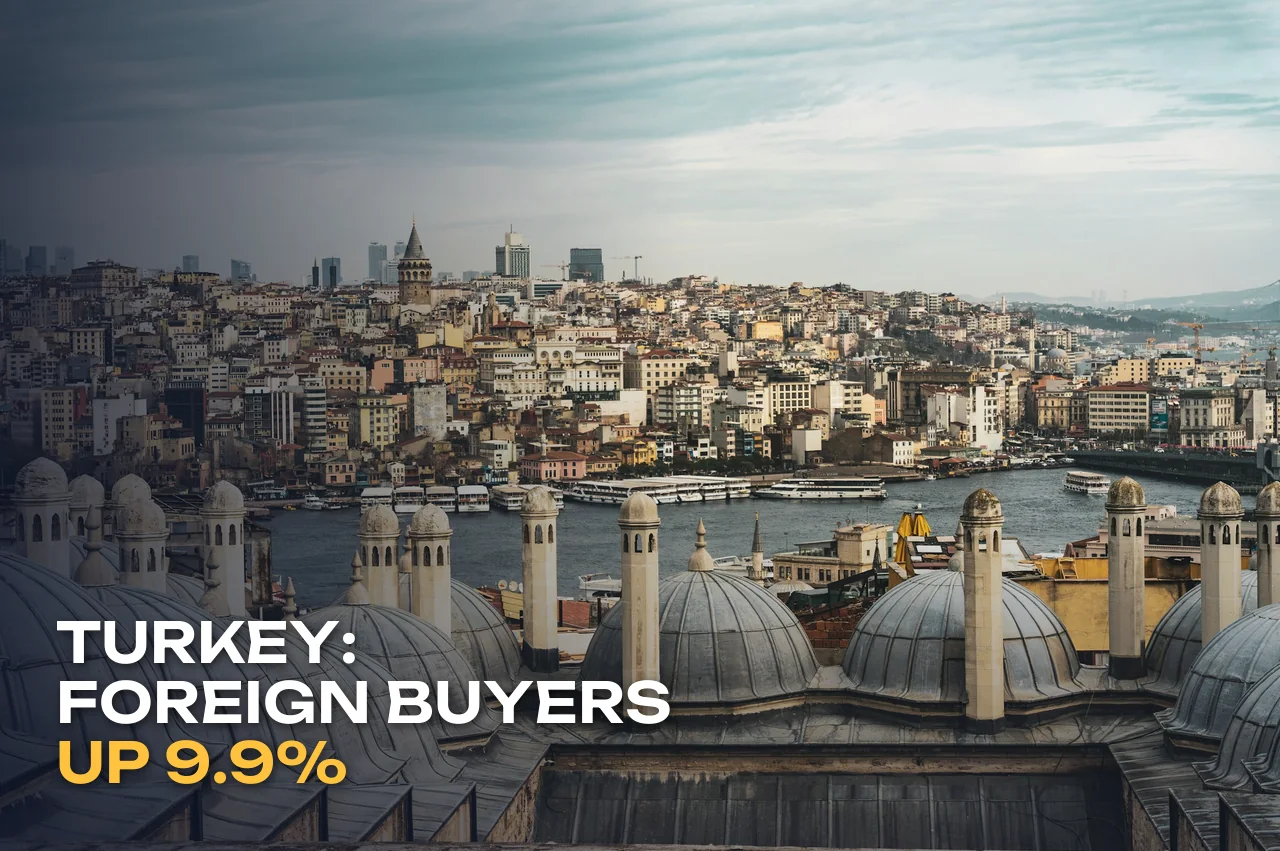 Turkey · 27 OctForeigners bought 9.9% more homes in Turkey in September: developers seek a higher citizenship threshold
Personal programme selection is conducted by Anna Kovalevskaya, Head of Legal, BRIDGES.
We will compare the investor permit, the property permit and citizenship for your family
We will calculate the costs and timelines of each route, check the family and choose the option for your budget and plans.