News · Turkey
Turkey: foreigners bought 9.9% more homes in September, developers seek a higher citizenship threshold
Updated: October 2026·10 min read·Expert reviewed
Terms and costs verified: October 2026
Contents
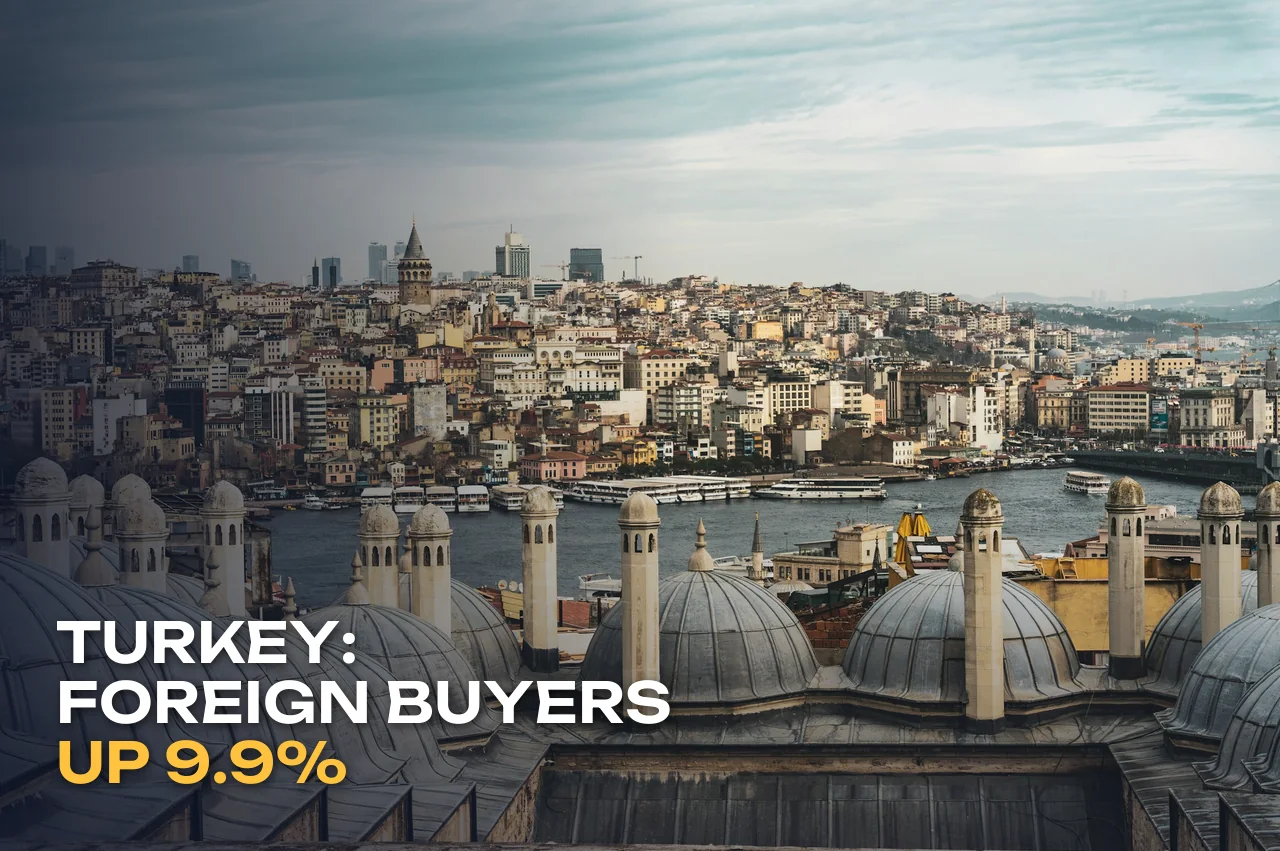
On 16 October 2026 the Turkish Statistical Institute published home sales data for September. Foreign buyers purchased 2,167 flats and houses, 9.9% more than a year earlier, even though the market as a whole shrank by 9.3%. Russian citizens again bought the most. At the same time, a developers' association proposed raising the threshold for citizenship through property from USD 400,000 to USD 750,000. I go through the figures and what they mean for anyone choosing property for a passport or residence.
In brief
- According to the Turkish Statistical Institute on 16 October 2026, 2,167 homes were sold to foreigners in September, 9.9% more than in September 2025. Foreigners accounted for 1.5% of all deals.
- The market as a whole fell by 9.3% in September to 142,390 deals: resales dropped 15.3%, while new builds rose 3.9%.
- From January to September foreigners bought 15,308 homes, 4.3% fewer than in the same period of 2025.
- The largest buyers were citizens of Russia (388), Iraq (166) and Germany (162).
- A developers' association proposed raising the citizenship-through-property threshold to USD 750,000; there is no government decision, and the threshold remains USD 400,000.
What the September figures show
The Turkish Statistical Institute publishes home sales data every month, around the middle of the following month. The September statistics show two different markets. Local buyers are trading resale homes much less: down 15.3% year on year amid expensive credit. New builds, by contrast, are growing slightly, and mortgage deals rose 5.1%.
| Indicator | September 2026 | Change on a year earlier |
|---|---|---|
| All home sales in Turkey | 142,390 | -9.3% |
| New builds | 51,519 | +3.9% |
| Resales | 90,871 | -15.3% |
| Mortgage sales | 23,397 | +5.1% |
| Sales to foreigners | 2,167 | +9.9% |
| Foreigners' share | 1.5% | - |
| To foreigners, January - September | 15,308 | -4.3% |
Foreigners bought more in September than in August (1,938 deals) and than in September last year (1,972). But over nine months the total is still below last year's: 15,308 against 15,992. In other words, autumn looks better than the start of the year so far, but it is too early to call it a turnaround. The developers' association expects foreigners to buy between 20,000 and 22,000 homes over 2026 as a whole.
What this means for you. If you are choosing property in Turkey, the resale market is currently on the buyer's side: fewer deals, more flexible sellers. New-build prices are holding up better.
Why resales are falling and new builds are rising
The main reason for the resale slump is expensive money. Loan rates in Turkey remain high, and local families are postponing buying or selling flats. Resale sellers are often unwilling to cut prices, while buyers are unwilling to pay at old expectations, so fewer deals go through. New builds are holding up better thanks to developer instalment plans: the buyer pays in parts without a bank, and for many this is the only way to buy a home when rates are high.
For foreigners the picture is different. They more often pay with their own money rather than on credit, so interest rates affect them less. Foreign demand is driven more by the lira exchange rate, residence and citizenship rules and the situation in their home countries. The rise in sales to foreigners in September against a general decline is an example of how these markets follow different laws.
What this means for you. If you are paying without a loan, high Turkish interest rates tend to work in your favour: there are fewer local buyers, and there is room to negotiate on resales.
Who is buying: Russia first again
Russian citizens remain the largest foreign buyers of homes in Turkey: 388 deals in September, almost one in five purchases by foreigners. Iraq, Germany, Iran and Ukraine follow some way behind. Germany's place is largely due to Turks with German citizenship buying homes in their home country and retirees on the coast. Iran and Iraq are neighbours for which Turkey has long been a second home.
| Buyer's country | Deals in September 2026 |
|---|---|
| Russia | 388 |
| Iraq | 166 |
| Germany | 162 |
| Iran | 159 |
| Ukraine | 158 |
| China | 124 |
| Afghanistan | 74 |
| Azerbaijan | 70 |
| United Kingdom | 63 |
| Egypt | 61 |
For Russians, Turkey is attractive for several reasons: direct flights, visa-free entry, a large Russian-speaking community in Istanbul, Antalya and Alanya, and the possibility of obtaining residence and citizenship through property. We covered how the programme works for Russian citizens in our piece on Turkish citizenship for Russians. A bank account is a separate issue, without which a citizenship purchase cannot be completed: how to open a Turkish bank account.
What this means for you. If you buy in an area popular with foreigners, bear in mind that demand there is supported by buyers from several countries. This helps on resale but also pushes prices up.
Developers propose raising the citizenship threshold
The developers' association that analyses new-build data, alongside the September figures, called for stricter rules on homes bought for citizenship and a threshold of USD 750,000. Currently citizenship through property requires buying property worth at least USD 400,000, with a three-year ban on resale. Developers believe a higher threshold would protect the market from deals with inflated valuations and attract wealthier buyers.
Importantly, this is an industry proposal, not a government decision. There is no decree on a new threshold, and as of 27 October 2026 the programme terms are unchanged. From 1 October the rules on valuing property for citizenship changed; we covered them in our news story on the new valuation rules. The valuation now has more influence on whether a property counts: how the SPK valuation works. All of this year's programme changes are collected in our piece on changes to Turkish citizenship in 2026.
What this means for you. If you plan Turkish citizenship through property, the threshold is still USD 400,000. But talk of raising it is under way, and if you have decided, there is no point delaying the purchase.
Karim NaserHead of Istanbul Office, BRIDGES
Choosing property in Turkey for citizenship? We will check the property
We will verify the valuation, documents and compliance with programme terms.
How many purchases are made for a passport
The Turkish Statistical Institute does not split foreigners' purchases by purpose: the figure of 2,167 includes deals for citizenship, for residence and holiday or rental flats. The authorities do not publish separate monthly statistics on citizenship-through-property applications. So the overall figure cannot tell us whether interest in the passport itself is growing. An indirect indicator is the share of properties above USD 400,000, but that is not officially disclosed either.
That is why the developers' proposal to raise the threshold should be seen as an industry position. Developers have an interest in more expensive deals and in protecting the market from schemes with inflated valuations, where a property is valued at USD 400,000 but its real price is noticeably lower. The new valuation rules from 1 October target precisely such schemes. If the government decides to raise the threshold, this is usually done by presidential decree with an effective date, giving buyers a short window to complete deals under the old rules.
Taxes and costs when buying
Besides the property price, buyers in Turkey should budget for the title registration tax of 4% of the price, usually split equally between buyer and seller unless the contract says otherwise. There are also costs for the valuation, document translation, a sworn interpreter at signing, and a notarised power of attorney if a representative handles the deal. After purchase, an annual property tax is paid, with the rate depending on the type of property and the city.
For a citizenship purchase, full transparency of payments is essential: the money goes through a Turkish bank, the transfer must match the price in the documents, and the valuation must confirm a value no lower than the threshold. Any discrepancy between the contract price, the valuation and the payments can lead to refusal. The full budget is covered in our piece on the cost of Turkish citizenship.
What this means for you. Budget around 3-5% on top of the property price for taxes and paperwork. For citizenship, check that the contract price, valuation and payment all match.
Where foreigners buy
Traditionally, foreigners buy most homes in Istanbul and Antalya, followed by Mersin and other coastal cities. Istanbul is chosen for its economy, work and study; Antalya and Alanya for the sea and climate. We covered buying in these cities in our pieces on property in Istanbul and property in Antalya. For residence through property, note that first-time residence permits for foreigners are restricted in some districts; the list is in the article on districts closed to residence permits.
Not every property qualifies for citizenship: the valuation, title, absence of encumbrances and previous deals with foreigners for the same purpose all matter. What counts is explained in the article on eligible properties, and how title is registered in the piece on the TAPU title deed. Common buyer mistakes are covered in pitfalls of Turkish property.
What this means for you. Before buying, check not only the price but also the property's legal history and valuation. For citizenship, a mistake in the documents costs more than overpaying.
Property and residence
Besides citizenship, Turkish property gives the right to residence. A short-term residence permit through property requires buying a property of a certain value, which depends on the size of the city; the conditions are on the Turkish residence page and in the article on Turkish residence through property. A general overview is in the Turkish residence guide. Residence does not give citizenship, but it allows you to live in the country, open an account and do business.
When comparing Turkey with other countries, it helps to look at the full cost: purchase taxes, upkeep and living costs. See the articles on the cost of living in Turkey in 2026, Dubai or Turkey and Turkey or Greece.
What to expect by the end of the year
The developers' association expects between 450,000 and 475,000 new homes to be sold in 2026, and foreigners to buy between 20,000 and 22,000 homes. To reach the lower end of the foreign buyer forecast, they need to buy about 4,700 homes in October - December, roughly 1,600 a month. September's 2,167 deals show this is achievable. The institute will publish October data in mid-November, and we will update the figures.
Three factors will shape foreign demand in the coming months: the decision on the citizenship threshold, how the new valuation rules from 1 October are applied in practice, and the situation with bank accounts for certain groups of buyers. If the threshold is raised, a surge in deals before the decision takes effect is to be expected, as happened in previous years when amounts were increased.
What to do
Define your goal
Citizenship requires property from USD 400,000 and a three-year resale ban. For residence the threshold is lower and depends on the city.
Check the valuation
Since 1 October the valuation rules for citizenship have changed. Without a correct valuation the property may not count.
Check the property legally
Title, encumbrances, previous deals. This is the main protection against refusal.
Prepare the account and funds
Payment goes through a Turkish bank. Prepare source of funds documents in advance.
Watch the threshold
The proposal to raise it to USD 750,000 is not yet a decision, but it could become one.
Programme terms are on the Turkish citizenship page, the full budget in the article on the cost of Turkish citizenship, and everything about buying for a passport in citizenship through property. A country overview is on the Turkey page and in the Turkey guide. We carry out a legal check of the property before the deal; you can discuss a purchase in an online consultation. All BRIDGES services are on the home page.
Buying property in Turkey? We will find a property for your goal
We will take into account your budget, city and residence or citizenship conditions.
Karim NaserHead of Istanbul Office, BRIDGES
How this article was prepared
Sources: Turkish Statistical Institute home sales statistics for September 2026, published on 16 October 2026; analysis by the developers' association of 17 October 2026; current terms of Turkish citizenship through property. The proposal to raise the threshold to USD 750,000 is an industry position, not a government decision. The 2026 forecast of sales to foreigners is the developers' association estimate. This article does not replace a consultation.
Share this article
Frequently asked
Questions people ask before deciding
01How many homes did foreigners buy in Turkey in September 2026?
2,167, which is 9.9% more than in September 2025, according to the Turkish Statistical Institute on 16 October 2026. That is 1.5% of all deals.
02Who buys the most homes in Turkey?
Russian citizens: 388 deals in September. Then Iraq (166), Germany (162), Iran (159) and Ukraine (158).
03Has the citizenship-through-property threshold changed?
No. It is USD 400,000. A developers' association proposed raising it to USD 750,000, but there is no government decision.
04Is the Turkish housing market growing?
Overall, no: in September sales fell 9.3% year on year, and resales 15.3%. New builds (+3.9%) and sales to foreigners are growing.
05What changed for citizenship on 1 October 2026?
The rules on valuing property for citizenship changed. A property counts according to its valuation, so it should be checked before the deal.
About the author
Related materials
What to read next
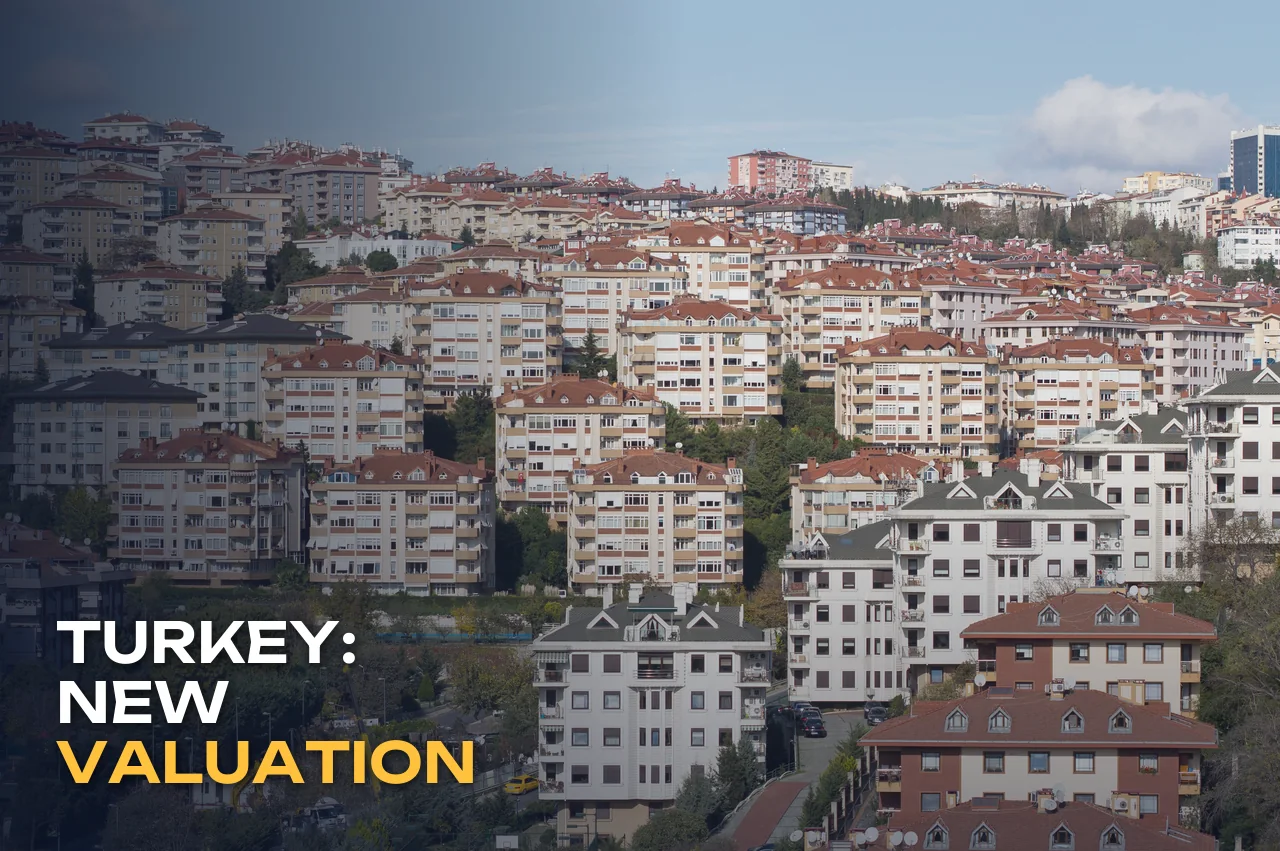 NewsTurkish citizenship: new property valuation rules from 28 September 2026
 ArticleTurkish citizenship for real estate in 2026: a complete guide to the $400,000 threshold
 ArticleReal estate in Istanbul for Turkish citizenship in 2026: areas, prices, profitability
News+6 stories on 31 October
Related news
 Turkey · 31 OctTurkey: new residents pay no tax on foreign income for 20 years
 Turkey · 17 OctTurkish citizenship: new property valuation rules from 28 September 2026
 Thailand · 31 OctThailand: authorities review 2,360 land plots held through nominees on behalf of foreigners
Personal programme selection is conducted by Anna Kovalevskaya, Head of Legal, BRIDGES.
Choosing property in Turkey for citizenship? We will check the property
We will verify the valuation, documents and compliance with programme terms.
