Citizenship · Turkey
Turkish Citizenship by Investment: Pros and Cons in 2026
Updated: ·15 min read·Expert reviewed
Terms and costs verified: undefined
Contents
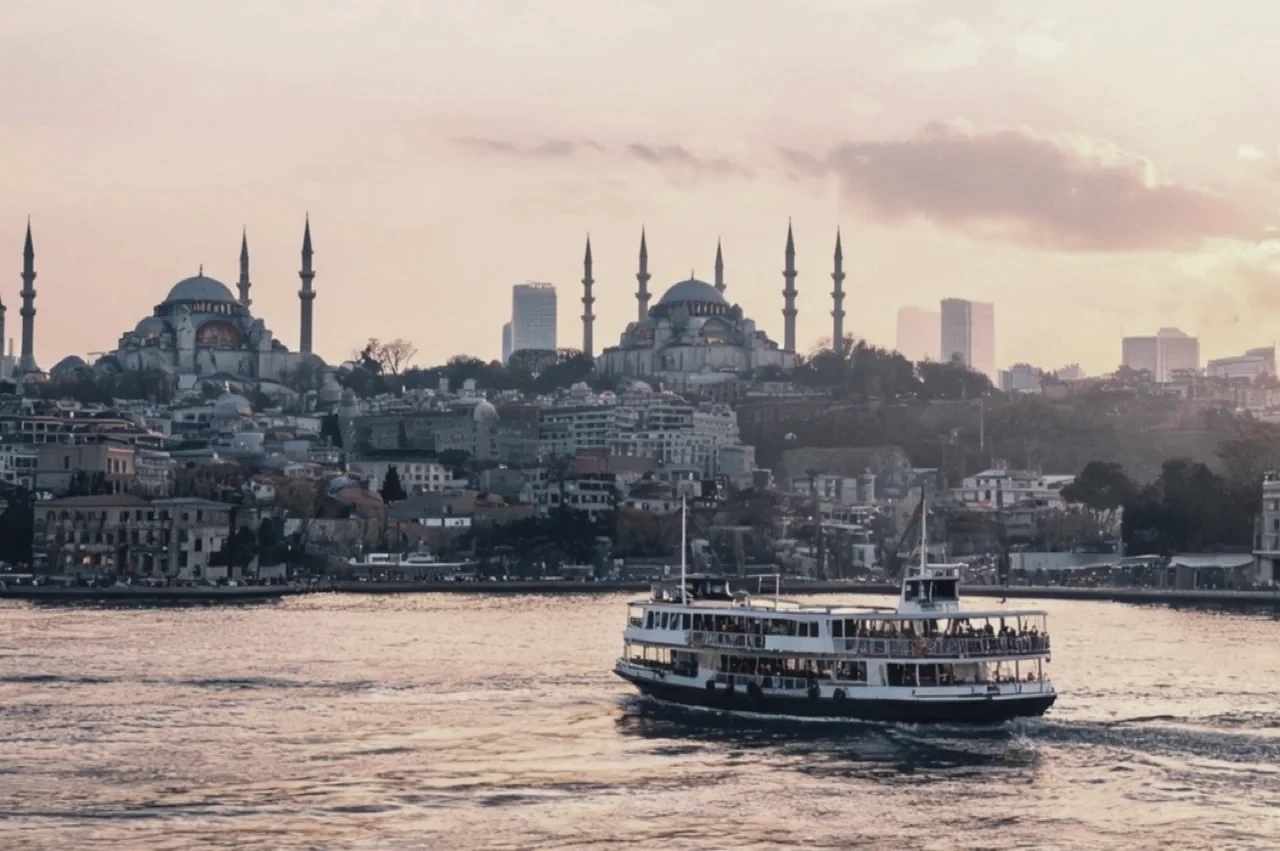
The Turkish passport by investment is praised for its speed and for the fact that the invested money remains yours in the form of real estate. But behind the beautiful promises are hidden the currency risk of the lira, a three-year asset freeze and the absence of Schengen. We analyzed the 2026 program without embellishment: where it is really strong, where the pitfalls are and who should stay away from it. Only numbers, facts and a picture.
Briefly about the program and the essence of choice
Türkiye gives citizenship and passport to foreign investors in exchange for investing in the country's economy. The basic and most popular way is to purchase real estate for an amount from $400 000 with an obligation not to sell it for three years. More expensive alternatives: bank deposit, investment fund shares or government bonds - from $500 000, or the creation of at least 50 jobs. There is no language exam, you do not need to live in Turkey before receiving a passport, dual citizenship is allowed.
It sounds attractive, and some of the benefits are real. But the program is not a gift, but a transaction with specific conditions and risks. The main question that you have to answer is: why do you need a Turkish passport? If for the sake of visa-free travel in Europe, you have chosen the wrong country. If for the sake of speed, a returnable asset, a bridge to a US investor visa and a second citizenship outside Western jurisdictions, Türkiye may be a very rational decision.
In this analysis, we will go through each plus and minus in turn, put them in a table, and then say who the program is suitable for and who it is absolutely not. We keep the full step-by-step design mechanics in a separate section. guide to Turkish citizenship by investment.
Plus 1. Speed: passport in months, not years
Türkiye has one of the fastest citizenship by investment programs in the world. According to our practice, from submission of a complete package to a decision, it takes approximately 3-8 months, while naturalization through a residence permit in most countries takes 5-10 years. You do not pass a language exam, do not prove integration and do not spend a minimum number of days in the country. This is important for those who need a passport as a tool, and not as a result of moving.
Speed brings concrete benefits. A businessman under sanctions or compliance restrictions receives a second document to open an account and continue operations. A family planning an alternate airfield secures its status before the program's conditions become more stringent. An investor who needs a Turkish passport as a stepping stone to an E-2 visa in the US does not waste years.
- Submission without personal presence - by proxy;
- The application for the whole family comes in one package;
- Once approved, passports are processed within weeks.
It is important to understand: 3-8 months is a period of time with perfectly collected documents and a clean check. Any mistake in real estate valuation, a controversial seller or questions about the origin of funds will delay the process. The speed of the program is real, but it is achieved through careful preparation, and not by itself.
Plus 2. Money doesn’t burn: an investment is an asset
The key difference between Turkey and the Caribbean programs, where the contribution to the state fund is non-refundable: here $400,000 does not disappear, but turns into real estate, which remains your property. After three years of holding, you have the right to sell it, rent it out during this time and, ideally, make money on the increase in value. Formally, this is not an expense, but an investment with a passport as a bonus.
In a growing market and with a successful choice of object, this works as a plus. Istanbul and resort regions are generating a flow of rentals, and new buildings from reliable developers are becoming more expensive. The deposit route ($500,000) also preserves the body of the investment and brings interest at high Turkish rates.
But this is where a trap lurks, which a consultant must warn about in advance. The price of an object for the program is fixed in dollars according to the official estimate, and developers know very well that a foreigner needs exactly $400,000. Therefore, objects for citizenship are often overvalued by 20-40% relative to real market value. You pay a premium for the fact that the apartment fits the program. If resold after three years, this premium may not be returned. So the asset is a real plus, but only if you buy it with an independent assessment, and not from the first investment real estate agent you come across.
Plus 3. No residence, no language, whole family
The program does not require you to live in Turkey - neither before applying nor after receiving your passport. There is no language test, no history or constitutional exam, no requirement to take fingerprints every year. For a busy entrepreneur or a family who is not planning a move right now, this removes a huge layer of obligations.
One investment per family. The application includes:
- the applicant's spouse;
- children under 18 years old - no restrictions on the number;
- financially dependent disabled children over 18 years of age.
This means that several people receive passports at once for one investment of $400,000 - in terms of a family member, the price is very competitive. Children who receive citizenship at an early age grow up with two passports and the right to Turkish education and medicine.
This nuance applies to adult children over 18 years of age. They cannot be included in the basic application - they require either their own separate investment or a scheme with the distribution of shares in one property, which must be structured in advance and competently. If the family has students aged 18-25, their status should be planned before the transaction, and not after. We discuss details on family composition and shares in main program guide.
Plus 4. Bridge to the E-2 visa to the USA
Few competitors disclose this advantage, but for a certain category of people it is decisive. Türkiye is on the list of countries that have entered into a Trade and Navigation Treaty with the United States, which gives Turkish citizens access to a US investor visa E-2 (Treaty Investor). Citizens of Russia, China, and many CIS countries do not have such an agreement with the United States - and for them a Turkish passport becomes a legal bridge to life and business in America.
The E-2 visa allows you to live and work in the United States, developing your own business, with an investment of approximately $100,000-200,000 in a real enterprise. The visa is extended every five years an unlimited number of times, the spouse receives the right to work, and children - to study. This is not a green card, but a working way to build an American base.
Important fair disclaimer: you can apply for an E-2 as a Turkish citizen not immediately after naturalization, but after three years of holding Turkish citizenship - this is a requirement of consular practice, cutting off “passports for a visa for tomorrow.” Therefore, a Turkish passport is a long game: you apply for citizenship, wait three years, then open the way to the United States. We have dedicated a separate article to those who are aiming specifically at America - Turkish passport and E-2 visa to the USA.
We will map your route to Turkey citizenship
We review your family, source of funds and timing and tell you which route fits.
Plus 5. Dual citizenship and neutral status
Türkiye does not require renunciation of previous citizenship. You keep your main passport and add a Turkish one - legally clear, without having to surrender or hide anything. For citizens of countries where second citizenship is allowed, this is simply an expansion of opportunities.
A Turkish passport also means geopolitically neutral status. Türkiye is not a member of either the EU or the Western sanctions coalitions in their entirety, and maintains working relations with very different countries. For an entrepreneur doing business at the intersection of the markets of Europe, the Middle East, the Caucasus and Central Asia, such a passport opens doors that are closed to holders of more “politicized” documents.
- Visa-free or simplified entry to many countries in Asia, Africa, Latin America and the post-Soviet space;
- The right to Turkish residence, bank accounts and business registration as a citizen;
- Access to the Turkish education and healthcare system for the whole family.
The Turkish passport is pragmatically good as a second document - an instrument of mobility and financial flexibility. This is not a replacement for European citizenship, but a different option according to its logic, and it must be assessed according to its objectives.
Minus 1. Main disappointment: NO Schengen and EU
This is the most common and most painful misunderstanding on which unscrupulous sellers make money. Let's say it straight: A Turkish passport does not provide visa-free entry into the Schengen area and does not make you an EU citizen. Turkey has been a candidate for joining the European Union for decades, but is not a member, and to travel to Germany, France, Italy, the holder of a Turkish passport still needs a Schengen visa.
If your only goal is to move freely around Europe, live and work in any EU country, and give your children European passports, Türkiye is not suitable for you in principle. For these tasks, there are programs of Malta, Cyprus and European paths of origin, and it is more to look at them right away, rather than try to squeeze out of the Turkish document what is not in it.
We examine this issue in detail and without illusions in a separate article - does a turkish passport give schengen. Read it before making a decision if European mobility is critical to you. The Turkish passport is strong in another dimension - speed, asset, bridge to the US, neutrality - and it should be judged by these parameters, and not by the European visa-free travel, which it does not have.
“Over the years of working with the Turkish program, I have drawn one simple rule for clients: a Turkish passport is strong in exactly what it is strong, and weak in exactly what it is weak - do not try to squeeze Schengen out of it, which is not there. When a person comes for speed, a returnable asset, and a bridge to an E-2 visa to the US, Türkiye almost always lives up to expectations. When he comes for a free Europe, I dissuade him and offer other jurisdictions. And most importantly: 80 percent of the risks are not in the program, but in the overvalued object. An independent assessment before transferring money saves clients tens of thousands of dollars more often than any negotiation with the developer.”
Minus 2. Currency risk of the Turkish lira
The Turkish economy has been living with high inflation and a noticeable weakening of the lira against the dollar for years. For an investor under a citizenship program, this creates very specific risks that need to be thought about in advance, and not retroactively.
The investment threshold is fixed in dollars - $400,000 at the official exchange rate of the Central Bank on the date of the transaction. But real estate itself and rental income are largely tied to the lira. If the object was valued in lira, and the national currency sank during the holding period, then when you resell it after three years, you risk receiving less in dollar terms than you invested, even if the price in lira has increased. The rental flow in lira also melts in dollar terms.
- High inflation eats up real rental yields;
- Exchange rate fluctuations affect the dollar value of the asset upon exit;
- Progressive income tax of 15-40% and revaluation of cadastral value in 2026 increase ownership costs.
This does not mean that it is impossible to make money - on individual objects and when the market grows, investors gain profit. But expecting a guaranteed return of all $400,000 upon resale is naive. A sober approach: consider the investment according to a conservative, rather than optimistic, scenario, and factor the currency drawdown into the model.
Minus 3. Freezing the asset for 3 years
By obtaining citizenship through real estate, you accept a strict obligation to: do not sell the property for three years. This is recorded in the cadastre with a mark and verified by the state. Violation risks revoking the citizenship acquired on the basis of this investment. That is, your $400,000 is tied up in one illiquid asset for three years.
What does this mean in practice? If you urgently need money during these three years, you cannot quickly exit the investment. If the real estate market turns down, you still hold the property until the end of the term. If a more profitable investment is found, the capital is not available. The deposit route ($500,000) also requires holding funds in the account for a set period.
Add here the costs of ownership itself: annual property tax (approximately 0.1-0.6% of the cost), utility bills, management costs, possible VAT (KDV) when purchasing from a developer. Liquidity is what you sacrifice for your passport. If freedom to manage your capital is critical to you, a three-year freeze is a serious argument against it, and it needs to be weighed before the transaction, and not discovered already within the program.
We will calculate the budget for your family
A full estimate: contributions, fees and our work for your family.
Minus 4. Overbought objects and a threshold that is growing
We have already mentioned this risk, but it is so common that it deserves a separate analysis. An entire industry of “investment properties” has been built around the citizenship program: apartments specially packaged for a threshold of $400,000. The developer and intermediary know the exact amount that a foreigner needs and include a premium in the price. According to our observations, such objects often stand on 20-40% more expensive comparable housing on the open market. You don’t buy the best apartment, but the one that fits the numbers.
The second structural risk is raising the threshold. The program has already gone through stages of tightening: in 2018, the bar was raised from $1 million to $250,000, in 2022 - to the current $400,000. Turkey periodically reviews the conditions, and the logic of recent years is upward, not downward. This means that the window with the current threshold may close, and with it the price of entry itself will rise.
- Take an independent assessment of the facility, not just the official one for the program;
- Compare the price with the real market of the area through several sources;
- Check the developer's reputation and title purity (TAPU) before making a deposit;
- Keep in mind that it is difficult to resell an overvalued property at a profit.
There is only one protection against both risks - do not buy “from the one who sold the visa,” but conduct independent due diligence on the object and jurisdiction before transferring money.
Pros and cons in one table
Let's bring all the arguments together. This table is not a verdict or an advertisement, but a map for an informed decision: the same program properties are a plus for one investor, and a minus for another.
| Pros | Cons |
|---|---|
| Speed: approximately 3-8 months until passport | No Schengen and EU citizenship |
| Investment is a returnable asset (real estate), not a contribution | Currency risk: weakening lira and high inflation |
| No accommodation, no language exam | Asset frozen for 3 years, low liquidity |
| Citizenship for the whole family in one package | Objects for the program are often overvalued by 20-40% |
| Bridge to US E-2 visa (after 3 years of citizenship) | The threshold is historically rising, conditions are becoming more stringent |
| Dual citizenship, neutral status | Ownership taxes and cadastre revaluation in 2026 |
Pay attention to the symmetry: a returnable asset is both a plus (money does not burn) and a minus (it is frozen and subject to exchange rate). The lack of residency requirements is convenient for those who are not moving, but of no use to those who wanted to live in the EU. Therefore, there is no universal answer “good or bad” - there is only compliance with your tasks.
Who is the program suitable for and who is not?
The most way to make a decision is to try the program on your situation. Turkish citizenship by investment is a tool with a very specific benefit profile.
Suitable if you:
- want to quickly get a second passport as a tool for mobility and financial flexibility;
- aim for an E-2 visa in the USA and are ready to play for the long haul (3 years + business in America);
- a citizen of a country without an E-2 treaty with the United States (Russia, China and a number of others);
- consider real estate in Turkey as an informed investment, and not just as a pass;
- do not need immediate European visa-free travel;
- want to give passports to the whole family at once and are calm about freezing capital for 3 years.
Not suitable if you:
- you buy a passport for the sake of free movement within Schengen and life in the EU - this is the wrong country;
- you are not ready for currency risk and want a guaranteed return on your entire investment;
- need high capital liquidity in the next three years;
- citizen of a country that prohibits second citizenship;
- counting on E-2 "right away" - the three-year rule makes this impossible.
If you recognize yourself in the first list, Türkiye is most likely a rational choice. If in the second, it’s more to look at the alternatives: European programs for Schengen, Caribbean programs for visa-free speed, or compare the options directly, for example UAE vs TurkeyandGrenada vs Turkey.
Conditions 2026: what exactly is required and how much it costs
We will collect the current program conditions for 2026 in one place so that you can see the full picture of the entry.
- Real Estate - one or more objects worth from $400 000 according to the official assessment, with a ban on sales for 3 years (mark in TAPU);
- Bank deposit - from $500 000 in a Turkish bank with retention for a specified period;
- Investment fund shares or government bonds - from $500 000 with hold;
- Job creation - at least 50 employees;
- There is no language exam or requirement to reside in the country;
- Dual citizenship is allowed; family (spouse, children under 18) is included in one application.
In addition to the investment amount, factor in additional costs: government duties, legal fees, independent appraisal, notary and translation services, purchase taxes and possible VAT from the developer. The real full budget is always above the “naked” threshold - a consultant shows it before the transaction, and not after.
You should check the current requirements and status of the program using official sources - for example, the citizenship portal nvi.gov.tr and the Migration Department en.goc.gov.tr. The terms of the program change periodically, and you need to focus on the original source, and not on old articles on the Internet.
Ready to calculate your specific scenario and see if Türkiye is right for you? Book a consultation with a BRIDGES GLOBAL expert - we’ll analyze your goal, check the object and say whether the game is worth the candle in your case.
We will send a document checklist for your case
Leave your details: we will put together documents and timelines for your family.
How to check an object and not overpay: an expert’s view
Most unsuccessful stories with Turkish citizenship are not a problem with the program itself, but with the problem of choosing an object and a contractor. The program gives transparent rules; mistakes happen at the transaction stage. Therefore, verification is not a formality, but the main protection of your $400,000.
Before transferring money, we go through a mandatory checklist:
- Independent assessment object - compare the real market price with the one declared for the program and see the markup;
- Title Purity (TAPU) - whether there are any encumbrances, arrests, disputed rights, whether the object is suitable for the program;
- District status - whether it is closed according to the “25% rule” for foreigners, which is especially important for the route through a residence permit;
- Developer reputation - history of delivery of objects, absence of ships and long-term construction;
- Origin of funds - preparation of documents for banking and government compliance in advance.
Separately, it is worth distinguishing between two different paths, which are often confused: citizenship for $400,000 and a short-term residence permit (İkamet) for real estate from $200,000. A residence permit does not automatically lead to citizenship - these are separate scenarios with different thresholds and rules. In short: you need to go to a Turkish passport consciously, with a verified object and an understanding of what you are buying - and then the program works exactly as promised.
Frequently asked
Questions people ask before deciding
01Does a Turkish passport give visa-free entry to Schengen?
No. Türkiye is not part of the EU or the Schengen area, and Turkish passport holders still need a visa to travel to Schengen countries. If your goal is free movement throughout Europe, the Turkish program is not suitable for you, and it is more to consider European options.
02How much does Turkish citizenship really cost in 2026?
The basic threshold is from $400,000 when purchasing real estate with a retention period of 3 years, or from $500,000 for a deposit, mutual funds or government bonds. On top of this amount, budget for fees, legal fees, appraisal, notary and taxes - the full budget is always above the bare investment threshold.
03How long does it take to get a Turkish passport?
In our practice, it takes approximately 3-8 months from submitting a complete package to a decision, provided the documents are clean and the property is assessed correctly. Errors in preparation, a controversial seller or questions about the origin of funds extend this period.
04Is it possible to sell real estate immediately after obtaining citizenship?
No. The object on the basis of which citizenship was obtained cannot be sold for three years - this is fixed by a mark in the cadastre (TAPU). Violation of the ban may result in revocation of citizenship. Your capital is effectively frozen in the asset for this period.
05Is it true that the objects for the program are overvalued?
Often yes. Developers and intermediaries know that a foreigner needs an amount of exactly $400,000, and they set a premium - according to our observations, often 20-40% of the real market price. There is only one protection: independent assessment and comparison with the open market of the area before transferring money.
06Does Turkish citizenship give access to an E-2 visa to the US?
Yes, this is one of the strongest advantages. Türkiye is an E-2 country and Turkish citizens can apply for a US investor visa. Important caveat: you can apply for E-2 as a Turkish citizen three years after naturalization, and not immediately.
07Do I need to renounce my previous citizenship?
No. Türkiye allows dual citizenship, you keep your primary passport. But check your country's laws: if it prohibits second citizenship, the restriction comes from there, not from Turkey.
08Which family member receives citizenship with one investment?
The applicant's spouse and children under 18 years of age are included in one application without additional payment for the investment. Adult children over 18 are not included in the basic package - they need a separate investment or a scheme with the distribution of shares, which is planned before the transaction.
09How does citizenship differ from a residence permit for real estate?
These are different paths. Citizenship - from $400,000 with retention for 3 years and issuance of a passport. Residence permit (İkamet) - from $200,000 real estate value, gives a residence permit, but does not automatically lead to citizenship. In “closed” areas with a share of foreigners above 25%, residence permits for real estate are not issued.
10How serious is the foreign exchange risk of the Turkish lira?
Serious. Türkiye has been living with high inflation and a weakening lira against the dollar for years. The threshold is fixed in dollars, but the cost of the property and rental income are tied to the lira, so when resale after 3 years in dollar terms you can get less than the investment. Consider according to the conservative scenario.
11What taxes will the owner have to pay?
Income tax in Turkey is progressive, approximately 15-40%. There is VAT (KDV, standard 20%), which can be applied when purchasing from a developer, a tax on the purchase of real estate and an annual property tax (approximately 0.1-0.6%). In 2026, cadastral revaluation increases the base. Please check exact rates on the transaction date.
12Can Türkiye raise the investment threshold?
Historically, the threshold has only increased: from $1 million to $250,000 in 2018 and to the current $400,000 in 2022. The logic of recent years has been towards tightening. This means that the window with current conditions may close, and those who decide to enter are wiser not to delay and fix the current rules.
Transparency
How this material was prepared
- Author
- Irena Sokolovska, head of European Practice, BRIDGES
- Terms and costs last verified
- Sources
- official government authorities of the relevant country and state publications
- Methodology
- government minimum requirements are stated separately from due diligence charges, state fees, legal and banking costs
Sources and methodology
Figures, terms and timelines are checked against official sources. Link availability verified in August 2026. Third-party blogs and agent websites are not used as a source of programme terms.
- [1]Presidency of Migration ManagementResidence permits and citizenshipen.goc.gov.tr
- [2]General Directorate of Land Registry and CadastreProperty transactions and valuationwww.tkgm.gov.tr/en
Methodology: tables and charts state government minimum investment requirements; due diligence charges, state fees, legal, banking and other costs are calculated separately and are not included in the minimum thresholds.
About the author
Related materials
What to read next
 ComparisonCaribbean or Turkey: Citizenship for Contribution or Real Estate in 2026
 AnalysisWhat is due diligence and why the Caribbean is rejecting applications
 ArticleTurkish citizenship by investment in 2026: complete guide
Personal programme selection is conducted by Anna Kovalevskaya, Head of Legal, BRIDGES.
Citizenship of Turkey: preparation checklist
Documents prepared in advance, source of funds checks and where applications usually fail.