Residency · Turkey
Turkish investor residence for 3 or 5 years: which is better
Updated: November 2026·12 min read·Expert reviewed
Terms and costs verified: November 2026
Contents
The new Turkish investor residence permit is granted for three years for USD 150,000 or for five years for USD 200,000. The USD 50,000 difference looks like a simple price for two extra years. But the choice of term affects more than the amount: the passport, insurance, fees, renewal, the 120-day rule for time abroad and the route to permanent residence. We work through both options under the law and its implementing regulation.
In brief
- The five-year permit costs USD 50,000 more but gives two extra years and spares you a renewal in the third year.
- In both options the money is held for half the term: 18 or 30 months. Each year of status means six months of holding.
- The permit is issued for 60 days less than the passport is valid. For a five-year status the passport must be valid for at least 5 years and 60 days.
- Insurance for a permit of a year or more is bought for a year and renewed annually, whatever the term.
- A short-term permit can be cancelled if you spent more than 120 days abroad in the past year. This rule matters more than the choice of term.
How the two options differ
Presidential Decision No. 11994 sets only the amount, the term and the holding rule. The other rows of the table follow from the general provisions of Law No. 6458 on Foreigners and its implementing regulation, which apply to all short-term permits. We covered the decision in our analysis of the new permit, and the choice of investment in the article on deposits, bonds, funds and BES.
| 3-year permit | 5-year permit | |
|---|---|---|
| Investment | from USD 150,000 | from USD 200,000 |
| Holding period | 18 months | 30 months |
| Renewals within 5 years | one, after 3 years | none |
| Passport must be valid for | at least 3 years and 60 days | at least 5 years and 60 days |
| Insurance | a one-year policy, renewed every year | a one-year policy, renewed every year |
| Permit fee | for 3 years, at filing | for 5 years, at filing |
What this means for you. The five-year option wins on peace of mind: one set of documents for five years and fewer points where the status can break. The three-year option wins on flexibility: the money is free a year earlier, and after three years you can decide whether to stay in Türkiye.
The maths: what the extra USD 50,000 buys
Divide the amount by the term and the options are almost equal: USD 150,000 for three years is USD 50,000 per year of status, USD 200,000 for five years is USD 40,000 per year. Holding is proportional: each year of status means six months when the money cannot be touched.
| Measure | 3 years | 5 years |
|---|---|---|
| Years of status per USD 50,000 | 1 year | 1.25 years |
| Months the money is held per year of status | 6 months | 6 months |
| When the money is free | after 1.5 years | after 2.5 years |
| Years of status left after the money is free | 1.5 years | 2.5 years |
There is an important difference. The money stays yours: the decision requires keeping the investment, not spending it. So the real price of the status is not USD 150,000 or 200,000, but the income you give up if you would otherwise invest the money differently, plus taxes and fees. On a foreign-currency deposit the bank withholds 25% of the interest, while Treasury Eurobonds carry no withholding for a non-resident. Tax is covered in detail in our article on choosing the instrument.
Hence a practical rule. If USD 200,000 is money you will not need for the next two and a half years, the five-year option costs almost nothing extra. If you need the money in eighteen months to buy a home or a business, the three-year option is the honest one: you do not lock up an extra USD 50,000 for an extra year.
Currency and an exchange-rate buffer
The threshold is set in US dollars, but the decision accepts the equivalent in another foreign currency. At what rate and on what date the Ministry will check the equivalent, the text does not say. If you invest euros, pounds or dirhams, it is sensible to keep a buffer of a few per cent above the threshold: exchange-rate moves between investing and filing should not push the amount below USD 150,000 or 200,000. For the five-year option this matters more, because the buffer is calculated on a larger amount.
What happens if you take the money out early
Article 33 of Law No. 6458 lists the disappearance of the conditions on which a short-term permit was issued as a ground for cancellation. For an investor that condition is the investment, which must be held for half the term. Withdrawing the money before 18 or 30 months puts the status at risk, and not only the investor's: the spouse and children hold permits through the same investment. How this will be applied and checked will be set by the Ministry procedure. Until then we advise sizing the amount so that it is never touched before the holding period ends, and keeping living reserves separately.
Is your passport valid long enough?
The regulation implementing Law No. 6458 sets a simple rule: the permit is issued for 60 days less than the passport is valid. If the passport expires in four years, a five-year permit will not be issued on it, even with USD 200,000 invested. The status is cut to fit the passport.
For a five-year permit the passport of the investor and of each family member must be valid for at least five years and 60 days on the filing date, for a three-year permit three years and 60 days. Children's passports are often issued for short periods, and they are what most often shortens the whole family's status. So renew passports before investing the money. The document list for a Turkish permit is in our article on residence permit documents.
Insurance: for the whole term, but year by year
A permit requires health insurance covering the whole requested term. But for permits of a year or more the regulation makes an exception: those outside the Turkish state insurance system need only a private policy for one year, renewed at the end of the year. So choosing between three and five years does not change the annual burden: you will renew the policy every year either way.
The policy requirements are set by the SEDDK. Since 1 April 2025 permit policies have minimum limits: outpatient treatment of at least TRY 15,000 a year and inpatient treatment at partner clinics with no cap. The premium is paid up front. Age strongly affects the price, and after 65 a policy can be hard to get; see our article on insurance for a Turkish permit.
What happens to children over 5 years
The decision extends the status to the investor's foreign spouse and to the minor or dependent children of the investor and spouse. Everyone shares one basis, the investor's investment, so the family receives its term within the investor's term. But the five-year option has a catch: within five years a child may turn 18.
Whether the child keeps the permit until the end of the term or must prove dependency, the decision does not say. For adult children the status is possible only if they are dependent, and that has to be shown with documents: proof of study, no income, financial support from the parents. If the family has children aged 15-17, discuss this before choosing the term. We wrote about the family permit in Türkiye and proving dependency in the article on the family residence permit.
Example. A family of four is choosing between USD 150,000 and USD 200,000. The father's passport is valid for six more years, the mother's for eight, the 16-year-old son's for four, the 10-year-old daughter's for two. Without renewing the children's passports, the son's five-year permit would be cut to his passport validity minus 60 days and the daughter's to about two years. And in two years the son turns 18. Here the order is clear: new passports for the children first, then the choice of term, and only then the investment.
Fees: you pay for the whole term up front
A permit carries two charges. The first is the card form, which costs TRY 964 in 2026 and is the same for everyone. The second is the residence fee, which depends on nationality and is calculated for the whole requested term. The Turkish migration service updated the fee table by country on 30 April 2026.
So a five-year permit costs more at filing than a three-year one: the fee is charged for five years at once. But the regulation protects against paying twice: if you change to a permit of the same type, the paid period is not charged again. Over a five-year horizon the total fees in both options are close; the difference is only when you pay.
Karim NaserHead of Istanbul Office, BRIDGES
We will price a 3-year and a 5-year permit for your family
We will check passports, insurance and fees for your nationality and choose the term to fit your plans.
The 120-day rule: the key condition for both options
The new permit is a short-term permit, issued under Article 31 of Law No. 6458. Such permits are subject to Article 33: a short-term permit is not issued, is cancelled or is not renewed if the foreigner spent more than 120 days in total outside Türkiye in the past year. The regulation sets out how the rule is applied.
For an investor this matters more than the choice of term. A five-year permit does not mean you can live in Türkiye for a month a year: with absences of more than 120 days a year the status risks cancellation. Decision No. 11994 introduces no special rules for the new investor permit, and how the Ministry will apply Article 33 to investors will be clear from the filing procedure.
The rule has a tax side. Someone who spends more than 245 days a year in Türkiye will almost certainly live there for more than six months and become a tax resident. How that affects income is explained in our article on Turkish tax residence. New residents may benefit from the 20-year exemption for foreign income in force since 2026.
What this means for you. If you plan to live in Türkiye for less than eight months a year, discuss it with us before investing. It affects not only the term but whether the investor permit suits you at all.
When to file for renewal
As a general rule a renewal is filed no earlier than 60 days before the permit ends and in any case before it ends. The migration service decides on a complete file within 90 days, and in the meantime issues a filing certificate that allows you to stay in Türkiye. The procedure is covered in our article on renewing a Turkish permit.
For an investor the key question remains open: does a renewal require holding the investment again? The decision speaks only of the first term and of holding for half of it. If you have already withdrawn the money after 18 or 30 months and the Ministry requires a new investment for renewal, you will have to place the amount again. Until the procedure is published, this argues for the five-year option: the renewal question arises two years later.
If the renewal is missed and the permit expires, the fee for the time without status is charged double, and with a delay of more than ten days the application may not be accepted. So we put the end dates of the permits and passports of the whole family into our tracking calendar on the day the cards are issued and remind you in advance.
Will the permit count towards the 8 years?
A permanent permit under Article 42 of Law No. 6458 is granted after eight years of uninterrupted residence in Türkiye on permits. Time on a student permit counts by half, time on other permits in full. Continuity is broken by more than six months abroad in a year or more than a year in total over the past five years, except for study and medical treatment. Details are in our article on Turkish permanent residence and in the glossary.
The decision introduces no special rules for counting these years on the investor permit. If it counts as an ordinary permit, a five-year status covers more than half the way to permanent residence in one filing. Whether it counts towards naturalisation after five years of residence is also not yet settled; that route is described in our article on citizenship after 5 years.
How to choose the term
- Choose 5 years if USD 200,000 is free for two and a half years, the family's passports are valid for more than five years, you definitely plan to live in Türkiye and want to avoid a renewal before new rules appear.
- Choose 3 years if you need the money in eighteen months, you are testing the country before a long move, or someone's passport expires soon.
- Compare with the property permit if you plan to buy a flat anyway: the property-based permit from USD 200,000 lasts as long as you own it. Renting or buying is covered in our article on the choice between them.
- Look at citizenship if the goal is a passport: Turkish citizenship by investment starts at USD 400,000 in property. Compare the statuses in "Residence permit, permanent residence or citizenship".
For retirees and people with passive income the five-year option is usually more convenient: fewer visits to the migration service. Other routes for this group are in our article on residence for retirees. All types of Turkish permit are in our overview, and the term is explained in the glossary.
Common mistakes when choosing the term
- Counting only the amount. The USD 50,000 difference is not a cost but extra money under holding. Compare the income you give up for the extra year, not the amount itself.
- Forgetting the children's passports. A short child passport cuts the child's status, and the family ends up with permits expiring on different dates.
- Planning half the year abroad. The 120-day rule applies whatever the term, and a five-year status does not protect against cancellation.
- Investing before the Ministry procedure without a margin. If it turns out that renewal needs a new investment or that the deposit must be opened after a certain date, fixing it will happen after the money has moved.
- Not comparing other routes. If you will buy a flat in three years anyway, it is sometimes simpler to take the property-based permit straight away.
What to check before investing
Passports
Validity of the whole family's passports: at least 3 or 5 years plus 60 days.
Dates
When you will need the money and how many months a year you will spend in Türkiye.
Address
A home in a district open to foreigners' registration.
Insurance
A one-year policy for each family member within SEDDK limits.
A permit requires an address in Türkiye, including rented housing. Some districts are closed to foreigners' registration; see our article on closed districts and the article on address registration. The full filing is covered in the article on the application stages. Programme terms, family and stages are on the Turkish investor residence page, an overview of the country is on the Türkiye page, and you can discuss your term at an online consultation.
How this article was prepared
This article is based on official texts: Presidential Decision No. 11994 in Official Gazette No. 33434 of 18 November 2026; Articles 31, 33 and 42 of Law No. 6458 on Foreigners and International Protection; Articles 21-23 and 27 of the regulation implementing Law No. 6458; Turkish migration service information on residence permits, the 2026 card fee and the fee table of 30 April 2026; and SEDDK circular 2024/34 on insurance for permits and visas, in force since 1 April 2025. The Interior Ministry procedure for the new permit had not been published as of the date of this article.
Share this article
Still have questions? We'll answer for your case
Tell us what you want to solve, and an expert on the topic will contact you.


Frequently asked
Questions people ask before deciding
01Which is better: a 3-year or a 5-year Turkish permit?
Per year of status the options are almost equal. Five years is more convenient if the money is free for 2.5 years and passports are valid for more than 5 years. Three years suits those who need the money in eighteen months.
02How long must the passport be valid for a 5-year permit?
The permit is issued for 60 days less than the passport is valid. For a five-year status the passport must be valid for at least 5 years and 60 days, otherwise the term is shortened.
03Do I need insurance for all 5 years at once?
No. For a permit of a year or more a one-year private policy renewed at the end of the year is enough if you are outside the Turkish state insurance system.
04Can I live outside Türkiye with the investor permit?
Only to a limited extent. Under Article 33 of Law No. 6458 a short-term permit can be cancelled if you spent more than 120 days abroad in the past year.
05Do I have to invest again to renew?
Decision No. 11994 does not say. The Interior Ministry procedure will answer this; it had not been published as of 22.11.2026.
06Does the investor permit count towards the 8 years for permanent residence?
The decision introduces no special rules. Under the law time on permits other than student permits counts in full, but the Ministry will confirm how this applies to the new permit.
About the author
Related materials
What to read next
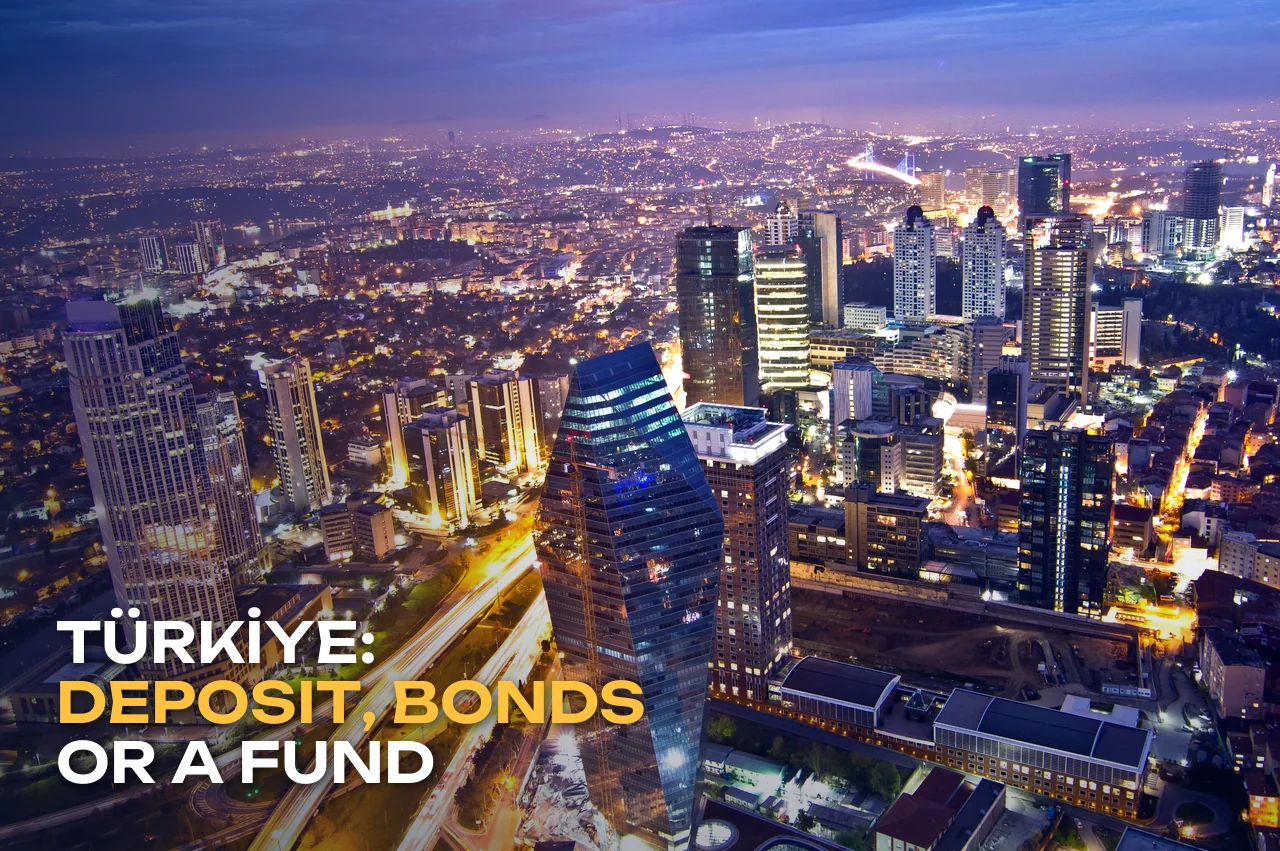 ArticleDeposit, bonds, fund or pension: where to put USD 150,000 for Turkish residence
 ArticleTurkey's permanent residence in 2026: the long-term residence permit (uzun donem ikamet) - a full guide
 ArticleTurkish citizenship by investment in 2026: complete guide
News+10 stories on 24 November
Related news
 Turkey · 21 NovTurkish home sales fell 23.3%: foreigners bought more in October
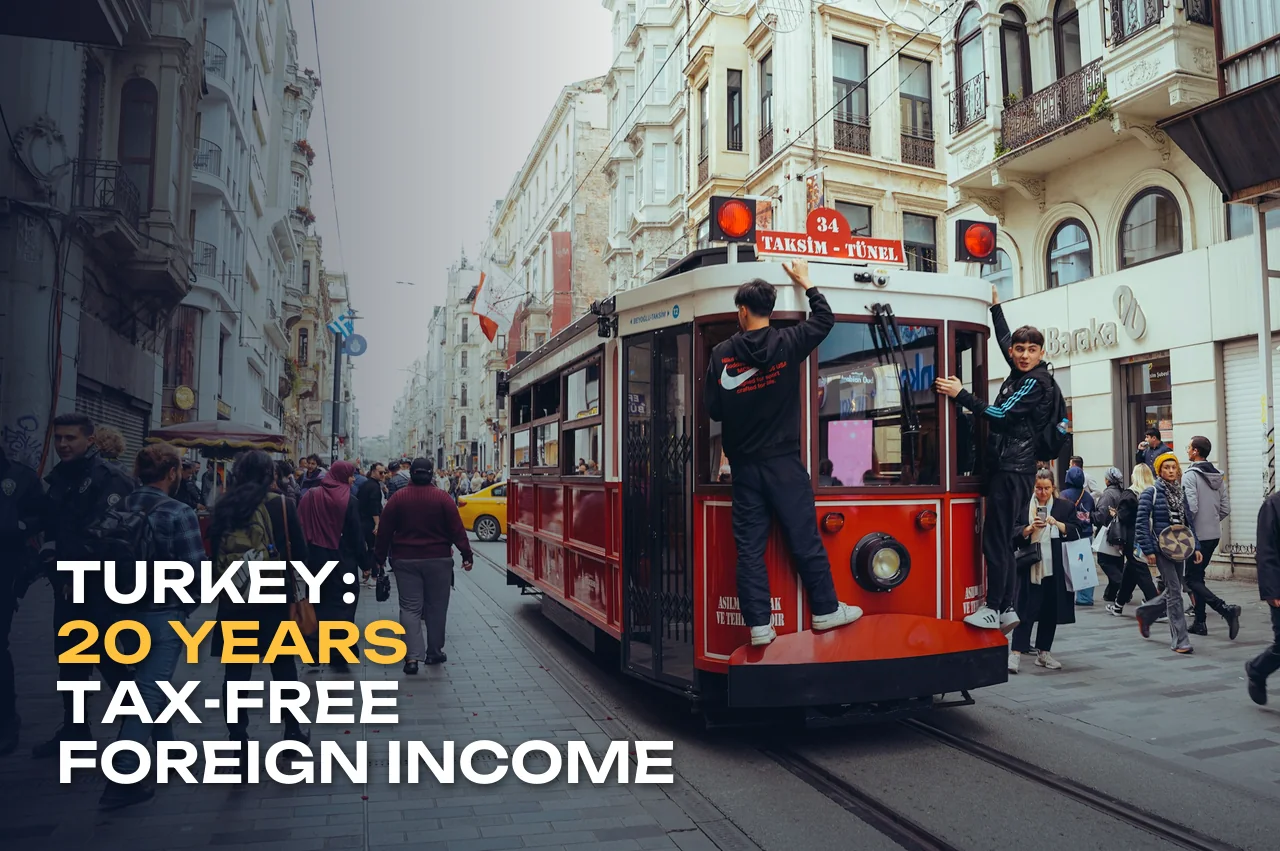 Turkey · 31 OctNew Turkish residents pay no tax on foreign income for 20 years: how the exemption works
 Turkey · 27 OctForeigners bought 9.9% more homes in Turkey in September: developers seek a higher citizenship threshold
Personal programme selection is conducted by Anna Kovalevskaya, Head of Legal, BRIDGES.
We will choose the investor permit term to fit your plans
We will check the family's passports and insurance, calculate fees for your nationality and prepare the documents for filing.