BRIDGES Insights · Portugal
Portuguese citizenship after the 29 October regulation: who should apply now

Updated: October 2026·11 min read·Expert reviewed
Terms and costs verified: October 2026

Contents
On 29 October the government of Portugal approved the regulation of the new nationality law. The news reported it as yet another tightening, but the law was actually tightened back in spring. The regulation does something else: it turns the requirements of the law into a procedure under which you can apply and get a decision. Below I look at what this changes for four groups of people considering a Portuguese passport, what versions of the text are possible and what I would do in each group's place now, before the document is published.
In brief
- The nationality law itself changed on 19 May 2026: 10 years of residence instead of 5, a test of language, culture and history, a declaration of adherence to the rule of law and a means requirement. The 29 October regulation does not change these rules; it sets out how they are checked.
- More than five months passed between the law entering into force and the regulation, although the law gave the government 90 days. For applicants this was a period of uncertainty: the requirements existed but there was no procedure to check them.
- Those who filed before 19 May are not affected by the new rules. For them the queue of 690,000 cases matters more than the regulation.
- Everyone else should work on what will be needed under any text: language, proof of income, criminal record certificates and counting their period within the 12-year window.
- I expect a soft version of the regulation as the main case, but it is worth planning a few extra months to prepare for the tests.
What actually changed on 29 October
To understand the decision, two documents need to be kept apart. The first is Organic Law 1/2026 of 18 May 2026. It amended the nationality law and entered into force on 19 May. It sets the conditions: the residence period, knowledge of language and culture, the declaration of adherence, no serious convictions, the ability to support oneself. The second is the nationality regulation, which since 2006 has described how these conditions are checked. That is what the government has now updated.
The law itself anticipated that the regulation would have to be rewritten and allowed 90 days from publication. That deadline expired in mid-August. The Council of Ministers approved the decree-law on 29 October, more than five months after the law was published. The decree-law still has to be promulgated by the President and published in the official gazette before it takes effect. The details of the decision are in our news on the regulation.
Why this matters. Until there was a regulation, an applicant under the new wording of the law was in an odd position: the law requires knowledge of culture and history to be proven by a test, but which test, where to take it and what counts as a pass was not stated. The same with income: the law requires the ability to support oneself, but there were no amounts or documents. The regulation closes this gap. From now on the new rules become checkable, and therefore predictable.
What this means for you. The tightening happened in May, not in October. The October decision is good news for those preparing to apply under the new rules: it will soon be clear exactly what to prepare for.

Four groups of applicants
I divide people considering Portuguese citizenship into four groups. Each has its own main risk, and the regulation means something different for each.
| Group | Which rules | Main risk | What to do |
|---|---|---|---|
| Filed before 19 May 2026 | previous wording: 5 years | the IRN queue | keep the file in order, answer requests |
| Period reached, not yet filed | new wording: 10 years and tests | test format unknown | prepare language and documents, file after publication |
| Golden visa or D7, period not reached | new wording, 12-year window | gaps between permits | watch renewals, count the window |
| Planning a move | the new wording in full | 10 years instead of 5 | compare with permanent residence and other EU routes |
The first group: those who filed before 19 May 2026. Article 7 of the organic law states directly that procedures pending when the law entered into force are governed by the previous wording. For them, 5 years of residence and the previous requirements remain, and the tests on culture and history do not apply. Their problem is different: the queue. As of 30 June 2026, 690,480 applications were awaiting a decision at the IRN registry, 38% more than a year earlier; more in our news on the queue. The government's promise to digitise the procedure and connect public services matters more to this group than any test. If it works, decisions will come faster.
The second group: those who have already reached the period under the new law but have not yet filed. These are mainly citizens of Portuguese-speaking countries and the EU with 7 years and foreigners with 10 years of legal residence. For them the regulation is a direct signal to prepare. You can file under the law, but without the regulation the application risks stalling at the knowledge check. I would use the coming weeks to prepare the language and all documents and plan to file right after the text is published.
The third group: holders of the golden visa, the D7 visa, the digital nomad visa and work permits who have not yet reached the period. For them the main news is not in the regulation but in the counting rule that already applies. The law adds up periods of legal residence, but only within a window: 12 years for most foreigners, 9 years for citizens of the EU and Portuguese-speaking countries. If there was a long gap between two residence permits, part of the period may fall outside the window. Given the AIMA timelines we covered in our news on document renewals, I would track every renewal in advance and keep proof of filing.
The fourth group: those only planning a move. For them Portugal is now a country with a 10-year path to a passport. That does not make it a worse place to live, but it changes the calculation: if the goal is specifically an EU passport, it is worth comparing Portugal with other routes, described below.
What this means for you. Work out which group you are in. It determines whether you need to follow the regulation at all, or whether the queue, the counting window and the choice of country matter more.
Sergey EvdokimovManaging Partner, BRIDGES
Want Portuguese citizenship? We will tell you which rules your application falls under
We will identify your group, count your period within the 12-year window and draw up a filing plan.
What the text could look like
The text of the decree-law had not been published as of 31 October. So instead of predicting figures I describe three versions and what each means for preparation. I assess them on three grounds: what the law already says, how the government described the decision and how similar tests have worked in other EU countries.
| Scenario | What the regulation says | Weight | What it means |
|---|---|---|---|
| Soft | A2 language and a short culture test, means proven with ordinary income documents | main | those who prepared for A2 change almost nothing |
| Strict | a higher language level, a separate history and institutions exam, an income threshold in figures | significant | preparation takes several months longer |
| Delayed | a presidential veto or slow publication, tests launched later | small | filings under the new wording are delayed and the queue grows |
I consider the soft version the main one. In its communiqué the government emphasised simplification and a digital procedure rather than strict tests. The law speaks of "sufficient" knowledge of language and culture and allows proof by certificate, not only by test. And the authorities already have a working A2 language exam, which is easier to supplement with a culture and history section than to build a new system from scratch.
The strict version cannot be ruled out. The law was written as a tightening, and the requirements on culture, history and the organisation of the state were not added for show. Similar country knowledge exams in other EU states often require separate preparation from a handbook and a question bank. If the regulation goes that way, several more months of study will be added to the language.
The delayed version is about procedure. A government decree-law takes effect after promulgation, and the President can veto it. Even if that does not happen, time may pass between publication and the actual launch of the tests. For applicants, this means the queue under the new wording would start moving later.
What this means for you. Prepare for the strict version and hope for the soft one. Language above A2 and basic knowledge of Portugal's history and institutions will help under any text.
The 12-year window: an underrated rule
Of all the changes in the law, the 10-year period is discussed most often. But for many people the window rule matters more. The law counts the sum of all periods of legal residence, continuous or interrupted, if they fall within 6, 9 or 12 years depending on the applicant's citizenship. For most foreigners that is 10 years within 12.
In practice this means three things. First, a two-year gap between residence permits already uses up the whole margin of the window. Second, a long absence from the country with loss of status can wipe out part of the period. Third, renewal delays at AIMA become not just a nuisance but a question of the period: time when a document has expired is risky to count as legal residence without proof of timely filing. We showed how to count the period step by step in our article on naturalisation in Portugal, and the timeline of the stages in a separate piece.
Hence a simple piece of advice: keep a calendar of your residence permits. The issue and expiry date of every document, the date of each renewal application, the confirmations from AIMA. If eight years from now the registry asks where you were in 2027, the answer should be in a folder, not in your memory.
What to keep in that folder: copies of every residence card on both sides, receipts and confirmations of renewal applications, rental contracts or property documents by year, Portuguese tax returns and tax residence certificates. Keep a separate calendar for your spouse and children: every family member applying for naturalisation has their own period and their own counting window.
If 10 years is too long
For some people it makes more sense not to wait for a Portuguese passport but to choose another route. Permanent residence in Portugal is available after 5 years and gives the right to live and work in the country without renewals every two years. We compared it with citizenship in our article on permanent residence versus citizenship.
Some routes were affected less by the reform. Citizenship by descent from Portuguese ancestors is described in our article on citizenship by descent, and by marriage in our article on citizenship by marriage. If you have roots in another EU country, look at Hungary, Bulgaria or Greece, where the descent route does not require years of residence. I examined the wider tightening across Europe in my analysis of the longer path to an EU passport, and all second citizenship programmes are on our citizenship page.
What this means for you. A Portuguese passport is still achievable, but it is a decade-long project. If you need a passport sooner, compare it with other routes before building your whole strategy around Portugal.
What I would do now
Identify your group
Filed before 19 May: follow your case at the IRN. Not filed: prepare for the new wording.
Work on the language
An A2 exam is needed under any version of the regulation. Aim higher to have a margin.
Gather income records for several years
Tax returns, statements, bank records. The amount will be known later, but the documents are needed anyway.
Check your criminal record certificates
From every country you have lived in. Apostille and translation take time.
Recount the 12-year window
Add up your residence periods and check the gaps. If the window is at risk, renew documents early.
Our criminal record certificate service helps obtain the certificate, the other papers are in our documents section, and the full list for naturalisation is in our article on citizenship documents. We described the language and exam in our piece on Portuguese. Taxes for those living on the D7 are in our article on D7 visa taxes, and golden visa changes in our overview of golden visa changes in 2026. Portugal allows dual citizenship; details are in our article on dual citizenship. What the passport gives you is shown in the Portugal passport index. You can discuss your situation in an online consultation.
Preparing for Portuguese citizenship? We will check your documents before you file
We will review your period, language, income and certificates and tell you when to apply.
Sergey EvdokimovManaging Partner, BRIDGES
How this article was prepared
Sources: the official communiqué of the Council of Ministers of Portugal of 29 October 2026 on the government portal portugal.gov.pt; Organic Law 1/2026 of 18 May 2026 and the republished Nationality Law 37/81 in the official gazette, the Diário da República; the nationality regulation approved by Decree-Law 237-A/2006; IRN registry data on applications as of 30 June 2026 and INE statistics on naturalisations in 2025. The scenarios are the author's assessment as of 31 October 2026, not a forecast of the document's text. This article is not a substitute for legal advice on your situation.
Share this article
Frequently asked
Questions people ask before deciding
01Did Portuguese citizenship become stricter on 29 October?
No, it was made stricter by the law that entered into force on 19 May 2026. The 29 October regulation sets out how the new requirements are checked: tests, means, the declaration of adherence and biometrics.
02Should I apply before the regulation is published?
If you have reached the period, you can apply under the law, but the procedure for checking knowledge and means will only exist with the regulation. It is wiser to prepare documents and language now and plan to file after publication.
03What is the 12-year window?
The law adds up periods of legal residence, continuous or interrupted, if they fall within 12 years (9 years for citizens of the EU and Portuguese-speaking countries). Long gaps between residence permits can push back the filing date.
04Does the regulation affect those who filed before 19 May?
No. Their applications are decided under the previous wording of the law. For them, the speed of the IRN matters more.
05What are the alternatives to 10 years?
Portuguese permanent residence after 5 years, citizenship by descent or marriage, and descent routes in other EU countries.
About the author
Related materials
What to read next
 NewsPortugal: government approves regulation of the new nationality law
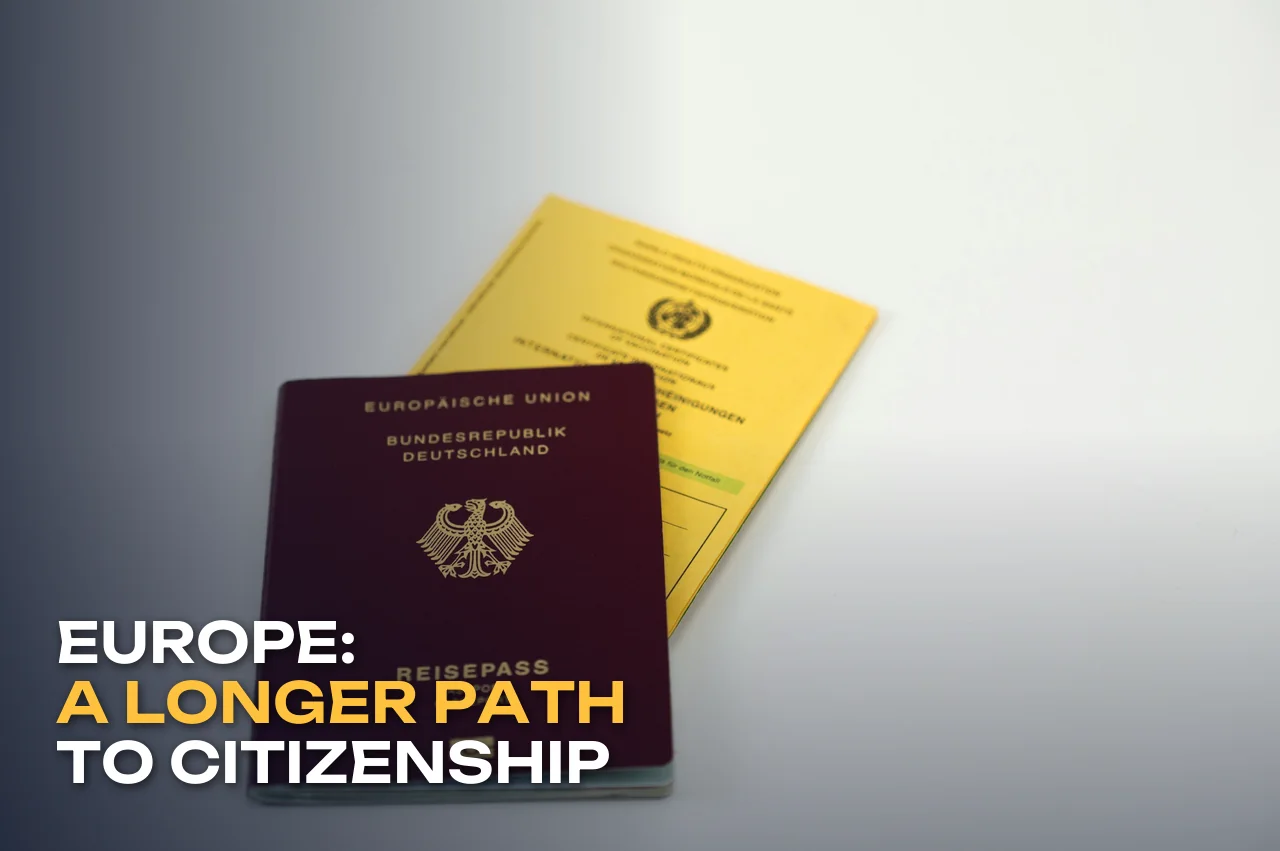 AnalysisEurope: the path to citizenship has become longer. What changed in 2026 and what to choose now
 ArticlePortuguese citizenship by naturalization in 2026: qualification 10 years, language A2, test
News+7 stories on 31 October
Related news
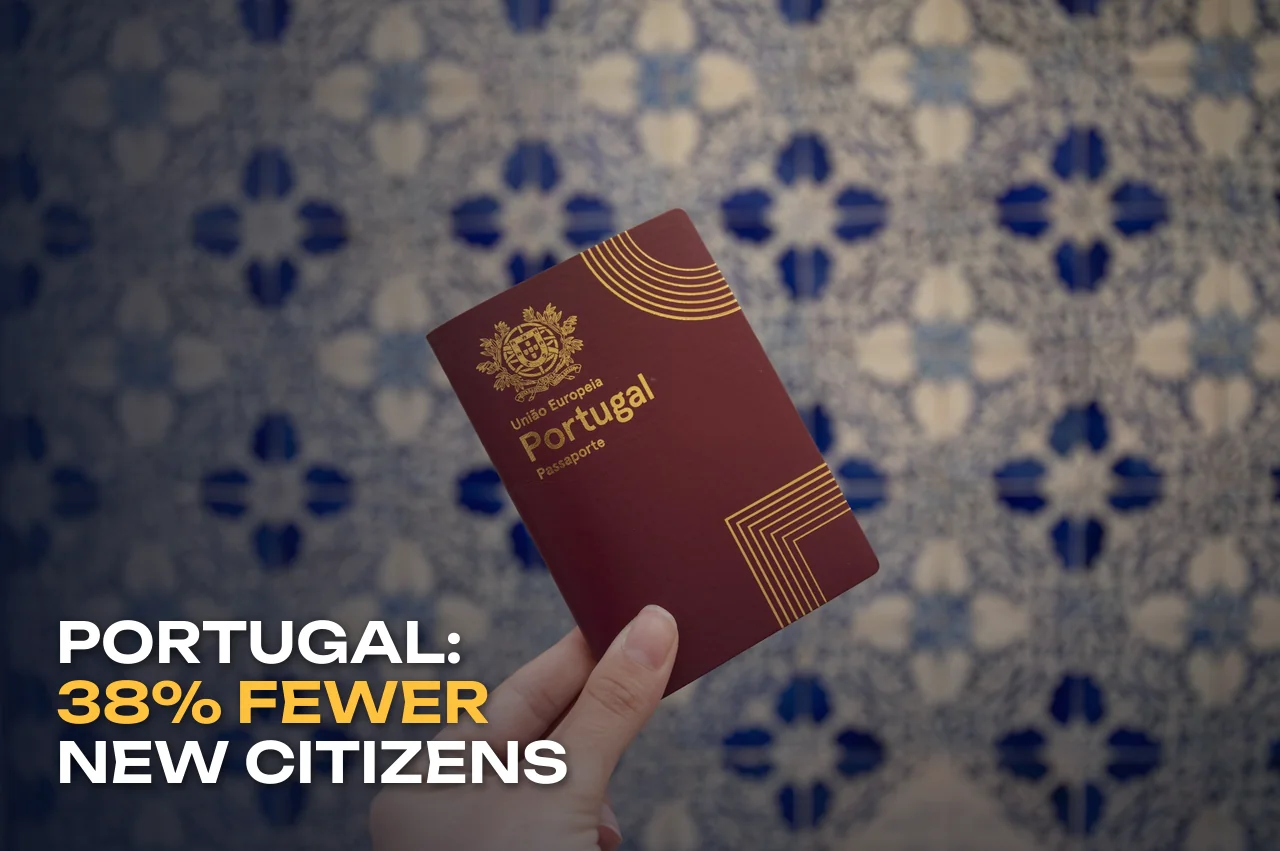 Portugal · 29 OctPortugal: 12,829 residents acquired citizenship in 2025, 38% fewer than a year earlier
 Portugal · 28 OctPortugal opens online renewal for residence permits expiring by 31 January 2027
Personal programme selection is conducted by Anna Kovalevskaya, Head of Legal, BRIDGES.
Want Portuguese citizenship? We will tell you which rules your application falls under
We will identify your group, count your period within the 12-year window and draw up a filing plan.
