News · Portugal
Portugal: government approves regulation of the new nationality law

Updated: October 2026·11 min read·Expert reviewed
Terms and costs verified: October 2026

Contents
On 29 October 2026 the Council of Ministers of Portugal approved a decree-law regulating the application of the new nationality law. The law has applied since 19 May, but without a regulation some of its new requirements had no procedure for checking them: how to take the test on language, culture and history, how to prove means of subsistence, how to make the declaration of adherence to the principles of the rule of law. That procedure is now coming. The decree-law has not yet been published in the official gazette and is not in force. We look at what is known from the government's official communiqué and the text of the law, who is affected and what to do now.
In brief
- On 29 October the Council of Ministers approved the decree-law regulating the new nationality law. It is item 2 of the official communiqué issued after the meeting.
- The regulation sets out how tests of Portuguese language, culture, history and institutions are held, the framework of the means of subsistence requirement, the procedure for the declaration of adherence to the principles of the democratic rule of law and the collection of biometric data.
- The government promises to digitise the procedure and connect public services so that decisions are made faster.
- Under Article 4 of Organic Law 1/2026, the regulation was due within 90 days of the law's publication on 18 May, that is, by mid-August. The Council of Ministers approved it on 29 October.
- Applications filed before 19 May 2026 are decided under the previous wording of the law. For everyone else, 10 years of residence apply (7 for citizens of Portuguese-speaking countries and the EU) together with the new requirements.
- The language level, test content and income threshold will be known once the decree-law text is published.
What the government decided
The Council of Ministers met on 29 October 2026. Afterwards the government published its official communiqué, and item 2 concerns nationality: it approved a decree-law that regulates the new nationality law and sets the requirements for acquiring and granting Portuguese nationality. The decision was presented by the Minister of the Presidency, António Leitão Amaro.
Portugal has long had a regulation for its nationality law: it was approved by Decree-Law 237-A/2006 and describes how to apply, which documents to attach and how the authorities check them. When parliament tightened the law itself in spring 2026, the old regulation no longer matched it. The new law introduced requirements that did not exist before or were worded more loosely, and they needed procedures.
The same communiqué contains another decision that matters to foreigners: the Council of Ministers appointed a new president of the executive board of AIMA, the agency for integration, migration and asylum. The post went to César Nuno da Costa Teixeira. AIMA issues and renews residence permits, so the path to citizenship depends on its work too, since the period for naturalisation is counted in legal residence. We covered document renewals at AIMA in our news on the extension to 31 January 2027.
| Stage | Date |
|---|---|
| Parliament passed the changes to the nationality law | 1 April 2026 |
| The President promulgated the law | 3 May 2026 |
| Organic Law 1/2026 published | 18 May 2026 |
| The law entered into force | 19 May 2026 |
| Deadline for the regulation under Article 4 of the law (90 days) | mid-August 2026 |
| Council of Ministers approved the regulation decree-law | 29 October 2026 |
| Promulgation and publication of the decree-law | date not yet known |
What this means for you. The regulation is approved but not yet in force. Until the text is published, the exact language level, test format and income threshold are unknown. Prepare your application with the documents the law requires and watch for the publication.
What exactly the decree regulates
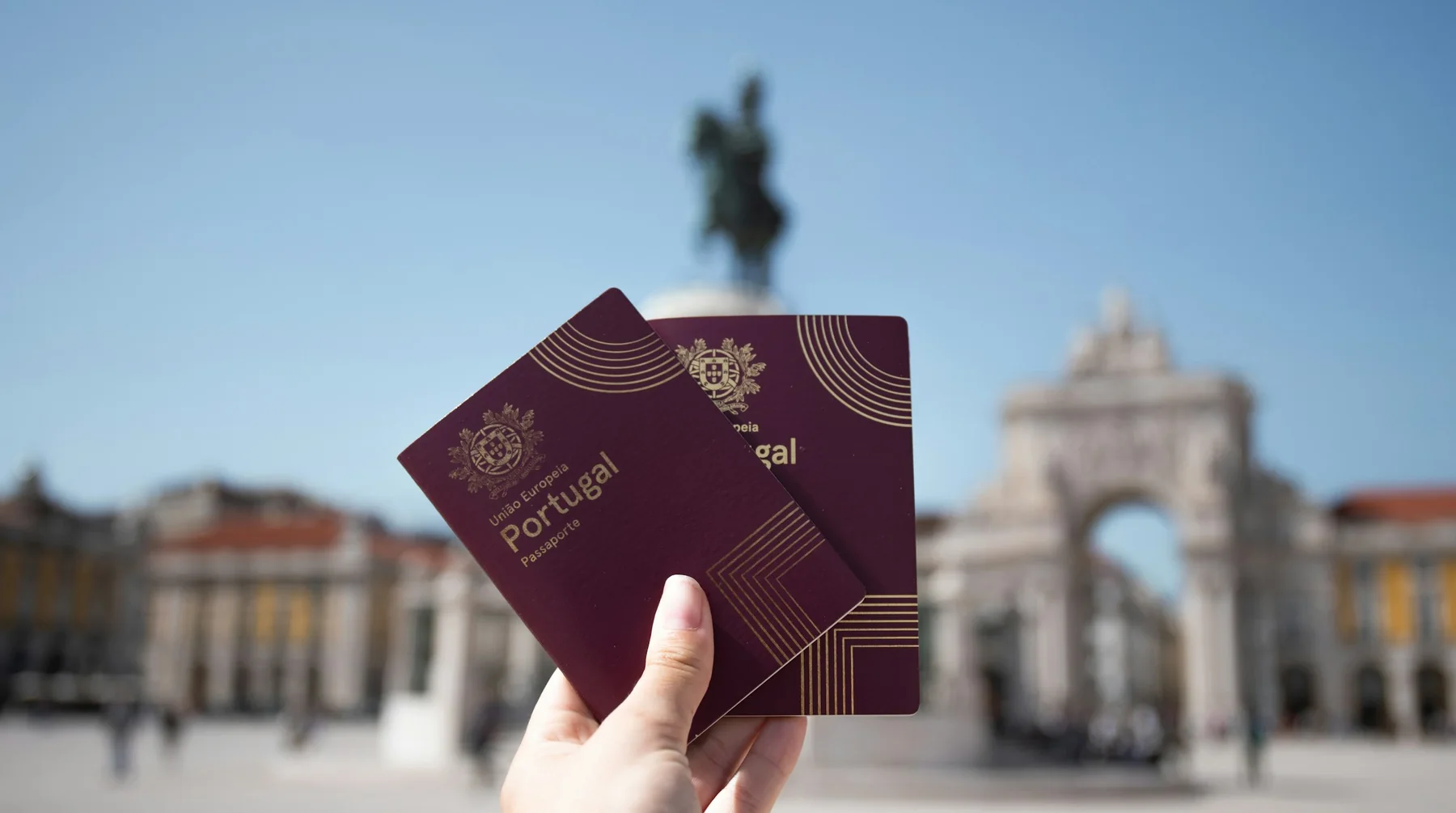
The government listed five blocks. The first is tests of knowledge of Portuguese language, culture, history and institutions. The law requires this knowledge to be proven by a test or a certificate. Until now, naturalisation in Portugal required language at A2 level, proven with the CIPLE exam; see our article on Portuguese for residence and citizenship. The new law added culture, history and national symbols to the language, as well as knowledge of a citizen's rights and duties and of the state's organisation. How this will be checked, and whether the A2 level stays, will be set by the text of the regulation.
The second block is means of subsistence. The law now expressly requires that the applicant be able to support themselves. The regulation sets the framework of this requirement: which income counts and how it is proven. The government communiqué gives no amounts.
The third block is the solemn declaration of adherence to the fundamental principles of the democratic rule of law. This is a new requirement of the law, and the regulation sets out how it is made. The fourth is the procedure for collecting biometric data. The fifth is a digital procedure: the government promises to simplify and digitise case handling, connect public services and obtain documents from them directly, cutting paperwork and speeding up decisions.
| Requirement of the law | What the regulation sets out |
|---|---|
| 10 years of legal residence (7 for CPLP and EU citizens) | the law already counts the sum of periods within a 12-year window (9 for CPLP and EU) |
| Test or certificate: language, culture, history and national symbols | how tests of language, culture, history and institutions are held |
| Knowledge of a citizen's rights and duties and of the state's organisation | part of the same knowledge checks |
| Solemn declaration of adherence to the principles of the rule of law | how and in what form the applicant makes it |
| Ability to support oneself | the framework of the means of subsistence requirement |
| Security and criminal record checks | the procedure for collecting biometric data |
The promise of faster decisions matters given the queue. As of 30 June 2026, 690,480 citizenship applications were awaiting a decision at the IRN registry, 38% more than a year earlier, as we reported in our news on the 690,000 pending applications. And naturalisations in 2025 fell by 38% to 12,829, according to the INE statistics institute; details in our news on naturalisation statistics.
What this means for you. If you are preparing an application, gather documents that prove not only your period of residence but also your language skills, income and clean criminal record. The law already requires these points.
What the law already says
The regulation does not change the law itself; it only describes how to apply it. The main rules are already set in Organic Law 1/2026 of 18 May 2026, which amended Nationality Law 37/81. The government grants nationality by naturalisation to adult foreigners who, at the time of applying, meet all of the following conditions:
- they have resided legally in Portugal for at least 7 years if they are citizens of Portuguese-speaking countries or the EU, and at least 10 years otherwise;
- they have proven by a test or certificate sufficient knowledge of the Portuguese language and culture, history and national symbols;
- they have sufficient knowledge of a citizen's fundamental rights and duties and of the country's political organisation;
- they have solemnly declared their adherence to the fundamental principles of the democratic rule of law;
- they have not been finally sentenced to more than 3 years of effective imprisonment for terrorism, violent and especially violent crime, organised crime, crimes against state security or aiding illegal immigration;
- they pose no threat to national security or defence and are not subject to UN or EU restrictive measures;
- they are able to support themselves.
The law also changes how the period is counted. The sum of all periods of legal residence counts, whether continuous or interrupted, but only if they fall within a window: 6 years for stateless persons, 9 years for citizens of Portuguese-speaking countries and the EU, and 12 years for everyone else. For most foreigners this means 10 years of legal residence within 12 years. A long gap between residence permits can push back the date on which you can apply. We went through the count step by step in our article on naturalisation in Portugal, and the timeline of each stage in a separate piece.
Sofia MendesInvestment Programs Expert, BRIDGES
Want Portuguese citizenship? We will check your period and documents
We will count your years of residence under the new law and tell you what to prepare for the test and the application.
Who is affected
The key transitional rule is in Article 7 of Organic Law 1/2026: administrative procedures already pending when the law entered into force are governed by the nationality law in its previous wording. The law entered into force on 19 May 2026. Applications filed before that date are therefore decided under the old rules: 5 years of residence and none of the new requirements on culture, history and the declaration of adherence.
| Your situation | Which rules apply |
|---|---|
| Application filed before 19 May 2026 | the previous wording of the law: 5 years, no new tests |
| Application filed from 19 May 2026 | the new wording of the law, checks under the regulation |
| Not yet filed, 10 years not reached | the new rules in full: period, tests, means, declaration |
| Golden visa or D7 holder | the same 10 years, counting and 12-year window under the law |
The new wording applies to everyone filing from 19 May. That includes holders of the golden visa and people living on the D7 visa or a work permit. The golden visa lets you live in the country with minimal presence, but citizenship requires the same period of legal residence as for everyone else. We calculated taxes on the D7 in our article on D7 visa taxes.
If you have not yet reached 10 years, many people have a nearer option: permanent residence in Portugal after 5 years. We compared it with citizenship in our article on permanent residence versus citizenship. Keeping your first passport is a separate question: Portugal allows dual citizenship, but the country of your first citizenship may set its own conditions; more in our article on dual citizenship with Portugal.
What this means for you. Those who filed before 19 May are not checked under the new rules. Those filing now should wait for the regulation text before booking a test, but can start gathering documents today.
What is still missing
Several important details cannot be learned from the government's official communiqué. As of 31 October 2026 the following have not been published:
- the required language level and the format of the test on culture, history and institutions;
- who runs the tests, how much they cost and where they can be taken outside Portugal;
- the amount or method of calculating means of subsistence and the list of acceptable documents;
- the form of the solemn declaration of adherence to the principles of the rule of law;
- the date the decree-law enters into force.
A government decree-law enters into force after promulgation by the President and publication in the official gazette, the Diário da República. The President may also veto it. So any specific figures now circulating are not confirmed by an official document. We will update this article when the text is out.
What changes in practice and what options different groups of applicants have, we examine in our analysis of Portuguese citizenship after the regulation. How Portugal fits into the wider tightening across Europe is covered in our piece on the longer path to EU citizenship.
What to do now
Recount your period
Add up all periods of legal residence and check that they fall within the 12-year window (9 years for EU citizens and Portuguese-speaking countries).
Start with the language
Language is needed at any level of requirement. You can prepare for the exam now, and the new parts of the test will be added to it.
Gather proof of income
Income statements, tax returns and bank statements for recent years will be needed whatever the final amount.
Order a criminal record certificate
Order a certificate from every country you have lived in early and have it apostilled.
Watch for publication
Plan your application and test booking for after the regulation text appears in the official gazette.
Our criminal record certificate service helps obtain the certificate, and apostille and sworn translation are in our documents section. The full list of papers for naturalisation is in our article on Portuguese citizenship documents, an overview of the routes to a passport is in our piece on Portuguese citizenship, and for Russian citizens specifically in our article on Portuguese citizenship for Russians. What a Portuguese passport gives you is shown in the Portugal passport index. You can discuss your situation in an online consultation.
Applying for Portuguese citizenship? We will prepare your documents for the new rules
We will check your period, language, income and certificates and tell you when to apply.
Sofia MendesInvestment Programs Expert, BRIDGES
How this article was prepared
Sources: the official communiqué of the Council of Ministers of Portugal of 29 October 2026 (items 2 and 10), published on the government portal portugal.gov.pt; Organic Law 1/2026 of 18 May 2026 amending Nationality Law 37/81 and the republished text of the law in the official gazette, the Diário da República; the Portuguese Nationality Regulation approved by Decree-Law 237-A/2006. The text of the new decree-law had not been published as of 31 October 2026, so we do not give levels, amounts or dates from it. This article is not a substitute for legal advice on your situation.
Share this article
Frequently asked
Questions people ask before deciding
01Are the new Portuguese citizenship requirements in force?
The law has applied since 19 May 2026. The regulation describing the tests, proof of means and the declaration of adherence was approved by the government on 29 October 2026, but it takes effect after promulgation and publication in the official gazette.
02What level of Portuguese is required?
Until now A2 was required. The new law added knowledge of culture, history, symbols and the organisation of the state. The level and test format will be known from the text of the regulation.
03I applied before 19 May 2026. Does this affect me?
No. Under Article 7 of Organic Law 1/2026, applications already pending when the law entered into force are decided under the previous wording of the law.
04How many years must I live in Portugal?
10 years of legal residence, or 7 years for citizens of Portuguese-speaking countries and the EU. Periods are added up, but they must fall within a 12-year window (9 years for the EU and Portuguese-speaking countries).
05How much money must I show?
The law requires the ability to support yourself, and the regulation sets the framework. The official communiqué gives no amounts; they will appear in the published text.
About the author
Related materials
What to read next
 AnalysisPortuguese citizenship after the 29 October regulation: who should apply now
 ArticlePortuguese citizenship by naturalization in 2026: qualification 10 years, language A2, test
News+7 stories on 31 October
Related news
 Portugal · 29 OctPortugal: 12,829 residents acquired citizenship in 2025, 38% fewer than a year earlier
 Portugal · 28 OctPortugal opens online renewal for residence permits expiring by 31 January 2027
 Portugal · 23 OctPortugal: 690,000 citizenship applications await a decision as the queue grows 38% in a year
Personal programme selection is conducted by Anna Kovalevskaya, Head of Legal, BRIDGES.
Want Portuguese citizenship? We will check your period and documents
We will count your years of residence under the new law and tell you what to prepare for the test and the application.
