Tax · Portugal
Taxes on a Portugal D7 visa: 183 days, IFICI and brokers

Updated: October 2026·16 min read·Expert reviewed
Terms and costs verified: October 2026

Contents
The D7 visa is granted for passive income: a pension, dividends, interest or rent. After the move, almost everyone asks the same practical question first - which taxes do I now pay, and to whom. The answer depends not on the visa but on tax residence: once you become resident, Portugal taxes your worldwide income, including dividends and gains on a brokerage account in another country. We go through the 2026 rules under the IRS Code and the guidance of the Portuguese Tax and Customs Authority (AT): when residence begins, which rates apply, how pensions are treated, why the IFICI regime usually does not suit D7 holders and how to declare a foreign broker.
In brief
- You become a Portuguese tax resident by staying more than 183 days in any 12 months or by having a home that looks permanent.
- Residence starts on the first day of your stay, so the year of the move is usually split in two.
- Dividends, coupons and interest from abroad are taxed at 28%, or you may include them in the general 12.5-48% scale.
- Foreign pensions are taxed under the general scale; there is no longer a reduced rate for pensioners.
- The NHR regime has been closed to new entrants since 2024, and IFICI rewards qualified work, not passive income.
- The Portugal-Russia treaty has not been formally terminated, but since 2023 Russia has not applied almost all of its articles.
- Foreign accounts, including brokerage accounts, go in Annex J of the tax return even if they produced no income.

When you become a tax resident
A D7 visa and residence permit do not by themselves make you a tax resident. The criteria are set in Article 16 of the IRS Code. You are resident for a year if you stayed in Portugal for more than 183 days, consecutive or not, in any 12-month period beginning or ending in that year. The second criterion works with fewer days: if on any day of that period you had a home in Portugal in conditions suggesting an intention to keep it as your habitual residence. The law used to look at the home on 31 December; now it looks at any day of the period. The general logic of the 183-day rule is explained in our glossary.
For a D7 holder the second criterion is usually met at once: the visa requires a lease or your own home, and the visa itself is issued for permanent residence. So relying on "I am not resident until 183 days" is risky. If you have rented a flat for a year and live in it, the tax authority may treat you as resident even with 150 days in the country.
An important detail is the start date. Under Article 16 you become resident from the first day of your stay in Portugal and cease to be resident from the last day. If you moved on 1 July 2026 and had not been resident in Portugal before, Portugal taxes your worldwide income for 2026 only from the day of the move. Income from the first half of the year belongs to your previous country. In practice, dividends paid in May and dividends paid in September fall into different tax systems. Status is covered in detail in our article on Portuguese tax residence.
Residence also has to be registered with the tax office: change your address in your Portal das Finanças account to a Portuguese one. As long as the system shows a foreign address, you are listed as non-resident, and that later has to be corrected. What tax residence means in general and why it is determined country by country is explained in the glossary.
What this means for you. Count your tax obligations from the day of the actual move and update your address with the tax office straight away. Staying under 183 days does not protect you if you have a permanent home in Portugal.
IRS rates in 2026
The main personal income tax in Portugal is IRS. The general scale is progressive; in 2026 it has nine brackets, with rates from 12.5% to 48%. The current wording of Article 68 of the IRS Code was set by the 2026 State Budget Law, No. 73-A/2025 of 30 December 2025. A solidarity surcharge also applies to the highest incomes.
The scale works in slices: each bracket taxes only the part of income within its limits. An example with illustrative figures. Taxable income for the year is EUR 20,000. Up to EUR 17,838 the tax is calculated at the average rate of 15.823%, which is EUR 2,822. The remaining EUR 2,162 is taxed at 24.1%, which is EUR 521. The total is about EUR 3,344 before deductions from tax, roughly 16.7% of taxable income. Taxable income is the amount after the specific deduction available to pensioners and employees.
| Annual taxable income, EUR | Rate on the part of income in the bracket | Average rate at the upper limit |
|---|---|---|
| up to 8,342 | 12.5% | 12.5% |
| 8,342 - 12,587 | 15.7% | 13.579% |
| 12,587 - 17,838 | 21.2% | 15.823% |
| 17,838 - 23,089 | 24.1% | 17.705% |
| 23,089 - 29,397 | 31.1% | 20.579% |
| 29,397 - 43,090 | 34.9% | 25.13% |
| 43,090 - 46,566 | 43.1% | 26.472% |
| 46,566 - 86,634 | 44.6% | 34.856% |
| over 86,634 | 48% | - |
Salary, self-employment income and pensions are taxed under the general scale. Capital income and capital gains are taxed separately by default, at a special rate. An overview of all types of income is in our article on personal income tax in Portugal.
Passive income: dividends, coupons, interest
For a D7 holder this is the key section. Dividends, bond coupons and deposit interest are capital income. If they are received through a Portuguese bank, the bank withholds 28% itself. If the income reaches a foreign account and no one withholds Portuguese tax, under Article 72 of the IRS Code it is taxed at the autonomous rate of 28% through your annual return.
There is a choice - englobamento, that is, including capital income in the general scale. This pays off when total income is small: if your whole base fits in the first brackets, the average rate will be below 28%. For dividends from companies in the EU and the European Economic Area, only half of the amount is included in the base under this option. But the choice applies to all capital income of that category for the year at once; you cannot pick only the favourable payments. With income in the upper brackets, englobamento is usually not worthwhile.
If a company or bank in another country withheld its own tax, Portugal credits it under Article 81 of the IRS Code. The credit is limited to the lower of two amounts: the tax actually paid abroad and the Portuguese tax on that income. An example with illustrative figures: dividends of EUR 10,000, the source country withheld EUR 1,500. Portuguese tax at 28% is EUR 2,800, so EUR 1,300 is payable. If more than 28% was withheld abroad, Portugal does not refund the excess. The mechanics of source withholding are explained under the term withholding tax.
A separate rule applies to the blacklist. If income comes from a structure or company in a jurisdiction that Portugal has listed as having a clearly more favourable tax regime, the rate is 35%. This is worth checking before buying funds or bonds of issuers in offshore jurisdictions.
| Income of a Portuguese tax resident | How it is taxed in 2026 |
|---|---|
| Dividends and coupons from a foreign brokerage account | 28% autonomous rate or, by choice, the general 12.5-48% scale |
| Interest on deposits at a foreign bank | 28% or the general scale by choice |
| Gains on selling shares and bonds | 28% on the annual net balance; for holdings under 365 days with income in the top bracket, the scale is mandatory |
| Income from jurisdictions on the Portuguese blacklist | 35% |
| Pension from another country | general 12.5-48% scale with credit for foreign tax, if any |
| Rent from a flat in another country | 28% or the general scale by choice, with credit for tax of the property's country |
| Crypto assets held for 365 days or more | as a rule not taxed |
What this means for you. The 28% rate is neither a ceiling nor a floor. Calculate both options: the autonomous rate and the general scale. With modest pensions and dividends, the scale is often cheaper.
A broker in a third country: what and how to declare
Many D7 holders keep a portfolio with a broker in the US, Switzerland, the UAE or another country. For Portugal, the broker's location does not matter: a resident is taxed on worldwide income. What matters is that a foreign broker does not withhold Portuguese tax and does not send a ready-made statement to the AT. You or your accountant do all the calculations.
Dividends and coupons are declared by payment date and converted into euros at the rate on the date received. Capital gains on selling securities are taxed at 28% on the annual net balance: profit on some trades is reduced by losses on others in the same year. Since 2023 there is a limit: if you held the securities for less than 365 days and your taxable income reaches the top bracket of the scale, such gains must be included in the general scale. More on capital gains is in our article on capital gains tax in Portugal and in the glossary under capital gains tax.
Crypto assets have their own rules: as a rule, gains on coins held for 365 days or more are not taxed, while a shorter holding is taxed at 28%. There are exceptions, covered in a separate article on crypto taxes in Portugal.
The brokerage account itself must also be reported. Annex J of the return has a section listing accounts with banks and brokers outside Portugal, with the account number and the institution code. This is an information obligation: it adds no tax, but omitting it can lead to a fine. Accounts with no activity must be listed too. Portugal takes part in the automatic exchange of financial account information (CRS), so the tax authority will usually receive data on an account in a participating country regardless of you.
Dmitry NagyInternational Tax Consultant, BRIDGES
Moving on a D7? We will calculate the tax on your portfolio in advance
We will review dividends, coupons, pension and broker gains in light of your moving date.
Pensions
A pension is the most common source of income for D7 holders. A resident's foreign pensions are taxed under the general IRS scale, after the specific deduction, as with salary. If the paying country also withheld tax, it is credited up to the Portuguese tax. Which country may tax the pension is decided by the double tax treaty between Portugal and the paying country: private pensions are often taxed by the country of residence, and government pensions of former civil servants by the paying country. The list of treaties is in our article on Portugal's tax treaties.
Until 2024 many pensioners were drawn by the NHR regime with a 10% rate on foreign pensions. New entrants no longer get it, and IFICI does not exempt pensions. So a D7 budget should assume the ordinary scale. A useful reference for pensioners is our article on Portugal for retirees.
IFICI: who it suits and why usually not D7 holders
IFICI is the tax incentive for scientific research and innovation introduced by Article 58-A of the Tax Benefits Statute (EBF) in place of NHR. It is available to those who become Portuguese tax residents and were not resident in any of the previous five years. The key condition is a qualifying activity: university teaching and scientific research, work at a certified start-up, highly qualified professions at companies meeting the statutory conditions, positions recognised by the state agencies AICEP and IAPMEI as relevant to the economy, and research and development.
What the regime offers. Employment and self-employment income from such activity is taxed at 20% for 10 consecutive years. Under Article 81 of the IRS Code, the exemption method applies to a participant's foreign income: foreign salary, business income, capital income, rent and capital gains are not taxed in Portugal, but are taken into account for the rate on other income. Pensions are not on this list. Income from blacklisted jurisdictions is not exempt either.
Why the regime is usually not available to a D7 holder. The benefit is tied to qualified work. If you live on a pension, dividends or interest and do not work in one of the listed professions, there is no basis for registration, and you will not get the exemption for foreign dividends. If you are moving to work at a Portuguese start-up or technology company, it is better to look at work visas or the D8 digital nomad visa, and check IFICI against the specific contract.
The filing deadline is strict: under Portaria No. 352/2024, the IFICI registration request is submitted through Portal das Finanças by 15 January of the year after the year in which you became resident. Filing late does not cancel the regime entirely, but the benefit only applies from the year of filing and for the remaining period. The regime can be used once, and former NHR participants are excluded.
What this means for you. IFICI is not a replacement for NHR for passive income. If you receive dividends and a pension, plan your tax at 28% and under the general scale.
The end of NHR: who is affected
The non-habitual resident regime (NHR) was abolished by the 2024 State Budget Law, No. 82/2023. Since 1 January 2024 no new participants are registered. Transitional rules let in those who by the end of 2023 already had, for example, a visa or a contract and became resident by the end of 2024. Those already registered keep NHR until the end of their 10 years. For a new D7 holder in 2026 this route is closed. How the regime worked and what remains for its participants is described in our article on the NHR regime and in our NHR case.
The Portugal-Russia treaty in 2026
The double tax convention between Portugal and Russia was signed in Moscow on 29 May 2000 and has applied since 2003. By Decree of the President of Russia No. 585 of 8 August 2023, the Russian side suspended Articles 5-22 and 24 of the convention and paragraphs 2-4 of its protocol. Almost all rules allocating taxing rights are suspended: dividends, interest, royalties, gains, pensions, and the non-discrimination clause. The articles on residence, elimination of double taxation and exchange of information are not formally suspended. In the official publications of the Diário da República we found no notice of termination of the convention by the Portuguese side as of October 2026.
What this means for a D7 holder with income from Russia. When paying a non-resident, Russia does not apply the treaty's reduced rates: under the Russian Tax Code, 15% is withheld from dividends of Russian companies paid to a non-resident individual. Portugal taxes the same dividends at 28% and credits the Russian tax up to the Portuguese tax under Article 81 of the IRS Code. With 15% withheld, about 13% is payable in Portugal. If you also remain a Russian tax resident at the same time, expect double taxation on all worldwide income, so it matters that your Russian status ends. How Russian residence is determined is covered in our articles on the 183-day rule and on tax residence.
Those who remain Russian residents in the year of the move have two further obligations: notify the Russian tax office of accounts abroad and follow rate changes. Notification is covered in our article on foreign accounts, and plans for rates of up to 22% on passive income in our news item. A tax residence certificate, issued through Portal das Finanças, helps confirm Portuguese residence.
What this means for you. With income from Russia there is usually no outright double tax, but no reduced treaty rates either. Calculate the Portuguese 28% minus the Russian withholding.
The D7 income threshold for 2026
The D7 income threshold is tied to the Portuguese minimum wage. For 2026 it was set by Decreto-Lei No. 139/2025 of 29 December 2025: EUR 920 a month on the mainland. Under Portaria No. 1563/2007 and the guidance of the AIMA agency, a family is assessed as follows: the first adult - 100% of the minimum wage, each further adult - 50%, each child under 18 and dependent adult children - 30%. In 2026 this means EUR 920 a month for one person, EUR 1,380 for a couple and EUR 1,656 for a couple with a child. Annually, for a single applicant, EUR 11,040.
The threshold is measured on income before tax, and the Portuguese authorities make no allowance for the fact that after the move part of the income will go to IRS. An applicant with income at the lower limit should therefore calculate in advance what remains after 28% on dividends or after the scale on a pension. The application and document requirements are described in detail on the D7 programme page, in our article on the D7 visa and in the step-by-step application guide. The minimum wage rises every year, so the threshold should be checked on the date of filing and renewal. On card renewals in 2027, see our news on AIMA renewals.
The tax return and deadlines
The annual IRS return (Modelo 3) for 2026 is filed from 1 April to 30 June 2027 through Portal das Finanças. Foreign income goes in Annex J: dividends, interest, capital gains, pensions, rent, and tax withheld abroad for the credit. Foreign accounts are listed in the same annex. If you choose englobamento, this is ticked in the return. Spouses may file jointly, which sometimes lowers the rate.
For the year of the move, the return is filed as a resident for the part of the year from the first day of your stay. It is easiest to ask your broker and banks in advance for annual statements broken down by date, so that income before the move can be separated from income after it.
Where people most often go wrong
- Assuming there is no tax residence under 183 days in the country, despite a home rented for a year.
- Not changing their address with the tax office and staying listed as non-resident for years.
- Counting on NHR or IFICI for dividends and pensions.
- Not declaring a foreign brokerage account because the broker "sends nothing".
- Not using the englobamento option when total income is small and the scale is cheaper.
- Forgetting to credit tax withheld in the source country, or trying to credit more than the Portuguese tax.
- Remaining tax resident in two countries at once and paying tax twice.
What to do after receiving a D7
Record your moving date
Portuguese tax residence starts from it.
Change your address with the tax office
A Portuguese address in your Portal das Finanças account.
Check your status in your previous country
Whether residence there has ended and what must be notified.
Collect broker and bank statements
Income by date, taxes withheld, account numbers.
Compare 28% with the general scale
Choose the option before filing the return.
File Modelo 3 with Annex J
From 1 April to 30 June of the following year.
We carry out these calculations together with tax advisers in Portugal: we check the residence date, the choice of rate, the credit for foreign tax and the reporting of accounts. More about our tax coordination service; a general overview of the country is in our section on Portugal, a comparison with the Spanish visa in our article D7 or the Spanish NLV, the investment route on the Portugal Golden Visa page, and a short D7 guide. You can start with an online consultation. This article describes the general rules and does not replace a calculation based on your documents.
Got a D7? We will check how much you will pay and where
We will review residence, rates and the return in light of all your income.
Dmitry NagyInternational Tax Consultant, BRIDGES
How this article was prepared
Sources: the Portuguese IRS Code as of October 2026, published by the Portuguese Tax and Customs Authority (AT) on Portal das Finanças (Articles 16, 68, 72 and 81); the 2026 State Budget Law No. 73-A/2025 of 30 December 2025; the 2024 State Budget Law No. 82/2023; Article 58-A of the Tax Benefits Statute (EBF) and Portaria No. 352/2024; Decreto-Lei No. 139/2025 of 29 December 2025 on the minimum wage, published in the Diário da República; Portaria No. 1563/2007 and AIMA guidance on means of subsistence; the Convention between Portugal and Russia for the avoidance of double taxation of 29 May 2000 (Resolution of the Assembly of the Republic No. 10/2002) and Decree of the President of Russia No. 585 of 8 August 2023, published on the official legal information portal. Figures in the examples are illustrative. This article is not individual tax advice.
Share this article
Frequently asked
Questions people ask before deciding
01Do I become a Portuguese tax resident as soon as I get a D7?
Not because of the visa, but on the facts: more than 183 days in the country in any 12 months, or a home that looks permanent. For D7 holders the second criterion is usually met from day one, and residence starts on the date of the move.
02How much tax is due on dividends from a foreign broker?
28% at the autonomous rate, with credit for tax withheld in the source country. You may instead include dividends in the general 12.5-48% scale, which pays off with modest total income.
03Does IFICI suit a D7 holder?
Usually not. The regime is granted for qualified work: research, start-ups, highly qualified professions. Passive income and pensions alone give no right to IFICI, and the regime does not exempt pensions.
04Can I still get NHR?
No. Since 1 January 2024 no new participants are registered. Those already in the regime keep it until the end of their 10 years.
05Is the Portugal-Russia treaty in force?
It has not been formally terminated, but since 8 August 2023 Russia has suspended Articles 5-22 and 24. Russia does not apply the treaty's reduced rates, and Portugal credits Russian tax up to its own.
06Do I need to declare a foreign brokerage account?
Yes. Foreign accounts, including brokerage accounts, are listed in Annex J of the Modelo 3 return even if they produced no income during the year.
About the author
Related materials
What to read next
 ArticlePortugal's D7 visa 2026: residence by passive income for rentiers and pensioners
 ArticlePortuguese tax residency 2026: the 183-day rule, how to become one, and the consequences
 ArticleTaxes in Portugal 2026: the NHR regime closed, the new IFICI, rates, and residency
News+7 stories on 31 October
Related news
 Portugal · 31 OctPortugal: government approves regulation of the new nationality law
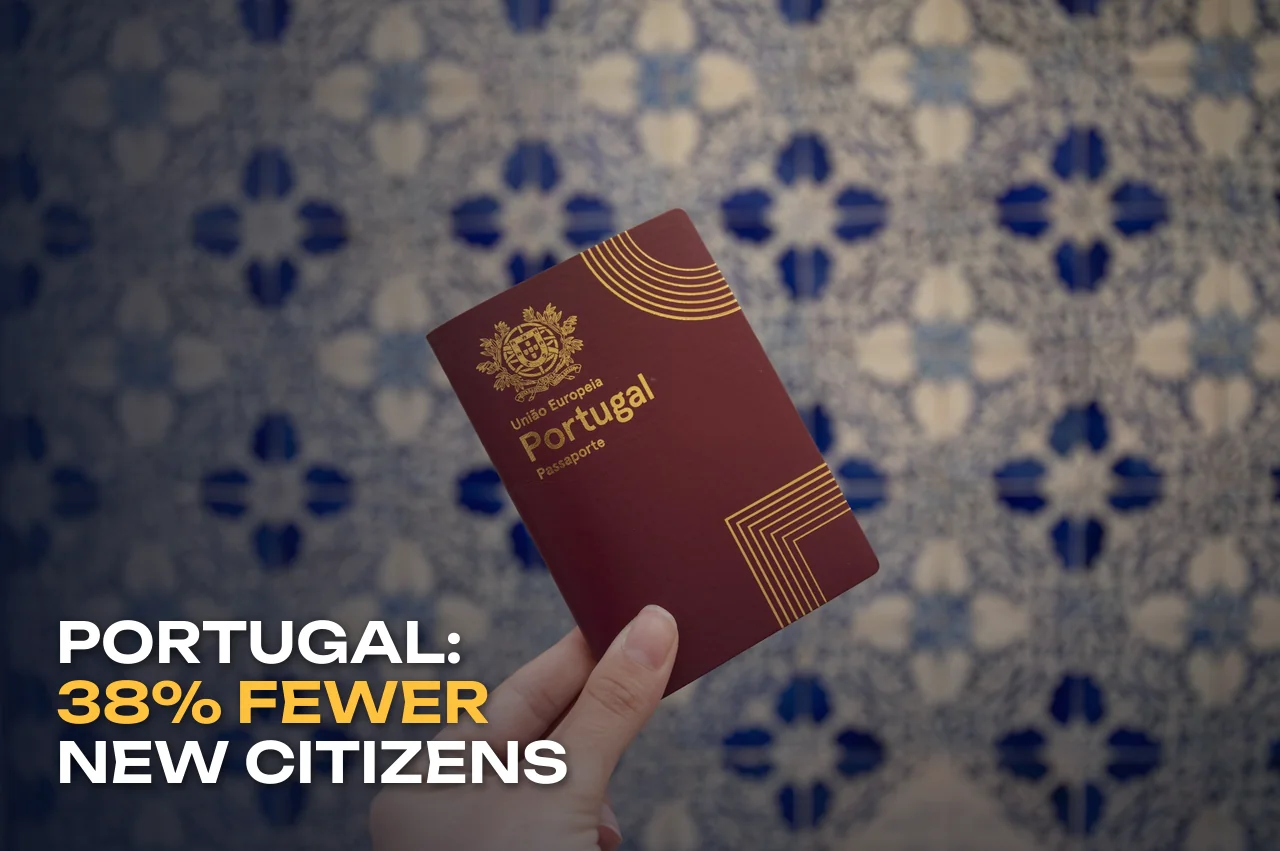 Portugal · 29 OctPortugal: 12,829 residents acquired citizenship in 2025, 38% fewer than a year earlier
 Portugal · 28 OctPortugal opens online renewal for residence permits expiring by 31 January 2027
Personal programme selection is conducted by Anna Kovalevskaya, Head of Legal, BRIDGES.
Moving on a D7? We will calculate the tax on your portfolio in advance
We will review dividends, coupons, pension and broker gains in light of your moving date.
