Comparisons · Sao Tome and Principe
Sao Tome and Principe or Nauru: which citizenship by contribution to choose in 2026
Updated: October 2026·10 min read·Expert reviewed
Terms and costs verified: October 2026
Contents
Sao Tome and Principe and Nauru are the two most affordable citizenship-by-contribution programmes in 2026. Both are processed remotely, with no visit to the country, and neither gives visa-free Schengen access. But they differ noticeably in family cost, timing, travel geography and risk. Sao Tome is cheaper, especially for families, and offers an unusual bonus: a route to Portugal through the Community of Portuguese Language Countries. Nauru costs more but is stronger on visa-free travel in Asia and lets you include more relatives in one application. I compare them point by point as of October 2026.
In brief
- For a single applicant Sao Tome costs about USD 95,750 in official items, Nauru about USD 121,000-125,000 after its offer ended on 30 June 2026.
- For families the gap is wider: in Sao Tome the contribution for a family of up to four is about USD 95,000, while in Nauru each family member is charged separately.
- Timing is comparable: in Sao Tome approval takes about 2 months, in Nauru 3-4 months. No visit to the country is needed in either case.
- Nauru gives more visa-free destinations, especially in Asia and Oceania; Sao Tome is stronger in Africa and linked to Portugal through the CPLP.
- Both programmes are young. In Sao Tome there has been no parliamentary majority since the 27 September election; in Nauru amounts have already changed.
Price: what each programme costs
In both programmes the main cost is a non-refundable contribution to a state fund. In Sao Tome it is the National Transformation Fund, which finances infrastructure, energy and education. In Nauru it is the economic and climate resilience fund, which pays for protecting the island against rising sea levels. In neither case is the money returned: it is a final expense, not an investment with an exit.
| Parameter | Sao Tome and Principe | Nauru |
|---|---|---|
| Programme | Decree-Law 07/2025, operating since 2025 | ECRCP, launched in 2024 |
| Contribution for one | from ~USD 90,000 to the national fund | ~USD 115,000 (the ~USD 90,000 offer ended on 30 June 2026) |
| Full budget for one | ~USD 95,750 in official items | ~USD 121,000-125,000 |
| Family of four | ~USD 100,000-103,000 | noticeably more: spouse ~+USD 30,000, child ~+USD 25,000 |
| Timing | approval in about 2 months, passport in about 4 | approximately 3-4 months |
| Visit to the country | not required | not required |
| Visa-free and simplified entry | ~70 destinations | ~85-90 destinations, ~52 without prior paperwork |
| Schengen, US, Canada visa-free | no | no |
| Special advantage | CPLP membership: route to Portuguese citizenship after 7 years of residence | a wide range of relatives in one application |
In Sao Tome, the contribution from USD 90,000 for one person is supplemented by a filing fee of about USD 5,000 per application and documents of about USD 750 per person. A detailed budget is in the article on the cost of Sao Tome citizenship. In Nauru, an offer of a contribution from USD 90,000 for one person applied until 30 June 2026. The standard contribution is now about USD 115,000, plus due diligence from USD 6,000 per adult and a passport fee of about USD 500. Details are in the cost of Nauru citizenship.
What this means for you. For one person Sao Tome is about USD 25,000-30,000 cheaper. If your budget is limited to USD 100,000, only Sao Tome of these two fits.
Family cost: where the gap is widest
The most noticeable difference is how the programmes count a family. In Sao Tome the contribution for a family of up to four is barely different from the single contribution: about USD 95,000 against USD 90,000. About USD 5,000 is added for each further family member. So a family of four fits into roughly USD 100,000-103,000 in official items.
| Family | Sao Tome and Principe | Nauru |
|---|---|---|
| Single applicant | ~USD 95,750 | ~USD 121,000-125,000 |
| Couple | ~USD 96,500 (family contribution for up to 4 ~USD 95,000) | ~USD 150,000 and up |
| Couple and two children | ~USD 100,000-103,000 | ~USD 200,000 and up |
| Each additional family member | ~+USD 5,000 to the contribution and ~USD 750 documents | a separate contribution by relative category |
In Nauru, since 2026 each family member has been charged separately: a spouse approximately USD 30,000, a minor child about USD 25,000, plus due diligence for each adult. On the other hand, the range of relatives is wider: the application can include children of any age, parents, grandparents and siblings. For a large family with elderly parents this can be decisive. General rules on including relatives are in the guide to citizenship for the family.
What this means for you. For a family with children, Sao Tome costs roughly half as much. Nauru makes sense if you need to include parents or siblings whom other programmes do not accept.
Sofia MendesInvestment Programs Expert, BRIDGES
Choosing between Sao Tome and Nauru? We will calculate it for your family
We will compare the full budget, timing and documents for your family.
Timing and procedure
Both programmes are processed remotely through a licensed agent. In Sao Tome, according to the programme's first annual report of 1 September 2026, approval takes about 2 months and the passport about 4 months. In the first year 548 applications were filed and 350 approved, 122 of them from Russia; details are in our news story on the Sao Tome programme's first report. The fund contribution is paid after approval, so before the decision mainly the filing fee is at risk.
In Nauru the timing is approximately 3-4 months from filing a complete pack. Due diligence is carried out on each adult, and its fee is not refunded on refusal. The procedure is described in the articles on Sao Tome citizenship for Russians and Nauru citizenship for Russians. For both programmes documents need an apostille and a sworn translation, and the origin of funds is checked as strictly as in Caribbean programmes; see the source of funds guide and the due diligence guide.
A practical point for both programmes: timing runs from filing a complete pack, not from the first call to an agent. Collecting documents, criminal record certificates and income statements and legalising them usually takes three to six weeks. So the real time from decision to passport is closer to three to five months for Sao Tome and four to six for Nauru.
What this means for you. On speed the programmes are close. Sao Tome is slightly faster and requires the main contribution only after approval, which reduces the applicant's risk.
The passport: where you can travel
Neither passport gives visa-free access to Schengen, the US or Canada. This is important to understand straight away: if the main goal is visa-free Europe, other programmes are needed. The difference lies in geography. A Nauru passport opens approximately 85-90 destinations including visa on arrival and e-visas, about 52 of them without prior paperwork; its strengths are Asia, Oceania and some Middle Eastern hubs. The list is in the article on visa-free countries for a Nauru passport.
A Sao Tome passport gives about 70 destinations with visa-free or simplified entry; its strengths are Africa, including West African economic community countries, the Caribbean and some points in Asia, such as Hong Kong and Singapore. Details are in visa-free countries for a Sao Tome passport. For business travel to Asia Nauru is more convenient; for Africa and the Portuguese-speaking world, Sao Tome.
What this means for you. If you travel often to Asia and the Middle East, Nauru gives more. If Africa or a link to Portugal matter, Sao Tome is stronger.
Sao Tome's trump card: a route to Portugal through the CPLP
Sao Tome has an advantage that Nauru and most other programmes lack. The country is a full member of the Community of Portuguese Language Countries. Under Portugal's 2026 citizenship law, CPLP citizens need 7 years of lawful residence in Portugal to naturalise, rather than the 10 required of most non-EU nationals. Portuguese at A2 level is also required. This is not a fast EU passport: you have to actually live in Portugal on a residence permit. But for those already planning to move to Portugal, Sao Tome citizenship shortens the route to a European passport by three years.
We examined this route in detail in the article on Sao Tome and the route to Portugal through the CPLP, and the general naturalisation rules in our piece on naturalisation in Portugal. Importantly, the period runs from the date of the first residence permit in Portugal, not from the date of the Sao Tome passport.
What this means for you. If you plan to live in Portugal, Sao Tome citizenship can save three years on the way to an EU passport. If you are not going to Portugal, this trump card does not apply to you.
Dual citizenship and taxes
Both countries allow a second citizenship, so there is no need to give up your existing passport. Russian citizens have a separate rule: they must notify the Interior Ministry within 60 days of receiving a second citizenship document. This applies to both a Sao Tome and a Nauru passport. The notification itself does not remove Russian citizenship, but failing to file it carries liability.
On taxes, it is important not to confuse citizenship with tax residence. A passport alone does not change the country where you pay tax: that depends on where you live for most of the year and where your centre of interests is. In Nauru, individuals' worldwide income is not subject to ordinary income tax, but to benefit you need to become tax resident on the island, which in practice suits very few people. More is in the article on taxes in Nauru. For most clients a second passport is a travel tool and a back-up document, not a tax solution.
What this means for you. Once you have the passport, remember to notify the Interior Ministry if you are a Russian citizen. A passport alone does not change your tax residence.
Risks of each programme
Both programmes are young, and this is the main shared risk: rules, amounts and practice are still changing. In Nauru this has already happened: the offer window ended on 30 June 2026, and the family fee structure switched to an individual one. In Sao Tome, parliamentary elections on 27 September 2026 left no party with a majority; the programme continues to operate under Decree-Law 07/2025, and the president is elected until 2031. Analysis is in our news story on the Sao Tome elections.
The second shared risk is pressure on citizenship programmes in general. The EU is already demanding that Caribbean countries wind down their programmes, and young programmes will also attract attention. Neither Sao Tome nor Nauru currently has visa-free Schengen access, so there is no direct threat of losing it either. You can compare them with more established programmes in the articles Nauru or the Caribbean, Nauru or Vanuatu and Sao Tome or Vanuatu, while Sao Tome or Argentina shows the difference with an expensive programme that has visa-free Schengen access.
What this means for you. Apply through a licensed agent and fix the contribution amount in writing on the filing date. In young programmes this is the main protection against changing terms.
Which to choose
Limited budget, single or family
Sao Tome: about USD 95,750 for one and about USD 100,000-103,000 for a family of four.
You need to include parents or siblings
Nauru: a wide range of relatives, but each is charged separately.
Frequent travel to Asia
Nauru: more visa-free destinations in Asia and Oceania.
Plans to move to Portugal
Sao Tome: a route to Portuguese citizenship after 7 years of residence instead of 10.
You need visa-free Schengen
Neither. Look at other programmes, such as Vanuatu with Greek residence or more expensive programmes with visa-free access.
Programme terms are on the Sao Tome citizenship and Nauru citizenship pages, country overviews on Sao Tome and Nauru, and guides to Sao Tome and to Nauru. Taxes in Nauru are covered separately: whether worldwide income is taxed. The fastest passport options are compared in the article on the fastest second citizenship, and the term is explained in the glossary. You can discuss your choice in an online consultation; all BRIDGES services are on the home page.
Need an affordable second passport? We will find a programme
We will compare Sao Tome, Nauru, Vanuatu and other options for your goal.
Sofia MendesInvestment Programs Expert, BRIDGES
How this article was prepared
Sources: Sao Tome and Principe Decree-Law 07/2025 and materials of the citizenship programme unit; the Sao Tome programme's first annual report of 1 September 2026; Nauru ECRCP programme materials; Portugal's citizenship law (Organic Law No. 1/2026). Amounts are approximate as of October 2026, based on our calculations and official cost items; the exact budget for your family should be fixed on the filing date. The number of visa-free destinations changes. This article does not replace a consultation.
Share this article
Frequently asked
Questions people ask before deciding
01Which is cheaper: Sao Tome or Nauru?
Sao Tome. For a single applicant about USD 95,750 in official items against USD 121,000-125,000 in Nauru. For families the gap is wider: in Sao Tome the contribution for a family of up to four is about USD 95,000.
02Do these passports give visa-free Schengen access?
No. Neither the Sao Tome nor the Nauru passport gives visa-free access to Schengen, the US or Canada.
03How long does processing take?
In Sao Tome approval takes about 2 months and the passport about 4. In Nauru approximately 3-4 months. No visit to the country is needed.
04How does Sao Tome help with moving to Portugal?
Sao Tome is a CPLP member. CPLP citizens need 7 years of lawful residence for Portuguese citizenship instead of 10, plus A2-level Portuguese.
05Which programme suits a large family with parents?
Nauru accepts parents, grandparents and siblings in the application, but each family member is paid for separately. Sao Tome is cheaper for a classic family of parents and children.
About the author
Related materials
What to read next
 ComparisonArgentina or Sao Tome citizenship: price, timing, passport and risks
 ComparisonNauru or Vanuatu citizenship: which should an investor choose
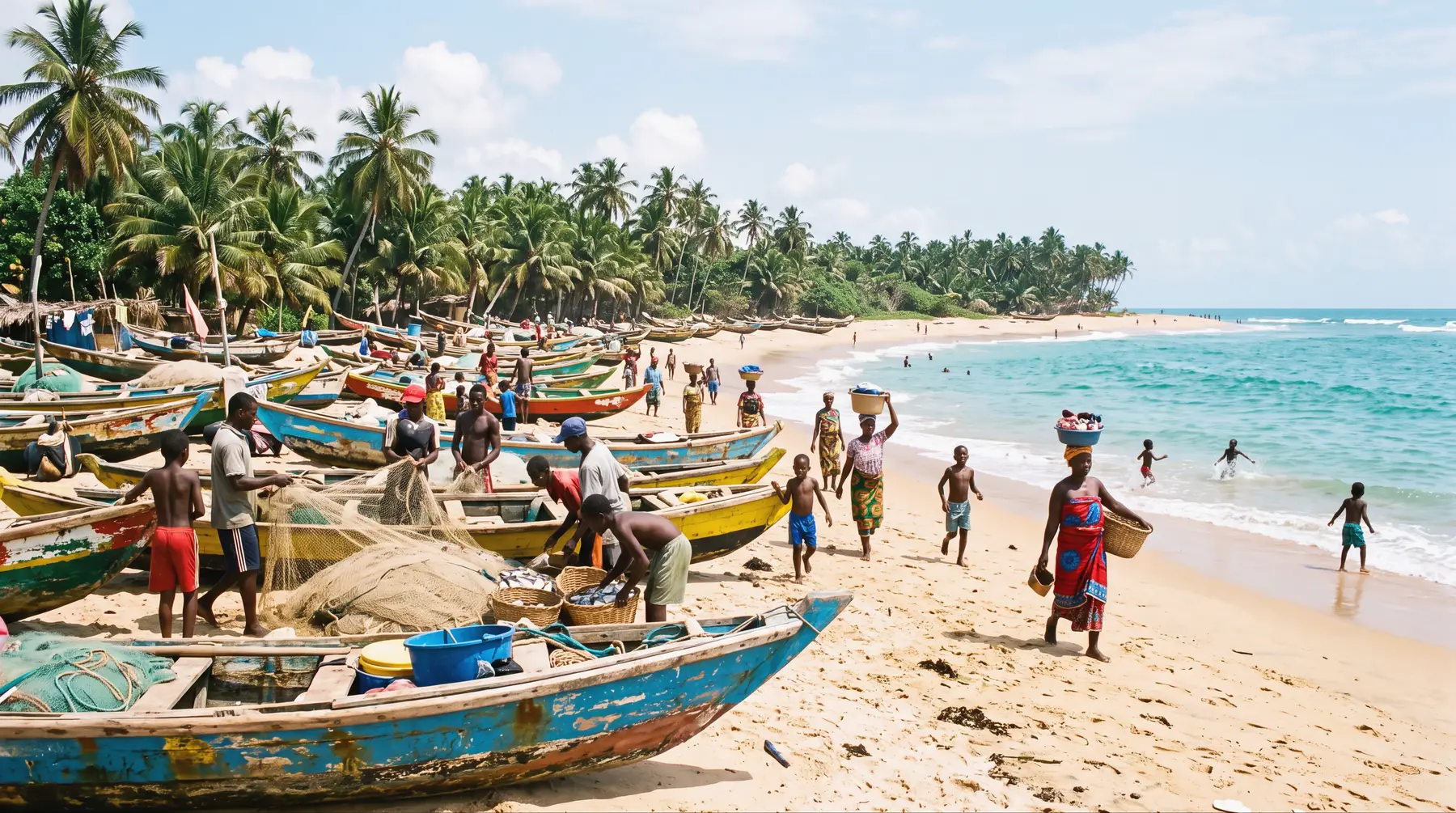 ComparisonSão Tomé or Vanuatu citizenship: which should an investor choose
News+1 story on 3 November
Related news
 Sao Tome and Principe · 17 OctSão Tomé and Príncipe: 548 applications in the first year, Russia in second place
 Sao Tome and Principe · 14 OctSao Tome election without a winner: what happens to the citizenship programme
 Greece · 3 NovGreece: the 15% home purchase tax will depend on tax residency, not on your passport
Personal programme selection is conducted by Anna Kovalevskaya, Head of Legal, BRIDGES.
Choosing between Sao Tome and Nauru? We will calculate it for your family
We will compare the full budget, timing and documents for your family.
