Citizenship · Argentina
Relocating to Argentina in 2026: a step-by-step plan
Updated: October 2026·16 min read·Expert reviewed
Terms and costs verified: October 2026
Contents
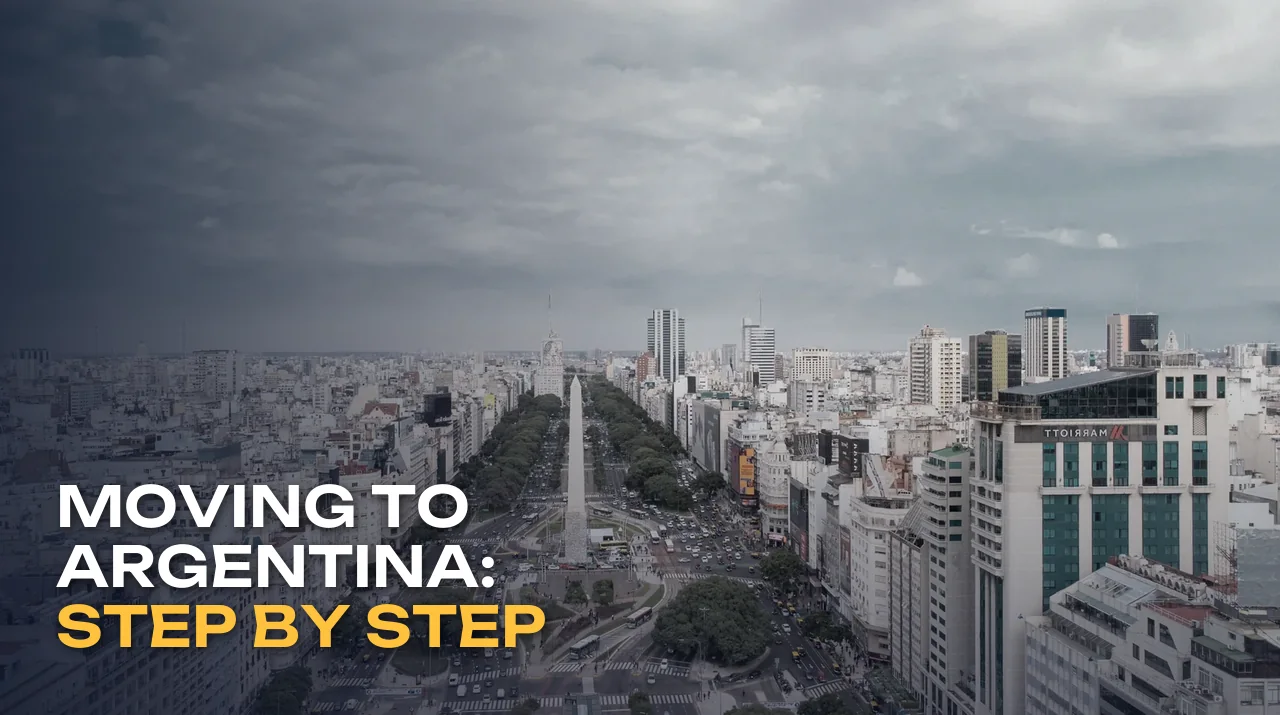
Relocating to Argentina in 2026 starts with a choice: live in the country and work towards citizenship through a residence permit, or obtain a passport through the investment programme without moving. A family that relocates enters visa-free, applies for residence in the first weeks, rents a home, and sorts out a health plan, school, a DNI identity card and a bank account. The first three months cost a family of four $15,000-22,000. Below is a step-by-step relocation plan, with documents, costs and mistakes. The terms, cost and procedure of the programme are on the page Argentine citizenship, end to end.
Relocating to Argentina: in brief
In brief: visa-free entry, a residence permit based on income, work or family, a DNI identity card, then permanent residence after 3 years and citizenship after 2 years of residence. If you do not need to live in Argentina, the investment programme provides the passport.
- Step 1Choose the routeA residence permit and life in the country, or citizenship by investment without relocating
- Step 2Prepare documents at homeApostilles and criminal record certificates, civil certificates, diplomas, children's documents
- Step 3Enter and rent a homeVisa-free entry, short-term rental for 1-3 months
- Step 4Apply for residenceApplication in RaDEX in the first weeks, temporary permit
- Step 5Set up daily lifeHealth plan, school, DNI identity card, CUIT and bank
- Step 6Long-term leaseA contract for a year or more once you have a DNI
Argentine Law 25.871, DNM migration service
The diagram shows that the main preparation is best done before you fly: criminal record certificates, apostilles and translations are easier to obtain at home than through a consulate from Buenos Aires. Once there, the family has 90 days of visa-free stay (30 for citizens of Kazakhstan) to apply for residence. After that, temporary resident status allows them to live, work, and leave and return while the migration service reviews the documents.
Relocation or a passport without relocating
In brief: if the family wants to live in Argentina, the route is a residence permit, permanent residence and naturalisation. If only a passport is needed, the investment programme provides one without residence.
Relocating on a residence permit suits families who choose Argentina as a place to live: for the climate, education, culture, work or business. Residence is granted on the basis of capital income, a pension, work, investment, study or family ties. After 3 years of temporary residence you can obtain permanent residence, and naturalisation requires 2 years of residence. More in the articles Argentine residence permit and Argentine permanent residence.
The investment programme suits those who need a second passport while the family will live in another country. The contribution is $350,000 for the main applicant, $100,000 for a spouse and $25,000 for a child under 18, with a decision within 30 working days after the checks. The programme and relocation are not mutually exclusive: many families first obtain the passport and then decide whether to live in Argentina. More in the article how much Argentine citizenship costs. The scope of services and how we work are shown on the page Argentine citizenship with BRIDGES.
Documents to prepare at home
In brief: criminal record certificates, birth and marriage certificates, diplomas and the children's school records with an apostille. Translations into Spanish are done in Argentina by a sworn translator.
- Criminal record certificates. From every country where an adult has lived for more than a year in the last 3 years, with an apostille.
- Birth and marriage certificates. With an apostille, for every family member.
- Diplomas and employment records. With an apostille, if you plan to work in your profession.
- Children's documents. School reports for recent years, certificates from the school, vaccination certificate.
- Medical documents. Records of chronic conditions and prescriptions for regular medication.
- Proof of income. Bank statements, pension certificates and contracts, if the residence permit will be based on income.
Criminal record certificates are valid for a limited time, so they are ordered 1-2 months before departure. Russian citizens order the certificate through the Gosuslugi portal and have it apostilled by the Interior Ministry; civil certificates are apostilled at the registry office that issued them. Translations into Spanish are done by Argentine sworn translators: translations made in other countries are usually not accepted without certification by the College of Sworn Translators.
Money when relocating
In brief: Russian bank cards do not work in Argentina. Cash over $10,000 per person is declared at customs. An account at an Argentine bank is opened once you have a CUIT.
Russian citizens need cards from banks in other countries or cash in dollars and euros. Cash over $10,000 per person is declared on entry; otherwise customs may confiscate it and impose a fine. Currency is exchanged at banks and licensed bureaux: since currency controls were lifted in 2025, the gap between the official and the cash rate has become small.
For large sums, a transfer to an account at an Argentine bank is more convenient. It is opened for a foreigner with a CUIT tax number, which in March 2026 replaced the former CDI number. The bank checks the origin of the money, so bring documents on your income and on the sale of assets. More in the article opening a bank account in Argentina.
The first weeks in Argentina
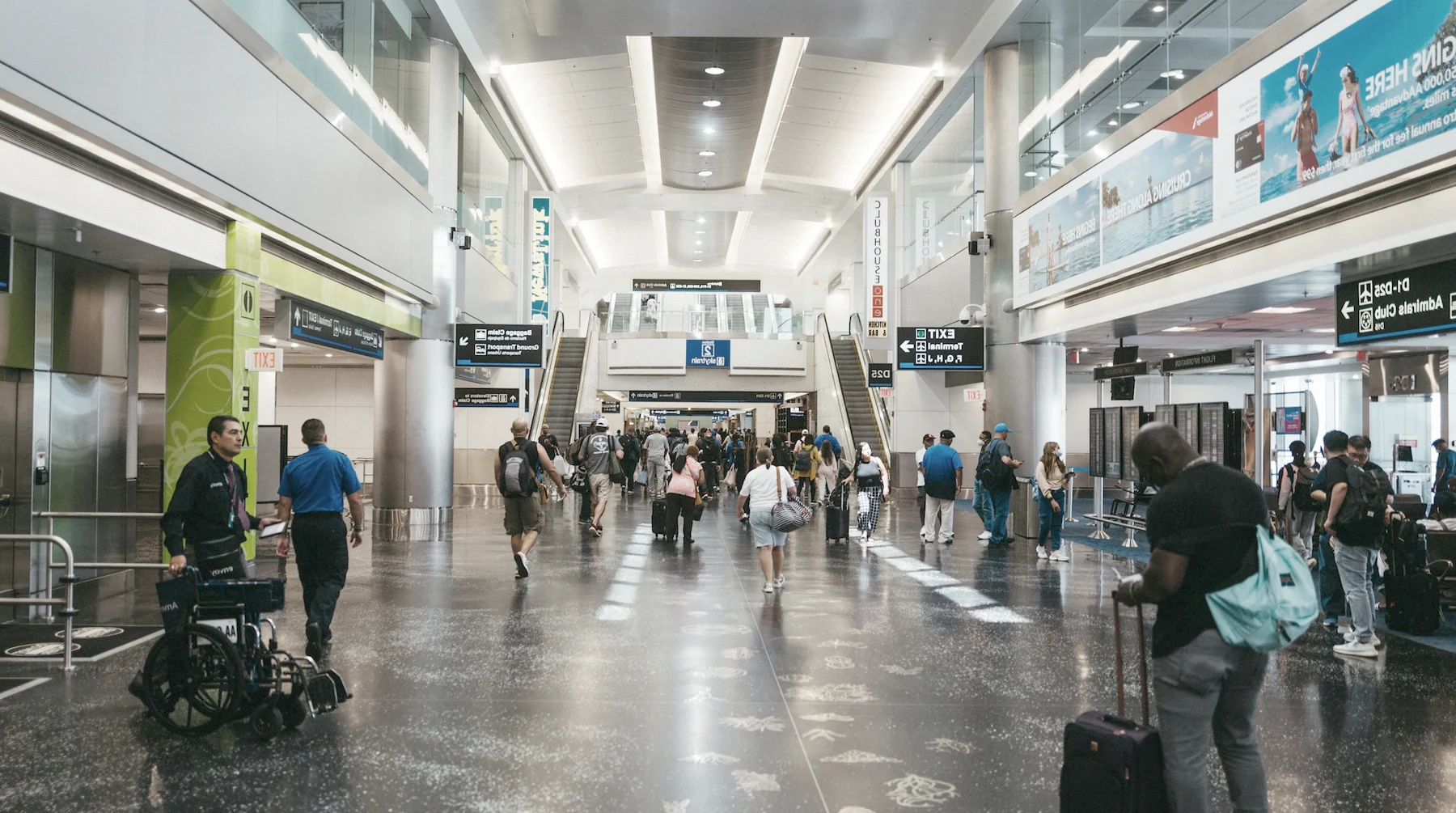
In brief: a SIM card, a SUBE card for transport, temporary housing, a health plan and a residence application in the RaDEX system.
On the first day you buy a local SIM card from one of the operators and a SUBE card for the metro, buses and suburban trains. For the first 1-3 months it is convenient to live in a furnished short-term rental: it can be rented without a guarantor, and in the meantime the family chooses a neighbourhood. From August 2026, national hospitals bill foreigners without permanent residence, so a health plan is arranged straight away.
The residence application is filed in the RaDEX system while you are in Argentina. Once the fees are paid, a temporary permit is issued that allows you to live, work, and leave and return. An appointment at the migration service is then scheduled, and after approval RENAPER produces the DNI identity card. With a DNI, the family obtains a CUIT, opens a bank account and signs a long-term lease.
Healthcare after relocating
In brief: until permanent residence, the family uses a private health plan. In September 2026 the OSDE 210 plan for a family of four cost about $685 a month, and Swiss Medical SMG02 about $730.
A health plan is taken out directly with the company or through an agent, with no waiting period for emergency care, though some services, such as childbirth, may have waiting periods. Plans cover doctor's appointments, tests, hospitalisation and discounted medication, and prices rise every month in line with inflation. It is worth checking in advance the medication the family takes regularly: some drugs are sold under different names, and some require a prescription from a local doctor.
Once permanent residence is granted, public hospitals are available on equal terms with citizens, with a DNI, but most foreign families keep a private plan because of the queues. More in the article living in Argentina.
Housing: short-term and long-term
In brief: a furnished short-term two-room rental in Palermo costs $700-1,400 a month. A long-term lease is cheaper but requires a guarantor or a rental guarantee insurance policy.
Since the rental law was repealed at the end of 2023, the parties agree freely on the term, the currency and indexation. The average asking rent for two rooms in Buenos Aires in August 2026 was about $583 a month, according to Zonaprop. Landlords ask for a guarantor who owns property in the city, so foreigners take out a rental guarantee insurance policy, which costs a fraction of a year's rent.
Neighbourhoods for families with children include Palermo, Belgrano, Nunez, Colegiales and Recoleta: safety is above average, with schools and parks nearby. Buying a home is best postponed until you have a DNI and know the city. More in the articles living in Argentina and real estate in Argentina.
Children: school and nursery
In brief: public schools admit foreign children free of charge, and private bilingual schools cost $400-1,200 a month. The school year runs from March to December.
To enrol a child at school you need the child's passport, birth certificate, school reports with an apostille and a vaccination certificate. The school or the ministry of education recognises schooling abroad and determines the year group. Children who do not speak Spanish usually start at a bilingual school or with extra lessons. Places at popular schools fill up early, so it is worth enrolling several months ahead, ideally before the move.
A convenient time for a family with children to relocate is December to February, before the school year starts in March. Nurseries take children from 45 days old, and compulsory education starts at age 4.
Darya MelnikSenior Investment Programs Advisor, BRIDGES
Want to move to Argentina? We will send you a step-by-step plan
We will set out the steps from the first documents to the final status, with the timing of each.
Language
In brief: Spanish is needed for everyday life, government offices, school and doctors. It makes sense to start learning it 3-6 months before the move and to continue at a language school in Buenos Aires.
Argentine Spanish differs in pronunciation and in the use of "vos", but a basic level is enough to rent a flat, book a doctor and talk to teachers. For naturalisation, judges check conversational Spanish at the interview, and Decree 366/2025 enshrined a language requirement. Buenos Aires has many language schools and private tutors, and public universities run inexpensive courses for foreigners.
- Living costs excluding rent$5,25028.5%
- Flights$3,50019.0%
- Short-term rental$3,20017.4%
- Deposit and fee$2,50013.6%
- Health plan and documents$3,95021.5%
BRIDGES calculation at September 2026 prices
Children learn Spanish faster: at school and in the playground they start speaking within a few months. Adults are helped by work or volunteering that involves talking to Argentines every day.
Work and taxes after relocating
In brief: most people who relocate work remotely or run their own business. After 12 months on a temporary permit or from the date of permanent residence, a foreigner becomes a tax resident and pays tax on worldwide income.
Local salaries in dollar terms are lower than in Europe, so income from abroad remains the main source for most families. Freelancers register under the simplified tax regime with a fixed monthly payment, and entrepreneurs set up a company. IT companies use the knowledge economy regime with tax incentives.
Tax residence changes your obligations: income tax on worldwide income on a scale from 5% to 35%, and personal assets tax, whose rates fall to 0.25% in 2027. Before moving, it makes sense to review foreign accounts and assets with a tax adviser. More in the articles taxes in Argentina and doing business in Argentina.
The capital or another city
In brief: most people who relocate start in Buenos Aires, where the migration service, schools, clinics and the Russian-speaking community are. Cordoba, Mendoza and Bariloche suit those who want somewhere quieter and closer to nature.
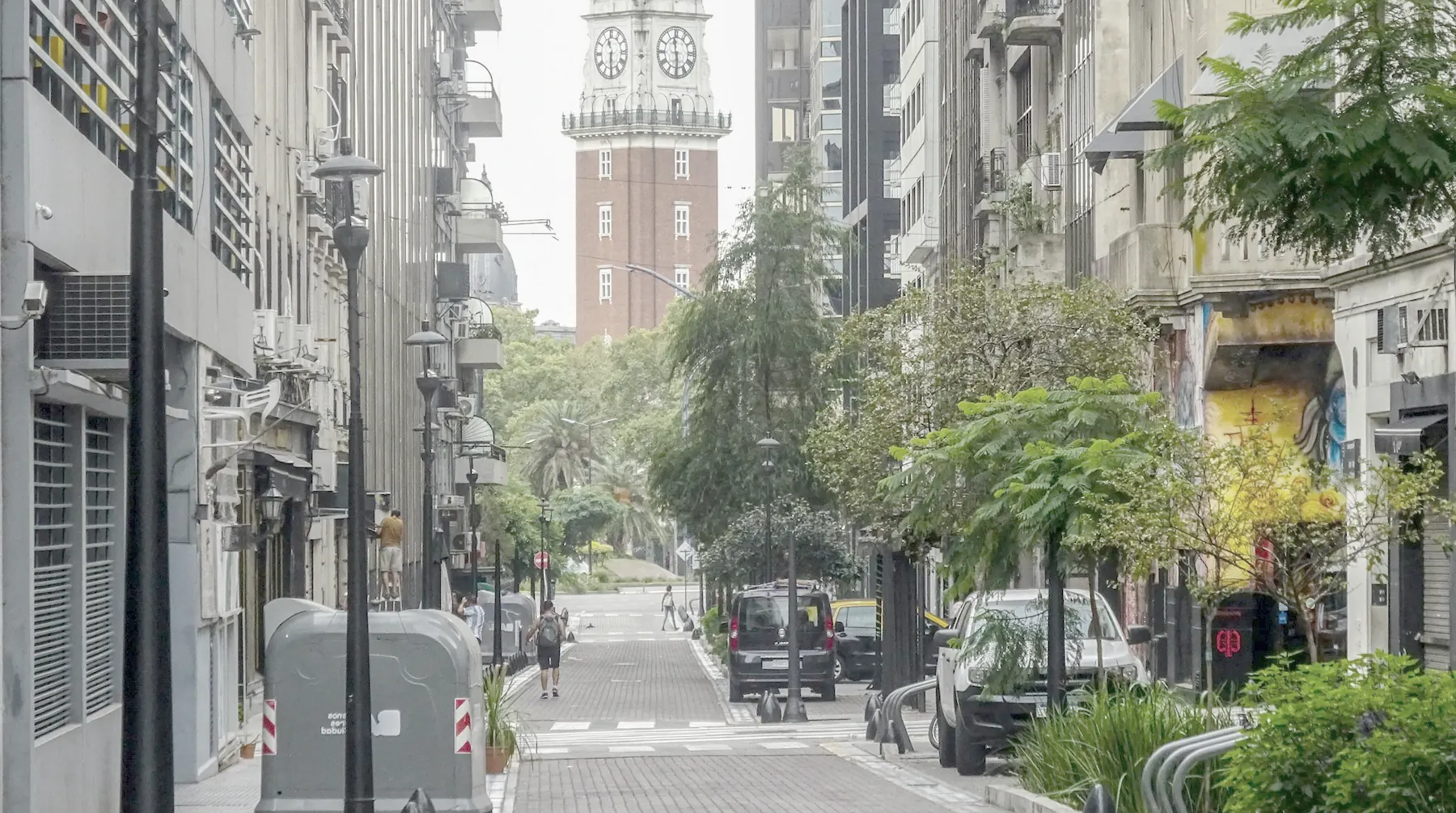
The first months in the capital make every step easier: migration appointments, choosing a school, healthcare, banks. Once the documents are ready, some families move to Cordoba, with its universities and IT companies, to sunny Mendoza at the foot of the Andes, or to Bariloche with its lakes and mountains. Life in these cities is 10-20% cheaper, but the choice of international schools and doctors is smaller.
Driving licence and car
In brief: a tourist drives on their own licence with an international driving permit; a resident obtains an Argentine licence from their municipality. Cars in Argentina are more expensive than in Europe.
After obtaining a residence permit and a DNI, a foreigner gets a local licence: a medical examination, a theory test on the rules of the road and a practical test. In Buenos Aires many families manage without a car: the metro, buses, taxis and ride-hailing services cover the city. New and used cars cost more than in Europe because of import duties, so a car is bought if the family lives in the suburbs or travels around the country often.
What relocation costs
In brief: the first three months cost one person $5,000-9,000 and a family of four $15,000-22,000. After that, a family spends $3,000-4,500 a month in Buenos Aires.
| Item | One person | Family of four |
|---|---|---|
| One-way flights | $700-1,200 | $2,500-4,500 |
| Short-term rental, first 2 months | $1,400-2,400 | $2,600-3,800 |
| Deposit and fee for a long-term lease | $1,000-1,500 | $2,000-3,000 |
| Apostilles, translations, residence fees | $400-800 | $1,200-2,500 |
| Health plan, 3 months | $300-450 | $2,000-2,200 |
| Living costs, 3 months excluding rent | $1,500-2,400 | $4,500-6,000 |
| Total for the first 3 months | about $5,000-9,000 | about $15,000-22,000 |
The table shows that most of the money goes in the first months: a short-term rental is more expensive than a long-term one, and signing a long-term lease requires a deposit, an agency fee and an insurance policy. From the fourth month, costs fall to the family's normal budget. A private school for two children adds $800-2,400 a month to it.
It is sensible to keep a reserve for unforeseen expenses of at least three months' living costs. Prices in pesos rise with inflation, which in August 2026 was 1.7% for the month, so the budget is calculated in dollars. For the investment route, the total for your family is shown in the Argentine citizenship estimate.
Belongings and pets
In brief: most families move with luggage and buy furniture locally. A pet needs a veterinary certificate and a rabies vaccination.
Shipping a container from Europe or Russia to Argentina takes months and is expensive, and imported appliances are subject to duties in the country. That is why families bring clothes, children's things, laptops and personal items, and buy furniture and household appliances locally or rent a furnished flat. There is a preferential customs regime for importing household goods when moving for permanent residence; check the conditions with a customs broker.
Dogs and cats are brought in with an international veterinary certificate from the country of departure and a valid rabies vaccination. Airline rules on carrying animals vary, and connections lengthen the journey, so flights are chosen with the animal in mind.
For citizens of Russia, Ukraine, Belarus and Kazakhstan
In brief: citizens of Russia, Ukraine and Belarus enter visa-free for 90 days, citizens of Kazakhstan for 30 days. What differs is how certificates are obtained, bank cards and the rules on second citizenship.
Russian citizens need to sort out cards and transfers in advance; citizens of Kazakhstan should apply for residence immediately after entry, because their visa-free period is shorter. Moving on a residence permit does not change your citizenship, but if the family plans to naturalise, the countries' rules differ: Kazakhstan prohibits dual citizenship, and Belarus requires notification. More in the articles for citizens of Russia, Ukraine, Belarus and Kazakhstan.
Where people go wrong when relocating
In brief: they arrive without apostilles, apply for residence at the end of the visa-free period, bring only Russian cards, sign a long-term lease straight away and do not take out a health plan.
- No apostilles on certificates. Obtaining them from Argentina is slow and expensive.
- Applying for residence in the last days. Overstaying leads to a fine.
- Bringing only Russian cards. They do not work in Argentina.
- Not declaring cash over $10,000. Customs may confiscate the money.
- Signing a one-year lease straight away. It is better to choose a neighbourhood after 1-2 months of living there.
- Not taking out a health plan. Without permanent residence, public hospitals charge fees.
- Enrolling children at school too late. Places at popular schools fill up early.
If you are choosing a country in the region, compare Argentina with its neighbours: Brazil and Uruguay and Paraguay.
How much will your family's move to Argentina cost? We will calculate it
We will break the costs down by item: mandatory payments, fees and services, with no hidden amounts.
Darya MelnikSenior Investment Programs Advisor, BRIDGES
Share this article
Frequently asked
Questions people ask before deciding
01How do you relocate to Argentina?
Enter visa-free, apply for residence in the RaDEX system within the first weeks on the basis of income, work, investment, study or family ties, obtain a DNI identity card, then permanent residence after 3 years and citizenship after 2 years of residence.
02Do you need a visa to relocate?
No. Citizens of Russia, Ukraine and Belarus enter visa-free for 90 days, citizens of Kazakhstan for 30 days, and apply for residence in Argentina.
03How much does relocating to Argentina cost?
The first three months cost about $5,000-9,000 for one person and $15,000-22,000 for a family of four. After that, a family spends $3,000-4,500 a month.
04Which documents should you bring?
Criminal record certificates, birth and marriage certificates, diplomas and the children's school records with an apostille, medical records and proof of income.
05Do Russian bank cards work in Argentina?
No. You need cards from banks in other countries, cash, or a transfer to an account at an Argentine bank once you have a CUIT.
06Can you get a passport without relocating?
Yes, through the investment programme: from $350,000 for the main applicant, with no requirement to live in the country.
07When is the best time to move with children?
December to February, before the school year starts in March. Popular schools need to be booked in advance.
08How can a foreigner rent a flat?
For the first months, a furnished short-term rental with no guarantor. A long-term lease requires a guarantor or a rental guarantee insurance policy.
09Is health insurance necessary?
Yes. From August 2026, national hospitals bill foreigners without permanent residence. A health plan for a family of four costs about $700 a month.
10Can you ship belongings in a container?
You can, but it is slow and expensive. There is a preferential customs regime for household goods when moving for permanent residence; check the conditions with a customs broker.
11Do you need Spanish to relocate?
For everyday life, government offices, school and doctors, yes. It makes sense to start learning it 3-6 months before the move.
12When will I become an Argentine tax resident?
After 12 months of residence on a temporary permit or from the date permanent residence is granted. A tax resident pays tax on worldwide income.
13Do you need to declare cash?
Yes, amounts over $10,000 per person are declared at customs on entry.
Transparency
How this material was prepared
- Author
- Darya Melnik, senior Investment Programs Advisor, BRIDGES
- Terms and costs last verified
- October 2026
- Sources
- official government authorities of the relevant country and state publications
- Methodology
- government minimum requirements are stated separately from due diligence charges, state fees, legal and banking costs
Sources and methodology
Figures, terms and timelines are checked against official sources as of October 2026. Link availability verified in August 2026. Third-party blogs and agent websites are not used as a source of programme terms.
- [1]EUR-LexOfficial texts of European Union legislationeur-lex.europa.eu/homepage.html
- [2]European Commission - Migration and Home AffairsEntry and residence rules in the EUhome-affairs.ec.europa.eu/index_en
Methodology: tables and charts state government minimum investment requirements; due diligence charges, state fees, legal, banking and other costs are calculated separately and are not included in the minimum thresholds.
About the author
Related materials
What to read next
 ComparisonCaribbean Passport: 5 Citizenship Programs Through Investment in 2026
 ArticleLatin America with a Vanuatu passport: Peru, Ecuador and the Caribbean visa-free
 ComparisonPassport of Portugal or Spain in 2026: which is stronger, terms and dual citizenship
News+1 story on 3 November
Related news
 Argentina · 11 OctArgentina citizenship by investment ban bills: risks for investors
 Greece · 3 NovGreece: the 15% home purchase tax will depend on tax residency, not on your passport
 European Union · 1 NovEuropean Union: updated social security rules for living and working in two countries enter into force
Personal programme selection is conducted by Anna Kovalevskaya, Head of Legal, BRIDGES.
Decided to move to Argentina? We will help with the documents
We take your situation into account and note what you already have and what you still need.
