Citizenship · Argentina
Permanent residence in Argentina: requirements, procedure and rights in 2026
Updated: October 2026·14 min read·Expert reviewed
Terms and costs verified: October 2026
Contents
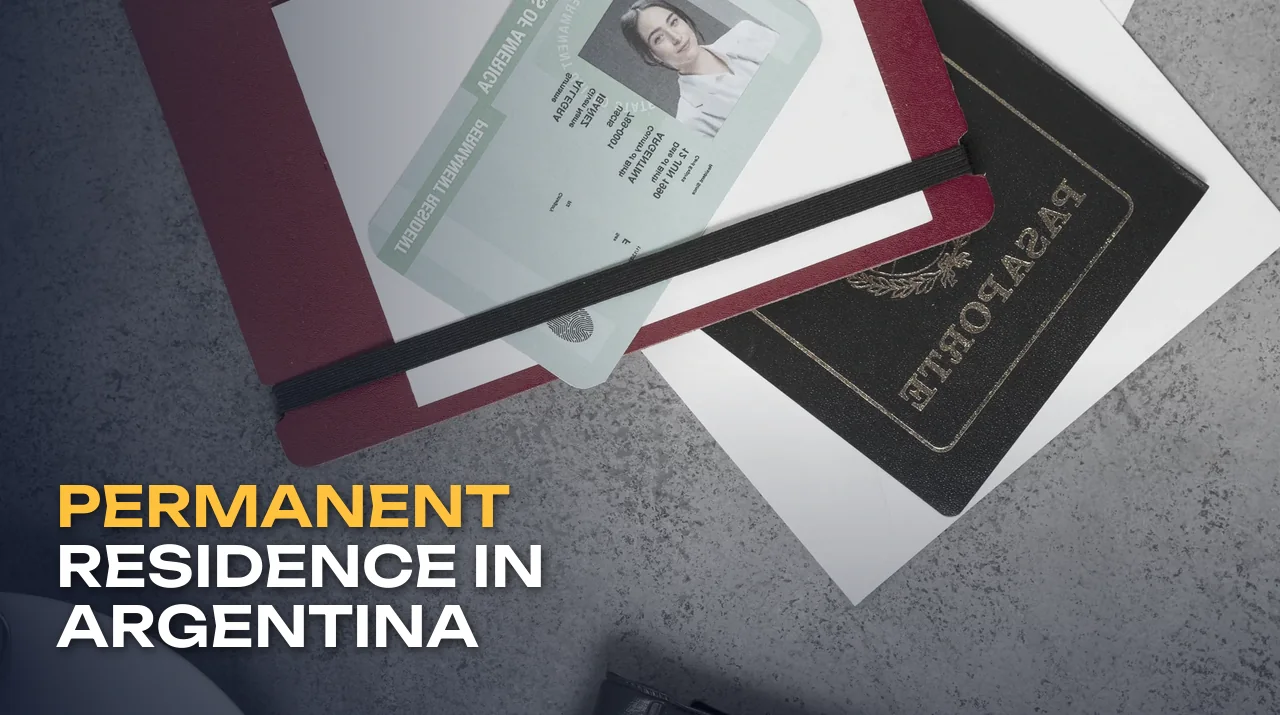
Permanent residence in Argentina is the right to live in the country indefinitely, to work, to be treated in public hospitals and to study at universities on equal terms with citizens. A citizen of Russia, Ukraine, Belarus or Kazakhstan obtains permanent residence after three years of temporary residence, provided they have spent more than half of that time in the country. Since May 2025, applicants must also prove their means of support. Below are the requirements as of October 2026, the filing procedure, the rights it brings and how permanent residence differs from citizenship. The conditions, cost and procedure of the programme are on the page turnkey Argentine citizenship.
Permanent residence in Argentina: the essentials
In brief: permanent residence is granted after 3 years of temporary residence to citizens of countries outside MERCOSUR and after 2 years to citizens of the bloc's countries. You must spend more than half of the period in the country, never leave for 6 months in a row and prove your means of support.
- EntryVisa-free, residence application filed in Argentina
- Year 1Temporary residence and a DNI identity card
- Years 2-3Residence renewal, more than half the period in the country
- Year 3Permanent residence application 60 days before temporary residence expires
- AfterIndefinite permanent residence and a DNI with no expiry date
Argentine Law 25.871, National Directorate of Migration (DNM)
The timeline shows that permanent residence is not a separate programme but the next step after temporary residence. It cannot be bought on its own: Argentina has no permanent residence by investment programme. It does, however, have a citizenship by investment programme, and for those who do not intend to live in the country it is simpler than the route through permanent residence. More in the article how much Argentine citizenship costs.
Permanent residence matters for families relocating for the long term. It removes the need to renew a residence permit, opens free public healthcare and universities and, under Decree 366/2025, has become a condition for naturalisation. Each step is covered in detail below.
Who can obtain permanent residence
In brief: temporary residents who have completed the required period, children of Argentine citizens born abroad, and citizens of Brazil. Since May 2025, parents and spouses of citizens first receive temporary residence.
The main route for foreigners is a change of category based on length of residence: 3 years of temporary residence for citizens of countries outside MERCOSUR, and 2 years for citizens of MERCOSUR and associated countries. Children of Argentine citizens born abroad receive permanent residence immediately, as do citizens of Brazil under the separate Law 26.240.
Before Decree 366/2025, parents and spouses of Argentine citizens also received permanent residence immediately. The decree moved them into family reunification with temporary residence of up to three years. This affects families who give birth in Argentina: the parents of an Argentine child now go through temporary residence first. More in the article giving birth in Argentina and citizenship.
Requirements for permanent residence
In brief: 3 years of valid temporary residence, more than 50% of the period spent in the country, no absences of 6 months in a row, means of support, criminal record certificates and an address in Argentina.
The immigration service checks the border crossing database to see how much time the applicant has spent in Argentina. You must have lived in the country for more than half of the term of the permit issued and must not have left for 6 months or more in a row. The temporary residence must have been valid without interruption: if it was not renewed on time, the qualifying period for permanent residence may start again.
Decree 366/2025 added two conditions to Article 22 of the Migration Law: means of support and the absence of criminal convictions that could be grounds for refusal. Means of support are proven by income, employment, a pension or savings: for a rentier or a pensioner the benchmark is the same as for temporary residence, 5 minimum wages a month, about $1,255 in September 2026.
- Passport. Valid.
- Argentine criminal record certificate. Requested through the RaDEX system.
- Criminal record certificates from other countries. From any country where the applicant lived for more than a year in the last 3 years, with an apostille and a translation.
- Address. A certificate of residence or a utility bill in the name of the applicant or their spouse.
- Means of support. Bank statements, an income certificate or an employment contract.
How to apply for permanent residence
In brief: the application is filed online through RaDEX 60 days before temporary residence expires or within 30 days after; you then attend an appointment and receive a DNI with no expiry date.
The applicant registers in the RaDEX system, selects a change of category based on length of residence, uploads the documents and pays the fees. The whole family applies with a single application, and children under 18 pay no fee. If the application is filed within 30 days after temporary residence expires, the fee rises by 50%, and you may not leave the country during that period.
The immigration service then schedules an appointment, checks the originals and takes biometrics. Once approved, RENAPER produces the permanent resident's DNI. Processing usually takes several months, and a temporary permit remains valid throughout. More on the first step in the article Argentine residence permit.
Sofia MendesInvestment Programs Expert, BRIDGES
Want permanent residence in Argentina? We will help you obtain it
We will set out every step from the first documents to the final status, with the timeline for each.
Family and children
In brief: the family applies for permanent residence with a single application. The spouse and children receive permanent residence together with the main applicant if they have lived in the country for the same period, and children under 18 pay no fee.
Family members of a temporary resident receive residence for the same term as the resident and then move to permanent residence together. Each person's period of residence and absences are checked, so if one family member was away for a long time, their application may be considered separately. Unmarried partners prove their union under Argentine rules: with a civil union certificate or a court decision.
Children born in Argentina are citizens of the country from birth and do not need permanent residence. Children who arrived with their parents study at schools and universities on equal terms with citizens once they have permanent residence. If a child has turned 16, criminal record certificates are also required for them.
The permanent resident's DNI
In brief: once permanent residence is approved, RENAPER issues a DNI marked with permanent residence status. It is the resident's main document in the country.
The permanent resident's DNI is presented at hospitals, banks, the tax office, notaries and when signing contracts. Since 2026, it is the DNI marked "permanent resident" that gives free access to public healthcare: hospitals check status on the identity card. The DNI number is the same as the one the foreigner received with temporary residence, so bank accounts and the CUIT tax number do not need to be changed.
The card is renewed periodically, just as it is for citizens. When the address changes, the details are updated with RENAPER, and if the holder leaves the country for a long time, the card stays valid, but permanent residence status is subject to the two-year rule.
What permanent residence gives
In brief: life without renewals, work, business, public healthcare and universities on equal terms with citizens, local elections in some provinces and tax residence.
| What it gives | Temporary residence | Permanent residence | Citizenship |
|---|---|---|---|
| Duration | 1-3 years, renewable | Indefinite | For life |
| Work and business | Yes | Yes | Yes |
| Public healthcare | Paid since August 2026 | On equal terms with citizens | Yes |
| Public university | Under the university's rules | Free | Free |
| Elections | No | Local elections in some provinces | All elections |
| Loss of status | When the term ends | After an absence of more than 2 years | Not for a citizen by birth |
| Argentine passport | No | No | Yes |
The table shows the main difference between permanent and temporary residence: access to public healthcare. Since 11 August 2026, national hospitals have been billing foreigners without permanent residence, while permanent residents are treated on equal terms with citizens on presentation of a DNI. The same applies to universities: Decree 366/2025 allowed them to charge foreigners without permanent residence.
Permanent residence also makes banking easier: a permanent resident can obtain a mortgage and a peso credit card, and banks less often request additional documents for large transactions. It also simplifies buying a car, taking out a private health plan and renting a home without a rental guarantee policy, because landlords see a permanent resident as a long-term tenant.
In a number of provinces and in the City of Buenos Aires, permanent residents can vote in local elections. Only citizens vote in national elections. Permanent residence does not give an Argentine passport: for travel, the resident uses the passport of their own country.
Permanent residence and taxes
In brief: from the date permanent residence is granted, a foreigner becomes an Argentine tax resident and pays tax on worldwide income and wealth tax.
The tax authority ARCA treats a permanent resident as a tax resident from the date permanent residence is granted, and a temporary resident after 12 months of living in the country. A tax resident pays income tax on worldwide income at rates from 5% to 35%, and personal assets tax at rates that fall to 0.25% in 2027. Gains from the sale of real estate have been exempt from tax since 2026.
Argentine Law 25.871, Law No. 346
That is why permanent residence should be planned together with a tax adviser: before the switch, it makes sense to sort out foreign assets, double taxation treaties and the reporting procedure. More in the article taxes in Argentina.
When permanent residence is lost
In brief: under Article 62 of the Migration Law, permanent residence is revoked if the resident is absent from Argentina for more than 2 years, and also in the event of criminal convictions or false information in the application.
Permanent residence does not require living in the country all the time, but an absence of more than two years in a row is grounds for revoking the status. The exception is work for the Argentine state or for Argentine companies abroad. Decree 366/2025 widened the grounds for revocation in cases of criminal convictions and breaches of immigration rules.
For a family that has obtained permanent residence and moved away, it is important to return to Argentina at least once every two years. If a long absence is planned, it makes sense to decide in advance whether permanent residence is needed or citizenship, which is not lost.
Permanent residence or citizenship
In brief: citizenship can be obtained before permanent residence: naturalisation requires 2 years of residence. Under Decree 366/2025, permanent residence became a condition for naturalisation, but the courts apply the previous law until the Supreme Court rules.
Under Citizenship Law No. 346, a foreigner applies for naturalisation to a federal judge after 2 years of living in Argentina, and permanent residence was not required. Decree 366/2025 changed the rules: 2 years of lawful residence without leaving the country plus permanent residence, with the decision taken by the immigration service. In June 2026 the courts declared the decree unconstitutional as regards citizenship, and the dispute moved to the Supreme Court. More in the article how to obtain Argentine citizenship.
Citizenship gives what permanent residence does not: a passport with 168 destinations without a consular visa, the right to live in the MERCOSUR countries, the vote in all elections and a status that is not lost when you leave. For most families, permanent residence is therefore an intermediate step. Without residence, a passport is available through the investment programme. More in the article the Argentine passport. Our services and the way we work are shown on the page Argentine citizenship with BRIDGES.
For citizens of Russia, Ukraine, Belarus and Kazakhstan
In brief: the requirements for permanent residence are the same for all citizens of countries outside MERCOSUR: 3 years of temporary residence. The only differences are how criminal record certificates are obtained and each country's rules on a second citizenship.
Unlike citizenship, permanent residence raises no questions about dual citizenship: it is a foreigner's status. For citizens of Kazakhstan, where dual citizenship is prohibited, permanent residence makes it possible to live in Argentina without risking the loss of a Kazakh passport. Citizens of Belarus do not need to report permanent residence, unlike a second citizenship. For citizens of Russia and Ukraine, permanent residence gives a stable status in the country while the question of citizenship is being resolved.
Criminal record certificates for permanent residence are needed from every country where the applicant lived for more than a year in the last 3 years. If the family has lived in Argentina throughout, only the Argentine certificate is needed, and the system requests it automatically. More in the articles for citizens of Russia and for citizens of Kazakhstan.
Timing and cost
In brief: a permanent residence application usually takes several months to process. The costs are the immigration fee, the DNI fee, translations and proof of means of support.
The immigration fee for permanent residence is higher for citizens of countries outside MERCOSUR than for citizens of the bloc's countries, and it is set in indexed accounting units. An additional fee is charged for an expedited appointment. If the family has lived in Argentina for all three years, the cost of apostilles and translations is minimal, because no foreign certificates are needed.
The main cost on the path to permanent residence is not the fees but three years of living in the country: rent, school, healthcare. That is why families who need a passport rather than a life in Argentina compare this route with the citizenship by investment programme. More on life in the country in the article living in Argentina. If the family chooses citizenship by investment, the amount for your family composition is shown by the Argentina programme cost calculator.
Where people go wrong
In brief: they leave for long periods during temporary residence, miss the filing deadline, fail to prepare proof of means of support and treat permanent residence as equal to citizenship.
- Leaving for 6 months or more. This stands in the way of permanent residence.
- Spending less than half the period in the country. The immigration service checks border crossings.
- Missing the filing window. More than 30 days after temporary residence expires, the path to permanent residence may start again.
- Not proving means of support. Since May 2025 this has been a mandatory condition.
- Thinking permanent residence gives a passport. Only citizenship gives a passport.
- Leaving for more than 2 years. Permanent residence may be revoked.
Need a document list for permanent residence in Argentina? We will send it
We will take your situation into account and mark what you already have and what you still need to obtain.
Sofia MendesInvestment Programs Expert, BRIDGES
Share this article
Frequently asked
Questions people ask before deciding
01How do I obtain permanent residence in Argentina?
Live for 3 years on a temporary residence permit, spending more than half of that time in the country and never leaving for 6 months in a row, prove your means of support and apply through RaDEX 60 days before the temporary permit expires.
02Can I buy permanent residence in Argentina?
No, there is no separate permanent residence by investment programme. There is a citizenship by investment programme from $350,000 with no residence requirement.
03After how many years is permanent residence granted?
For citizens of countries outside MERCOSUR, after 3 years of temporary residence; for citizens of MERCOSUR countries, after 2 years.
04Do the parents of an Argentine child receive permanent residence?
Since May 2025, they first receive temporary residence of up to three years on family reunification grounds. Before Decree 366/2025, permanent residence was granted straight away.
05How long can I be absent with permanent residence?
No more than 2 years in a row. A longer absence allows permanent residence to be revoked under Article 62 of the Migration Law.
06Is healthcare free with permanent residence?
Yes. Permanent residents are treated in public hospitals on equal terms with citizens on presentation of a DNI.
07Is permanent residence needed for citizenship?
Under Decree 366/2025, yes, but since the Chamber's ruling the courts apply the previous law, under which 2 years of residence are enough. The Supreme Court will have the final say.
08Do I become a tax resident with permanent residence?
Yes, from the date permanent residence is granted. A tax resident pays tax on worldwide income and wealth tax.
09Does permanent residence give an Argentine passport?
No. Only citizenship gives a passport. With permanent residence, a resident travels on the passport of their own country.
10Can I vote with permanent residence?
Not in national elections. In a number of provinces and in the City of Buenos Aires, permanent residents vote in local elections.
11Does the family receive permanent residence together with the applicant?
Yes, the family files a single application. Each member's period of residence and absences are checked, and children under 18 pay no fee.
12Does permanent residence affect Kazakh citizenship?
No. Permanent residence is a foreigner's status, not a second citizenship, so Kazakhstan's ban on dual citizenship does not apply to it.
13What happens if I miss the filing deadline?
Within 30 days after the temporary permit expires, you can still apply with a 50% surcharge on the fee. Later than that, the qualifying period for permanent residence may start again.
Transparency
How this material was prepared
- Author
- Sofia Mendes, investment Programs Expert, BRIDGES
- Terms and costs last verified
- October 2026
- Sources
- official government authorities of the relevant country and state publications
- Methodology
- government minimum requirements are stated separately from due diligence charges, state fees, legal and banking costs
Sources and methodology
Figures, terms and timelines are checked against official sources as of October 2026. Link availability verified in August 2026. Third-party blogs and agent websites are not used as a source of programme terms.
- [1]EUR-LexOfficial texts of European Union legislationeur-lex.europa.eu/homepage.html
- [2]European Commission - Migration and Home AffairsEntry and residence rules in the EUhome-affairs.ec.europa.eu/index_en
Methodology: tables and charts state government minimum investment requirements; due diligence charges, state fees, legal, banking and other costs are calculated separately and are not included in the minimum thresholds.
About the author
Related materials
What to read next
 ComparisonCaribbean Passport: 5 Citizenship Programs Through Investment in 2026
 ArticleLatin America with a Vanuatu passport: Peru, Ecuador and the Caribbean visa-free
 ComparisonPassport of Portugal or Spain in 2026: which is stronger, terms and dual citizenship
News+1 story on 3 November
Related news
 Argentina · 11 OctArgentina citizenship by investment ban bills: risks for investors
 Greece · 3 NovGreece: the 15% home purchase tax will depend on tax residency, not on your passport
 European Union · 1 NovEuropean Union: updated social security rules for living and working in two countries enter into force
Personal programme selection is conducted by Anna Kovalevskaya, Head of Legal, BRIDGES.
Decided to live in Argentina for good? We will help with permanent residence
Describe your situation briefly and we will tell you where to start.
