Citizenship · Argentina
Living in Argentina in 2026: prices, cities, healthcare and schools
Updated: October 2026·18 min read·Expert reviewed
Terms and costs verified: October 2026
Contents
Living in Argentina in 2026 means Buenos Aires with its European architecture and strong universities, a temperate climate, a large Russian-speaking community and prices below European levels, though higher than in 2023. One person in the capital needs about $1,100-1,650 a month, a family of four $3,000-4,500. Inflation has slowed to 1.7% a month, but peso prices are still rising. Below are the budget, cities, healthcare, schools, safety, climate and everyday life as seen by a family that is relocating. Terms, cost and procedure of the programme are on the page Argentine citizenship by investment.
Living in Argentina: in brief
In brief: Argentina suits families who value urban culture, education and a mild climate and are prepared for economic instability. The main costs are rent, private healthcare and school.
- Budget. One person $1,100-1,650 a month in Buenos Aires, a family of four $3,000-4,500.
- Healthcare. A private plan for a family of four costs about $700 a month.
- School. State schools are free, a bilingual private school costs $400-1,200 a month per child.
- Language. Spanish; English is widely spoken in central Buenos Aires.
- Inflation. 1.7% a month and 33.5% year on year in August 2026.
Families from Russia, Ukraine, Belarus and Kazakhstan choose Argentina for three reasons: visa-free entry, a clear route to residence and citizenship, and a way of life similar to southern Europe. Buenos Aires is often compared with Madrid or Barcelona in the 1990s: wide avenues, cafés, theatres, bookshops and life that goes on late into the night.
What it costs to live there
In brief: in Buenos Aires a family of four spends about $4,400 a month at a middle level with a private school, and about $3,000 with a state school. One person spends $1,100-1,650.
Total about $4,400 a month. With a state school, about $3,000. Peso prices converted at about 1,520 pesos to the dollar.
INDEC, Zonaprop, OSDE and Swiss Medical tariffs, school listings, September 2026
The breakdown shows that food, transport and utilities are cheap in Argentina, while private school and healthcare are expensive. According to the INDEC statistics institute, the basic basket of goods and services for a family of four in Greater Buenos Aires cost 1,605,497 pesos in August 2026, about $1,056 excluding rent. That is the minimum level, and foreign families spend more.
Lunch in an inexpensive café costs about $20, dinner for two in a mid-range restaurant about $65. Imported goods, electronics and branded clothing cost more than in Europe because of duties. Locally produced meat, wine, fruit and vegetables are cheaper. More on currency and prices in the article Argentina's currency and economy. For the investment route, the Argentine citizenship estimate shows the total for your family.
Housing
In brief: the average asking rent for a two-room flat in Buenos Aires in August 2026 was about $583 a month, according to Zonaprop. In Palermo and Recoleta, furnished, it is $700-1,400.
After the rental law was repealed at the end of 2023, leases became unregulated: the parties choose the term, currency and indexation themselves. Many landlords let in dollars, and peso leases are indexed every 3-6 months. A long-term lease usually requires a guarantor who owns property in Buenos Aires, or a rental guarantee insurance policy, which foreigners use more often.
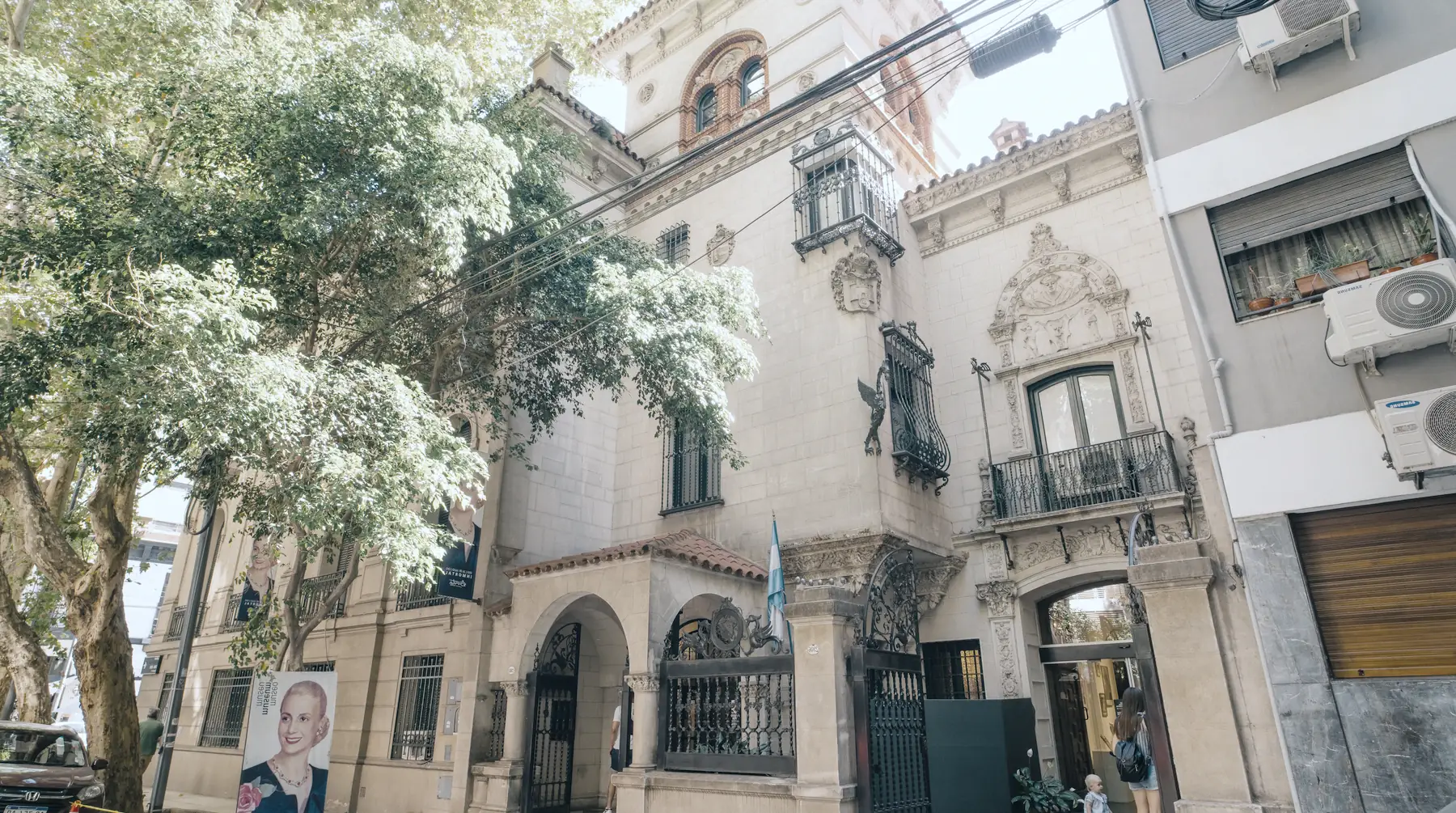
The neighbourhoods most popular with foreigners are Palermo, Belgrano, Recoleta, Núñez and Colegiales: greenery, cafés, schools and above-average safety. Foreigners face no restrictions on buying property, and the average price per square metre in the capital is about $2,484, according to Zonaprop for September 2026. More in the article real estate in Argentina.
Where to live: cities
In brief: most foreigners live in Buenos Aires. Córdoba and Mendoza are cheaper and calmer, and Bariloche is chosen by those who love mountains and nature.
| City | Strengths | Climate | Living for one, $ a month |
|---|---|---|---|
| Buenos Aires | Work, culture, schools, Russian-speaking community | Temperate, humid summer | 1,100-1,650 |
| Córdoba | Universities, IT, lower prices | Dry, warm | 1,100-1,300 |
| Mendoza | Wine, mountains, a calm pace | Dry, sunny | 1,100-1,300 |
| Rosario | A large riverside city, lower prices | Temperate | 1,000-1,300 |
| Bariloche | Lakes, mountains, skiing | Cool, snowy winter | 1,200-1,600 |
The table shows that the difference in budget between cities is smaller than the difference in lifestyle. Buenos Aires, a city of about 15 million people including its suburbs, concentrates the jobs, international schools, best clinics and almost all Russian-speaking life. Córdoba is the country's second city, with large universities and IT companies. Mendoza, at the foot of the Andes, is known for its vineyards and more than 300 days of sunshine a year.
Bariloche in Patagonia resembles the Alps: lakes, mountains, a ski resort and chocolate factories. It is quiet and beautiful, but the choice of schools and healthcare is narrower and the winters are cold. Families with children usually spend the first year in Buenos Aires and then decide whether to stay in the capital.
Healthcare
In brief: foreigners use private health plans. In September 2026 the OSDE 210 plan for a family of four cost about $685 a month, and Swiss Medical SMG02 about $730.
Argentina has three tiers of healthcare: public hospitals, employee health funds paid for by employers, and private prepaid plans. Since August 2026 foreigners without permanent residence pay at national hospitals, so a health plan is needed from the first months. Plans cover doctor visits, tests, hospitalisation, childbirth and the child's first year, and prices rise every month in line with inflation.
The private clinics of Buenos Aires, such as Hospital Alemán, Hospital Italiano, Otamendi and Suizo Argentina, operate at European standards. Many doctors speak English. The cost of a plan rises steeply with age: for people over 55 it is 2-3 times higher than for 30-year-olds. More on childbirth in the article giving birth in Argentina.
Schools and universities
In brief: state schools are free for all children, bilingual private schools cost $400-1,200 a month. State universities are free for citizens and permanent residents.
The school year in Argentina runs from March to December, with the summer holidays in January and February. State schools are free and accept the children of foreigners, but standards vary widely and teaching is in Spanish only. That is why foreign families more often choose bilingual private schools with English, Italian, German or French. Places at the best schools fill up early, so it is worth enrolling six months ahead.
The University of Buenos Aires is among the best universities in Latin America, and tuition is free for citizens and permanent residents. Since 2025 state universities have been allowed to charge foreigners without permanent residence. Children born in Argentina study as citizens.
Sofia MendesInvestment Programs Expert, BRIDGES
Want to move to Argentina? We will help you arrange it
We will take your situation into account and note what you already have and what you still need to obtain.
Work and income
In brief: most foreigners in Argentina work remotely for clients abroad or run their own business. Local salaries in dollar terms are lower than in Europe, and a tax resident pays tax on worldwide income.
The local labour market is open to residents, but peso salaries converted into dollars are noticeably lower than in Europe: mid-level professionals earn a few hundred dollars a month, strong engineers and managers more. That is why relocating families usually keep income from abroad: remote work, a business or investment income. The same income also qualifies for a rentier residence permit.
Freelancers and small business owners register under the simplified tax regime with a fixed monthly payment. IT companies use the knowledge economy regime. More in the articles doing business in Argentina and taxes in Argentina.
Children and family
In brief: Argentina is a country where children are adored and taken everywhere: to cafés, restaurants and concerts. Nurseries accept children from 45 days, and school is compulsory from age 4.
Buenos Aires has many parks and playgrounds, and families with children stroll and have dinner late into the evening. Nurseries are state-run or private, with Spanish-language and bilingual groups. Compulsory education starts at age 4, and at 6 children go to primary school.
There are plenty of clubs and activities: football, field hockey, swimming, tennis, music and dance, including tango. Children born in Argentina receive citizenship from birth, and the children of foreigners get free state education. Many families note that children pick up Spanish within a few months, faster than their parents.
Food and habits
In brief: Argentine cuisine means meat grilled over coals, empanadas, pasta, mate and wine. People dine late, after 9 pm, and at weekends gather for an asado.
Argentine beef is famous across the continent, and meat in the shops costs less than in Europe. The influence of Italian and Spanish settlers shows in everything: pizza, pasta, ice cream and coffee. Mate is a hot herbal drink taken at home, at work and in parks, with the gourd passed round the group. Wine from Mendoza and Salta is sold in every shop at affordable prices.
The rhythm of the day differs from Europe's: shops and cafés stay open late, dinner in a restaurant starts at 9-10 pm, and in summer life moves onto the streets and into the parks. Groceries are bought in supermarkets, markets and small local shops, and delivery works in all large cities.
Safety
In brief: Buenos Aires is safer than most large Latin American cities, but pickpocketing and street phone snatching are common. Safety depends heavily on the neighbourhood.
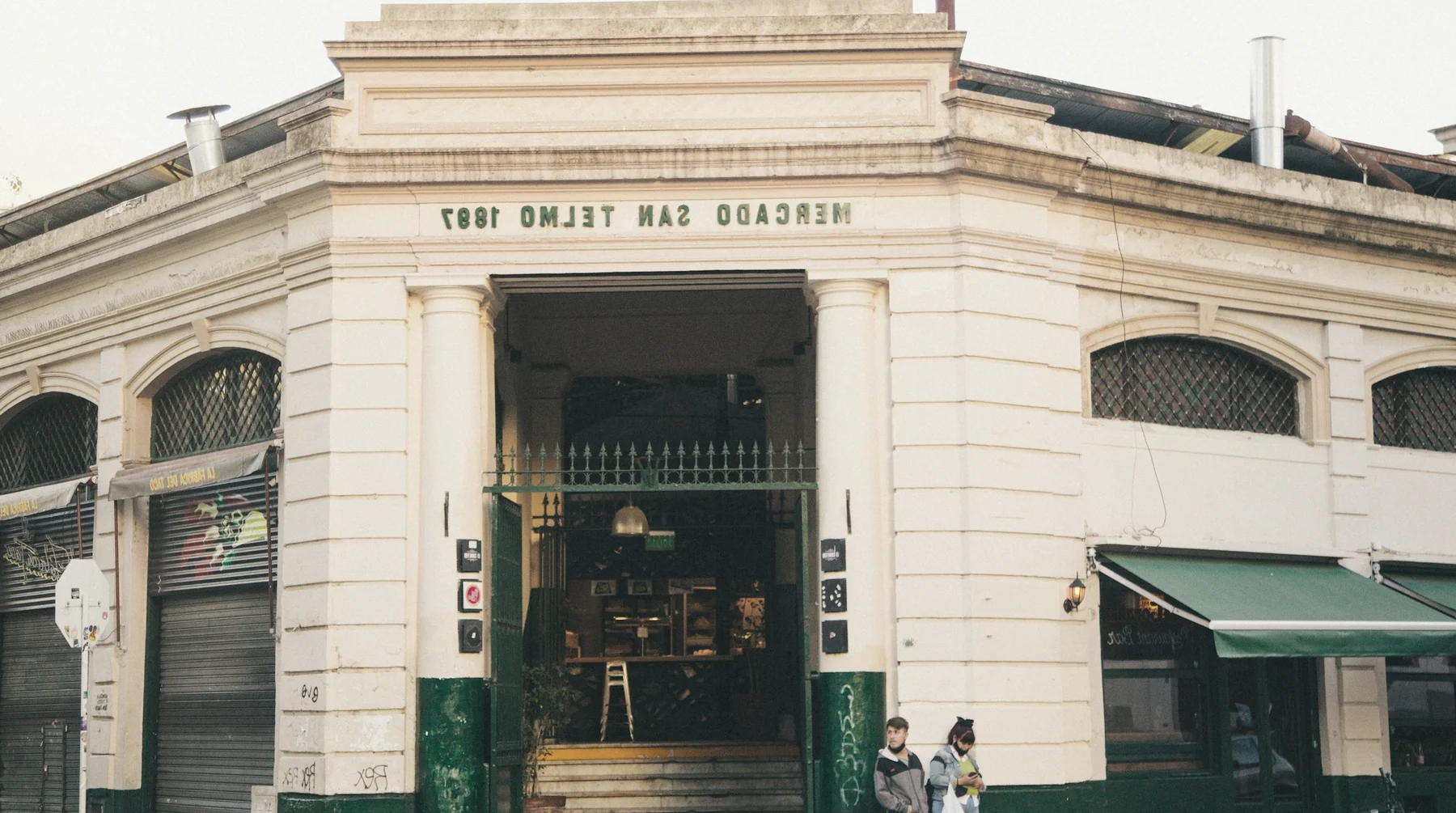
Palermo, Belgrano, Recoleta, Núñez and Puerto Madero are considered safe for living with children. In the centre and tourist areas such as La Boca, San Telmo and Retiro station, you need to be more careful in the evening. Locals advise not holding your phone in your hand on the street and not wearing expensive jewellery.
The homicide rate in Argentina is lower than in Brazil, Mexico and Colombia, and crime in large cities fell over 2024-2025. Even so, when choosing a home foreigners pay attention to building security and street lighting.
Climate
In brief: Buenos Aires has a temperate climate: a hot, humid summer from December to February and a cool winter from June to August without snow. The north of the country is tropical, the south is cold Patagonia.
- Population46 millionabout a third in Greater Buenos Aires
- Area2.8 million km²the eighth largest country by area
- Time difference with Moscow6 hourstime zone UTC-3
- Inflation1.7%for the month of August 2026
INDEC, September 2026
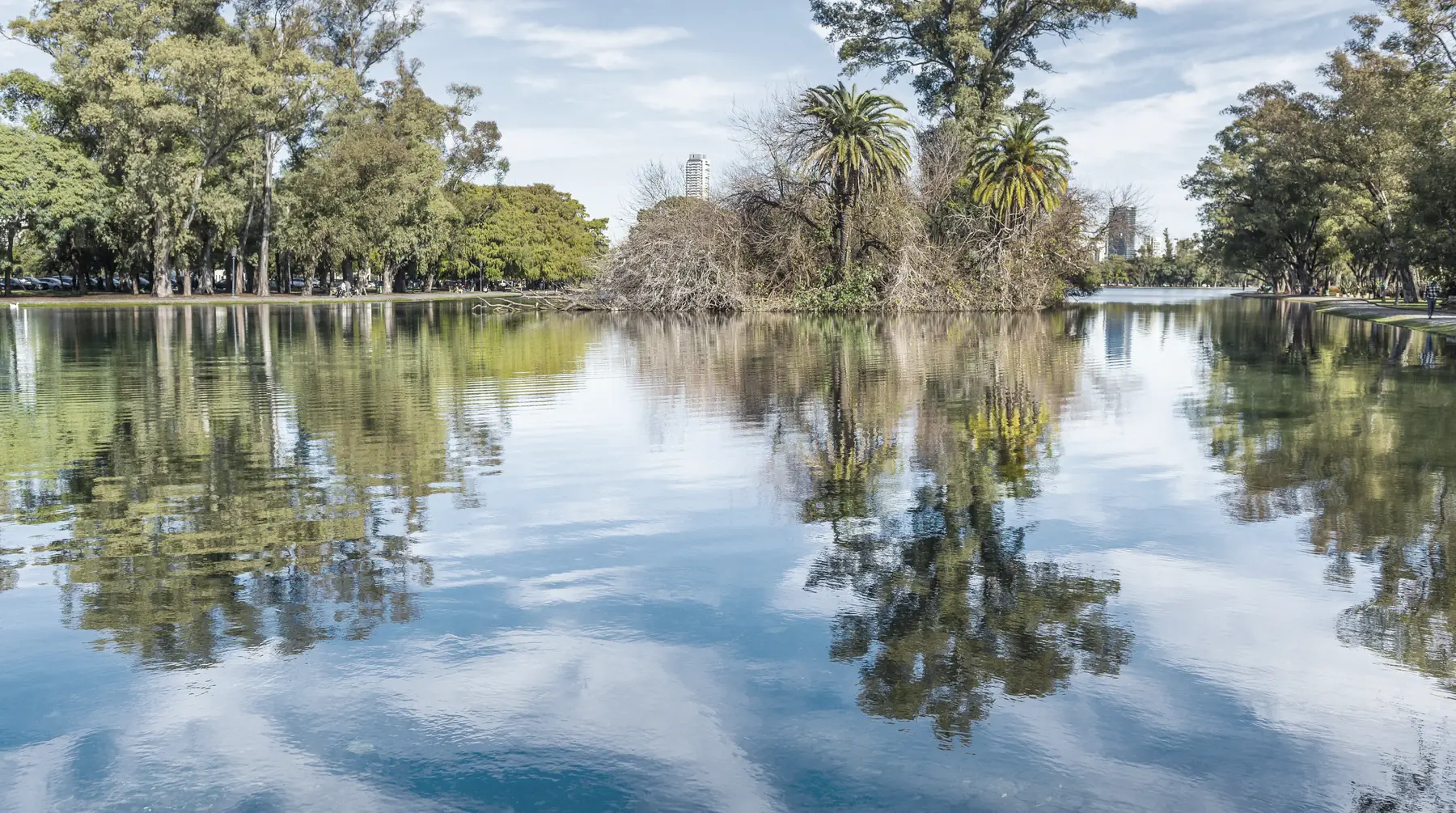
Argentina lies in the Southern Hemisphere, so the seasons are the reverse of Europe's: New Year is celebrated in summer. In summer the capital can reach +35°C with high humidity, and in winter it is +5 to +15°C, so heating in flats is essential. Many families from Russia say the Buenos Aires climate is easier to bear than the heat of Dubai or Thailand.
The country stretches 3,700 km from north to south, so it has everything: the Iguazú Falls in the subtropics, the deserts of Salta, the vineyards of Mendoza, the glaciers of Patagonia and Tierra del Fuego. More on geography in the article where Argentina is.
Everyday life: language, phone, transport, banks
In brief: Spanish is needed for daily life, phone and internet are inexpensive, transport is paid with a SUBE card, and a bank account is opened with a CUIT tax number.
Argentine Spanish has its own pronunciation and uses "vos" instead of "tú", but it is understood by anyone who has learned Spanish. In central Buenos Aires many people speak English, but at government offices, schools and doctors it is hard to manage without Spanish. Mobile service and internet are inexpensive, and fibre-optic internet is available in most urban buildings.
The metro, buses and suburban trains are paid with a SUBE card, and fares are cheap. Taxis and ride-hailing services operate in all large cities. A foreigner opens a bank account with a CUIT tax number, which in March 2026 replaced the former CDI number. More in the article a bank account in Argentina.
Pets
In brief: Buenos Aires is a city of dogs: dog walkers work in the parks and there are vet clinics in every neighbourhood. Bringing in a pet requires a veterinary certificate and a rabies vaccination.
Almost every second Argentine family keeps a dog or a cat, and professional walkers with a dozen dogs on leads are a common sight in Palermo. Vet clinics are open around the clock, and pet food and services cost less than in Europe. To bring in a pet you need an international veterinary certificate issued in the country of departure and a valid rabies vaccination. Airline rules on carrying animals in the cabin and in the hold vary, so check them in advance.
Documents and bureaucracy
In brief: most public services in Argentina are booked online, but decisions are slow. For a foreigner the key documents are the DNI identity card and the CUIT tax number.
Appointments with the migration service, RENAPER and the tax service are booked through the agencies' websites, and the government app "Mi Argentina" stores an electronic copy of the DNI, medical documents and a driving licence. But processing times at government bodies are longer than in Europe, so applications are filed early. Contracts and transactions require notaries, whose services cost noticeably more than in Russia.
A foreign driving licence is valid for tourists, while a resident obtains an Argentine licence from their municipality. More on residence in the article Argentine residence permit.
Flights and staying in touch with home
In brief: Argentina is far from Europe and Russia: about 12-13 hours non-stop to Madrid, and more than a day with a connection to Moscow. The time difference with Moscow is 6 hours.
There are direct flights from Buenos Aires to Madrid, Rome, Paris, Frankfurt, Miami, New York and the capitals of Latin America. Russia and the CIS are reached with a connection in Istanbul, Dubai, Doha, Addis Ababa or Europe. For families whose relatives stay at home this is the main drawback: trips are expensive and long, so grandparents tend to come for extended stays.
Travelling within the region is easy: Uruguay is 1-3 hours away by ferry, and Chile, Brazil and Paraguay are reached by regional flights. Within the country people travel by plane and long-distance coach: the Iguazú Falls, the glaciers of Patagonia, the beaches of Mar del Plata.
Retirement
In brief: retirees with income from abroad obtain a residence permit with a pension of at least 5 minimum wages, about $1,255 a month in September 2026. The main expense in retirement is the health plan.
Argentina attracts retirees with its mild climate, unhurried pace and prices below European levels. A retiree residence permit is issued for a year with renewal, and after 3 years one can obtain permanent residence and free access to public healthcare. Until then a private health plan is needed, which for people over 55-60 costs 2-3 times more than for younger people, so it is chosen in advance and several companies are compared.
Retirees most often choose quiet neighbourhoods of Buenos Aires, Mendoza, Córdoba or resort towns on the coast. More on residence in the article Argentine permanent residence.
The economy: what to expect
In brief: after the 2024-2025 reforms inflation slowed and currency controls for individuals were lifted, but the economy remains sensitive to politics. The next presidential election is in 2027.
For life in the country this means that income and savings in dollars protect a family better than peso deposits. Peso prices rise every month, and rents, health plans and school fees are revised several times a year. The 2027 election may change the government's course, so families make major decisions, such as buying a home or transferring savings, with the political calendar in mind. More in the article Argentina's currency and economy.
The Russian-speaking community
In brief: after 2022 a large Russian-speaking community formed in Buenos Aires: doctors, lawyers, weekend schools, children's clubs and neighbourhood chats.
Russian-speaking families in Argentina help each other find housing, doctors, schools and lawyers. There are Russian-speaking paediatricians and obstetricians, nurseries and weekend schools, as well as Orthodox parishes and community groups. For families with children this makes the first months easier. More on relocation in the article moving to Argentina.
Pros and cons of living there
In brief: the pros are culture, climate, education, attitudes to children and a route to a strong passport. The cons are inflation, bureaucracy, the distance to Europe and the price of imports.
- Pro. European-style city life and culture.
- Pro. A mild climate and nature from the tropics to the glaciers.
- Pro. Strong universities and free education for residents.
- Pro. A route to citizenship after 2 years or by investment.
- Con. Inflation and frequent changes to economic rules.
- Con. Slow bureaucracy.
- Con. Long flights: 12-14 hours to Europe, and more than a day with a connection to Moscow.
A detailed analysis is in the article the pros and cons of Argentine citizenship. How we take an application from vetting to passport is described on the page support for the Argentina programme.
How much does living in Argentina cost a family? We will work it out
We will break the costs down by item: mandatory payments, fees and services, with no hidden amounts.
Sofia MendesInvestment Programs Expert, BRIDGES
Share this article
Frequently asked
Questions people ask before deciding
01How much does it cost to live in Argentina in 2026?
One person in Buenos Aires needs about $1,100-1,650 a month including rent. A family of four needs $3,000-4,500, depending on the school and neighbourhood.
02How much is rent in Buenos Aires?
The average asking rent for a two-room flat in August 2026 was about $583 a month. In Palermo and Recoleta, furnished, it is $700-1,400.
03How much does health insurance cost?
The OSDE 210 plan for a family of four costs about $685 a month and Swiss Medical SMG02 about $730, at September 2026 prices.
04Is it safe to live in Argentina?
Buenos Aires is safer than most large Latin American cities, but pickpocketing is common. Safety depends on the neighbourhood.
05What is the climate like in Buenos Aires?
Temperate: a hot, humid summer from December to February and a cool winter from June to August without snow.
06How much does a private school cost?
A bilingual private school costs $400-1,200 a month per child. State schools are free.
07Do you need to know Spanish?
Yes, for everyday life, government offices, schools and doctors. In central Buenos Aires many people speak English.
08Where is the best place to live in Argentina?
Most foreigners choose Buenos Aires. Córdoba and Mendoza are cheaper and calmer, and Bariloche suits those who love mountains.
09Is there a Russian-speaking community in Argentina?
Yes, after 2022 a large community formed in Buenos Aires: doctors, weekend schools, clubs and neighbourhood chats.
10Can a foreigner buy a flat?
Yes, there are no restrictions on foreigners in cities. The average price per square metre in the capital is about $2,484.
11Can you find work in Argentina?
Residents can work, but local salaries in dollar terms are lower than in Europe. Most foreigners keep a remote job or a business abroad.
12How long is the flight to Argentina?
About 12-13 hours non-stop to Madrid; from Russia and the CIS, with a connection, more than a day.
13Can you retire to Argentina?
Yes. A retiree residence permit is granted with a pension of at least 5 minimum wages, about $1,255 a month in September 2026.
14Do children go to nursery from an early age?
Yes, nurseries accept children from 45 days, and compulsory education starts at age 4.
15Can you bring a dog or cat to Argentina?
Yes. You need an international veterinary certificate from the country of departure and a valid rabies vaccination.
Transparency
How this material was prepared
- Author
- Sofia Mendes, investment Programs Expert, BRIDGES
- Terms and costs last verified
- October 2026
- Sources
- official government authorities of the relevant country and state publications
- Methodology
- government minimum requirements are stated separately from due diligence charges, state fees, legal and banking costs
Sources and methodology
Figures, terms and timelines are checked against official sources as of October 2026. Link availability verified in August 2026. Third-party blogs and agent websites are not used as a source of programme terms.
- [1]EUR-LexOfficial texts of European Union legislationeur-lex.europa.eu/homepage.html
- [2]European Commission - Migration and Home AffairsEntry and residence rules in the EUhome-affairs.ec.europa.eu/index_en
Methodology: tables and charts state government minimum investment requirements; due diligence charges, state fees, legal, banking and other costs are calculated separately and are not included in the minimum thresholds.
About the author
Related materials
What to read next
 ComparisonCaribbean Passport: 5 Citizenship Programs Through Investment in 2026
 ArticleLatin America with a Vanuatu passport: Peru, Ecuador and the Caribbean visa-free
 ComparisonPassport of Portugal or Spain in 2026: which is stronger, terms and dual citizenship
News+1 story on 3 November
Related news
 Argentina · 11 OctArgentina citizenship by investment ban bills: risks for investors
 Greece · 3 NovGreece: the 15% home purchase tax will depend on tax residency, not on your passport
 European Union · 1 NovEuropean Union: updated social security rules for living and working in two countries enter into force
Personal programme selection is conducted by Anna Kovalevskaya, Head of Legal, BRIDGES.
Decided to live in Argentina? We will send a step-by-step plan
We will set out the steps from the first documents to the final status, with the timing of each.
