Citizenship · Argentina
Argentine citizenship for Russians in 2026
Updated: October 2026·18 min read·Expert reviewed
Terms and costs verified: October 2026
Contents
Russian citizens can obtain Argentine citizenship in three ways: by investment from $350,000 with no residence requirement, by naturalisation after two years of living in the country, and through the birth of a child in Argentina. The investment programme announced on 2 October 2026 does not, as of the announcement, restrict applications by nationality, but the vetting takes country risk into account. Russian citizenship is retained, and the Russian Interior Ministry must be notified of the second citizenship within 60 days. Below is what matters specifically to a Russian citizen: documents, the money route, travel, taxes and obligations. Terms, cost and procedure of the programme are on the page Argentine citizenship by investment.
Argentine citizenship for Russians: in brief
In brief: a Russian citizen can obtain Argentine citizenship for a $350,000 contribution or an $800,000 bond without relocating, or by naturalisation after two years of living in the country. Russian citizenship is retained. The key questions are documents from Russia, moving the money and the country-risk vetting.
For Russian citizens, Argentina is attractive because it opens what a Russian passport keeps closed: the Schengen area without a visa, the UK with an electronic travel authorisation, and Japan. Of the citizenship-by-investment programmes open to Russian citizens in 2026, only Argentina gives visa-free Schengen access. The Caribbean programmes are closed to Russian citizens, and the EU programmes have been discontinued.
The programme is new and carries risks. The National Electoral Chamber has declared the decree it rests on null and void, the dispute is before the Supreme Court, and the regulations have not been published. So a sensible plan for a family from Russia is to prepare the documents and the money route now and to pay once there is clarity. More on the risks in the article the legal basis of Argentina's programme.
Law No. 346, Decrees 3213/84, 366/2025, 524/2025; government statement of 2 October 2026
The comparison shows that the route depends on a single question: is the family prepared to live in Argentina? If so, naturalisation is cheaper. If the family stays in Russia, the UAE or Europe, the only route without relocating is the investment programme. The third route, the birth of a child in Argentina, gives the child citizenship immediately and the parents grounds for residence.
Is the programme open to Russian citizens
In brief: as of the announcement on 2 October 2026, the programme sets no restrictions based on the applicant's nationality. The vetting includes a country-risk assessment under OECD and FATF standards, and Russian citizenship will be taken into account.
The Argentine government has announced multi-stage vetting: the Citizenship by Investment Programmes Agency checks the investment and the applicant, and opinions are given by the Ministry of Security, the UIF financial intelligence unit, the criminal records registry, the RENAPER national registry of persons and the SIDE intelligence service. They check identity, the route and lawfulness of the money, finances, country and jurisdictional risks, reputation and travel history. For a Russian citizen this means closer attention to the source of funds and to connections.
The Agency's regulations may specify requirements for citizens of particular countries. Until they are published, BRIDGES checks eligibility by nationality and risk in a preliminary Due Diligence, free of charge and before any contract. If we see a risk, we say so at once. The questionnaire is the preliminary check for Argentina.
Sanctions and public office
The programme is effectively unavailable to people under US, EU or UK sanctions and to their close relatives: banks will not process the payment, and the vetting will reject the application. Public officials and their relatives undergo enhanced source-of-funds checks. These questions are clarified before work begins, so that the family does not lose money on documents and fees.
Residence is a separate matter. A Russian citizen who has long lived in the UAE, Turkey, Serbia or a European country and holds a permanent status there is vetted with that country taken into account. For them the money route and the documents are usually simpler: income and taxes are confirmed in the country of residence, and the payment comes from an account with a long history. That is why the first thing BRIDGES clarifies is not only nationality but also where the family lives and pays tax.
Entering Argentina for Russian citizens
In brief: Russian citizens enter Argentina without a visa and may stay for up to 90 days. That is enough for the trip to collect a passport under the programme and to apply for residence when relocating.
There are no direct flights from Russia to Argentina, so people fly with a connection, usually via Istanbul, Dubai or Europe. A connection in Europe requires a Russian citizen to hold a transit or Schengen visa, depending on the airport, so the route is planned via Turkey or the Persian Gulf. At the Argentine border you may be asked for a return ticket, an accommodation booking and funds for the trip.
Under the investment programme, the trip is needed after the decision: the family receives DNI identity cards and passports at RENAPER. BRIDGES combines all the appointments into a single trip. For naturalisation, visa-free entry is the first step: an application for residence is filed within 90 days, and while it is being processed a permit to live and work is issued. More in the article Argentine residence permit.

Documents from Russia
In brief: birth and marriage certificates, an Interior Ministry criminal record certificate and proof of funds. All documents are apostilled and translated into Spanish by an Argentine sworn translator.
Russia and Argentina are both parties to the Hague Apostille Convention, so Russian documents for Argentina are apostilled in Russia and no consular legalisation is needed. The apostille on civil registry certificates is affixed by the civil registry department of the region where the document was issued, and on the criminal record certificate by the Interior Ministry. The documents are then translated into Spanish by an Argentine sworn translator, and the translator's signature is certified by the College of Translators.
| Document | Where to obtain it | What to do for Argentina |
|---|---|---|
| Birth certificate | Civil registry office, a duplicate if lost | Apostille and sworn translation |
| Marriage or divorce certificate | Civil registry office | Apostille and translation |
| Criminal record certificate | Interior Ministry, via Gosuslugi or an MFC centre | Apostille and translation, limited validity |
| Criminal record certificates from other countries | Countries where you have lived in recent years | Apostille or legalisation and translation |
| Proof of funds | Banks, tax office, notary | Translation of key documents |
| International passport | Interior Ministry | Valid throughout the process |
A common problem for families from Russia is inconsistent Latin spelling of the surname across the international passport, certificates and bank documents. Before translation BRIDGES agrees a single spelling and, if needed, prepares transliteration documents. The second problem is old Soviet-style certificates and documents issued in other former Soviet republics: they are apostilled where they were issued, and that takes longer.
Money: how to pay from Russia
In brief: money enters Argentina only through banks, with checks on its origin. Direct transfers from Russian banks are restricted, so the payment usually comes from an account in a third country, and the history of the funds is documented from the very start.
The source-of-funds check for a Russian citizen covers the entire route of the money: how it was earned, where it was held and how it reached the account the payment is made from. Acceptable sources are business and employment income, the sale of property or a stake in a company, dividends and inheritance. Each is backed by documents: contracts, statements, tax returns and income certificates.
Banks that process a large transfer to Argentina check the sender and the country. An account in a third country where the family has a transaction history, such as the UAE, Turkey, Kazakhstan, Armenia or a European country, reduces the risk of delay. BRIDGES agrees the payment route with the bank in advance, so that the transfer clears the checks without being held up. More in the article a bank account in Argentina.
- Visa-free stay in Argentina90 daysfor entry and a residence application
- Interior Ministry notification of a second citizenship60 daysfrom the day the document is received
- Russian tax residencefrom 183 daysin Russia over 12 consecutive months
Argentine entry rules, Federal Law No. 138-FZ, Russian Tax Code
The three deadlines on the chart are worth keeping in mind from the start. The 90 visa-free days determine the length of the trip to Argentina. 60 days is the deadline for notifying the Interior Ministry of a second citizenship after the document is received. 183 days in Russia within 12 months determine whether the family remains Russian tax resident.
Russian citizenship and the Interior Ministry notification
In brief: Argentina does not require renunciation of Russian citizenship, and Russia does not prohibit a second citizenship. Notification of Argentine citizenship is filed with the Interior Ministry within 60 days.
The notification is filed with the local Interior Ministry office at the place of residence in Russia or, if the person is abroad, within 30 days of their first entry into Russia. Copies of the Russian passport and of the Argentine citizenship document are attached. For failing to file on time, the Criminal Code provides for a fine of up to 200,000 roubles or compulsory labour; breaching the filing procedure carries an administrative fine.
On Russian territory a citizen with two passports is treated solely as a Russian citizen: they enter and leave on the Russian passport and do not receive Argentine consular protection in Russia. The obligations of a Russian citizen, including military registration for men, remain in place. More in the article dual citizenship in Russia.
Viktoria LebedevaManaging Director, Private Clients, BRIDGES
Want Argentine citizenship with a Russian passport? We will help you get it
We will set out the steps from the first documents to the final status, with the timing of each.
How much it costs a family from Russia
In brief: a single applicant pays a $350,000 contribution, a couple $450,000, a family of four with children under 18 $500,000. On top of that come programme fees, documents, translations, the trip and banking costs for the payment route.
For a family from Russia, preparing the money route is added to the usual costs. If the family has no account with a transaction history in a third country, one is opened in advance, which takes time and money: transfer fees and sometimes obtaining residence in the bank's country. Soviet-era documents and documents from other former Soviet republics must be apostilled where they were issued, which also adds costs.
The $800,000 bond option usually does not suit a family from Russia: holding such a sum in Argentine securities for seven years without interest and then repatriating it through the banking system is an additional risk. A detailed calculation is in the article the cost of Argentine citizenship and in the estimate, which recalculates the amount for your family.
How BRIDGES handles families from Russia
In brief: BRIDGES starts with a free preliminary check, then prepares the documents from Russia, the payment route and proof of funds, and files the application once the regulations are published.
Work with a family from Russia begins with the questions that decide the outcome: the source of funds, the country through which the payment will go, sanctions and reputational risks, and the composition of the family. If there is a risk, BRIDGES says so before the contract and shows how to address it or which programme to choose instead of Argentina. Then comes gathering documents in Russia: certificates, records, apostilles, a single spelling of the surname and translation into Spanish.
Once the regulations are published, BRIDGES files the application, responds to requests from the Agency and the services, agrees the payment with the bank and arranges a single trip to Buenos Aires for the DNI cards and passports. After the passport is issued, we remind you of the Interior Ministry notification deadline and help prepare it. We have been working since 2004, and more than 8,000 families have gone through BRIDGES. How we take an application from vetting to passport is described on the page support for the Argentina programme.

Taxes for a Russian citizen
In brief: an Argentine passport does not change your tax position: a Russian tax resident pays taxes in Russia and reports foreign accounts and companies. Argentina does not tax a citizen who lives abroad.
A person remains a Russian tax resident if they spend 183 days or more in the country within 12 consecutive months. A resident pays tax on worldwide income, notifies the Federal Tax Service of accounts opened abroad, and reports cash flows and controlled foreign companies. An account in Argentina, if opened, also falls within this reporting.
In Argentina, a citizen who lives abroad and holds a permanent status there, or has been outside the country for 12 consecutive months, is not considered a tax resident. If the family moves to Argentina, it becomes Argentine resident and pays taxes there. More in the article taxes in Argentina. If the family sells assets in Russia to pay the contribution, tax on the sale is calculated under Russian rules, and proof of tax paid will help confirm the source of funds.
Russian speakers in Argentina
In brief: since 2022 a sizeable Russian-speaking community has formed in Buenos Aires: families who moved to live, give birth and work remotely. There are Russian-speaking doctors, lawyers, weekend schools and interest groups.
After 2022 Argentina became one of the popular destinations for Russian citizens: visa-free entry, lenient residence conditions, birthright citizenship for children and relatively low prices in dollar terms. Most of those who moved live in Buenos Aires, in Palermo, Belgrano, Recoleta and Núñez. Spanish is needed for daily life, but in the first months Russian-speaking professionals and community chats help.
For an investor who does not relocate, the community is useful as a source of practical help during the trip to collect documents. For a family considering a move, it is a first network of contacts. On life in the country, see the articles living in Argentina and moving to Argentina.
Giving birth in Argentina for Russian citizens
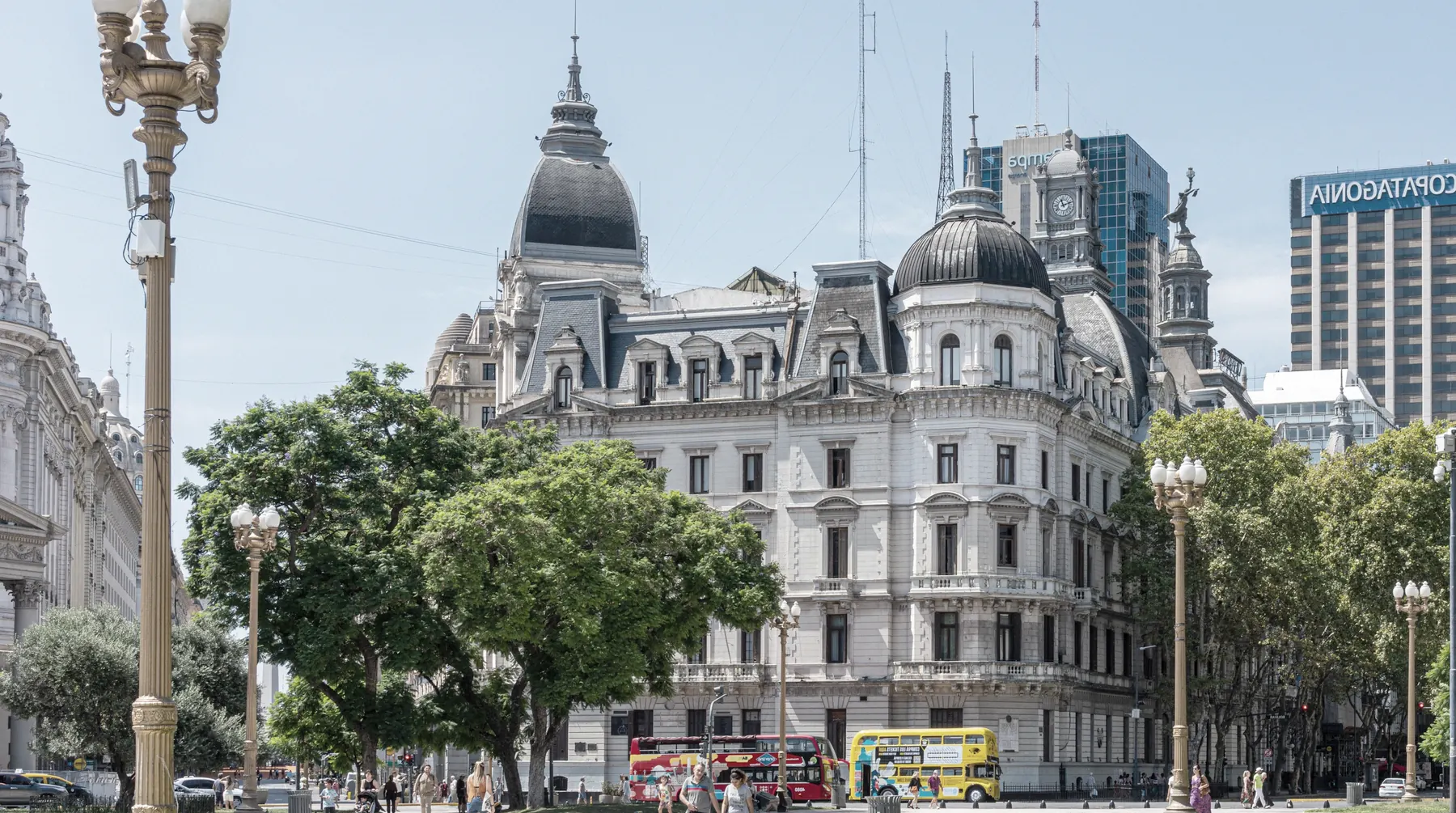
In brief: a child born in Argentina is a citizen of the country from birth. The parents gain the right to residence, and their own route to citizenship after 2025 depends on the Supreme Court's ruling.
For years Russian citizens came to Argentina to give birth: the child received an Argentine passport, and under Decree 3213/84 the parents could naturalise without a residence period. Decree 366/2025 changed this: parents now naturalise on general terms after two years of living in the country. Courts that follow the chamber's ruling apply the previous rules. An Argentine child remains a citizen in any case and receives a passport with 168 destinations without a consular visa. More in the article giving birth in Argentina and the child's citizenship.
Argentina and other programmes for Russian citizens
In brief: if the passport is needed quickly, Vanuatu and Turkey are available to Russian citizens. Argentina is the choice when visa-free Schengen access matters and the family is prepared to wait for the regulations.
Vanuatu issues a passport in 2-3 months from $130,000, and Russian citizens give biometrics in Moscow or St Petersburg. Turkey grants citizenship for real estate from $400,000, and the money stays in the property. Neither passport opens Schengen without a visa, but with a Vanuatu passport families obtain a Greek golden visa and live in the EU. More in the articles Argentina or Vanuatu, Argentina or Turkey and a second passport for Russians in 2026.
Where Russian citizens go wrong
In brief: they do not prepare the money route in advance, mix up the spelling of the surname across documents, fail to notify the Interior Ministry and plan a connection in Europe without a visa.
- They start by choosing a programme rather than with the money. Routing funds from Russia takes the most time.
- They do not agree the Latin spelling of the surname. Discrepancies trigger queries from the vetting bodies.
- They do not notify the Interior Ministry. The deadline is 60 days, and a breach carries criminal liability.
- They plan a Schengen connection without a visa. For Russian citizens, the route is planned via Turkey or the Persian Gulf.
- They transfer the contribution before the regulations. The procedure for payment and refunds has not yet been set.
What to check before you start
In brief: whether there are sanctions or reputational risks, where the money comes from and through which country the payment will go, who is included in the application, and where the family will live and pay tax.
- Whether there are sanctions, politically exposed person status or other vetting risks.
- How the source of the full amount is documented and through which country the transfer will go.
- Who is included in the application: a spouse, children under 25.
- Where the family will be tax resident and which reports are required in Russia.
- How much the programme costs for your family: the cost calculation and the estimate.
How Argentina compares with other second-passport options for Russian citizens is covered in the article a second passport for Russians.
Questions about Argentine citizenship? A lawyer will answer
Describe your situation briefly and we will tell you where to start.
Viktoria LebedevaManaging Director, Private Clients, BRIDGES
Ask a lawyerShare this article
Frequently asked
Questions people ask before deciding
01Can Russian citizens obtain Argentine citizenship?
Yes. As of the announcement, the investment programme does not restrict applications by nationality. Naturalisation after two years of living in the country and the route through a child's birth are also available.
02Do you have to renounce Russian citizenship?
No. Argentina does not require renunciation, and Russia does not prohibit a second citizenship. The Interior Ministry must be notified of Argentine citizenship within 60 days.
03Does a Russian citizen need a visa for Argentina?
No. Russian citizens enter Argentina without a visa and may stay for up to 90 days.
04Where is the Argentine passport issued?
In Buenos Aires: after the citizenship decision the family receives DNI identity cards and passports at RENAPER. BRIDGES combines all the appointments into a single trip.
05How do you transfer money from Russia for the contribution?
Direct transfers from Russian banks are restricted. The payment usually comes from an account in a third country, and the source and route of the money are documented.
06Which documents are needed from Russia?
Birth and marriage certificates, an Interior Ministry criminal record certificate and proof of funds. All with an apostille and a translation by an Argentine sworn translator.
07What happens if you do not notify the Interior Ministry?
The Criminal Code provides for a fine of up to 200,000 roubles or compulsory labour for failing to file a notification of a second citizenship.
08Do you have to pay taxes in Argentina?
No, if you live abroad and hold a permanent status there, or have been outside Argentina for 12 consecutive months. A Russian tax resident pays taxes in Russia.
09Does an Argentine passport give visa-free Schengen access?
Yes, 90 days in any 180-day period. Among the programmes open to Russian citizens, it is the only passport with visa-free Schengen access.
10What are the programme's risks for Russian citizens?
The vetting takes country risk into account, the programme's legal basis is being challenged in the Supreme Court, and the regulations have not been published.
11Can you give birth in Argentina to obtain citizenship?
A child born in Argentina is a citizen from birth. The parents gain the right to residence; their own route to citizenship after 2025 depends on the Supreme Court's ruling.
12How much does Argentine citizenship cost a family from Russia?
A single applicant $350,000, a couple $450,000, a family of four with children under 18 $500,000 in contributions, plus fees, documents, the trip and banking costs.
13Does the $800,000 bond suit a family from Russia?
Usually not: the money is tied up for seven years without interest, and repayment through the banking system adds risk. The contribution is chosen more often.
14Can you apply if the family does not live in Russia?
Yes. A Russian citizen with a permanent status in the UAE, Turkey or Europe is vetted with the country of residence taken into account, and the money route is usually simpler for them.
15What if the passport is needed quickly?
Consider Vanuatu: a passport in 2-3 months from $130,000, with biometrics in Moscow or St Petersburg.
Transparency
How this material was prepared
- Author
- Viktoria Lebedeva, managing Director, Private Clients, BRIDGES
- Terms and costs last verified
- October 2026
- Sources
- official government authorities of the relevant country and state publications
- Methodology
- government minimum requirements are stated separately from due diligence charges, state fees, legal and banking costs
Sources and methodology
Figures, terms and timelines are checked against official sources as of October 2026. Link availability verified in August 2026. Third-party blogs and agent websites are not used as a source of programme terms.
- [1]EUR-LexOfficial texts of European Union legislationeur-lex.europa.eu/homepage.html
- [2]European Commission - Migration and Home AffairsEntry and residence rules in the EUhome-affairs.ec.europa.eu/index_en
Methodology: tables and charts state government minimum investment requirements; due diligence charges, state fees, legal, banking and other costs are calculated separately and are not included in the minimum thresholds.
About the author
Related materials
What to read next
 ComparisonArgentina or Sao Tome citizenship: price, timing, passport and risks
 ArticleArgentine passport: ranking, strength and how to get it
News+1 story on 3 November
Related news
 Argentina · 11 OctArgentina citizenship by investment ban bills: risks for investors
 Greece · 3 NovGreece: the 15% home purchase tax will depend on tax residency, not on your passport
 European Union · 1 NovEuropean Union: updated social security rules for living and working in two countries enter into force
Personal programme selection is conducted by Anna Kovalevskaya, Head of Legal, BRIDGES.
Decided to move to Argentina? We will send you the document list
We will take your situation into account and note what you already have and what you still need to obtain.
