Comparisons · Saint Kitts and Nevis
Vanuatu or St Kitts: which citizenship by investment to choose in 2026

Updated: September 2026·16 min read·Expert reviewed
Terms and costs verified: September 2026
Contents
Two passports, one from the Pacific and one from the Caribbean, two different worlds. Vanuatu gives citizenship in a couple of months for the most modest sum on the market, but with reduced visa-free access. St Kitts has been running since 1984, costs more and checks more strictly, but it opens Schengen and the UK. In short: one solves the problem of speed and budget, the other the problem of prestige and real visa-free access. We look at what exactly you are buying in each case and which option suits whom in 2026.
In brief: Vanuatu or St Kitts
Vanuatu is one of the fastest and cheapest passports on the market, but its visa-free access has narrowed considerably: since 2023 both Schengen and the UK have been closed. St Kitts is more expensive and stricter, but it gives what a second citizenship is usually obtained for: real freedom of movement around Europe and the UK, plus the reputation of the oldest programme. Both countries have zero taxes, and you do not need to live there for a single day.
- Urgent and inexpensive (a back-up document, mobility outside the EU, moving beyond the restrictions of your current passport): Vanuatu.
- Strong visa-free access and a solid reputation (Schengen, the UK, banks, business, a long-term outlook for the family): St Kitts.
Below is a direct comparison of price, speed, passport strength, checks and family, so the choice is an informed one.
Summary table: Vanuatu against St Kitts
The main parameters of both programmes side by side as of 2026.
| Parameter | Vanuatu | St Kitts and Nevis |
|---|---|---|
| Programme launch | 2017 | 1984 (the oldest) |
| Minimum contribution | from USD 130,000 (donation) | from USD 250,000 (SISC fund) |
| Type of status | citizenship straight away | citizenship straight away |
| Timing | 2-3 months | from about 60 days (AAP), standard 4-6 months |
| Residence | not required | not required |
| Family | spouse, children, parents | spouse, children, parents, sometimes siblings |
| Schengen | no (since 2023) | yes |
| United Kingdom | no (since 2023) | yes |
| Total visa-free/on arrival | about 90+ countries | about 150+ countries |
| Tax on worldwide income | 0% | 0% |
| Return of money | no (donation) | no under SISC; partly with the real estate option |
| Due diligence | moderate | strict, multi-level |
Detailed reviews of both programmes are in the guides to Vanuatu citizenship by investment and St Kitts and Nevis citizenship by investment.
Vanuatu: speed and a minimal budget
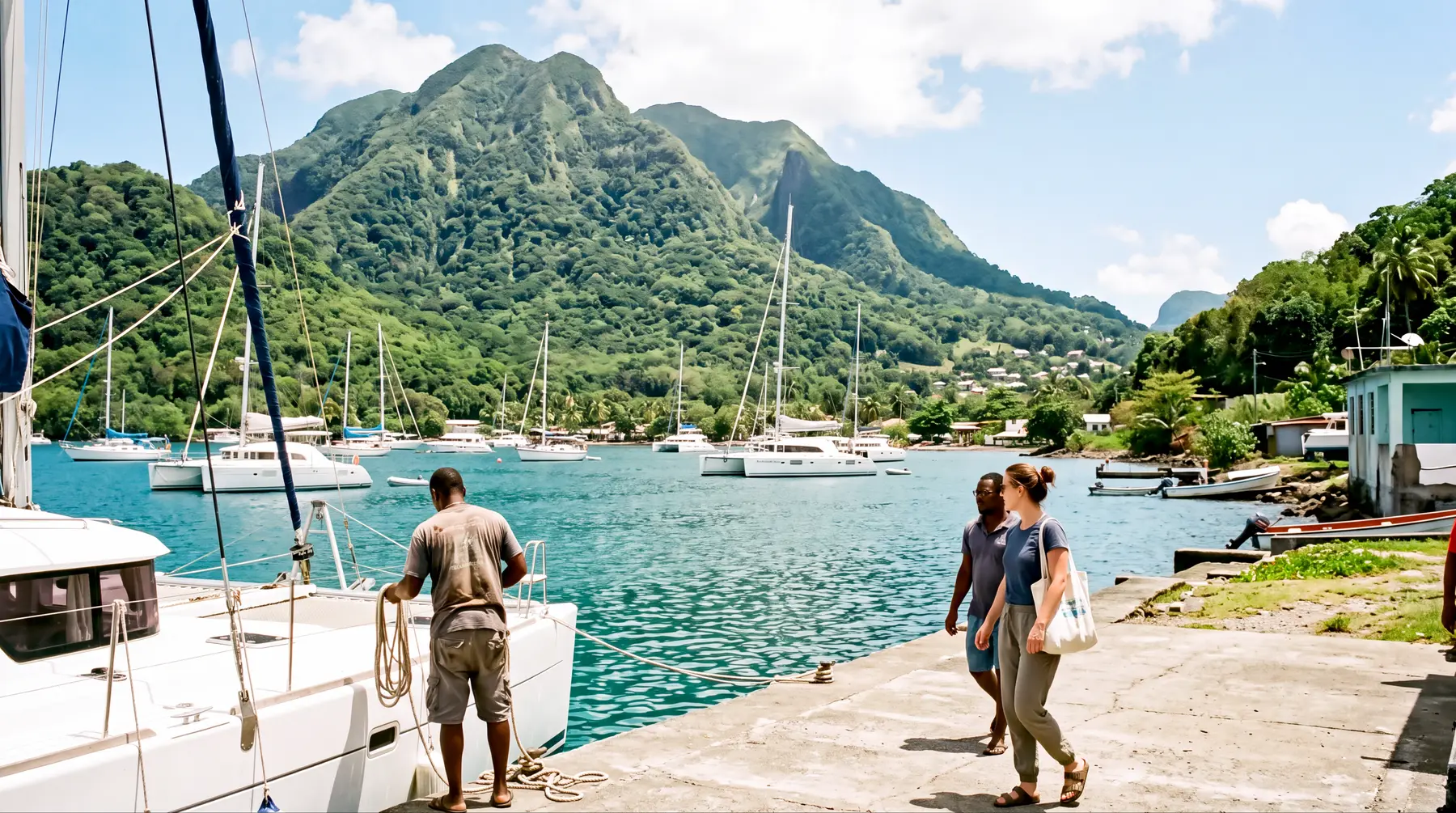
Vanuatu is a Pacific island state whose citizenship by investment programme (DSP/CIIP) started in 2017 and quickly became a byword for “fast”. There are no requirements for residence, language or a personal visit: the whole process is remote.
The basic route is a non-refundable donation to a state development fund. For a single applicant it is from USD 130,000, and for a family of four the amount rises to roughly USD 165,000 including additional contributions for dependants. There is also an alternative configuration (CIIP), where part of the amount is paid as a contribution to an approved investment fund and partly returned after several years; its terms are confirmed with the government, so take the non-refundable contribution as the basic model.
What you actually get: a lawful second passport in 2-3 months, zero tax on worldwide income, the right to pass citizenship to children and easy mobility outside the EU and the UK. It is a working tool for those who need a back-up document here and now.
- The shortest timelines on the market.
- The lowest entry threshold among citizenship programmes.
- Fully remote, with no residence.
- The main drawback is that Schengen and the UK are closed (more below).
It is important to understand the nature of this passport. Vanuatu was never designed as a “European” document: it is a Pacific offshore jurisdiction with zero taxation, and its strength has always been speed and privacy rather than the number of destinations. After the EU measures the programme openly repositioned itself: today it is chosen not for Paris but for quickly obtaining a lawful second citizenship, diversifying risks and mobility across Asia, the Caribbean and the former Soviet Union. For an entrepreneur who needs a back-up document within weeks, it is still one of the most practical options on the market.
St Kitts and Nevis: the benchmark of Caribbean CBI
We will match a programme to your goal
We will discuss your family composition, budget and the purpose of a second passport and name the programme that meets the goal faster and for less.
St Kitts and Nevis launched its programme back in 1984: it is the oldest citizenship by investment scheme, and over the decades it has set the standard for the whole Caribbean. Reputation here is not a marketing word but an asset: with a St Kitts passport it is easier to open accounts and do international business.
The main route is a non-refundable contribution to the island’s sustainable development fund, the SISC (Sustainable Island State Contribution), from USD 250,000 for a single applicant. The money goes to healthcare, education, infrastructure and energy. There is also an option to invest in approved real estate, where part of the funds may be recovered on sale, but the entry threshold there is higher.
Separately there is the accelerated AAP (Accelerated Application Process): for an additional fee of about USD 25,000 for the main applicant and around USD 20,000 for each dependant, the review is shortened to about 60 days. This is St Kitts’ direct answer to Vanuatu’s speed, albeit for a price.
- The oldest and one of the most respected programmes.
- A strong passport: Schengen and the UK.
- Strict, multi-level checks, which is a plus for the document’s reputation.
- The price and fees are noticeably higher than Vanuatu’s.
Stability deserves a separate mention. After the OECS reform, the minimum contributions for Caribbean programmes were raised and harmonised at USD 200,000-250,000 or more, and St Kitts was one of the first to move to the new threshold through the SISC fund. This step ended price wars between the islands and reduced pressure from the EU and the US, which had demanded that the Caribbean tighten its rules. For the investor this means predictability: you are buying not a one-off “offer” but a status that partner countries are less likely to withdraw. It is this predictability that sets St Kitts apart from programmes that have faced restrictions.
If you are considering other islands too, our review of the Caribbean passport by investment is useful.
Full cost: contribution, fees, family
Comparing only the base contribution is a mistake. The real amount is made up of the contribution, government and due diligence fees, payment for dependants and support services. Below is a guide for 2026.
| Item | Vanuatu (1 applicant) | St Kitts (1 applicant) |
|---|---|---|
| Base contribution | from USD 130,000 | from USD 250,000 (SISC) |
| Acceleration | included in the standard timeline | AAP about USD 25,000 on top |
| Family (typical) | about USD 165,000 for 4 people | noticeably higher because of fees for each person |
| Due diligence / government fees | moderate | higher, reflecting the depth of checks |
The conclusion on money is clear: Vanuatu is the most budget-friendly entry to the citizenship market, and a family of four costs less than a single applicant in St Kitts. St Kitts is the premium segment, where you pay extra not for the island but for passport strength and reputation. BRIDGES experts will calculate an exact estimate for your family at a free consultation.
Vanuatu and St Kitts timing step by step
Both programmes are remote, but speed is one of the main arguments in the choice.
- Step 1. Preliminary compliance check and collecting the document package: 1-2 weeks in both cases.
- Step 2. Filing through a licensed agent: direct filing is not possible in either Vanuatu or St Kitts.
- Step 3. State due diligence: faster and lighter in Vanuatu, deeper and longer in St Kitts.
- Step 4. Approval, payment of the contribution, issue of the passport.
The result: Vanuatu fits into 2-3 months, sometimes less. St Kitts under the accelerated AAP gives a result in about 60 days, and under the standard procedure in 4-6 months. If speed is critical, both options work, but Vanuatu has the shortest route. More on the race against time in the article on the fastest second citizenship.
Passport strength: where the line of choice runs
This is the main difference between the two programmes, and this is where the decision is most often made.
Vanuatu. From 2022 the EU began to wind down visa-free access, and from February 2023 it fully suspended visa-free Schengen entry for all Vanuatu citizens; in December 2024 this decision was made final (see the official EU Council release). From July 2023 the UK also introduced a visa for Vanuatu citizens. In the end the passport gives 93 destinations without a visa or with a visa on arrival, including Hong Kong, Singapore, Russia, and parts of Asia and the Caribbean, but without the two zones that matter most to most people.
St Kitts. The passport opens visa-free Schengen and the UK, about 150+ countries and territories in total. An honest caveat: from 15 June 2026 Ireland introduced visa requirements for citizens of St Kitts (and several other Caribbean countries); this is not Schengen, but it is worth taking into account. Compared with Vanuatu, St Kitts’ visa-free access still remains incomparably stronger.
If your goal is free entry to Europe and the UK, the choice is predetermined in favour of St Kitts. If Europe is not a priority, Vanuatu’s advantage on price and timing outweighs it.
Family in the application: Vanuatu and St Kitts
Both countries allow citizenship for the whole family in one application and pass it on to children by birth.
- Vanuatu: spouse, children (including adult dependants within the set limits) and parents. The surcharge for each dependant is small, so a family application remains one of the most affordable on the market.
- St Kitts: spouse, children, parents, and in some cases the main applicant’s siblings. The range of relatives is traditionally one of the widest among Caribbean programmes, but each additional participant noticeably increases the estimate through fees and due diligence.
For a large family on a limited budget Vanuatu is better value; if a wide circle of relatives and a strong passport for the children for years ahead matter, St Kitts.

Due diligence: what BRIDGES checks for both programmes
The level of checks is not bureaucracy but what determines the passport’s stability in future. The more strictly a state filters applicants, the lower the risk that partner countries will close visa-free access (as happened with Vanuatu).
- Vanuatu: the check is moderate and quick, which is a plus for timing, but lenient controls in the past became one of the reasons for the EU measures.
- St Kitts: multi-level, involving international due diligence firms. Longer and more expensive, but it is what keeps the passport’s reputation high.
Before filing, BRIDGES carries out its own preliminary compliance check: we analyse the source of funds, background, past visa refusals and potential stop factors. This reduces the risk of refusal and saves your money, as an application rejected by the state does not return the contribution. For both programmes we will tell you plainly in advance whether you qualify.
In practice the reason for refusal is most often not criminal history but details: an unclear origin of funds, unresolved tax issues, previous US, Canadian or UK visa refusals, discrepancies in documents. The state interprets doubts against the applicant, and the contribution is not returned on refusal, so a preliminary check pays for itself many times over. St Kitts sets a higher bar, and preparing the document package takes more time, but the passport obtained is also more stable. Vanuatu’s check is softer, but that is no reason to file as is: even here an incorrect document package leads to rejection.
“Clients often come asking for ‘cheaper and faster’ and automatically choose Vanuatu. I always ask a counter-question: what do you need it for? If the goal is to travel to Europe or the UK, Vanuatu no longer does that, and the money saved becomes money wasted. St Kitts is more expensive and stricter on checks, but it is that strictness that keeps its visa-free access strong for years. Vanuatu’s speed is invaluable when the document is needed here and now and Europe is not a priority. These are two different tools for two different tasks, and my job is to make sure you do not overpay for someone else’s task.”
 Anna KovalevskayaHead of the Legal Department, BRIDGES
Mistakes when choosing between Vanuatu and St Kitts
- Looking only at price. Vanuatu is cheaper, but if you need Schengen the saving is pointless, as the passport will not do the job.
- Trusting outdated visa-free lists. Many articles still credit Vanuatu with Schengen and the UK, which has been wrong since 2023.
- Ignoring due diligence. Trying to hide a visa refusal or a problematic source of funds almost guarantees rejection without a refund of the contribution.
- Treating the contribution as the “final price”. Government fees, due diligence and payment for each family member can change the estimate significantly, especially in St Kitts.
- Filing directly. Both countries accept applications only through licensed agents; filing on your own is not possible.
Who Vanuatu suits and who St Kitts suits
Let us reduce everything to practical scenarios.
- You need a passport urgently and inexpensively: Vanuatu. A back-up document, mobility outside the EU, quickly moving beyond passport restrictions.
- Schengen and the UK are what matter: St Kitts. Travel, business, children’s studies in Europe.
- A large family, a limited budget: Vanuatu, where a family of four costs less than one applicant in St Kitts.
- The passport’s reputation with banks and business matters: St Kitts.
- Zero taxes without relocating: both work, as neither Vanuatu nor St Kitts taxes worldwide income or requires residence.
- A long-term outlook for the children: St Kitts, with stable visa-free access and a time-tested programme.
There is also a third, combined scenario. Some clients first obtain Vanuatu as a fast back-up document to meet an urgent need for mobility, and then, without haste, obtain St Kitts for strong visa-free access and a long-term outlook. This is a lawful strategy: both states allow multiple citizenship, and holding one passport does not prevent obtaining another. Whether to take this route depends on the budget and real needs; at a consultation we will tell you plainly whether you need a second document or one well-chosen passport is enough.
Related reading: Vanuatu or the Caribbean, Vanuatu or Turkey, comparison with the Nauru programme, comparison with São Tomé and Príncipe, full cost comparison, Vanuatu citizenship with BRIDGES, turnkey cost calculation.
Conclusion: Vanuatu or St Kitts
This comparison is not about “better or worse” but about different tasks. Vanuatu remains the champion of speed and price: in 2-3 months and from USD 130,000 you get a lawful second citizenship with zero taxes. But after losing Schengen and the UK, its value has shifted towards a back-up document and mobility outside Europe.
St Kitts is an investment in passport strength and reputation. More expensive, stricter on checks, but with real visa-free access to Schengen and the UK and the status of the world’s oldest programme. For most people for whom Europe matters, it is the right choice.
We will send a comparison of the programmes in one file
Leave your contacts: we will put the contributions, timing, family composition and requirements of the two programmes into one table with a total for your case.
In short: choose Vanuatu for speed and budget, St Kitts for prestige and freedom of movement. And to understand which programme suits your situation and family, book a free BRIDGES consultation: we will calculate the estimate and assess the chances of approval under both programmes.
Frequently asked
Questions people ask before deciding
01Which is faster: Vanuatu or St Kitts?
Vanuatu is one of the fastest programmes: citizenship takes 2-3 months. St Kitts under the accelerated AAP gives a result in about 60 days, and under the standard procedure in 4-6 months.
02Which is cheaper?
Vanuatu. The base contribution is from USD 130,000 against from USD 250,000 under the SISC fund in St Kitts. A family of four in Vanuatu costs less than one applicant in St Kitts.
03Does a Vanuatu passport give visa-free Schengen?
No. The EU fully suspended visa-free Schengen entry for Vanuatu citizens from February 2023 and made it final in December 2024. A visa is needed for Europe.
04And the UK?
Since July 2023 Vanuatu citizens have needed a visa to enter the UK. St Kitts keeps visa-free entry to the UK.
05Why choose Vanuatu at all, then?
For speed, a low price, zero taxes and mobility outside the EU and the UK, for example as a back-up document or to move beyond the restrictions of your current passport. Visa-free access remains for 90+ countries.
06Why is St Kitts considered more stable?
It is the oldest citizenship by investment programme (since 1984), with multi-level applicant checks. Strict due diligence keeps the passport’s reputation and visa-free access high.
07Do I need to live anywhere or know the language?
No. Both programmes are fully remote, with no requirements for residence, language or a personal visit.
08What are the taxes in these countries?
Neither country has tax on worldwide income, inheritance or capital gains. Citizenship in itself does not make you a tax resident; residence is determined separately.
09Can I include my family?
Yes. Both programmes allow a spouse, children and parents to be added. St Kitts in some cases allows siblings. Children acquire citizenship by birth.
10Is the money invested returned?
The fund contribution (the donation in Vanuatu, the SISC in St Kitts) is non-refundable. St Kitts has a real estate option in which part of the funds is recovered on a later sale.
Transparency
How this material was prepared
- Author
- Darya Melnik, senior Investment Programs Advisor, BRIDGES
- Terms and costs last verified
- September 2026
- Sources
- official government authorities of the relevant country and state publications
- Methodology
- government minimum requirements are stated separately from due diligence charges, state fees, legal and banking costs
Sources and methodology
Figures, terms and timelines are checked against official sources as of September 2026. Link availability verified in August 2026. Third-party blogs and agent websites are not used as a source of programme terms.
- [1]St Kitts and Nevis Citizenship by Investment UnitOfficial conditions of the programmeciu.gov.kn
Methodology: tables and charts state government minimum investment requirements; due diligence charges, state fees, legal, banking and other costs are calculated separately and are not included in the minimum thresholds.
About the author
Related materials
What to read next
 ArticlePros of St. Kitts citizenship in 2026: how a passport is useful
 ComparisonMalta, Türkiye or St. Kitts: which passport gives more visa-free travel in 2026
 AnalysisWhat is due diligence and why the Caribbean is rejecting applications
Personal programme selection is conducted by Anna Kovalevskaya, Head of Legal, BRIDGES.
We will help you obtain Vanuatu citizenship
We will prepare the documents and handle the check and the application through to the passport. Timing and amounts are fixed before we start.
