Updated
SRV-BA-CA
Bank accounts · For companies
A corporate account for a companyto fit the business model
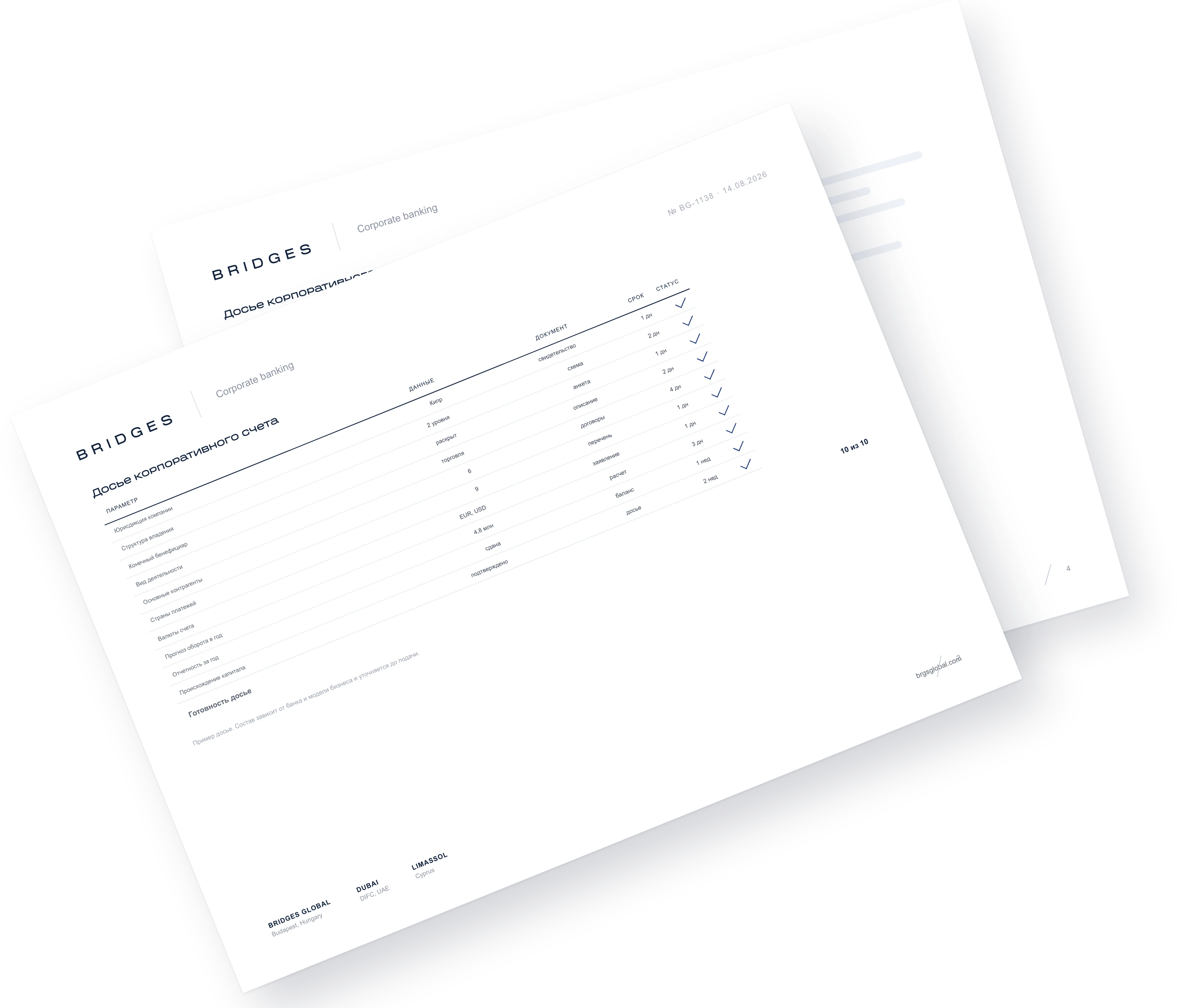
A company account is opened to fit the operating model: who pays you, whom you pay, in which currencies and countries. We check it will pass before filing, prepare the file and take it through to working settlements — not merely to account details on paper.
- We start from the model of payments, not from the name of a bank
- We prepare the file and handle compliance in the company’s name
- We take it through to the first payment made
01 / The service
How a bank looks at a company
Compliance checks not the elegance of the charter but the economic sense: whether it is clear how the company earns, whether the turnover matches the business, whether there is real substance. A company with no contracts, staff or address raises questions whatever its jurisdiction of registration.
The model of payments
Who pays the company and whom it pays: the countries, the currencies, the regularity, the average sums. That is the first thing that settles the choice of bank — and the main thing we ask about at the start.
Economic substance
Contracts, staff, an office or an evidenced remote presence. An empty company is the commonest reason for refusals, and no paperwork saves it.
The ownership structure
The chain to the ultimate beneficial owner with every link evidenced by documents. An opaque structure closes the doors of most banks.
The industry
Every bank has a list of unwanted lines of business. Knowing those lists saves months: we do not file where the profile plainly will not pass.
02 / Situations
When a corporate account is needed
The situations people come with most often.
Launching a company abroad
Registration with no account gives you nothing to work with: the account is the second half of the project and has to be planned from day one.
Settlements with foreign counterparties
Taking payments from clients and paying suppliers in the currencies of the contracts, with nothing lost on conversion.
A change of bank
After an account is closed, service is refused or the bank tightens its policy on your industry or jurisdiction.
A holding company receiving dividends
An account to consolidate income from subsidiaries and distribute it among the members.
Property transactions
Settling the purchase of commercial property through a company: the seller and the notary work only with a corporate account.
Entering a new region
Working with the markets of the Gulf, Asia or Europe calls for a local banking presence — counterparties expect it.
03 / Honest limits
When we will decline the task
Lines we do not cross under any conditions.
A company with no real activity
An empty legal person with no contracts and no substance does not pass compliance. No file compensates for that — the company has to be given real content first.
An industry the bank will not take
Some lines of business banks will not serve at all. In that case we change the bank or the jurisdiction, not the description of the activity in the documents.
Concealing the beneficial owner
Nominee structures to hide the real owner from the bank are a direct breach. When it comes out the account is closed and everyone involved bears the consequences.
Pass-through with no substance
Arrangements where a company is used only to run funds through are recognised by banks quickly — from the pattern of payments. We do not take such work on.
We raise these factors at the first consultation, before the agreement and before any time is spent.
04 / Catalogue
Where we open accounts for companies
The direction is chosen for the business model: where the payments go, in which currencies, who the counterparties are. We name the particular institution at the review — after checking that the profile will pass.
- 3–8 weeksOpening
- PresenceLooked at closely
- AED, USD, EURCurrencies
Working accounts for mainland and free zone companies. The bank assesses the office, the visas and the real turnover.
- Trade
- Services
- Paired with residency
- 4–10 weeksOpening
- A visitAs a rule required
- HKD, USD, CNYCurrencies
The logical choice when buying in Asia. The banks require contracts, invoices and a clear supply chain.
- Trade with Asia
- Imports
- Several currencies
- 4–10 weeksOpening
- HighCompliance requirements
- SGD, USD, EURCurrencies
A direction strong on reputation for holdings and trading companies with real activity.
- A holding
- Trade
- Reputation
- 3–8 weeksOpening
- A link with the EUThe condition
- EURThe main currency
A euro account for working with European counterparties. A clear business and a local connection are required.
- Settlements in the EU
- A holding
- Services
- 1–4 weeksOpening
- RemotelyOften possible
- EURThe main currency
Licensed payment institutions: a fast start and European account details. They do not replace a classic bank.
- A fast start
- Settlements in the EU
- Online business
- 2–8 weeksOpening
- A local connectionThe condition
- GBP, EUR, USDCurrencies
It suits companies with British clients and a presence. With no connection to the country the chances are low.
- Settlements in GBP
- Services
- Clients in Britain
One account is a single point of failure. A second account at another institution is opened in advance, not after a block.
05 / Scope of work
What we do
From the model of payments to working settlements.
Going through the business model
Who pays, whom you pay, the currencies, the countries, the turnover, the seasonality. We build the company’s payment map — the whole choice follows from it.
Choosing the institution
A shortlist to fit that model: classic banks, digital banks, payment institutions. With an honest assessment of the chances and the timing at each.
The corporate file
A description of the business in compliance’s language, the ownership chart, the contracts, evidence of the origin of the company’s and the owners’ capital.
Filing and correspondence
We fill in the forms, file the application and answer compliance’s questions in the company’s name — through to the decision.
Opening and setting up
The signing, access to online banking, setting up the signatories, the limits and the staff’s access rights.
Starting the settlements
We support the first payments: the reference, the supporting documents, the answers to the bank’s questions about the operations.
We prepare and we support. Instructions on the account are given only by the company’s authorised persons — we have no access to it.
06 / Cost
What the cost depends on
It is calculated by the type of institution, the complexity of the structure and the volume of preparation.
The type of institution
A classic bank, a digital bank or a payment institution — different amounts of preparation, different requirements and timelines.
The company’s jurisdiction
Companies from higher-risk jurisdictions call for a larger file and more explanation.
The complexity of the structure
Multi-level ownership, several beneficial owners and a trust or foundation in the chain all increase the volume of checks.
The number of accounts and currencies
Several accounts or a multi-currency structure are quoted separately, but part of the preparation is reused.
The estimate is fixed before the work starts. On a refusal, choosing the next institution and improving the file are covered by the support.
07 / How it works
How we work
From the payment map to the first payment made.
Going through the model
We discuss the business, the counterparties, the currencies and the expected turnover. We assess whether the profile will pass.
1–2 days
Choosing the institution
A shortlist with an assessment of the chances, the timing and the requirements as to presence for each option.
2–3 days
The corporate file
We assemble the set to the requirements of the bank chosen and clear the contradictions.
1–2 weeks
Filing the application
The forms, the documents and the covering explanations about the business model and the ownership structure.
3–7 days
The consideration
Compliance studies the file and puts follow-up questions — we answer them, in the company’s name.
3–8 weeks
Opening and starting up
The signing, the access, setting up the signatories, support for the first payments.
The time for consideration is set by the bank. We influence the quality of the preparation and the speed of the answers, not its procedure.
08 / Preparation
What we will need from you
The set depends on the jurisdiction, but the core is the same.
The corporate documents
The charter, the certificate of incorporation, the registers of directors and members, the resolutions of appointment — along the whole chain of ownership.
Evidence of the activity
Contracts, invoices, the website, a description of the product, details of the staff and the address. That is the proof of real substance.
The beneficial owners’ documents
Passports, proof of address, a CV, details of the tax residency of every ultimate owner.
The financial picture
The expected turnover, the accounts where they exist, the origin of the share capital and of the funds in the account.
The documents are sent over secure channels; confidentiality is an obligation under the agreement.
09 / Team
Who runs the work
The business model is assessed by a lawyer together with a tax adviser.
 Nikos PappasBanking Relations SpecialistThe corporate file and the correspondence with the bank
 Daniel KovachSenior International Law AttorneyThe model of payments and the specifics of the industry
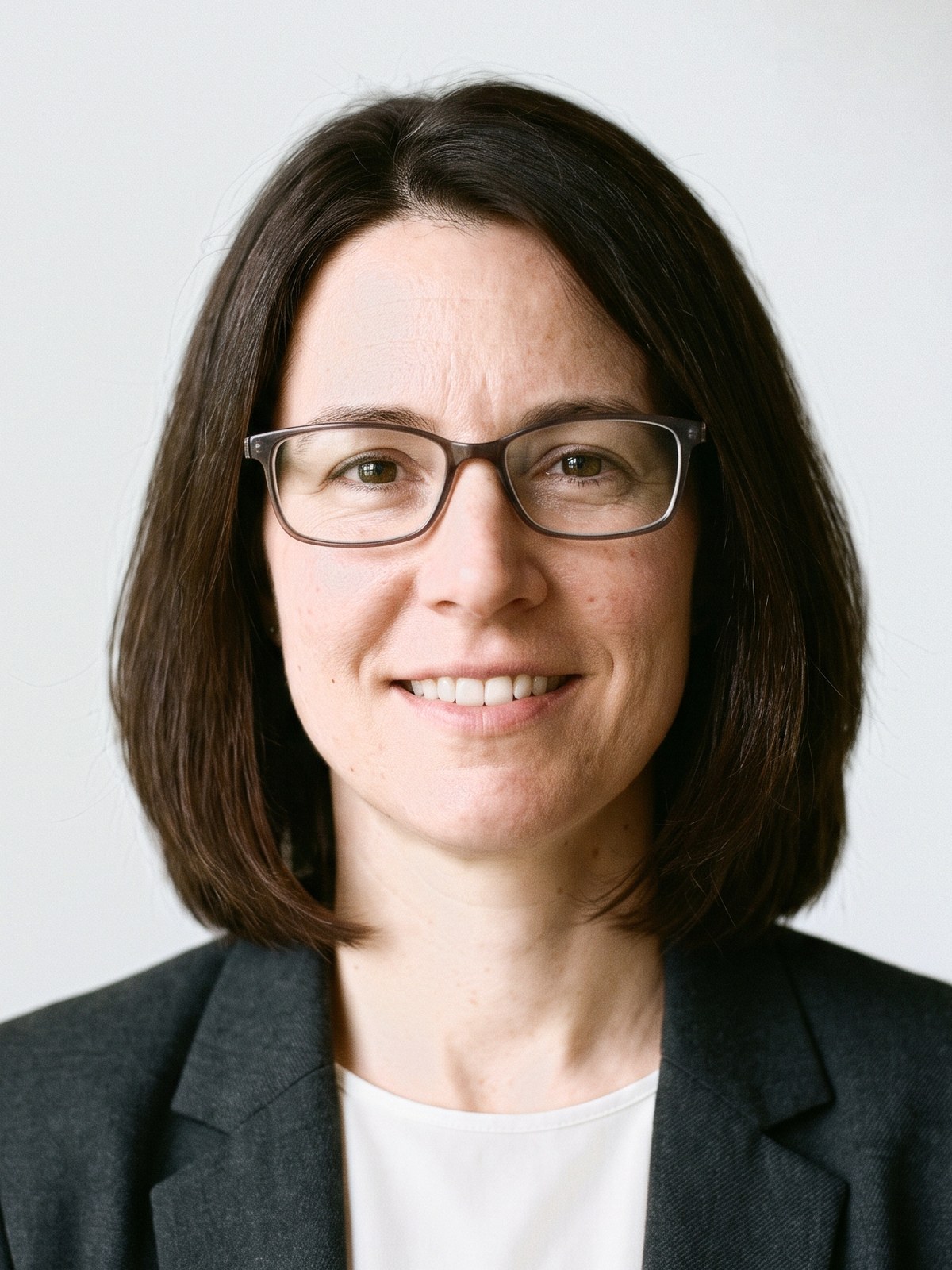 Klara RihterHead of Compliance and Due DiligenceThe tax consistency of the structure and the settlements
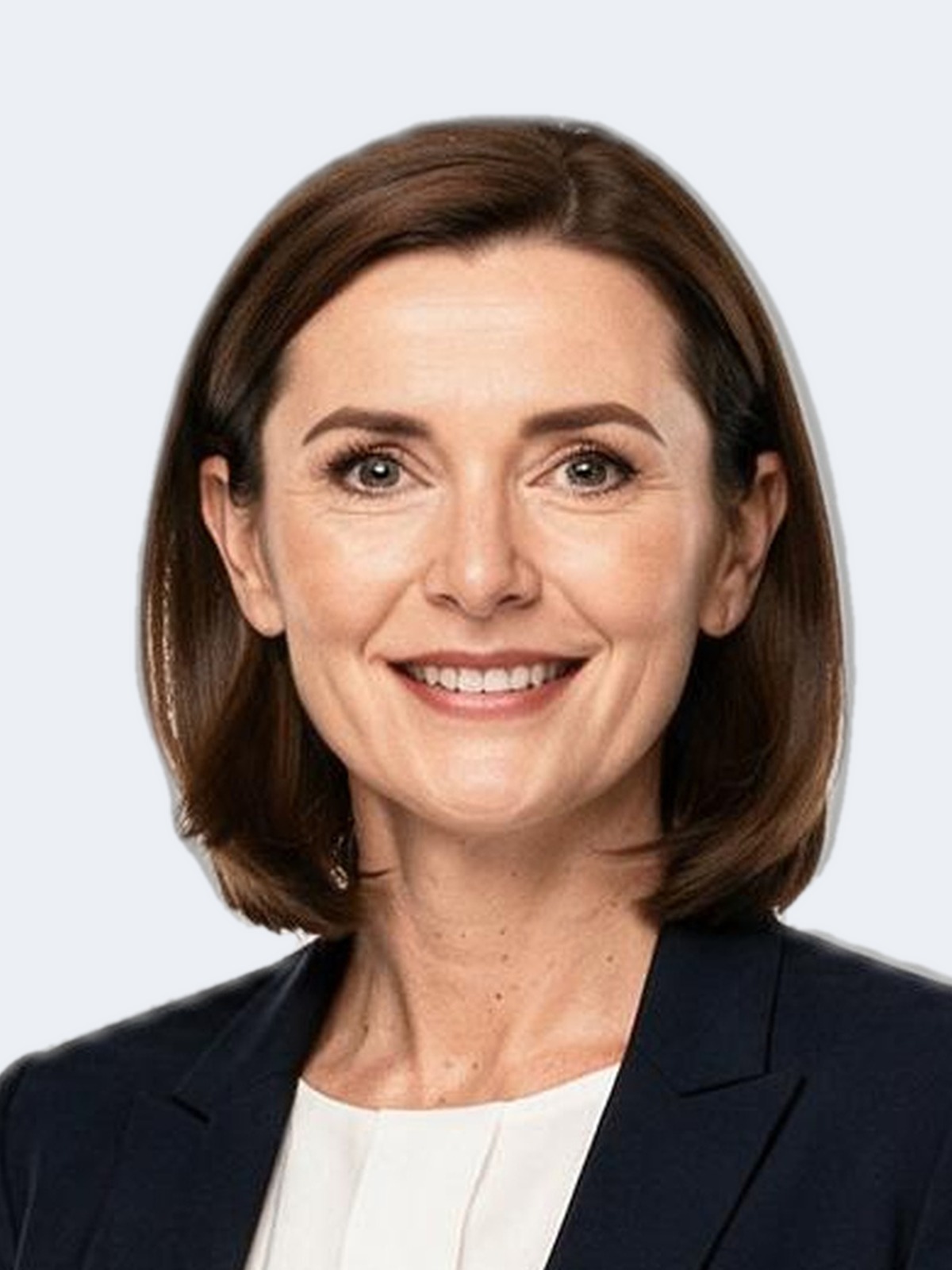 Anna KovalevskayaHead of Legal12 years of practice
11 / Questions
Answers to common questions
In some jurisdictions yes, especially at digital banks and payment institutions. The classic banks of Switzerland, Singapore and the UAE more often require at least one signatory in person. We say so before the bank is chosen, so the trip can be planned in advance.
In practice yes. Banks check economic presence: contracts, staff, an address, real operations. A shell company does not pass compliance whatever its jurisdiction of registration — that is the main reason for refusals in recent years.
From three weeks at payment institutions to two months at classic banks. Most of the time goes on compliance rather than on paperwork, so the quality of the file bears directly on the timing.
First we establish the cause: it settles the strategy. Then we prepare a file with the risk closed and choose an institution that works with such a profile. Filing again at a similar bank with nothing changed gives the same result.
For operating settlements it is a perfectly workable instrument, often faster and cheaper than a bank. But for holding large balances and for complex transactions a classic bank is safer. A pairing often makes sense: the institution for turnover, the bank for capital.
No. We prepare the documents, agree the wording of the references with the bank and answer its questions about operations, but the instructions are given by the company’s authorised persons from their own access. Arrangements with payments through an intermediary are read by banks instantly and the accounts are closed.
A bank is not obliged to disclose the reason and almost never does. The commonest grounds are an unclear business model, the company’s jurisdiction, the beneficial owner’s profile or the absence of any connection with the bank’s country.
Having clients, suppliers, staff or assets in the region. The bank wants to understand why the account is being opened with it in particular. A company with not one local connection looks to compliance like a pass-through.
At least two, at different institutions. One account is a single point of failure: if it is blocked the whole business stops. The second account is opened in advance, not once the first is already frozen.
Yes, but the requirements will be higher: contracts with counterparties, an explanation of the model and sometimes a local director will be needed. It is simpler where the company has a real presence.
From three weeks to three months. The European banks take longest with a complex ownership structure. The time shortens where the structure is transparent and the file is prepared before filing.
INITIAL ASSESSMENT
Tell us what outcome your family needs
We will design a solution for your case, choose the country and the right status, and take the whole process through to the result.