Case study · Vanuatu
Vanuatu Citizenship for a Crypto Investor: How Seven Years of Wallets and Exchanges Became a Clear Report
Updated: September 2026·10 min read·Expert reviewed
Composite example based on typical investor enquiries · figures as of September 2026 · names invented

Contents
A spreadsheet of two thousand six hundred rows: every crypto transaction since 2019, purchases, sales, transfers between wallets, staking income. A developer from Dubai, a Russian citizen, kept it himself in the evenings and brought it to a meeting with our lawyer. He admitted straight away that he had come with little hope: friends had convinced him that crypto wealth rules out a second passport, because due diligence wants a salary and bank statements. Our lawyer scrolled through the spreadsheet for a long time and saw that the wealth was clean and clear. The difficulty lay elsewhere: a home-made spreadsheet is not a document for due diligence. It had to be turned into a package of exchange reports, blockchain records and tax documents. Here is how we rebuilt the history from an exchange that had left the Russian market and proved that fourteen addresses belong to one person.
A developer who kept his wealth in crypto for seven years
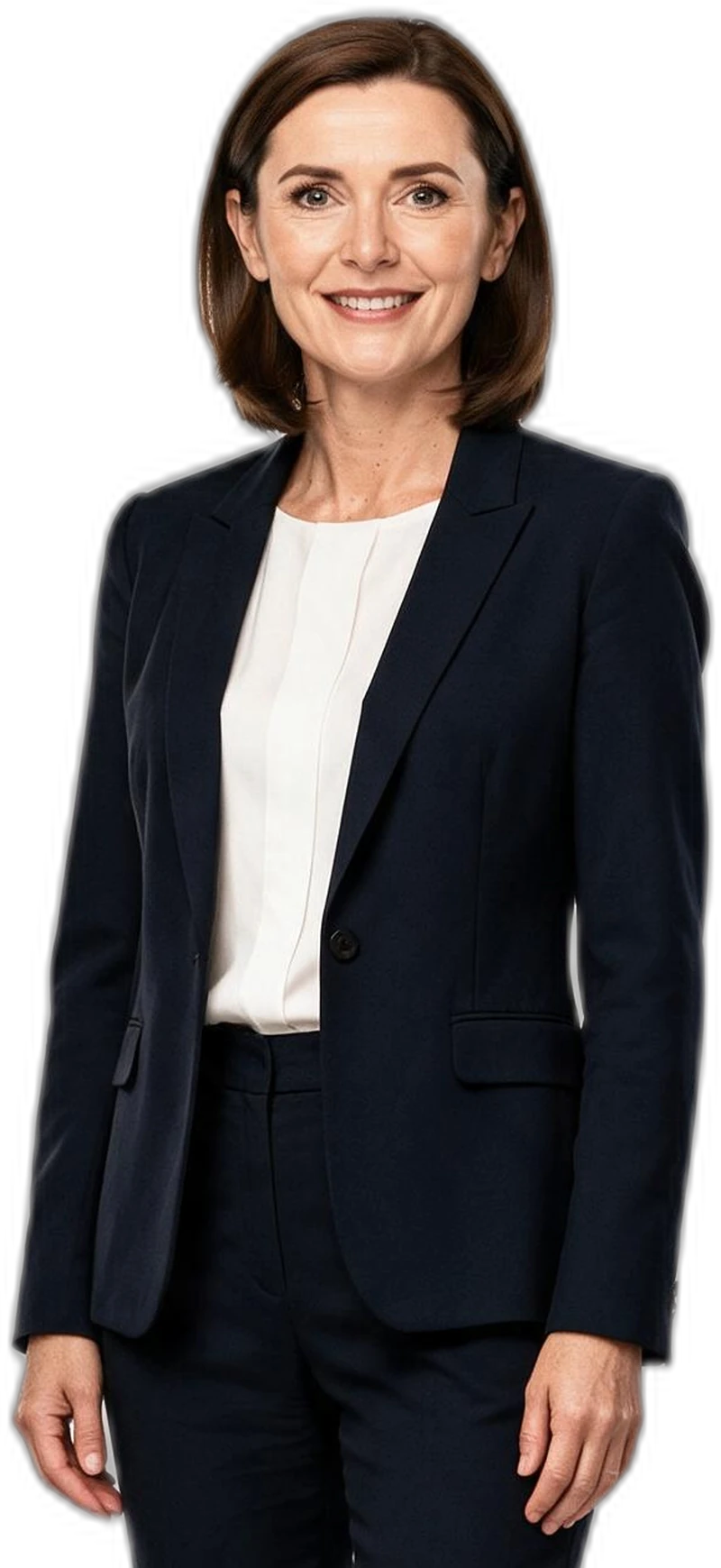
Nikita is 34 and a Russian citizen. Until 2024 he lived in Moscow and wrote software for banks. He started buying crypto in 2019, a little from his salary at first, then seriously.
Two years ago he moved to Dubai, obtained a residence visa and joined a team building payment services. Almost all his wealth over these years grew in crypto: early purchases, staking, several well-timed sales.
He needed a second passport for two reasons. First, trips to industry conferences in Singapore, which requires a visa for Russian passport holders. Second, a backup document in case something happens to his Russian passport abroad.
Friends said crypto could not pass due diligence. In reality due diligence needs not bank statements but a clear history of the money.
What the lawyer said in the first ten minutes
Before discussing documents, the lawyer explained honestly what a second passport will not do. Foreign banks and crypto exchanges apply restrictions to Russian citizens. A Vanuatu passport does not lift those restrictions, and it must not be used to get around them.
Nikita nodded: he had no such intention. His accounts in Dubai are opened as a UAE resident, and the bank knows his Russian citizenship.
What the passport will do: visa-free entry to Singapore for up to 30 days and to Hong Kong for up to 90, and a second travel document. Russia allows a second citizenship; the Interior Ministry must be notified within 60 days.
The lawyer also checked the tax side. Vanuatu does not tax personal income and does not require living on the islands. Nikita’s tax residence does not depend on the passport: he remains a UAE resident while he lives there.
The donation over the fund for a single applicant
For a single applicant the donation costs USD 135,000 including the due diligence fee. The coconut oil fund costs 165,000, with 50,000 returned after five years.
The donation is $30,000 cheaper at payment; the fund is $20,000 cheaper after five years.
Vanuatu programme terms as of September 2026
Nikita chose the donation. His reasoning was simple: the money for payment would have to be sold out of crypto and converted into dollars, and the smaller the amount, the easier it is to explain the sale to a bank. The 30,000 difference mattered more to him than a future refund.
The second advantage of the donation: it is paid after approval. Until the Commission decides, the crypto stays with Nikita, and there is no need to sell it in advance. How the two programmes compare is covered in donation or fund.
We will check how to prove your crypto wealth
We will go through your transaction history and tell you which documents are missing for due diligence.
Seven years of wealth on one timeline
The lawyer began by asking for the history of the money year by year, without the spreadsheet. Where he bought, where he stored, where he sold, where the first money came from.
A clear line emerged. First purchases from his Moscow salary, confirmed by income statements. An exchange he traded on until 2022. Cold wallets where he moved most of it. Staking. The move to Dubai and a new exchange licensed by the UAE regulator.
- 2019first purchases from a Moscow salary
- 2020-2022trading on an exchange and moving to cold wallets
- 2022the exchange leaves the Russian market
- 2024move to Dubai, a licensed exchange in the UAE
- 2026selling part of the crypto to pay the donation
Due diligence looks at the whole chain: where the first money came from and how the wealth grew.
Course of work in a BRIDGES composite example
Every link in this line had to be confirmed by a document, not a spreadsheet row. The lawyer drew up a list, and the work split into three parts: exchanges, wallets and taxes.
The exchange left, but the transaction history remained
The new exchange in Dubai caused no difficulty: it issues an official transaction report for any period. Nikita requested one for two years, and it arrived three days later.
The old exchange was harder. In 2022 it left the Russian market, and access to the account was closed. Before that Nikita had managed to export his transaction history, but only for the last two of three years.
The first year had to be rebuilt. We found the exchange’s emails about every deposit and withdrawal in Nikita’s inbox: amounts, dates, transaction IDs. Using the IDs, our specialist traced each withdrawal on the blockchain to Nikita’s cold wallets.
One withdrawal was still missing: there was no email about a transfer in spring 2020, and that month was not in the export. Nikita had already decided he would have to explain the gap in words. Our specialist found the transfer from the other side: Nikita’s cold wallet had received funds from the exchange’s address on exactly that day. The amount and time matched his spreadsheet to the minute, and the gap was closed.
Emails, the export and blockchain records together formed a complete history for all three years. We attached a short note to the package explaining why the first-year report was compiled from several sources.
How to prove fourteen addresses belong to one person
The second difficulty was the wallets. Over seven years Nikita had accumulated fourteen addresses on different networks. He had moved crypto between them dozens of times.
To him these were transfers to himself. To a reviewer who sees only addresses, they are transfers to unknown parties. Each could have become a separate question.
The solution was technical. A wallet owner can sign a short message with their key, and anyone can verify the signature came from that address. Nikita signed the same phrase from each of the fourteen addresses. The keys themselves are never shared.
- 1Income statementsfirst money from salary
- 2Exchange reportsan official report and a rebuilt history
- 3Address signaturesfourteen wallets, one owner
- 4Analytics reportaddresses checked against risk databases
- 5Taxesreturns in Russia and UAE residence
Each source confirms its own link; together they cover the whole chain.
Course of work in a BRIDGES composite example
The blockchain analytics report
We then ordered a report from an independent company that screens crypto addresses. It went through all fourteen addresses and checked whether they had interacted with sanctioned addresses, platforms of doubtful reputation or services used to obscure transaction trails.
No such links were found. The report went into the package as a separate signed document. How due diligence views crypto is covered in Vanuatu passport and crypto.
Calculate the cost of Vanuatu citizenship
The estimate compares the donation and the fund and shows what is paid at filing and what after approval.
Tax returns from the Moscow years
The third part was the tax trail. While living in Moscow, Nikita sold crypto twice and filed an income tax return both times. Copies of the returns and tax payment receipts were in his personal tax service account.
Since 2024 he has lived in Dubai. The UAE has no personal income tax, and the lawyer asked Nikita to obtain a UAE tax residency certificate. It shows where Nikita pays taxes now.
The Russian documents were apostilled and received certified English translations. Police certificates were needed from two countries: Russia and the UAE. Our representative in Moscow obtained the Russian one under a power of attorney, and Nikita ordered the UAE certificate through the Dubai Police app.
- Years of history7from 2019 to 2026
- Transactions2,600in exchange reports
- Addresses14signed by one owner
- Exchanges2one left the market
The applicant’s spreadsheet stayed a working draft. Only documents went into the package.
Course of work in a BRIDGES composite example
Due diligence’s only question: tokens that came for free
Two weeks after filing, due diligence asked one question. The exchange report showed incoming tokens Nikita had not paid for. Where did they come from?
They were token airdrops from projects Nikita had used as a developer. Thousands of users receive such airdrops, and in the crypto world this is routine. To a reviewer, it is money without a clear source.
The lawyer prepared the answer in two days: the projects’ pages with airdrop terms, blockchain records of receipt and an explanation that such receipts made up less than 3% of the wealth. There were no further questions.
A month later the approval letter arrived.
The Dubai bank asked where the dollars came from
After approval the donation had to be paid. The USD 5,000 due diligence fee had been paid at filing. 130,000 remained.
Nikita sold part of his crypto on a licensed exchange in the UAE and withdrew dollars to his account at a Dubai bank. The next day the bank froze the incoming funds and sent a letter: please confirm the source of funds.
We had expected this. Banks need the same answers as programme due diligence. The lawyer sent the bank the exchange’s sale report, the blockchain analytics report and the approval letter explaining the purpose of the transfer. Three working days later the funds were released, and the donation went to the agent.
The package we built for due diligence proved useful a second time. That is exactly why it is worth building properly the first time.
Biometrics twenty minutes from home
Biometrics remained. They are given in person in one of five cities: Port Vila, Dubai, Hong Kong, Moscow or Saint Petersburg.
Nikita lives in Dubai, so no flights were needed. The lawyer booked him for a Friday morning before the working day. It all took less than an hour: passport check, fingerprints, photo, signature.
Under the plan the passport arrives by courier 1-3 weeks after biometrics. All stages are covered in Vanuatu citizenship timeline.
We will build your crypto wealth package
We request exchange reports, rebuild missing history and order an analytics report.
What the applicant gets
Under this scenario Nikita has a Vanuatu passport 3-4 months after the first meeting. The outcome is described as expected: the decision rests with the Citizenship Commission.
He will be able to fly to the autumn conference in Singapore without a visa. If the team calls him to Hong Kong, he can stay there for up to 90 days.
He keeps his Russian citizenship. He will notify the Interior Ministry of the second citizenship within 60 days; the lawyer prepared the notification in advance. In the UAE he continues to live on his residence visa.
The main thing Nikita took away from the meetings has nothing to do with the passport. He now has a document package that explains his wealth to any bank or reviewer. He still keeps his two-thousand-six-hundred-row spreadsheet, but now requests official exchange reports once a year.
Crypto wealth passes due diligence when its history is told by documents, not by a spreadsheet.
Who this path suits
This story repeats for investors and developers whose wealth grew in crypto. They do not need to prove that crypto is legal; they need to show the path of their money from the first purchases to today.
It is best to start with what has survived: exchange reports, emails about deposits and withdrawals, tax returns. Even if an exchange has closed, the history can often be rebuilt from email and blockchain records.
Russian citizens should remember: a second passport does not lift restrictions that foreign banks and exchanges apply to Russian citizens. It gives freedom to travel and a backup document, not a way around the rules.
Similar stories: a Vanuatu passport for a furniture importer and a backup passport for a tech founder. Full programme terms are on the Vanuatu citizenship page.
Composite example: this story is based on typical enquiries; no real clients are described. Figures as of September 2026. The decision on citizenship is made by the Vanuatu Citizenship Commission.
Frequently asked
Questions people ask before deciding
01Can Vanuatu citizenship be obtained with crypto wealth?
Yes, if the source of the wealth is proven: exchange reports, blockchain records, an analytics report and tax documents.
02What if an exchange has closed or left the market?
Rebuild the history from saved exports, the exchange’s emails about deposits and withdrawals and transaction records on the blockchain.
03How do you prove wallets belong to the applicant?
Sign the same message from each address. The signature is verified against the address, and keys are never shared.
04Can the donation be paid in crypto?
No. The crypto is sold on a licensed exchange, and the donation is transferred in dollars through a bank.
05Does a Vanuatu passport lift restrictions for Russian citizens?
No. Bank and exchange restrictions for Russian citizens remain, and a second passport must not be used to get around them.
06How much is Vanuatu citizenship for one person?
The donation is USD 135,000 including the due diligence fee. The fund is 165,000, with 50,000 returned after five years.
07Does Vanuatu tax crypto income?
Vanuatu does not tax personal income. Taxes are paid where the person is tax resident.
08Is notification to the Interior Ministry required?
Yes, Russian citizens notify the Interior Ministry of a second citizenship within 60 days.
About the author
Related materials
What to read next


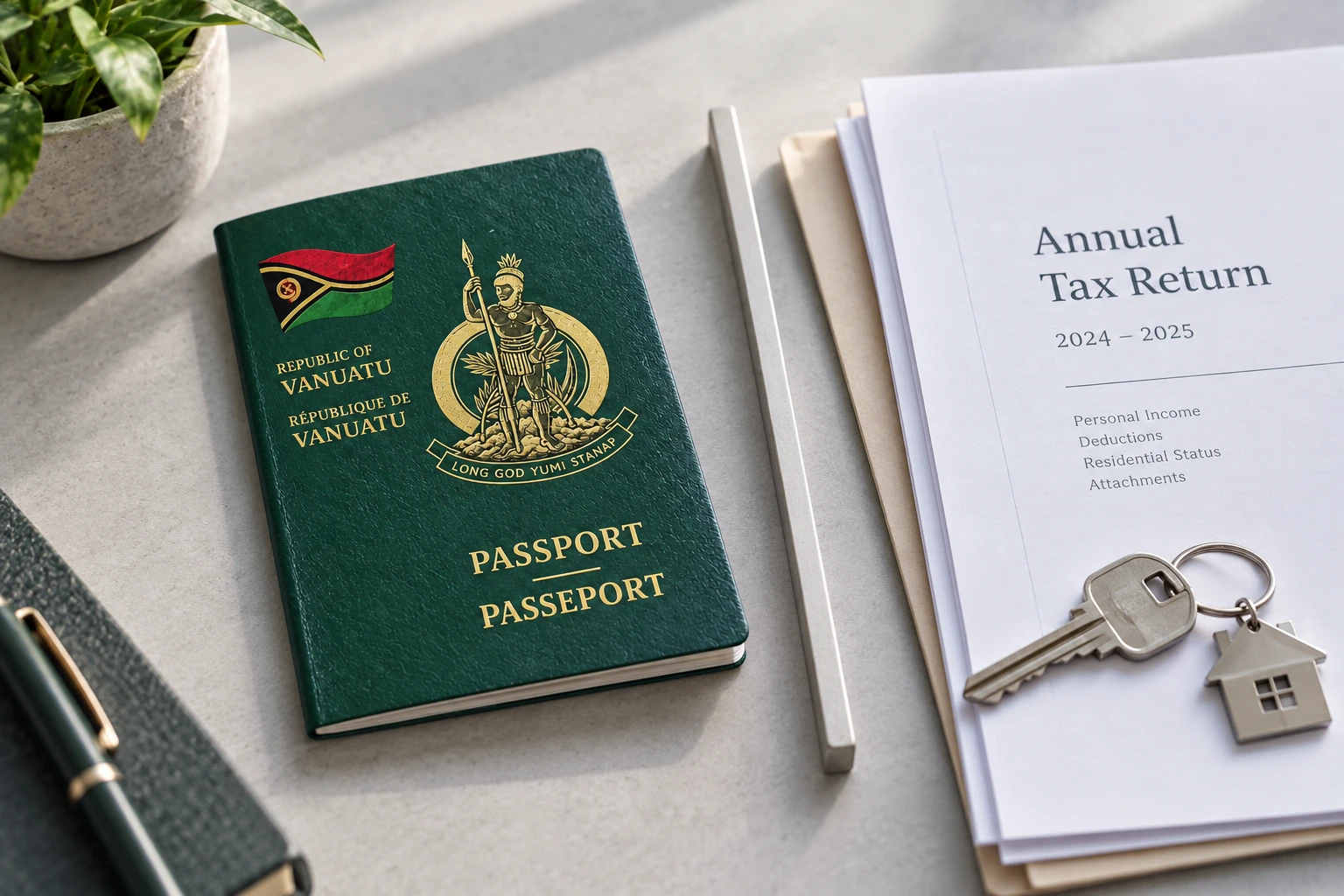 ArticleTaxes and Vanuatu citizenship
Personal programme selection is conducted by Anna Kovalevskaya, Head of Legal, BRIDGES.
We will help prove your crypto wealth for a Vanuatu passport
Fast, reliable and fully legal. Tell us where your wealth is held: a BRIDGES specialist will tell you which documents are missing and build the due diligence package.