Residency · Malta
Malta residence permit by investment: the MPRP programme, amounts, timelines, and advantages

Updated: June 2026·11 min read·Expert reviewed
Terms and costs verified: June 2026
Contents
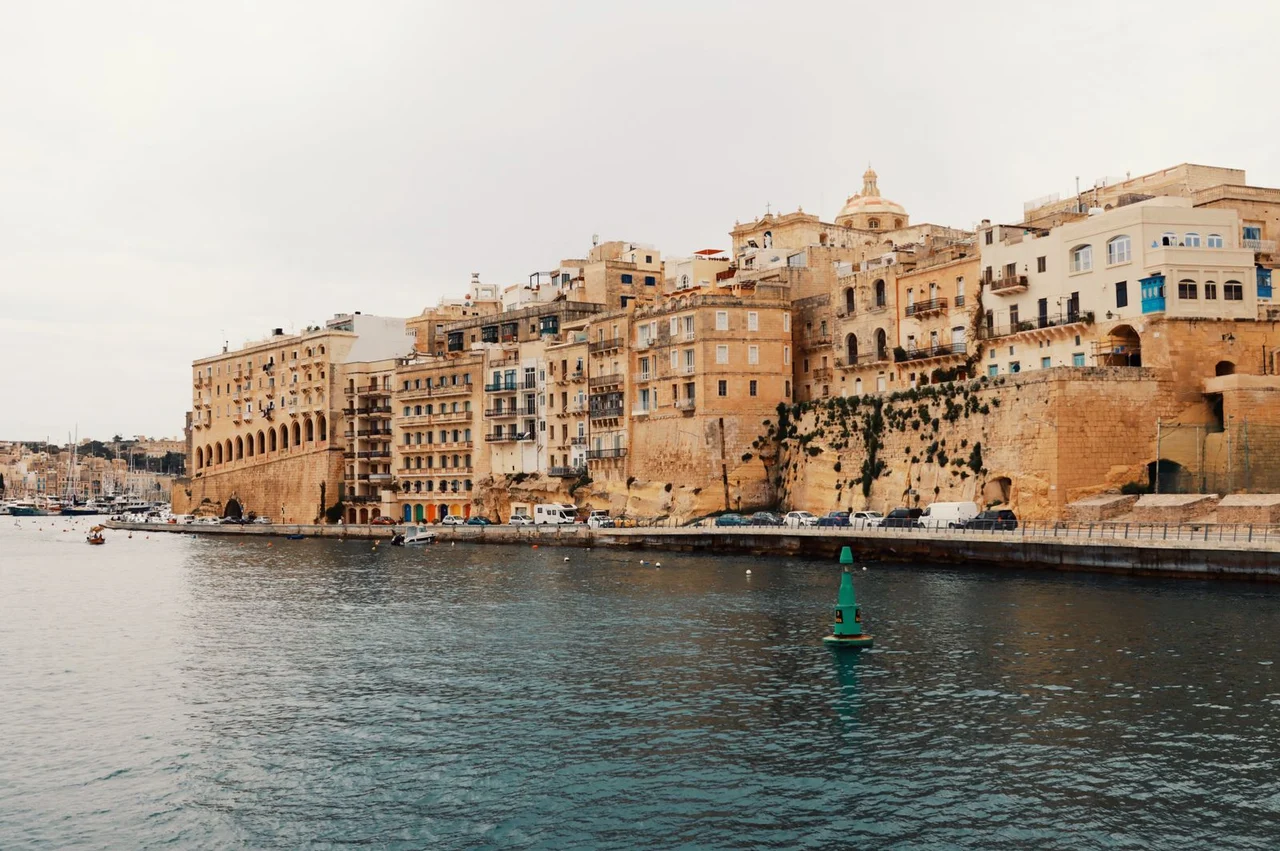
When people talk about Malta residency by investment, they almost always mean one programme - MPRP. This isn't a tourist visa or a temporary status: the participant gets a lifelong residence permit in an EU and Schengen country, with no obligation to permanently live on the island. Malta's golden visa is a colloquial name for the same MPRP. We break it down piece by piece: what amounts are actually needed, what's the deal with real estate and rental, how long the review takes, who can be included in the application, and why citizenship for money no longer works here.
What an investment residence permit in Malta is, and where MPRP fits in
Let's clarify the terminology right away, since even consultants get confused by it. When a person searches fora Malta residence permit by investment, they almost always end up at a programme called MPRP - the Malta Permanent Residence Programme. Literally this is «Malta's permanent residency programme». The key word is permanent: you get not a temporary residence permit for a year or two with renewals, but immediately a lifelong resident status.
Hence the slight confusion in names. On the market this status is called various things: andMalta residency by investment, andmalta residency by investment, andMalta golden visa, andan investment residence permit in Malta. All of this is the same MPRP programme. There's no separate «golden visa» parallel to MPRP on the island: it's just a marketing name.
What the status essentially gives:
- the right to live in Malta as long as desired - a month, a year, or a lifetime;
- the status doesn't lapse if you leave: it's enough to meet the programme's conditions;
- the whole family gets residency under one application;
- a road to EU long-term resident status down the line.
It's important to understand that MPRP is about the right to live, not about a passport. This programme doesn't give citizenship, let alone an EU passport, and this is a fundamental point we'll return to below.
Why investors choose Malta specifically
Malta is a full member of the EU and the Schengen area, the currency is the euro, and English is here one of two official languages. For a foreign investor this is a rare combination: a European jurisdiction where English is enough for everyday matters, and at the same time a full-fledged Mediterranean country with a mild climate and developed infrastructure.
Strategically, Malta resident status solves several tasks at once:
- Mobility.The resident card gives visa-free travel within Schengen in tourist mode - up to 90 days in every 180 days.
- A backup base.The status is lifelong, and in case of instability at home the family has a ready-made base in the EU.
- Children's education.Access to schools and universities in Malta and a springboard to studying in other EU countries.
- Tax planning.Malta is a well-known hub for holding and operating structures, and residency fits well into such a configuration.
That said, Malta doesn't require an MPRP participant to live on the island permanently. This is convenient for those whose business or family stays in another country: the status is there, but no obligation to sit permanently on the island. A detailed breakdown of the advantages and nuances of life on the island - in ourour article on types of Malta residence permits.
MPRP programme conditions: who qualifies
MPRP is a programme for wealthy families, and the applicant requirements are built around three things: age, a clean reputation, and proven wealth. The basic conditions look like this:
- the main applicant - 18 years or older;
- a stable, legal source of income and capital that can be documented;
- proven assets - the programme targets capital in the range of 500,000 euros and up, including a liquid portion;
- no criminal record or sanctions restrictions, a clean compliance history;
- valid medical insurance for the whole family.
The main thing to understand in advance: Malta has an extremely serious good-standing check (due diligence). It's not a formality. The Residency Malta agency examines the origin of every euro, sources of capital, business reputation, and prior visa and programme refusals. So applicants prepare in advance: gathering an evidence base on money, statements, tax documents, and explanations for large transfers.
The good news is that the applicant isn't required to know the language, take exams, or reside there before filing. This is specifically an investment programme: you meet the financial conditions and pass the check, not take integration tests.
How much a Malta residence permit by investment costs: a breakdown of amounts
Now for the most important thing - money. MPRP's cost consists of several mandatory parts, and the total depends on whether you buy or rent real estate. Here's the full picture in one table.
| Parameter | Value |
|---|---|
| Administrative fee | 50,000 euros |
| Buying real estate | from 375,000 euros (from 300,000 euros on Gozo and south Malta) |
| Or renting real estate | from 14,000 euros a year (from 10,000 euros on Gozo and the south) |
| Government contribution for buying real estate | 30,000 euros |
| Government contribution for rental | 60,000 euros |
| A charitable donation | 2,000 euros to a local NGO |
| The holding period for the property/rental | 5 years |
The logic here is: the state gives a choice - invest in your own real estate or rent. If you buy housing, the government contribution is lower (30,000 euros), because the money stays in the island's economy as an asset. If you rent, the government contribution is higher (60,000 euros) - this compensates for the absence of a capital investment in real estate.
Separately there's a 2,000-euro donation to a registered Maltese non-profit organization - a mandatory condition for everyone. It's more convenient to calculate an exact estimate for your situation and family composition with an expert, since the number of adult dependents affects the final figure.
What the final budget actually consists of
To avoid surprises, let's break down the full cost into layers. Many look only at the real estate price and forget about related expenses, which noticeably affect the total.
The programme's mandatory core:
- a 50,000-euro administrative fee - paid to the state for reviewing the application and non-refundable;
- a government contribution of 30,000 or 60,000 euros depending on the purchase/rental choice;
- a 2,000-euro donation to an NGO;
- the real estate itself - a purchase from 375,000 euros or a rental from 14,000 euros a year for five years.
Costs per adult dependent.If adult children, parents, or grandparents are added to the application, additional fees are set for each such family member. A spouse and minor children come out cheaper.
Related expenses.This includes legal support, stamp duty on buying real estate, a notary, medical insurance, translations, and document legalization. In practice an additional budget is set aside on top of the mandatory core.
If you're specifically planning a purchase rather than a rental, it makes sense to study the market in advance - we've gathered the nuances in our overviewreal estate in Malta for an investor.
Real estate: buying or renting under MPRP
Real estate is the heart of the programme, so the choice is approached judiciously. The applicant has two paths, each with its own economics.
Purchase.The threshold is from 375,000 euros in mainland Malta and from 300,000 euros if the property is located on the island of Gozo or in south Malta. The government contribution for a purchase is lower - 30,000 euros. The property needs to be held for at least five years. After this period, the real estate can be freely disposed of, and for many this turns the programme's mandatory condition into a full-fledged investment: the apartment can be rented out or later sold.
Rent.The threshold is from 14,000 euros a year in Malta and from 10,000 euros on Gozo and the south. The rental term is the same five years. The government contribution for rental is higher - 60,000 euros. This path is chosen by those who don't want to lock up a large sum in real estate or haven't yet decided on a specific area.
What's more beneficial depends on the horizon. If you're considering Malta seriously and long-term, buying often turns out more rational: the money works as an asset, rather than going into rental payments. If the status is needed as a backup with no plans to live on the island, renting lowers the capital entry threshold. An additional nuance - a foreigner needs a real estate acquisition permit to buy outside special zones, and this is also factored in when choosing the property.
Timelines: how long to wait for resident status
Reviewing an MPRP application takes several months - a normal horizon for a serious European programme with deep screening. Comparing to reality: buying status «in a week» here is impossible in principle, and anyone promising an instant result is being dishonest.
What the timeline roughly looks like:
- Preparation (a few weeks).Gathering documents, building an evidence base on sources of capital, and vetting the family on the consultant's side - to avoid a refusal out of nowhere.
- Filing and screening (the main phase).The Residency Malta agency carries out multi-level due diligence: the applicant is checked against databases, the origin of the money, reputation, and prior refusals are examined.
- A letter of approval in principle.After a successful check, preliminary approval comes, and then the main payments are made and the real estate deal is closed.
- Resident cards.The final step is issuing cards to all included family members.
The actual timeline depends heavily on how carefully the application is assembled. A complete and consistent document set speeds up the process, while the regulator's questions about unclear transfers or gaps in the capital's history, on the contrary, delay it.
“MPRP is a programme where the winner isn't the one who pays fastest, but the one who prepares cleanest. Malta has the most exacting check of capital sources in Europe, and it's exactly at this stage that we see the most refusals among those who went it alone. So we start the work not with choosing an apartment, but with a assessment: will the applicant pass due diligence, and can they documentably explain the origin of every large transfer. For citizens of Russia and Belarus a sanctions perimeter is added - here we speak directly, with no promises to get around restrictions. If there's a legal path, we build it carefully. If not, we offer other jurisdictions. This takes longer than pretty slogans, but it's exactly how the status reaches the resident card, rather than getting stuck in a refusal.”
Who can be included in the application
MPRP's strength is a very broad definition of family. Under one application, status is granted not just to the nuclear family, but also to the older generation, which often turns out to be a decisive factor for foreign families.
The application can include:
- a spouse or partnerthe main applicant;
- children- minors, as well as adult dependent children financially dependent on the parents;
- parentsthe main applicant and their spouse;
- grandparents- that is, effectively up to the family's older generation.
This is a breadth rare for Europe: many programmes are limited to a spouse and minor children. The ability to include parents and even grandparents means the whole family gets European status at once, with no separate applications and no need for everyone to go through the process individually.
It's worth keeping in mind that each adult dependent increases the final cost - separate fees are set for them. But per person, including relatives in one application is almost always more beneficial than filing separately. All included relatives also undergo a good-standing check.
The status's main advantages
Let's gather in one place what investors go to MPRP for. The advantages split into practical and strategic ones.
- Lifelong nature.The status doesn't need to be renewed annually with the risk of not getting the renewal - it's indefinite as long as the programme's conditions are met.
- Schengen.The resident card opens visa-free travel within the Schengen area in tourist format - up to 90 days in every 180 days.
- EU residency.You become a resident of an EU country with everything that entails: access to banking and investment services, legalization within the European legal field.
- With no mandatory residence.The programme doesn't require permanently living on the island, which is convenient for those with affairs in another country.
- The whole family at once.One document package covers up to the older generation.
- Stability.Malta is a stable EU jurisdiction with a predictable legal field and developed financial infrastructure.
Let's note the English-speaking environment separately: for a family with children this removes the language barrier in daily life, school, and dealing with government bodies. Overall, MPRP is one of the most balanced ways to establish yourself in Europe through investment.
Important: citizenship by investment has been abolished
Here we need to be extremely, because the market still has outdated offers. Malta's citizenship-by-investment programme - the so-called golden passport - was ruled illegal by the Court of Justice of the European Union. The ruling was issued in 2025: the court held that selling citizenship for predetermined payments contradicts EU law, since it turns obtaining citizenship into a commercial transaction.
What this means in practice:
- a Malta passport can no longer be bought through investment - this option officially doesn't exist;
- any offers of «Malta citizenship for money» today are unreliable;
- legal paths to citizenship remain - naturalization after long residence, by origin (roots), by marriage.
MPRP is about residency, not a passport, and this difference is important to understand from the start. Resident status gives the right to live in an EU country, but doesn't make you a citizen and doesn't give a passport. If you're specifically interested in the citizenship topic, we break down the current situation in our article onMalta citizenship by investment- with all the restrictions after the EU court ruling.
Russians and MPRP: what to know about sanctions
Separately and without embellishment - about citizens of Russia and Belarus. After 2022, the EU and Malta introduced restrictions on accepting applications under investment programmes from citizens of these countries as part of the sanctions regime. This is a reality important to factor in at the start, not learn about after paying the fees.
Key points:
- intake of applications from citizens of Russia and Belarus under MPRP is restricted by EU sanctions measures;
- all work proceeds strictly within the legal field, with no attempts to get around sanctions - this is impermissible and dangerous;
- the compliance check for such applicants is many times stricter: the origin of capital is examined especially thoroughly;
- having a second citizenship or another legal status can change the picture - each case is considered individually.
We don't promise the impossible and don't offer gray schemes. If there's a legal path for your situation, we'll assess it and discuss all the risks. If there's no direct path, we'll say so directly too and offer alternative jurisdictions. Any attempt to get around sanctions restrictions isn't helping the client, it's creating problems, and we don't do such things.
How MPRP compares to other programmes
For an informed decision, it helps to understand MPRP's place among European investment statuses - no commercial rankings, just the substance.
Malta's strengths:
- The lifelong nature of the status.Many European programmes first give a temporary residence permit with renewals, and you have to grow into permanent status. MPRP gives permanent residency right away.
- An EU and Schengen member.Not all popular destinations are in Schengen, which affects mobility.
- The English language.Removes the everyday barrier, which matters for the family.
- A broad family.Parents and the older generation in one application - a rarity.
What to pay attention to:
- the capital entry threshold is higher than some competitors;
- the good-standing check is one of the strictest in Europe;
- MPRP is specifically permanent residency, not citizenship; the path to a passport through this programme is closed.
For a family that values EU stability, an English-speaking environment, and lifelong status including the older generation, Malta is one of the most logical options. A detailed comparison of options and the step-by-step procedure - in ourguide to the MPRP programme.
We'll help calculate your MPRP application
The figures in the table are the base. The real budget depends on the family composition, the choice between buying and renting, and how cleanly the sources-of-capital check goes. A mistake at the document preparation stage is costly: a due diligence refusal closes the door not just to MPRP, but to other European programmes.
BRIDGES GLOBAL's experts will guide you through the entire path - from a preliminary chance assessment and gathering the evidence base on money to filing and obtaining resident cards for the whole family. We build the application so that good-standing questions are closed in advance.
Request a cost estimate and an assessment of your situation- the first consultation will help understand whether you qualify for the programme and what budget you'll fit into.
Verification and official sources
Investment migration is a field where figures and rules change: Malta's MPRP legislation has been adjusted, and certain thresholds are periodically revised. So treat any amounts and conditions as a guideline as of the reading date, and check against the primary source.
The official source for the programme is the Residency Malta agency, the state body that runs MPRP and screens applicants. All current requirements, forms, and the legal framework are published by the regulator:residencymalta.gov.mt.
What to pay attention to when self-checking the facts:
- the publication date - outdated articles may cite outdated thresholds;
- separating the concepts of residency and citizenship - they're often confused;
- real estate conditions - purchase and rental differ by government contribution;
- family composition and fees for adult dependents.
We always check the calculation against the current version of the rules before filing, so the client pays by current figures, not yesterday's. This is part of the normal work on the programme, not an extra option.
Frequently asked
Questions people ask before deciding
01What is a Malta residence permit by investment, in plain terms?
This is a resident status granted under the MPRP programme in exchange for an investment in real estate (purchase or rental) plus government fees. The status is lifelong: you get the right to live in an EU and Schengen country with no obligation to stay permanently on the island. This programme doesn't give citizenship and a passport.
02Are Malta's golden visa and MPRP the same thing?
Yes. Malta's golden visa is a colloquial, marketing name for the MPRP programme. There's no separate golden visa parallel to MPRP on the island. All these names refer to the same permanent residency by investment programme.
03How much money is needed for Malta residency by investment?
The basic core: a 50,000-euro administrative fee, a 30,000-euro government contribution for buying real estate or 60,000 euros for renting, a 2,000-euro NGO donation, and the real estate itself - a purchase from 375,000 euros or a rental from 14,000 euros a year. On Gozo and south Malta the real estate thresholds are lower.
04What's the difference between buying and renting in the programme?
When buying real estate (from 375,000 euros, from 300,000 euros on Gozo and the south) the government contribution is lower - 30,000 euros. With a rental (from 14,000 euros a year, from 10,000 euros on Gozo and the south) the government contribution is higher - 60,000 euros. Both the property and the rental must be held for at least five years.
05Does a Malta residence permit give citizenship and a passport?
No. MPRP is a lifelong residence permit, not citizenship. A Malta passport can't be bought through investment: the citizenship-by-investment programme was ruled illegal by the EU Court of Justice in 2025. Legal paths to citizenship - naturalization after long residence, by origin, or by marriage.
06How long does obtaining the status take?
Reviewing the application takes several months. The timeline is affected by the depth of the good-standing check and the completeness of the documents. A carefully assembled application with a clear evidence base on sources of capital goes through faster than a package with gaps and unclear transfers.
07Who can be included in one application?
A very broad circle: a spouse or partner, minor and adult dependent children, the main applicant's and spouse's parents, and grandparents. This is one of the broadest family options in Europe. Additional fees are set for each adult dependent.
08Do you need to live in Malta permanently?
No, the MPRP programme doesn't require permanent residence on the island. This is convenient for those whose business or family stays in another country. The status is maintained as long as the programme's conditions are met - primarily holding the real estate or rental for five years.
09Do you need to take a language exam?
No. To obtain a Malta residence permit by investment under the MPRP programme, neither language knowledge, nor integration tests, nor mandatory residence before filing are required. This is an investment programme: you meet the financial conditions and pass a good-standing check.
10Can Russian citizens participate?
After 2022, the EU and Malta introduced sanctions restrictions on accepting applications under investment programmes from citizens of Russia and Belarus. Each case is assessed individually, strictly within the legal field, with no circumvention of sanctions. The compliance check for such applicants is many times stricter.
11What's checked when reviewing the application?
The Residency Malta agency carries out a deep good-standing check: the origin of capital and every large transfer, business reputation, no criminal record and no sanctions restrictions, prior visa and programme refusals. This is one of the strictest checks in Europe, and applicants prepare for it in advance.
12Can real estate bought for the programme be sold later?
Yes, but not right away. The property needs to be held for at least five years from obtaining the status. After this period the real estate can be freely disposed of - sold or rented out. So for many the purchase turns from a mandatory condition into a full-fledged investment.
Transparency
How this material was prepared
- Author
- Elena Titova, client Relationship Manager, BRIDGES
- Terms and costs last verified
- June 2026
- Sources
- official government authorities of the relevant country and state publications
- Methodology
- government minimum requirements are stated separately from due diligence charges, state fees, legal and banking costs
Sources and methodology
Figures, terms and timelines are checked against official sources as of June 2026. Link availability verified in August 2026. Third-party blogs and agent websites are not used as a source of programme terms.
- [1]Identità MaltaResidence, citizenship and documentsidentita.gov.mt
Methodology: tables and charts state government minimum investment requirements; due diligence charges, state fees, legal, banking and other costs are calculated separately and are not included in the minimum thresholds.
About the author
Related materials
What to read next
 ArticleMaltese citizenship by descent: through parents, grandparents and roots
 ComparisonCitizenship of Cyprus or Malta in 2026: comparison of paths to an EU passport
 AnalysisWhat is due diligence and why the Caribbean is rejecting applications
Personal programme selection is conducted by Anna Kovalevskaya, Head of Legal, BRIDGES.
Residency in Malta: timelines and requirements
Grounds, document list, presence requirements and what is needed for renewal.