Residency · Malta
Malta's digital nomad visa: income, a 10% tax, and how to apply

Updated: June 2026·11 min read·Expert reviewed
Terms and costs verified: June 2026
Contents
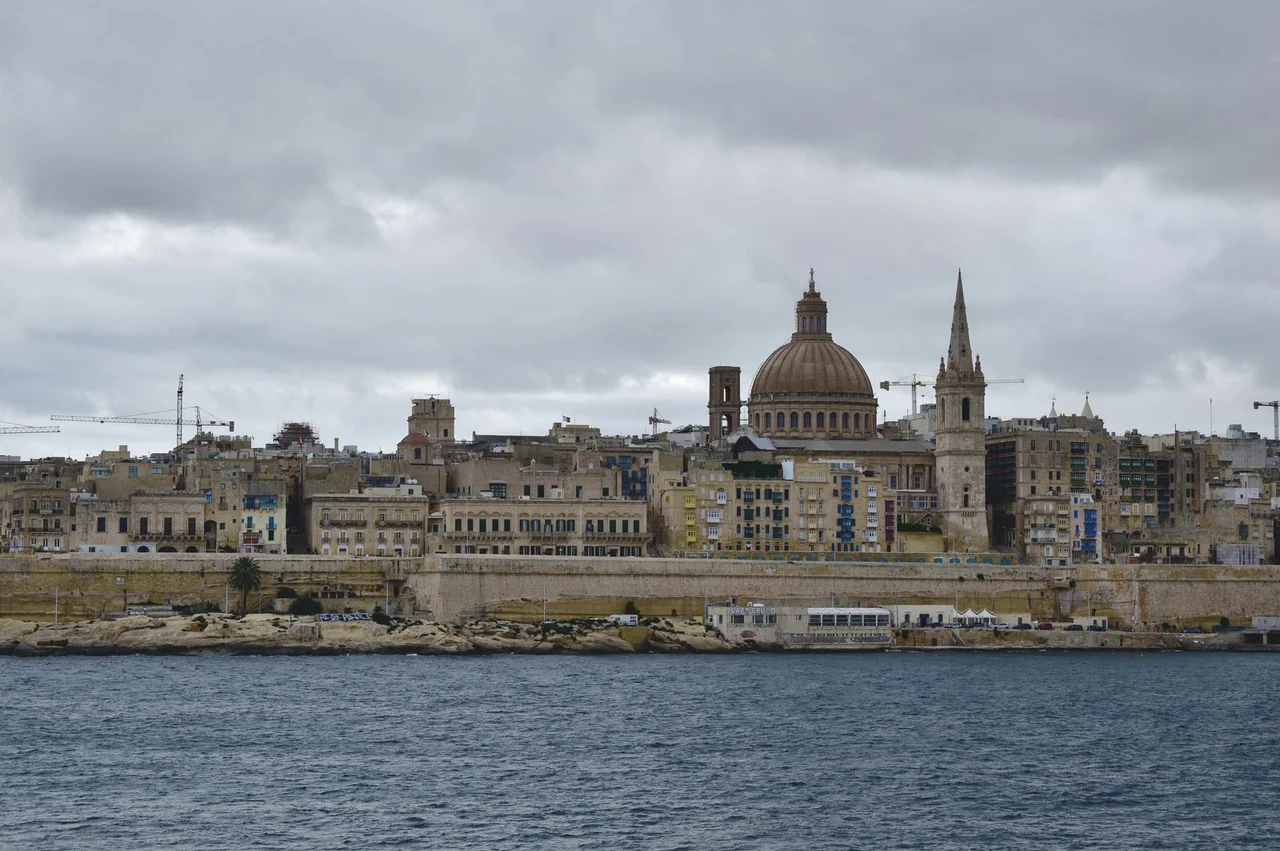
Malta is an island in the center of the Mediterranean, an EU and Schengen member, where English is an official language. For remote workers there's the Nomad Residence Permit - a digital nomad residence permit: income from 42,000 euros a year, a preferential 10% rate on nomad income, and a stay of up to four years. This is specifically a residence permit, not permanent residency or a passport, but a convenient entry point to the EU for those working with a foreign client. We break down the conditions, taxes, documents, and who a more durable status would suit.
What the Malta Nomad Residence Permit is
The Nomad Residence Permit (Malta's digital nomad visa) is a residence permit for people who work remotely for a company or clients outside Malta. The programme was launched by the state agency Residency Malta, and it's designed for those not tied to an office: IT people, designers, marketers, consultants, online business owners.
The idea is simple. You physically live in Malta, but your income source remains abroad - a foreign employer, foreign clients, or your own company registered outside the island. Malta gives you a legal basis to stay in the country long-term, access to the Schengen area, and a clear tax regime.
- This is a residence permit, not permanent residency or citizenship - the status is temporary and needs renewing.
- You can't work for a Maltese employer under this permit - income must come from abroad.
- The resident card gives the right to visa-free travel within Schengen.
If you've long been eyeing Europe but aren't ready for large investments, Malta for remote workers is one of the softest entry points. Read more about other legal stay options in our overviewresidence permits in Malta.
Who Malta's residence permit for freelancers suits
The permit was designed for a specific applicant profile. In short - you earn remotely and want to live in the EU without losing clients and your employer. The programme covers three main categories.
- Remote employees.You're on the staff of a foreign company, have an employment contract, and can perform the work from anywhere in the world.
- Freelancers and self-employed.You provide services to clients outside Malta under service contracts - design, development, copywriting, consulting.
- Business owners.You hold a stake in a company registered abroad and manage it remotely.
An important limitation: the programme is open to citizens of third countries - that is, those who aren't citizens of the EU, EEA, or Switzerland. EU citizens don't need a separate visa, they already live freely in Malta.
Malta's residence permit for freelancers requires proving that income is active and regular. Savings, an investment portfolio, or an inheritance alone don't meet the threshold - the agency wants to see a flow specifically from work.
Conditions and requirements for the applicant
To get the Malta digital nomad visa, you need to meet several conditions at once. The main one is income. Since April 1, 2024, the minimum threshold has been raised to 42,000 euros a year, about 3,500 euros a month gross. Those who filed before this date keep the previous 32,400-euro threshold - but only the new bar applies to new applicants.
| Requirement | Value |
|---|---|
| Citizenship | a third country (not EU, not EEA, not Switzerland) |
| Minimum income | from 42,000 euros a year (about 3,500 euros a month) |
| Income source | remote work for clients/an employer outside Malta |
| Housing | a rental or purchase agreement in Malta |
| Medical insurance | a policy covering the entire stay |
| Age | from 18 years old |
| Background check | the agency's mandatory compliance |
Income is confirmed with three months of bank statements, an employment or service contract, payment slips, and tax documents from the country of previous residency. Details on how to become a tax resident of the island are in our article onMalta tax residency.
Visa validity and renewal
The permit is issued for one year. It can then be renewed, and the total stay under the programme reaches up to four years, provided you still meet the requirements - keeping income, the remote nature of the work, and residence in Malta.
The renewal application is filed in advance, usually no later than a couple of months before the current card expires. The agency again checks income, insurance, and housing - the programme doesn't become an automatic right, the status needs to be maintained.
- The base term is 1 year, renewable several times.
- The maximum horizon under the programme is about four years.
- For renewal it's important to actually live on the island and not lose the source of income.
Four years is the ceiling specifically for the nomad visa. If your plans for the EU are longer, it makes sense to look toward permanent status in advance, which we'll cover below.
How to prove income
Income is the central point of the application, and it's checked carefully. It's important for the agency to see that 42,000 euros a year isn't a one-off amount, but a stable flow from real work. So account balances alone aren't enough.
- Bank statementsfor the last three months on the main account, showing regular receipts.
- Contract- an employment contract with a foreign employer or a service agreement with clients.
- Payment slipsfor the last few months, confirming payments.
- Tax documentsof the country of previous residency - returns or tax payment certificates.
Let's stress separately: savings, an investment portfolio, asset sales, or an inheritance don't meet the threshold. The Malta nomad residence permit is designed for those who actively earn remotely, not live off capital. If your main income is passive, it's better to consider other Malta statuses.
We will find the right basis for residency in Malta
We calculate the budget and timing for your family and list the documents you need.
Documents and medical insurance
The document package for Malta's digital nomad visa is assembled by a clear list. Most papers are filed online through the agency's portal, some - after approval in principle.
- A valid international passport.
- Proof of remote work outside Malta - a contract, description of the role, and the foreign nature of the activity.
- Financial documents: statements, payment slips, tax certificates.
- A rental or purchase agreement for housing in Malta.
- Medical insurance covering the entire stay on the island.
- A motivation letter and completed agency forms.
- Certificates as part of the background check.
Housing and insurance are usually required to be provided after preliminary approval - within the set period. So it makes sense to look for an apartment once the agency has confirmed you meet the criteria in principle.
How to apply: the step-by-step process
The process of obtaining the permit is built around the state agency Residency Malta and proceeds in several stages. Below is the general logic by which the application moves.
- Step 1. Eligibility check.You assess income, citizenship, and the source of earnings - whether you meet the programme's criteria.
- Step 2. Filing the application.You fill out forms and upload documents through the agency's portal, and pay the administrative fee.
- Step 3. Compliance and screening.Agency staff check completeness and carry out a background check.
- Step 4. Approval in principle.After that, within the set period, you provide the housing agreement and medical insurance.
- Step 5. Card issuance.You pay the resident card fee and receive the document.
Substantive review takes about 30 working days from payment confirmation. Exact timelines and forms are best checked on the agency's official website -residencymalta.gov.mt.
How much the nomad visa costs
Direct government fees under the programme are relatively small - this isn't an investment residence permit requiring hundreds of thousands of euros. The main costs are the administrative fee and card issuance, and then day-to-day living expenses follow.
| Cost item | Roughly |
|---|---|
| Administrative fee | about 300 euros per applicant (non-refundable) |
| Resident card issuance | about 27.5 euros per person |
| Card production fee | about 50 euros |
| Medical insurance | from a few hundred euros a year (depends on the policy) |
| Housing rent | by market, depends on the region and season |
The figures are approximate and may change - it's worth checking them with the agency before filing. The main financial barrier here isn't the fees, but the income requirement: it's exactly a stable 42,000 euros a year that separates those who'll pass from those who should look at other paths. Read about everyday expenses in our overviewthe cost of living in Malta.
Can you bring your family
Yes, the programme is family-oriented. Along with the main applicant, close relatives can obtain the permit under the same conditions as the nomad themselves. This is convenient for those relocating not alone.
- Spouse or partnerin a recognized relationship.
- Minor children.
- Adult dependent children- those economically dependent on the applicant or needing care due to health condition.
There's an important nuance: the nomad permit by itself doesn't give family members the right to work in Malta. If a spouse wants to take a local job, they need to separately obtain a work permit (Single Permit). Income to meet the threshold is calculated for the main applicant - it's specifically they who must show the required amount.
For a family, Malta is attractive for its English language, safety, and Mediterranean climate - children adapt easily to an international environment.
Limitations and who won't qualify
The programme has limits, which are better known in advance so as not to waste time.
- Third countries only.Citizens of the EU, EEA, and Switzerland don't fall under the programme - they don't need the visa.
- Income must be foreign.You can't work for a Maltese employer under this permit.
- Active income.Passive sources and savings don't meet the threshold.
- Sanctioned and problematic jurisdictions.The agency keeps a list of countries whose applicants it currently doesn't accept.
For citizens of Russia and Belarus, application intake under this and a number of other programmes is currently restricted amid EU sanctions. We work strictly within the legal field, with enhanced compliance and no workaround schemes - if the path is closed due to citizenship, we'll say so and offer legal alternatives where possible.
Nomad visa or permanent residency: which to choose
The digital nomad visa is a temporary status with a four-year ceiling. It's great for living in the EU, testing life on the island, and keeping remote income. But it doesn't lead directly to permanent status and doesn't give a passport.
If your goal is to seriously establish yourself in Europe, it makes more sense to look toward permanent residency. The Maltese programmeMPRP (Malta Permanent Residence Programme)gives lifelong resident status, includes the spouse, children, parents, and even grandparents, and has no time limit.
- Nomad visa- fast, inexpensive, but temporary and tied to remote income.
- MPRP- more expensive and through investment, but the status is lifelong and the family is broader.
It often makes sense to start with the nomad visa, assess the country from the inside, and then move on to permanent residency. We help build exactly this strategy for specific goals and budget.
Why Malta is convenient for remote workers
Besides the tax rate and clear procedure, Malta has a set of everyday advantages that keep the island steadily on digital nomads' radar.
- English is an official language.No need to learn a new language for documents and daily life.
- An EU and Schengen member.The resident card opens up free travel across Europe.
- Climate and safety.Mediterranean sun most of the year and a low crime rate.
- Connectivity and infrastructure.Developed internet and a remote-worker community.
- Compactness.A small island where the sea and the airport are just minutes away.
There are downsides too: it's hot and crowded in summer, housing rent rises during peak season, and the island itself is small - some people quickly feel cramped. But as a base for remote work in the EU, Malta remains one of the most balanced options.
10% tax on nomad income
The main financial reason to choose Malta is the preferential 10% rate on digital nomad income. This is a special regime noticeably lower than the island's regular progressive income tax scale, where the top rate reaches 35%.
The mechanics work like this. In the first 12 months of stay, income earned outside Malta and not remitted to the country isn't taxed. From the second year, a fixed 10% rate applies to nomad income coming into Malta.
- The 10% rate applies specifically to income from remote activity under the programme.
- To fully benefit from the relief, you usually need to become a Malta tax resident.
- It's important to factor in double taxation avoidance treaties with your country of citizenship.
The tax picture depends on where you remain resident and how you structure income. This is an area where a mistake is costly, so it's worth planning the rate in advance and together with a specialist, not after the fact.
“The nomad visa looks simple, but there are two traps in it. The first is income. The agency wants to see not a balance on an account, but a living flow from remote work: a contract, regular receipts, a tax history. If your main money is passive, you technically won't meet the 42,000-euro threshold, even with a million on the account. The second is taxes. The 10% rate doesn't just switch on by itself: you need to become a tax resident and reconcile it with double taxation avoidance treaties. And separately on the term - this is a residence permit for four years, no more. If the goal is to seriously establish yourself in the EU, keep in mind the transition to permanent status, so the nomad visa becomes a first step, not a dead end.”
We will send a document checklist for your case
Leave your details: we will put together documents and timelines for your family.
Bottom line: is it worth getting
The Nomad Residence Permit is one of the most accessible ways to legally live in the EU for those working with foreign clients. Low government fees, a preferential 10% rate on nomad income, the English language, and access to Schengen make Malta an attractive entry point for remote workers.
The main thing to keep in mind is the framework: this is a residence permit with a four-year ceiling, the income must be foreign and active, and the 42,000-euro-a-year threshold needs to be genuinely proven. If your EU plans are longer, the nomad visa becomes a first step, logically followed by permanent status through MPRP.
To avoid wasting time on a refusal over formalities, it's wise to check your case in advance and assemble the package for the agency's requirements. We'll help figure out which route suits you specifically, and carry the application through to card issuance.
Frequently asked
Questions people ask before deciding
01What is Malta's digital nomad visa?
This is a residence permit (Nomad Residence Permit) for citizens of third countries who work remotely for clients or an employer outside Malta. The status allows legally living on the island, gives access to Schengen and a preferential 10% tax rate on nomad income. This is a residence permit, not permanent residency or citizenship.
02What minimum income is needed for the Malta nomad residence permit?
Since April 1, 2024, the minimum threshold is from 42,000 euros a year, about 3,500 euros a month gross. Those who filed earlier keep the previous 32,400-euro bar, but only the new amount applies to new applicants. The income must be active - from remote work.
03Is it true the tax is only 10%?
Yes, a preferential 10% rate applies to digital nomad income. In the first 12 months, income earned outside Malta and not remitted to the country isn't taxed, and from the second year, 10% applies to income coming into Malta. To benefit from this relief, you usually need to become a tax resident.
04For how long is the visa issued, and can it be renewed?
The permit is issued for one year, renewable. The total stay under the programme is up to four years, provided you still meet the income and remote work requirements. The renewal application is filed in advance, and the agency checks the documents again.
05Who can obtain Malta's residence permit for freelancers?
The programme is open to citizens of third countries (not EU, EEA, or Switzerland): remote employees of foreign companies, freelancers and self-employed with foreign clients, and business owners outside Malta. The main condition is confirmed active income from remote activity.
06Can you work for a Maltese employer?
No. Under the nomad visa, income must come from clients or an employer outside Malta. You can't take a local job under this permit - a separate work permit (Single Permit) would be needed for that.
07Can you bring your family along?
Yes. Along with the main applicant, the spouse, minor children, and adult dependent children can obtain the permit under the same conditions. Income to meet the threshold is calculated for the main applicant, and family members don't have the right to work in Malta under this permit.
08What documents are needed for the Malta digital nomad visa?
An international passport, proof of remote work outside Malta (a contract), financial documents (statements, payment slips, tax certificates), a rental or purchase agreement for housing on the island, medical insurance for the entire term, and completed agency forms. Housing and insurance are usually provided after approval in principle.
09How much does filing cost?
Direct government fees are small: roughly about 300 euros administrative fee per applicant, plus resident card fees. This isn't an investment residence permit. The main barrier isn't the fees but the income requirement. Exact amounts should be checked with the agency before filing.
10How long does application review take?
Substantive review takes about 30 working days from payment confirmation. Before that, document completeness and compliance checks take place. The exact timeline depends on the specific case and the current workload of the Residency Malta agency.
11Does the nomad visa give the right to Malta permanent residency or a passport?
No, not directly. This is a temporary status with a four-year ceiling. If the goal is permanent EU resident status, it's worth looking toward the MPRP programme, which gives lifelong permanent residency and includes a broader family circle. The nomad visa can become the first step of this strategy.
12Can citizens of Russia and Belarus obtain the visa?
Currently application intake for a number of Maltese programmes for citizens of Russia and Belarus is restricted amid EU sanctions. We work strictly within the legal field, with enhanced compliance and no workaround schemes. If the path is closed due to citizenship, we'll say so and offer legal alternatives if there are any. Passive income can't meet the threshold - active earnings from remote work are needed there.
Transparency
How this material was prepared
- Author
- Dmitry Nagy, international Tax Consultant, BRIDGES
- Terms and costs last verified
- June 2026
- Sources
- official government authorities of the relevant country and state publications
- Methodology
- government minimum requirements are stated separately from due diligence charges, state fees, legal and banking costs
Sources and methodology
Figures, terms and timelines are checked against official sources as of June 2026. Link availability verified in August 2026. Third-party blogs and agent websites are not used as a source of programme terms.
- [1]Identità MaltaResidence, citizenship and documentsidentita.gov.mt
Methodology: tables and charts state government minimum investment requirements; due diligence charges, state fees, legal, banking and other costs are calculated separately and are not included in the minimum thresholds.
About the author
Related materials
What to read next
 ArticleMaltese citizenship by descent: through parents, grandparents and roots
 ComparisonCitizenship of Cyprus or Malta in 2026: comparison of paths to an EU passport
 AnalysisWhat is due diligence and why the Caribbean is rejecting applications
Personal programme selection is conducted by Anna Kovalevskaya, Head of Legal, BRIDGES.
Tax residency in Malta: how it is determined
When tax residency arises, how double taxation is avoided and what the tax authority checks.
