Residency · UAE
Schools in Dubai 2026: International, British, and Russian - Programs and Tuition Costs

Updated: June 2026·12 min read·Expert reviewed
Terms and costs verified: June 2026

Contents
Education in Dubai for children is one of the main concerns for families relocating to the UAE. The good news is there is plenty to choose from. The emirate operates more than 220 private schools following 17 educational curricula - British, IB, American, Indian, and a Russian school with instruction according to the Russian Federation program. All education is fee-paying; school ratings are maintained by the regulator KHDA, and tuition costs in Dubai range from approximately 25,000 to 120,000+ AED per year. We review what types of international schools Dubai has, how much each program costs, and how to enroll your child while places are still available.
Education in Dubai for Children: How the System Works
First, parents must understand: public school education in the UAE is primarily intended for UAE citizens, while children of foreign residents attend private schools. This is not an exception but the norm - the private sector meets the needs of expat families, which make up the majority in Dubai. Therefore, when planning relocation, you should immediately search for a school in the private sector and factor this into your family budget.
The scale of the system is impressive. Dubai has more than 220 private schools educating approximately 400,000 children across 17 different educational curricula. Students at these schools represent almost 190 nationalities - this is one of the most international school markets in the world. For families, this means real freedom of choice: you can select a school based on language, your child's future university, residential area, and budget.
Education at Dubai schools is conducted primarily in English (except for national programs - such as Russian or French). The standard in strong schools is high: graduates are accepted to universities in the United Kingdom, United States, Europe, and the UAE. If you are only planning relocation, it is useful to study in advance how family life is organized in the emirate - we have written about this in detail in our article on Relocating to the UAE with Family.
KHDA: Who and How Evaluates Dubai Schools
So that parents do not choose a school blindly, Dubai has a separate government regulator - KHDA (Knowledge and Human Development Authority). This is a key body, and understanding its role is essential for anyone enrolling their child in a local school.
What KHDA Does:
- Inspects and evaluates schools. Each private school undergoes regular inspection and receives a rating on a five-point scale: Outstanding, Very Good, Good, Acceptable, Weak.
- Publishes reports. Inspection results are public: you can view a specific school's rating on teaching quality, student results, management, and child welfare.
- Controls tuition fees. Tuition increases are linked to the rating: highly-rated schools may raise fees by a larger percentage, weaker schools by a smaller one. This protects parents from arbitrary price increases.
In practice, this works as follows: before submitting documents, parents check the latest KHDA rating for the specific school. Most schools with a British curriculum traditionally maintain high ratings. The rating is not the only criterion but a useful filter at the start. Current information should be checked on the official UAE Government Portal (u.ae).
How to enroll your child in a Dubai school: conditions and steps
Enrollment in a Dubai school is a process best started well in advance. Good schools are oversubscribed, with limited places: popular programs have waiting lists, and it is recommended to submit documents 6-12 months before the start of the school year, particularly for foundational levels and transitions to secondary school.
How the procedure generally works:
- Application and registration. The parent completes an online application on the school's website, receives a reference number, and pays a registration fee (approximately 500 AED + VAT).
- Child assessment. The school conducts testing or an interview. This may be a cognitive test (for example, CAT4), written work, or an interview—depending on age and program.
- Documentation. Passports and visas for the child and parents, Emirates ID, school transcripts, and a transfer certificate from the previous school are required, often notarized.
- Place confirmation. After successful assessment, a deposit is paid and the place is secured for the child.
A key condition often overlooked: a resident child attends school based on a visa and Emirates ID. Therefore, the school question cannot be separated from the residency question—first establish status, then proceed with full enrollment. The main rule is not to delay: a strong school with a good KHDA rating may have no available places by the start of the academic year.
How to choose a school: program, budget, location
When there are over two hundred options, school selection becomes a separate task. To avoid being overwhelmed by choices, it makes sense to focus on three key factors: program, budget, and location. These three factors address the majority of the decision.
What to consider when choosing:
- Program aligned with future university plans. If your child is targeting the United Kingdom—British system or IB; the USA—American system; Russia—Russian school or supplementary Russian subjects. This is the first and primary filter.
- Family budget. determine your spending limit for education, accounting for all additional expenses and the number of children. This immediately narrows down school options and focuses your search.
- Location and logistics. A school near home saves your child and family hours on commuting. Choice of residential area and school should be coordinated: sometimes it is more logical to choose housing based on the school.
- KHDA rating. A current regulator assessment is a quick way to eliminate weak schools and compare strong ones.
Additionally, consider the language of instruction, class size, infrastructure, and reviews from other expatriate families. However, the basic logic remains: first program, then budget, then geography—and use the KHDA rating as quality control.
What to pay attention to: expert perspective
Over the years working with families relocating to the UAE, we have observed that the school question is almost always underestimated in terms of timelines. Parents focus on visa, housing, work—and leave school for last, ultimately running into waiting lists.
Several practical guidelines to keep in mind:
- Start your school search simultaneously with your relocation, not after. For strong schools, submit documents 6-12 months in advance; by September, there may be no available places.
- Calculate the full budget, not just tuition. Registration fee, deposit, transport, uniform, extracurricular activities—the actual amount is considerably higher than the base fee.
- Check the KHDA rating. This is an objective filter: it shows a school's level regardless of its marketing.
- Do not separate school selection from residency. Full child enrollment is based on a visa and Emirates ID—status must be obtained on time.
- Prepare documentation in advance. Notarization of a transfer certificate from the previous school may take weeks.
A Dubai school is not a one-time purchase but a decision for years to come. The earlier a strategy is established (program, budget, location, timelines), the smoother both the relocation and the child's adaptation will be.
Summary: what is important to know about Dubai schools in 2026
Dubai is one of the world's most convenient cities for relocation with children precisely because of its schools. Over 220 private schools, 17 programs, English-language instruction, strong academic results, and state quality control through KHDA give families real freedom of choice—from affordable Indian programs to premium British and IB schools.
Key guidelines for 2026:
- Education is fee-based —approximately from 25,000 to 120,000+ AED per year depending on program and prestige, plus additional expenses.
- Many programs available - British, IB, American, Indian, Russian, and over a dozen national programs; choice depends on your child's future university.
- Russian school is available - with instruction following the Russian Federation curriculum and Unified State Exam (USE), but practically only one option, so enrollment should be secured in advance.
- KHDA - your assistant - use the regulator's ratings as an objective filter.
- Enrollment - plan ahead - at quality schools, registration is required 6-12 months in advance; places are limited.
The optimal strategy for a family is to address the school question together with residency and district selection as a single project. This way, relocation proceeds smoothly, and your child enters a suitable program from day one. More details on the practical aspects of relocation in our materials about life in the UAE for families and cost of living in Dubai.
Not sure which country and status to choose?
We will compare suitable residency programs on budget, timelines and stay requirements - with a full cost calculation for your family.
Free of charge, we reply right away, no obligation.
British School in Dubai: The Most Popular Program
The British program is the most widespread in Dubai, with approximately one third of all private school students in the emirate following it. When you hear the phrase "British school Dubai," it almost certainly refers to the classical English system: EYFS (preschool level), followed by primary and secondary school with IGCSE exams at around age 16 and A-Level in final years.
Why the British program is so popular with expats:
- Clear and predictable structure. Parents from many countries understand how the English system works and trust it.
- Strong academic results. Many British schools in Dubai maintain high KHDA ratings and prepare well for university admission in the United Kingdom and other countries.
- A-Level and IGCSE are recognized worldwide. With such credentials, a child is not tied to one country when choosing a university.
In terms of cost, British schools occupy the middle and upper segments. Junior classes start at approximately 30,000-40,000 AED per year, while senior school in prestigious institutions with A-Level exams reaches 100,000-130,000 AED per year. The range is significant, so schools are selected according to budget: there are both solid mid-tier options and top-tier names with corresponding price tags.
IB schools: International Baccalaureate.
The second most prestigious and recognized program is the International Baccalaureate (IB). This is a global system valued for the flexibility and universality of its diploma, recognized by universities worldwide.
IB is structured in several stages: PYP (Primary Years Programme), MYP (Middle Years Programme), and the concluding IB Diploma Programme in senior years. The key feature is an emphasis not only on knowledge but also on research skills, critical thinking, and independence. An IB Diploma graduate enters university with experience in serious academic work.
Who IB suits:
- Families who relocate frequently. The IB diploma is universal and not tied to one national system—convenient if further relocations are ahead.
- Children aiming for strong universities worldwide. IB Diploma is highly valued for admission to top universities.
- Parents for whom developing their child's independence is important. The program places serious emphasis on this.
In terms of cost, IB is a premium segment. Schools offering IB Diploma in Dubai are among the most expensive: senior classes often cost 90,000-130,000 AED per year. This is the price for a globally recognized diploma and, as a rule, a high standard of the school itself.
American program: Common Core, AP, and High School Diploma.
The American program is the third major system in Dubai. It is built around Common Core standards, advanced Advanced Placement (AP) courses, and concludes with obtaining an American High School Diploma. This program is particularly suited to families aiming for universities in the USA or those who have already lived in an American educational environment.
Key features of the American approach:
- Flexibility in subject selection. Students largely form their own course selection, allowing them to emphasize their strengths.
- AP courses. These are university-level subjects taken in high school—they strengthen applications for admission and may be credited at US universities.
- Focus on admission to American universities. Familiar assessment formats, GPA, and SAT preparation.
In terms of cost, American schools in Dubai occupy the middle and upper segments, comparable to British schools. Junior classes start at approximately 30,000-40,000 AED, senior classes are noticeably higher, depending on prestige and KHDA rating. The choice between British and American programs is usually determined by which country the family plans to send their child to for university.
Indian program (CBSE): affordable segment.
The Indian program, primarily CBSE, is the most affordable segment of Dubai schools by cost and is also very widespread: approximately a quarter of all private school students in the emirate follow Indian programs. This makes sense, as the Indian diaspora in the UAE is one of the largest.
The main advantage of CBSE is price. Education under the Indian program costs significantly less than British or IB: approximately 12,000-15,000 to 50,000-55,000 AED per year. For a family with several children and a limited budget, this is often a deciding factor. Meanwhile, strong Indian schools provide solid academic education, particularly in mathematics and natural sciences.
Important considerations:
- Academic year. Some Indian schools begin the academic year in April rather than September—this needs to be factored into relocation planning.
- Language. Instruction is conducted in English, which is convenient for most expat families.
- Documents. Admission often requires a certified transfer certificate—certification can take several weeks, so it should be started in advance.
The Indian program is a reasonable choice for those who value quality education without a premium price tag. It is part of the overall family budget picture, which is useful to assess alongside other expenses—see more details in the review of Dubai cost of living. (continuation of item 34).
Russian school in Dubai: education according to the Russian Federation program.
A separate and frequent request from parents from the CIS is about Russian schools in Dubai. It is important to give a picture: there is a school with full-fledged education according to the Russian program in the emirate, but there is essentially only one, and this must be taken into account when planning.
Russian International School in Dubai has been operating since 1996 and conducts teaching according to Russian educational programs in the Russian language. Key features:
- RF program and Unified State Exam (USE). Upon completion of studies, students take the Unified State Exam and receive a Russian-format diploma—this opens a direct path to Russian universities.
- Instruction in Russian. For families who wish to preserve their native language and the Russian system, this is the main argument.
- Cost. Approximately 26,000 to 32,000 AED per year depending on level—this is one of the more affordable options on the Dubai market.
- Admission. The school enrolls approximately 300 new students annually; there is testing and interviews with parents; places are limited.
Many Russian-speaking families choose a compromise: enroll their child in an international school (British, IB, American) for English language and a global diploma, while supplementing Russian language and RF subjects additionally. Which path to choose depends on where the child will apply to university. This topic is closely related to overall adaptation—we write about this in the article on life in Dubai for Russian speakers. (continuation of item 47).
Other programs: French, German, IB, and national systems.
In addition to the big four (British, IB, American, Indian) and Russian school, Dubai has more than a dozen other educational programs. This is a rare case where almost any national education system has its own school in the city—a consequence of the emirate being home to representatives of almost 190 nationalities.
What else is available to parents:
- French program - with instruction in French and French diploma (baccalauréat), following the French system and Francophone countries' curricula.
- German program - for families oriented toward Germany and the German-speaking region.
- National programs - Japanese, Philippine, Pakistani, Iranian, Canadian and others, designed for respective diasporas.
- UAE Ministry of Education program - local national system.
Such diversity is a strong advantage of Dubai as a city for relocation with children. Families from any country can find a school that either continues their familiar system or offers an international diploma. However, this has a downside: the more niche the program, the fewer schools offering it, and the earlier you need to address enrollment.
"The main thing I repeat to every family at the first meeting: you cannot put off school in Dubai until later. Parents actively solve visa, work, and housing issues - but defer school, and by August there are no places left in strong schools with good KHDA ratings. Dubai has over two hundred schools and 17 programs, the choice is enormous, but top schools receive applications 6-12 months in advance. Therefore, I advise moving forward on three fronts simultaneously: the program aligned with your child's future university, a realistic budget accounting for all additional expenses (not just tuition), and a residential area near the school. And definitely calculate the full estimate: enrollment fee, deposit, transportation, uniform, and extracurriculars often add a substantial amount to annual fees. School is a decision for years, and the earlier you build a strategy, the smoother both the relocation and adaptation will be."
Cost of education in Dubai: table by programs
We'll consolidate the cost of education in Dubai into one table - this is the most frequent parent question. One important note upfront: the figures are approximate and depend on grade level (higher grades are more expensive), KHDA rating, and prestige of the specific school. Beyond annual tuition, there are almost always additional expenses: enrollment fee, transportation, uniform, textbooks, meals, and extracurricular activities.
| Program | Example | Cost from (AED/year, approximately) |
|---|---|---|
| Indian (CBSE) | Accessible segment, mainstream | from 12,000-15,000 |
| Russian (RF program) | Russian International School, Unified State Exam | from 26,000 |
| British | EYFS / IGCSE / A-Level | from 30,000-40,000 |
| American | Common Core / AP / High School Diploma | from 30,000-40,000 |
| French / German | National European | from 30,000-40,000 |
| IB (International Baccalaureate) | PYP / MYP / IB Diploma | from 40,000, upper grades up to 120,000-130,000 |
General market guidance: budget schools start at approximately 12,000-25,000 AED, mid-range segment - 30,000-60,000 AED, premium British and IB schools in upper grades reach 100,000-130,000 AED per year. For families with two to three children, education becomes one of the largest expense categories, and this should be calculated in advance.
Additional expenses beyond tuition
A common budgeting mistake is looking only at annual tuition. In reality, the total amount is noticeably higher, because along with tuition comes a whole set of mandatory and semi-mandatory expenses. These need to be factored in from the start so the actual figure doesn't become a surprise.
What typically comes on top of tuition:
- Enrollment/registration fee. When submitting documents, the school charges an application fee - approximately 500 AED + VAT, sometimes more. Part of the fee may be non-refundable.
- Deposit for enrollment. To secure a place, a deposit is often required, which is later credited toward tuition.
- Transportation. School bus is a separate line item, especially if the school is far from home.
- Uniform, textbooks, materials. Mandatory expenses at the start of the year.
- Meals and extracurricular activities. Clubs, sports, trips - optional, but in practice accumulate to a substantial sum.
Practical tip: when comparing schools, request a full annual budget from each institution, not just the tuition fee. Two schools with identical tuition may differ significantly in total expenses. Education is part of the overall relocation budget, which is convenient to plan together with housing and living arrangements, as we discuss in our relocation guide. Moving to Dubai.
Frequently asked
Questions people ask before deciding
01How many schools are in Dubai and what curricula do they follow?
Dubai has over 220 private schools educating approximately 400,000 children across 17 curricula. The main programs are British, International Baccalaureate (IB), American, and Indian (CBSE). There is also a Russian school following the RF curriculum, French, German, and more than a dozen national programs. Students represent almost 190 nationalities.
02What is the cost of schooling in Dubai in 2026?
Approximately 25,000 to 120,000+ AED per year. The most affordable segment is Indian schools (CBSE), from approximately 12,000-15,000 AED. British and American schools start from 30,000-40,000 AED, while premium IB and British schools in upper grades reach 100,000-130,000 AED. Figures depend on the level, rating, and prestige of the school.
03Is there a Russian school in Dubai?
Yes. The Russian International School in Dubai has been operating since 1996 and provides education according to the Russian curriculum in the Russian language. Graduates take the Unified State Exam and receive a Russian diploma. The cost is approximately 26,000 to 32,000 AED per year. It is essentially the only full-fledged Russian school in the emirate, so places should be reserved in advance.
04What is KHDA and why does a parent need it?
KHDA is the government education regulator in Dubai. It inspects private schools and assigns them ratings on a five-point scale from Outstanding to Weak, publishes reports, and monitors tuition fee increases. For a parent, the KHDA rating is an objective filter that helps eliminate weak schools and compare strong ones before submitting applications.
05Can children of foreign residents attend schools in Dubai?
Yes, private schools are designed primarily for children of foreign residents—they are the majority in Dubai. Public schools are intended mainly for UAE citizens. To enroll, a child needs a resident visa and Emirates ID, so the school question is resolved together with obtaining residency status for the family.
06Which program is better—British, IB, or American?
It depends on where the child will apply to university. The British system (IGCSE, A-Level) is convenient for UK universities, IB is universal and recognized worldwide, and American (Common Core, AP) is oriented toward US universities. There is no single best option—the choice is made based on the family's goals, budget, and the child's aptitudes.
07What is the most affordable program in terms of cost?
The Indian program (CBSE) is the most affordable segment, approximately 12,000-15,000 to 50,000-55,000 AED per year. It educates about a quarter of all private school students in Dubai. Strong Indian schools provide solid education, particularly in mathematics and natural sciences. This is a sensible choice for families with a limited budget.
08How much advance notice is needed to enroll a child in school?
The earlier, the better. Applications for popular schools are submitted 6-12 months before the start of the school year, especially for entry levels and transition to secondary school. Good schools are oversubscribed, waiting lists form, and there may be no available places by the start of the academic year. Delaying the school decision to the last moment is risky.
09How does the enrollment process work for schools in Dubai?
First, a parent fills out an online application and pays a registration fee (approximately 500 AED + VAT). The school then conducts an assessment of the child—testing (for example, CAT4), written work, or an interview. Passports, visas, Emirates ID, school transcripts, and a transfer letter from the previous school will be required. After successful assessment, a deposit is paid and the place is secured.
10What is the language of instruction in Dubai schools?
In most international schools, instruction is conducted in English—this is convenient for expat families from different countries. An exception is national curricula: Russian is taught in the Russian school, French in the French school, and German in the German school. The level of English in strong international schools is high.
11What are the expenses in addition to tuition?
In addition to annual tuition, there are typically: registration fee (approximately 500 AED + VAT), deposit for enrollment, transportation (school bus), school uniforms, textbooks, meals, and extracurricular activities. The total amount is noticeably higher than the base tuition, so when comparing schools, request a full annual estimate, not just the tuition figure.
12Can you obtain a Russian diploma and take the Unified State Exam in Dubai?
Yes. The Russian International School in Dubai provides education according to the RF curriculum; graduates take the Unified State Exam and receive a Russian diploma, which opens a direct path to Russian universities. Many Russian-speaking families also choose an international school for English and a world diploma, supplementing Russian language studies additionally.
Transparency
How this material was prepared
- Author
- Viktoria Lebedeva, managing Director, Private Clients, BRIDGES
- Terms and costs last verified
- June 2026
- Sources
- official government authorities of the relevant country and state publications
- Methodology
- government minimum requirements are stated separately from due diligence charges, state fees, legal and banking costs
Sources and methodology
Figures, terms and timelines are checked against official sources as of June 2026. Link availability verified in August 2026. Third-party blogs and agent websites are not used as a source of programme terms.
- [1]Federal Authority for Identity, Citizenship, Customs and Port Security (ICP)Visas, residence statuses, Emirates IDicp.gov.ae/en
- [2]Official portal of the UAE GovernmentGolden visa and residence visasu.ae/en/information-and-services/visa-and-emirates-id/residence-visas/golden-visa
Methodology: tables and charts state government minimum investment requirements; due diligence charges, state fees, legal, banking and other costs are calculated separately and are not included in the minimum thresholds.
About the author
Related materials
What to read next
 ArticleUAE citizenship by investment in 2026: is there a program and what really works?
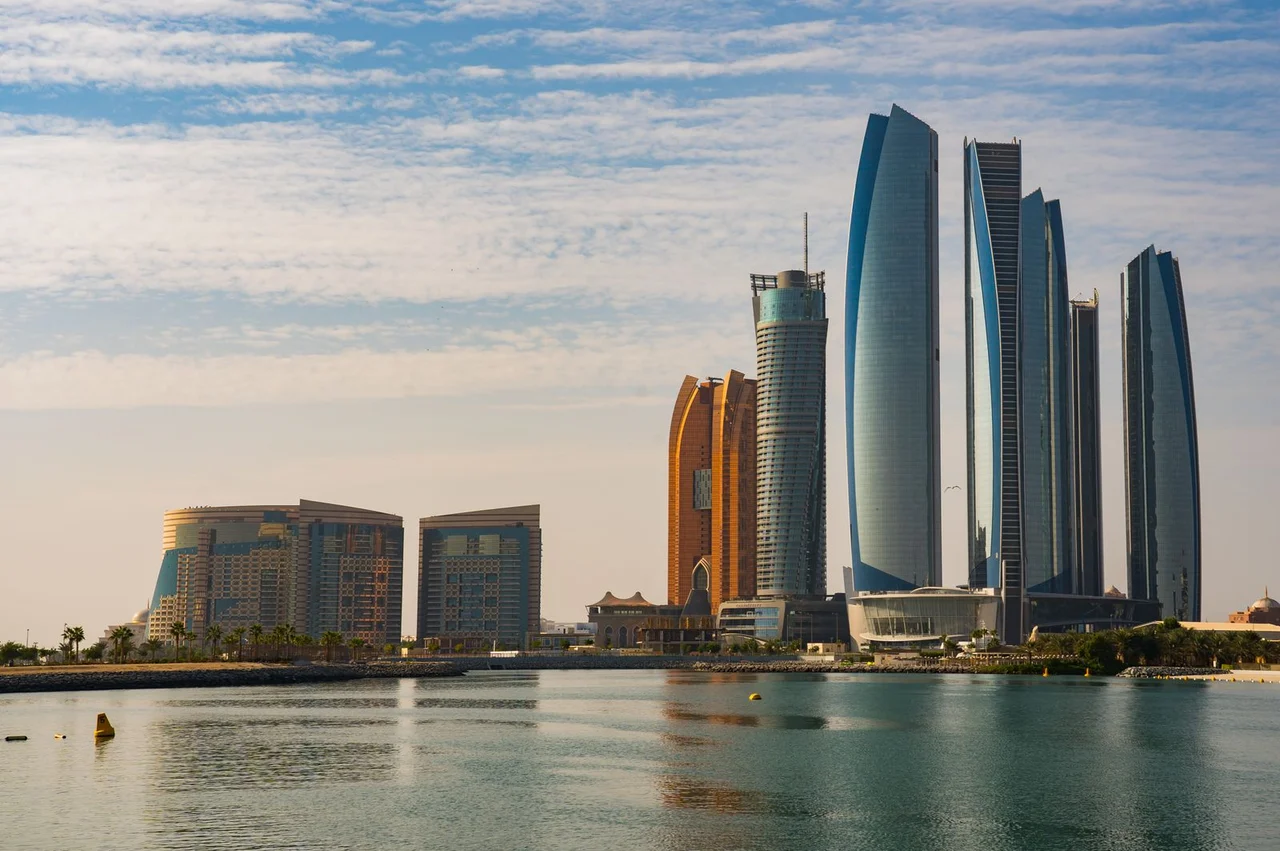 ComparisonDubai or Abu Dhabi in 2026: where to live, work and buy property
 AnalysisWhat is due diligence and why the Caribbean is rejecting applications
Personal programme selection is conducted by Anna Kovalevskaya, Head of Legal, BRIDGES.
Residency in UAE: timelines and requirements
Grounds, document list, presence requirements and what is needed for renewal.