Residency · Cyprus
Cost of living by cities of Cyprus 2026: Limassol, Paphos, Larnaca, Nicosia - comparison

Updated: June 2026·12 min read·Expert reviewed
Terms and costs verified: June 2026
Contents
Cyprus has ceased to be an unambiguously cheap destination: rent and utilities have become noticeably more expensive, especially in Limassol. But there is a real gap in spending between the cities of the island. The same lifestyle in Limassol can cost 30-50% more than in Nicosia, Larnaca or Paphos. Let’s take a look: how much does it cost to rent an apartment, what do electricity and air conditioning cost in the summer, prices for food, transport and medicine - and what monthly budget can a single person and a family of four realistically set in each of the four main cities in 2026. All figures are indicative and change quickly.
Four cities, four different budgets
When they talk about the “cost of living in Cyprus”, this is almost always an averaging, which is not suitable for anyone. The island is small, but the price range between its cities is huge, and the choice of city is one of the main factors in your monthly budget, along with the size of your home and lifestyle.
Briefly, the balance of power in 2026 looks like this:
- Limassol - financial and business capital, the most expensive city of the island. Here are the headquarters of IT and forex companies, a shortage of housing by the sea and the highest prices for rent and restaurants.
- Nicosia - the administrative capital in the interior of the island. Rent is noticeably cheaper than coastal cities, but there is no sea, and summers in the basin are especially hot.
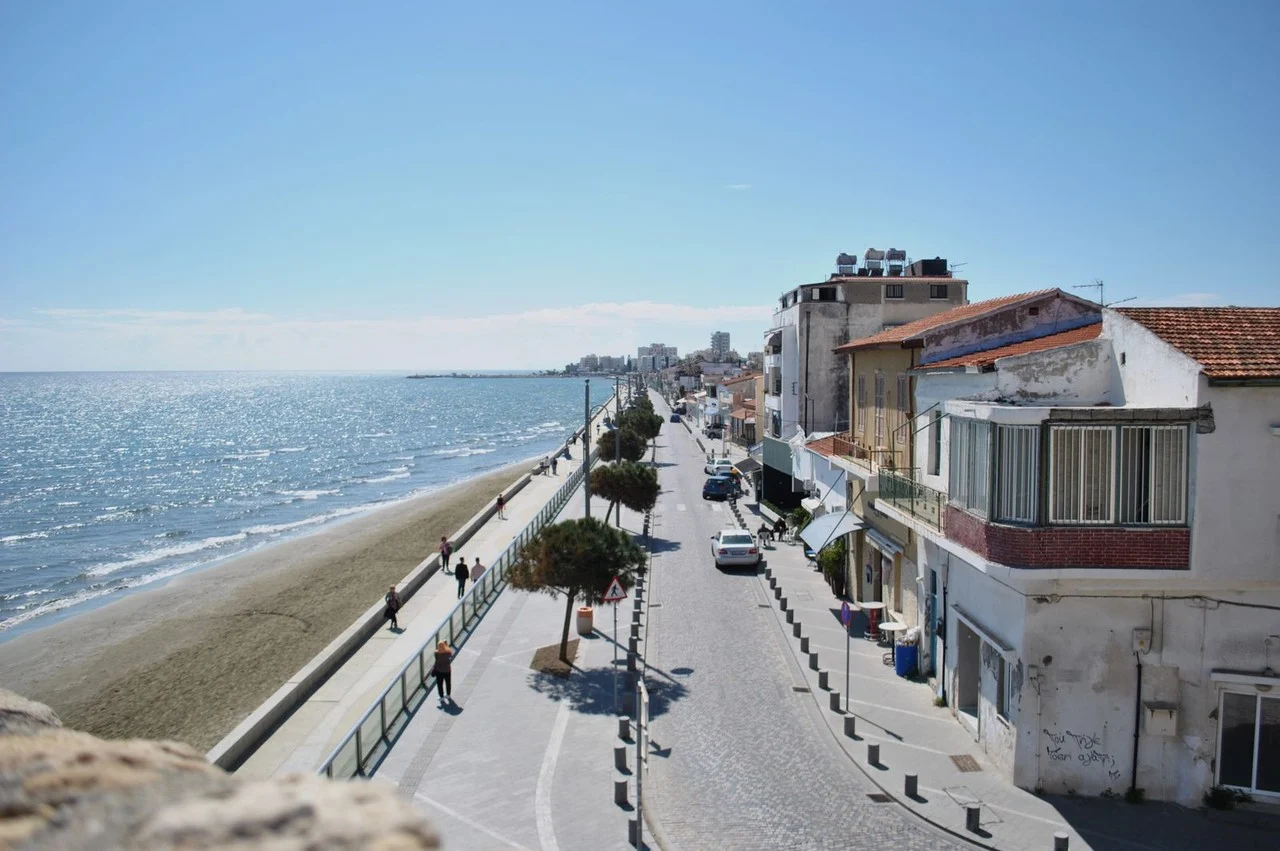
- Larnaca - the most logistically convenient city: the main airport is nearby, a calm rhythm and affordable prices.
- Pathos - quiet resort west, large community of expats and retirees, prices lower than Limassol, English-speaking environment.
Next, we will analyze each expense item separately and put everything into a comparative table. Let’s make a reservation right away: the rental market on the island is scarce, prices are rising, and any figures here are approximate, for estimating the order of the amounts, and not an exact price list.
Rental housing: where Limassol breaks away from everyone
Rent is the item that most severely separates cities from their budgets. This is where Limassol breaks away from the rest of the island, and Paphos and Larnaca look like salvation for the wallet.
Indicative ranges for 2026 for one-room and two-room apartments (euro per month):
| City | 1 room (landmark) | 2-room (landmark) |
|---|---|---|
| Limassol | 900-1500 € | 1300-2200 € |
| Nicosia | 700-1000 € | 900-1300 € |
| Larnaca | 700-1000 € | 900-1400 € |
| Pathos | 600-900 € | 800-1200 € |
It can be seen that rent in Limassol is approximately 30-50% higher than in other cities: high demand from expats, IT companies and the limited supply of housing by the sea are pushing rates up. In Paphos and Larnaca, you will get noticeably more spacious accommodation for the same money. At the same time, the market is scarce, good options are gone quickly, and the specified forks are just a guideline, not a guarantee. A detailed breakdown of costs can be found in our guide to cost of living in Cyprus.
Utilities and electricity: summer bill for air conditioners
Utility costs in Cyprus are a frequent surprise for new residents. The main item is electricity, and it is expensive here: approximately about 0.25 € per kilowatt-hour. The Cypriot summer, with temperatures in the 35-40 degree range, means air conditioning runs almost 24/7 and summer bills skyrocket.
Approximate structure of communal services (euro per month per apartment):
- Electricity - on average 80-120 € in winter and off-season, but in summer for a two-room apartment with active air conditioning the bill easily goes up to 150-250 €.
- Water - approximately 20-40 €.
- Internet - about 30-40 € for fast home Internet.
- General expenses at home (koinoxrista) - 50-100 € in complexes with an elevator, a swimming pool, and cleaning of the territory.
An important feature: communal services are slightly dependent on the city; they are approximately the same in Limassol, Nicosia, Larnaca and Paphos - the electricity tariff is the same across the island. But the type of housing decides everything: a private house with a swimming pool and a garden costs several times more than an apartment. In total, you should budget approximately 120-300 € per month for an apartment, with summer peaks closer to the upper limit.
Products and food: EU level, local is cheaper than imported
Food prices in Cyprus are approximately at the level of the European Union, without sharp regional differences between cities. Another rule applies here: local is noticeably cheaper than imported. Cypriot vegetables, fruits, olive oil, halloumi cheese, local wine and fish are reasonably priced, but imported goods, northern products and alcohol from abroad are significantly more expensive.
Guidelines for 2026:
- Products per person - approximately 150-250 € per month.
- Family of four - approximately 600-1000 € per month for groceries.
The most noticeable difference between cities is not in stores, but in restaurants. Limassol is the most expensive city in terms of prices in cafes and establishments: fashionable restaurants on the embankment maintain the capital's price level. In Paphos, Larnaca and Nicosia, dining out is significantly cheaper. Those who cook at home and buy local products in markets spend significantly less on food than those who are accustomed to restaurants and imported brands. The prices in this section are indicative and change with inflation.
Transportation: a car is almost mandatory
Let's say something that is rarely warned about: Cyprus is an island of motorists. Public transport is provided only by buses, their network and schedule are weak, especially outside city centers and in the evening. There are no metro or trains. Therefore, for most families, owning a car is not a luxury, but a practical necessity.
What to include in your transport budget:
- Automobile - main article: fuel, insurance, road tax, technical inspection, periodic repairs. Driving here is on the left, like in Britain.
- Buses - cheap, but not always convenient option; Suitable for the city and students, travel cards are inexpensive.
- Taxi and car sharing - available in large cities, but for regular trips it is expensive.
The difference between cities is small, but there is a nuance: in compact Larnaca and Nicosia, much is within a reasonable trip, while Limassol, stretched along the coast, means longer journeys and traffic jams during rush hours. Airports - in Larnaca (main) and Paphos; For residents of Limassol and Nicosia, it takes approximately 40-60 minutes to get to Larnaca airport.
Medicine and GESY: public system and private clinics
The healthcare system in Cyprus is built around the government program GESY (GeSI) - universal health insurance. Tax residents and officially employed people make contributions on their income and have access to doctors, hospitals, tests and some medications within the system. This seriously reduces medical costs compared to countries without such a system.
What is important to understand about medical expenses:
- GESY covers the bulk of services for those who pay contributions; financed by deductions from salaries, pensions and other income.
- Private medicine remains popular for speed and comfort; many expats carry additional private insurance.
- Private insurance for non-residents and those not in GESY, it costs approximately several hundred euros per year per person, depending on age and coverage.
Cities differ little in terms of prices for medicine: there are large private clinics in Limassol, Nicosia, Larnaca and Paphos. The quality of private medicine on the island is high, English is widely spoken in clinics.
Comparison table: monthly budget for four cities
Let's put it all together. Below is the estimated monthly budget for a single person and for a family of four in each of the four cities in 2026. Amounts include rent, utilities, groceries, transportation and basic daily expenses; they are approximate and depend on the area, housing size and lifestyle.
| City | Lonely man (landmark) | Family of 4 (guideline) | Peculiarity |
|---|---|---|---|
| Limassol | 2200-3200 € | 4000-5500 € | The most expensive, sea, business center |
| Nicosia | 1700-2500 € | 3200-4300 € | Cheaper to rent, but without the sea |
| Larnaca | 1600-2400 € | 3000-4200 € | Accessible, convenient airport |
| Pathos | 1500-2300 € | 2900-4000 € | Calm down, expat community |
The main conclusion from the table: the gap between Limassol and other cities in terms of the family budget can reach a thousand euros per month or more - mainly due to rent and restaurants. Let us emphasize once again: these are guidelines for estimation, and not an exact calculation. The rental market is tight, prices are rising, and the actual amount for a particular family may vary significantly. For a personal calculation tailored to your city, family composition and goals contact BRIDGES GLOBAL specialists - we will help you understand what living and moving will cost in your case.
Limassol: expensive, but in the center of business life
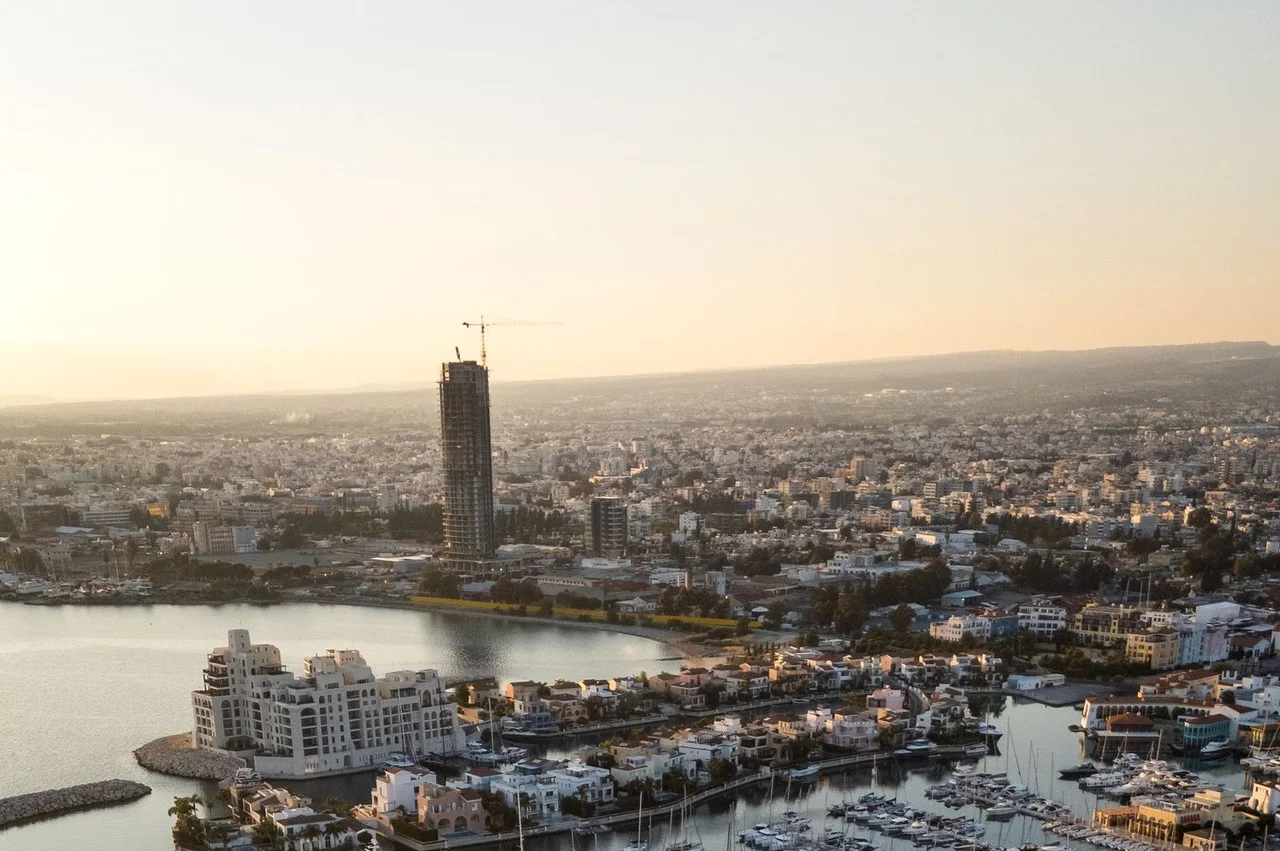
Limassol is the Cypriot Dubai in miniature: skyscrapers by the sea, a yacht marina, international companies, expensive restaurants and the highest concentration of the Russian-speaking community on the island. There is a price to pay for this - literally.
Who is Limassol suitable for:
- For those who work in IT, fintech, forex and shipping companies - most of the offices are here, and the commute to work is more important than saving on rent.
- For those who appreciate an urban environment by the sea - embankment, restaurants, schools, developed infrastructure, international clinics.
- For those who are ready for the highest budget on the island - rent and eating out here are significantly more expensive than other cities.
Limassol is the choice of active and working people, for whom proximity to the business center and infrastructure outweighs the overpayment. A family of four easily costs 4000-5500 € per month and more. If the budget is more important than the address at the marina, it is worth taking a closer look at neighboring cities. Read more about the city in our material about life in Limassol.
“When people come to me with the question “how much does life cost in Cyprus,” I always ask again - in which city. Because Limassol and Paphos are two different Cyprus in terms of money. The most common mistake is to look at the average figure for the island and plan your move according to it. In reality, the difference between cities in rent reaches thirty to fifty percent, and taking into account restaurants and schools, a family of four in Limassol spends one thousand to one and a half euros per month more than the same family in Larnaca or Paphos. The second thing I always warn you about: communal apartments in the summer and a car. In the Cypriot heat, air conditioners work almost around the clock, and the electricity bill doubles, and without a car on the island it’s difficult almost everywhere. Therefore, I advise you not to believe beautiful average figures, but to calculate the budget for a specific city and lifestyle - and lay down a reserve, because prices on the island are rising, and the rental market is scarce.”
Paphos: quiet west and affordable prices
Pathos is the complete opposite of bustling Limassol. It's a laid-back resort town in the west of the island with a gentle pace, a large community of British retirees and expats, a strong English-speaking community and noticeably more affordable rental prices.
Why Paphos is attractive:
- Cheaper rentals in Limassol - for the same money you will get more spacious housing or save a significant amount per month.
- Calm, measured lifestyle - suitable for families, remote workers and those who are retired, who value silence and nature.
- English-speaking environment - large international community, English is used everywhere, it is easier to adapt without Greek.
- Own airport - a small international airport in Paphos with seasonal flights.
Let’s also name the disadvantages: less well-paid work locally, a more provincial rhythm, it takes longer to get to Larnaca and the main airport. But for a family whose income is not tied to a Cyprus office, Paphos is one of the most reasonable options in terms of money. Detailed analysis - in the material about life in Paphos.
Larnaca: convenient logistics and reasonable prices
Larnaca is an often underrated but very practical choice. The island's main international airport is located here, rental prices are moderate, and the city is compact and convenient for everyday life.
Larnaca's strengths:
- The main airport is nearby - invaluable for those who often fly for work or to visit family; just a few minutes to the terminal.
- Moderate prices - rent and cost of living are noticeably lower than Limassol, at the level of Nicosia or slightly higher due to the sea.
- Compactness - Phinikoudes embankment, markets, schools and clinics within a short drive, little travel time.
- Sea and calm rhythm - a seaside city without the Limassol high cost and bustle.
Larnaca is well suited for families and those for whom the balance of price, sea and logistics is important. This is the golden mean of the island: cheaper than Limassol, but with a sea that Nicosia does not have, and with the best transport accessibility in the country. When choosing between cities, many choose Larnaca as the most balanced option.
Nicosia: a capital without a sea and without resort fees
Nicosia (Lefkosia) is the administrative and business capital in the very center of the island, the only large city without access to the sea. It is the lack of beaches and resort demand that makes rental here one of the most affordable among large cities.
What makes Nicosia different:
- Affordable rental - without the resort markup, housing is cheaper than coastal cities, especially compared to Limassol.
- Business and student center - government agencies, banks, universities, local, not tourist economy.
- No sea - the drive to the nearest beaches of Larnaca is approximately 40-50 minutes, for some this is a decisive minus.
- Hot summer - location in a basin far from the sea means especially high summer heat and high bills for air conditioning.
Nicosia is the choice of those who work in the capital, study or run a local business and for whom the proximity of the sea is not a priority. For a family, this is a way to significantly save on rent, but you will have to put up with trips to the sea and hotter summers. The city lives its own, non-tourist life, and this is its special character.
Schools and education: where to send children
For families with children, education is a separate and significant budget item that can reverse any savings on rent. There are three main routes in Cyprus.
- Public schools - free, training in Greek. Suitable for families who are planning integration and are ready for their children to study in Greek.
- Private international schools - training in English according to the British or international program. This is the most popular choice among expats, but also the most expensive, with annual fees running into the thousands of euros per child.
- Private local and bilingual schools - an intermediate price option.
The cities differ in the availability of schools: the most international schools are in Limassol and Nicosia, there are decent options in Larnaca and Paphos. If you are planning a private international education, budget this expense separately - it may be comparable to rent. Details are collected in our material about schools and education in Cyprus.
How to choose a city to suit your budget and lifestyle
There is no universal answer - it all depends on what is more important to you: money, work, sea, silence or logistics. Let's reduce the logic of choice into simple guidelines.
- Do you work in IT, fintech or have an active business life? - Limassol, if the budget allows; there is work, infrastructure and an international environment.
- Want to save money and fly often? - Larnaca: reasonable prices, the sea and the main airport nearby.
- Value silence, retired or work remotely - Pathos: calm rhythm, affordable rent, English-speaking community.
- Do you work in the capital or need maximum savings on rent? - Nicosia, if you are ready to live without the sea and survive the hot summer.
In practice, many people first rent a home for six months to a year, take a closer look at the city, and only then decide to buy real estate and move long-term. This is a smart strategy: the budget on paper and real spending often diverge. It is useful to study in advance which areas of Cyprus are better to live in, to narrow down your choices to specific neighborhoods, not just cities.
An expert's view: what is the most common mistake with the budget?
Over the years of working with families moving to the island, it is clear that the budget is almost always planned too optimistically. We will analyze typical mistakes so that you budget a realistic amount.
- Underestimation of utilities in the summer. People look at their winter electricity bill and are surprised when air conditioners double it in the summer. Plan for the seasonal peak in advance.
- Calculation for public transport. Without a car in Cyprus it is difficult almost everywhere except the center. The transport budget is usually the car budget.
- Ignoring the rental shortage. Good housing in Limassol and coastal areas is going quickly and expensively, prices are rising. The budget from a year ago is already outdated.
- Forgotten schools. Families consider rent and food, but forget about private international schools, which can cost as much as a second rent.
And most importantly, all figures for the island are approximate and change quickly. The real budget is determined only for a specific city, region, family size and lifestyle. It’s better to do the calculations personally once than to move around with numbers from an outdated article.
Bottom line: where is it cheaper to live in Cyprus, and where is it more convenient?
Let's put the whole picture together. Limassol is the most expensive and most business city, the choice of those who work in its companies and appreciate the infrastructure by the sea. Nicosia is the most affordable for rent, but without the sea and with hot summers, an option for those working in the capital. Larnaca is a balanced middle ground: moderate prices, the sea and the main airport. Paphos is a quiet and affordable west for families, remote workers and those who are retired.
The difference in the family budget between Limassol and other cities can reach a thousand euros per month or more, and it is mainly solved by rent. Therefore, the first practical step is to answer whether your income is tied to a specific city, and how much you are willing to pay for sea and address status.
An important final disclaimer: all amounts in this article are approximate, to understand the order of the numbers. The rental market is tight, prices are rising, and the exact budget is always individual. Official information about life and services on the island can be checked on the state portal Government of Cyprus (gov.cy), and we will help you make a personal calculation for your city and family composition at BRIDGES GLOBAL.
- Cypriot permanent residence vs Cypriot citizenship: what to choose
- Cyprus Permanent Residency Law: Regulation 6(2)
- Northern Cyprus Citizenship (TRNC): what yes
- How much does Cyprus citizenship cost
- Cyprus permanent residence or Turkish residence permit: what to choose
- Investing in Cyprus real estate: guide
Frequently asked
Questions people ask before deciding
01Which city in Cyprus is the most expensive to live in 2026?
Limassol is the most expensive city on the island. IT, fintech and forex companies are concentrated here, the shortage of housing by the sea pushes rent up, and restaurants maintain the capital’s price level. Rent in Limassol is approximately 30-50% higher than in Paphos, Larnaca or Nicosia. The numbers are indicative and change.
02Which city in Cyprus is the cheapest to rent a house in?
The cheapest places to rent are Paphos and Nicosia. In Paphos, there is a calm resort rhythm and a large community of expats, in Nicosia - the absence of the sea and the resort markup. Larnaca is a little more expensive due to the sea, but is also accessible. All figures are approximate, the market is in short supply, prices are rising.
03How much does it cost to rent an apartment in Cyprus in 2026?
Approximately: one-room in Limassol 900-1500 €, in Paphos 600-900 €, in Larnaca and Nicosia 700-1000 € per month. A two-room apartment in Limassol can reach up to 2000-2200 €, in other cities it is noticeably cheaper. These are guidelines for estimation, not an exact price.
04How much money does a family of four need per month in Cyprus?
Approximately: in Limassol, the budget of a family of four easily reaches 4000-5500 € per month, in Nicosia, Larnaca and Paphos - approximately 2900-4300 €. The main difference is in rent and restaurants. Amounts are approximate and vary by area, home size, schools and lifestyle.
05How much do utilities and electricity cost in Cyprus?
Electricity is expensive, approximately 0.25 € per kWh. In winter, the apartment bill is 80-120 €, but in summer, due to air conditioning, it can go up to 150-250 €. Plus water 20-40 €, internet 30-40 €, general expenses at home 50-100 €. In total, the apartment costs approximately 120-300 € per month.
06Do communal services vary across the cities of Cyprus?
Almost none. The electricity tariff is the same across the island, so utilities in Limassol, Paphos, Larnaca and Nicosia are approximately the same. It is not the city that decides, but the type of housing: a private house with a swimming pool and a garden costs many times more than an apartment, and summer bills everywhere rise due to air conditioning.
07Are food expensive in Cyprus?
Food prices are approximately at the EU level and vary slightly between cities. Local goods - vegetables, fruits, halloumi, olive oil, fish - are reasonably priced, while imported and imported goods are significantly more expensive. For one person approximately 150-250 € per month, for a family of four - 600-1000 €. The numbers are indicative.
08Do you need a car in Cyprus or will public transport suffice?
A car is practically required. Public transport is provided only by buses, their network and schedule are weak, especially in the evening and outside the center. There are no metro or trains. The transport budget for most families is the car budget: fuel, insurance, tax, inspection, repairs.
09What is GESY and does the system cover medicine?
GESY is the public health insurance system of Cyprus. Tax residents and workers pay contributions on their income and have access to doctors, hospitals and tests. This seriously reduces medical costs. Many additionally carry private insurance for the sake of speed and comfort.
10Which city in Cyprus is most convenient in terms of airport?
In Larnaca - here is the main international airport of the island, just a few minutes from the terminal. This is a big plus for those who fly frequently. Paphos has its own smaller airport with seasonal flights. For residents of Limassol and Nicosia, the journey to Larnaca airport is approximately 40-60 minutes.
11Where is the best place to live for a family with children in Cyprus?
Depends on priorities and schools. The largest number of international schools are in Limassol and Nicosia; there are decent options in Larnaca and Paphos. If saving is important - Larnaca or Paphos, if working in IT - Limassol. Private international education costs thousands of euros per year per child, and is paid for separately from rent.
12How approximate are the prices in Cyprus and should they be trusted?
All numbers in such guides are just approximate, to understand the order of the amounts. Prices on the island have increased, the rental market is scarce, especially in Limassol, and the actual budget is always individual. The exact amount should be calculated for a specific city, region, family size and lifestyle, and not according to average figures.
Transparency
How this material was prepared
- Author
- Anna Kovalevskaya, head of Legal, BRIDGES
- Terms and costs last verified
- June 2026
- Sources
- official government authorities of the relevant country and state publications
- Methodology
- government minimum requirements are stated separately from due diligence charges, state fees, legal and banking costs
Sources and methodology
Figures, terms and timelines are checked against official sources as of June 2026. Link availability verified in August 2026. Third-party blogs and agent websites are not used as a source of programme terms.
- [1]Ministry of Interior of the Republic of CyprusResidence conditions and statuses for foreign nationalswww.moi.gov.cy/moi/moi.nsf/index_en/index_en
- [2]Cyprus Tax DepartmentTax residency and rateswww.mof.gov.cy/mof/tax/taxdep.nsf/index_en/index_en
Methodology: tables and charts state government minimum investment requirements; due diligence charges, state fees, legal, banking and other costs are calculated separately and are not included in the minimum thresholds.
About the author
Related materials
What to read next
 ArticleCyprus citizenship by descent: right of blood in 2026
 ComparisonNorthern and Southern Cyprus: Key Differences and Where to Buy Real Estate in 2026
 AnalysisWhat is due diligence and why the Caribbean is rejecting applications
How a programme is chosen: goals breakdown
Budget, family, timelines and relocation plans - which answers lead to which programme.