Residency · Bulgaria
Real estate in Bulgaria for Russians in 2026: how to buy, payment, risks
Updated: June 2026·11 min read·Expert reviewed
Terms and costs verified: June 2026
Contents
Bulgaria remains one of the few EU countries where a Russian citizen can still safely buy an apartment by the sea at an affordable price - and obtain full ownership rights. But in 2026, the main difficulty for Russians is not the purchase itself, but the payment: transfers from Russia to eurozone banks are constrained by sanctions compliance, and having an account in the country of the transaction has become a separate task. In this material we will go through step by step how to buy real estate in Bulgaria as a citizen of the Russian Federation, how to legally make payments without circumventing sanctions, how much apartments on the Black Sea cost and what risks lie in wait at each stage.
Is it possible for a Russian to buy real estate in Bulgaria in 2026?
The short answer is: yes, you can. Despite the political background, Bulgarian legislation did not introduce a direct ban on the purchase of housing by Russian citizens. A foreigner - including a non-EU individual - has the right to acquire ownership of a building or a separate apartment (apartment). This is a full ownership right, which is registered in your name and confirmed by a notarial deed.
An important nuance concerns the ground. A non-EU resident individual cannot directly purchase a separate plot of land (for example, for building a house). What works here is either a scheme through a Bulgarian legal entity (a company that owns the land), or the purchase of the so-called ideal part of the plot under the building itself - a share of the land adjacent to your apartment or house. For an apartment in a multi-storey complex, the issue of land is usually resolved automatically: you receive a share in the common parts.
That is, for most Russians the scenario is simple - buy an apartment by the sea or a house with an adjacent share of land. But the purchase of a clean plot for a vineyard or cottage will require registration of a company. This is a legal and common practice, but it adds costs to running the company and accounting.
Why Russians choose Bulgaria
Bulgaria has been a member of the EU since 2007, and since 2025 it has been fully included in the Schengen area, including land borders. On January 1, 2026, the country joined the eurozone and adopted the euro. For a Russian buyer, this combination of factors makes the market particularly attractive.
The first is prices. Bulgarian housing remains one of the most affordable in the European Union. On the Black Sea coast, a square meter costs approximately from 1000 to 2500 EUR, depending on the city and location. It is possible to find a studio in a resort area for 30-50 thousand euros - an amount that in most EU countries cannot even buy a parking space.
The second is climate and language. The warm sea, mild winters, the Cyrillic alphabet and the close Slavic language lower the adaptation threshold. Many Russians buy housing here for vacation or for future retirement.
Third, low ownership taxes and a flat income tax rate of 10%. This makes Bulgaria interesting not only for holidays, but also for those who are thinking about moving the center of life to Europe.
It is important to understand the framework. The apartment itself does not make you an EU resident and does not give you a passport. A staple for those with Bulgarian roots is Bulgarian citizenship by descent (EU passport), and this is a separate story not related to buying a home.
Where to buy: Black Sea, Sofia or mountains
Request real estate in Bulgaria for Russians by the sea - the most common, and this is logical. The coast is divided into several sustainable destinations, each with its own character.
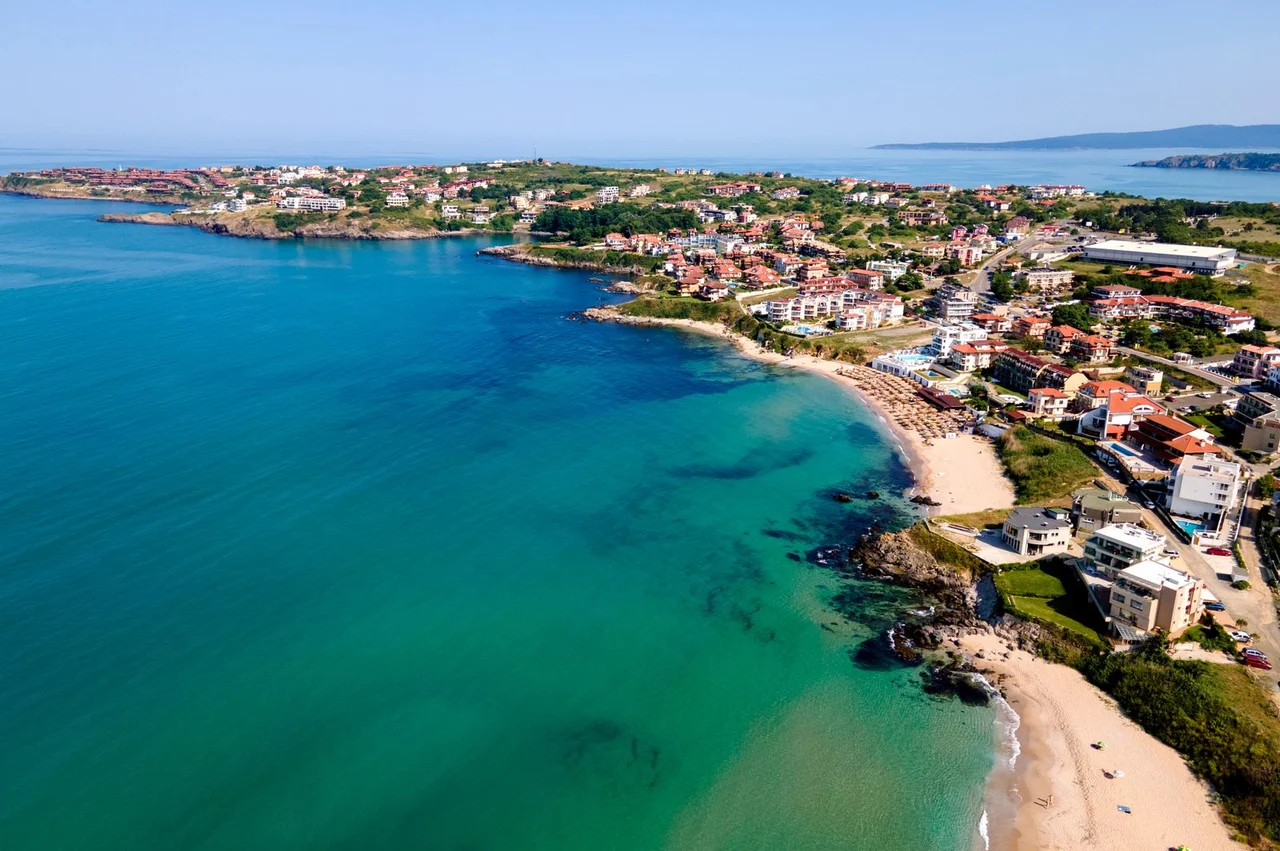
South Coast - Burgas, Nessebar, Pomorie, Sunny Beach, Sozopol. This is the heart of a beach holiday: long sandy beaches, developed resort infrastructure, an abundance of apartments in gated complexes with a swimming pool. Prices here are noticeably lower than in Varna. The downside is the pronounced seasonality: in winter, many complexes are empty.
North coast - Varna and surroundings (Golden Sands, St. Vlas next door). Varna is a large city with a university, an airport, and year-round life. Housing here costs 20-30% more than in Burgas, but liquidity is also higher: it is easier to rent out and resell an apartment.
Sofia - the capital, a market for those who are thinking about work, business or long-term rental. There is no sea here, but there is stable demand and more predictable profitability.
Mountains - first of all, Bansko, a ski resort. Suitable for lovers of winter holidays and those who want to diversify: renting in summer and winter.
We have collected a detailed analysis of resort locations in a separate material about real estate in Bulgaria by the sea.
Who buys and why: typical scenarios
Upon request real estate in Bulgaria for Russians There are different people with different goals, and the purchasing strategy greatly depends on which group you belong to.
Holidays and seasonal housing. The most common scenario: a family wants their own apartment by the sea instead of an annual hotel rental. The resort complexes of the South Coast are logical here - inexpensive, with a swimming pool and infrastructure. The main thing is to soberly assess how many weeks a year you will actually live there.
Future life in retirement. Bulgaria is popular among pre-retirees and pensioners from the Russian Federation: mild climate, affordable prices, Slavic environment. Often, buying a home is combined with obtaining a residence permit on the basis of a stable income.
Investment and rental. Those who consider profitability are interested in Varna and Burgas with year-round demand and rental yield of approximately 5%. Liquidity and quality of management are more important here than low prices.
Alternate airfield in the EU. Some buyers take housing as a foothold in Europe - a place where they can come with a European address. For families with Bulgarian roots, this often goes in conjunction with the strategy of obtaining an EU passport by origin.
Determine your scenario before going to the market - the location, budget, and payment scheme depend on it.
How to buy an apartment in Bulgaria for a citizen of the Russian Federation: step-by-step process
Question how to buy an apartment in Bulgaria as a citizen of the Russian Federation rests on a clear but formal procedure. The Bulgarian transaction is built around a notarial deed - it is this deed that transfers ownership. Here's how it works in practice.
Step 1. Selecting an object and making a reservation. You find an apartment, agree on a price and make a reservation deposit (usually 1000-2000 EUR), which removes the property from sale during the inspection.
Step 2. Purity check (due diligence). The lawyer requests a certificate of encumbrances from the Registration Agency - it shows the history of the property for 10 years and the presence of liens, arrests, and legal disputes. This is a critical stage, discussed in more detail below.
Step 3. Preliminary agreement. The parties sign a preliminary contract - it legally binds both parties. The buyer makes a deposit, usually 10% of the price.
Step 4. Obtaining a tax number. A foreigner needs a Bulgarian identification number (often through registration in the BULSTAT system) - without it the notary will not issue the deed.
Step 5. Notarial deed. The final transaction takes place at the notary's office: he checks documents and identities, confirms the seller's rights, and draws up a notarial deed. Taxes and duties are also paid here. It is not necessary to be present in person - you can act through a notarized power of attorney with an apostille.
Step 6. Registration of rights. The notary submits the deed to the property register. After registration (usually 1-2 weeks) you receive official confirmation of ownership.
The entire path from agreement to title takes approximately 4-8 weeks.
What documents will be needed
The list of documents for a Russian does not look daunting, but it is worth preparing for it in advance so as not to slow down the deal.
The buyer is usually required to: a valid foreign passport; Bulgarian identification number (issued locally or by proxy); confirmation of the origin of funds - documents explaining where the money came from (sale of another asset, income, savings). The last point has become especially important in 2026 due to enhanced compliance for clients from Russia.
If you buy through a power of attorney without coming in person, the power of attorney is drawn up by a notary, translated into Bulgarian and certified with an apostille. The text of the power of attorney must be verified by a Bulgarian lawyer - inaccurate wording can block the deal with a local notary.
If we are talking about the purchase of land or a scheme through a company, documents for registration of a Bulgarian legal entity (EOOD) are added - charter, decision of the founder, registration in the trade register.
Keep in mind separately: the bank through which the payment will be made will request its own package regarding KYC (know your client) and the origin of funds. The more transparent and documented the history of money, the lower the risk of payment being stuck.
Payment for real estate in Bulgaria under sanctions: how to spend money legally
This is the most sensitive block, and the request payment for real estate Bulgaria sanctions reflects the real pain of buyers from the Russian Federation. Let’s immediately outline the principle: we are talking only about legal methods within the framework of EU law and without circumventing sanctions. Any gray schemes are a risk of losing money and being subject to criminal liability.
What is the difficulty? A direct transfer from a Russian bank to a eurozone bank is very difficult today: dozens of Russian banks are cut off from settlements with the EU, payments are processed slowly, and are often returned or frozen for verification. In addition, there is a restriction: a citizen of the Russian Federation has no right to keep more than 100,000 EUR in accounts in EU banks. This directly affects the purchase of expensive housing.
What does this mean in practice? You usually need to pay for an apartment from a Bulgarian (or other European) account to the seller, and this account itself must first be opened and replenished by a Russian - and every step undergoes a compliance check. The bank will require documentary evidence of the origin of the funds: where the money came from, how it was received legally.
Legal routes used by buyers:
- an account in a bank of a friendly jurisdiction (for example, in a number of countries in Asia, the Middle East, the CIS), from where funds come to Bulgaria through an understandable banking chain;
- funds already located outside the Russian Federation (for example, from a previously sold foreign asset);
- accurate work through a Bulgarian account with a pre-assembled package of documents about the origin of the money.
Important: in December 2025, the Bank of Russia partially lifted restrictions on currency transfers abroad for citizens, but this concerns the Russian side - sanctions compliance on the EU side has not gone away. Each transaction must be calculated individually, having agreed in advance on the payment route with the bank and lawyer. There is no universal button, and anyone who promises an instant transfer of any amount is most likely offering a risk.
How much does it cost for a Russian to buy real estate in Bulgaria?
When they say buy property in Bulgaria for a Russian, it is important to consider not only the price of the apartment, but also the full cost of the transaction. Related costs in Bulgaria are moderate by EU standards, but they exist.
A guide to the price of the objects themselves on the coast: studio in Sunny Beach - from 30-49 thousand EUR, depending on the zone and distance from the sea; one-room apartment - from 48-65 thousand EUR; in Varna the price tag is 20-30% higher than in Burgas. In terms of per meter, this is approximately 1000-2500 EUR per sq.m.
Additional costs when purchasing (closing costs) usually amount to about 5-6% of the price, not counting the agent’s commission:
- tax on transfer of ownership - approximately 3% (Burgas, Varna, Sofia, etc.);
- notary fee - fractions of a percent, according to the tariff scale;
- fee for registration in the property register;
- legal services for transaction support.
If you add the buyer's agent's commission (in Bulgaria often 2.5-3%), the total transaction costs can rise to 8-10% of the property price. Put this buffer into your budget in advance so as not to find yourself in a situation where you have enough money for an apartment, but not enough for decoration.
If you are ready to move on to selecting an object and calculating a budget for your situation, leave a request - we will help you build a secure transaction and payment scheme. Contact us.
Taxes on ownership and residence
After the purchase, a regular fiscal burden appears - small, but you need to be aware of it. We have included a detailed analysis in a separate article about property taxes in Bulgaria, here is the main thing.
The annual property tax in Bulgaria is one of the lowest in Europe and is calculated based on the tax assessment of the property (and not on the market price). To this is added a fee for waste removal (estimate fee), which depends on the municipality. In total, this is usually a modest amount of money per year for a typical resort apartment.
If you plan to rent out your property, the income is subject to Bulgarian income tax at a flat rate of 10%. Corporate tax (if you own through a company) is also 10%, VAT is 20%.
It is worth separating the two concepts separately. Tax residency is determined by the fact of residence (183 days per year) or center of vital interests, and not by the fact of owning an apartment. Purchasing real estate does not automatically make you a tax resident of Bulgaria - and does not relieve you of obligations in the country of your current residence. If you are planning to actually move, it is better to calculate the tax picture in advance with a consultant.
“Over the past two years the practice for clients from Russia has changed radically - and it has changed not in the real estate itself, but in the money. It is still possible to buy an apartment by the sea in Bulgaria - the law does not prohibit it, and ownership is fully registered in the name of a Russian citizen. But making the payment has become a separate engineering task: dozens of Russian banks are cut off from settlements with the eurozone, there is a 100,000-euro limit on EU accounts, and every payment undergoes strict compliance with verification of the origin of funds. My main advice to the buyer is to turn the usual logic upside down. Do not start by searching for an apartment. Start by asking exactly how and from where the money will come, and agree on this route with the bank and lawyer BEFORE you put down a deposit. I have seen too many stories where a person found the perfect property, put down 10% on a preliminary contract, then waited weeks while the transfer got stuck - and ended up losing the deposit. And second: no grey schemes. Circumventing sanctions is not a saving, it is a risk of losing both your money and your freedom. Legal routes exist; they simply require preparation and patience.”
Does buying an apartment give you the right to a residence permit?
This is where the main misconception of buyers is concentrated, and it is important to say frankly: buying real estate in Bulgaria in itself does NOT give you a residence permit. This is not a golden visa program - Bulgarian investment citizenship was abolished in 2022, and a residence permit is not granted for the fact of purchasing an apartment.
To obtain a residence permit, you need a separate legal basis: representation of a foreign company in the Bulgarian Chamber of Commerce and Industry, pensioner status with a stable income and housing, family reunification, work, study. Having your own apartment is a pleasant plus (there is a place to live, a confirmed address), but not an independent motive.
For example, a popular scheme for pensioners from the Russian Federation is: a confirmed pension or other stable income plus the availability of housing - and on this basis a residence permit is issued. The apartment here strengthens the application, but it is not what decides.
The residence permit is renewed annually, after 5 years the path to permanent residence opens, then to the status of a long-term EU resident and naturalization. How exactly to link real estate with a legal basis for residence, we discuss in the material about Bulgarian residence permit and real estate.
Risks and pitfalls: what to watch out for
The Bulgarian property market is generally safe, but there are a number of common pitfalls for non-resident buyers. Let's look at the main ones.
Unfinished and problematic complexes. Buying at the foundation pit stage (off-plan) is cheaper, but riskier: the developer may delay delivery or not complete construction at all. Check the developer's reputation, construction permits and contract terms.
Hidden encumbrances. The property may be subject to a lien, a lien, unpaid debts from the previous owner, or a legal dispute. That is why a certificate of encumbrances for 10 years is a mandatory step, and not a formality.
Payments for maintenance (support fee). Resort complexes have annual maintenance fees (pool, security, cleaning). They may turn out to be significant, and the debts on them may pass to a new owner. Check the size and availability of debt before the transaction.
Seasonal liquidity. It's easy to rent out a resort studio in the summer, but it can be difficult to resell in the winter. If you are considering housing as an investment, evaluate the real demand, and not the promised profitability from advertising.
Payment stuck. For a Russian, the main practical risk is not the real estate itself, but a stuck payment due to sanctions compliance. The payment route must be agreed upon BEFORE signing the preliminary agreement with the deposit, otherwise you may lose the deposit by failing to spend the money on time.
How to reduce risks: checklist for a safe transaction
Most problems are resolved by discipline at the preparatory stage. Here's what you should definitely do.
- Hire an independent lawyer. Not the one suggested by the seller or the developer's agent, but his own - he protects your interests, and not the deal at any cost.
- Order a certificate of encumbrances and check the history of the property 10 years before making a deposit.
- Check the developer when purchasing a new building: completed objects, company registration, reviews, availability of permits.
- Agree on the payment route with the bank and lawyer in advance, collect documents on the origin of funds.
- Write it down in the contract exact deadlines, responsibilities of the parties, conditions for returning the deposit and the condition of the object upon transfer.
- Find out the size of the dachshund support and check that there are no debts on it.
- Don't sign anything in a language you don't understand without certified translation.
This discipline seems unnecessary while everything is going smoothly. But it is precisely this that separates a calm purchase from a story with lost money and a frozen object.
Table: stages of the transaction and what to look for
We bring the key stages of the purchase into one picture - to keep before your eyes what to pay attention to at each step.
| Stage | What to look for |
|---|---|
| Object selection and reservation | Real market price, reputation of the seller/developer, size and repayment of the reservation deposit |
| Purity check (due diligence) | Certificate of encumbrances for 10 years, absence of pledges, arrests, legal disputes and maintenance debts |
| Preliminary agreement and deposit | Conditions for the return of the deposit, terms, responsibilities of the parties; Is the payment route agreed upon before depositing 10% |
| Payment | Legal transfer channel, documents on the origin of funds, limit of 100,000 EUR on EU accounts, risk of payment freeze |
| Notarial deed | The tax number has been received, the text of the act and power of attorney have been verified, taxes and duties have been calculated |
| Registration of rights | Submitting to the property register, obtaining confirmation of ownership in your name |
If at any stage uncertainty appears, this is a signal to slow down and double-check, rather than push the speed.
Checking the object and transaction: where they usually go wrong
Support experience shows that Russians make fatal mistakes not at the time of purchase, but earlier - at the stage when it seems that everything is obvious. Double-checking the object and the money route is not bureaucracy, but insurance for a large sum.
The most common mistake is to make a 10% deposit under a preliminary agreement without making sure that the money will physically reach the seller on time. Due to sanction compliance, the payment may be stuck in verification for weeks, but the deadlines under the contract are running out - and the deposit is lost. Therefore, the payment route is agreed upon with the bank BEFORE signing.
The second mistake is to trust the verification of the purity of the object to the same party that sells it. The certificate of encumbrances and property history should be ordered and read by your independent lawyer.
The third is to ignore the tax picture and support fee, learning about the costs after the transaction.
If you have Bulgarian roots, in parallel with buying a home, it makes sense to evaluate a more strategic path - Bulgarian citizenship by descent (EU passport). These are different products, but for a family they often add up to the same logic: housing by the sea today and European status tomorrow.
Briefly about the main thing: what is important to remember
We put the findings together so that you have a complete picture before making a decision.
It is possible for a Russian to buy real estate in Bulgaria legally in 2026: ownership of an apartment or building is fully registered in your name, restrictions apply only to individual land (it is purchased through a company). Prices on the coast remain one of the most affordable in the EU - approximately 1000-2500 EUR per meter, a studio can realistically be rented for 30-50 thousand euros.
The process is clear and formalized: reservation, cleanliness check, preliminary agreement with a deposit, tax number, notarial deed and registration of rights - on average 4-8 weeks. Closing costs are about 5-6%, with an agent up to 8-10%.
The main difficulty for a citizen of the Russian Federation is not the purchase itself, but the payment. Sanctions compliance, the EUR 100,000 limit on EU accounts and difficult transfers from Russia require that the route of the money be thought out and agreed upon with the bank before making a deposit. Only legal ways, without circumventing sanctions.
And remember the frame: the apartment does not automatically provide either a residence permit or a passport. For status you need a separate basis, and for an EU passport - a path through origin. If you want to build a safe scheme to suit your situation, we are nearby and will help you complete the transaction without losses.
Frequently asked
Questions people ask before deciding
01Can a Russian citizen buy real estate in Bulgaria in 2026?
Yes. Bulgarian legislation does not prohibit Russian citizens from buying housing. A non-EU resident individual can acquire full ownership of a building or apartment; the right is registered in your name by a notarial deed. The restriction applies only to individual land plots - they are purchased through a Bulgarian legal entity.
02Is it possible for a Russian to buy land in Bulgaria?
Directly as a non-EU resident individual - no. A separate plot of land is purchased through a Bulgarian company (EOOD), which becomes the owner of the land, or as an ideal share of the plot under your building. For an apartment in a complex, the issue of land is usually resolved automatically - you receive a share in the common parts.
03How to pay for real estate in Bulgaria under sanctions?
Only legally and without circumventing sanctions. Direct transfers from a Russian bank to the eurozone are very difficult, plus there is a limit of 100,000 EUR on accounts in EU banks for Russian citizens. In practice, they use an account in a friendly jurisdiction, funds already located abroad, or a Bulgarian account with a pre-assembled package about the origin of the money. The route is agreed upon with the bank before the transaction.
04Does buying an apartment in Bulgaria give you the right to a residence permit?
No, it doesn’t by itself. Investment citizenship will be abolished in 2022, and a residence permit for the fact of purchasing a home will not be provided. A separate legal basis is needed - representation of a company, pensioner status with income, family reunification, work or study. The apartment strengthens the application, but it does not decide.
05How much does real estate on the Black Sea cost in Bulgaria?
Approximately 1000-2500 EUR per square meter, depending on the city. A studio in Sunny Beach can be found from 30-49 thousand EUR, a one-room apartment - from 48-65 thousand EUR. Varna is 20-30% more expensive than Burgas. Exact prices depend on distance from the sea, condition and season.
06What expenses besides the price of the apartment will there be when purchasing?
Closing costs are usually about 5-6% of the price: transfer tax ~3%, notary fee, registration in the property register, legal services. With a buyer's agent commission (2.5-3%), total transaction costs can rise to 8-10%. Budget for this buffer in advance.
07Do I need to go to Bulgaria for a transaction?
Not necessarily. Bulgaria allows purchases by notarized power of attorney: your representative acts on your behalf. The power of attorney is drawn up by a notary, translated into Bulgarian and certified with an apostille, and its text must be verified by a Bulgarian lawyer - inaccurate wording can block the transaction.
08What is a notarial deed and why is it needed?
A notarial deed is a document that transfers ownership in Bulgaria. The transaction is completed by a notary: he checks documents and identities, confirms the rights of the seller, draws up a deed and submits it for registration to the property register. Without a notarial deed, ownership rights do not arise.
09What taxes does a property owner pay in Bulgaria?
The annual property tax is one of the lowest in the EU, calculated from the tax assessment, plus a waste collection fee. Rental income is subject to income tax at a flat rate of 10%. Owning an apartment does not automatically make you a tax resident - this is determined by residence (183 days) or center of interest.
10What are the main risks when buying for a Russian?
Unfinished construction when purchasing off-plan, hidden encumbrances and debts at the site, significant payments for the maintenance of the complex, seasonal liquidity of resort housing and - the most practical - payment freeze due to sanction compliance. Most risks are removed by an independent lawyer, verification of encumbrances and a pre-agreed payment route.
11In what currency are transactions in Bulgaria now?
On January 1, 2026, Bulgaria joined the eurozone and adopted the euro (EUR). Lev (BGN) is withdrawn from circulation, calculations and prices are in euros. For the buyer, this simplifies the transaction, since most properties were previously priced in euros, and removes the currency risk within the eurozone.
12Is it possible to obtain Bulgarian citizenship for the purchase of real estate?
No. The citizenship by investment program (golden passports) is canceled in 2022, and citizenship cannot be purchased with real estate. The main route to an EU passport for those with Bulgarian ancestors is citizenship by descent and is not linked to the purchase of a home. This is a separate product with its own conditions.
Transparency
How this material was prepared
- Author
- Maria Stavru, real Estate Analyst, BRIDGES
- Terms and costs last verified
- June 2026
- Sources
- official government authorities of the relevant country and state publications
- Methodology
- government minimum requirements are stated separately from due diligence charges, state fees, legal and banking costs
Sources and methodology
Figures, terms and timelines are checked against official sources as of June 2026. Link availability verified in August 2026. Third-party blogs and agent websites are not used as a source of programme terms.
- [1]Ministry of Interior of BulgariaResidence of foreign nationals and documentswww.mvr.bg/en
Methodology: tables and charts state government minimum investment requirements; due diligence charges, state fees, legal, banking and other costs are calculated separately and are not included in the minimum thresholds.
About the author
Related materials
What to read next
 ArticleBulgarian citizenship through investment in 2026: why the program was cancelled and what works instead
 ComparisonCitizenship of Bulgaria or Romania: what to choose for an EU passport
 AnalysisWhat is due diligence and why the Caribbean is rejecting applications
Personal programme selection is conducted by Anna Kovalevskaya, Head of Legal, BRIDGES.
Buying property in Bulgaria: what to check
Title, encumbrances, outstanding debts and what to look for in the contract.