Citizenship · Sierra Leone
Capital of Sierra Leone: Freetown - What It Is Known For and What to See
Updated: June 2026·12 min read·Expert reviewed
Terms and costs verified: June 2026
Contents
The capital of Sierra Leone is Freetown, a city on the Atlantic coast of West Africa that developed around one of the world's largest natural harbors. Its population is estimated at approximately 1.2 million people, and together with suburbs the agglomeration is considerably larger. Freetown was founded in the late 18th century by freed slaves, and this history can still be read in street names, old churches, and the character of its residents. Today it is the administrative, commercial, and port center of the country - with peninsula beaches, bustling markets, and green hills overlooking the bay. We explore what the main city of Sierra Leone is known for, what to see in Freetown, and why it is of interest to those considering citizenship and relocation.
What City Is the Capital of Sierra Leone
The capital of Sierra Leone is Freetown (in English, literally meaning "free city"). It is both the main city of the country and its largest populated center, as well as the administrative, political, and economic center. The government, parliament, key ministries, and the country's main seaport are located here. The city lies on the western coast of the country on the Atlantic Ocean, at the very mouth of the Sierra Leone River. Geographically, Freetown occupies the northern tip of a hilly peninsula, so buildings climb the hillsides, offering views of the bay from the upper neighborhoods. This location is no accident: it was the deep and protected natural harbor that once determined the city's fate. To answer the query "capital of Sierra Leone" briefly - it is Freetown, and there have been no alternatives in the history of the independent country: the city received capital status during the colonial period and retained it after gaining independence in 1961.
Population of Freetown: How Many People Live in the Capital
The exact figure for Freetown's population is a question that requires careful consideration. According to various estimates, approximately 1.2 million people live in the city proper, while modern demographic services give values of around 1.4 million and higher for the agglomeration. The discrepancies are explained by how one counts: only formal city boundaries or the entire sprawling capital region with suburbs.
For context: the population of all Sierra Leone is estimated at approximately 8-9 million people. That is, a significant share of the country's residents is concentrated in the capital and its surroundings - a typical situation for states where one large port center significantly outpaces other cities in size and business activity.
Freetown is young in age structure and a rapidly growing city. People come here for work, education, and opportunities from rural areas, so suburbs are expanding and the strain on infrastructure - roads, water, electricity - remains a notable challenge. This is important to understand for those considering the capital not only as a tourist destination but also as a place to live or do business.
The Natural Harbor - Heart of the City
The main physical feature of Freetown is its harbor. The bay at the mouth of the Sierra Leone River is considered one of the world's largest natural harbors and the largest on the African continent. The deep, storm-protected cove allows large vessels to be received, and it was this that historically made this place strategically important.
Much of the city's economy is built around the port: cargo operations, fishing, logistics, vessel servicing. The country's foreign trade passes through the port - export of mineral raw materials and agricultural products, import of goods. For a state with rich mineral resources (diamonds, bauxite, rutile, gold), access to the sea through a convenient harbor is a direct channel to world markets.
For the traveler, the harbor is also a landscape: a view of the bay from the hills, ferries, fishing boats, silhouettes of ships at anchor. The maritime facade largely sets the rhythm of the city and explains why Freetown has been oriented toward the sea since its founding.
History: A City Founded by Freed Slaves
Freetown occupies a special place in Atlantic history. In 1792, a group of freed Africans - former slaves who had gained their freedom, including through service to the British crown during the American War of Independence - settled on this shore. Some of them had lived in Nova Scotia (Canada) before relocation, from where they were evacuated. The city was literally created as a "free city" for those who had escaped slavery.
Later, Africans freed from intercepted slave ships were also resettled here. From the mixing of these communities with the local population, a distinctive Krio culture emerged - with its own language, traditions, and architecture of wooden "board houses." English remained the official language of the country (a legacy of British colonization), and Krio became the language of everyday communication in the capital.
This origin is not simply a line in a textbook. The theme of freedom and return is woven into the city's self-awareness, into place names, churches, and collective memory. Understanding this context helps one perceive Freetown respectfully and without superficial stereotypes about West Africa.
The Cotton Tree - A Symbol That No Longer Exists
For a long time, the main historical symbol of Freetown was the Cotton Tree - a huge ceiba tree in the city center, near the Supreme Court building and the National Museum. According to legend, the first freed slave settlers gathered under its canopy to thank fate and freedom. The tree was attributed an age of several centuries.
In May 2023, a violent storm with heavy rain brought down much of the tree - for the city this became a real shock and cause for national mourning. The loss of the symbol was painfully felt by residents, as the Cotton Tree was for Freetown what major monuments are for other capitals.
Today the site of the tree remains an important point of memory. Those coming to Freetown should know this history beforehand: a conversation about the Cotton Tree is a conversation about the city's roots, about freedom, and how residents cherish their history even after the physical loss of a landmark.
What to See in Freetown: Main Attractions
Freetown is not a museum city but a living one, so its "attractions" are a mix of history, markets, and nature. What to see in Freetown first:
What to see in Freetown: main places
Freetown is not a museum city, but a living city, so its “sights” are a mixture of history, markets and nature. What to see in Freetown first:
- Historic Center - area near the former Cotton Tree, Supreme Court building, old colonial structures.
- St George's Cathedral (St George's Cathedral) - one of the oldest Anglican churches in West Africa, founded in the 19th century.
- National Museum of Sierra Leone - collections of masks, artifacts and documents about the country's peoples, colonial past and path to independence.
- King Jimmy Market (King Jimmy Market) - one of the oldest and most colorful markets in the city, a slice of everyday life.
- Creole wooden houses (board houses) - characteristic architecture of the descendants of freed slaves.
This is a compact but rich itinerary: in a couple of days you can genuinely feel the character of the capital, not counting trips to the ocean.
Beaches and Peninsula: Nature Close to the Capital
One of the main discoveries for visitors is that ocean beaches begin right at the city. The most famous city beach is Lumley (Lumley Beach): an extensive stretch along the western edge of Freetown, with bars and cafes that come alive in the evenings on weekends. This is a familiar leisure spot for locals.
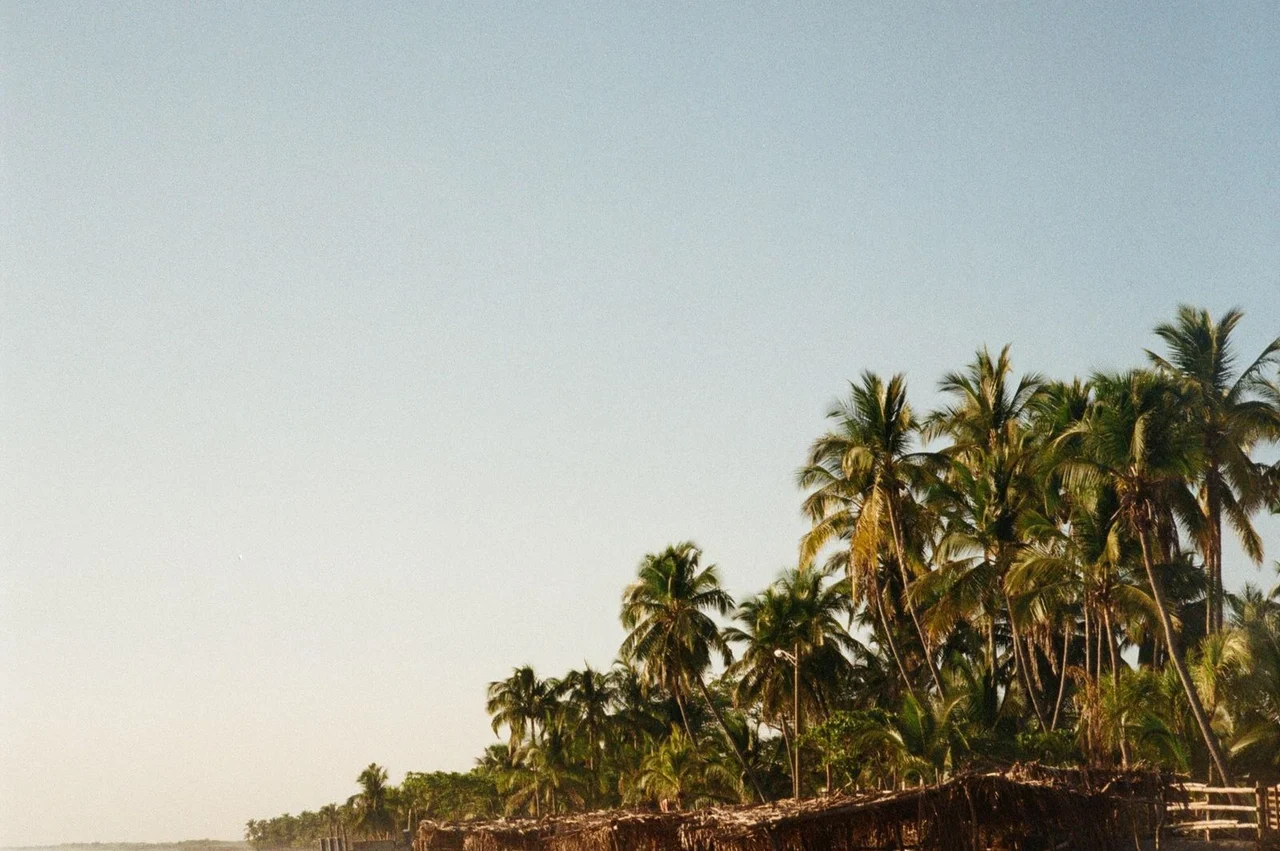
Further extends Freetown Peninsula with a chain of quieter and more picturesque beaches, framed by green hills and forest. The best hotels in the Aberdeen district (Aberdeen) and a lighthouse at the western tip are also located here. The peninsula's beaches are already in an almost resort format: sand, palms, calm water during daylight hours.
A separate point of attraction is Tacugama Chimpanzee Sanctuary (Tacugama) in the hills above the city, a rehabilitation center for rescued primates. Visits require advance booking. The combination of ocean, tropical forest and city makes the surroundings of Freetown more diverse than one would expect from a West African capital.
Climate and When to Visit
Freetown lies in a tropical climate zone with a clear division between dry and wet seasons. The dry season lasts approximately from December to April - there is almost no rain, and during this time a dry harmattan wind from the Sahara can blow, bringing light haze. This is the most comfortable and predictable time for a trip and city tours.
The wet season falls roughly in May-October, with its peak in July and August, when rain falls almost daily and very heavy precipitation occurs. Tropical downpours can hamper movement around the city and complicate road conditions, so it is worth planning intensive programs for these months with weather adjustments in mind.
Temperature throughout the year remains high and fairly steady - these are equatorial latitudes. The main factor when planning a visit to Freetown is not heat, but the rainy season itself: it is better to account for it in advance.
"When a client asks about Sierra Leone, I always advise starting with country knowledge rather than thresholds and amounts. Freetown is the key to understanding the country: a seaport, ECOWAS membership, English language, openness of people. If this context resonates, then it makes sense to discuss citizenship by investment specifically. The program is young, the passport is more modest than Caribbean jurisdictions, without Schengen and the USA - and I say this directly, without embellishment. But as a tool for business in West Africa, regional mobility and diversification, it can be appropriate. My rule is simple: first facts and sober assessment, then decision. And mandatory - strict compliance with the law, compliance and source of funds verification, especially for clients from CIS countries. Getting to know the capital is not abstract exotica, but part of normal preparation for a well-considered decision."
Economy and Business Life of the Capital
As the country's main city, Freetown concentrates Sierra Leone's business activity. It is home to the port, banks, government agencies, company headquarters, wholesale trade and services. External trade passes through the capital's port, and the country is known for exporting mineral raw materials - diamonds, bauxites, rutile and gold.
The city's economy is diverse: alongside the modern business sector lives a huge informal economy - street trading, small workshops, markets. For entrepreneurs this means both opportunities and the need to soberly assess infrastructure limitations: power outages, road conditions, logistics.
Sierra Leone is a member of ECOWAS (ECOWAS), the Economic Community of West African States, which provides access to the regional market and freedom of movement between member states. For businesses that view West Africa as a growth region, the capital with a seaport and ECOWAS membership is a logical entry point.
Security and Everyday Realities
It is important to speak about the country . Sierra Leone experienced a civil war (1991-2002) and an Ebola epidemic, but today it is a peaceful state that is recovering and developing. Freetown is an ordinary large African city with its advantages and challenges, not a "hotspot."
Everyday realities should be factored in: power and water supply interruptions are possible, roads during the rainy season can be difficult, medical infrastructure is limited. As in any major city, it makes sense to observe basic caution with valuables and movement at night.
At the same time, visitors often note the friendliness of locals, English as a common language and relative ease of communication. For those considering Freetown as a place for long-term stay, it is reasonable to rely on trusted local consultants and think in advance about housing, communications and medical issues.
Why the Capital Interests Those Thinking About Citizenship
Interest in Freetown often arises not just from tourist curiosity. Sierra Leone in recent years has been developing a citizenship by investment program, and country knowledge about the capital is the first practical step for those considering a second passport or a presence in the region.
The capital is the face of the country: business contacts, banking operations and state procedures pass through Freetown. Understanding how the main city, its port and business environment are organized is useful before making decisions - it helps realistically assess both opportunities and limitations.
In short: getting to know Freetown provides the substance on which a well-considered decision is built. And about the Sierra Leone citizenship program itself, it makes sense to discuss separately - with current conditions and thresholds for the current year.
Sierra Leone Citizenship: Brief Overview of the Opportunity
Sierra Leone is developing a citizenship by investment program (known as the GO-FOR-GOLD initiative), launched approximately from 2024. This is a young program, so it should be discussed and with caveats: conditions, thresholds and participation paths are best verified for the current year directly.
The general logic is as follows: investment paths are provided (in particular, through gold) or naturalization through a specific contribution, processing is possible remotely, without mandatory long-term residence, subject to beneficial ownership verification (due diligence). A Sierra Leone passport provides visa-free or simplified entry to approximately several dozen countries - without Schengen and without the USA, and this is important to understand without inflated expectations. A separate advantage is the country's ECOWAS membership with freedom of movement in the West Africa region.
Citizenship is not equal to automatic tax residency - it is determined by place of actual residence. For Russian and other CIS country citizens, participation is possible strictly within the law, with enhanced compliance and source of funds verification; the obligation to inform your country about second citizenship remains. We discuss conditions in detail on a separate page: Sierra Leone citizenship by investment program.
Want to understand if this path is right for you and what the current conditions are for the current year? Leave an inquiry - we'll discuss your situation individually.
Freetown in Numbers: Quick Reference Guide
Summary table with key parameters of Sierra Leone's capital - convenient for quick orientation.
| Parameter | Value |
|---|---|
| City | Freetown |
| Status | Capital and largest city of the country |
| Country | Sierra Leone, West Africa |
| Location | Atlantic coast, estuary of the Sierra Leone River |
| Population | Approximately ~1.2 million (metropolitan area - larger) |
| Year of Establishment | 1792 (settlement of liberated slaves) |
| Harbor | One of the largest natural harbors in the world |
| Language | English (official), Krio (colloquial) |
| Climate | Tropical, dry season December-April |
| Main Attractions | Historic center, markets, Lumley Beach, peninsula |
Population figures are approximate: different sources calculate city and metropolitan area boundaries differently.
Expert Commentary
Below is a practitioner's perspective on how familiarity with the capital relates to investment citizenship decisions. This is not advertising but an attempt to set realistic expectations.
Summary: Key Facts About Sierra Leone's Capital
Summary of the main city of the country:
- Sierra Leone's Capital - Freetown, the largest city and main port of the country on the Atlantic coast.
- Population - approximately 1.2 million people; the metropolitan area is significantly larger.
- The city is located at One of the world's largest natural harbors - which determined its role.
- Founded in 1792 by liberated slaves; hence the distinctive Krio culture and the theme of freedom.
- Historic symbol - the Cotton Tree, most of which collapsed in 2023.
- What to See: historic center, cathedral and National Museum, markets, Lumley Beach and peninsula.
- For those looking beyond tourism, the country is developing an investment citizenship program - terms should be clarified for the current year.
Frequently asked
Questions people ask before deciding
01What city is the capital of Sierra Leone?
The capital of Sierra Leone is Freetown. It is the largest city in the country, its main seaport, and the administrative, political, and economic center. The city has retained its capital status since the colonial period and after independence in 1961.
02Where is Freetown located?
Freetown is located in the west of Sierra Leone, on the Atlantic coast of West Africa, at the mouth of the Sierra Leone River. The city occupies the northern part of a mountainous peninsula, so buildings rise up the hillsides above the bay.
03What is Freetown's population?
Freetown's population is estimated at approximately 1.2 million people, and with suburbs the agglomeration is noticeably larger - current data sources indicate approximately 1.4 million and higher. The variation is due to whether counting only the city or the entire capital region.
04What is Freetown's harbor known for?
The bay at the mouth of the Sierra Leone River is considered one of the world's largest natural harbors and the largest in Africa. The deep protected bay allows it to accommodate large ships and historically determined the city's role as the country's maritime gateway.
05When and by whom was Freetown founded?
Freetown was founded in 1792 by freed Africans - formerly enslaved people who gained their freedom, some of whom lived in Nova Scotia before resettlement. The city was created as a "free town," hence its name Freetown.
06What happened to the Cotton Tree in Freetown?
The Cotton Tree was the city's main historical symbol. In May 2023, a severe storm with heavy rain brought down much of the centuries-old tree. For residents it was a painful loss, and the site remains an important place of remembrance.
07What is there to see in Freetown?
Worth seeing are the historic center near the former Cotton Tree, Saint George's Cathedral, the Sierra Leone National Museum, the colorful King Jimmy Market and Creole wooden houses. Outside the city - Lumley Beach and the peninsula beaches, and in the hills - the Tacugama Chimpanzee Sanctuary.
08Are there beaches in Freetown?
Yes. The main city beach is Lumley Beach on the western outskirts. Further along stretches a peninsula with quieter and more scenic beaches, green hills, and hotels in the Aberdeen district. Swimming and relaxation are more comfortable during daylight hours.
09What is the climate in Freetown?
The climate is tropical, divided into dry and wet seasons. Dry season - approximately December-April, this is the best time to visit. Wet season - May-October with a peak in July-August, when rain falls almost daily. Temperature is high and steady year-round.
10What language is spoken in the capital?
The official language of the country is English (a legacy of the British colony). In everyday communication in the capital, Krio is widely used - a language that developed among descendants of freed slaves. English facilitates communication for visitors.
11Is it safe in Freetown?
Today, Sierra Leone is a peaceful state that has left behind its civil war (1991-2002) and Ebola epidemic. Freetown is a typical large African city. It is important to account for everyday realities (power and water outages, roads during the rainy season) and observe basic precautions.
12How does getting acquainted with the capital relate to Sierra Leone citizenship?
Country knowledge helps realistically assess the country before making decisions about investment citizenship. Sierra Leone is developing an investment citizenship program; conditions and thresholds should be clarified for the current year. Details are available on the program page and through consultation with BRIDGES GLOBAL specialists.
Transparency
How this material was prepared
- Author
- Andres Ferreira, head of Investment Advisory, BRIDGES
- Terms and costs last verified
- June 2026
- Sources
- official government authorities of the relevant country and state publications
- Methodology
- government minimum requirements are stated separately from due diligence charges, state fees, legal and banking costs
Sources and methodology
Figures, terms and timelines are checked against official sources as of June 2026. Link availability verified in August 2026. Third-party blogs and agent websites are not used as a source of programme terms.
- [1]State House, Republic of Sierra LeoneOfficial government publicationswww.statehouse.gov.sl
Methodology: tables and charts state government minimum investment requirements; due diligence charges, state fees, legal, banking and other costs are calculated separately and are not included in the minimum thresholds.
About the author
Related materials
What to read next
 ComparisonAntigua and Barbuda or Grenada: Family Passport for Large Families in 2026
 AnalysisWhat is due diligence and why the Caribbean is rejecting applications
 ArticleSierra Leone Citizenship by Investment in 2026: GO-FOR-GOLD program, gold, fee
Personal programme selection is conducted by Anna Kovalevskaya, Head of Legal, BRIDGES.
Citizenship of Sierra Leone: preparation checklist
Documents prepared in advance, source of funds checks and where applications usually fail.