Citizenship · Sierra Leone
Sierra Leone on the map: location, neighbors, and how to get there
Updated: June 2026·9 min read·Expert reviewed
Terms and costs verified: June 2026
Contents
The question "Where is Sierra Leone?" arises for many hearing the country's name for the first time. The short answer: a small nation on the western coast of Africa, right at the Atlantic Ocean, between Guinea and Liberia. But behind this line lies much more—convenient seaports, direct flights from European and African hubs and, importantly for an investor, a young citizenship program processed remotely. Let us analyze in detail where Sierra Leone is on the world map, which countries border it, what its coordinates are, and how to get there if travel becomes necessary.
Where Sierra Leone is located on the world map
To briefly answer the query "where is Sierra Leone," it is the western coast of the African continent, facing the Atlantic Ocean. The country lies in the part of the continent that geographers call West Africa—a region stretching from Senegal and Mauritania in the north to Nigeria and Cameroon in the southeast. Sierra Leone occupies a compact area within it: its territory is approximately 73 thousand square kilometers, comparable to Ireland or Georgia.
On a world map, the country is conveniently located by a simple landmark—the convex "bulge" of West Africa facing the Atlantic. Sierra Leone is positioned in the lower part of this protrusion, slightly south of Guinea. The ocean washes it from the west and southwest; the coastline stretches approximately 400 kilometers. It is this Atlantic access that largely determined the country's history: convenient bays made the coast a point of attraction for sailors and merchants centuries ago.
For those accustomed to orienting by familiar countries: Sierra Leone is located at approximately the same latitude as the southern part of the Arabian Peninsula, but on the other side of Africa—at the Atlantic, not the Indian Ocean. From Moscow to Freetown in a straight line is about 7 thousand kilometers.
Coordinates and position on the globe
Precise geographical coordinates help understand how close the country is to the equator. Sierra Leone is located approximately between 7° and 10° north latitude and between 10° and 14° west longitude. The central point falls at approximately 8.5° north latitude and 11.8° west longitude.
What this means in practice. Northern latitude of about 8 degrees is the tropics, near the equator. The climate here is hot and humid, with a pronounced rainy season from approximately May to October and a drier period in the remaining months. Its western longitude puts the country in the same time zone as Greenwich (UTC+0) - the same as London in winter, and three hours behind Moscow.
The position at the zero meridian in terms of time is convenient for business communication: the working day in Freetown almost completely coincides with the European one. For an entrepreneur conducting business remotely, this means that a call with local partners or government bodies can be scheduled during convenient morning and daytime hours without late-night calls.
Which countries border Sierra Leone
The country has only two land neighbors, both located along the continental border. In the north and east— Guinea, with the longest shared border here, nearly 800 kilometers. In the southeast— Liberia. From the west and southwest, there are no land neighbors: there is the Atlantic Ocean.
The border with Guinea runs from the ocean coast in the west inland to the point where the borders of three states converge—Sierra Leone, Guinea, and Liberia. This junction in the eastern part of the country is called the tripoint. The terrain along the borders is predominantly hilly and forested, and in the northeast it rises to mountain ranges.
The neighborhood also has practical significance. All three countries—Sierra Leone, Guinea, and Liberia—are members of the Economic Community of West African States (ECOWAS). This means that a regime of freedom of movement operates between them: citizens can cross borders, live and work in neighboring countries of the region under simplified rules. We will discuss ECOWAS membership and its advantages in more detail below.
Freetown—the capital and main port
The capital of Sierra Leone is Freetown, located on the coast in the western part of the country, on a peninsula extending into the ocean. It is the largest city in the country and its economic center.
Freetown's main feature is its natural harbor. The estuary of the Sierra Leone River forms one of the world's largest natural deep-water harbors. This bay is often listed among the planet's largest natural harbors. The deep protected waters allow it to accommodate large vessels, so Freetown has historically been an important port on the Atlantic route along the western coast of Africa.
The city's name itself—"Free Town"—is connected to history: at the end of the 18th century, a settlement was established here for freed people. Today, Freetown is the administrative, business, and cultural center, where government institutions, banks, and the port are concentrated. If you are studying the country in greater depth, a separate article is devoted to the capital of Sierra Leone and life in Freetown.
Terrain, climate, and nature
Despite its compact size, Sierra Leone's landscape is diverse. Along the Atlantic stretches a belt of lowlands with beaches, mangrove thickets, and marshy areas. Further from the coast, the terrain rises: the central part is occupied by rolling plains, and mountains begin in the northeast. The highest point is located in a mountain range in the eastern part of the country.
The climate is tropical, with high humidity and significant precipitation. The year is divided into two seasons: wet (approximately May to October) and dry (November to April). During the rainy season, a substantial portion of the annual rainfall occurs, making Sierra Leone one of the wettest countries in the region.
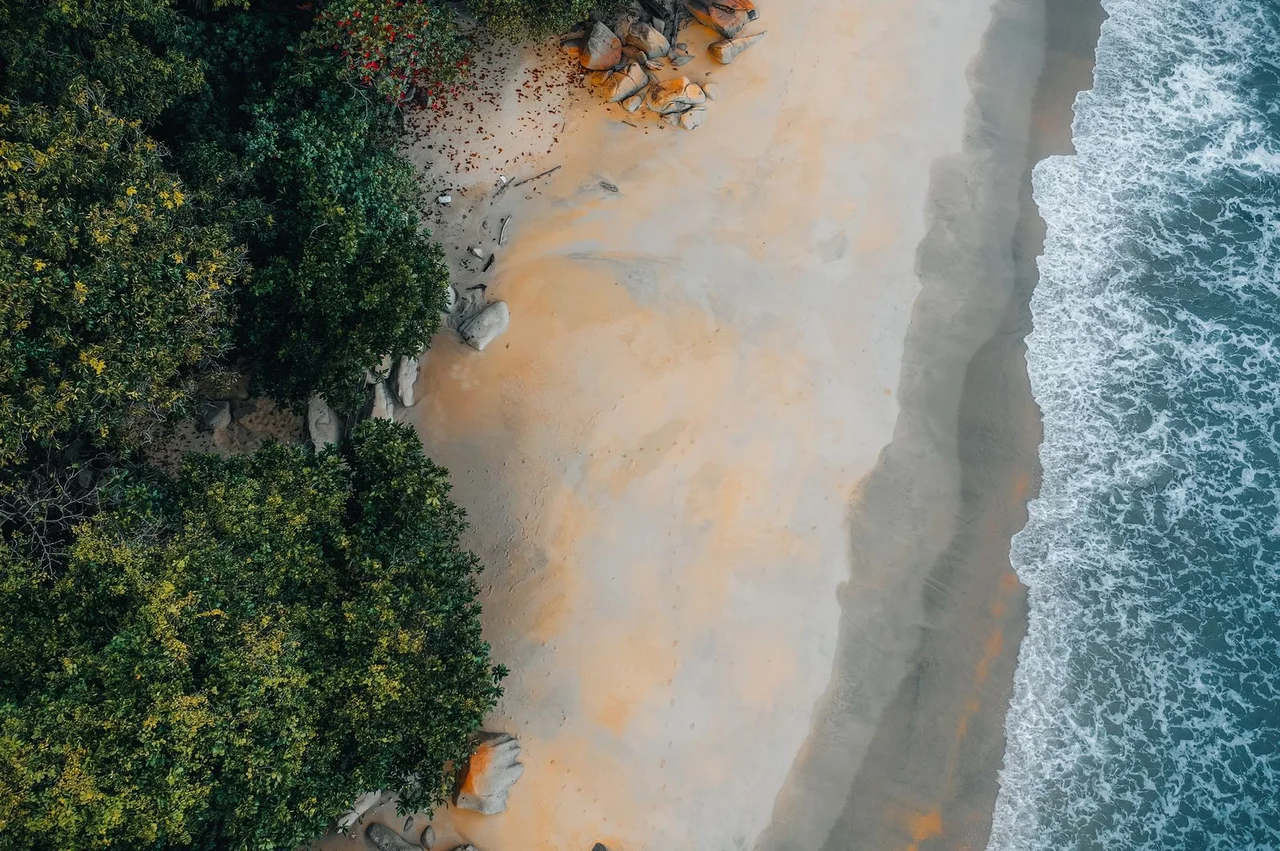
Nature is rich: tropical forests, diverse fauna, and an extended ocean coastline with sandy beaches. The peninsula near Freetown is known for wooded slopes that descend to the shore itself. These natural conditions are one of the factors by which the country is gradually developing tourism.
We will map your route to Sierra Leone citizenship
We review your family, source of funds and timing and tell you which route fits.
What the country is known for: resources and economy
Sierra Leone is rich in mineral resources. The country is known primarily for diamonds - extraction of precious stones was long the hallmark of its economy. Additionally, the country mines bauxite (raw material for aluminum), rutile (titanium ore, in which the country is among global leaders) and gold.
Gold plays a particular role in the country's modern investment agenda. Sierra Leone possesses significant gold reserves, and the state seeks to attract capital into this sector. This topic is directly linked to the citizenship program, which we will discuss further.
The economy remains developing, with its foundation comprising the extractive sector and agriculture. The country has passed through a difficult historical period—civil war in the 1990s and early 2000s, and later an Ebola fever epidemic. Today, Sierra Leone is a peaceful state that is recovering and developing, establishing new economic instruments, including attracting foreign investors.
Language, population, and governance
The official language of the country is English. This is a legacy of its colonial past: Sierra Leone was a British colony and gained independence in 1961. English is used in government administration, education, and business, which notably facilitates communication for foreigners. In daily life, Krio creole is widely spoken, as well as languages of local peoples.
The country's population is estimated at approximately 8-9 million people. The majority live in rural areas, but the share of urban population is growing, with Freetown being the largest agglomeration.
In terms of government, Sierra Leone is a presidential republic. The country is a member of the Commonwealth of Nations, the African Union, and the Economic Community of West African States. English as the state language and membership in the Commonwealth are factors that make interaction with the local system more understandable for entrepreneurs from other countries. More details about the state are compiled in the overview of Sierra Leone as a whole.
How to get to Sierra Leone
The main air hub of the country is Lungi International Airport (Lungi, code FNA). It serves the capital, although physically located not in Freetown itself but on the opposite bank of the Sierra Leone River estuary. This is an important feature of logistics, which we will return to separately.
There are no direct flights from Russia to Sierra Leone. Travel is done with a stopover through European or African hubs. The main connecting routes go through:
- Brussels - Brussels Airlines flights connect Europe with Freetown;
- Casablanca - Royal Air Maroc flies through it, a convenient connection option for passengers from Europe and the CIS;
- Accra (Ghana) - a regional West African hub served by several African carriers;
- Addis Ababa (Ethiopia) - Ethiopian Airlines and other companies operate connections through it.
In practice, the route from Moscow is usually constructed through one European or Middle Eastern hub with a further connection to one of the listed flights. Travel time including layover is typically from half a day or more, depending on the schedule.
"When a client opens a map for the first time and sees Sierra Leone between Guinea and Liberia, the first reaction is almost always the same—far and unclear. But I always suggest looking not at the distance from home, but at what this location offers in substance. First, you don't need to travel there to obtain citizenship at all: the entire procedure is conducted remotely, and the country's physical remoteness does not affect the timeline. Second, geography works in the investor's favor through ECOWAS membership—this is freedom of movement across a large West African market, not an abstract line in a reference book. I tell clients about the limitations too: the passport does not open Schengen and the USA, the program is young, and thresholds will still be clarified. But if the objective is a legitimate second document and a foothold for business in Africa, then this location on the map turns from a minus into a meaningful plus. The key is to calculate compliance, source of funds, and notification to your authorities in advance, so that everything is clean and trouble-free."
Lungi Airport and the road to Freetown
The peculiarity of arrival in the country is that Lungi Airport is separated from Freetown by water. Between them is the Sierra Leone River estuary, the very one that forms the famous harbor. In a straight line across the bay, the distance is small—about 12 miles—but the overland detour road is very long, more than 100 miles.
Therefore, the main way to get from the airport to the capital is not by car, but by water. Several options are available:
| Method | Travel time (approximate) |
|---|---|
| High-speed water taxi (speedboat) | 30-40 minutes |
| State ferry | approximately one hour by water |
| Land route by car | several hours (rarely used) |
Most often passengers use water taxis—comfortable speedboats, many of which are equipped with air conditioning. This is a normal part of traveling to Sierra Leone, and the local infrastructure is well-organized for such crossings. The main thing is to allow additional time for the transfer beyond the flight.
ECOWAS: freedom of movement across West Africa
One of the non-obvious but important geographic factors is Sierra Leone's membership in the Economic Community of West African States (ECOWAS). This is a regional association that includes approximately 15 West African countries.
What membership provides in practice. ECOWAS member states operate under a freedom of movement regime: citizens of participating countries can move, reside, and work in other community countries under simplified rules. For the region, this is equivalent to what the unified movement space became for Europe.
Why this interests investors. A Sierra Leone passport alone does not provide access to Schengen or the USA—and we state this . However, it opens freedom of movement across an extensive West African market with a population of hundreds of millions. For an entrepreneur conducting or planning business in Africa—trade, extraction, logistics—this represents a tangible advantage tied specifically to the country's geography and its membership in the regional union.
Sierra Leone citizenship: no need to fly to the country
Here geography takes an unexpected turn toward practical application. To obtain Sierra Leone citizenship through investment, traveling to the country and crossing the estuary is not necessary— the procedure is conducted remotelyAll key steps, from document submission to verification, are conducted remotely with specialist participation.
The country is developing a young investment citizenship program, unofficially known as GO-FOR-GOLD (launched approximately from 2024). Main paths to obtaining status:
- Gold investment approximately from 1 kg of gold (approximately 148,000 USD);
- Naturalization through contribution approximately from 100,000 USD.
Exact 2026 thresholds, family composition, and conditions should be clarified separately, as the program is young and parameters are updated. The country permits dual citizenship. A detailed breakdown of conditions and amounts is in the article on Sierra Leone citizenship through investmentand a general overview of the status is in the review of Sierra Leone citizenship.
If you are considering a second passport as a tool for accessing the African market through ECOWAS—review the Sierra Leone citizenship program on our website and discuss details with an expert.
Discuss Sierra Leone citizenship with an expert
Key considerations for investors from Russia and CIS countries
For citizens of Russia and CIS countries, obtaining second citizenship is possible strictly within legal frameworks. Several points warrant advance attention.
First, enhanced compliance. Any investment program involves due diligence and source of funds verification. This is standard international practice: the applicant confirms that capital was obtained legally. We do not propose or use any sanctions evasion schemes—work is conducted and within legal bounds.
Second, Russian citizens are obligated to notify competent authorities of obtaining second citizenship or other status. This is a procedural matter that must be addressed within established timeframes.
Third, citizenship does not equal tax residency. Tax obligations are determined primarily by actual place of residence and other rules, not by passport ownership alone. This aspect should be calculated separately based on your situation.
Sierra Leone on the map: key points in brief
Let's consolidate the geographic picture. Sierra Leone is a state on the western coast of Africa, by the Atlantic Ocean, between Guinea and Liberia. Coordinates are approximately 8.5° north latitude and 11.8° west longitude; climate is tropical; coastline is approximately 400 kilometers.
The capital Freetown sits on one of the world's largest natural harbors. Main air gateway is Lungi Airport, separated from the city by an estuary, accessed via water taxi and ferry. No direct flights from Russia; routes are via Brussels, Casablanca, Accra, or Addis Ababa.
For an investor, this geography offers a practical bonus: the country's ECOWAS membership provides freedom of movement across West Africa, and citizenship is processed remotely—without needing to fly to that very coast you just found on the map. If the idea of a second passport in Africa seems logical to you, the next step is a conversation with a specialist who can break down figures and timelines for your situation.
We will send a document checklist for your case
Leave your details: we will put together documents and timelines for your family.
Expert commentary
Questions on Sierra Leone's geography and citizenship processing are regularly discussed with clients during consultations. Below is the practical view of a BRIDGES GLOBAL expert on how to read this country through an investor's lens.
Frequently asked
Questions people ask before deciding
01Where is Sierra Leone located?
Sierra Leone is a state on the western coast of Africa, on the Atlantic Ocean. It is located in West Africa, between Guinea to the north and east and Liberia to the southeast. The country is washed by the Atlantic from the west.
02Where is Sierra Leone on the world map?
Look for the West African peninsula facing the Atlantic Ocean. Sierra Leone is located in the lower part of this peninsula, slightly south of Guinea, at approximately 8 degrees north of the equator, in the tropical zone.
03What are Sierra Leone's coordinates?
The country lies approximately between 7° and 10° north latitude and 10° and 14° west longitude. The central point is approximately 8.5° north latitude and 11.8° west longitude.
04Which countries does Sierra Leone border?
The country has two land neighbors: Guinea to the north and east and Liberia to the southeast. There are no land borders to the west and southwest - the Atlantic Ocean is there.
05What is the capital of Sierra Leone?
The capital is Freetown, the largest city in the country on the Atlantic coast. It is located at one of the world's largest natural harbors, formed by the estuary of the Sierra Leone River.
06What language is spoken in Sierra Leone?
The official language is English, a legacy of the British colonial past. Creole language (Krio) and local ethnic languages are also common in everyday life. English facilitates communication for foreigners.
07How to get to Sierra Leone from Russia?
There are no direct flights. Travel with a connection through European or African hubs - Brussels, Casablanca, Accra or Addis Ababa. Arrival is at Lungi International Airport (FNA).
08Why is Lungi Airport separated from Freetown?
The airport is located on the opposite bank of the Sierra Leone River estuary. The distance by water is approximately 12 miles, so from the airport to the capital is reached by water taxi (30-40 minutes) or ferry (about an hour).
09Do I need to travel to Sierra Leone to obtain citizenship?
No. Sierra Leone citizenship through investment is processed remotely, without mandatory visit to the country and without residence requirements. The physical remoteness of the state does not affect the processing timelines.
10What is ECOWAS and why is it important?
ECOWAS - Economic Community of West African States, approximately 15 countries. Membership provides freedom of movement, residence and work in the region, which is a real advantage for business in Africa.
11Does a Sierra Leone passport provide visa-free access to Europe and the USA?
No. The passport provides simplified entry to approximately 60 countries and territories, but without Schengen and without the USA. However, it opens freedom of movement in ECOWAS countries.
12What is Sierra Leone known for economically?
The country is rich in natural resources: diamonds, bauxites, rutile and gold. Gold is connected to the young investment citizenship program (unofficially GO-FOR-GOLD), launched approximately from 2024.
Transparency
How this material was prepared
- Author
- Darya Melnik, senior Investment Programs Advisor, BRIDGES
- Terms and costs last verified
- June 2026
- Sources
- official government authorities of the relevant country and state publications
- Methodology
- government minimum requirements are stated separately from due diligence charges, state fees, legal and banking costs
Sources and methodology
Figures, terms and timelines are checked against official sources as of June 2026. Link availability verified in August 2026. Third-party blogs and agent websites are not used as a source of programme terms.
- [1]State House, Republic of Sierra LeoneOfficial government publicationswww.statehouse.gov.sl
Methodology: tables and charts state government minimum investment requirements; due diligence charges, state fees, legal, banking and other costs are calculated separately and are not included in the minimum thresholds.
About the author
Related materials
What to read next
 ComparisonAntigua and Barbuda or Grenada: Family Passport for Large Families in 2026
 AnalysisWhat is due diligence and why the Caribbean is rejecting applications
 ArticleCapital of Sierra Leone: Freetown - What It Is Known For and What to See
Personal programme selection is conducted by Anna Kovalevskaya, Head of Legal, BRIDGES.
Citizenship of Sierra Leone: preparation checklist
Documents prepared in advance, source of funds checks and where applications usually fail.