News · Russia
Russia: individuals without a friendly passport or residence permit now count as unfriendly

Updated: November 2026·9 min read·Expert reviewed
Terms and costs verified: November 2026
Contents
On 5 November 2026 Russian Presidential Decree No. 816 came into force. A bank, broker or registrar handling a deal or payment in Russia now treats an individual as a person from an unfriendly state unless they present one of four documents: a Russian passport, a passport of a friendly country, a Russian residence permit or a residence permit of a friendly country. The rule was written into six decrees on deals, payments and company stakes at once. There is no transition period.
Key points
- Decree No. 816 of 5 November 2026 "On amendments to certain decrees of the President of the Russian Federation" was published on the official legal information portal and came into force on the day of publication.
- The new rule was added to Decrees No. 81, 95, 254, 618, 737 and 198. These are the main decrees under which Russia has applied a special regime for deals and payments involving persons from unfriendly countries since 2022.
- Status is now decided by a document. An individual who presents none of the four documents is treated as a person from an unfriendly state or as a foreign creditor from such a state.
- A Russian passport, a passport of a country not on the unfriendly list, a Russian residence permit, or a residence permit or other permanent residence document of a friendly country all qualify.
- The Bank of Russia interprets the new rule in Decree No. 618, and the Ministry of Finance interprets all other questions under that decree. The decree has no transitional provisions.
What changed on 5 November
Since 2022 Russia has applied a set of decrees that restrict deals and payments involving persons from countries taking unfriendly actions against Russia. The government approved the list of such countries by Order No. 430-r of 5 March 2022 and has extended it since. It includes the EU member states, the UK, the US, Canada, Switzerland, Japan, Australia and several other states.
Until November, whether someone counted as a person from an unfriendly country was decided by the person's own attributes: citizenship, place of residence, place of main business. The criteria were set out in explanations from the Bank of Russia and the Ministry of Finance. A bank or broker looked at the client file and drew its conclusion. An individual about whom there was no clear information remained in a grey zone.
Decree No. 816 closed that zone. Each of the six decrees received a clause with the same wording: persons of unfriendly states include, among others, individuals who have not presented a document proving Russian citizenship or the citizenship of a friendly country, a Russian residence permit, or a residence permit or other document confirming the right of permanent residence in a friendly country. The words "among others" mean the earlier criteria still apply and a new one has been added.
Under clause 7 the decree came into force on the day of official publication, that is 5 November 2026. There is no grace period for those already doing business in Russia. Banks and brokers apply the rule to new transactions immediately, including those under contracts signed earlier.
What this means for you. If you hold an account, an apartment, a company stake or securities in Russia, keep a document confirming your status at hand. Without it, any payment to you or deal involving you will follow the rules for unfriendly persons: money to a type C account, deals only with a government commission permit.

Which documents remove unfriendly status
The decree names four documents. One of them is enough. Below is who can present which document and what to watch for.
| Document | Who can present it | What matters |
|---|---|---|
| Russian passport | a Russian citizen, including one with another citizenship | internal or international passport, valid on the date of the check |
| Passport of a friendly country | a foreigner who is a citizen of a country not on the unfriendly list | a foreign document usually needs a Russian translation |
| Russian residence permit | a foreigner or stateless person living in Russia | shows a link to Russia regardless of citizenship |
| Residence permit of a friendly country | a foreigner with a permanent residence right in a country not on the list | an EU, UK or US residence permit does not qualify: these countries are on the list |
The key word in the decree is "friendly". A passport or residence permit of an EU country does not remove the status, even if it is a Greek or Portuguese golden visa. Documents from countries not on the list do: for example, a UAE residence visa, a Turkish residence permit or a Turkish passport, or a Serbian residence permit. The list changes, so check it against the current version of Order No. 430-r before any deal.
A bank usually accepts a foreign document with a Russian translation, and sometimes with an apostille or a notarised copy. Format requirements depend on the specific bank or registrar. Our team arranges apostilles and sworn translations so the document is accepted the first time.
Which decrees now contain the rule
The rule is the same, but it works in six different regimes. Which decree applies to your transaction determines the consequence: whether a type C account is needed, whether a government commission permit is required, or whether a special payment procedure for securities applies.
| Decree | What it governs | New clause |
|---|---|---|
| No. 81 of 1 March 2022 | deals with persons from unfriendly countries: loans, securities, real estate, subject to commission approval | clause 1.1 |
| No. 95 of 5 March 2022 | payments to foreign creditors on loans and bonds, including via type C accounts | clause 12.2 |
| No. 254 of 4 May 2022 | payments to participants of Russian companies: profit distributions and other corporate payments | clause 8.1 |
| No. 618 of 8 September 2022 | deals with stakes in Russian LLCs | clause 6.1, interpreted by the Bank of Russia |
| No. 737 of 15 October 2022 | certain types of deals under Decrees No. 81 and 618 | clause 7.1 |
| No. 198 of 19 March 2024 | performance of obligations on certain securities | sub-clause (c) of clause 5 |
For Decree No. 618 on deals with LLC stakes, Decree No. 816 also changed who gives explanations. The new clause 7 empowers the Bank of Russia to officially interpret clause 6.1 and the Ministry of Finance to interpret everything else in that decree. So it is the Bank of Russia's position that will decide how documents are checked when stakes are bought and sold.
Daniel KovachSenior International Law Attorney, BRIDGES
Hold assets in Russia and a second passport or residence permit? We will check your status before the deal
We will review your documents, tell you which one the bank will accept, and prepare the translation and apostille.
Who the decree affects
Russian citizens. Nothing changes for them if the bank or broker sees a valid Russian passport. A second passport or foreign residence permit is not needed for this: the Russian passport is enough. Problems arise for those who live abroad, have not updated their details with the bank for a long time or hold an expired passport. In that case the bank may consider that no document has been presented.
Foreigners from friendly countries. A citizen of Turkey, the UAE, Kazakhstan, Serbia or another country not on the list confirms their status with their passport. If the bank received a copy when the account was opened, it is usually enough to check that the copy is current.
Citizens of unfriendly countries with a second passport or a friendly residence permit. This is the main group for which the decree opens a new route. Under the wording of the rule, a person who presents a passport or residence permit of a friendly country does not fall under the new criterion. Whether they still fall under the earlier criteria because of their unfriendly passport, the decree does not say. The explanations of the Bank of Russia and the Ministry of Finance will settle that. Until they appear, we prepare a full set of documents for clients and check the specific bank's position before the deal.
Individuals without documents. A stateless person, an heir who does not have the required document at hand, or a client whose passport the bank has never seen automatically receive unfriendly status. For inheritance and property sales this means a longer and more complex route.
Check before the deal
- which status document your bank, broker or registrar holds and whether it has expired;
- whether the country of your second passport or residence permit is on the unfriendly list;
- whether a translation, apostille or notarised copy of the foreign document is required;
- which decree your transaction falls under and how that changes the timing and payment route.
What is still unresolved
The decree is short, and some questions will only be answered by official explanations. The first is dual citizenship with an unfriendly country. The second is temporary statuses. The decree names a residence permit and a document confirming the right of permanent residence. A temporary residence permit or a short-term visa is not expressly on the list, and a bank may refuse to accept it.
The third question is transactions that began before 5 November. There are no transitional provisions, so a payment under an old contract that goes through after that date is checked under the new rules. If you are waiting for dividends, a loan repayment or settlement for a stake sale, give the document to the bank in advance.
There is a separate obligation to keep in mind. A Russian citizen living in Russia who acquires a second citizenship or a foreign residence permit must notify the Ministry of Internal Affairs within 60 days, and failure to do so carries a fine. Decree No. 816 does not change that obligation. But if you choose to show a foreign document to a bank, the bank will hold information about it. We discussed how to handle a second passport and bank accounts in a separate article, "Notify or not".
What to do now
Check what the bank knows about you
Ask your bank or broker which citizenship or residence document is in your file and until when it is valid.
Choose the right document
A Russian passport, a friendly-country passport, a Russian residence permit or a friendly-country residence permit. EU, UK and US documents do not qualify.
Prepare the document for filing
Get a Russian translation and, if needed, an apostille or notarised copy.
Hand the document over before the transaction
Especially if you expect a payment or are selling property or a company stake.
A detailed guide to documents for different situations, from selling an apartment to receiving dividends, is in our article "Second citizenship and residence permits in Russian deals". For the general rules on dual citizenship read "Russian dual citizenship with other countries", and for choosing a second passport see the second citizenship overview.
The decree continues the trend towards stricter checks. In autumn 2026 the Federal Tax Service began mass requests for information on foreign accounts, and the Bank of Russia tightened requirements on the source of cash. We covered which foreign account notifications have to be filed separately.
Our team supports deals with assets in Russia and abroad, opens accounts in friendly jurisdictions and prepares documents. Our citizenship programmes section will help you choose a second passport or residence permit that works for such checks, and you can discuss your situation at an online consultation.
Share this article
Still have questions? We'll answer for your case
Tell us what you want to solve, and an expert on the topic will contact you.



Frequently asked
Questions people ask before deciding
01What did Decree No. 816 change?
It added a rule to six decrees on deals and payments: an individual who does not present a passport or residence permit of Russia or a friendly country counts as a person from an unfriendly state.
02When does the decree apply from?
From 5 November 2026, the day of official publication. There are no transitional provisions.
03Will a Greek or Portuguese residence permit work?
No. Greece, Portugal and other EU countries are on the list of unfriendly states, so their residence permits do not remove the status.
04Does a Russian citizen need to show a second passport?
No. A valid Russian passport is enough to confirm status. A second passport or foreign residence permit is not needed for this.
05What happens if no document is presented?
Payments to that person follow the rules for unfriendly persons, for example to a type C account, and deals with their property may require a government commission permit.
About the author
Related materials
What to read next
 ArticleSecond citizenship and residence permits in Russian deals: which documents to confirm
 AnalysisTelling the state about a second passport and a foreign account: the decision stays with you
 ArticleInheritance funds in Russia: how to set one up and how it differs from a foreign foundation
News+1 story on 19 November
Related news
 Russia · 29 OctRussia: the Bank of Russia brings crypto payments under foreign trade contracts into currency control
 Russia · 29 OctRussia: CFC profit to be taxed without the RUB 10 million threshold from 2027
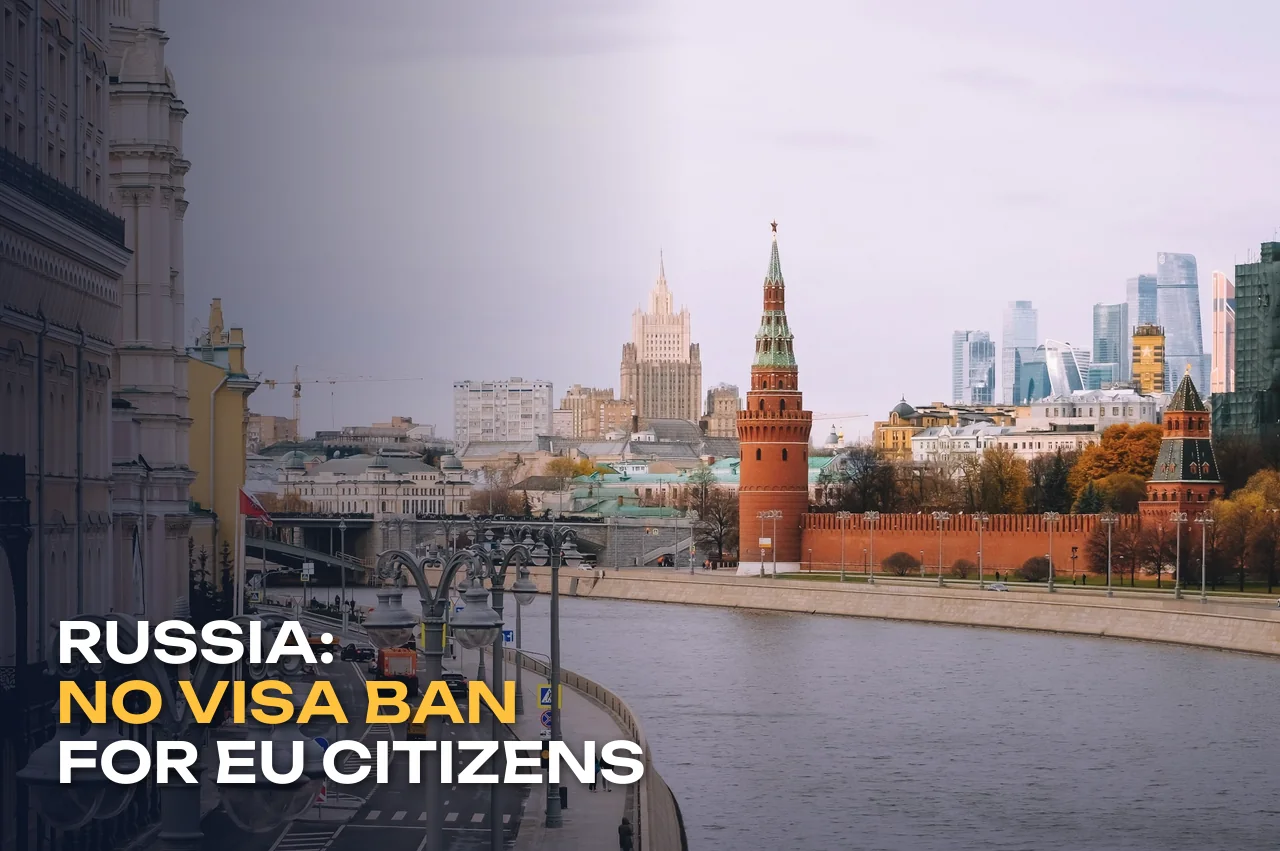 Russia · 28 OctRussia's Foreign Ministry: no full visa ban for EU citizens in response to tighter Schengen rules
Personal programme selection is conducted by Anna Kovalevskaya, Head of Legal, BRIDGES.
Need a second passport or a friendly residence permit? We will choose and arrange it
We will compare programmes in the UAE, Turkey and other countries off the list by timing, cost and family documents.
