BRIDGES Insights
Where should an IT specialist from Russia relocate in 2026: countries, taxes, visas
Updated: October 2026·14 min read·Expert reviewed
Terms and costs verified: October 2026

Contents
Who this is for. This article is written for citizens of Russia. Visa, banking, sanctions and dual citizenship rules depend on your passport: for other nationalities they may differ.
Zero tax in Dubai, 1% of turnover in Tbilisi, 20% for ten years in Lisbon: the figures for the six countries IT professionals from Russia most often move to look simple. The difficulty lies in the conditions. Each rate works only for a particular type of income, contract and number of days in the country, and this is exactly where people go wrong. I have put the taxes, visas, banks and cost of living in the six countries into one review under the rules as of October 2026, and added what I check with everyone who comes to me with a question about relocating.
Why these six countries and how I compare them
I chose these countries because each has a clear path to legal residence for someone who works remotely or runs a small business. The UAE, Georgia and Armenia offer low tax without investment. Portugal and Cyprus give status in the European Union. Serbia offers an inexpensive life next to the EU and simple residence through your own sole proprietorship.
I compare them on five parameters: tax on your type of income, the way to obtain the right to live in the country, processing time, access to banks with a Russian passport, and cost of living. The tax rate is the most misleading of them: it depends on who pays you and where you are when you work.
I always look at Russia separately: moving abroad does not by itself remove Russian taxes. More on this in the section on mistakes.
Sergej EvdokimovManaging Partner, BRIDGES
Moving abroad as an IT specialist? We will help you choose
We compare price, timing and what each option gives your family.
UAE: zero tax and two visa pathways
For an IT professional the UAE offers the simplest tax picture of the six countries: there is no personal income tax. Salary, freelance fees and dividends are not taxed. Companies pay 9% corporate tax on profit above AED 375,000 a year.
There are two visa pathways. The first is the remote work visa: it is issued for a year with renewal to those who work for a foreign employer or for themselves and earn from $3,500 a month. That threshold is stated on the UAE government portal, but I check it again before every application. The second pathway is a freelance permit or your own company in a free zone, followed by a residence visa.
Those who earn more can apply for the 10-year golden visa. A skilled employee needs a university degree and a salary from AED 30,000 a month; a property buyer needs a home from AED 2,000,000. Banking is the slowest part in the UAE. Accounts are opened for holders of a Russian passport, but the source of funds is checked in detail. Without a residence visa and a local address an account is hard to open, so the order is visa first, bank second.
Dubai is the most expensive of the six options. According to open price databases for October 2026, a one-bedroom flat in the centre costs about AED 8,800 a month, roughly EUR 2,100. More in our review of UAE taxes for Russians.
Portugal: IFICI for 10 years instead of NHR and the D8 visa
Portugal's NHR regime has been closed to newcomers since 2024. It was replaced by IFICI, known as NHR 2.0: a 20% rate on income from qualifying work for 10 years, with most foreign income exempt. Without the incentive, income is taxed on a progressive scale of up to 48%.
The difficulty with IFICI lies in its conditions. You must not have been a Portuguese tax resident in the previous five years, must hold a university degree and must work in a qualifying activity: a certified start-up, a company with an investment contract, science or an export industry. Remote work for a foreign company usually does not fall into these categories. The application is filed by 15 January of the year after the one in which you became resident.
For a remote worker the main pathway is the D8 digital nomad visa. The income threshold is four Portuguese minimum wages, which in 2026 means EUR 3,680 a month. The income must come from work for clients or an employer outside the country. The visa is obtained through a consulate, and the residence permit is then issued in Portugal. I plan for months rather than weeks.
Portuguese banks follow EU rules. A bank cannot accept deposits above EUR 100,000 in total from a Russian national without an EU residence permit. With a residence permit this limit no longer applies, but source-of-funds checks remain strict. A one-bedroom flat in central Lisbon costs about EUR 1,430 a month. More on Portuguese taxes and IFICI and the D8 visa.

Lisbon at blue hour. Photo: Jorge Franganillo, CC BY 2.0, image modified.
Cyprus: non-dom and the new tax rules
New tax rules have applied in Cyprus since 1 January 2026. Personal income up to EUR 22,000 a year is tax-free, after which the rate rises in steps to 35% on income above EUR 72,000. Corporate tax rose from 12.5% to 15%.
For an employed IT professional the main incentive is a 50% exemption on salary. If you work in Cyprus for the first time, earn more than EUR 55,000 a year and had not been resident there for the previous 15 years, only half of the income is taxed, for up to 17 years. For a company owner non-dom status matters more: dividends, interest and rental income are exempt from the special defence contribution. The status applies for 17 out of 20 years.
You can become a Cyprus tax resident with 60 days a year. The conditions are at least 60 days on the island, no more than 183 days in any other single country, a home in Cyprus and work, a business or a directorship in a Cypriot company. Since 2026 the condition of not being tax resident in another country has been abolished.
A Russian national needs a visa to enter Cyprus. Remote workers can use the digital nomad visa: net income from EUR 3,500 a month, with a one-year permit that can be renewed. Another pathway is a job with a local IT company. Banks follow the same EU rules as in Portugal. A one-bedroom flat in central Limassol costs about EUR 1,480 a month. More on non-dom status in Cyprus.
Georgia: 1% of turnover and a year without a visa
Georgia offers the fastest start: a Russian national enters without a visa and may stay for up to 365 days.
The standard personal income tax is 20%, and income from Georgian sources is taxed. Here lies the trap: work you perform while physically in Georgia may be treated as Georgian income even if the client is abroad. That is why IT freelancers register as individual entrepreneurs and obtain small business status: 1% of turnover up to GEL 500,000 a year, and 3% on the excess. The status is requested from the Revenue Service, and some consulting activities are excluded.
IT companies can obtain virtual zone status: profit from IT products and services for clients outside Georgia is exempt from profit tax. Only a company can hold this status, not a sole trader, and 5% is withheld when dividends are paid to the owner.
For residence, Russians use work, business or buying a home: from 1 March 2026 the purchase threshold is $150,000, and the permit is issued for a year with renewal. Georgian banks open accounts for Russians but ask for proof of income and client contracts. A one-bedroom flat in central Tbilisi costs about GEL 1,760 a month, roughly EUR 560. More on Georgian tax residence.
Serbia: flat-rate tax and residence through your own business
Serbia beats the European options on price and ease of entry. A Russian national enters without a visa for 30 days, registers as an entrepreneur and on that basis obtains temporary residence. Since 2023 such a permit has been issued for up to three years.
IT entrepreneurs most often pay tax under the flat-rate (pausal) regime: the amount is fixed by the tax administration according to the activity and place of registration. The regime is available with turnover up to RSD 6 million a year, about EUR 51,000. Exceeding the limit or registering for VAT moves you to standard accounting.
The main risk of the flat-rate regime is the independence test. If you work for a single client like an employee, on their schedule and their terms, the tax authority may treat the income as salary. It is then taxed as other income: 20% tax plus 24% pension contributions. I check this test against the contracts before the business is registered, not after.
With a residence permit it is easier to open an account with a Serbian bank. A one-bedroom flat in central Belgrade costs about RSD 86,000 a month, roughly EUR 740. More on Serbian tax residence and Serbian residence permits.
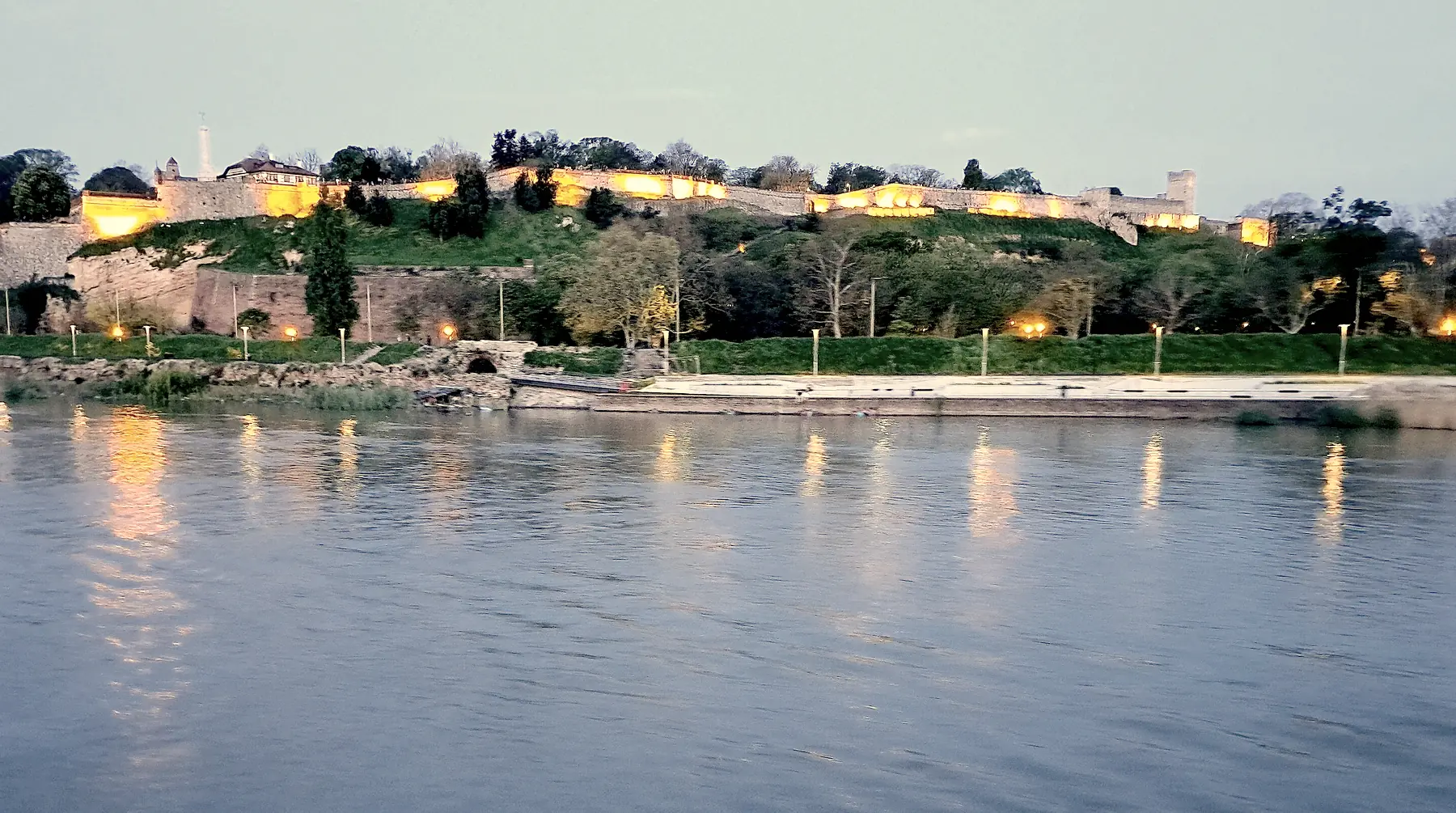
Belgrade at blue hour, Belgrade Fortress. Photo: Christian Gebhardt, CC BY-SA 4.0, image modified.
Armenia: 1% for IT companies and 180 days without a visa
Armenia is the closest to Russia in its entry rules: a Russian national may stay without a visa for up to 180 days a year. For a longer stay a temporary residence permit is issued on the basis of work or business.
Personal income tax in Armenia is a flat 20%. The IT incentives are designed for companies, not individuals. From 2025 to 2031 a company in the high-tech register may pay 1% of turnover instead of profit tax. The conditions are at least 90% of revenue from IT activities, turnover up to AMD 115 million a year (about $290,000) and no tax debts.
A freelancer without an Armenian company does not benefit from these incentives: you need your own company in the register. Armenian banks open accounts for Russians and check the source of funds. A one-bedroom flat in central Yerevan costs about AMD 353,000 a month, roughly EUR 780. More on Armenian second citizenship.
How much tax will you pay? We will calculate
We compare your taxes now and after the move.
Sergej EvdokimovManaging Partner, BRIDGES
The six countries compared in one table
The essentials for each country in one table. Rents come from open price databases for October 2026, in euros, rounded.
For Portugal without an incentive and for Cyprus the top rate of the scale is shown; in Cyprus it applies to income above EUR 72,000. In Georgia the 1% is paid by a sole trader and in Armenia by a registered company, and it is charged on turnover rather than income; in the UAE 0% is personal income tax, and the Serbian flat-rate tax is a fixed amount, so it is not on the scale.
Tax rules of the countries as of October 2026
| Country | Tax for an IT professional | Main way to the right to live there | 1-bedroom rent in the centre, per month |
|---|---|---|---|
| UAE | 0% on personal income | remote work visa from $3,500 a month, freelance permit, golden visa | about EUR 2,100 |
| Portugal | 20% for 10 years under IFICI, up to 48% without it | D8 visa with income from EUR 3,680 a month | about EUR 1,430 |
| Cyprus | income up to EUR 22,000 a year tax-free, half of a salary above EUR 55,000 exempt | digital nomad visa from EUR 3,500 a month, job with a local company | about EUR 1,480 |
| Georgia | 1% of turnover for a sole trader up to GEL 500,000 a year | up to 365 days visa-free, residence through work, business or a home from $150,000 | about EUR 560 |
| Serbia | flat-rate (pausal) tax with turnover up to RSD 6 million a year | residence for up to 3 years through your own sole proprietorship | about EUR 740 |
| Armenia | 1% of turnover for companies in the high-tech register | up to 180 days a year visa-free, residence through work or business | about EUR 780 |
The table is a choice between tax and status. The UAE, Georgia and Armenia give the lowest tax but no EU status. Portugal and Cyprus give EU status, and their tax incentives do not suit every IT professional.
How to choose a country: my criteria
I start not with the tax rate but with the question of who pays you. Then I go through the list in order:
- Source of income: an employment contract with a Russian company, a foreign employer, your own clients or your own company. This decides which incentive applies at all.
- Whether you need EU status. If you do, the choice narrows to Portugal and Cyprus.
- Level of income. EU digital nomad visas require EUR 3,500 to EUR 3,680 a month; the UAE requires from $3,500.
- Family. School, healthcare and housing for several people change the budget more than the tax rate does.
- Banks. Where you will receive money and whether you can spend it in the new country.
"I have been working with IT emigrants since 2022, and the situation has changed dramatically. In the first months, people were leaving in panic, choosing a country based on 'wherever I can go right now.' Now the situation has stabilized - and it is possible to think strategically.
What I observe: most mistakes do not happen because people do not know tax rates. Everyone googles tax rates now. Mistakes happen because people misjudge their own situation. Someone reads that Georgia does not tax foreign income - and moves there. Then it turns out they have a Russian employer, the money comes from a Russian account, and the territorial principle works nothing like they expected.
Or another case I see regularly: an IT specialist moves to the UAE, celebrates zero tax, opens a bank account - and discovers they cannot properly receive payments from Russian clients. Or that opening an account with a decent bank requires six months of living in the country and a set of documents they knew nothing about.
I always tell my clients: the tax rate is just one of five parameters. Banking, the visa pathway, the cost of living with a family, the planning horizon - all of this needs to be reviewed together. Only then will the choice be right for you, not just impressive on paper.
And one more thing many underestimate. Relocation is not only about money and documents. It is about where you will feel at home. I have seen people choose a country that was perfect from a tax perspective - and leave after a year because they could not live there. So my advice is always: visit first, spend a month there - and only then submit your documents."
 Anna KovalevskayaHead of Legal, BRIDGES
A relocation budget for 6 months
I calculate the first six months separately. Income in a new country often does not start at once, while housing is paid in advance. Below is the budget for one person in the main city of each country according to open price databases for October 2026, in euros, rounded.
Amounts are rounded. Excluding flights, state fees, document translation, insurance and the housing deposit.
Open price databases, October 2026, converted into euros
| City | 1-bedroom rent in the centre | Monthly costs of one person without rent | Six months for one person |
|---|---|---|---|
| Dubai | about EUR 2,100 | about EUR 1,000 | about EUR 18,600 |
| Limassol | about EUR 1,480 | about EUR 970 | about EUR 14,700 |
| Lisbon | about EUR 1,430 | about EUR 760 | about EUR 13,100 |
| Belgrade | about EUR 740 | about EUR 710 | about EUR 8,700 |
| Yerevan | about EUR 780 | about EUR 610 | about EUR 8,300 |
| Tbilisi | about EUR 560 | about EUR 550 | about EUR 6,700 |
These amounts exclude flights, state fees, translation and certification of documents, health insurance and the housing deposit, which often equals one month of rent. A family also needs a larger flat, school fees and insurance for everyone. The visa income thresholds above have to be earned every month, not saved once.
Three mistakes I see most often
Mistake one: assuming the move has wiped out Russian taxes. Since 2024 a salary under an employment contract with a Russian company has been taxed in Russia on the general scale, currently 13% to 22%, wherever you live. Russian tax residence is lost if you spend fewer than 183 days in the country within 12 consecutive months, and most other Russian income is then taxed at 30%. Income from foreign sources is free of Russian tax. If this is not planned in advance, the same salary may be taxed both in Russia and in the new country.
Mistake two: reading the rate without the conditions. The 1% in Georgia requires small business status and monthly returns. The 20% in Portugal does not apply to remote work for a foreign company. Cypriot non-dom status does not reduce tax on salary; it covers dividends and interest.
Mistake three: leaving the bank for later. Without an account in your country of residence you can neither pay rent nor prove income when renewing a visa. In the EU, deposits of a Russian national without EU residence are limited to EUR 100,000 per bank. I plan the account together with the visa, not after the move.
How to check your own case before deciding
I suggest checking your case in five steps, before spending any money on the move. You will need your contracts with your employer or clients and account statements for the past year.
Describe your income
Who pays you, under what contract and which account the money arrives in.
Count the days
How many days a year you will spend in Russia and in the new country: this decides tax residence.
Check the incentive conditions
Education, type of activity, turnover limit, application deadline.
Check the bank
Where you will open an account and what documents the bank will ask for.
Spend a month there
Live in the chosen city before filing documents.
BRIDGES are licensed agents for investment programmes, and in relocation we work on one principle: we do the work, you make the decisions. We calculate the tax for your situation, select the country and visa, prepare the documents and handle the application. From you we need information about your income and family, signatures and a trip for filing or biometrics if the country requires it.
Summary: which country suits whom
If you want minimal tax and are ready for a high cost of living, choose the UAE. If you need EU status and earn from EUR 3,680 a month, choose Portugal or Cyprus, bearing in mind that not everyone qualifies for IFICI. If a fast and inexpensive start matters most, choose Georgia or Armenia. If you want to live in Europe for less and work through your own business, choose Serbia.
In every option I calculate the tax in the new country together with the Russian one. Otherwise the saving stays on paper. The rules in this article apply as of October 2026 and should be checked again before filing documents.
Related: the 183-day rule, UAE freelance visa, Cyprus digital nomad visa, UAE or Georgia.
Share this article
Frequently asked
Questions people ask before deciding
01Do I have to pay tax in Russia after moving abroad?
A salary under an employment contract with a Russian company is taxed in Russia on the general scale of 13% to 22% wherever you live. If you spend fewer than 183 days in Russia within 12 consecutive months, you lose Russian tax residence: Russia does not tax foreign-source income, and most other Russian income is taxed at 30%.
02Will I get the 20% rate in Portugal if I work remotely for a foreign company?
Usually not. IFICI is designed for qualifying work in Portugal: certified start-ups, companies with an investment contract, research projects, export industries and science. You also need a university degree and no Portuguese tax residence in the previous five years.
03What is the 60-day rule in Cyprus?
It is a way to become a Cyprus tax resident: spend at least 60 days a year on the island, no more than 183 days in any other single country, keep a home in Cyprus and have work, a business or a directorship in a Cypriot company. Since 2026 the condition of not being resident elsewhere has been abolished.
04Who qualifies for the 1% tax in Georgia?
An individual entrepreneur with small business status and turnover up to GEL 500,000 a year. The status is requested from the Revenue Service, some consulting activities are excluded and returns are filed monthly. Turnover above the limit is taxed at 3%.
05Where can an IT professional start living legally fastest?
In Georgia and Armenia: a Russian national enters Georgia without a visa for up to 365 days and may stay in Armenia visa-free for up to 180 days a year. Serbia allows 30 visa-free days, during which you register a business and apply for residence.
06How much money do I need for the first six months?
For one person at October 2026 prices: about EUR 6,700 in Tbilisi, EUR 8,300 in Yerevan, EUR 8,700 in Belgrade, EUR 13,100 in Lisbon, EUR 14,700 in Limassol and EUR 18,600 in Dubai. These amounts exclude flights, state fees, insurance and the housing deposit.
07Will an EU bank open an account for a Russian national?
An account can be opened, but without an EU residence permit a bank cannot accept deposits above EUR 100,000 in total from a Russian national. With residence in an EU country this limit does not apply, although source-of-funds checks remain.
08Do Armenian IT incentives apply to freelancers?
No. The 1% turnover regime for 2025-2031 is designed for companies in the high-tech register: at least 90% of revenue from IT activities and turnover up to AMD 115 million a year. A freelancer without an Armenian company pays 20% income tax.
Transparency
How this material was prepared
- Author
- Sergej Evdokimov, managing Partner, BRIDGES
- Terms and costs last verified
- October 2026
- Sources
- official government authorities of the relevant country and state publications
- Methodology
- government minimum requirements are stated separately from due diligence charges, state fees, legal and banking costs
Sources and methodology
Figures, terms and timelines are checked against official sources as of October 2026. Link availability verified in August 2026. Third-party blogs and agent websites are not used as a source of programme terms.
- [1]EUR-LexOfficial texts of European Union legislationeur-lex.europa.eu/homepage.html
- [2]European Commission - Migration and Home AffairsEntry and residence rules in the EUhome-affairs.ec.europa.eu/index_en
Methodology: tables and charts state government minimum investment requirements; due diligence charges, state fees, legal, banking and other costs are calculated separately and are not included in the minimum thresholds.
About the author
Related materials
What to read next
 ArticleTaxes in Portugal 2026: the NHR regime closed, the new IFICI, rates, and residency
 ArticleNon-dom in Cyprus in 2026: tax benefits for investors
 ArticleGeorgia tax residency: territorial principle and reality
News+1 story on 3 November
Related news
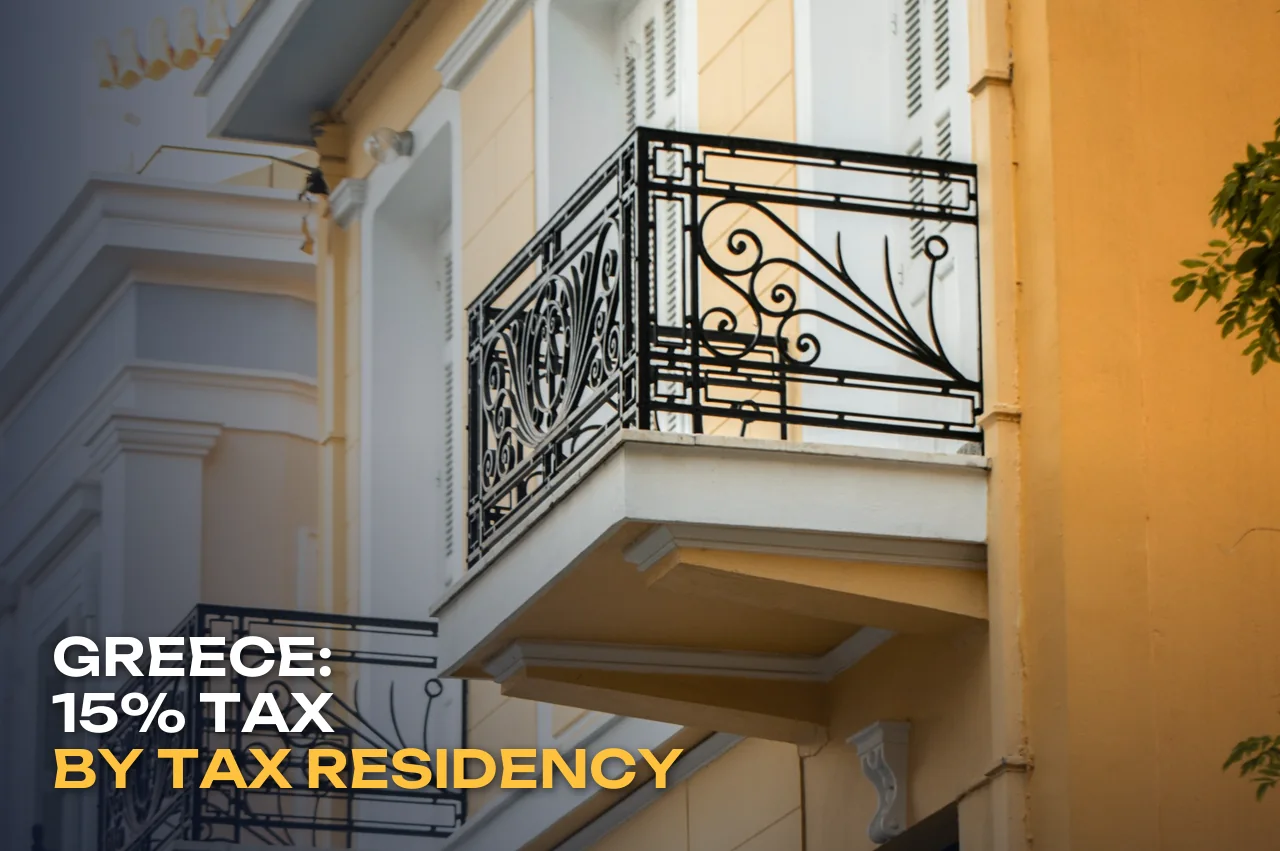 Greece · 3 NovGreece: the 15% home purchase tax will depend on tax residency, not on your passport
 European Union · 1 NovEuropean Union: updated social security rules for living and working in two countries enter into force
 Spain · 1 NovSpain: foreigners bought 13% fewer homes as the market falls for an eighth month
Personal programme selection is conducted by Anna Kovalevskaya, Head of Legal, BRIDGES.
Tax residency in simple words
When tax residency arises, how double taxation is avoided and what the tax authority checks.
