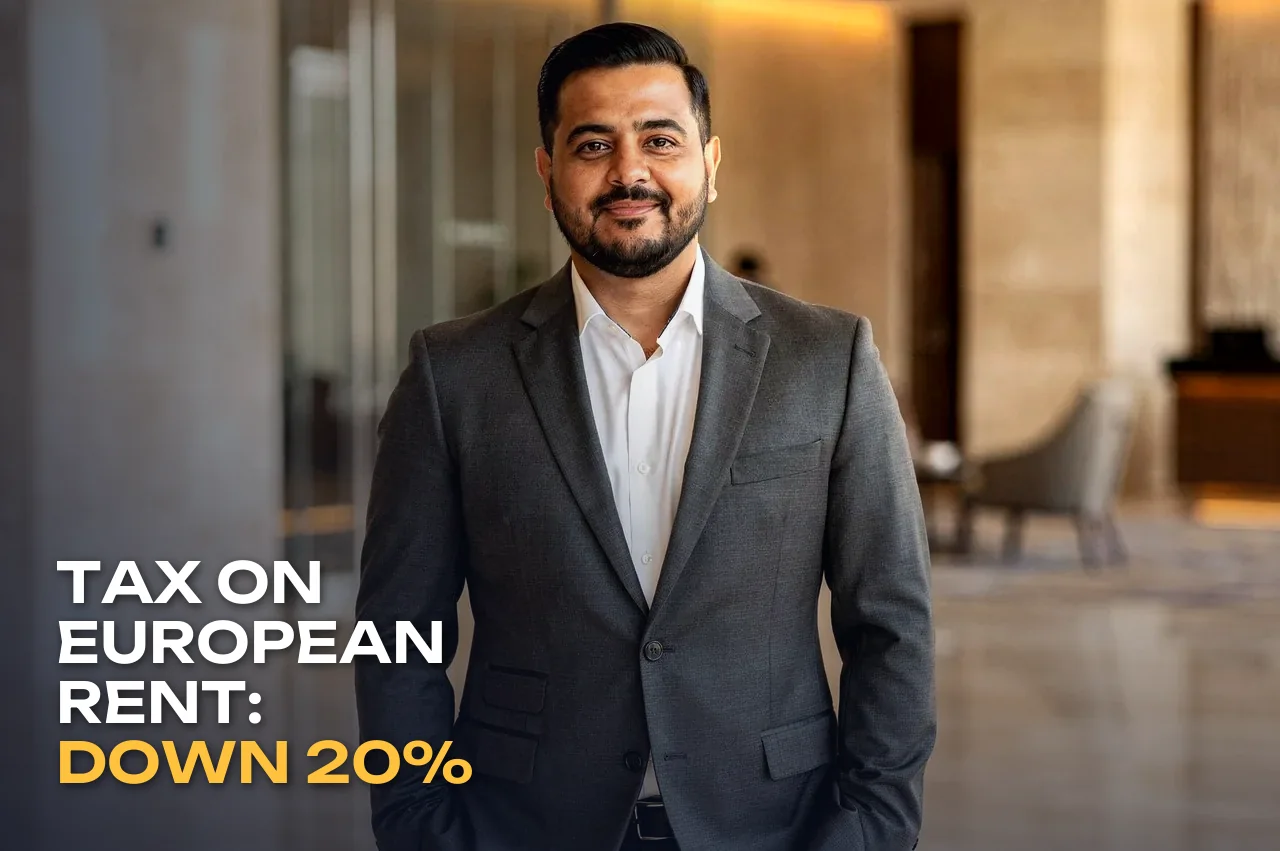
Fahad, an investor from Riyadh, has built up stakes in operating shopping centres in Germany and Spain over the years. The properties bring steady rent, but not all of it was reaching him.
A large share of the income was withheld at source, at the maximum rate. The reason was the recipient's status: treaty benefits and EU directives are designed for residents of member states, and Saudi Arabia is not one of them. Fahad did not want to sell the assets or move his family.
We obtained a status under Malta's GRP for him, secured a Maltese tax residence certificate and presented it to the tax authorities in Germany and Spain. Reduced treaty rates were applied, part of the tax already withheld was credited, and the overall burden fell by more than 20%, a saving that repeats every year. Below we explain how it was set up.
Case at a glance
Situation, solution and outcome in seven lines
Client
Fahad, 44, a commercial property investor, from Riyadh
From
Riyadh, with family
Program
Malta, Global Residence Programme
Objective
Reduce withholding tax on income from shopping centers in Germany and Spain
Solution
GRP status, Malta Tax Residence Certificate, application of EU treaties
Timeline
Status granted, tax rates revised within several months
Result
Tax burden reduced by more than 20%
Client story
Client Story
Where they started
Fahad is an investor from Riyadh who has built a portfolio of commercial real estate across Europe over the years: stakes in operating shopping centers in Germany and Spain. The properties generated stable rental income, but Fahad did not receive the full amount—a significant portion was withheld as source withholding tax before payment.
Why the standard route did not work
The root of the problem lay in the recipient's status. When income from European real estate goes to a resident of a third country without a developed network of treaties with the EU, withholding occurs at the maximum rate. Tax treaty benefits and internal EU directives that reduce the tax burden are designed for residents of EU member states—and Saudi Arabia is not such a member.
What BRIDGES had to solve
Fahad did not want to sell his assets or relocate his family's country of residence. He needed a more sophisticated tool: tax residency in a respected European jurisdiction that would allow him to present the correct certificate to German and Spanish authorities and apply reduced rates on a lawful basis.
Why a standard answer would not do
Malta was almost ideal. As an EU member state, it provides access to the Union's internal mechanisms, and the GRP program allows obtaining full tax status there without the need to relocate the family and spend the entire year on the island.
Half the income from my shopping centres in Europe went in withholding tax. Yan arranged my status in Malta and applied the tax treaties. The burden fell by more than 20%.
What Was at Risk
What Was at Risk
There was no threat of status loss or account blocking—there was systematic overpayment. Each quarter, income from European properties arrived reduced, and this difference accumulated into significant amounts year after year. Inaction itself was costing money.
Maximum withholding tax rate on dividends and rental income from EU properties;
01Unavailability of reduced rates under tax treaties and EU directives;
02Inability to credit already withheld foreign taxes without a European certificate;
03Complicated dealings with European banks servicing the properties due to the non-European beneficial owner status;
04Absence of a predictable and optimal structure for years ahead as the portfolio grew.
The logic of the solution
How the matter progressed: from checks to result
The chart is built from the facts of this matter and shows the logic of the work without decorative or unverified data.
01
Stage 1
We analyzed the ownership structure of assets in Germany and Spain and identified which EU agreements and directives apply to each type of income.
02
Stage 2
We obtained GRP status: qualified residential property on the island, health insurance, proof of financial resources, and passing fit and proper checks.
03
Stage 3
We obtained Malta's Tax Residence Certificate - a document confirming Fahad's EU tax residency.
04
Stage 4
We provided the certificate to tax authorities and paying agents in Germany and Spain to apply reduced rates to future payments.
05
Stage 5
We addressed the credit of previously withheld taxes and structured the ownership so that it remains optimal as the portfolio expands.
Takeaway. Meanwhile, neither the assets themselves nor the family's residence in Riyadh needed to be changed. GRP status allowed Fahad to obtain EU tax residency as a tool, not as an obligation to live on the island year-round.
How we solved the problem
How we solved the problem
The work was split into verifiable stages so that every conclusion rested on documents.
01
Stage 1
We analyzed the ownership structure of assets in Germany and Spain and identified which EU agreements and directives apply to each type of income.
02
Stage 2
We obtained GRP status: qualified residential property on the island, health insurance, proof of financial resources, and passing fit and proper checks.
03
Stage 3
We obtained Malta's Tax Residence Certificate - a document confirming Fahad's EU tax residency.
04
Stage 4
We provided the certificate to tax authorities and paying agents in Germany and Spain to apply reduced rates to future payments.
05
Stage 5
We addressed the credit of previously withheld taxes and structured the ownership so that it remains optimal as the portfolio expands.
06
Stage 6
We ensured compliance with the 183-day rule and ties to Malta to make the status robust against scrutiny from any of the countries.
Expert comment
Gulf-based investors often overpay withholding tax in Europe simply because their status does not provide access to EU agreements. Malta solves this elegantly: it is in the EU, it has an adequate tax regime, and through GRP one can obtain residency there without relocating the family. In Fahad's case, we did not touch the assets themselves or the family's place of residence - we simply gave him the correct tax address. This was sufficient to recover more than one-fifth of the income to the portfolio.
Outcome
What the client received
Indicator
Before · After
Withholding rate on EU income
Maximum · Reduced by agreement
Withholding tax credit
Unavailable · Partially applied
Tax burden on European portfolio
Baseline · -20%+
Family residence location
Riyadh · Unchanged
Family residence location
Riyadh · Unchanged
With the Maltese resident certificate, the tax authorities of Germany and Spain applied reduced rates under the agreements to Fahad's income, and previously withheld amounts were partially recovered through tax credits. The overall tax burden on the European portfolio decreased by more than twenty percent - and this saving repeats every year.
Meanwhile, neither the assets themselves nor the family's residence in Riyadh needed to be changed. GRP status allowed Fahad to obtain EU tax residency as a tool, not as an obligation to live on the island year-round.
The key conclusion is that for a cross-border investor, the tax residency status of the income recipient is as important as the assets themselves. Properly chosen EU residency transforms the maximum withholding rate into a moderate one and makes the portfolio significantly more efficient.
GRP status with a Maltese residence certificate lets you apply the preferential EU tax treaties. We will look at your assets.
Share this article
FAQ
Questions people ask in a similar situation
01Why does an investor from the Gulf need Malta's tax residency?
To obtain residency status in an EU Member State and apply reduced rates under tax agreements and directives to income from European assets, which are unavailable to residents of third countries.
02Does the entire family need to relocate to Malta?
No. The GRP programme allows obtaining tax residency status without an obligation to reside on the island for the entire year. Qualified residential property and compliance with programme conditions are required.
03Is this legal tax optimization?
Yes. It involves the correct application of existing EU agreements and directives, which require only the proper tax status of the income recipient.
04By how much is the tax realistically reduced?
It depends on the type of income and ownership structure. In the described case, the aggregate tax burden on the European portfolio was reduced by more than 20%.
05What is the minimum tax in Malta under GRP?
The status provides for a minimum annual tax, and foreign income brought into the island is taxed at a rate of 15%. We calculate the exact model individually.
06Which documents were key in this case?
We analyzed the ownership structure of assets in Germany and Spain and identified which EU agreements and directives apply to each type of income. We obtained GRP status: qualified residential property on the island, health insurance, proof of financial resources, and passing fit and proper checks.
07Why did the standard route not suit the client?
The root of the problem lay in the recipient's status. When income from European real estate goes to a resident of a third country without a developed network of treaties with the EU, withholding occurs at the maximum rate. Tax treaty benefits and internal EU directives that reduce the tax burden are designed for residents of EU member states—and Saudi Arabia is not such a member.
08What risk had to be closed before filing?
There was no threat of status loss or account blocking—there was systematic overpayment. Each quarter, income from European properties arrived reduced, and this difference accumulated into significant amounts year after year. Inaction itself was costing money. Maximum withholding tax rate on dividends and rental income from EU properties;
I lead the international tax practice at BRIDGES and work at the intersection of tax residence, cross-border reporting and banking compliance. I assess how citizenship, residence, relocation or a new ownership structure may affect the client's tax obligations, banking profile and capital.
My work covers tax residence, CRS and FATCA requirements, source of funds and the questions a bank may raise. These elements should be considered together, because inconsistencies between documents, declarations and the underlying circumstances can create risks after a status has been obtained or an account has been opened.
During the consultation, you will receive an assessment of the tax and banking implications of the proposed decision. Where further work is required, I determine the financial documentation and personally oversee the tax and compliance aspects of the BRIDGES project.
Prepared on the basis of BRIDGES practice and reviewed by a subject-matter expert.
We will explain the requirements, amounts and timelines that apply now, and what is checked in a situation similar to yours.
We will review your situation and propose a solution
Describe your task in a few words. We will study your situation, assess the legal and practical options and propose the next step based on your goals, documents and country.
Confidential · no obligations · answered by the relevant specialist
Names and certain details have been changed to protect client confidentiality. The result described reflects one specific situation and is neither a public offer nor a guarantee of a similar outcome. Programme terms are stated as of 2026 and may change - please confirm current parameters with a BRIDGES consultant.